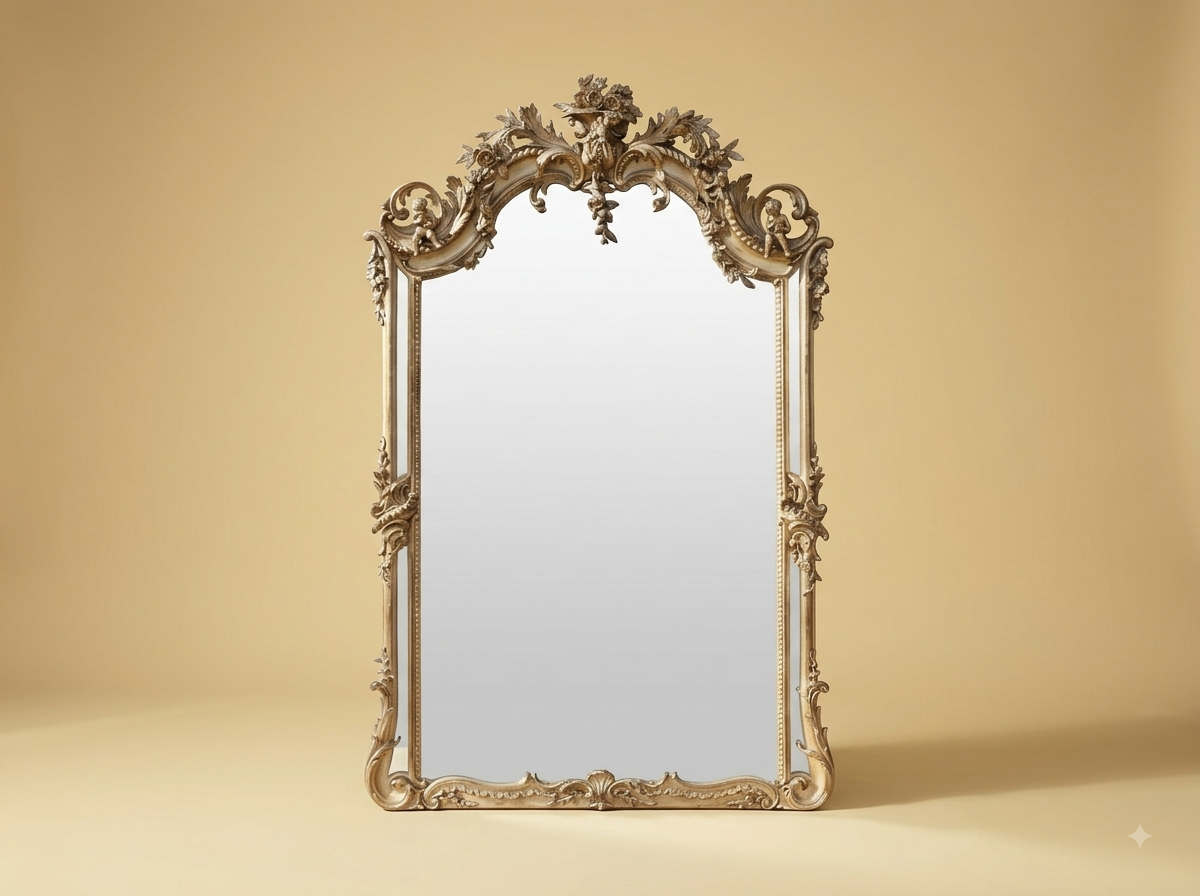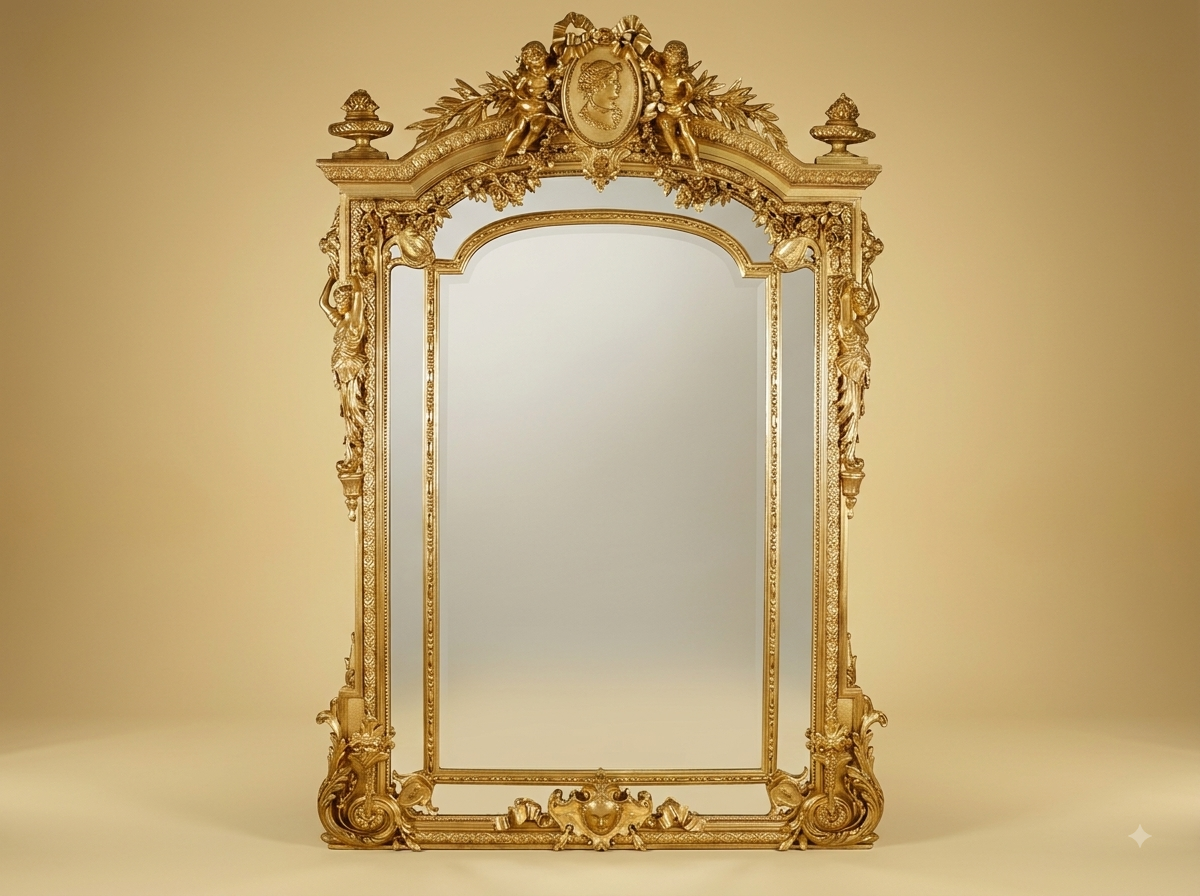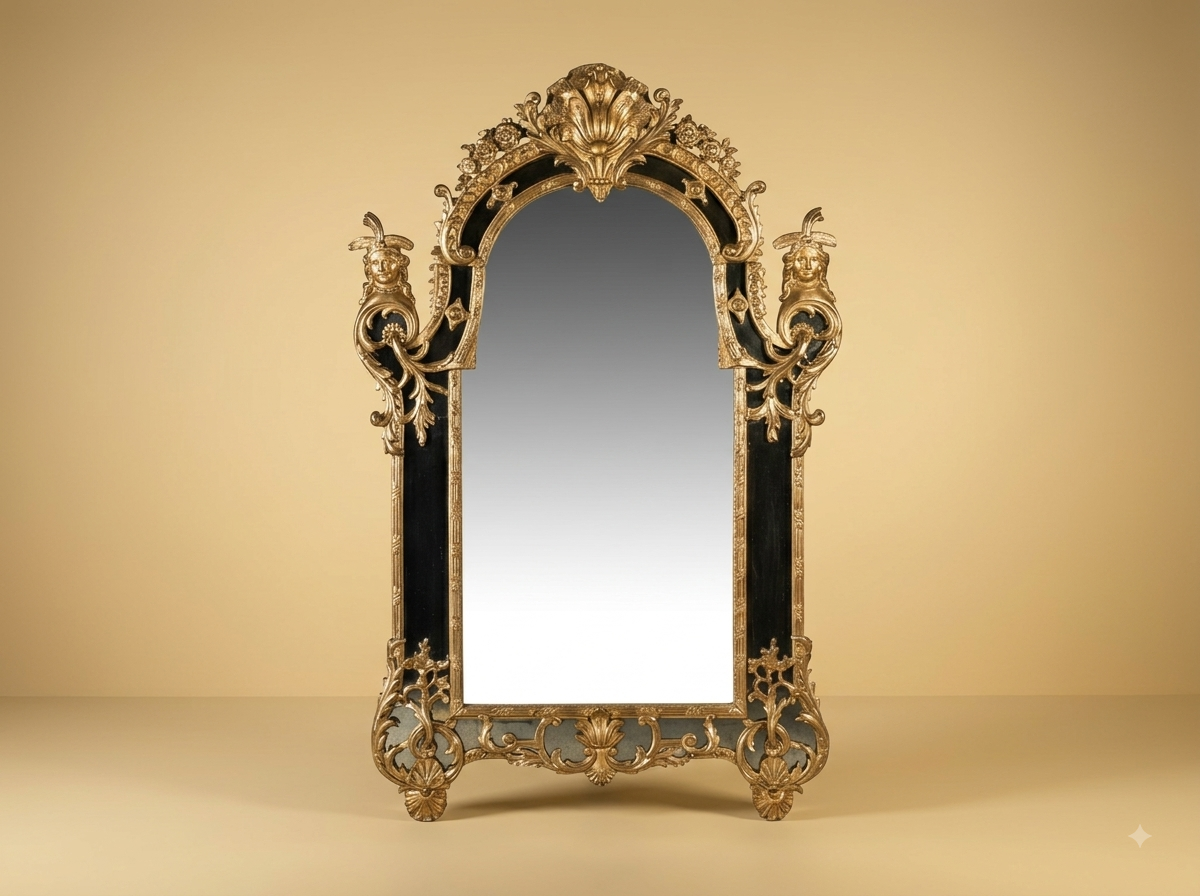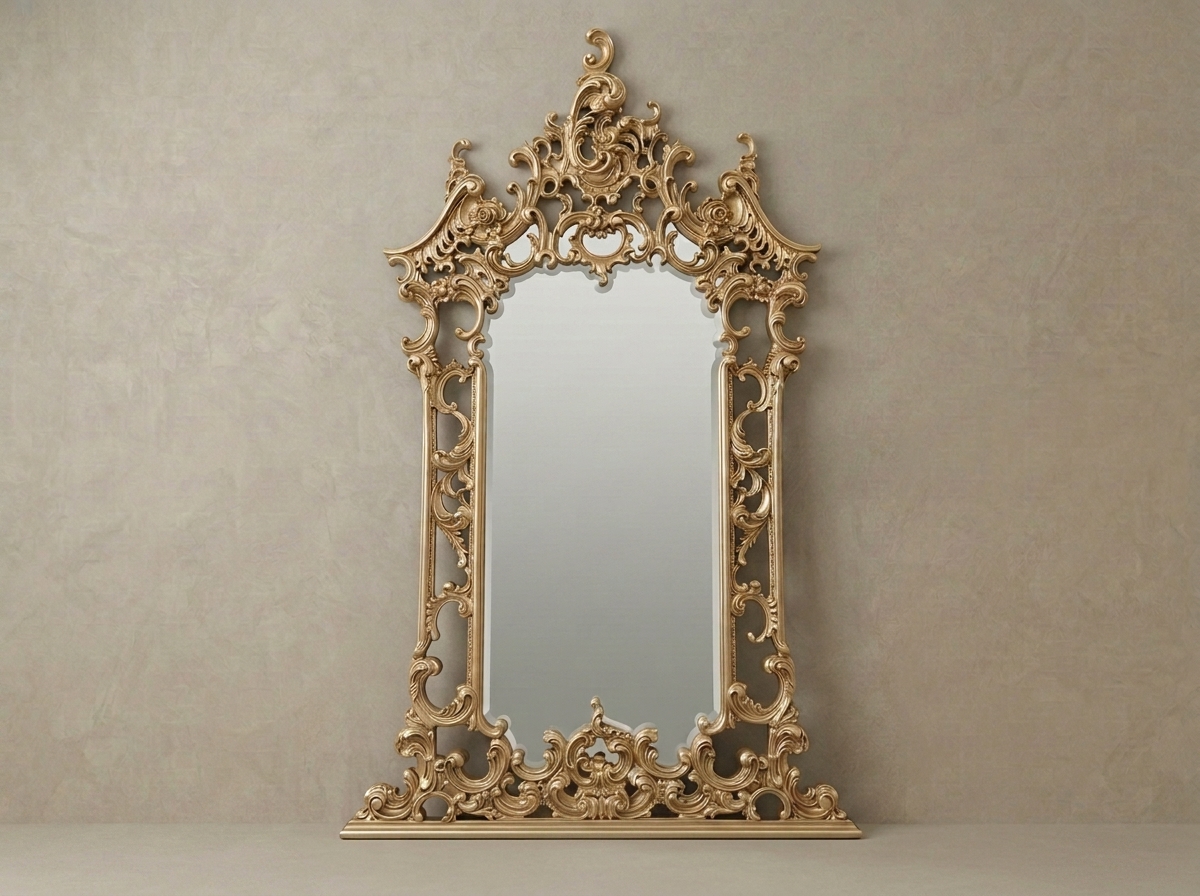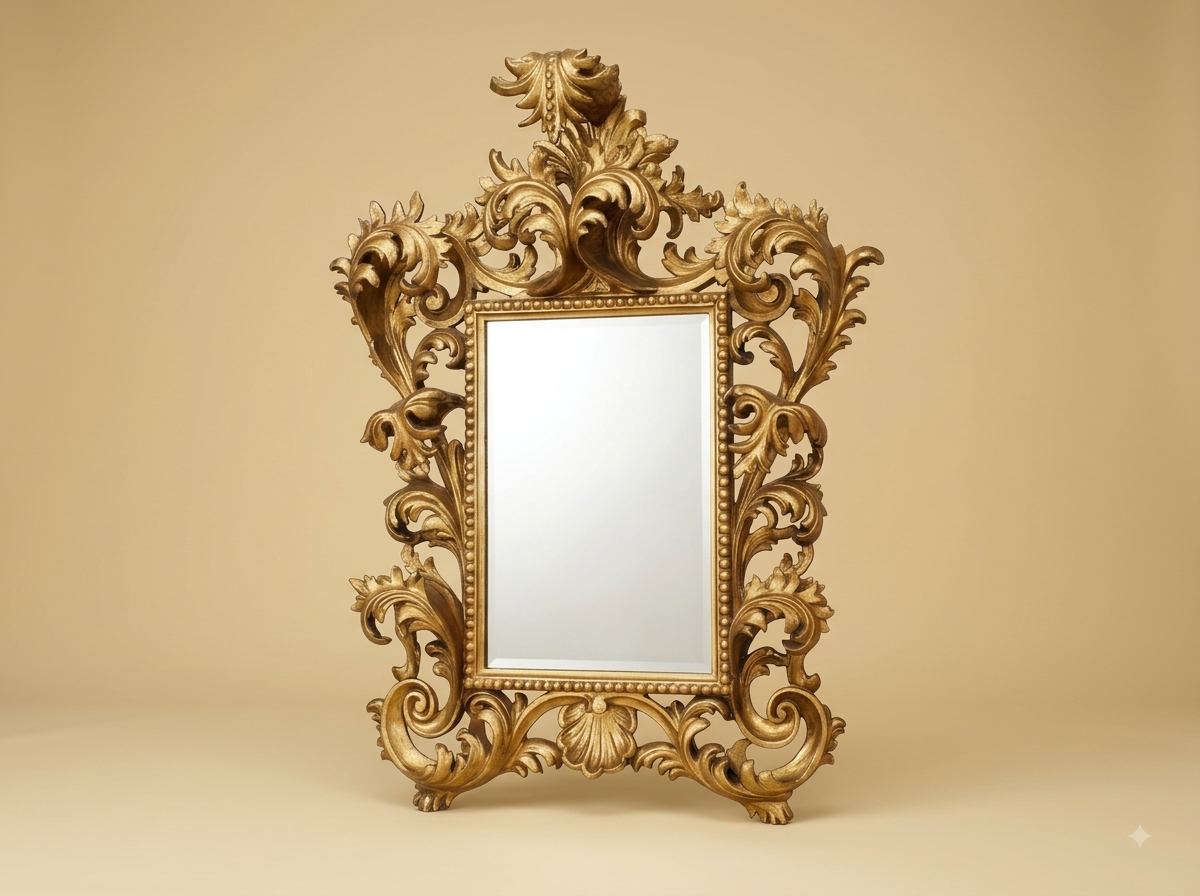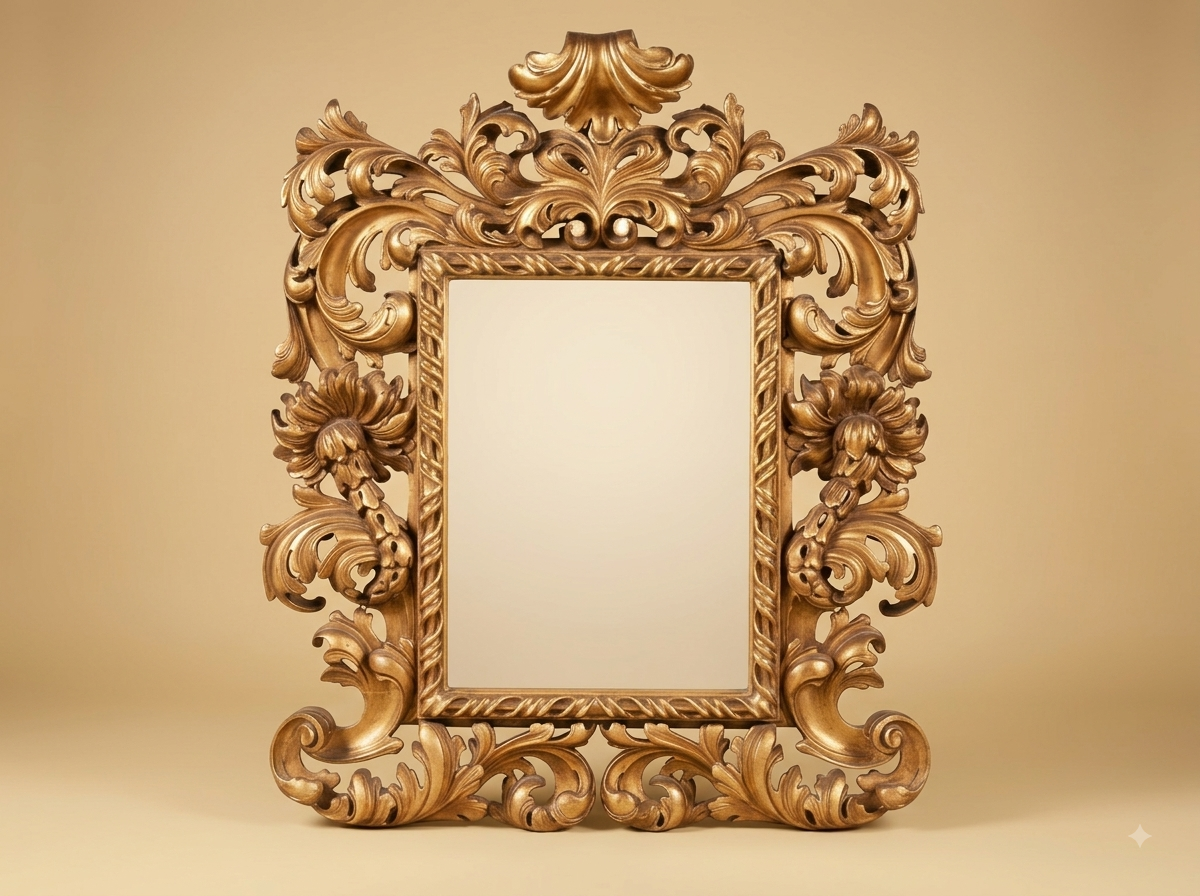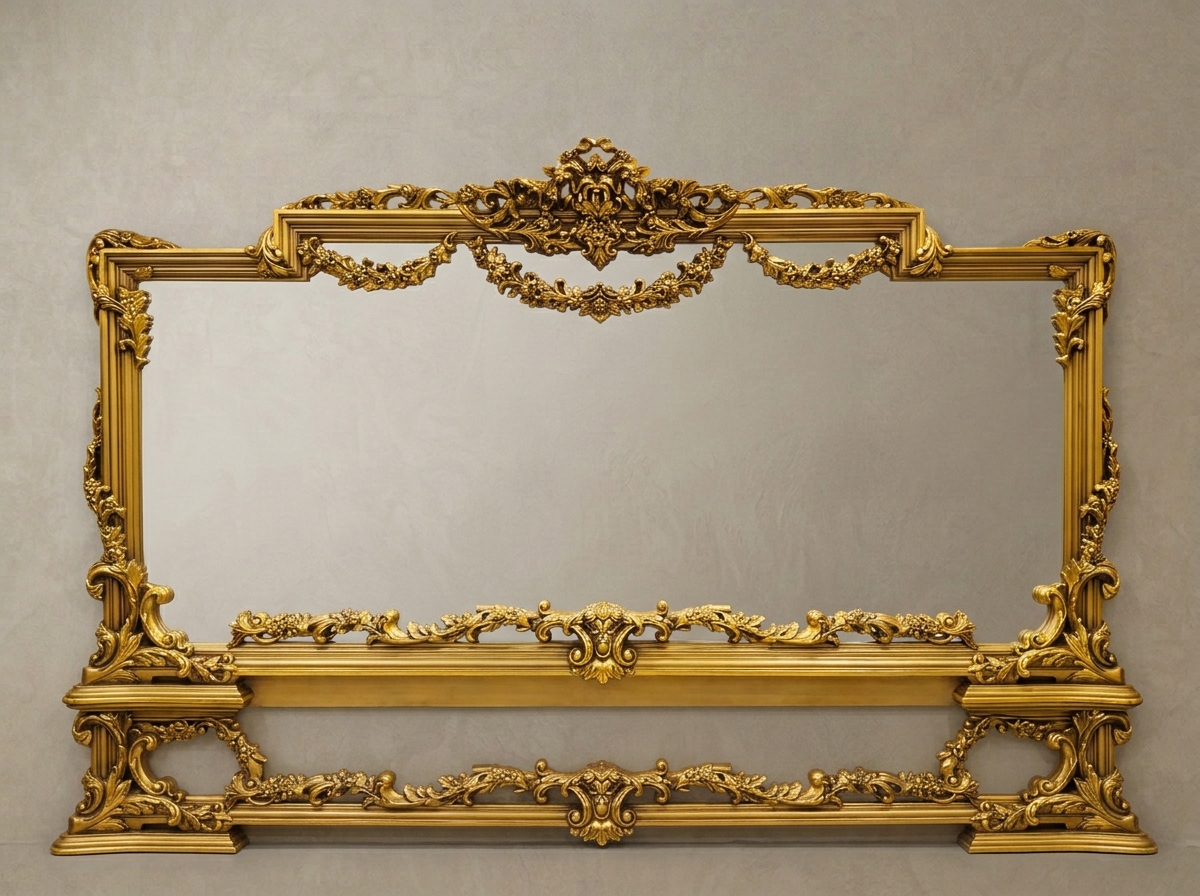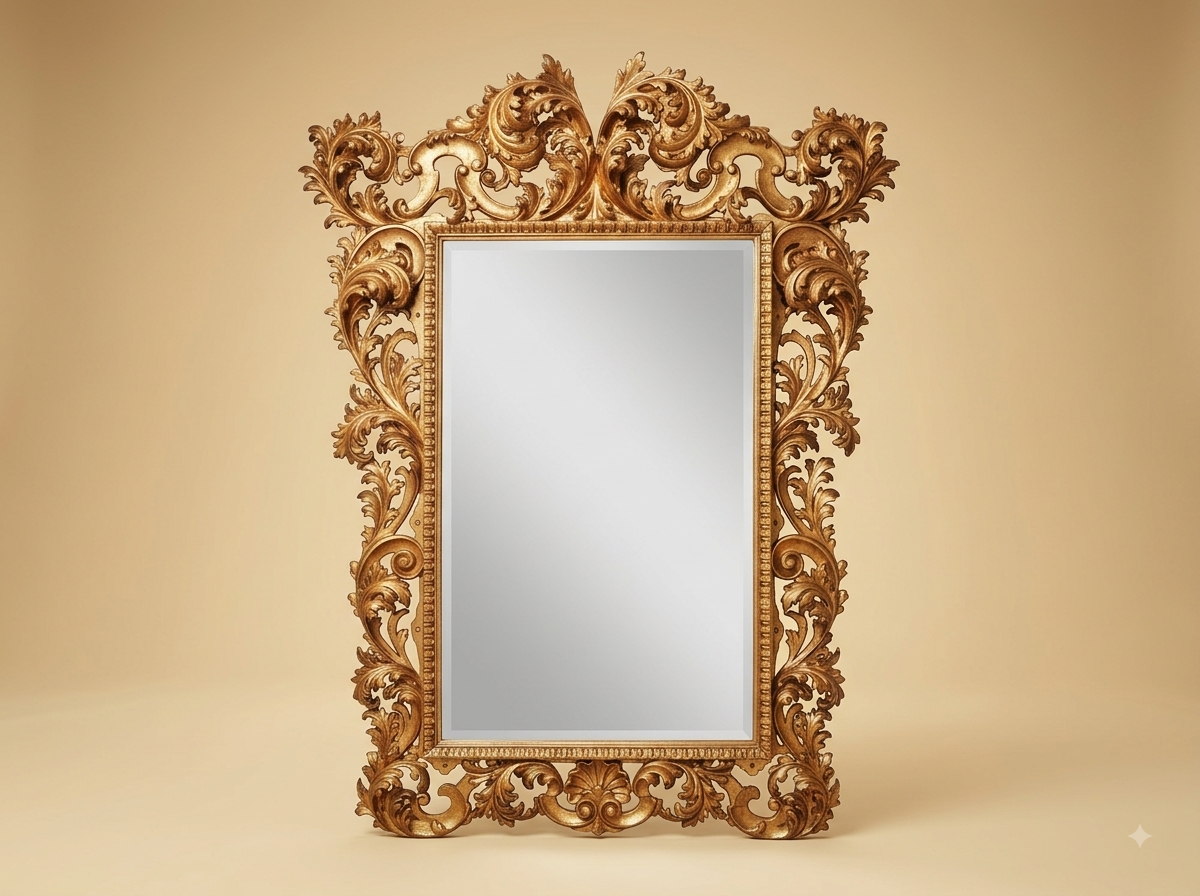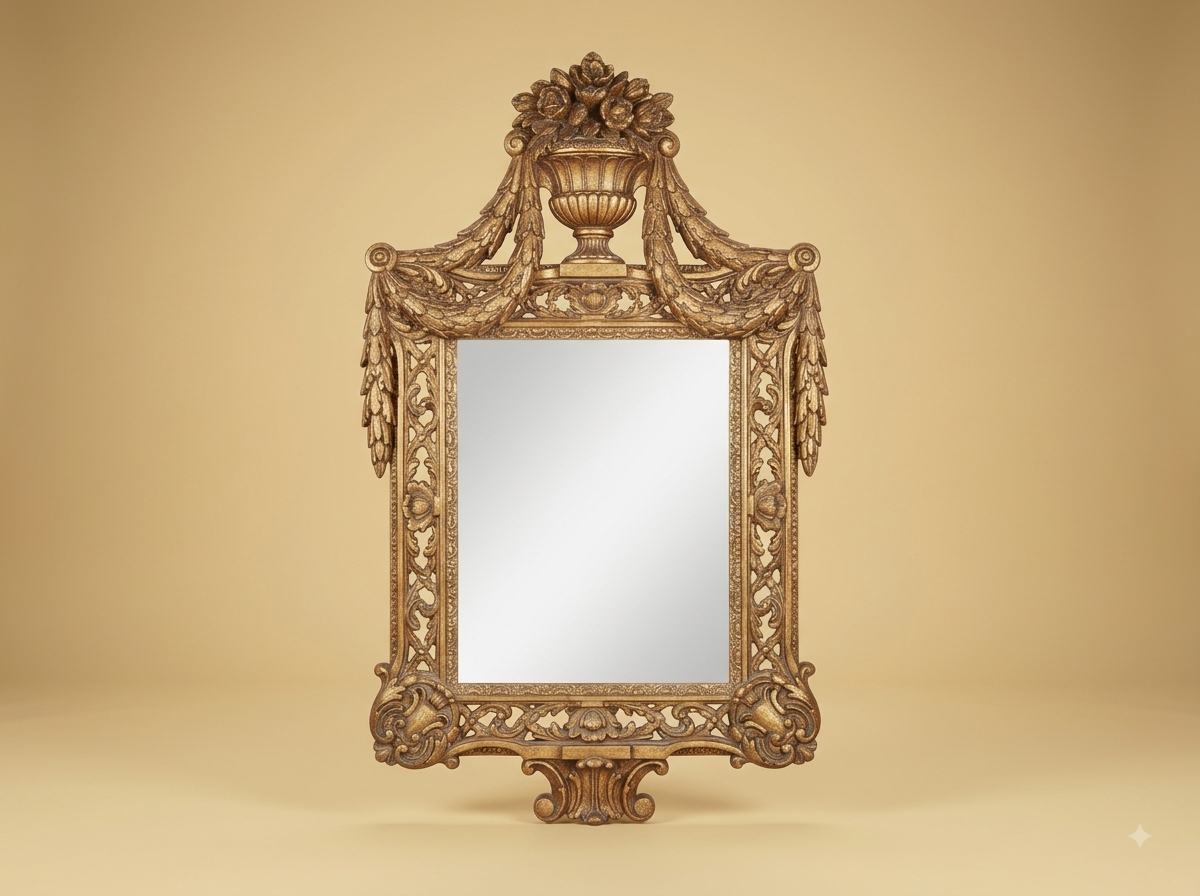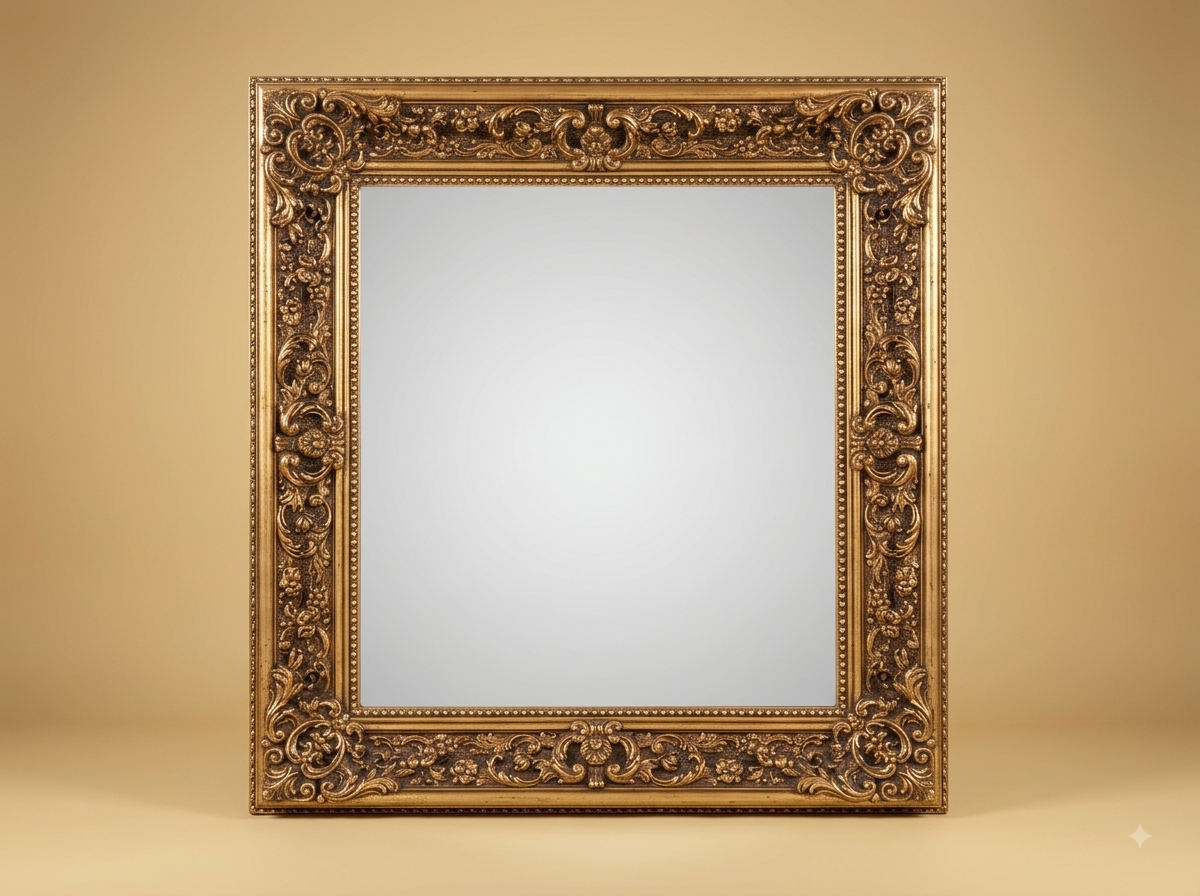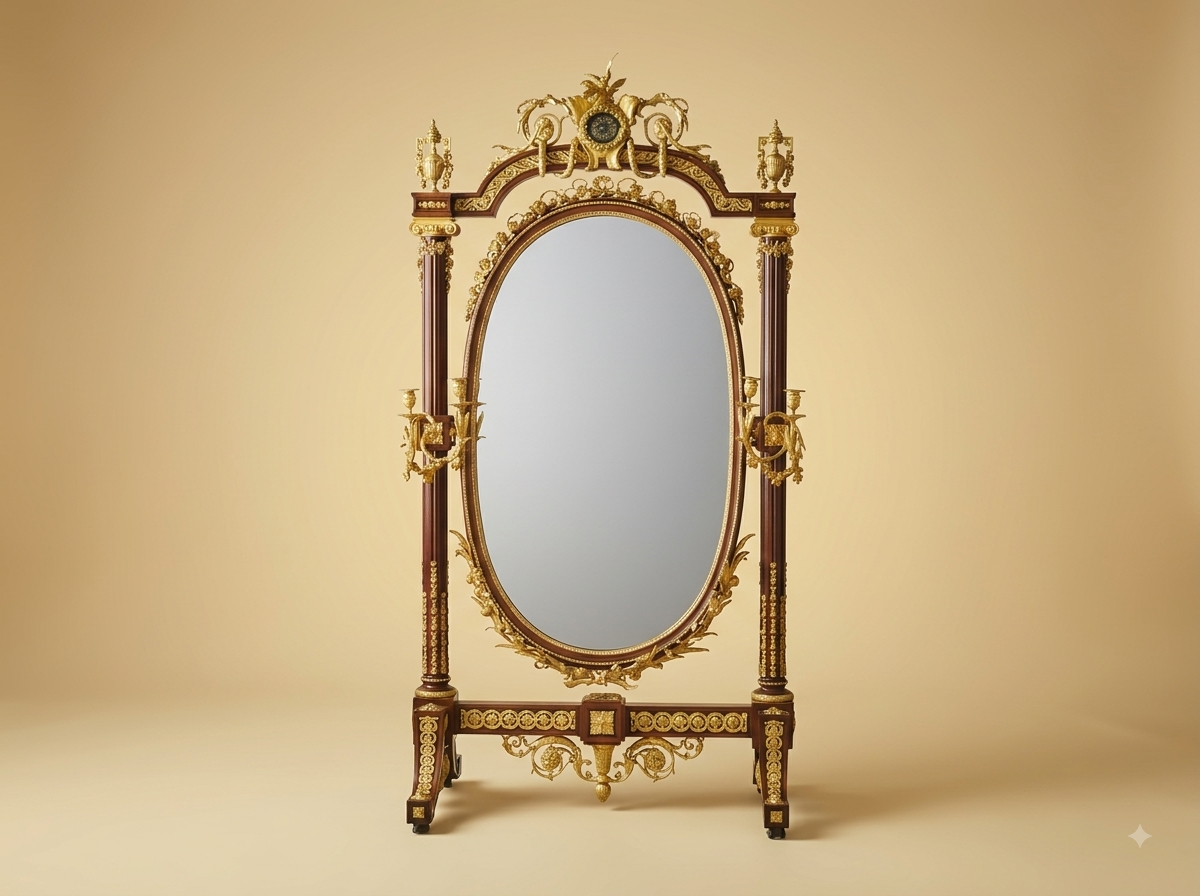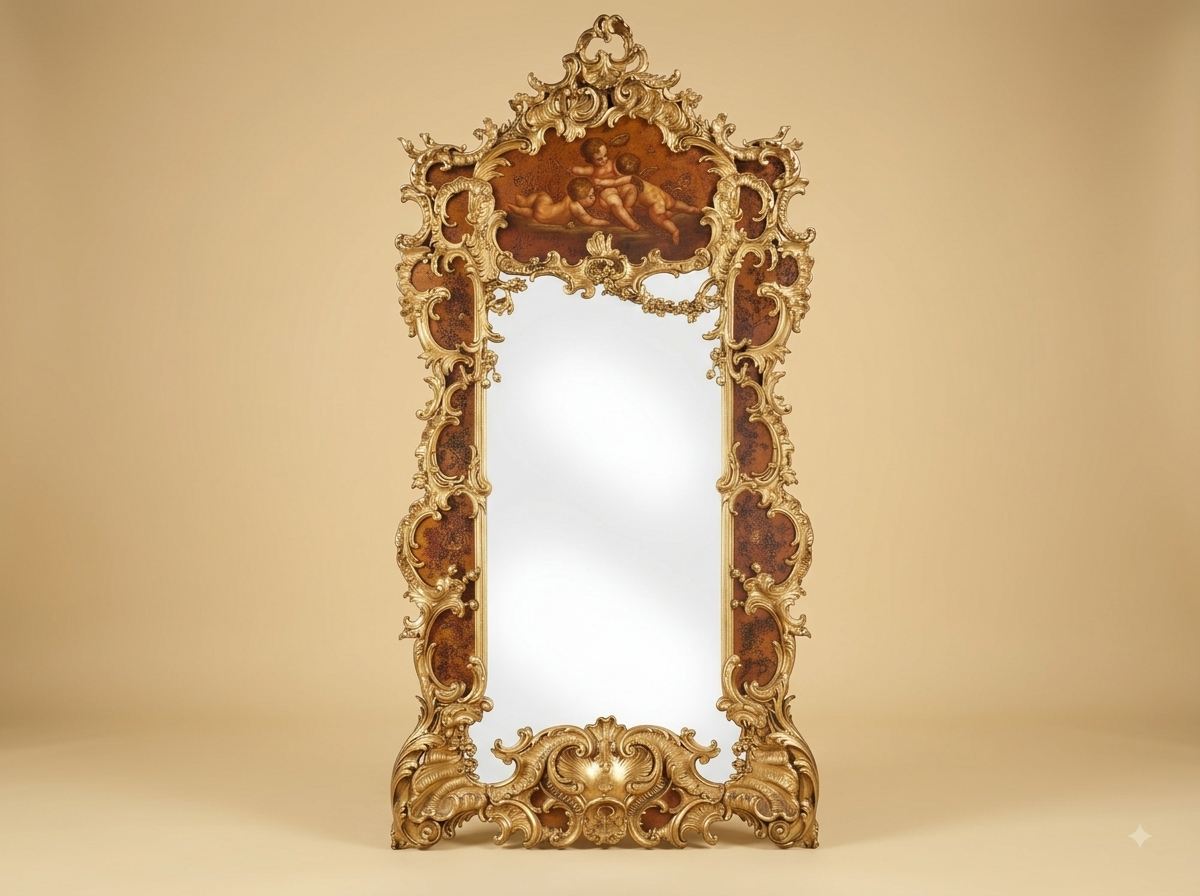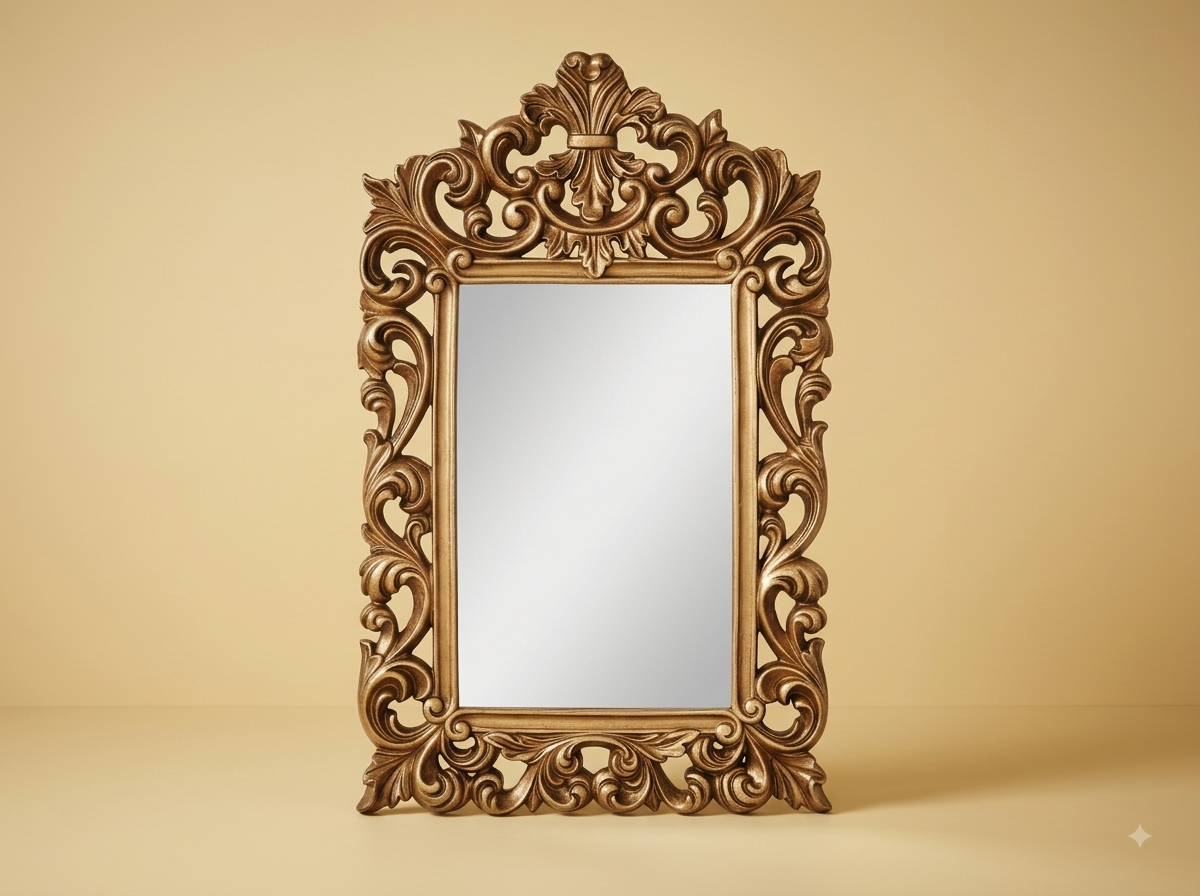
Look closely at where the scrolls meet the glass and it seems as though the carved tips curl right over the edge of the plate. They do not. Every one of them stops just short.
The reason is simple. Glass and timber respond differently to a change in temperature, and a mirror plate that is pinched by carving at any point will eventually complain about it - first as a stress mark in the reflection, later as something worse. So our artisans cut the openwork panel with a deliberate set-back all around the opening, leaving a small clearance between the innermost scroll tips and the glass.
Then they work on the shadow. Each tip is undercut on its lower face so that it throws a dark line onto the plate edge, and the eye reads that shadow as contact. The gap does its structural job invisibly while the carving appears to embrace the glass.
It is a small clearance, decided at the drawing stage and held through every stage of making. It is also the difference between a mirror that survives twenty summers and one that does not.
 Ask Price On WhatsApp