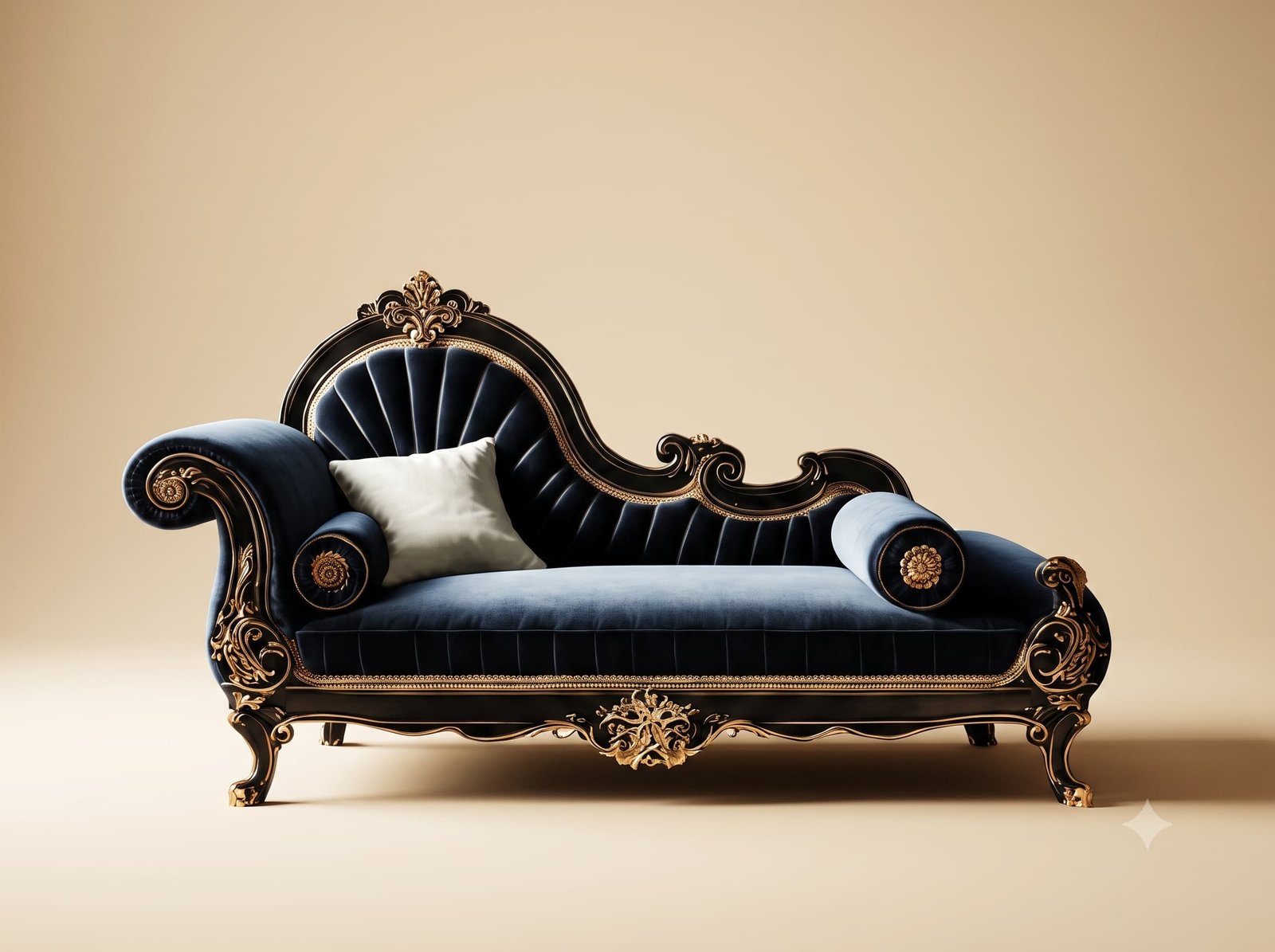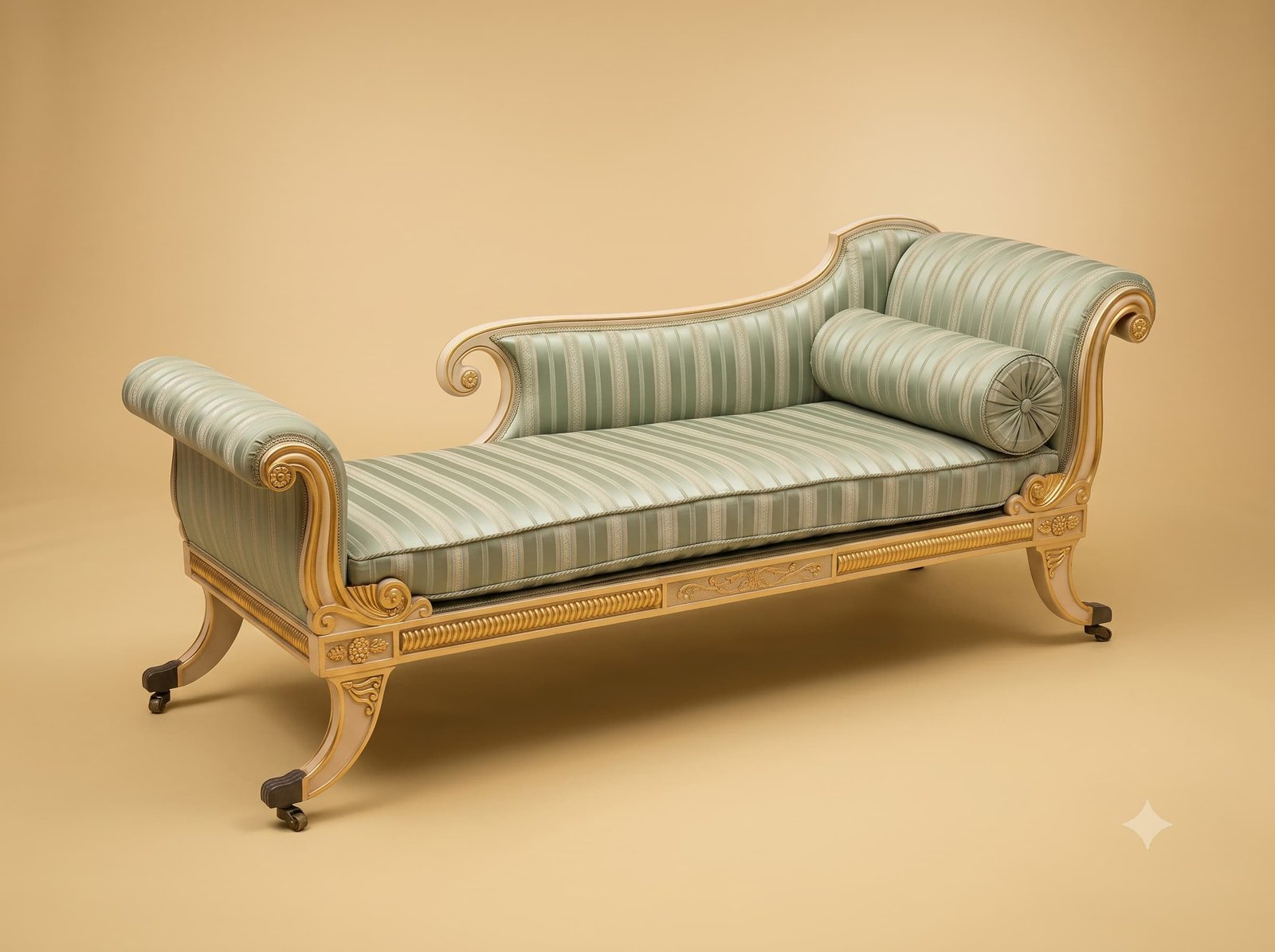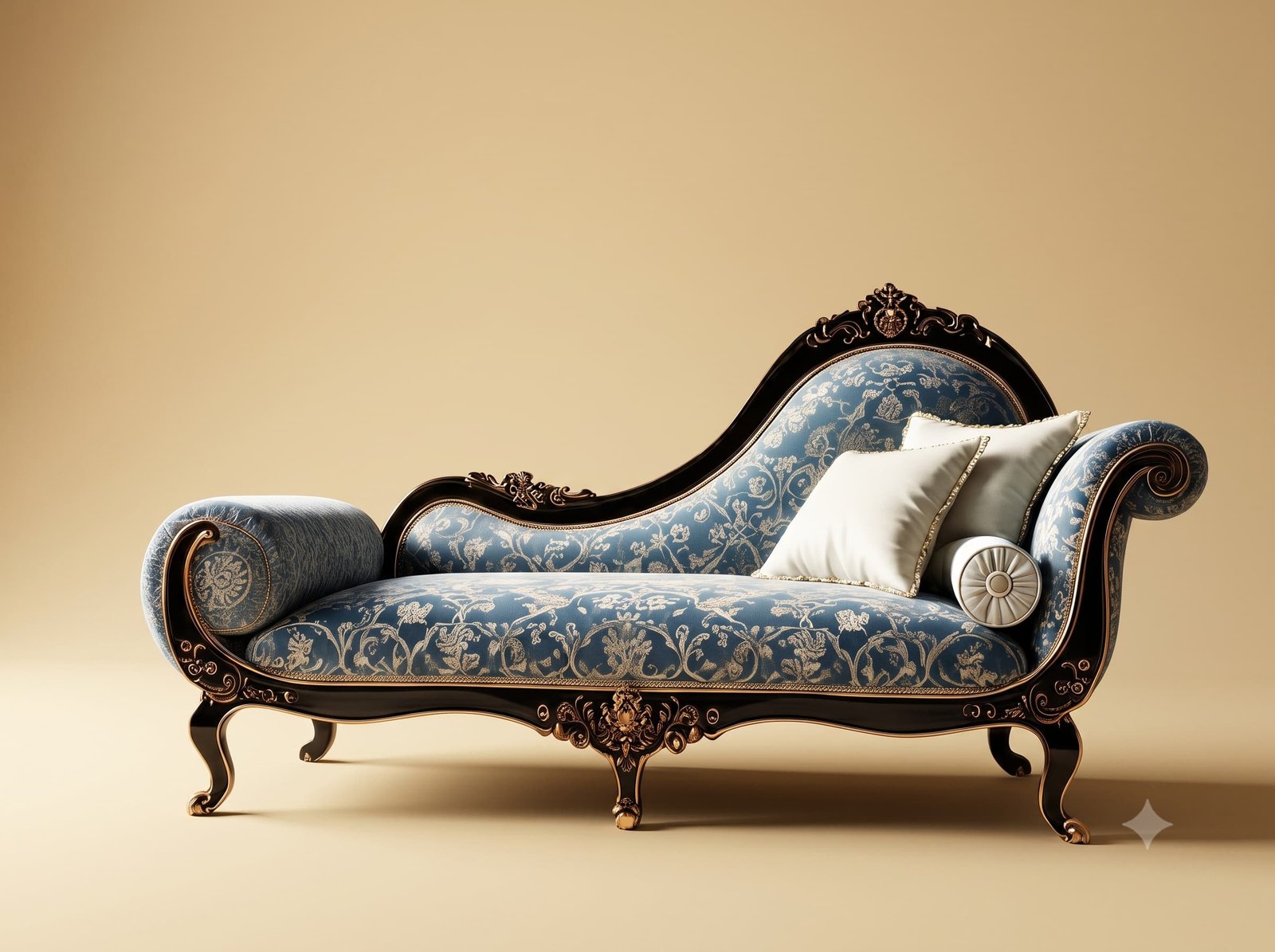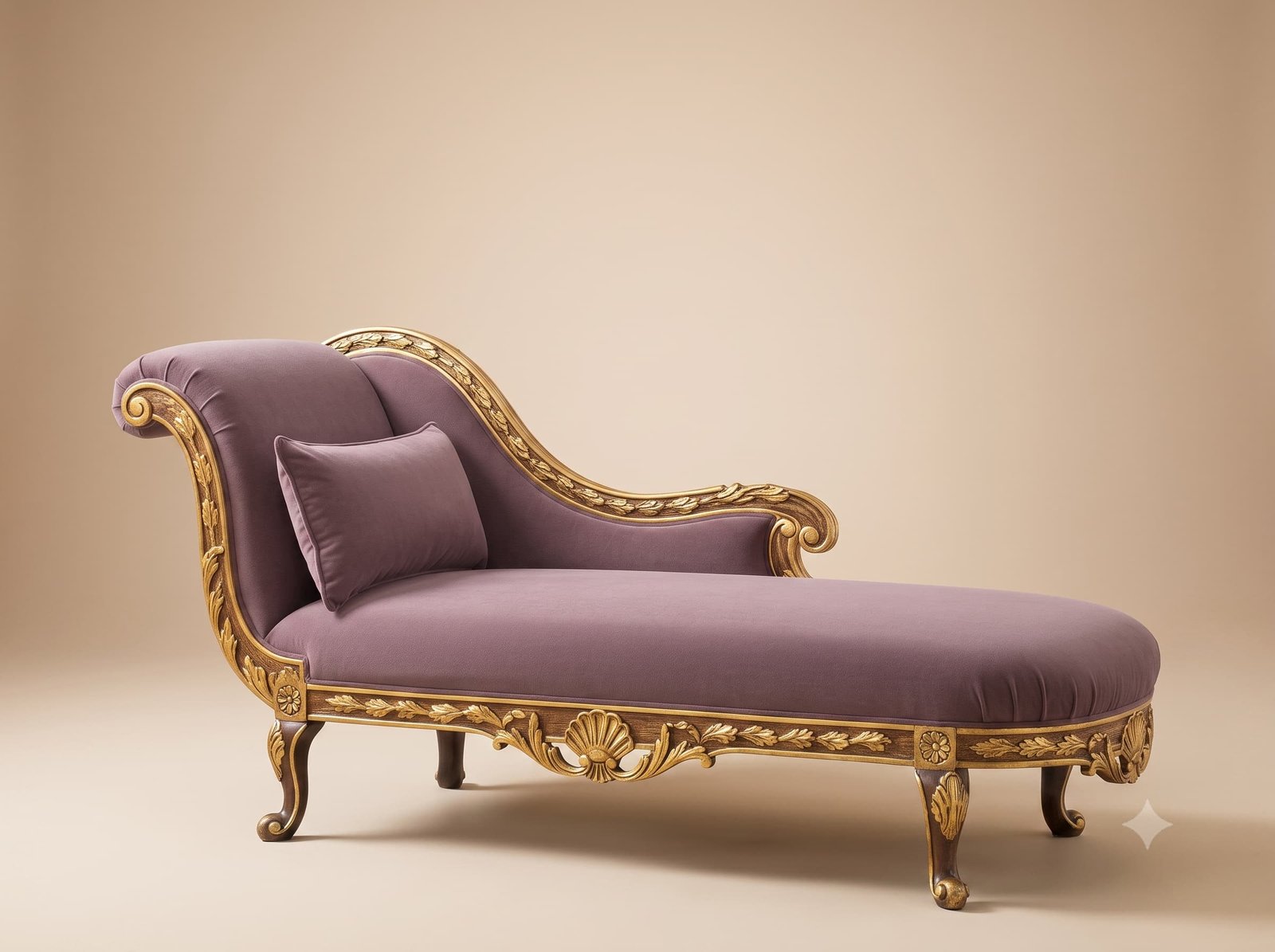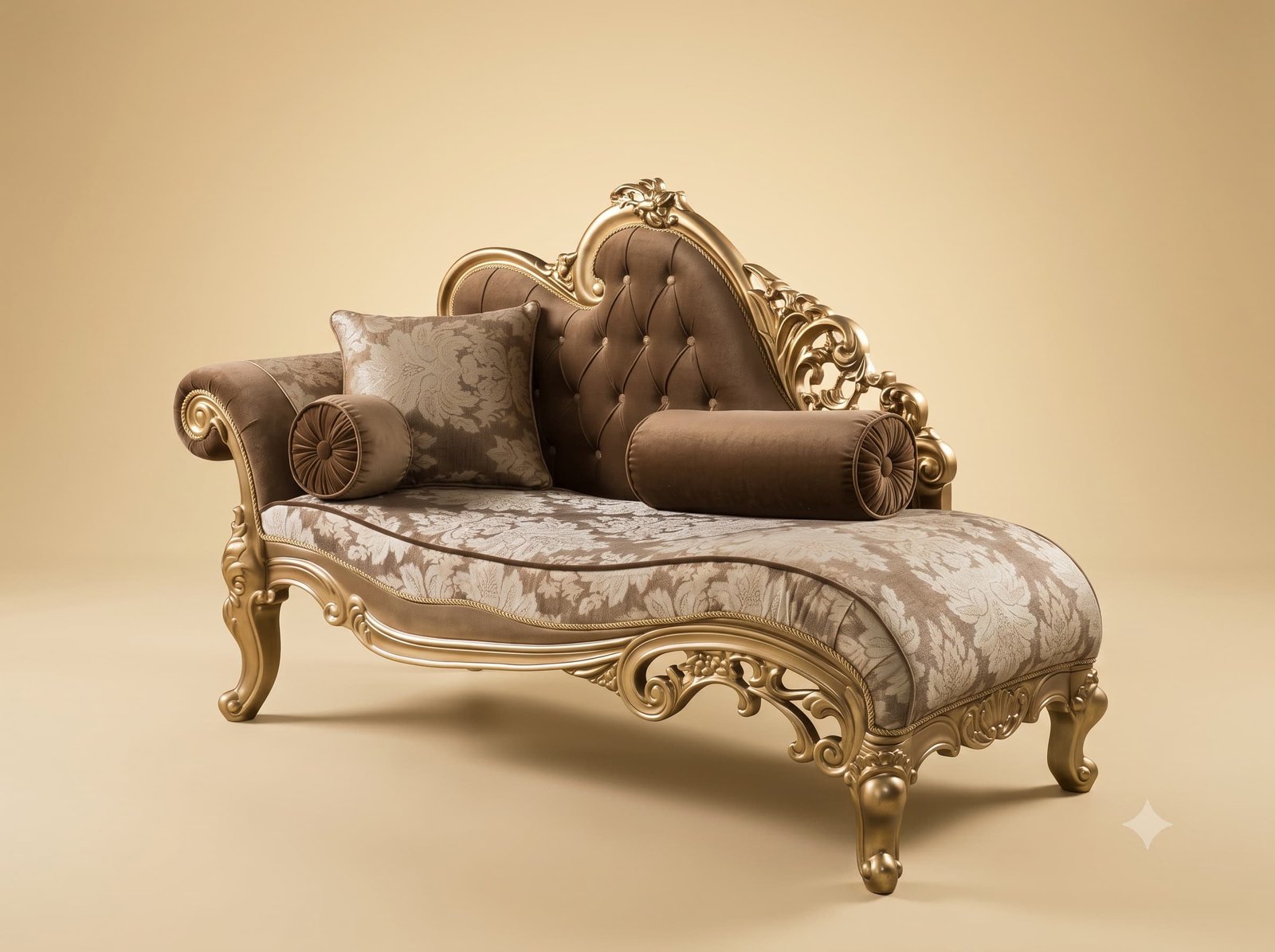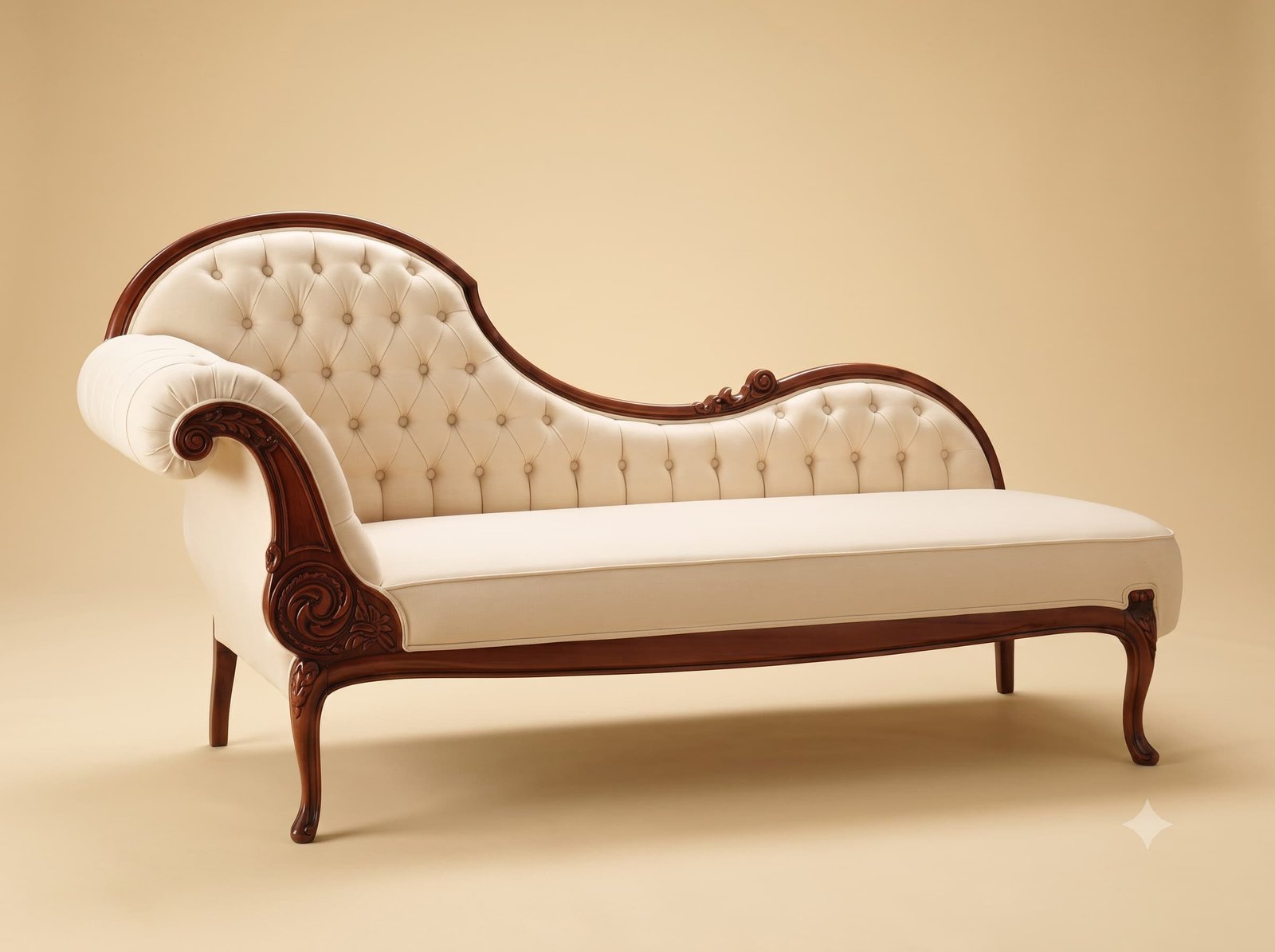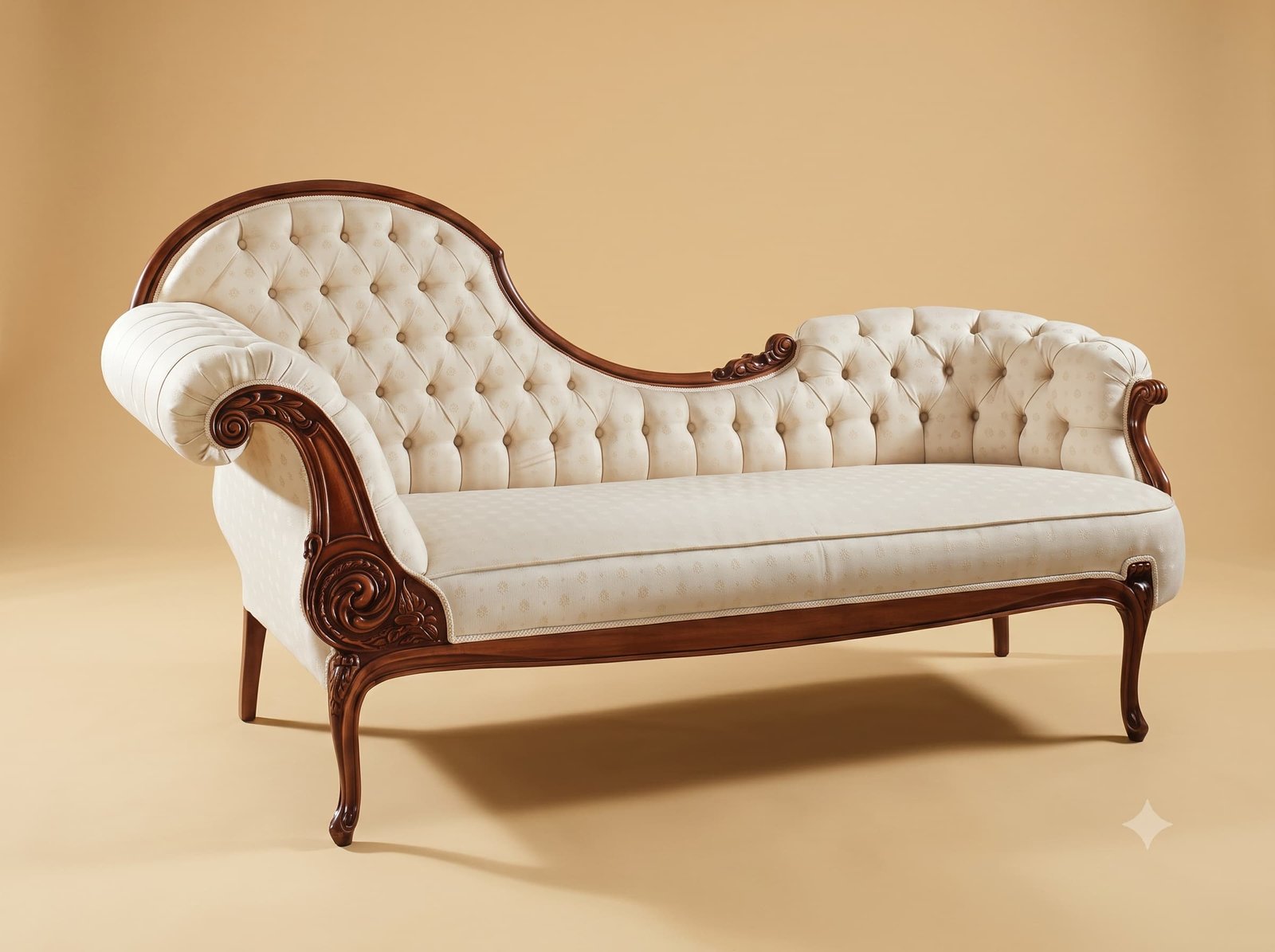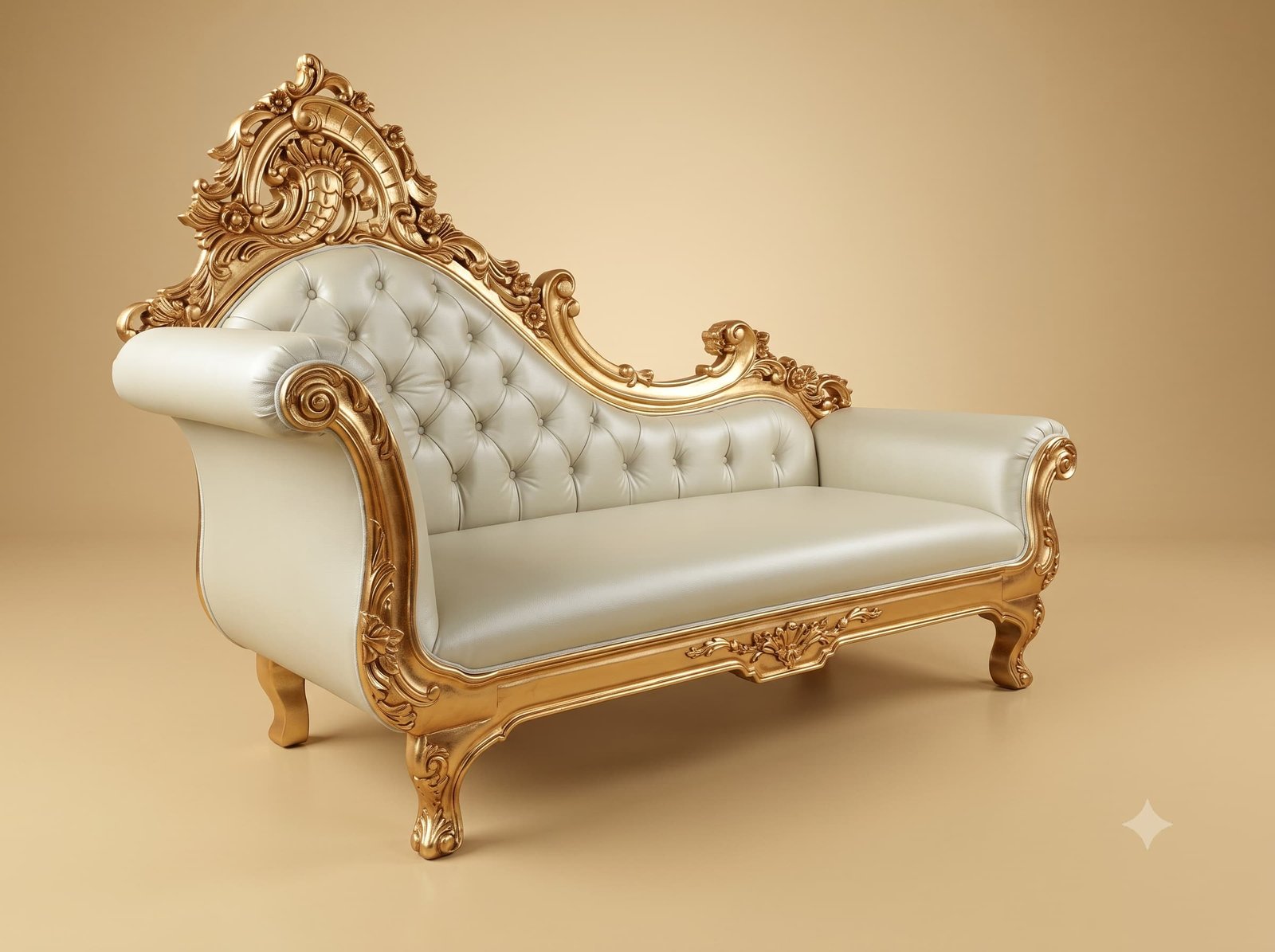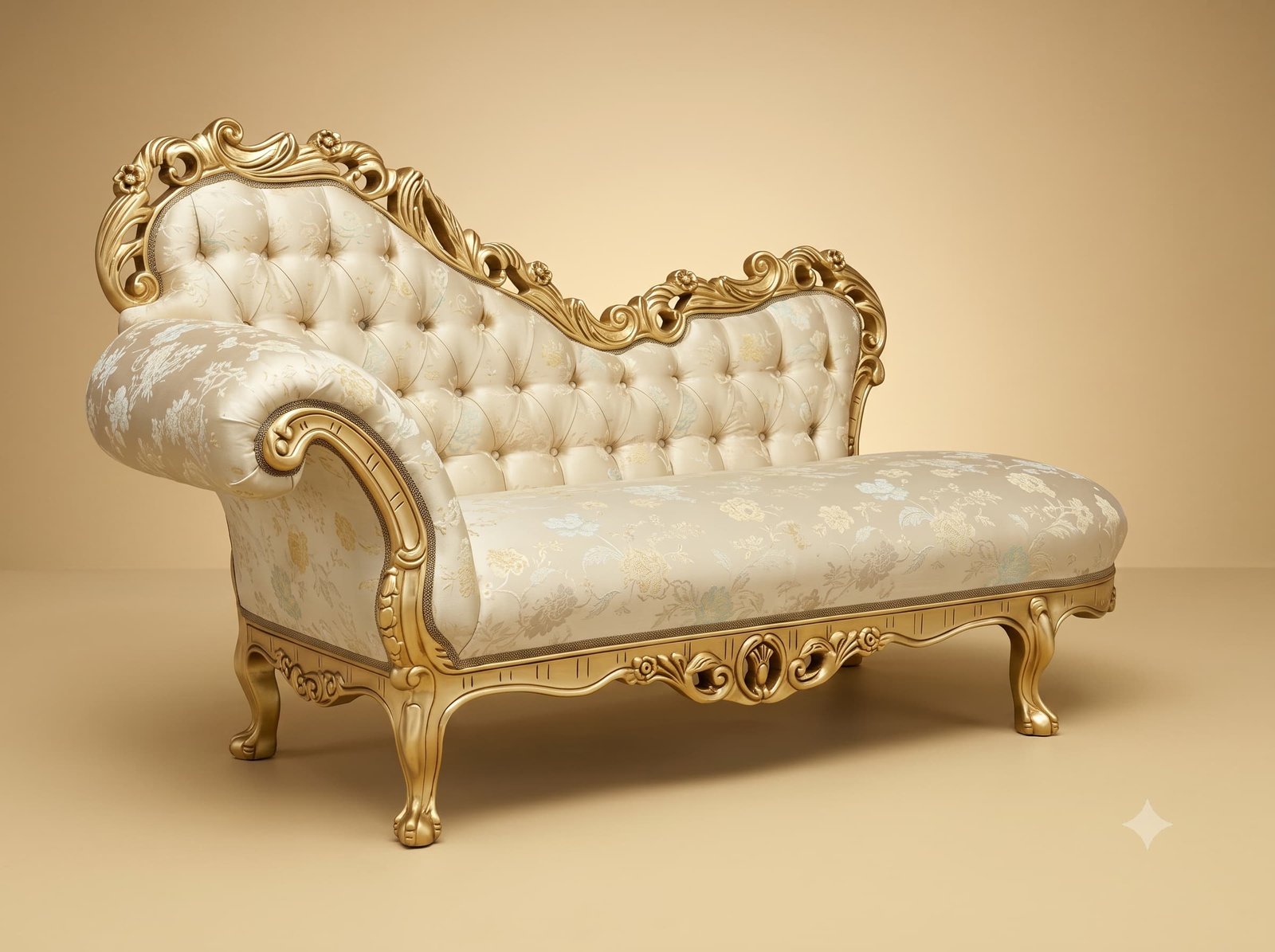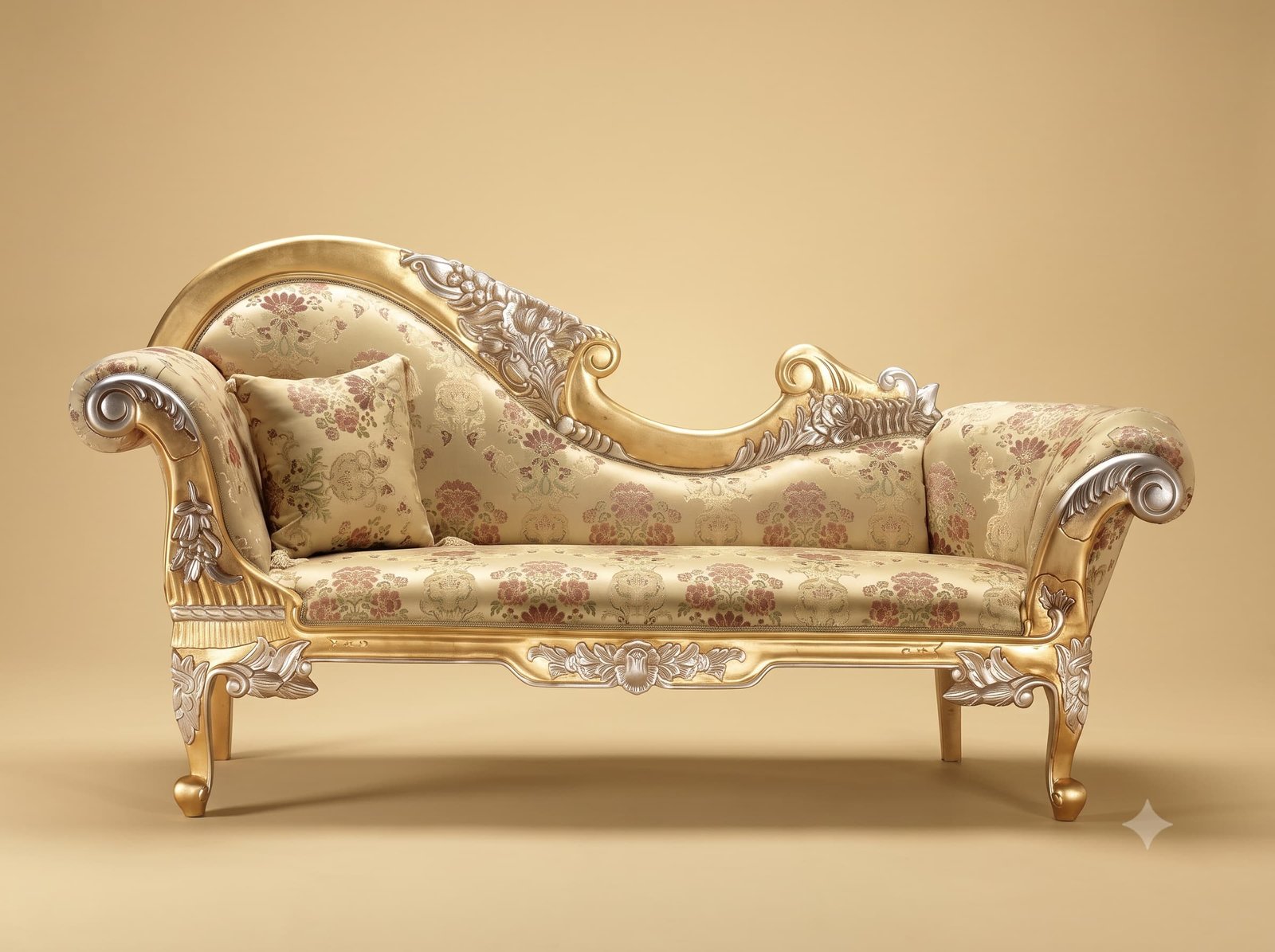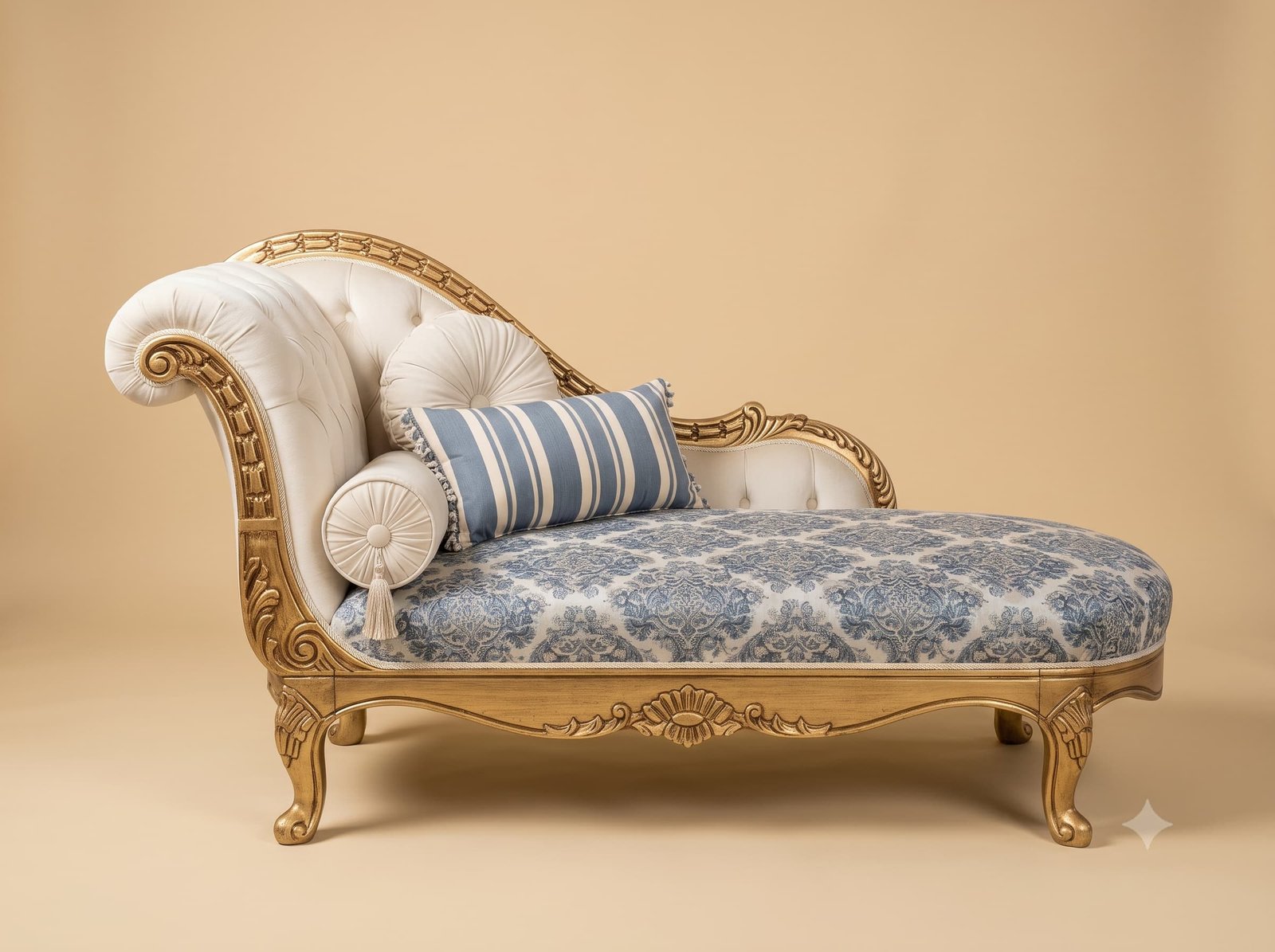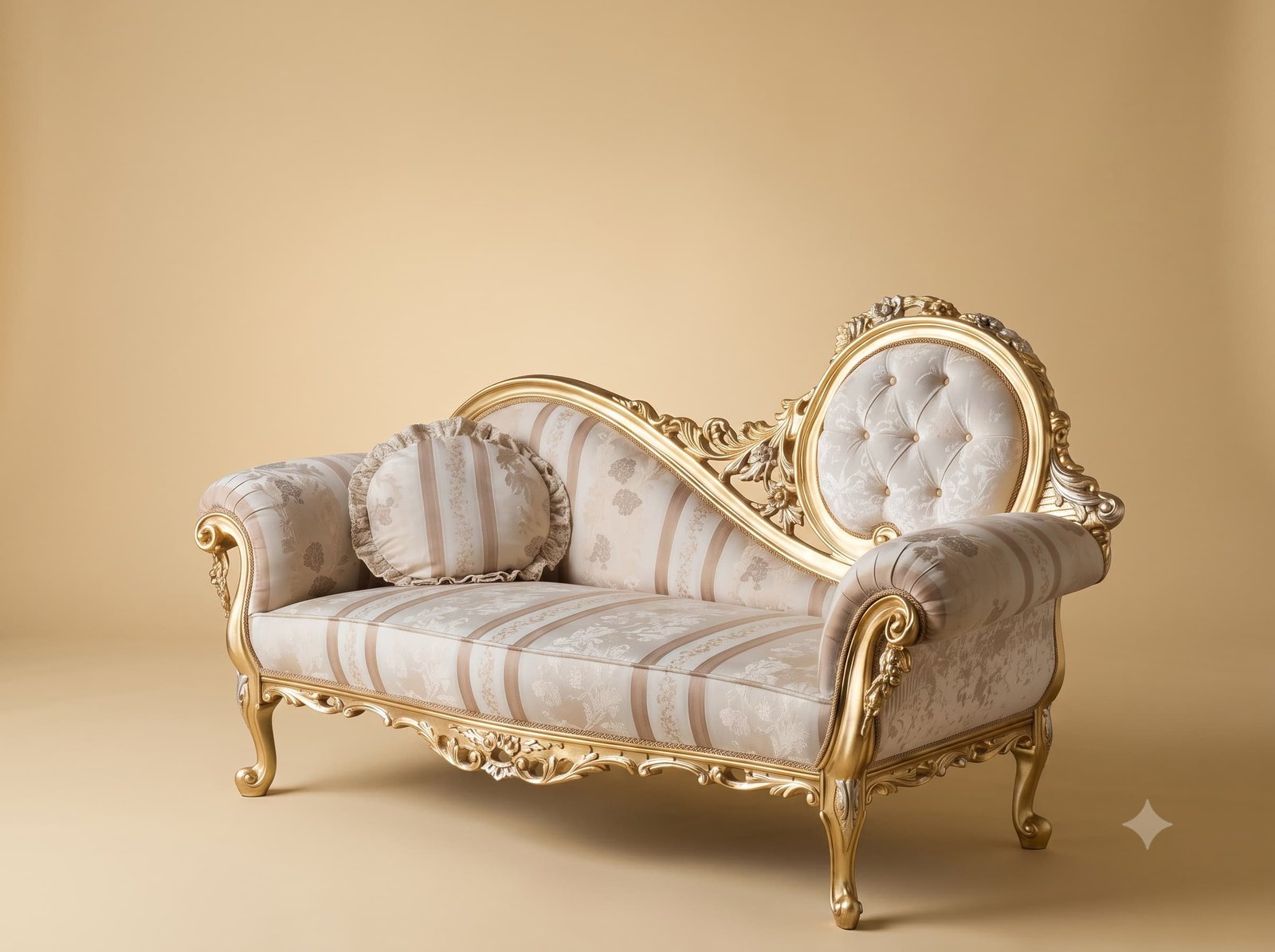
A striped covering has to be aligned to gravity, not to the furniture, and on a diwan those two things disagree.
The back of a diwan falls diagonally - high at one end, low at the other. If the stripes were laid parallel to that falling rail, as the frame invites you to do, every stripe on the back would lean. Standing in the room you would not think the fabric was interesting; you would think the diwan was crooked, because the eye judges vertical against the walls and the floor, not against the piece of furniture in front of it.
So the stripes are set out plumb. A vertical line is struck on the back before covering begins, and every stripe is aligned to it regardless of what the rail above is doing.
The seat is then aligned to the back, so that the stripes appear to continue down from one to the other across the joint rather than restarting at a slightly different spacing - which is why the seat panel is cut after the back is finished, not at the same time.
The oval panel is the exception, kept plain so it does not have to resolve with anything.
 Ask Price On WhatsApp