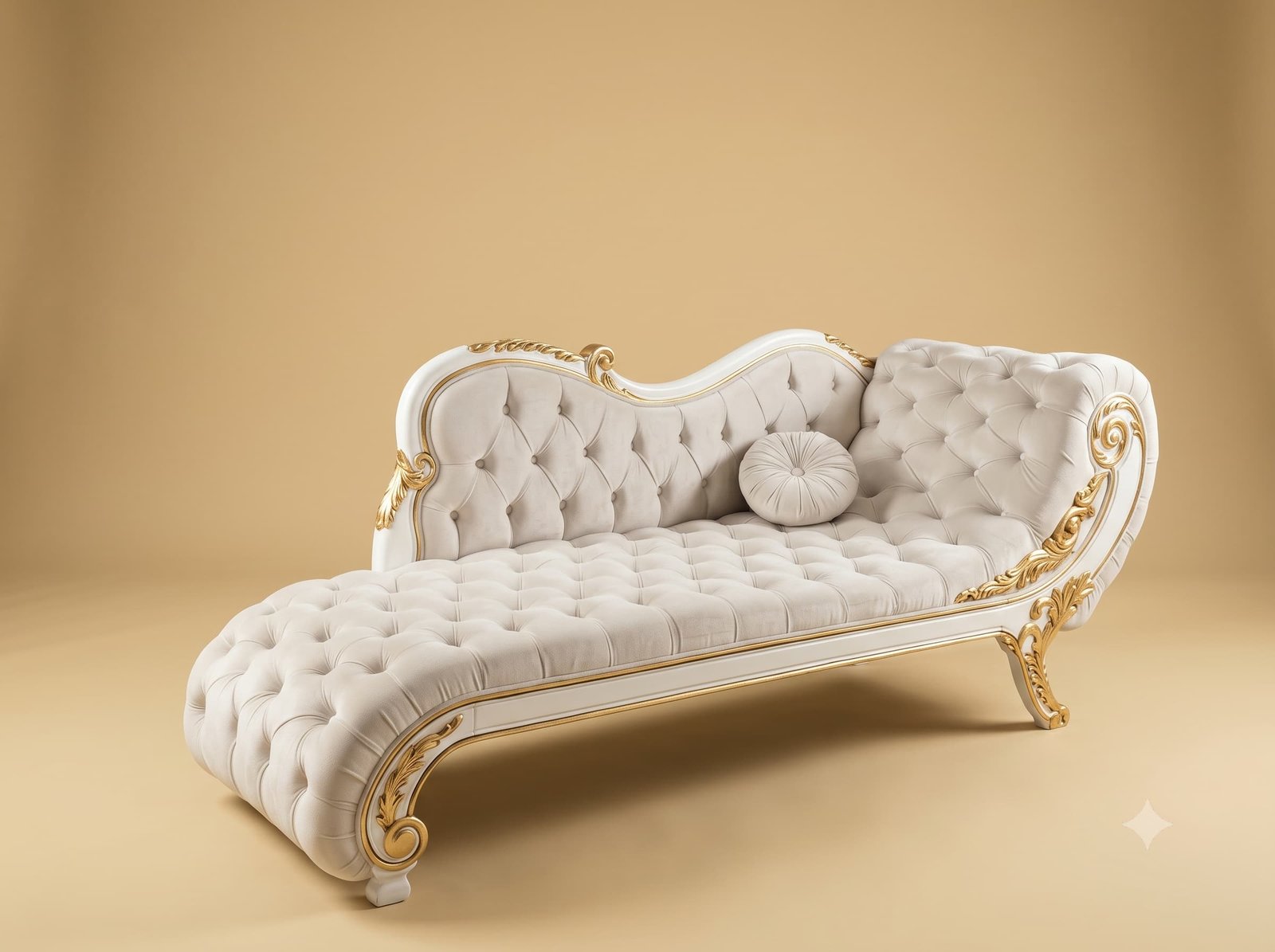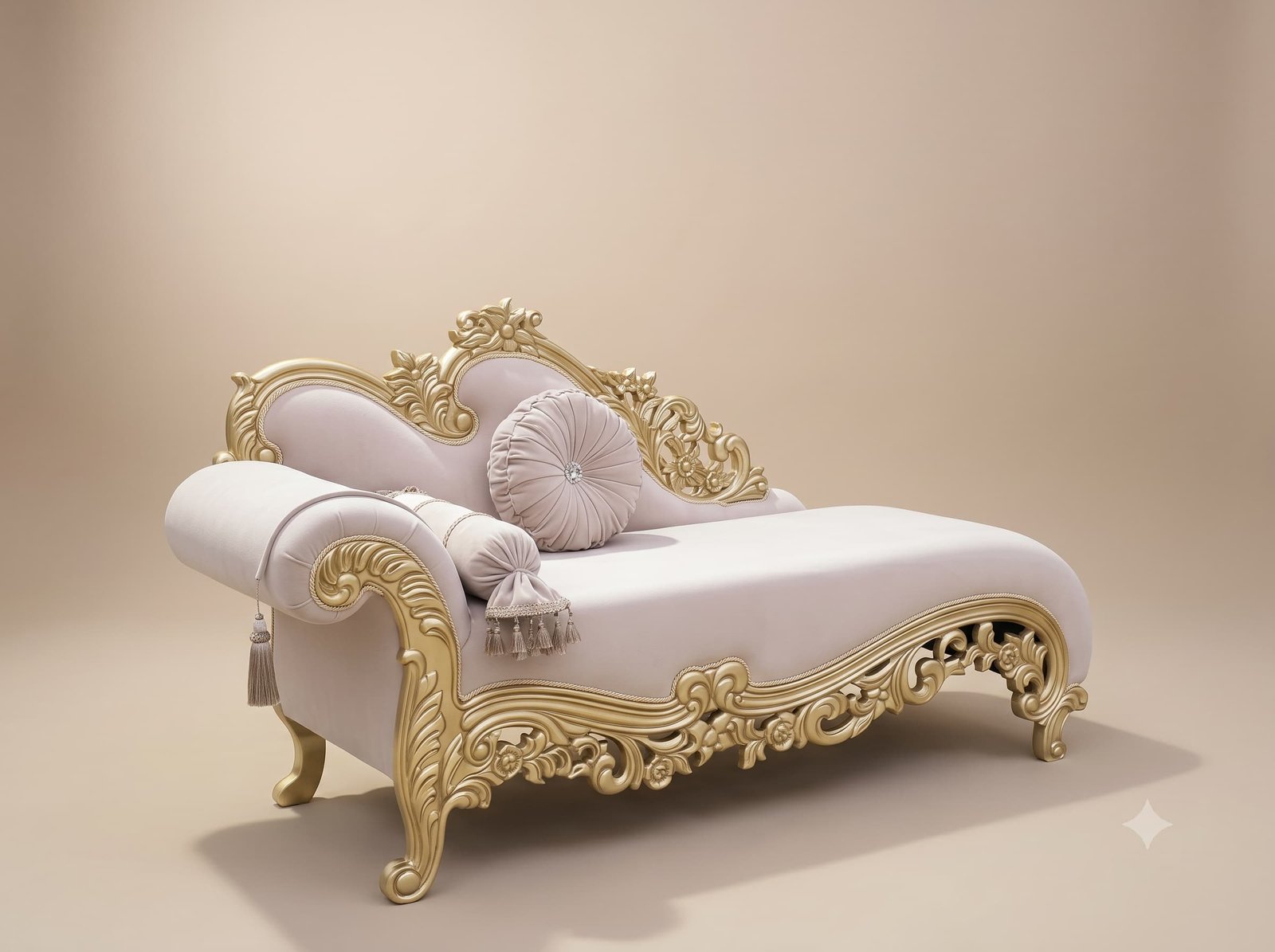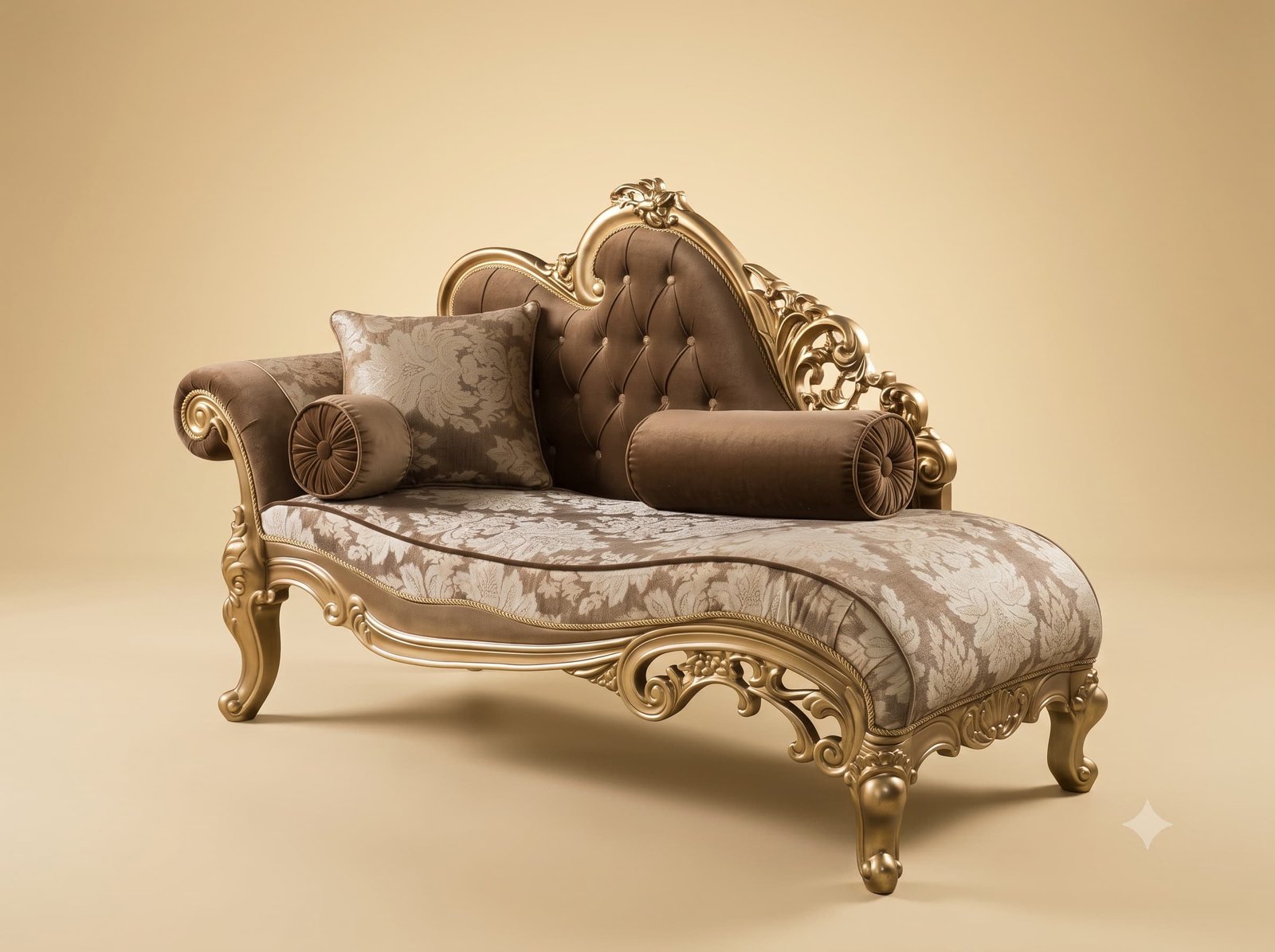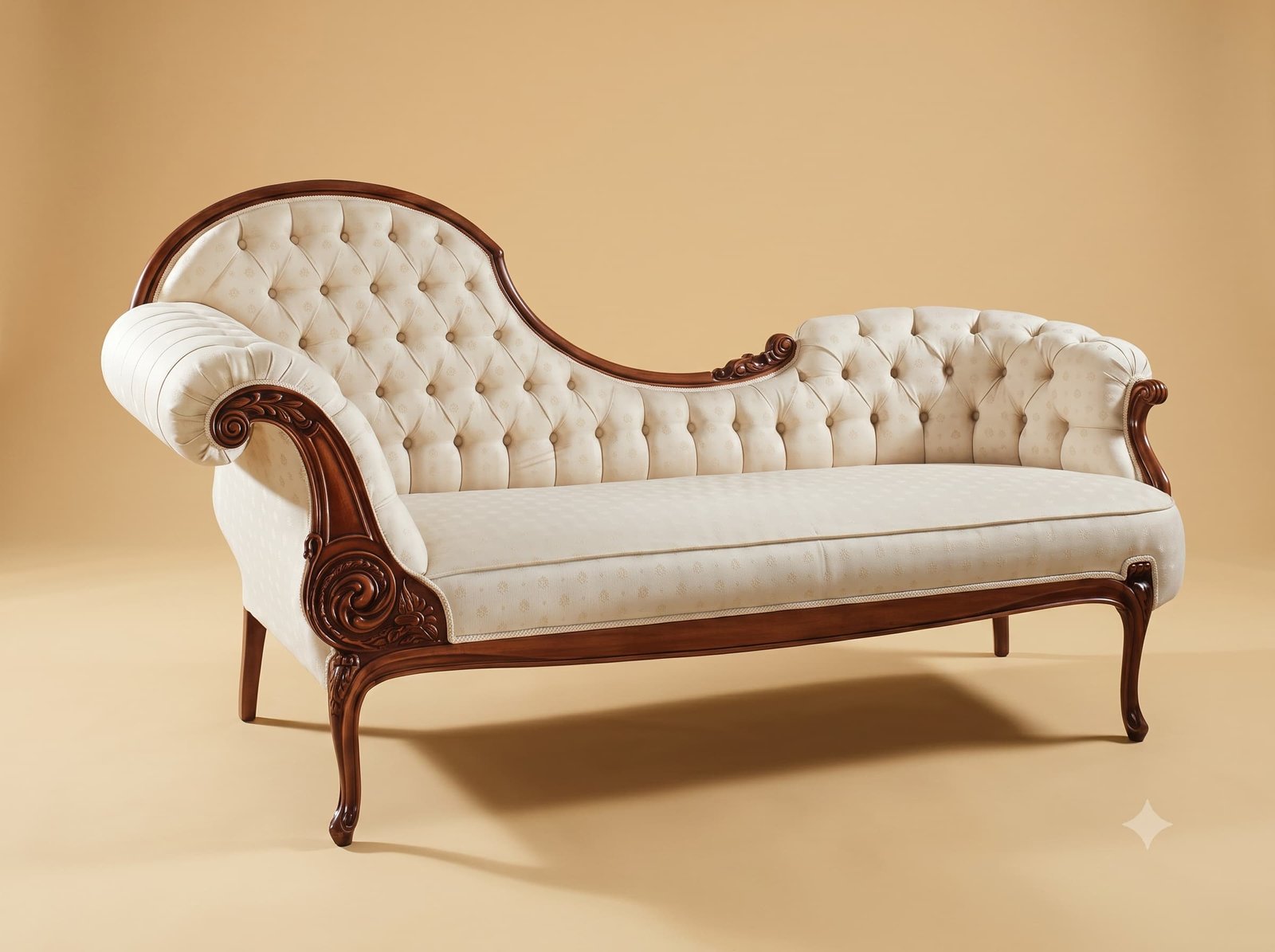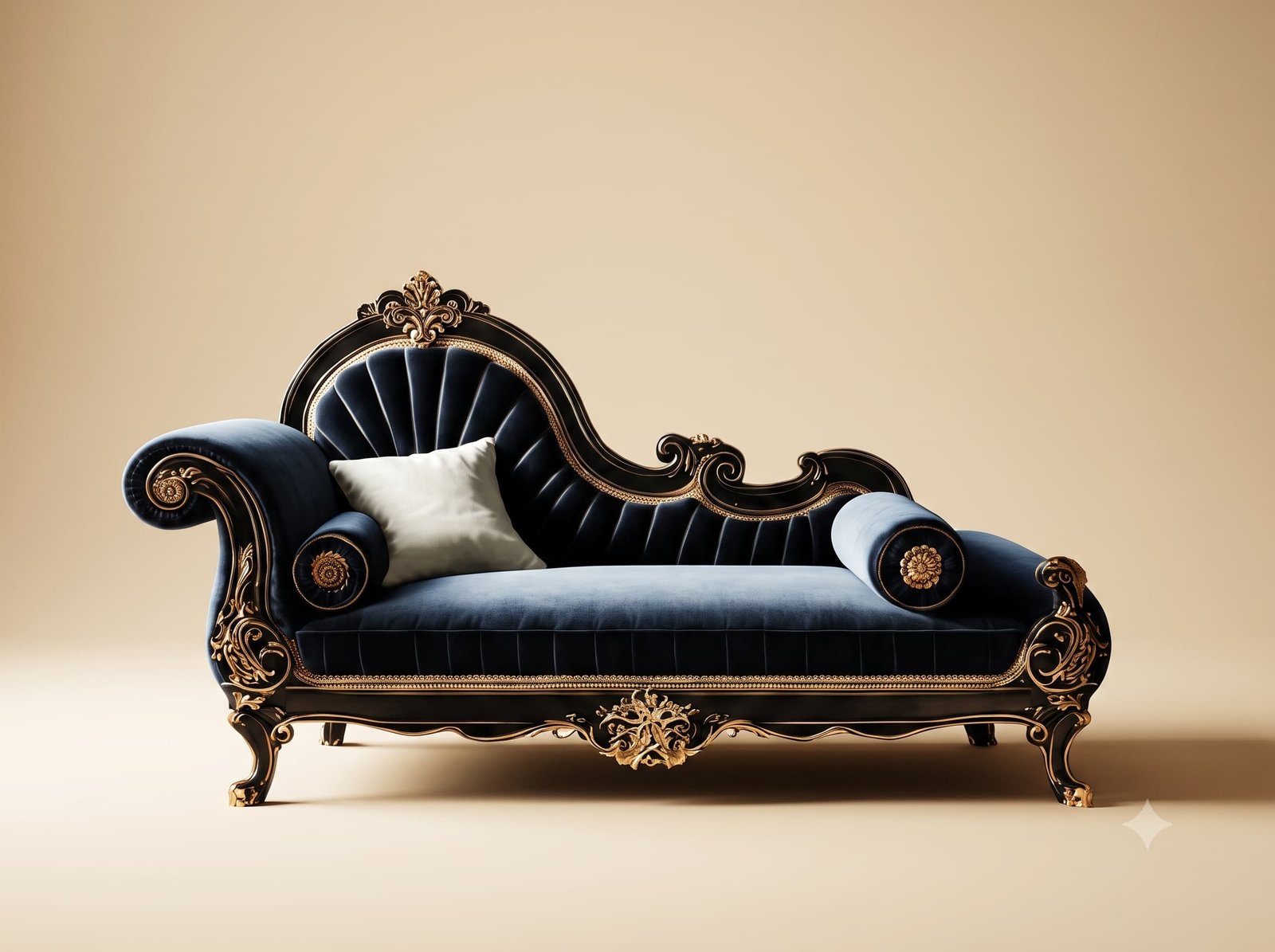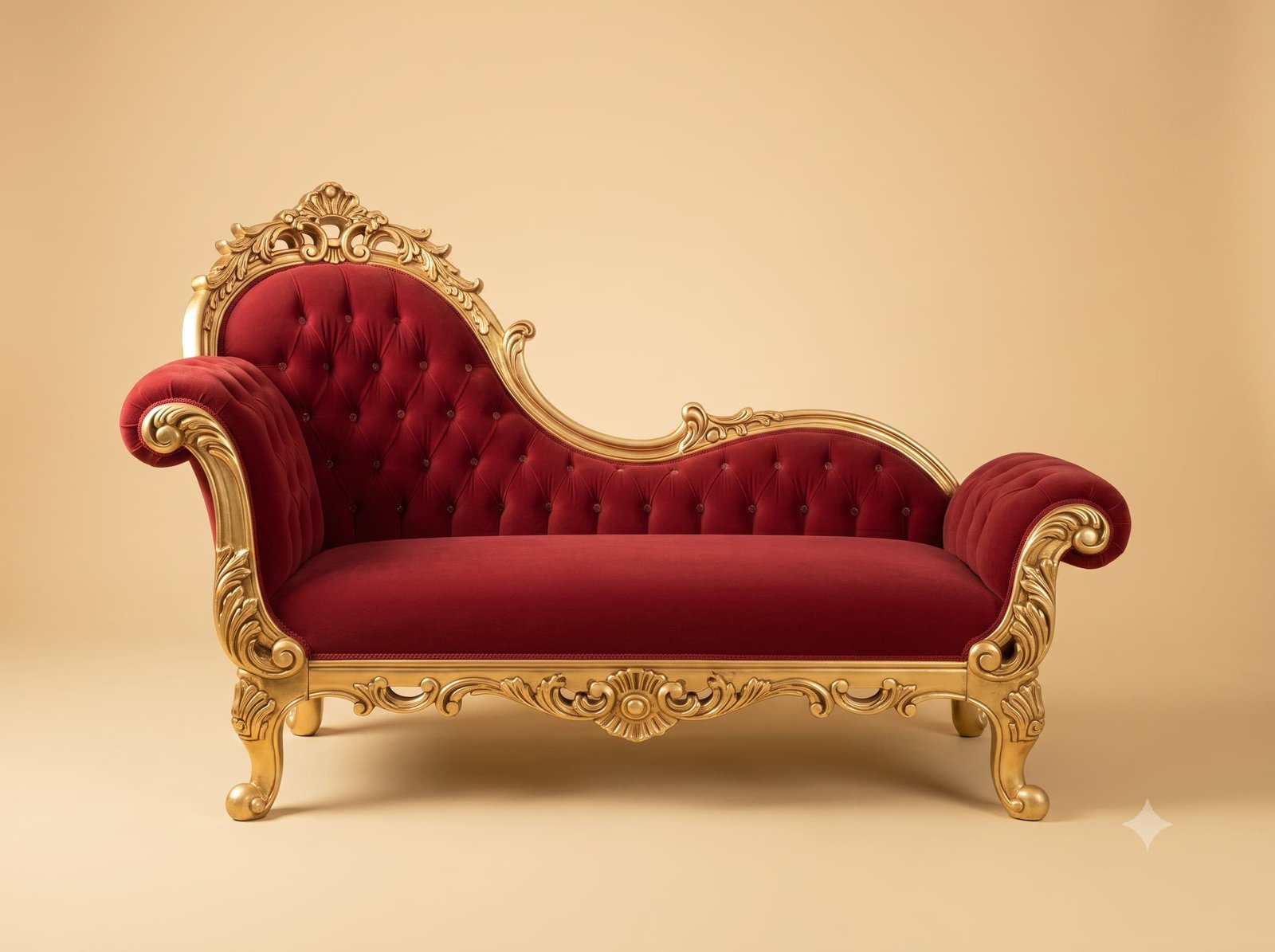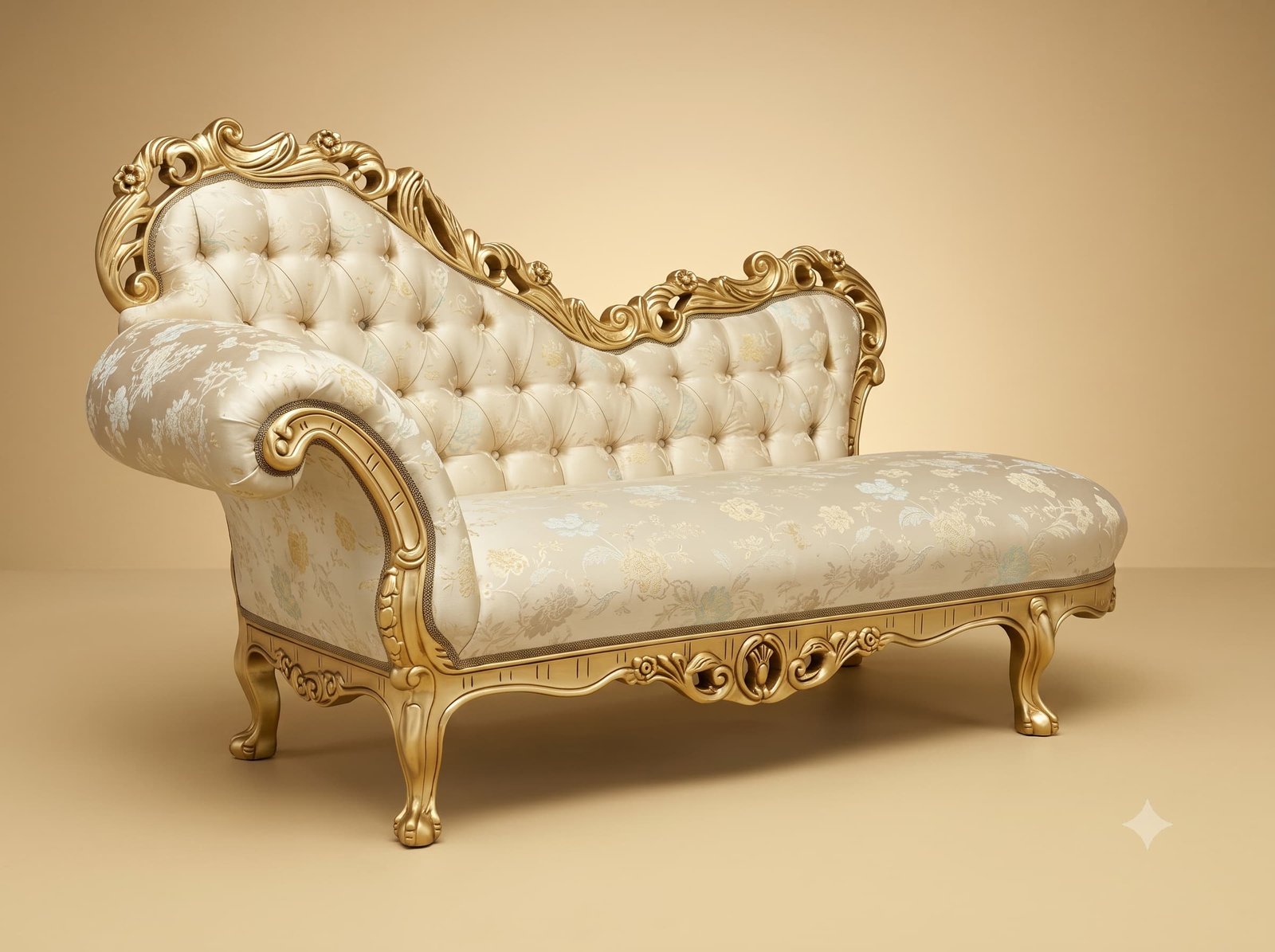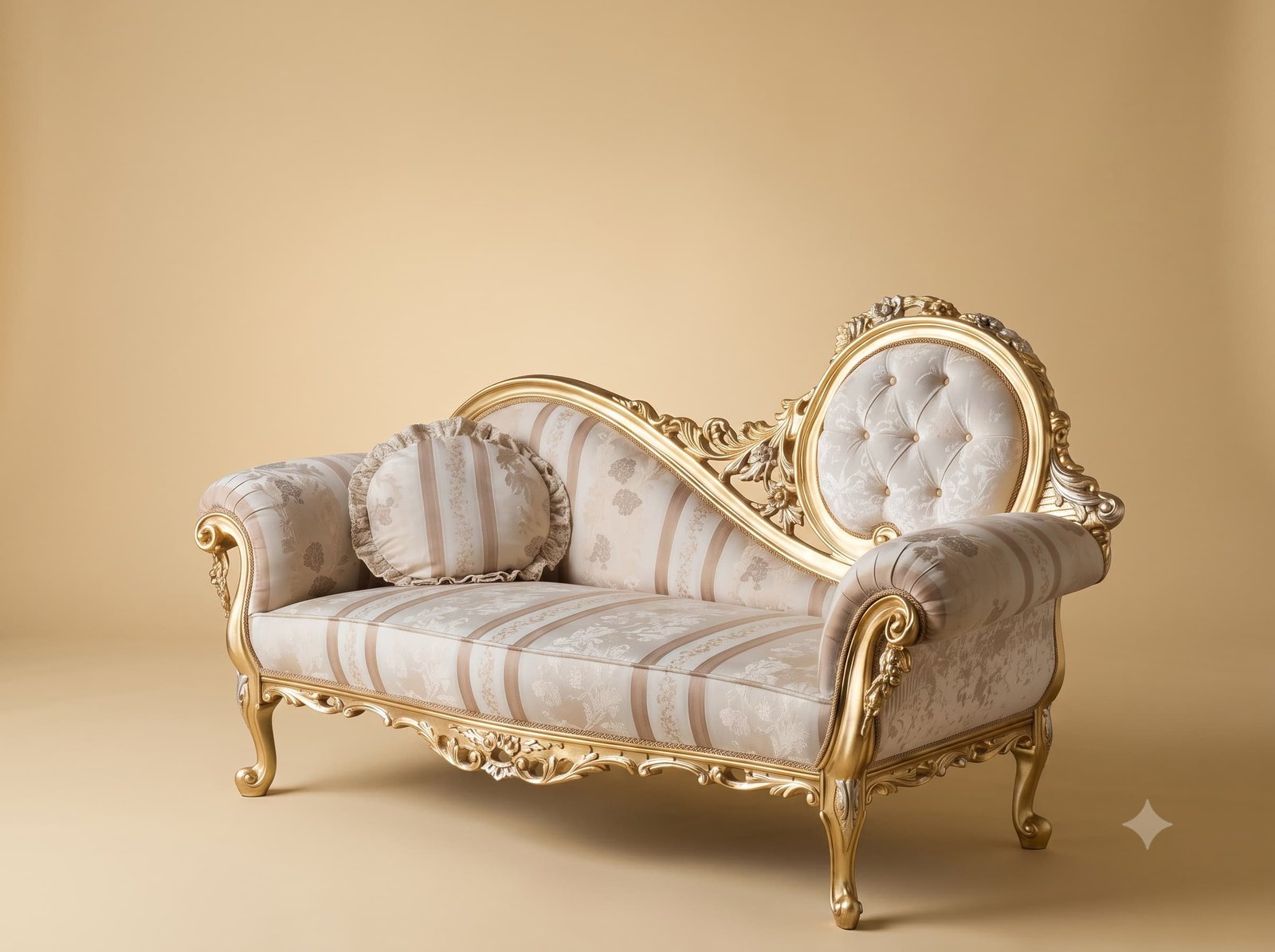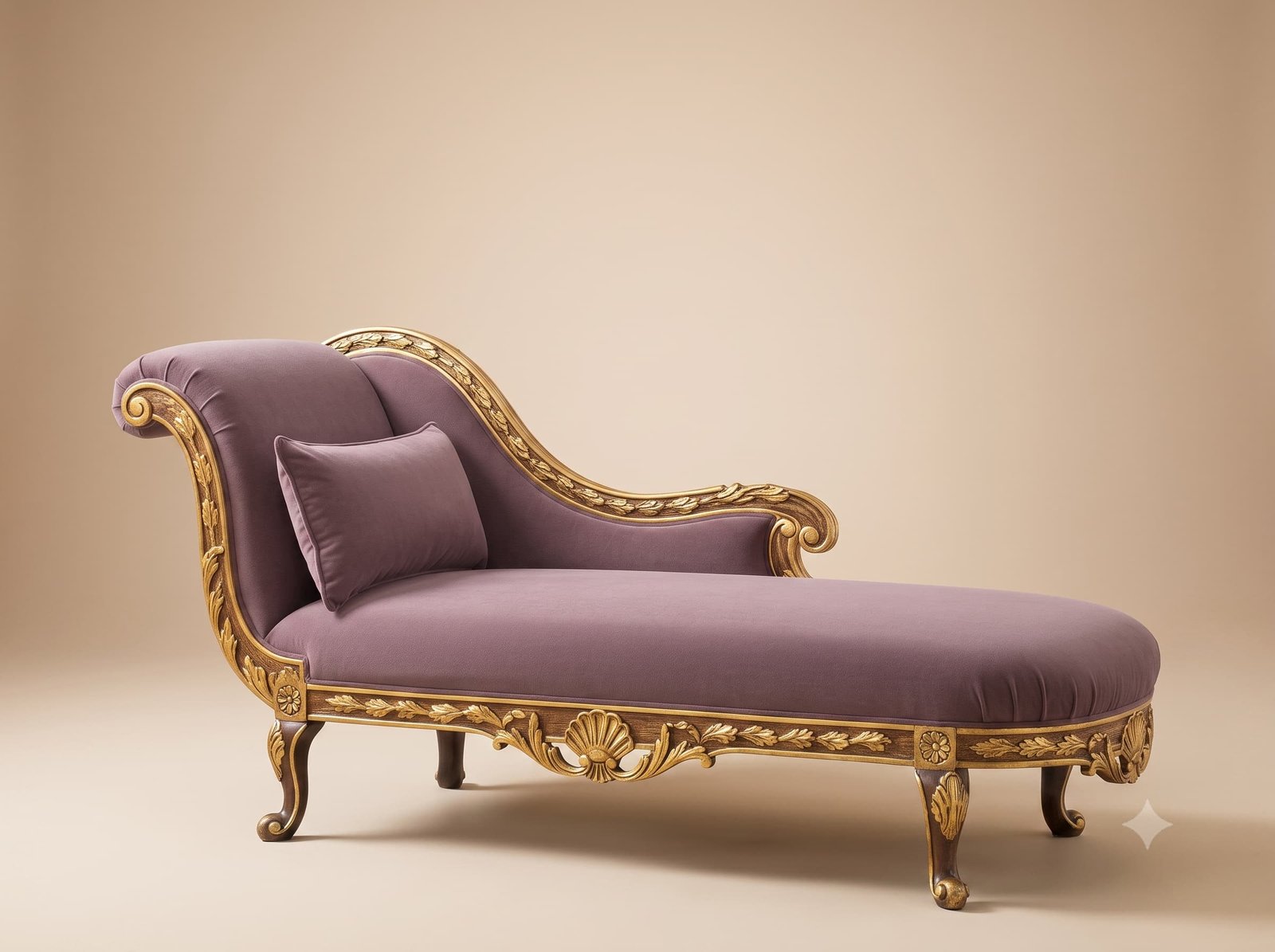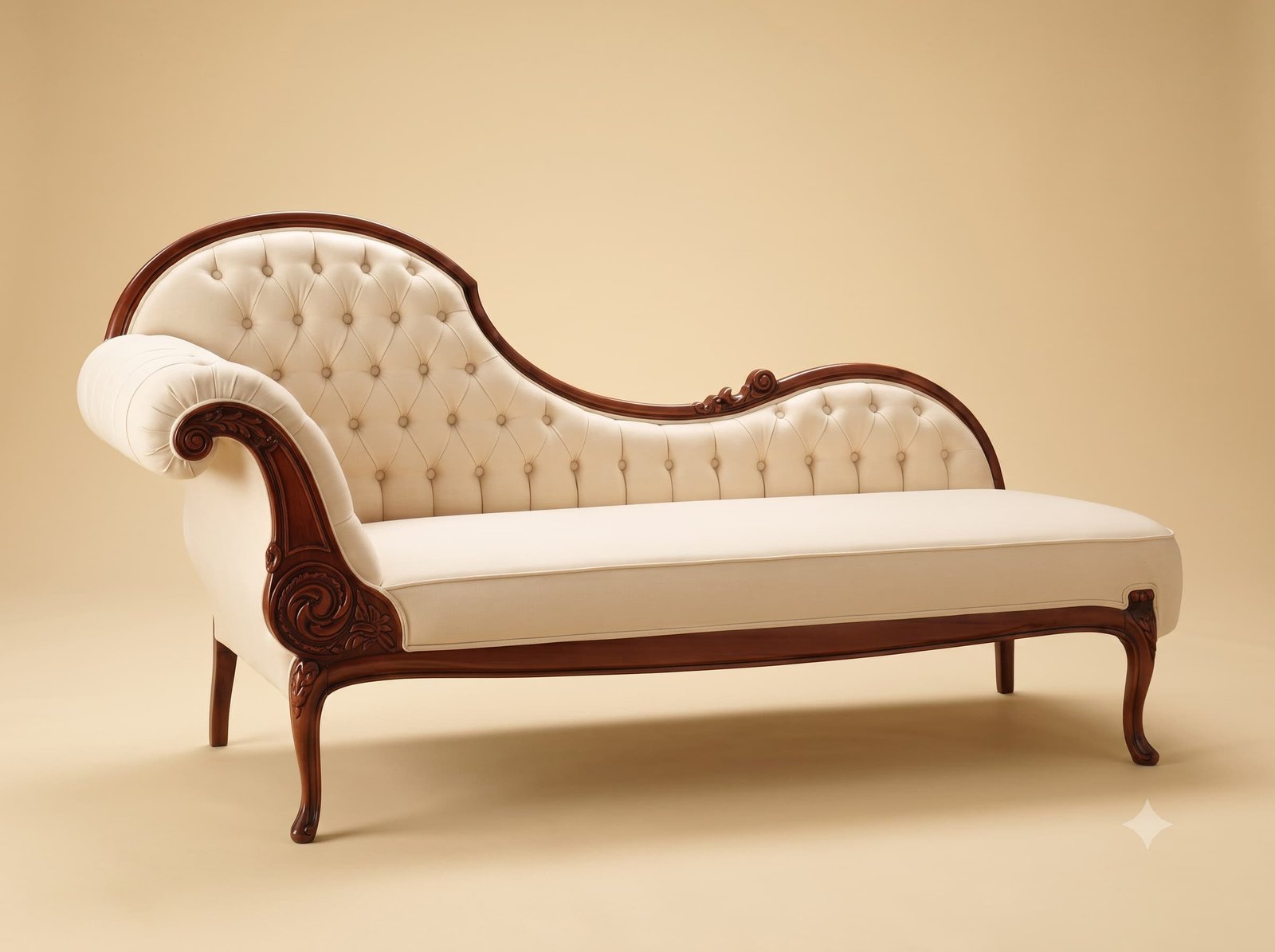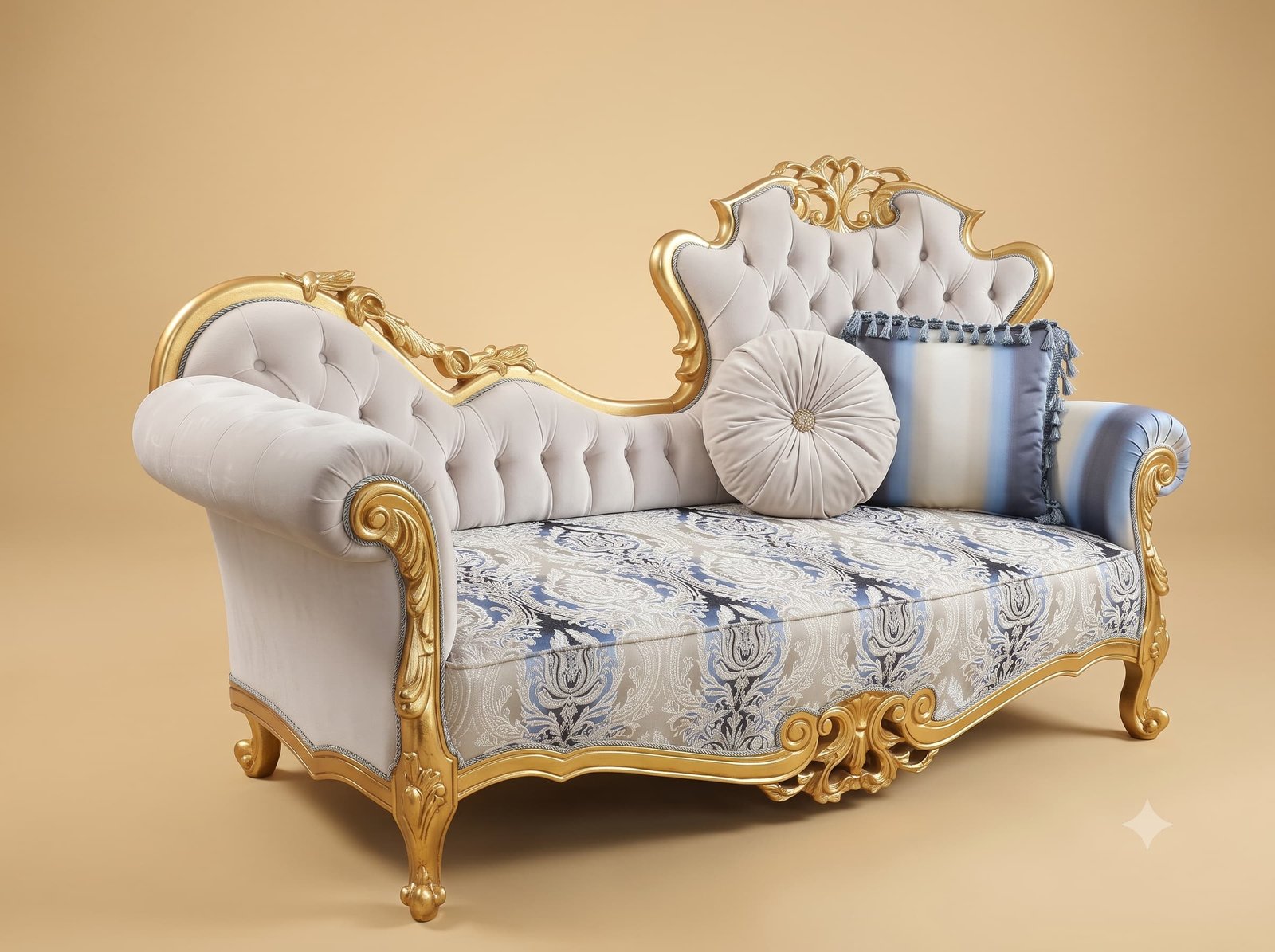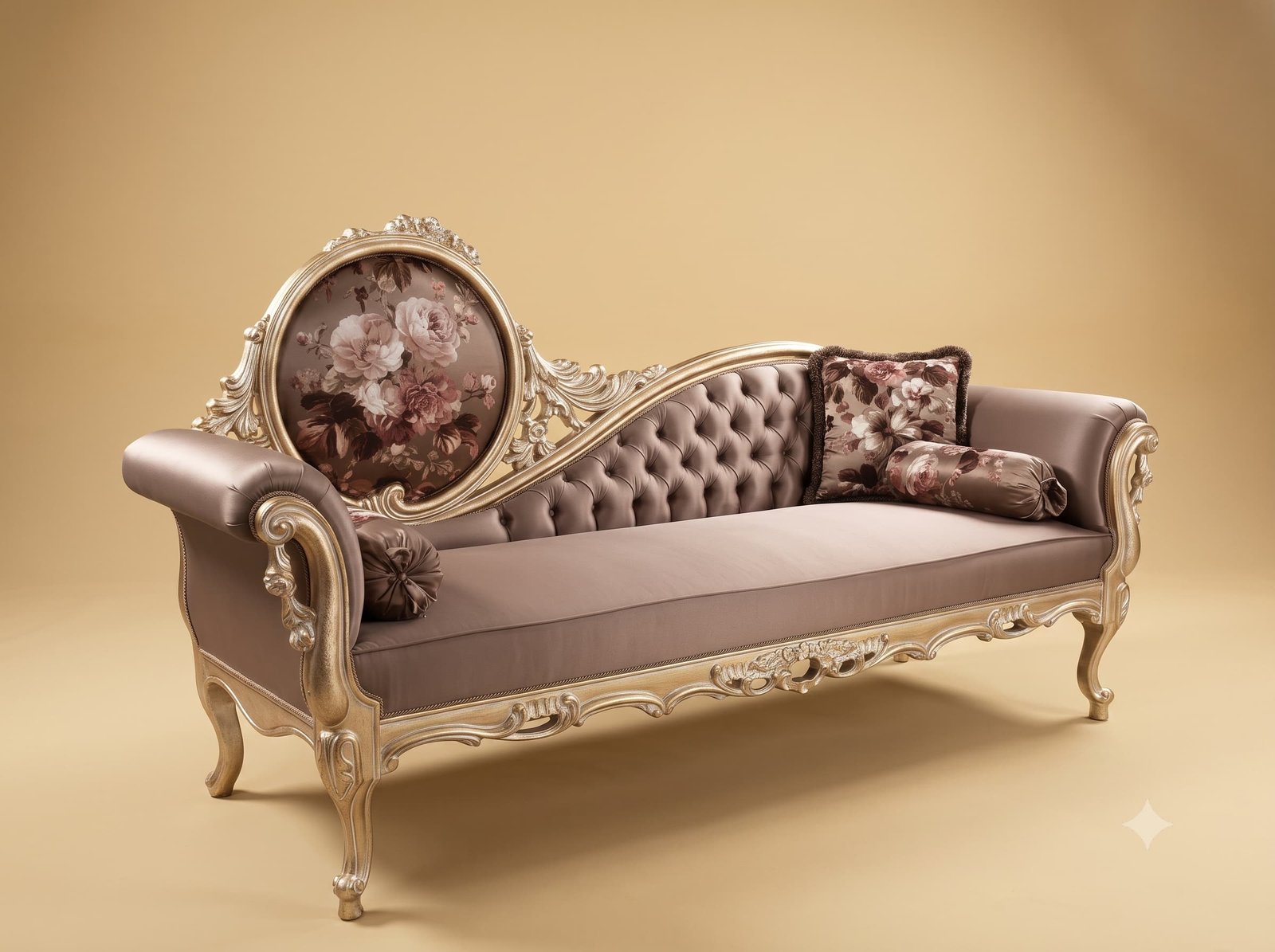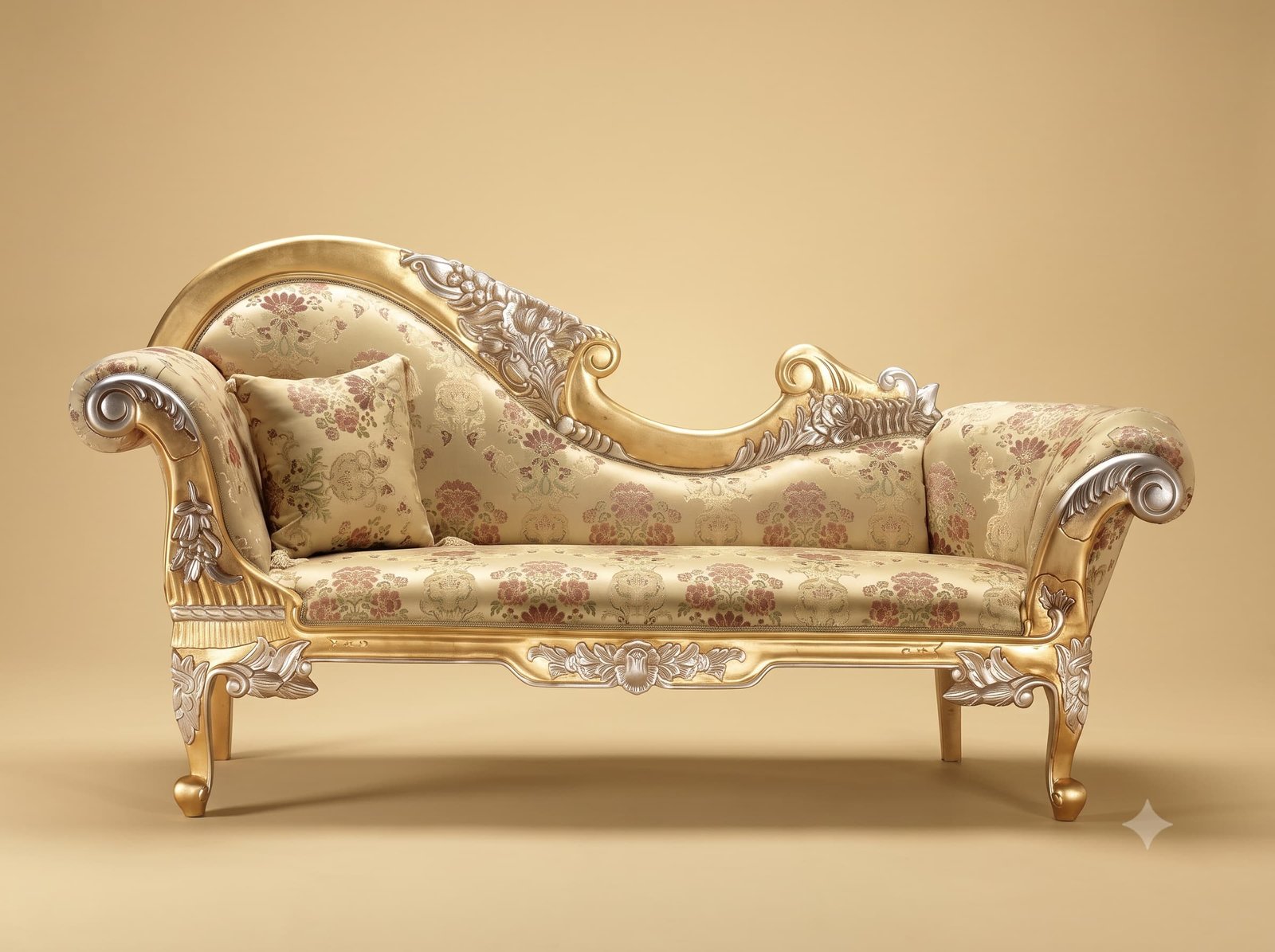
The outside back of this diwan - the face nobody is supposed to look at - is covered in the same brocade as the front, and matched to it.
On most upholstered furniture it is not. The outside back is treated as hidden: it gets a plain lining cloth, chosen for cost rather than appearance, because the piece is assumed to live against a wall.
Diwans are the pieces least likely to do that. They get placed across a corner, at the foot of a bed, floating in the middle of a large drawing room, angled towards a window. In every one of those positions the outside back is in full view of half the room, and a lining cloth announces itself immediately.
So it is covered in the same brocade, and it is pattern-matched - the repeat is positioned so the motifs on the outside line up with the motifs on the inside back, as though the cloth ran straight through the frame.
It uses more of your fabric, and it takes an extra fitting. It also means you can put the diwan wherever the room actually wants it.
 Ask Price On WhatsApp