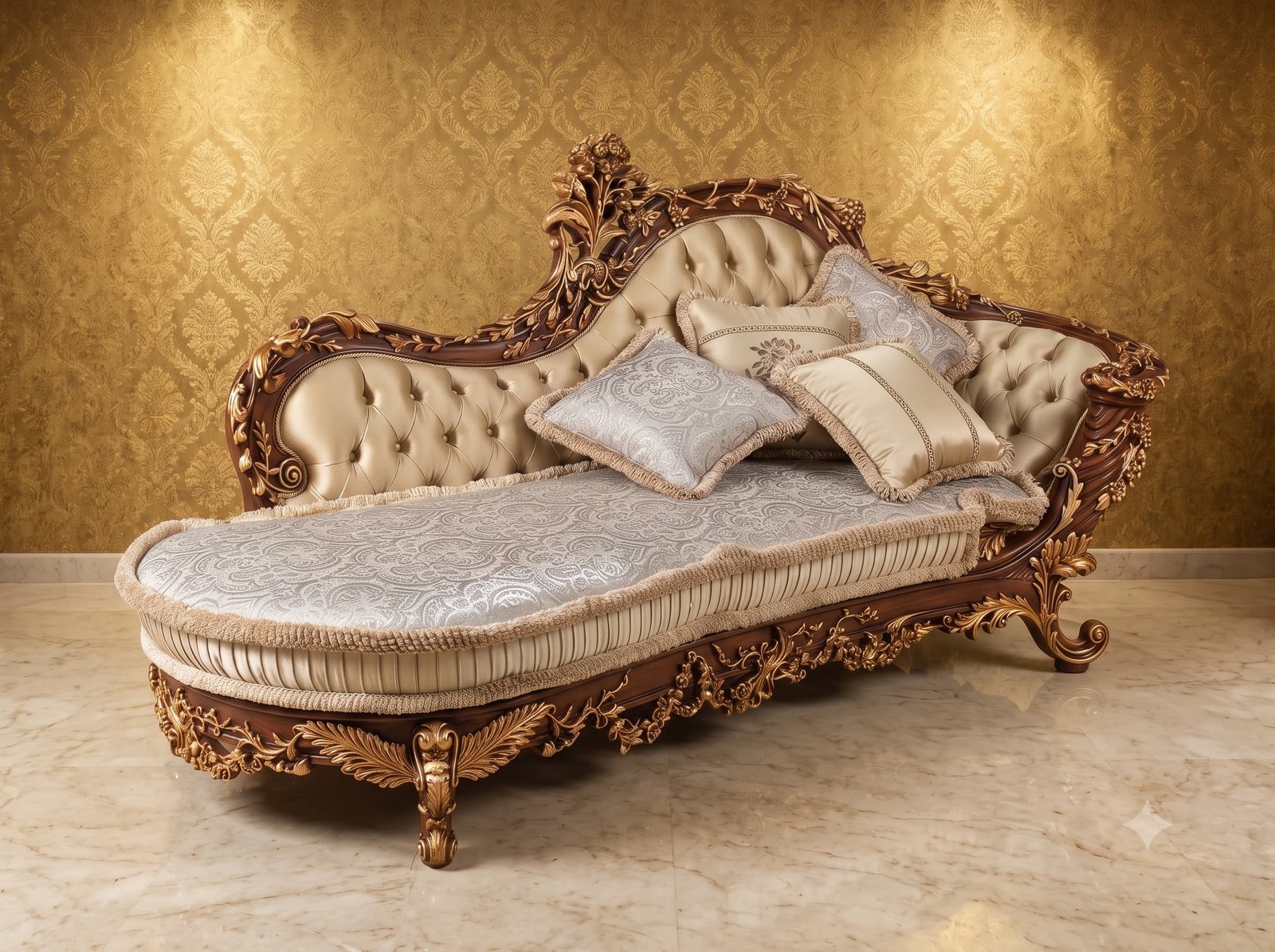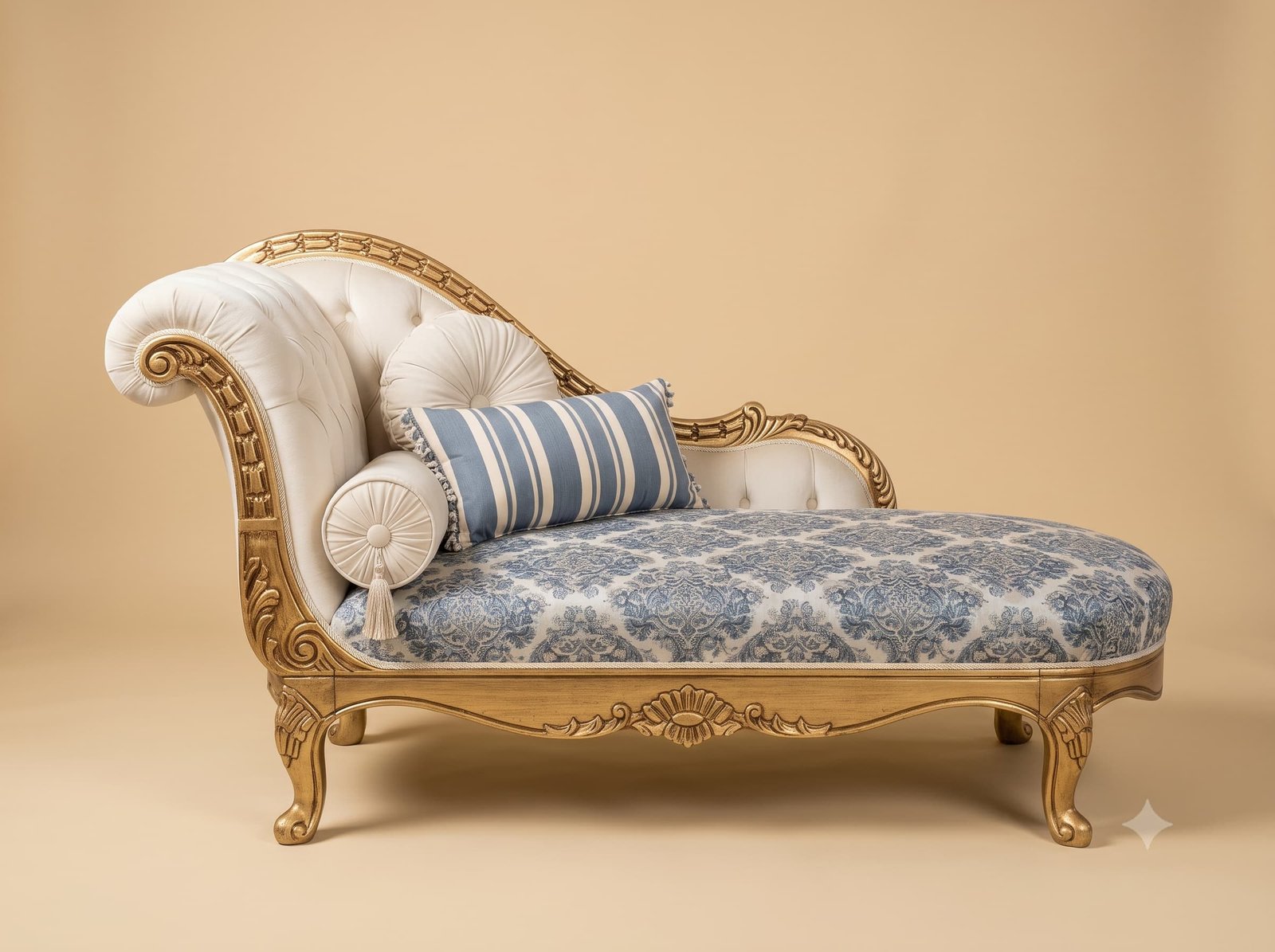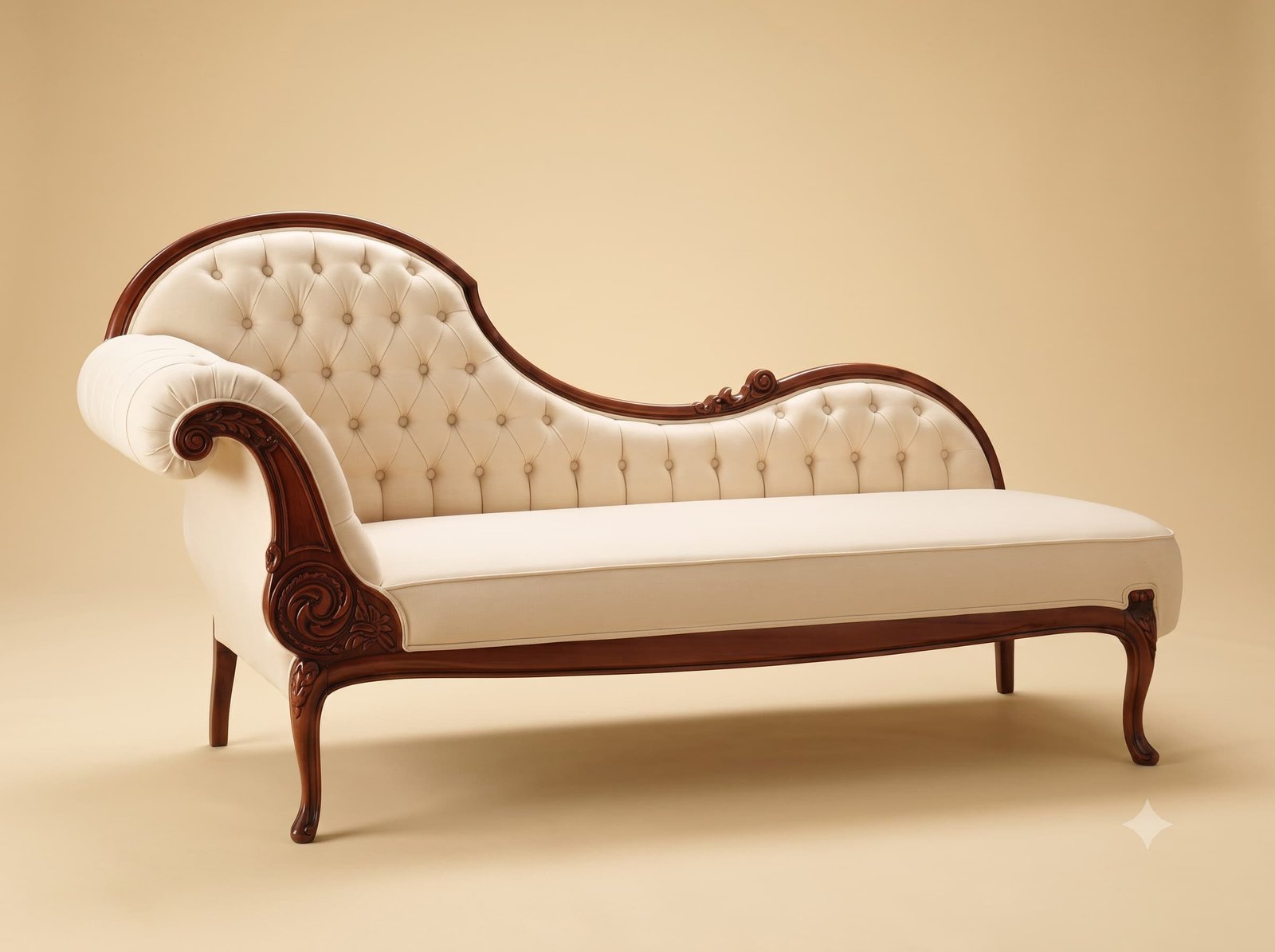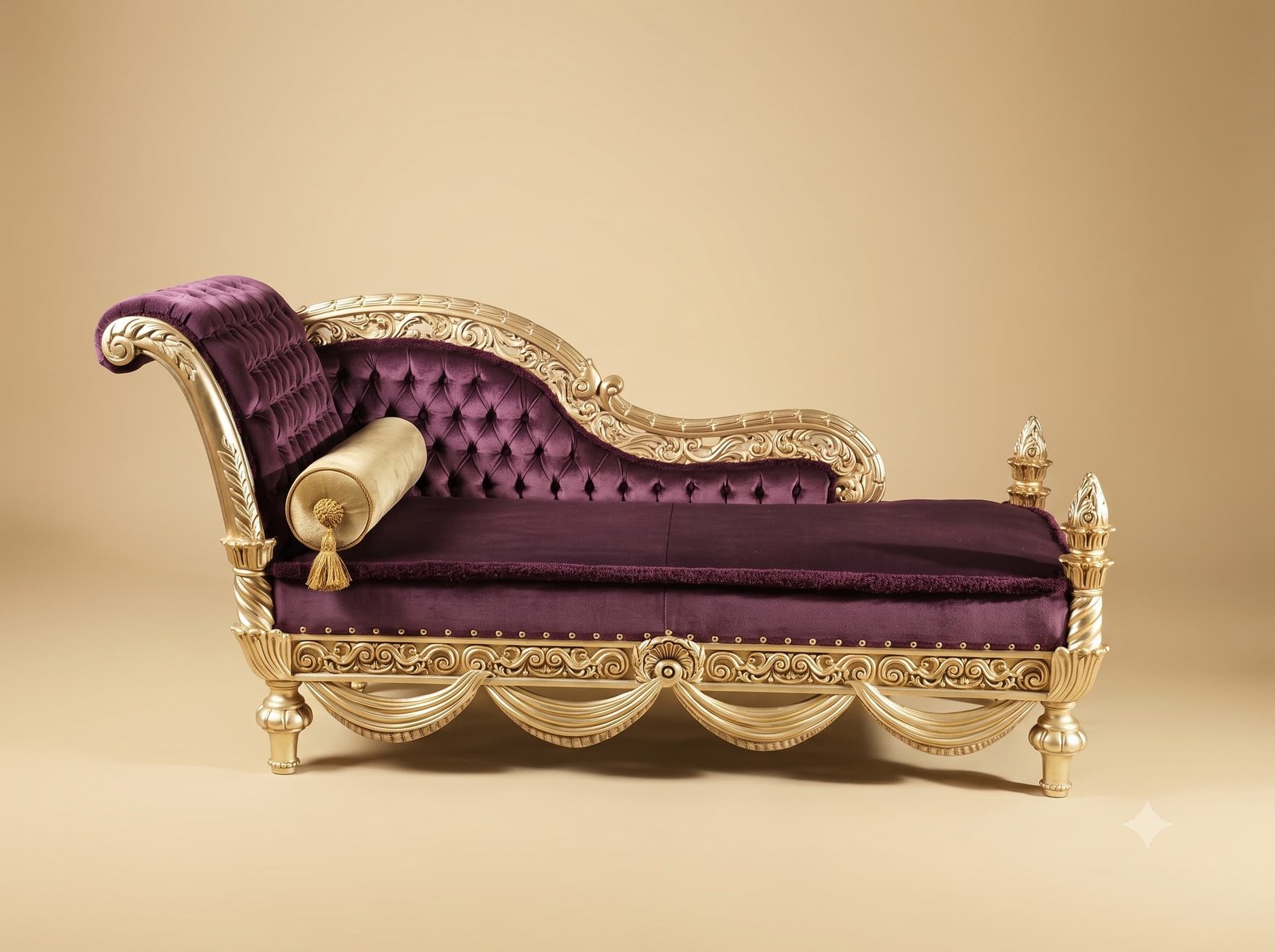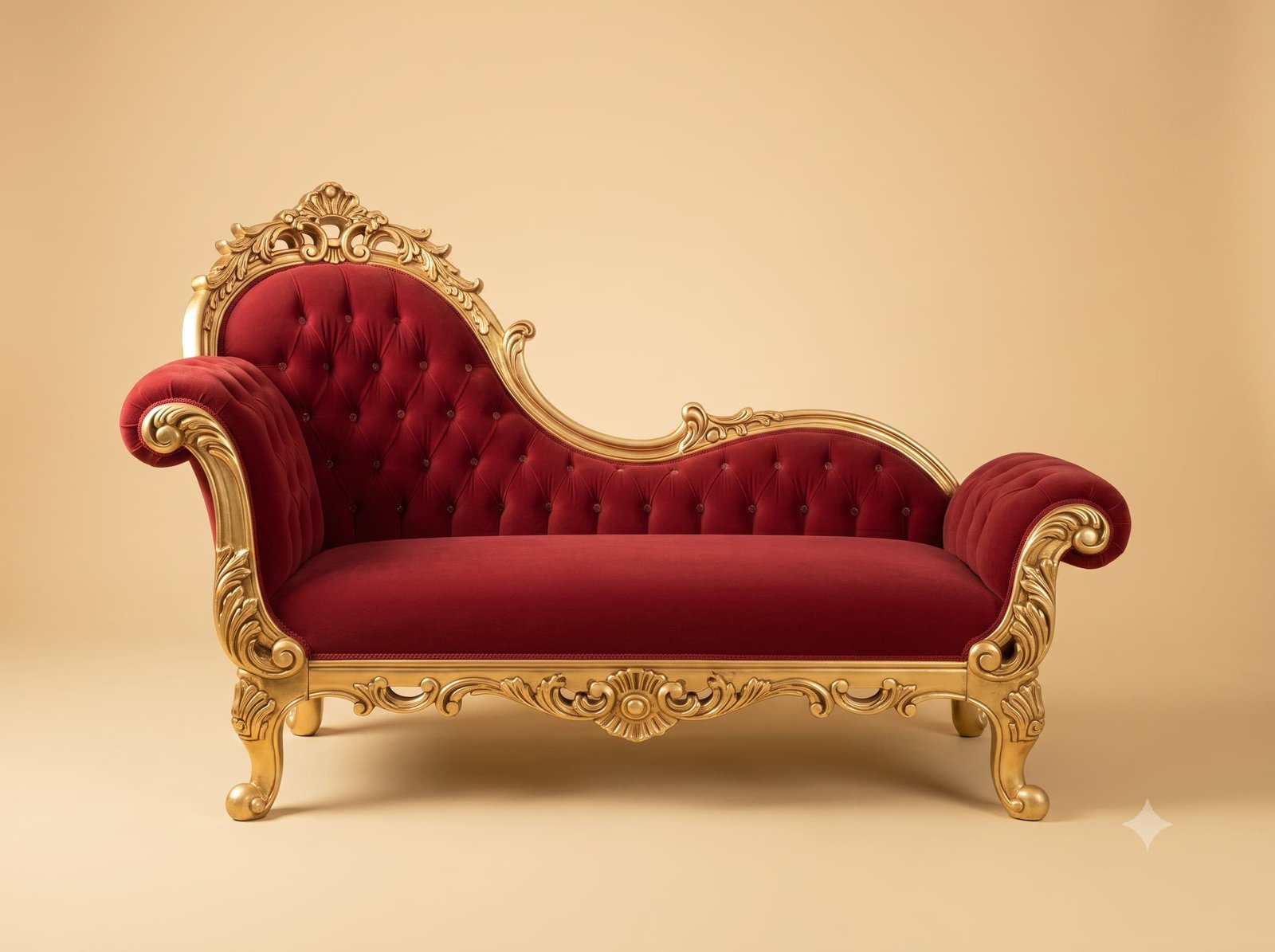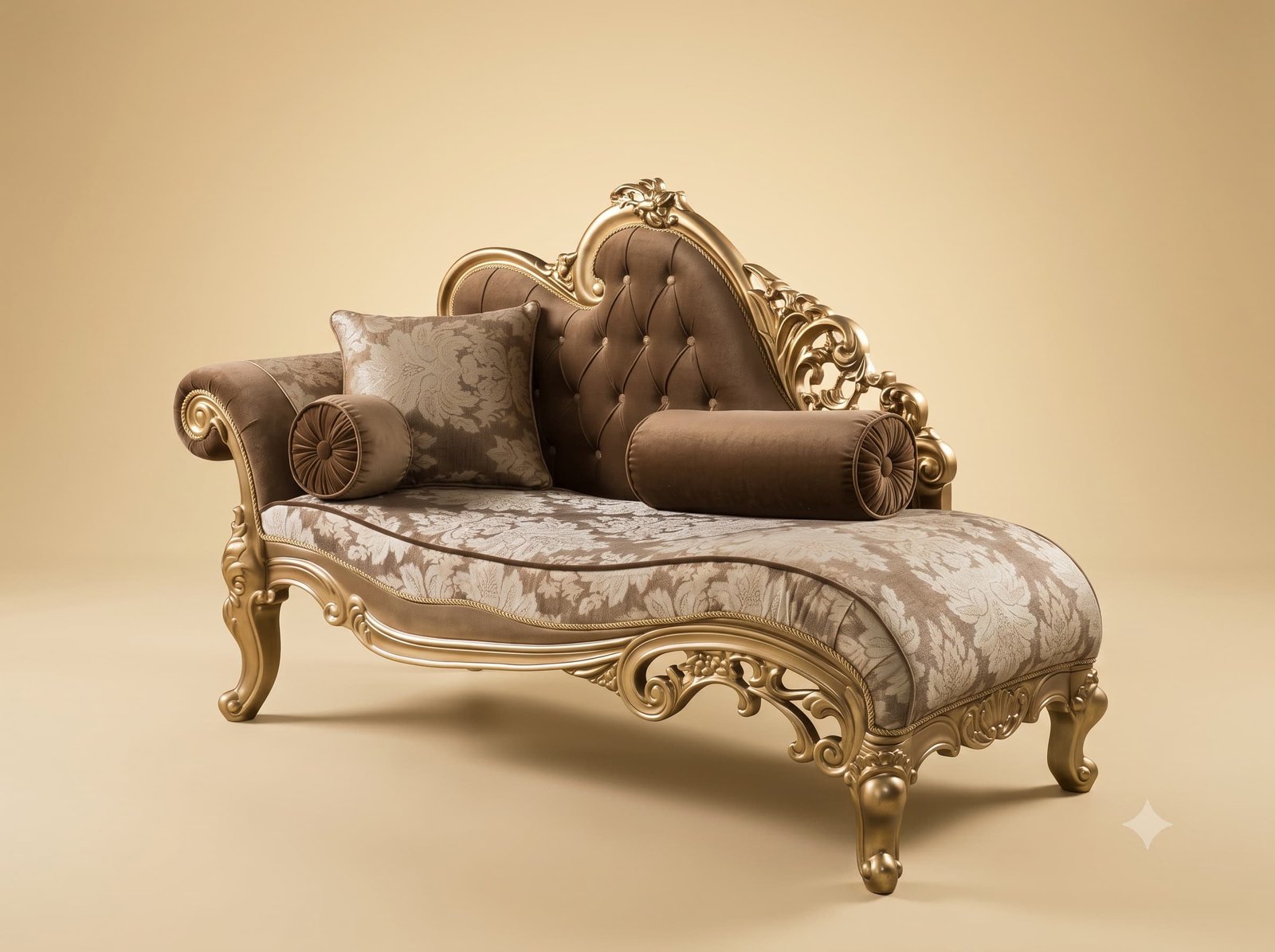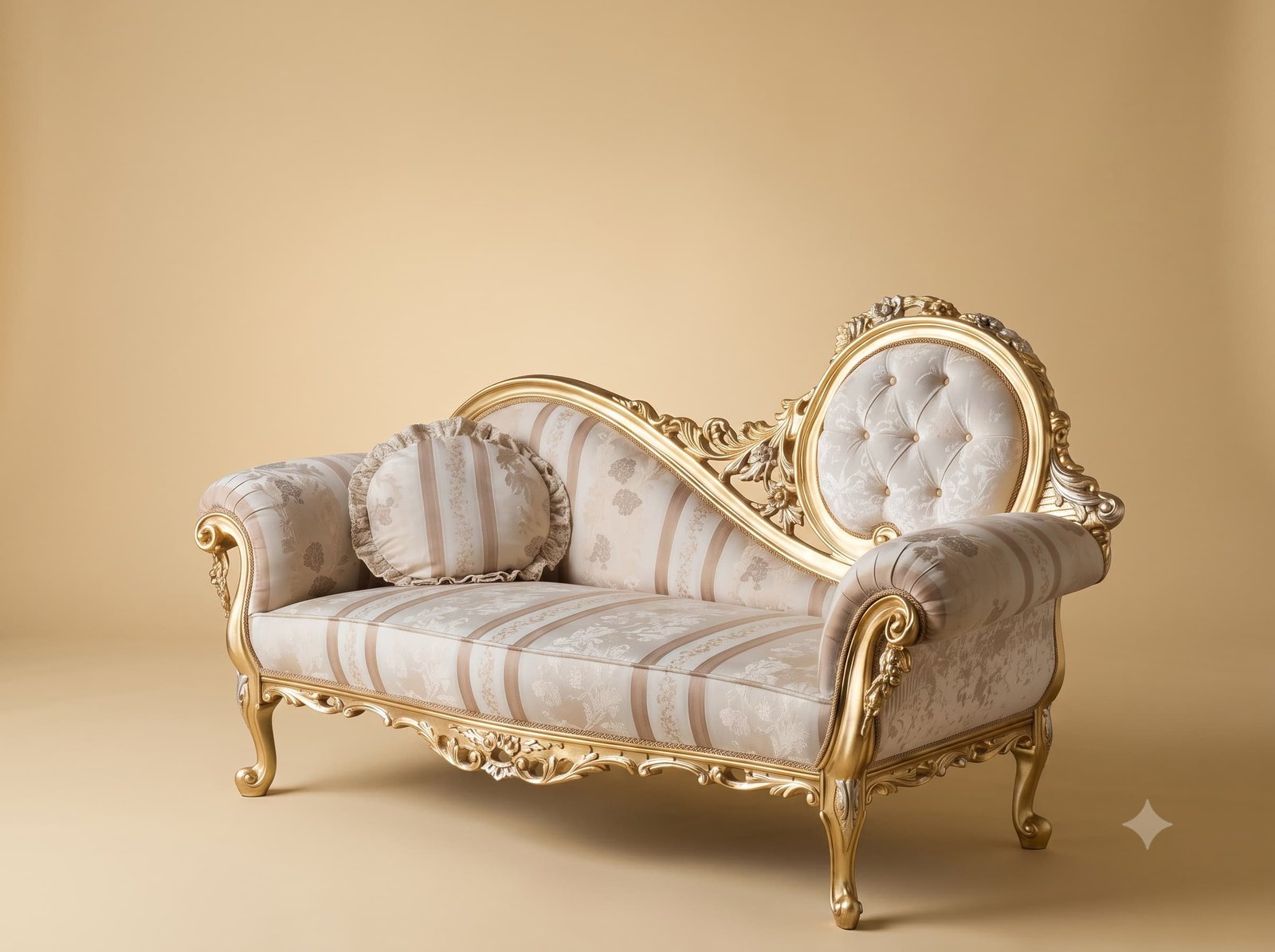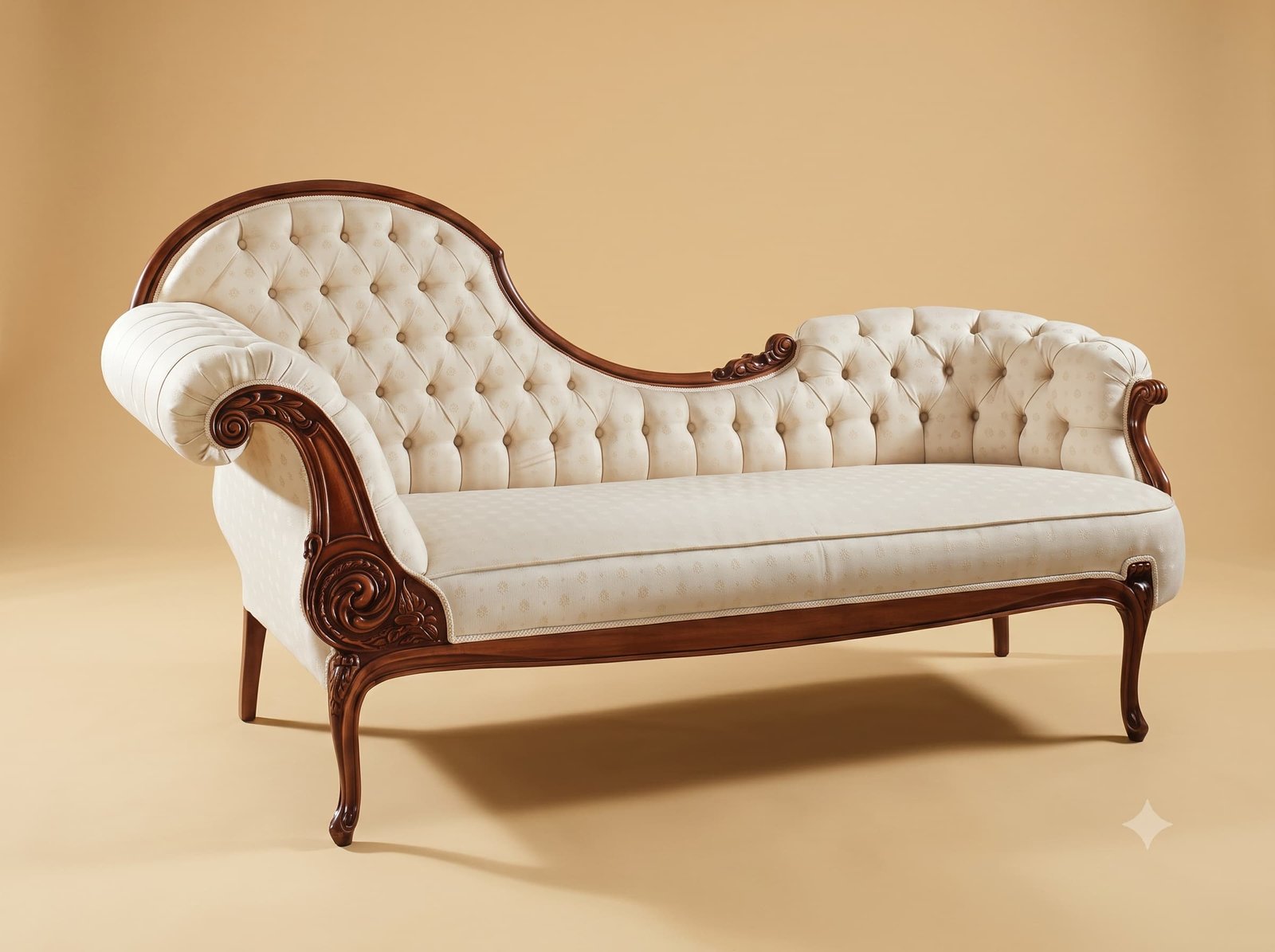
The buttoning on a curved back is set out on the frame before any covering goes near it, and that is the part that decides whether it looks right.
Deep buttoning creates a diamond grid, and a grid only reads as regular if the diamonds are the same size and the pleats between them all fall the same way. On a flat back that is easy. This back is not flat - it curves in section from top to bottom and it also changes height along its whole length, falling from high at the head to low at the foot.
Mark the button positions on the fabric and the grid will distort as soon as the fabric is pulled onto that shape. So instead the positions are marked directly onto the frame and the base, measured around the curve rather than across it, and every button is drawn down to the same depth.
The pleats are then formed by hand as each button is pulled - every one folded downwards, so no pleat sits open to catch dust.
The row nearest the top edge is the one everybody sees, so it is set out first and everything else is spaced from it.
 Ask Price On WhatsApp