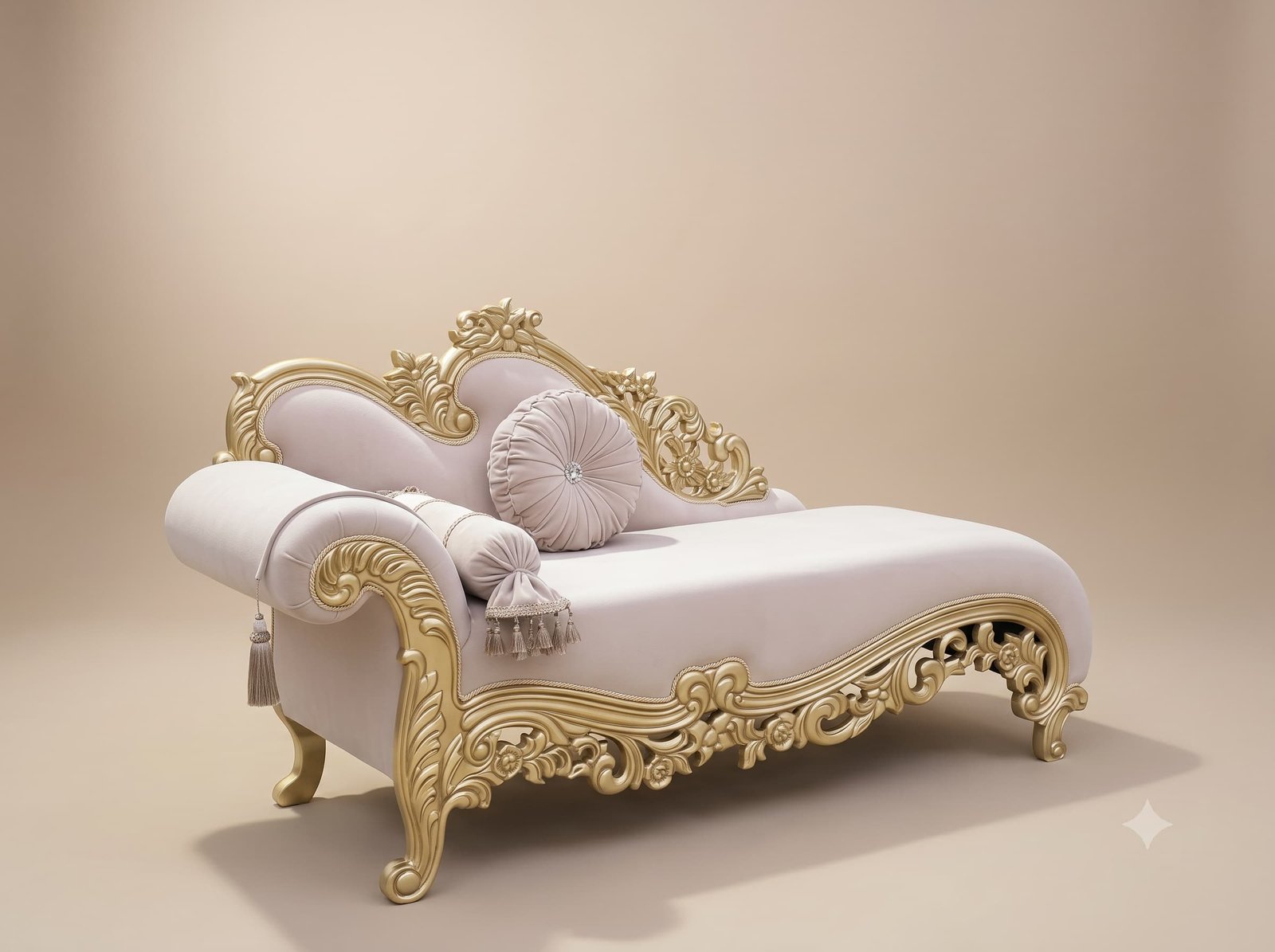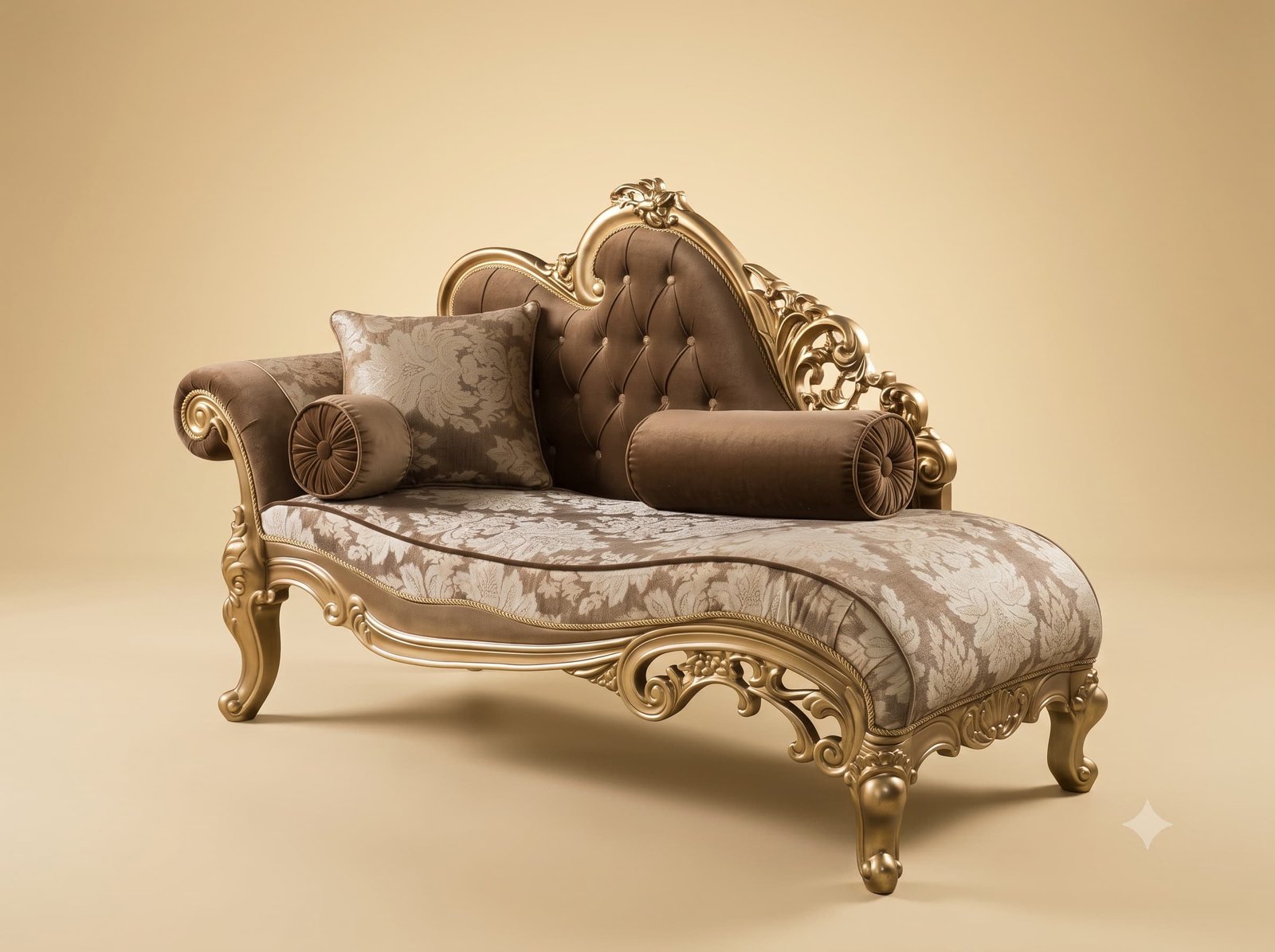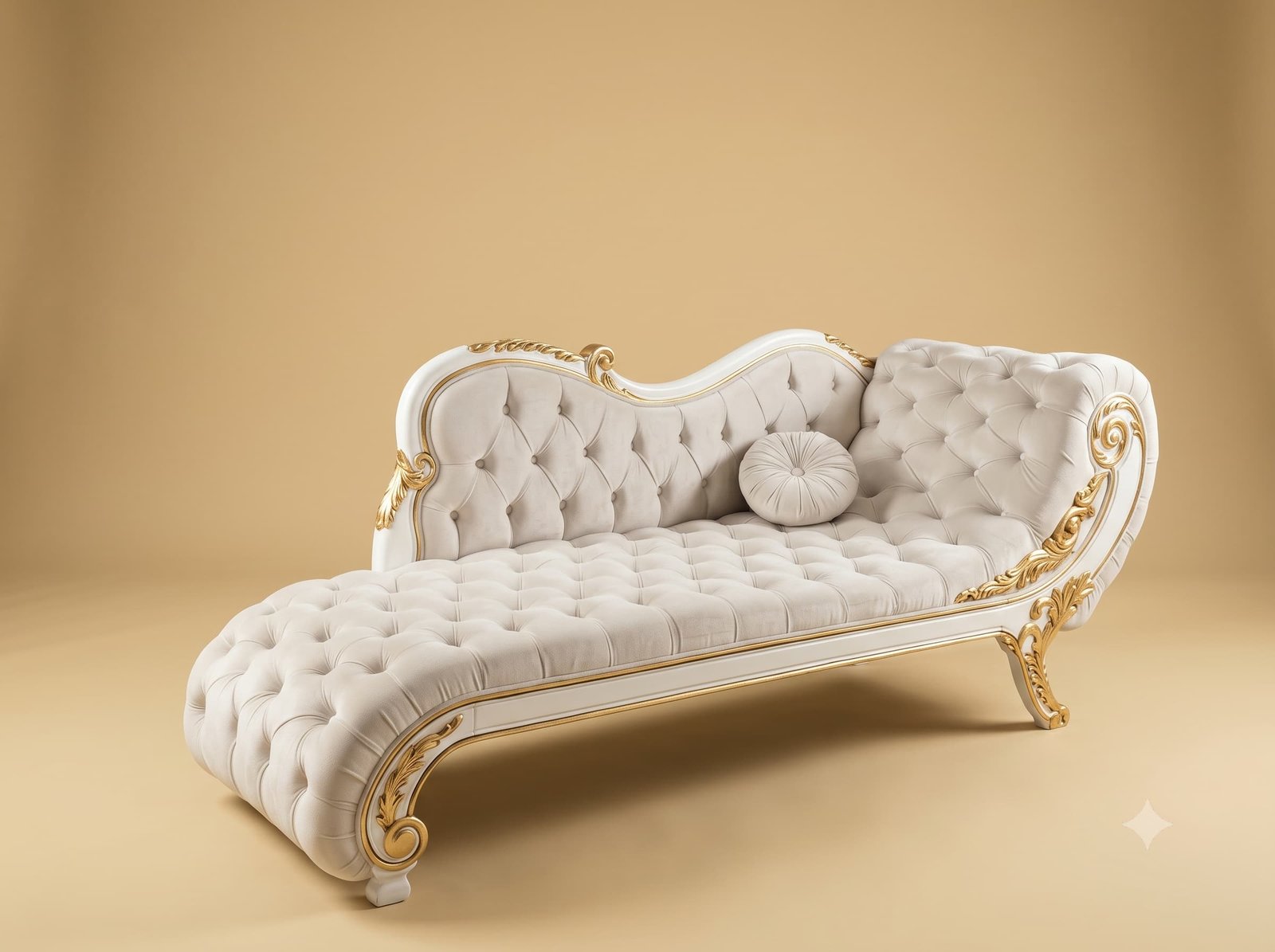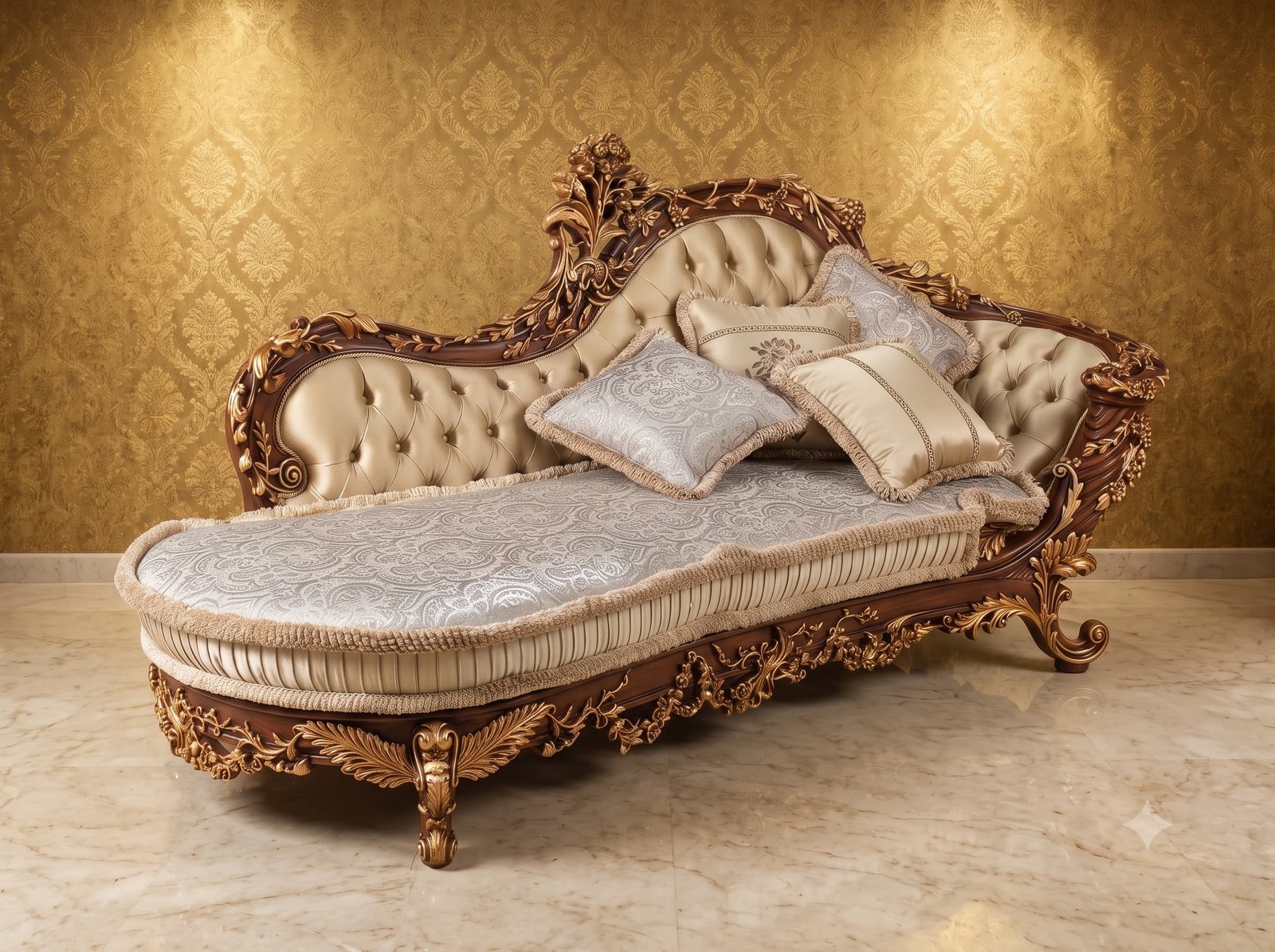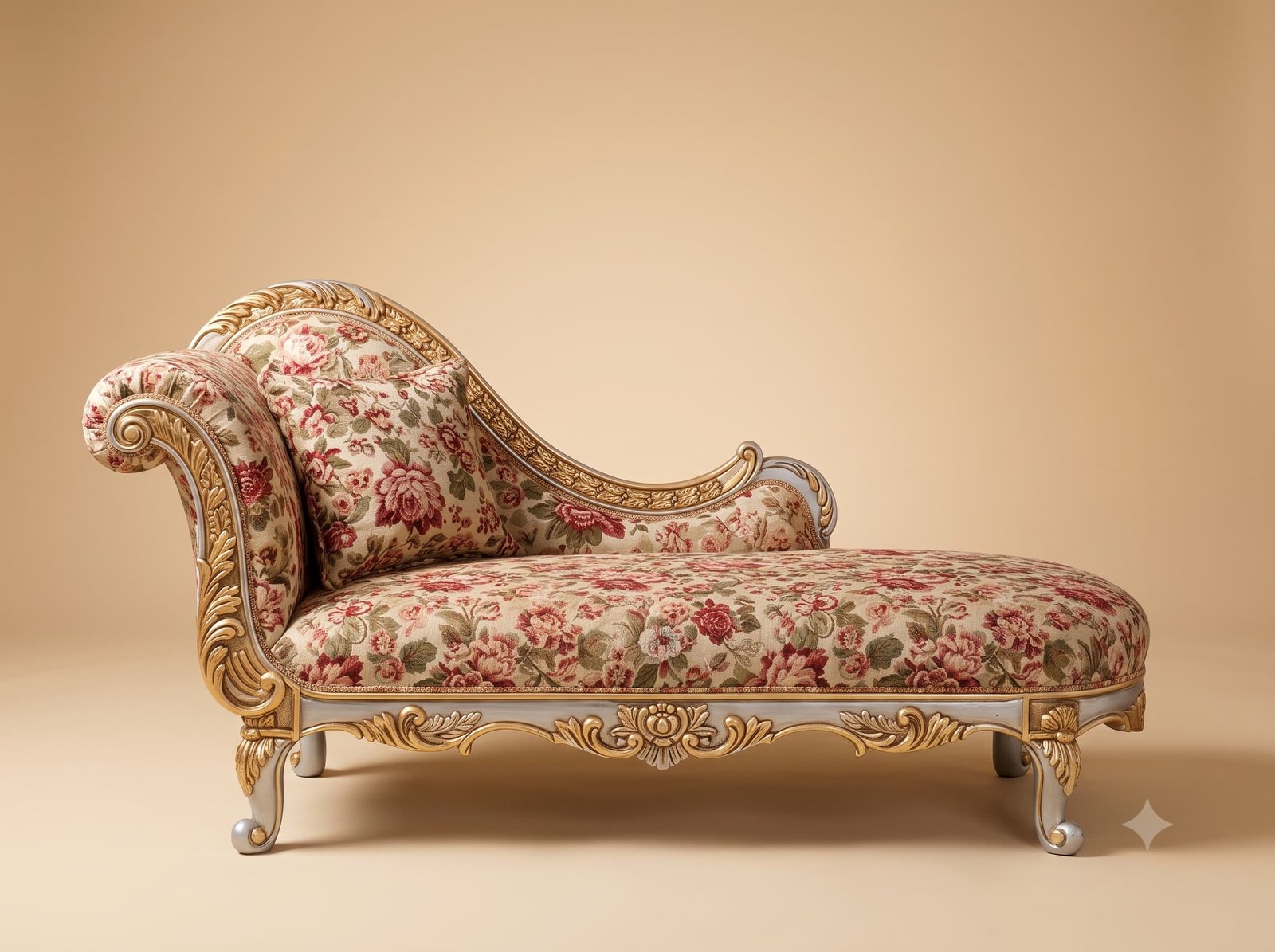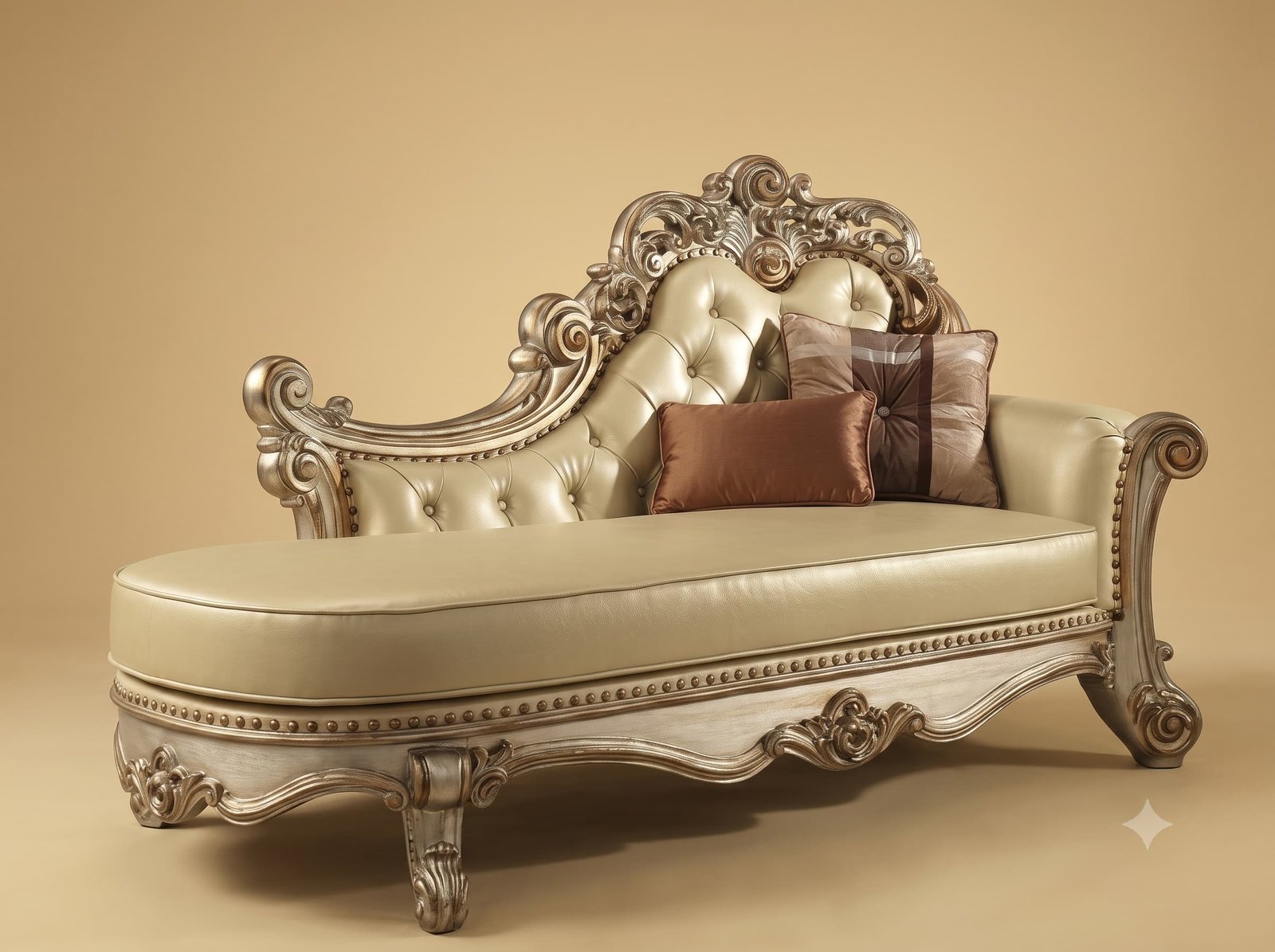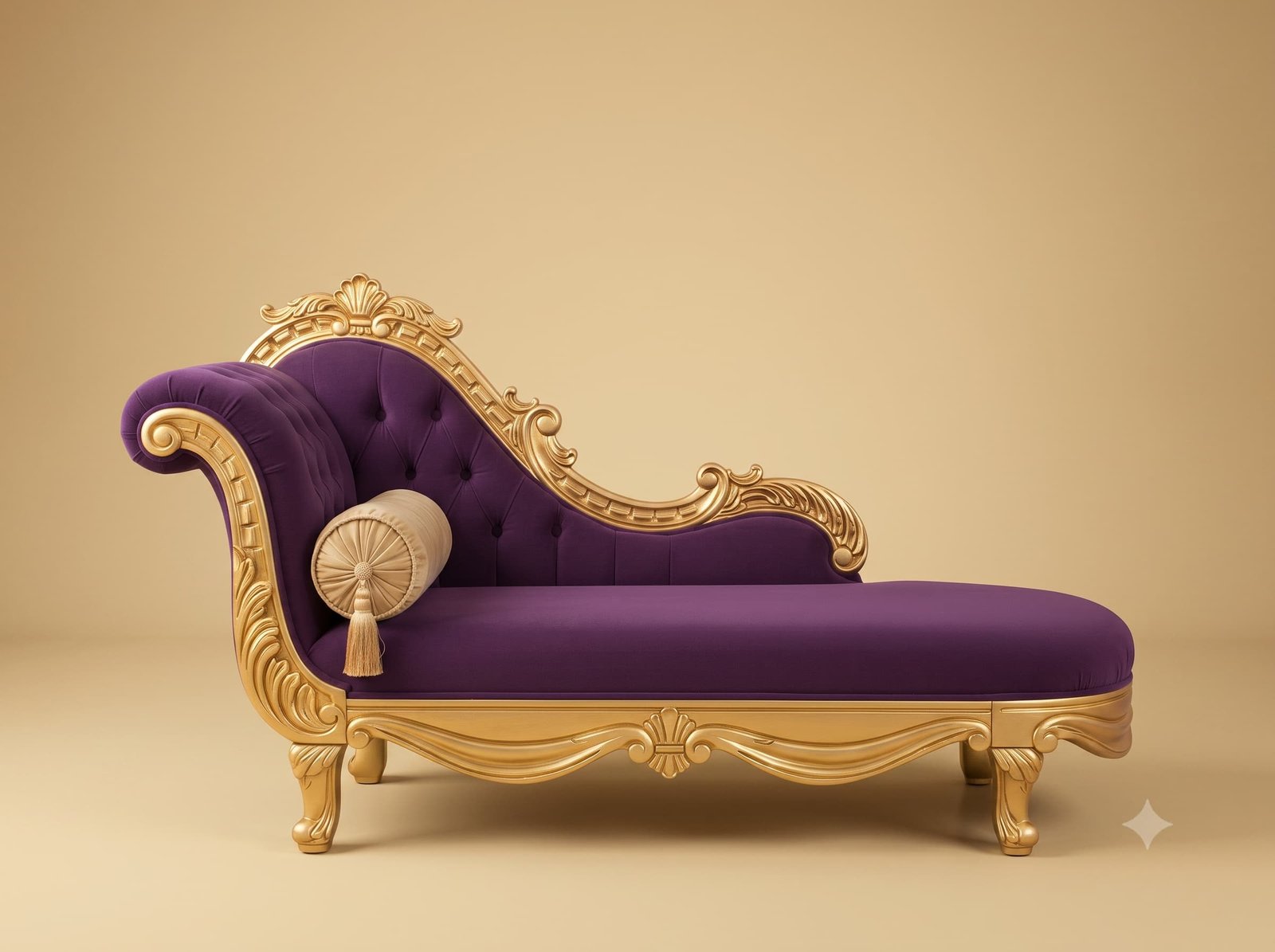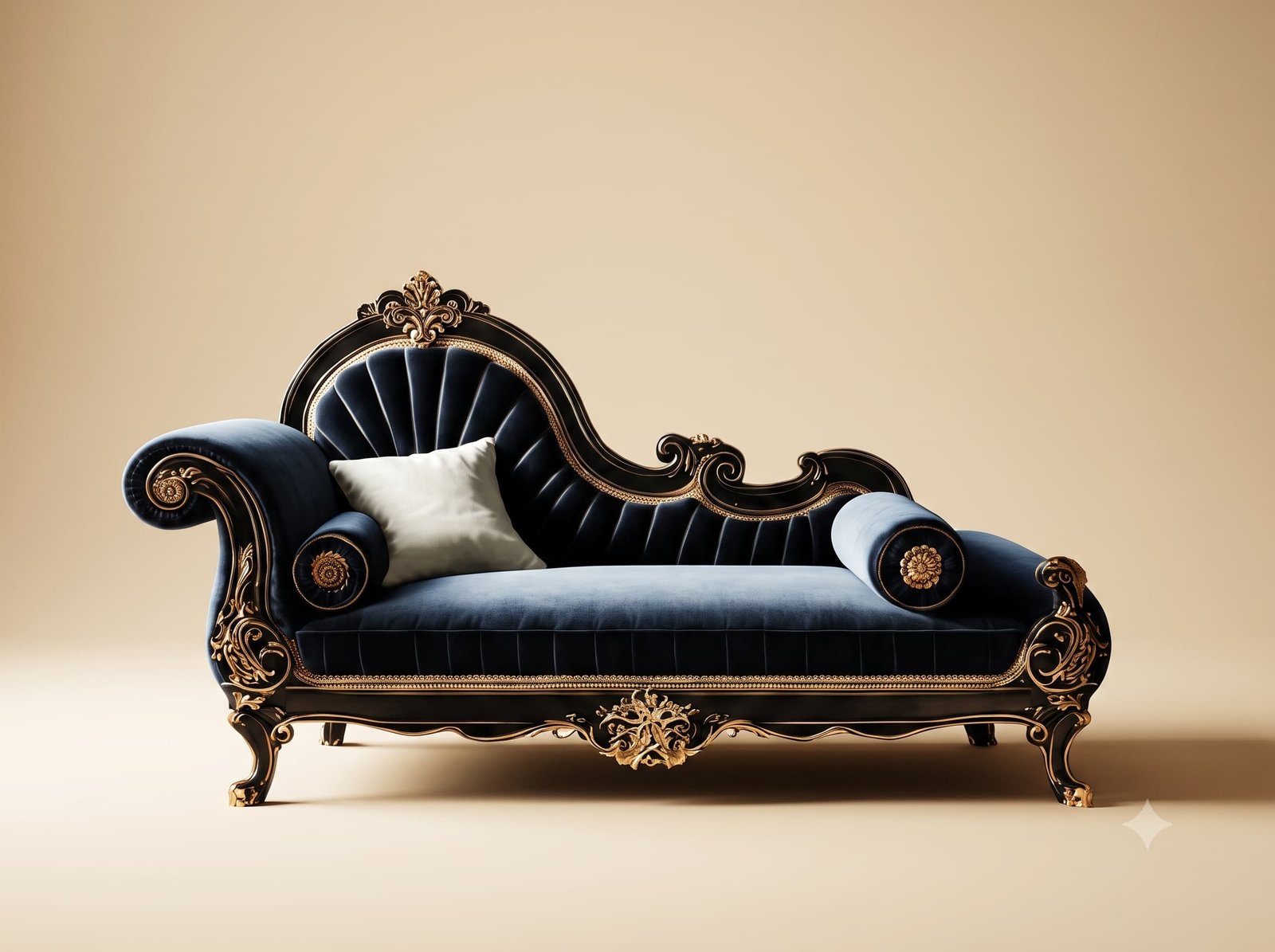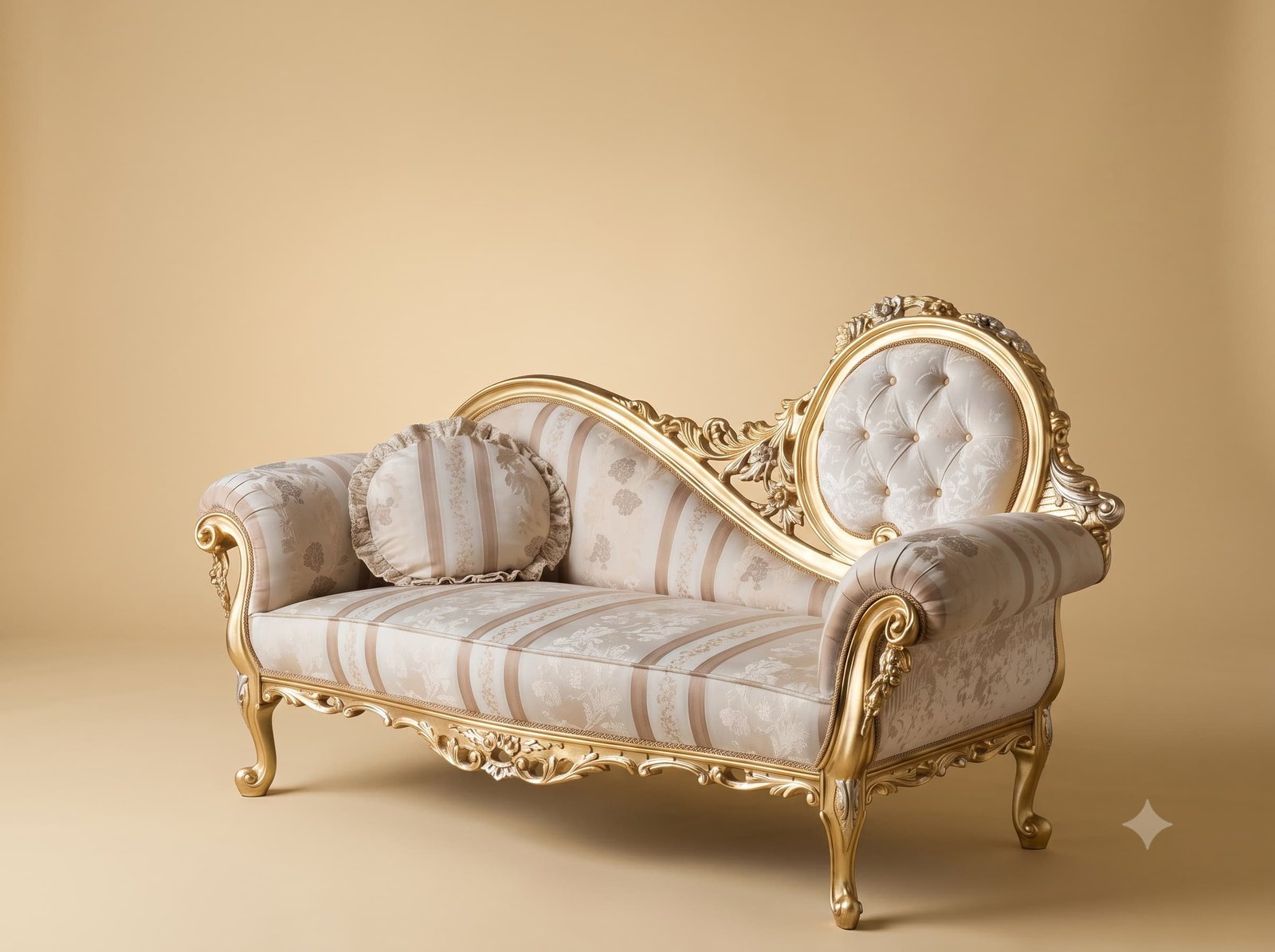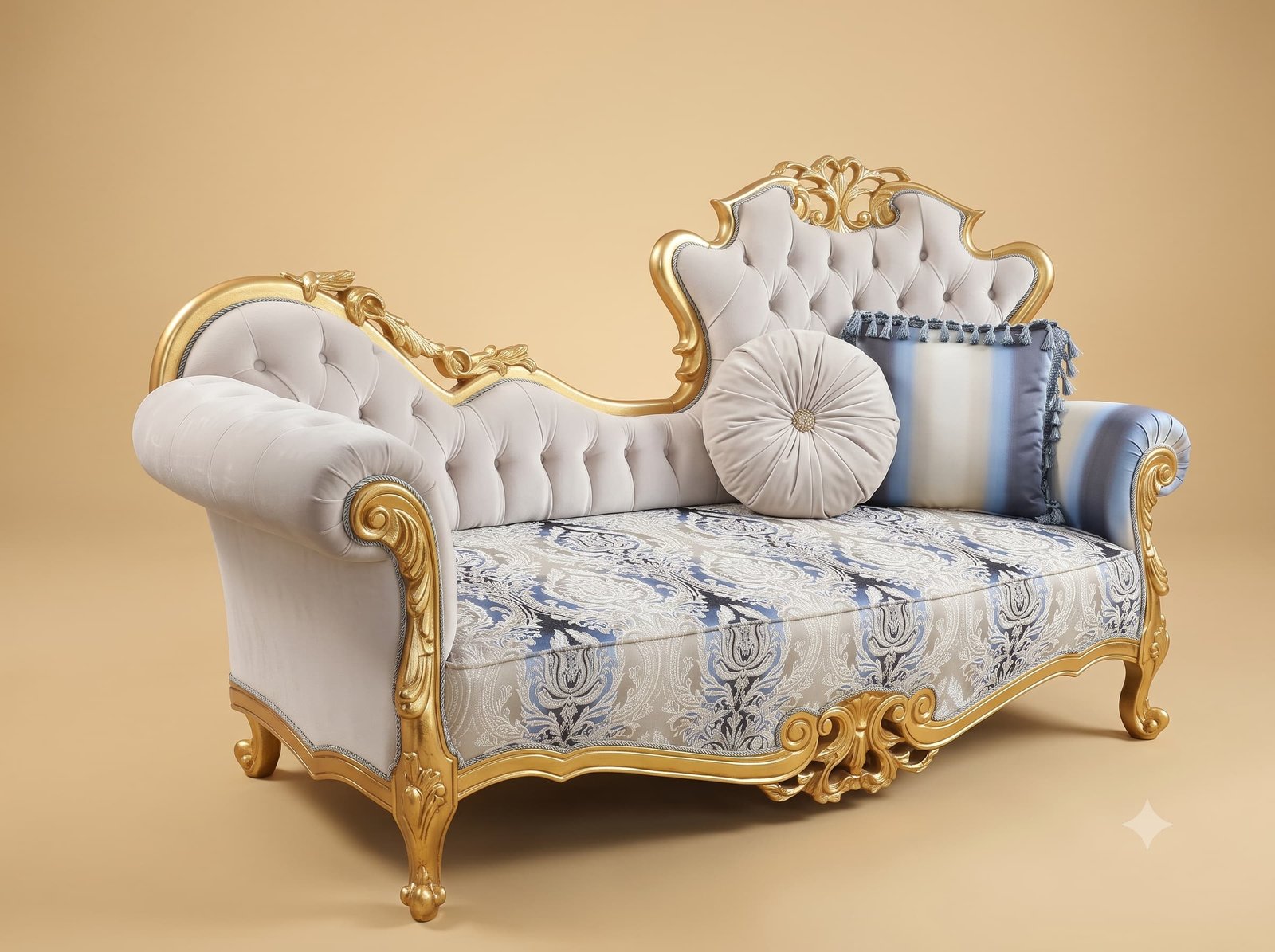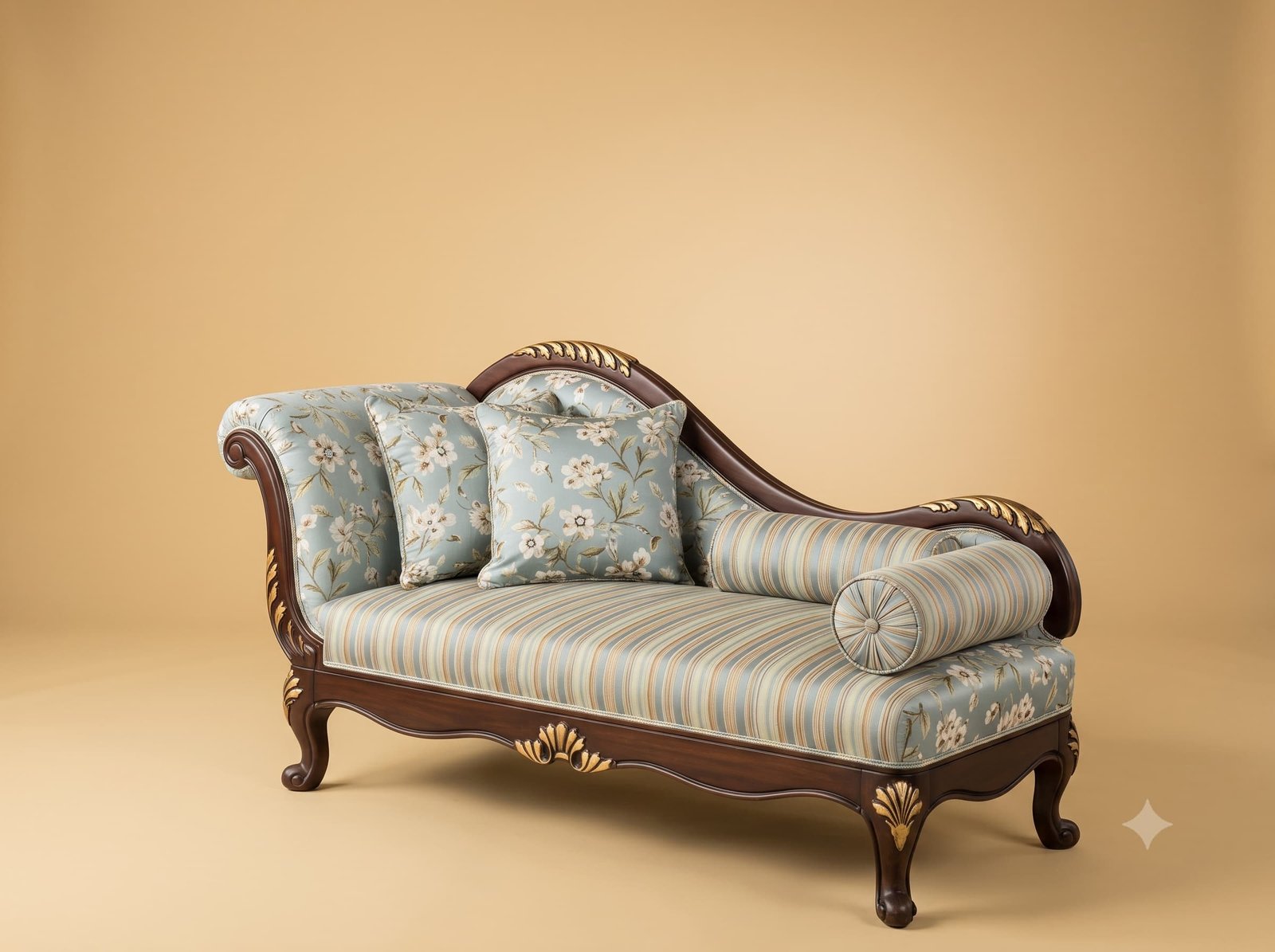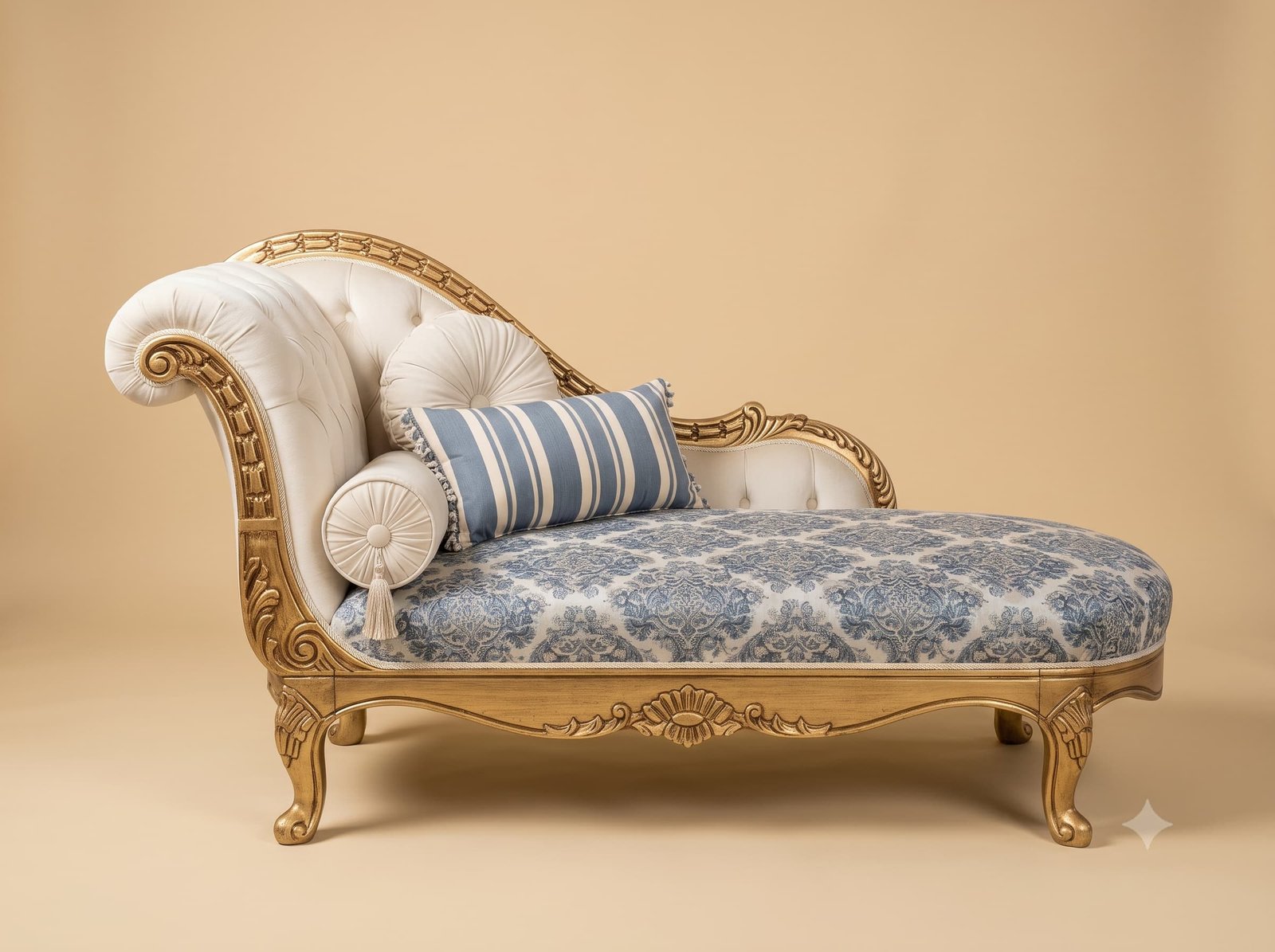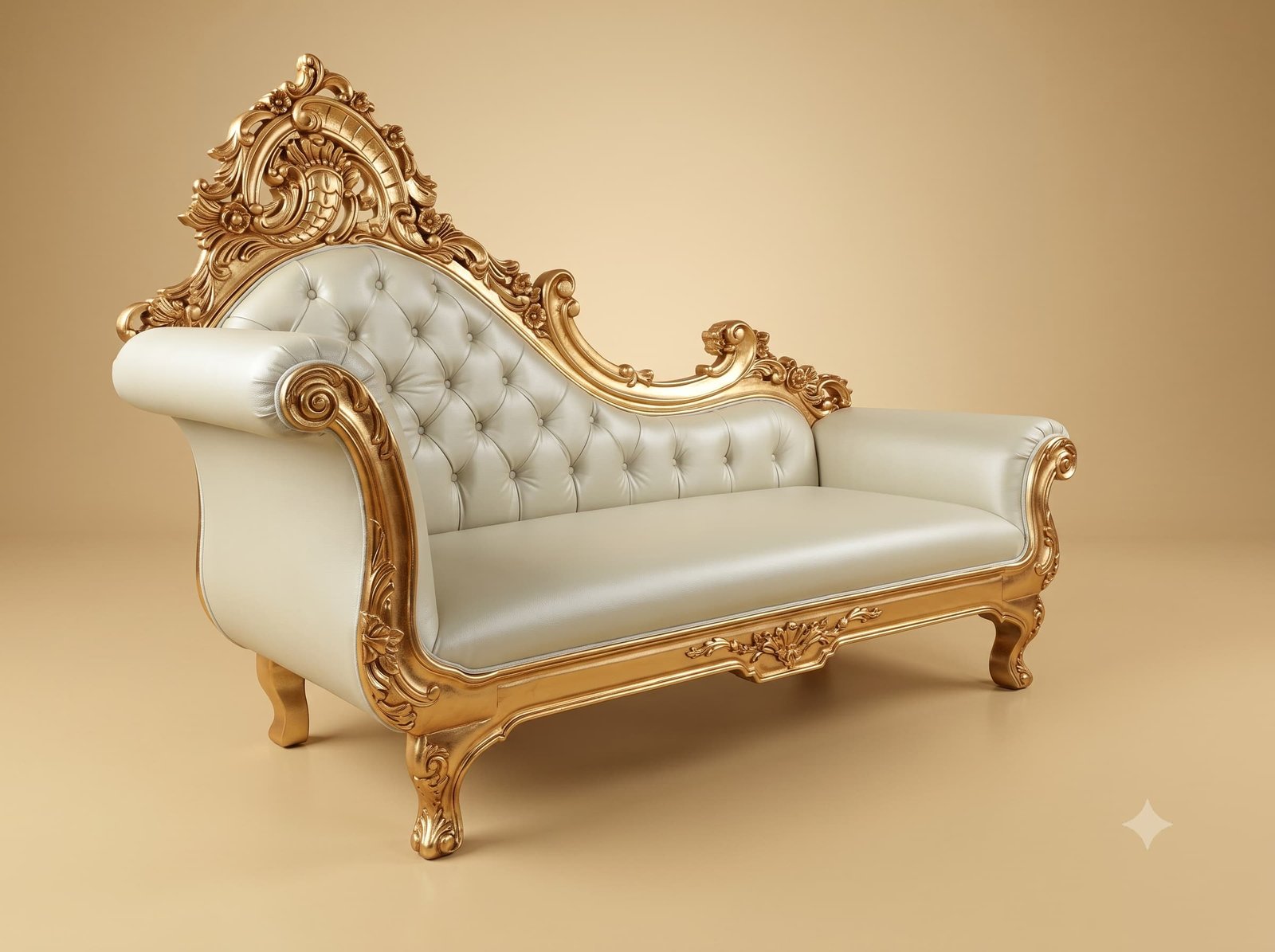
The crest on this diwan is carved on both faces, and that doubles the work for a reason that only becomes obvious once the piece is in a room.
On most upholstered furniture, carving sits against something. A carved back rail has upholstery behind it; a carved leg has the floor behind it. Only the front is ever seen, so only the front is worked, and the back face is left flat.
This crest stands clear above the back, pierced right through. A diwan is very often placed away from a wall - at the foot of a bed, across a corner, in the middle of a large room - and the moment it is, the back of that crest is in full view of anyone walking behind it. A flat, unworked reverse would be visible from half the room.
So the carver works it as a two-sided piece: the pattern is set out on both faces, the piercings are cut to meet cleanly through the thickness, and the scrolls are modelled front and back so neither side reads as the wrong one.
The gilding follows the same rule - both faces are prepared, laid and burnished to the same standard.
 Ask Price On WhatsApp