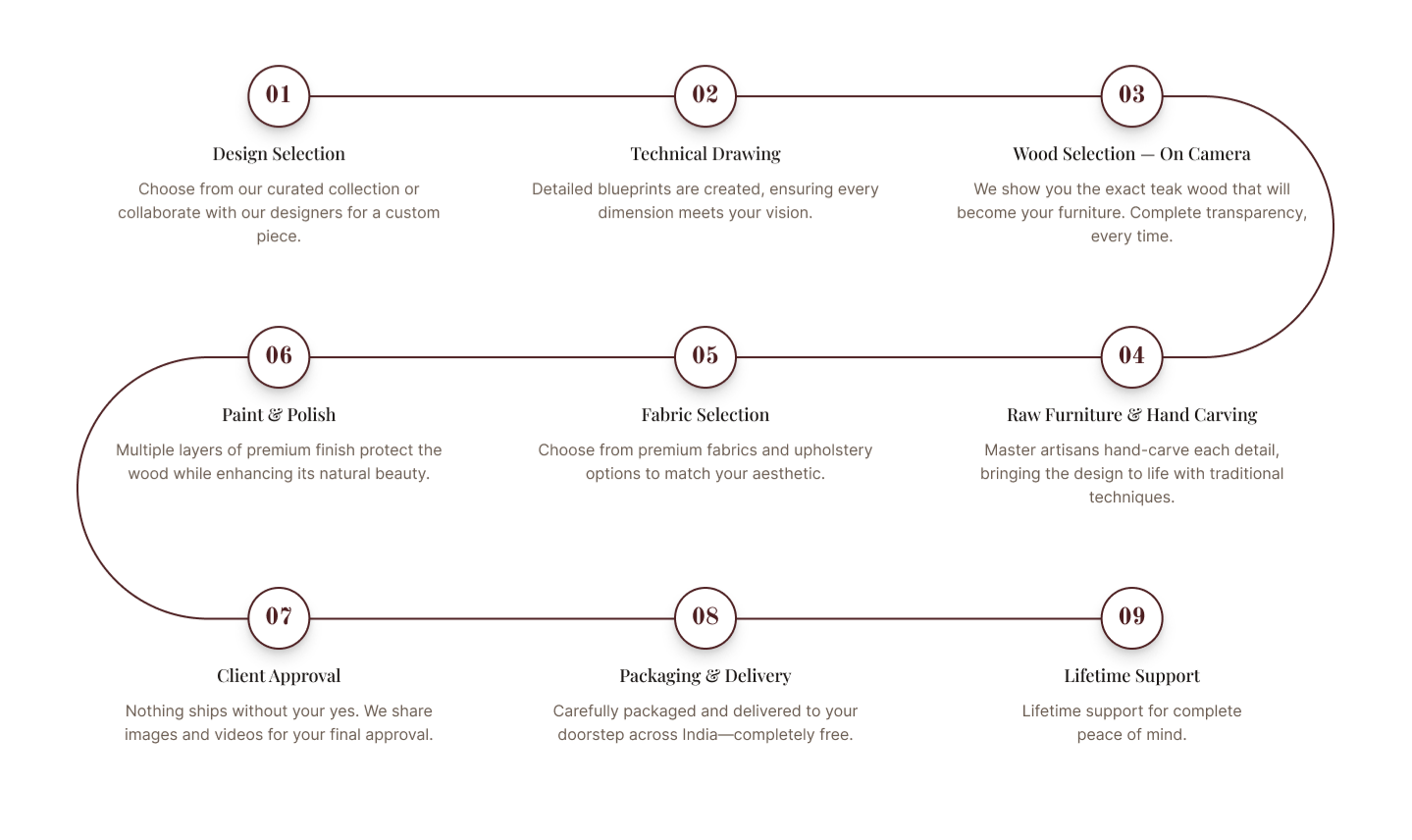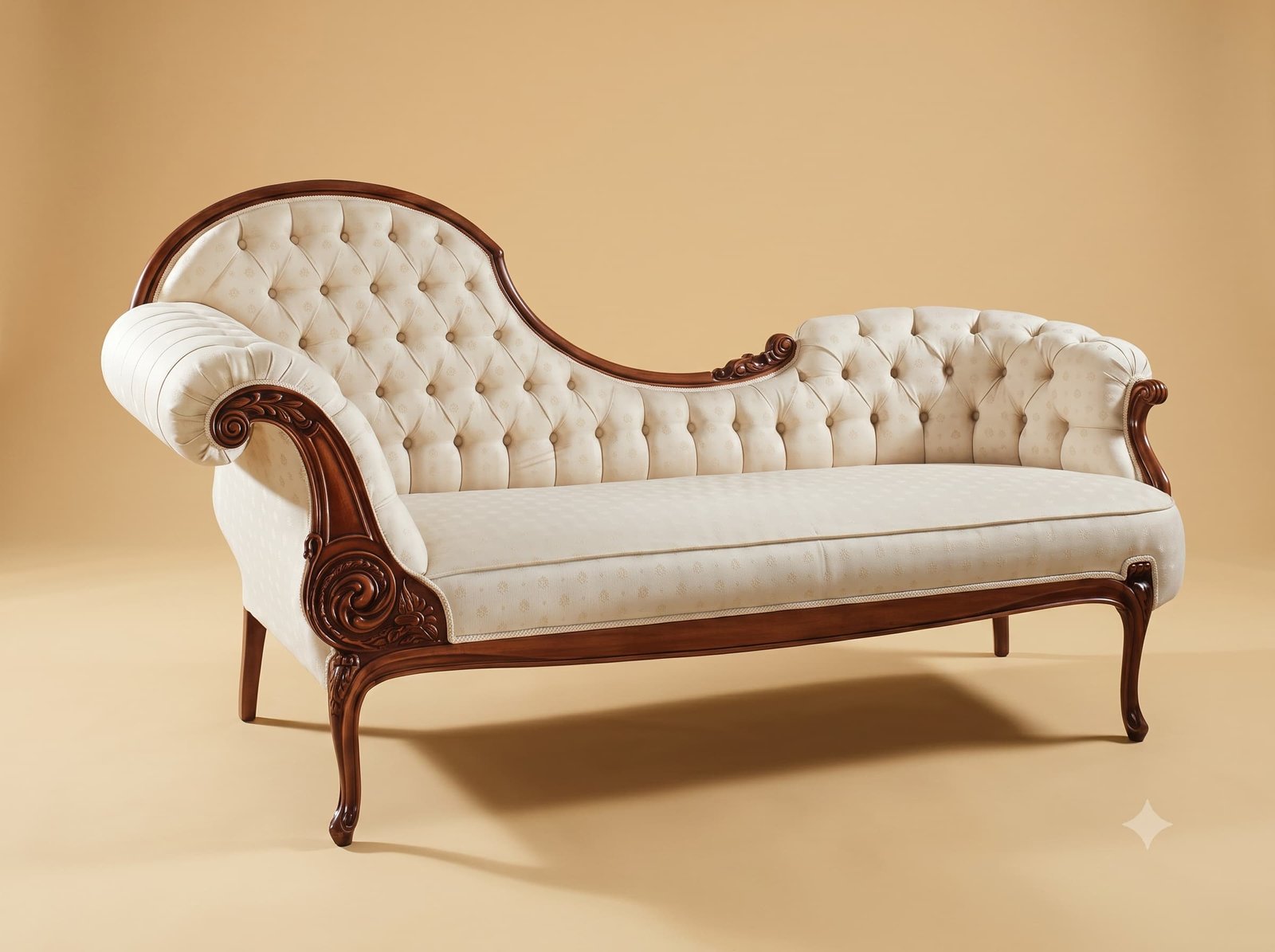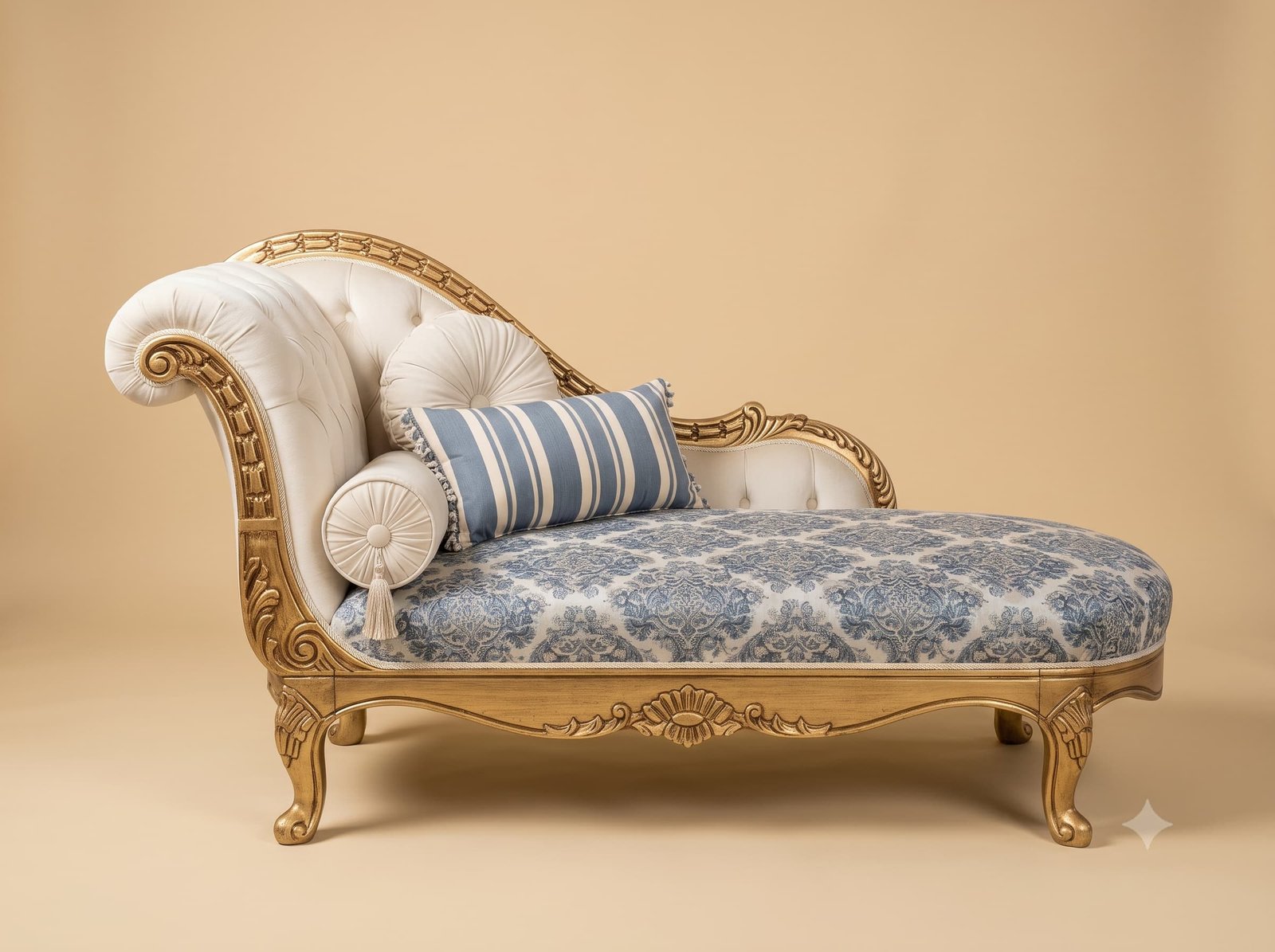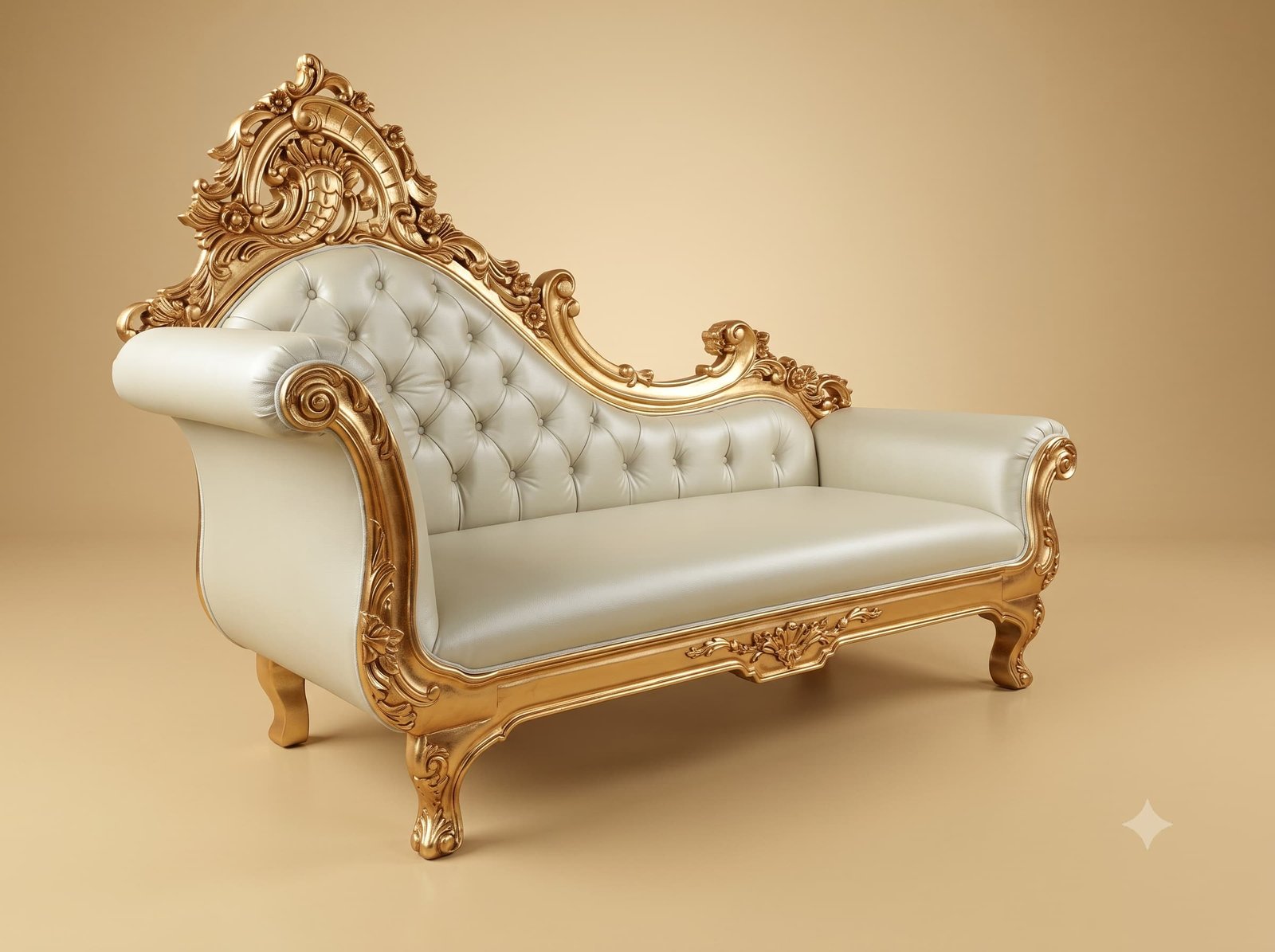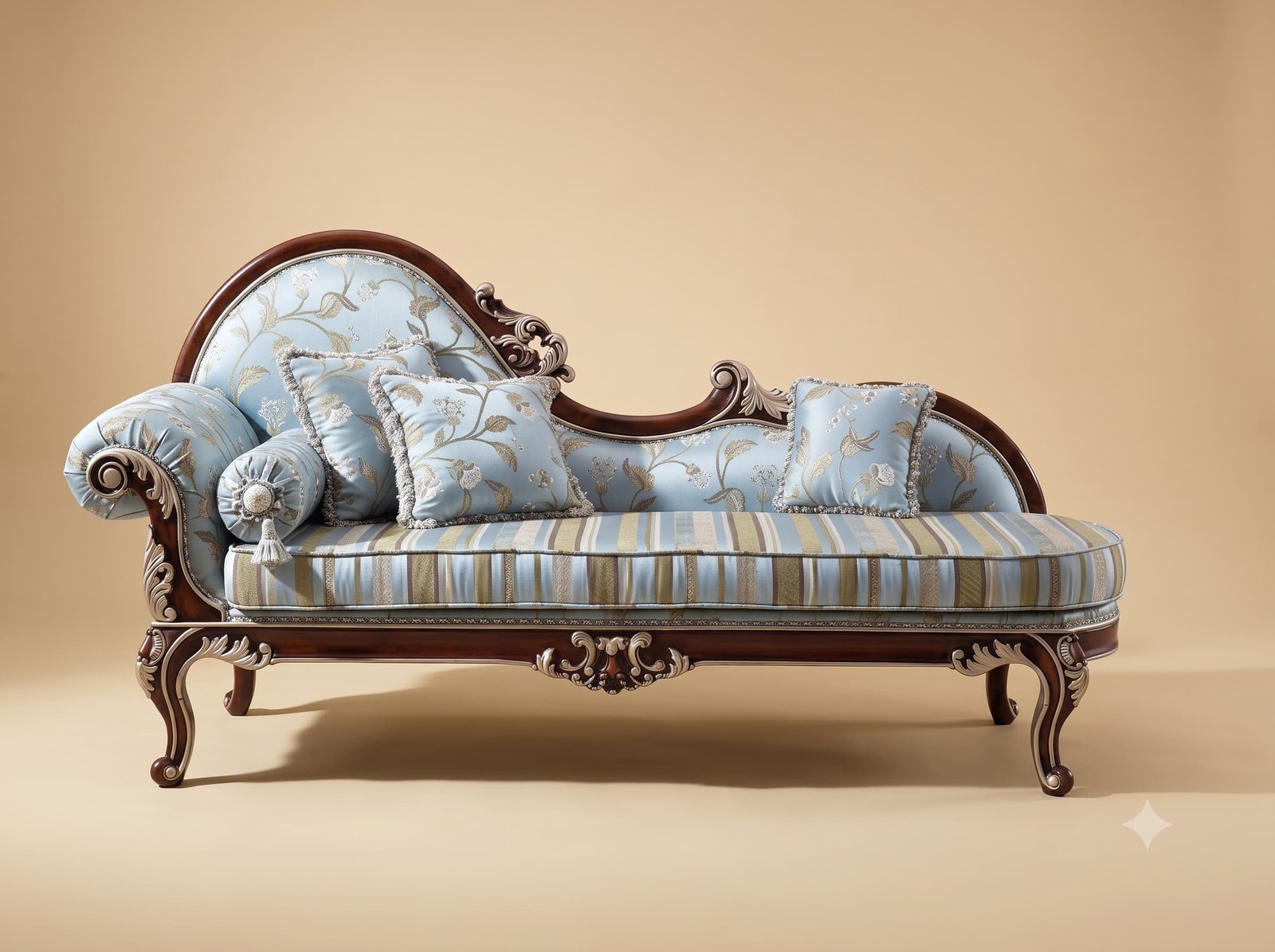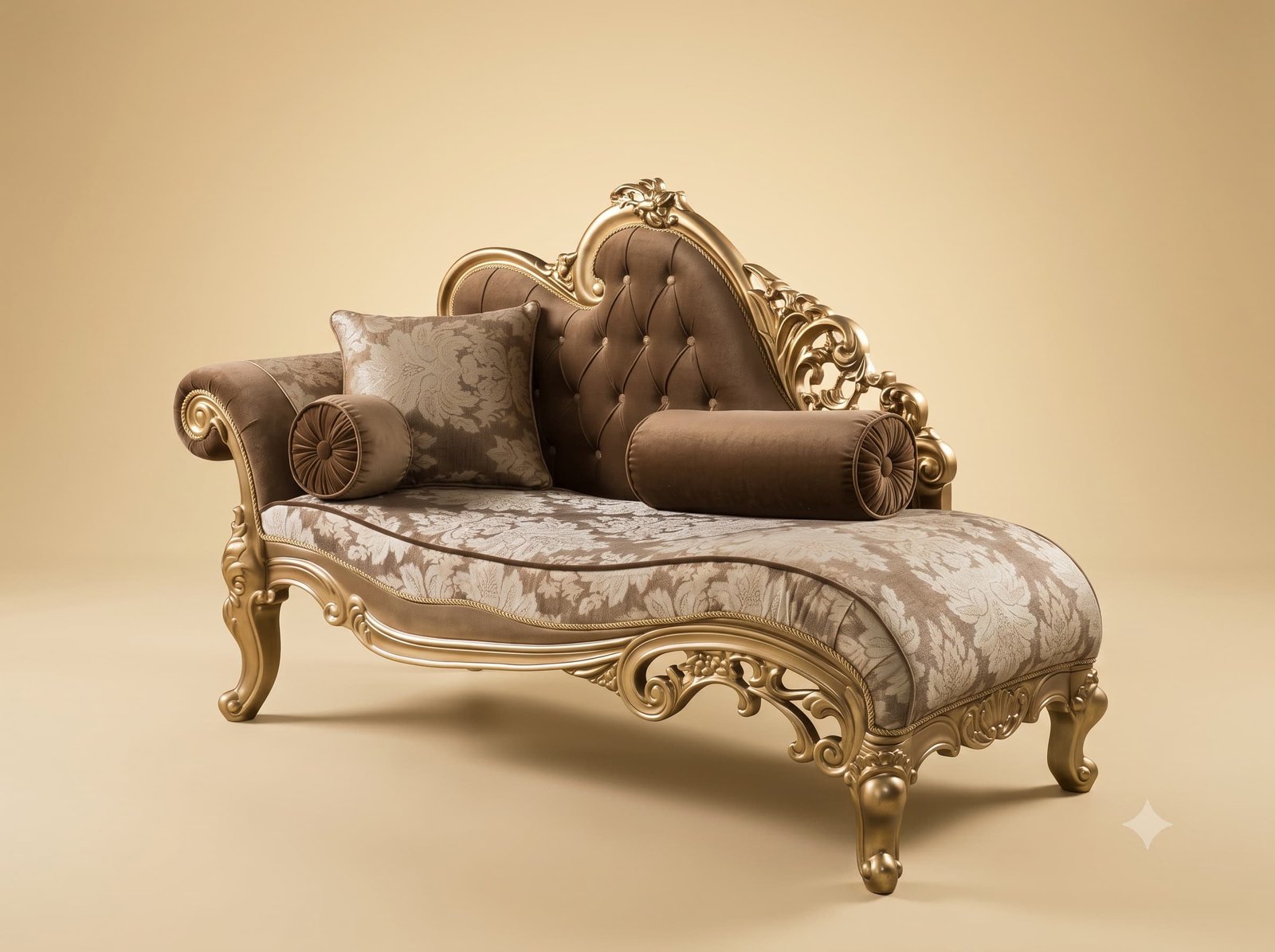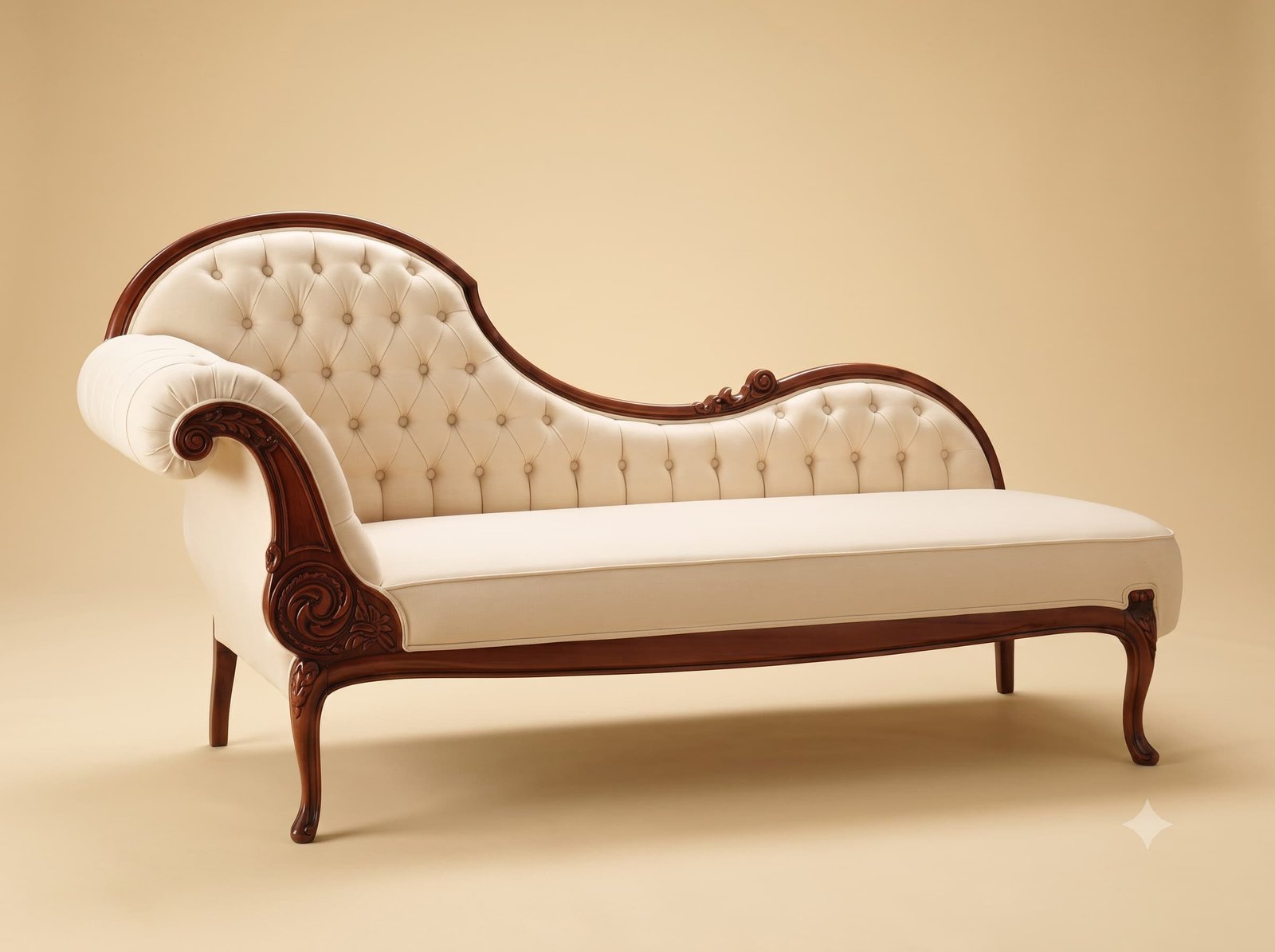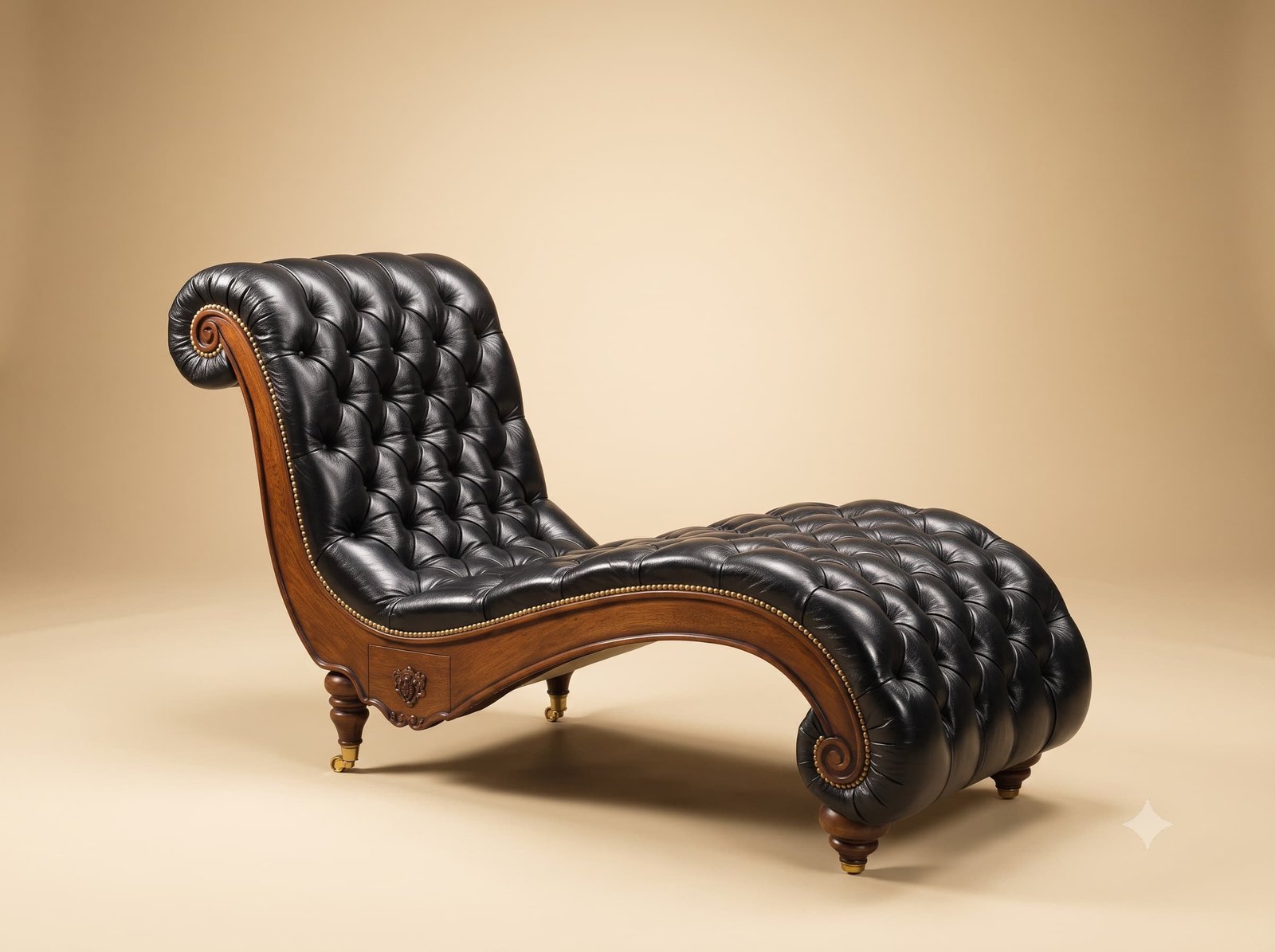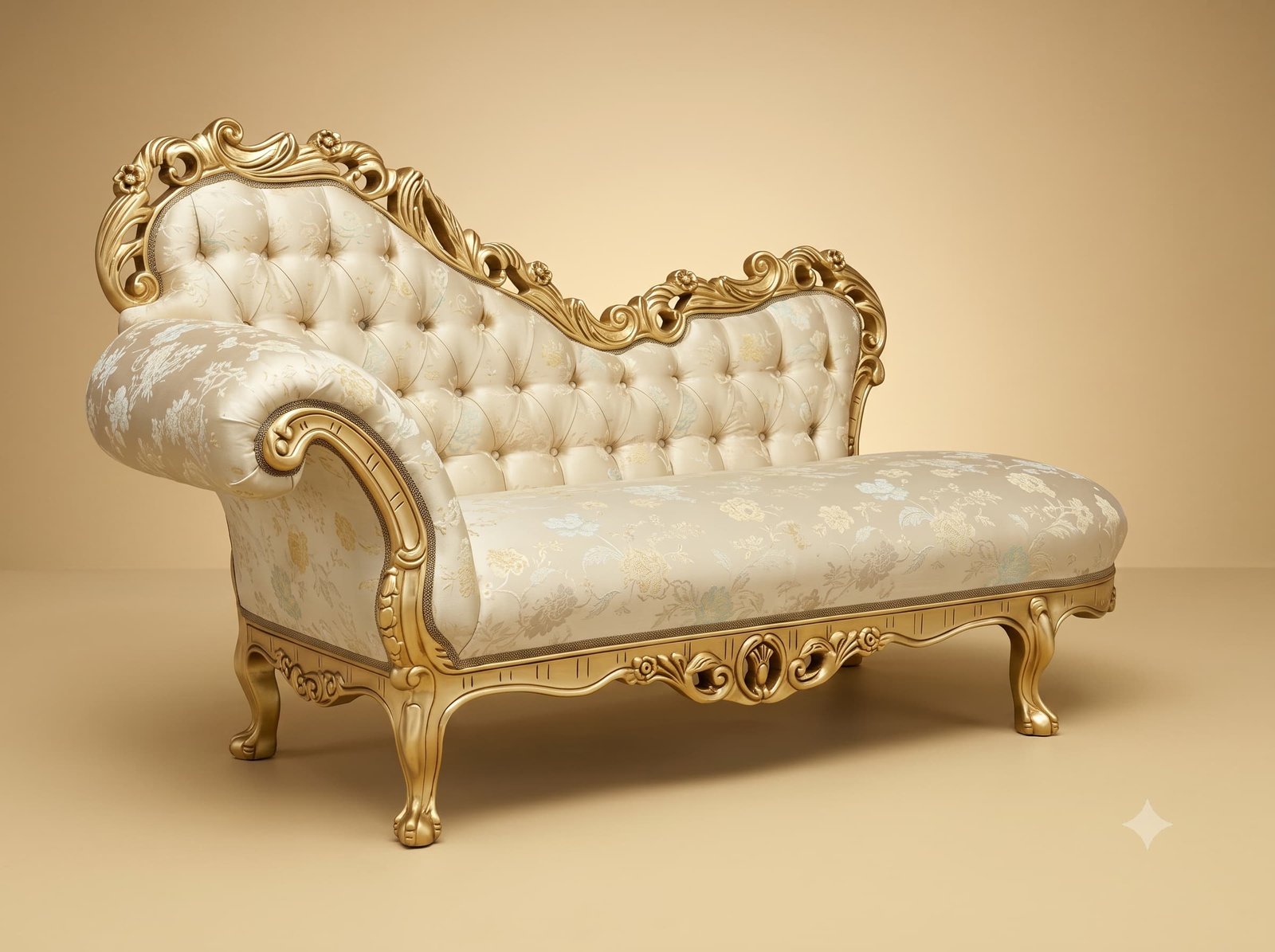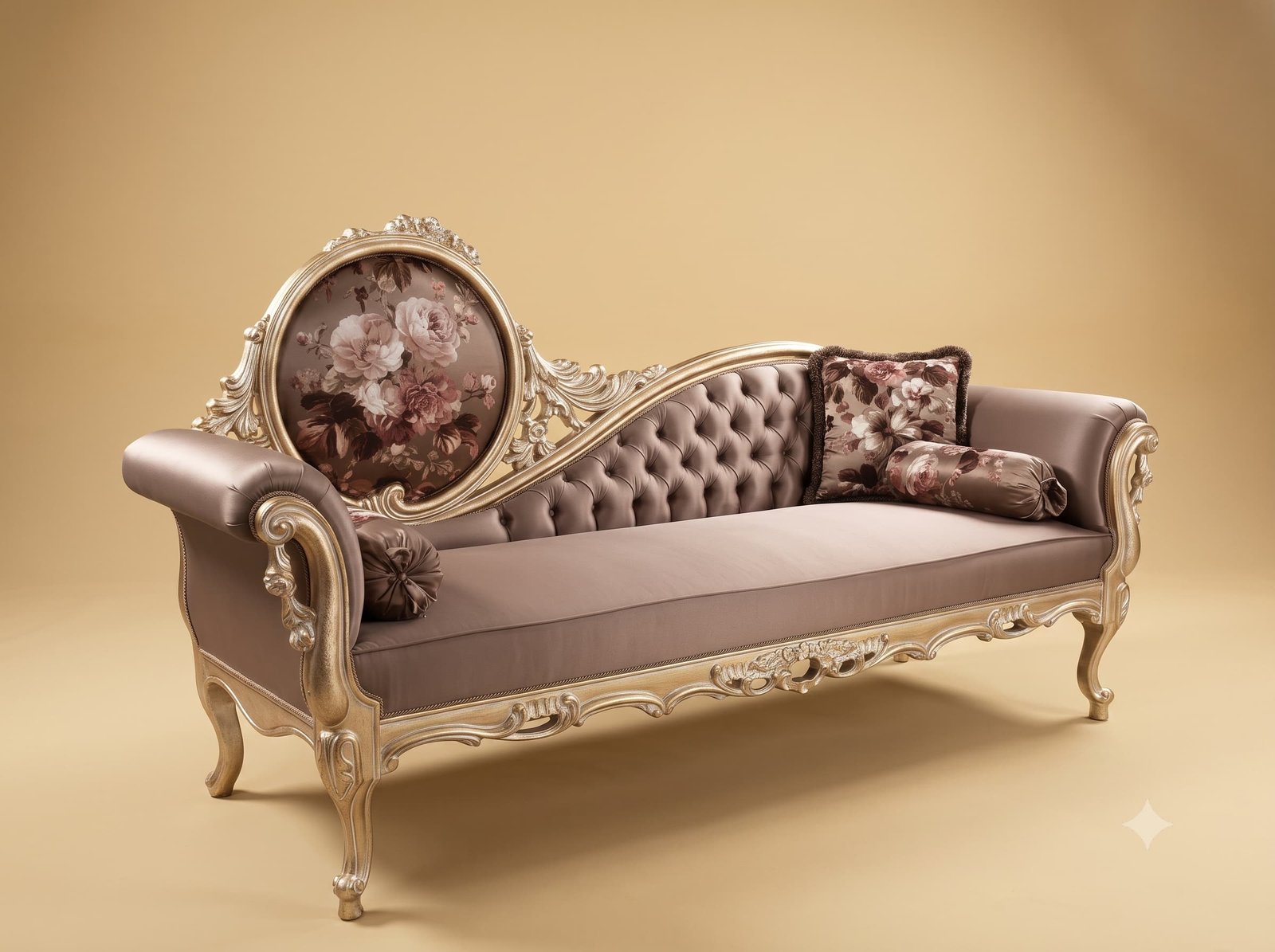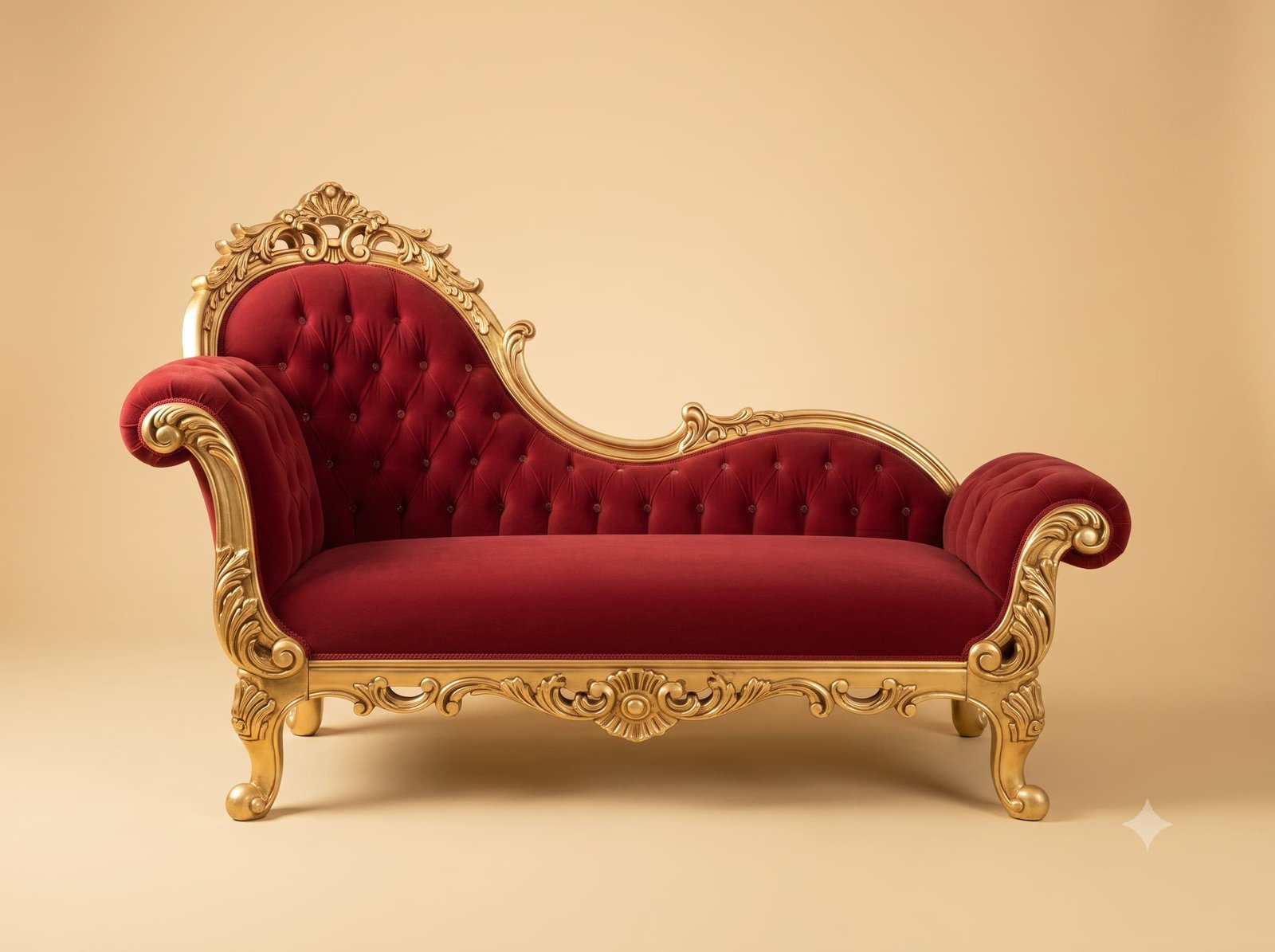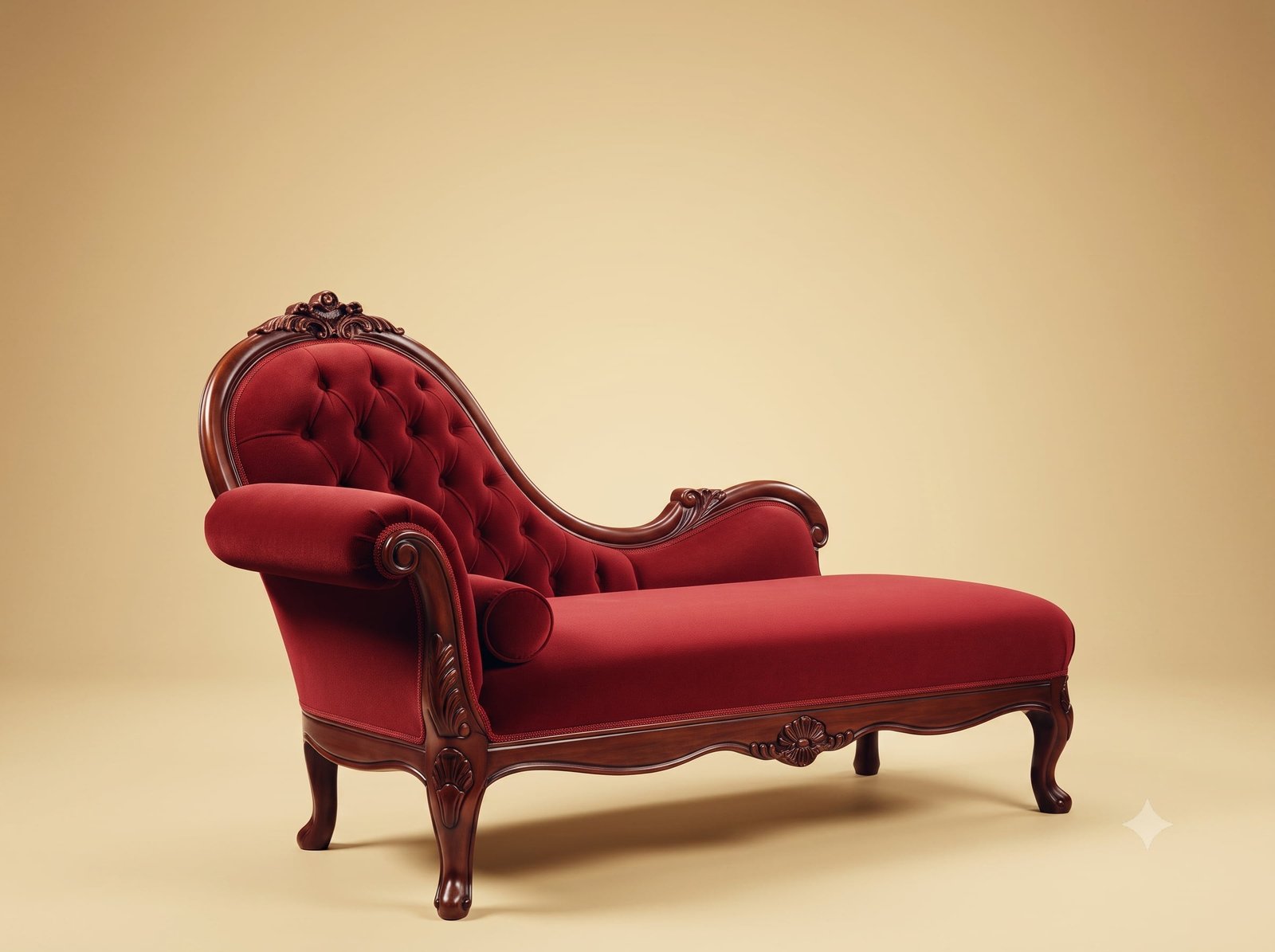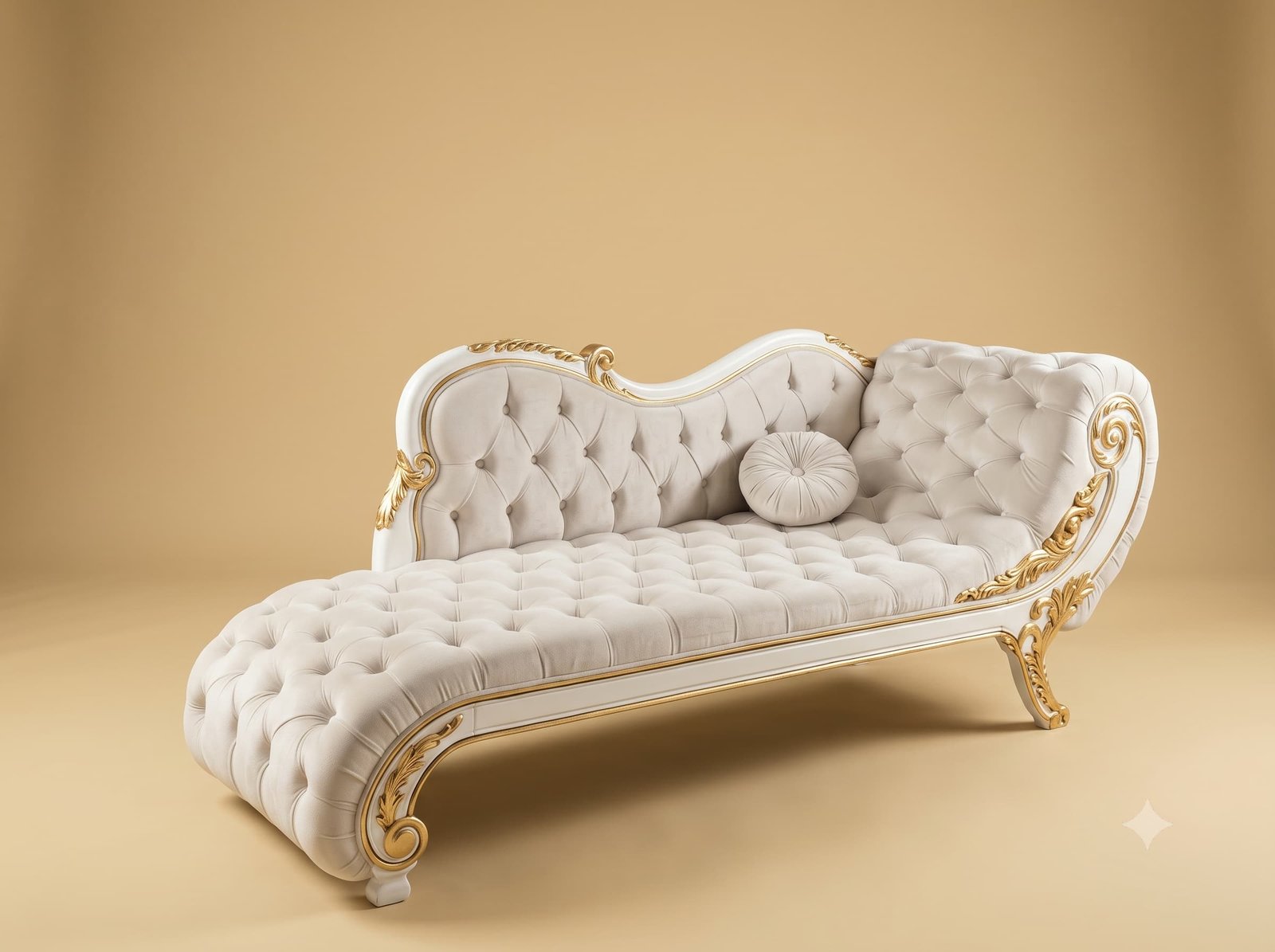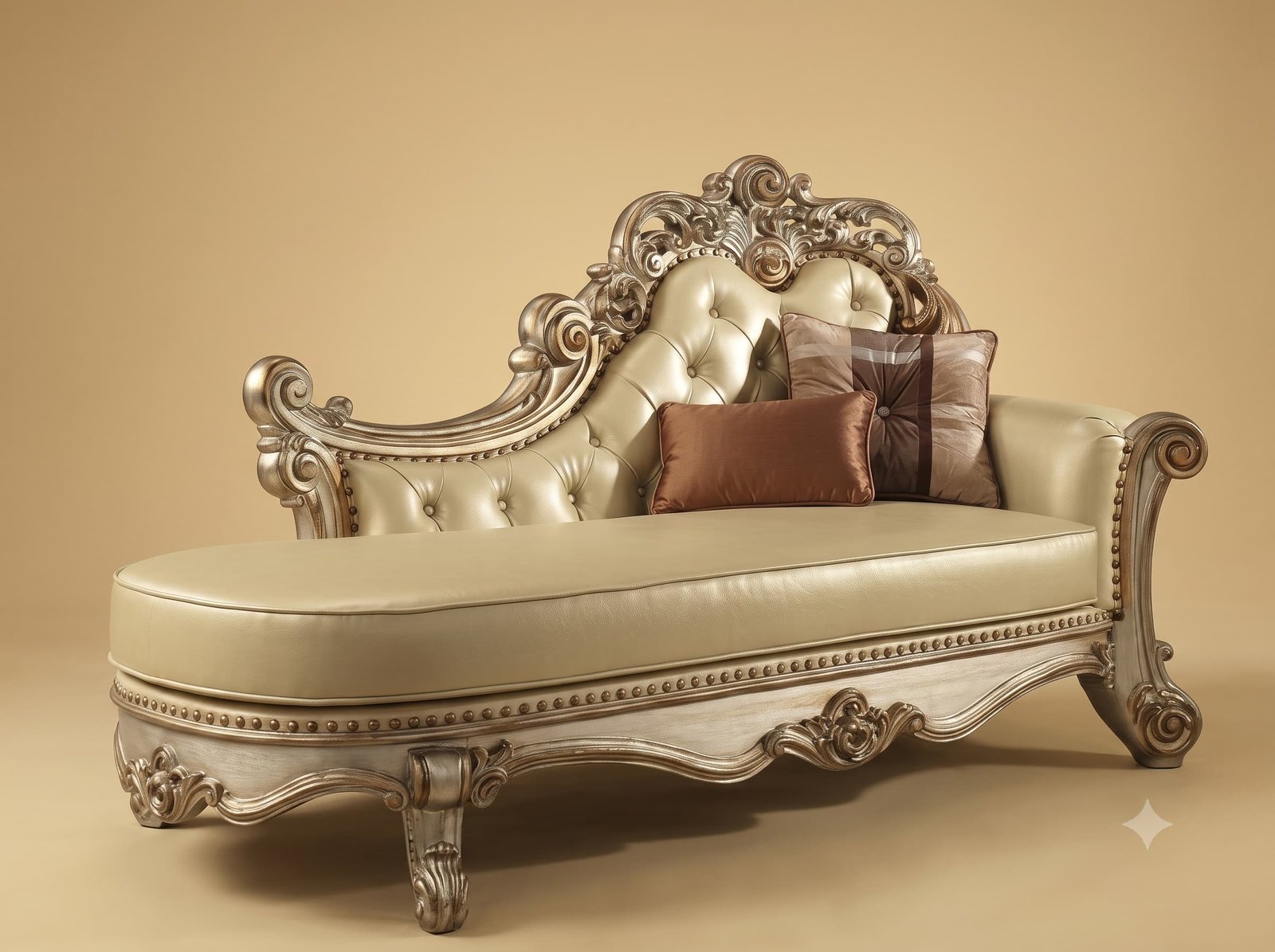
The rounded front of this seat has no pleats in it, and that is the hardest thing on the piece to achieve.
A seat that ends square can be covered in flat panels - front, side, top - each one meeting the next at a corner where any surplus material can be tucked away. This seat has no corner. The covering has to travel from the top face, over a rolled edge, round a continuous curve at the end and back along the side, all in one piece, with nothing gathered anywhere along the way.
Two things make that possible. The panel is cut on the cross rather than square to the weave, so the material has a natural give in the direction it needs to stretch. And it is worked round the curve gradually - eased and re-eased, a hand's width at a time, walking round the shape several times rather than pulling it tight in one pass.
Pull it tight in one pass and the surplus has to go somewhere: it appears as a pucker at the tightest part of the curve, and once it is there it cannot be worked out.
The stud line goes on last, following the finished edge and holding it.
 Ask Price On WhatsApp