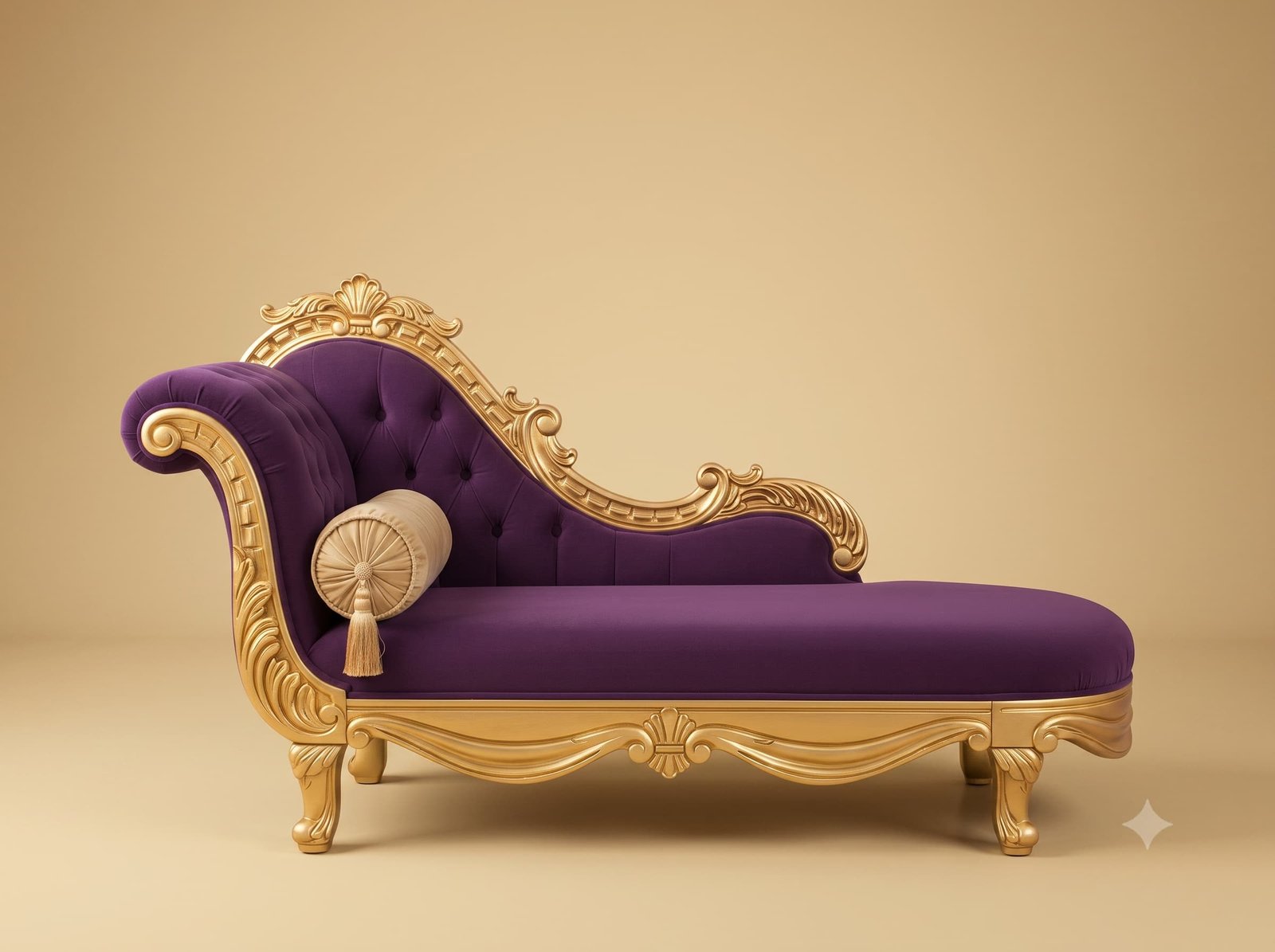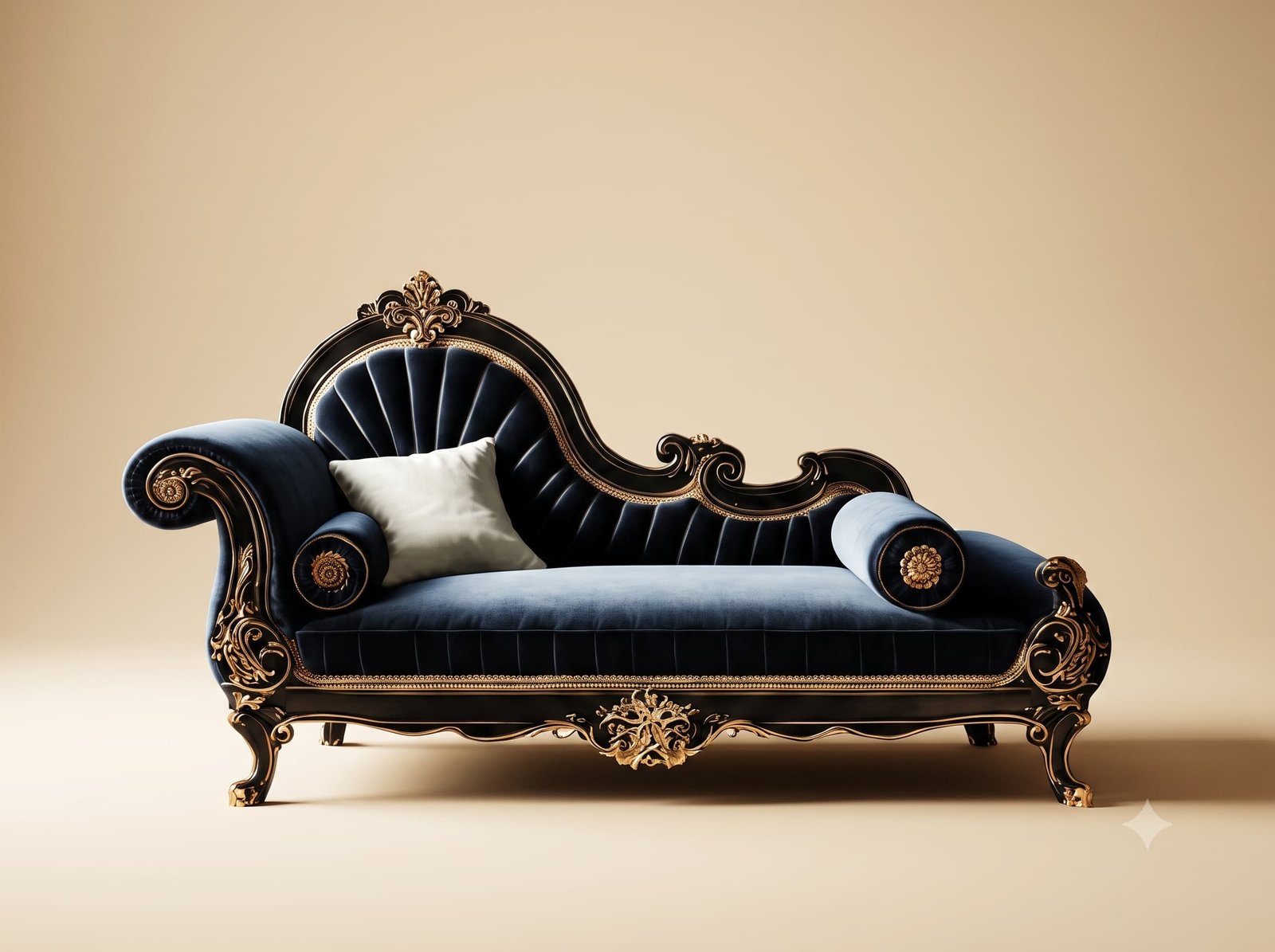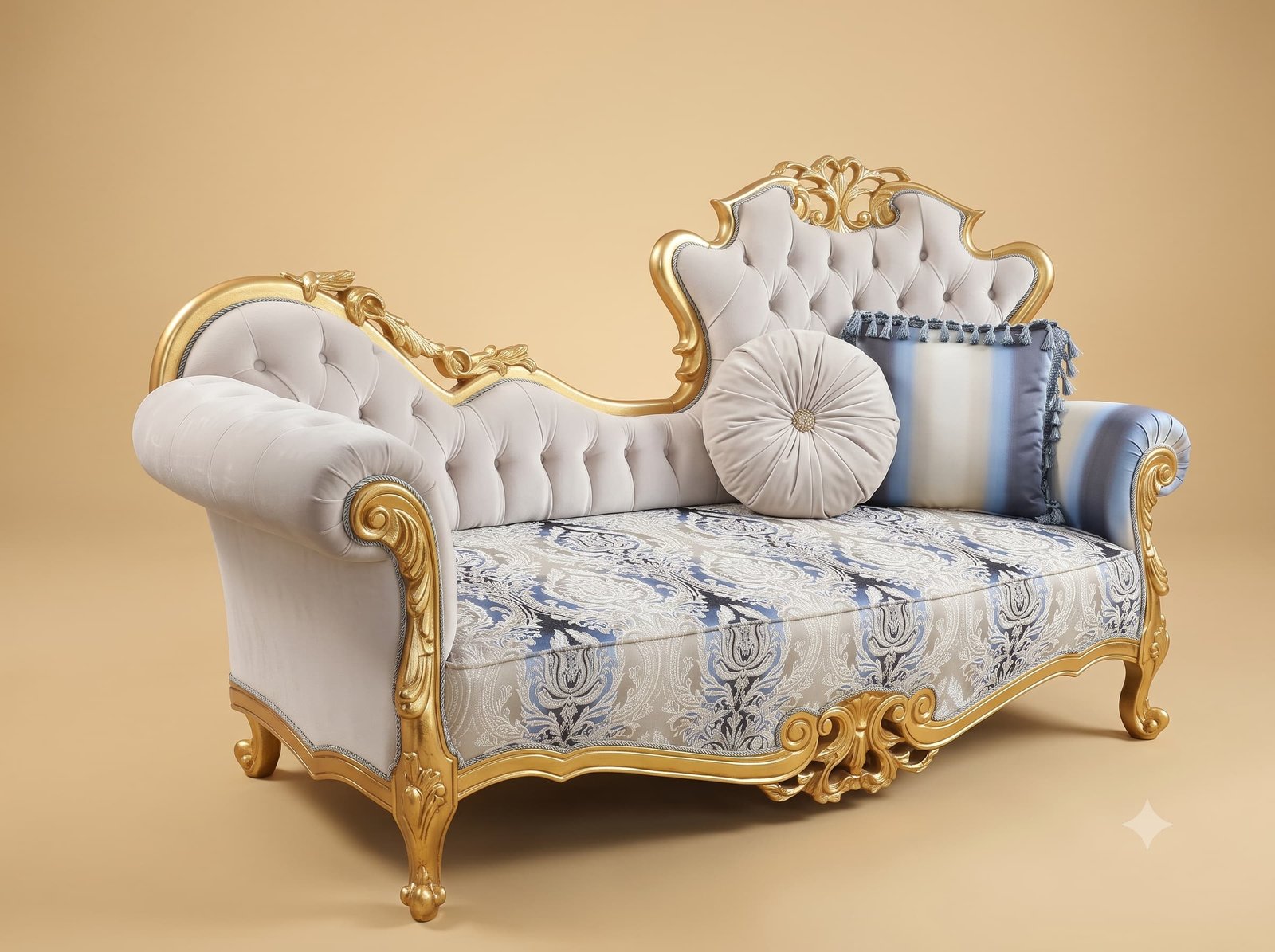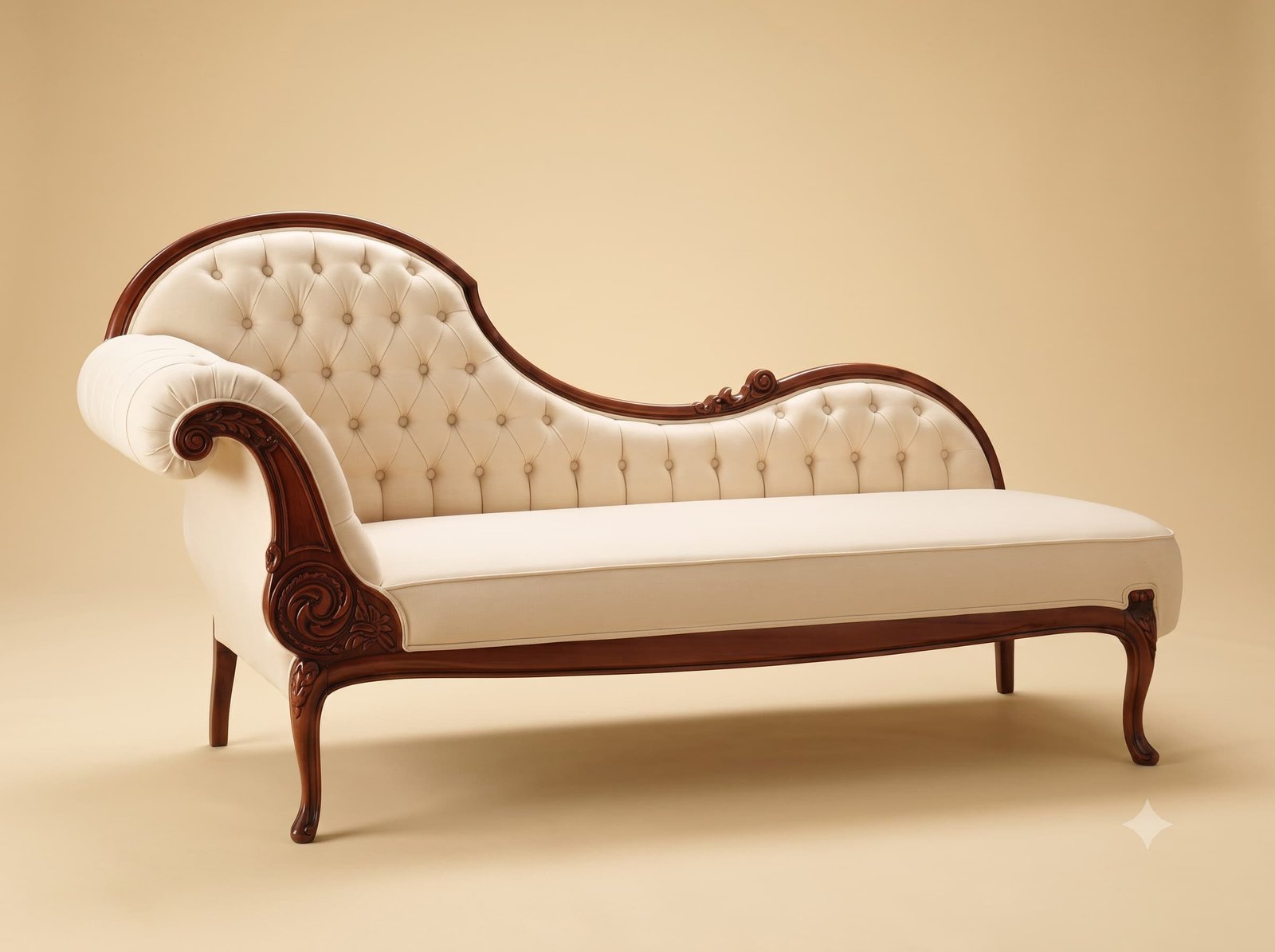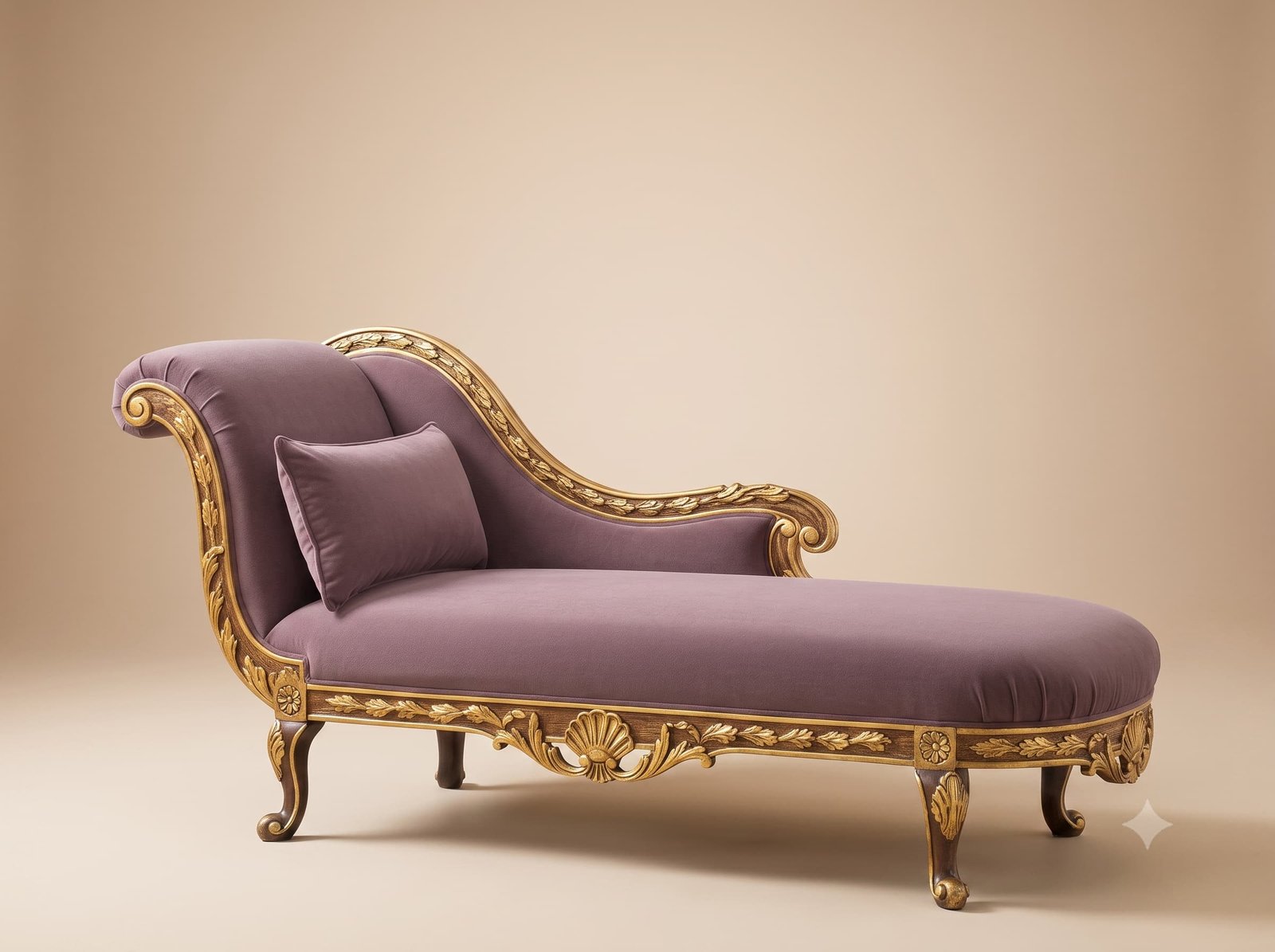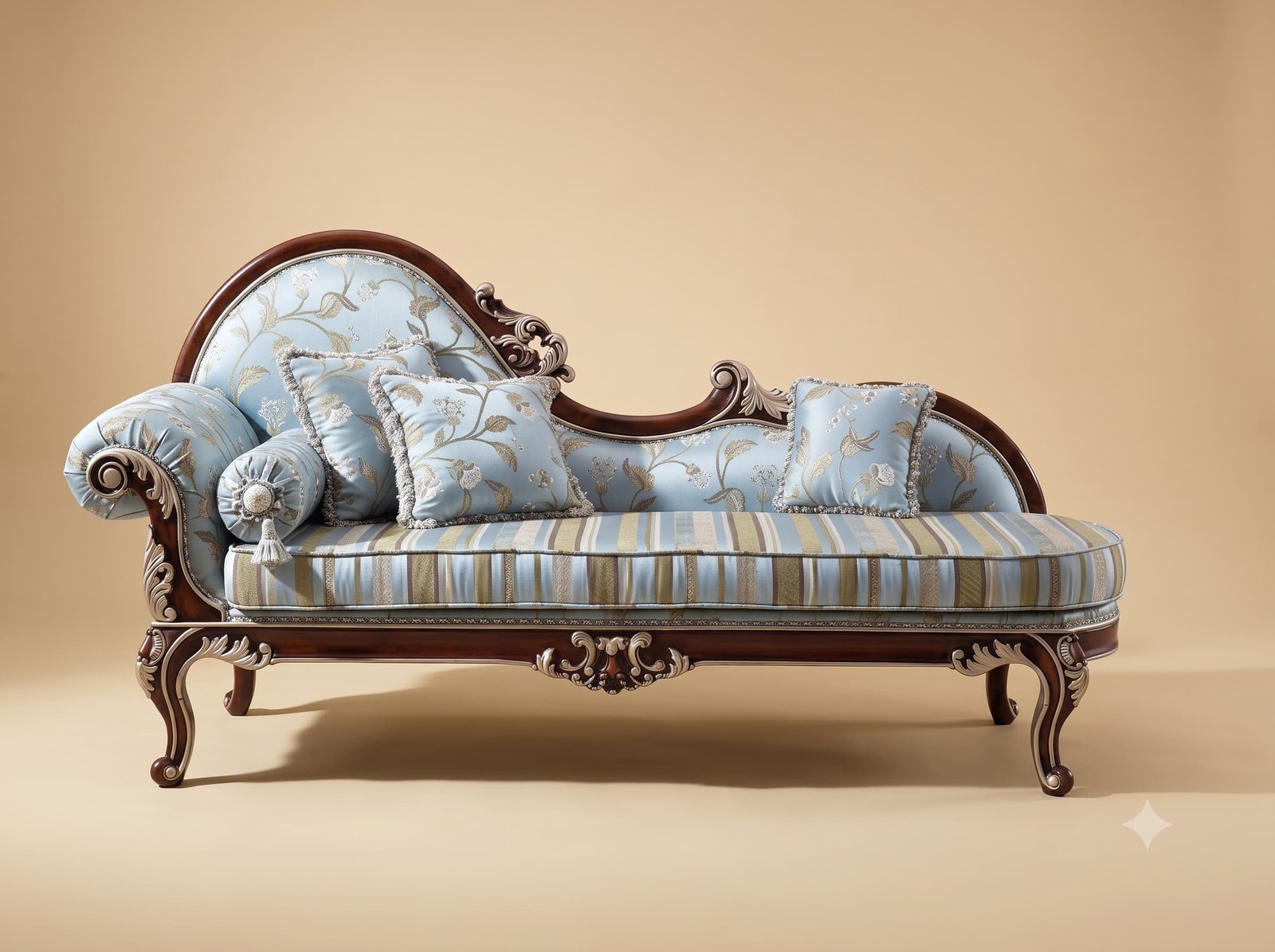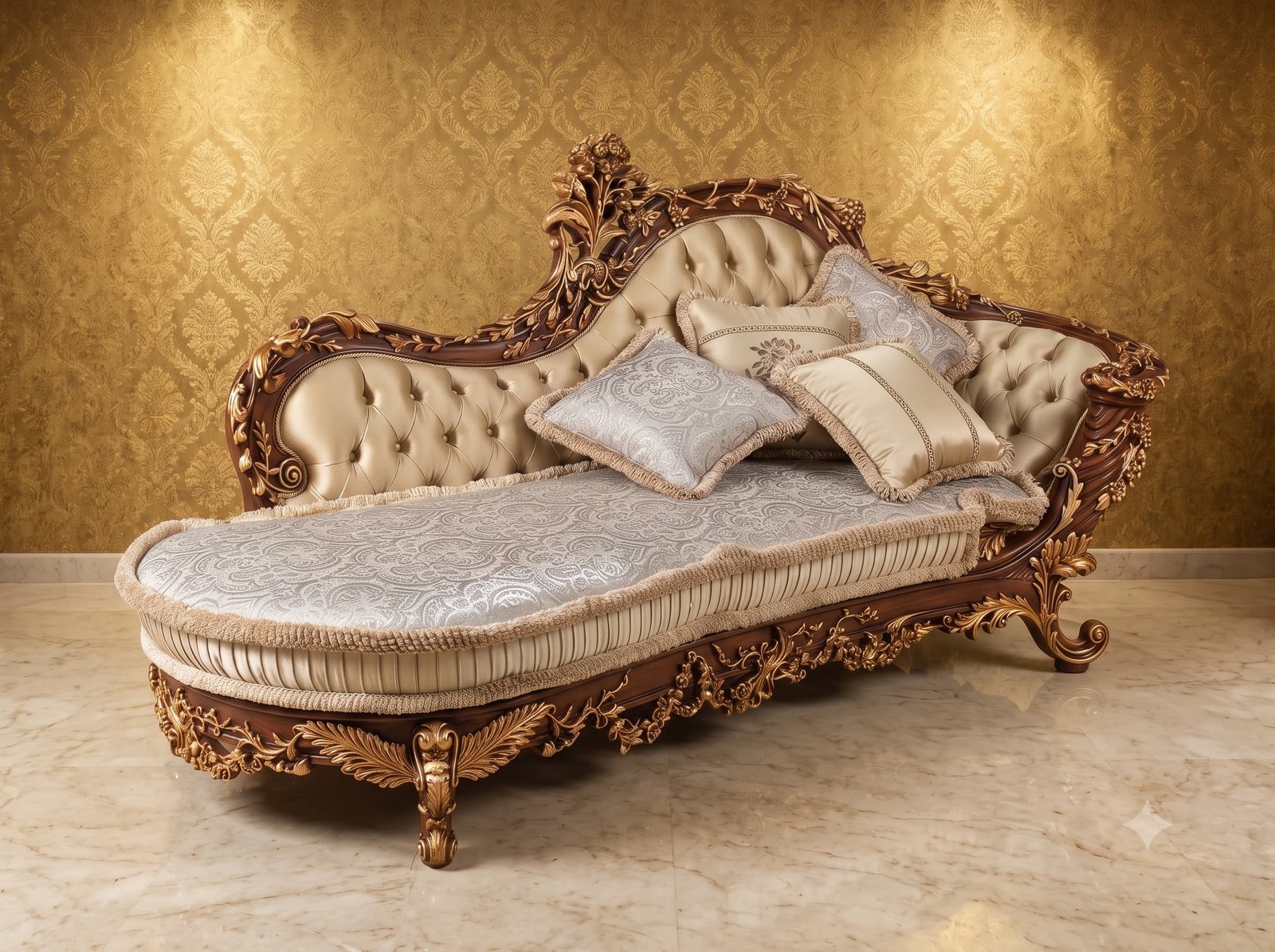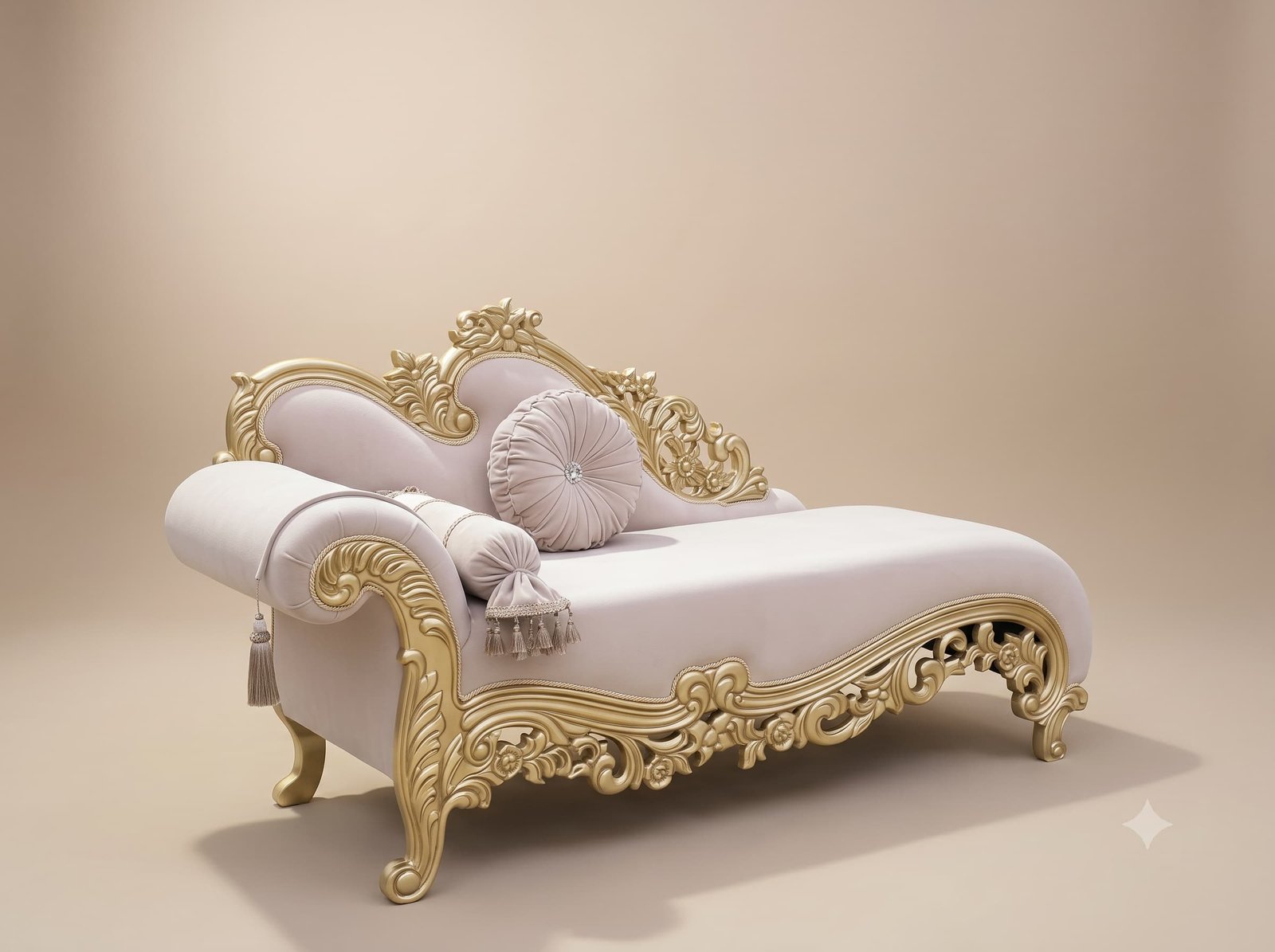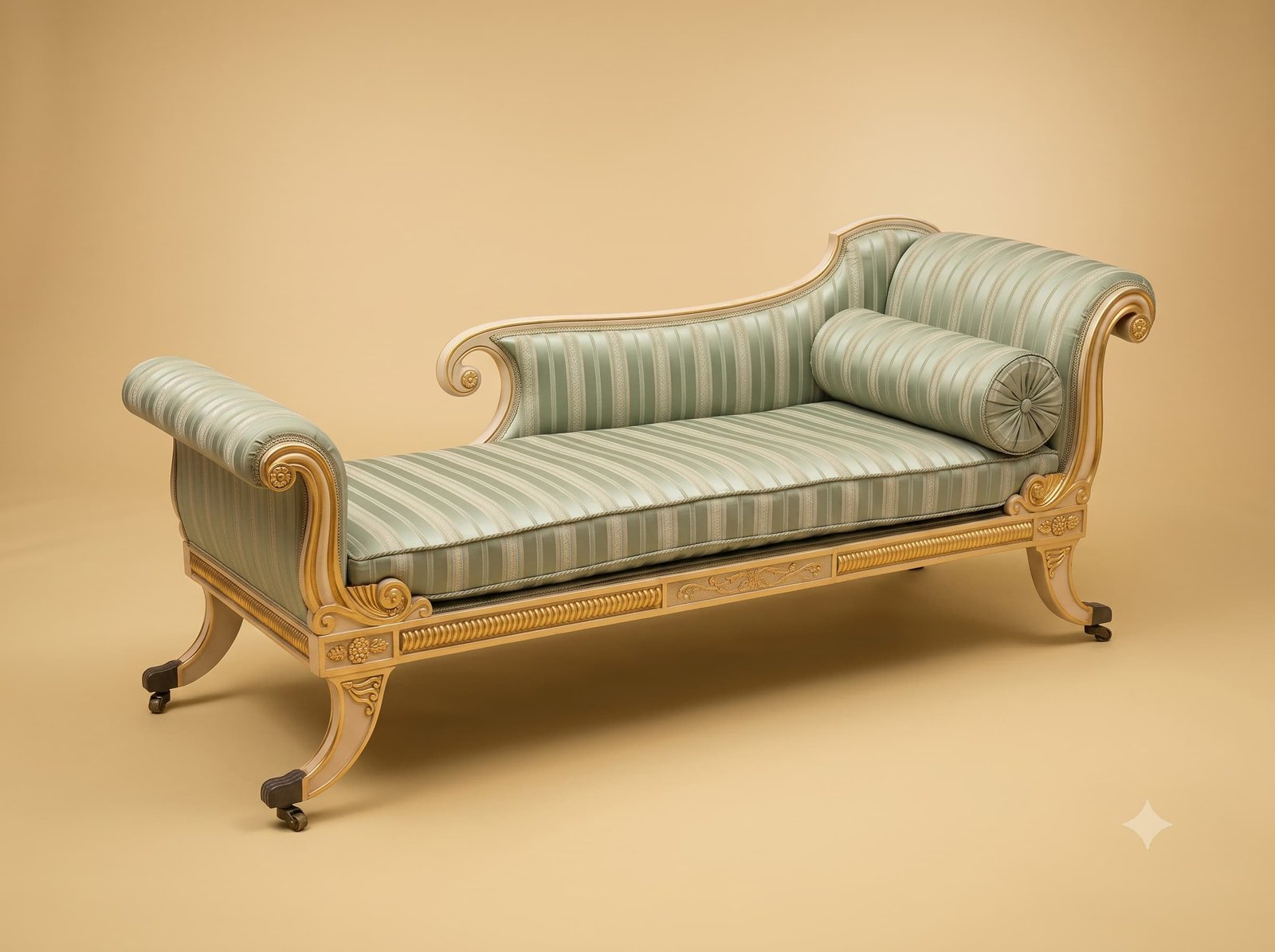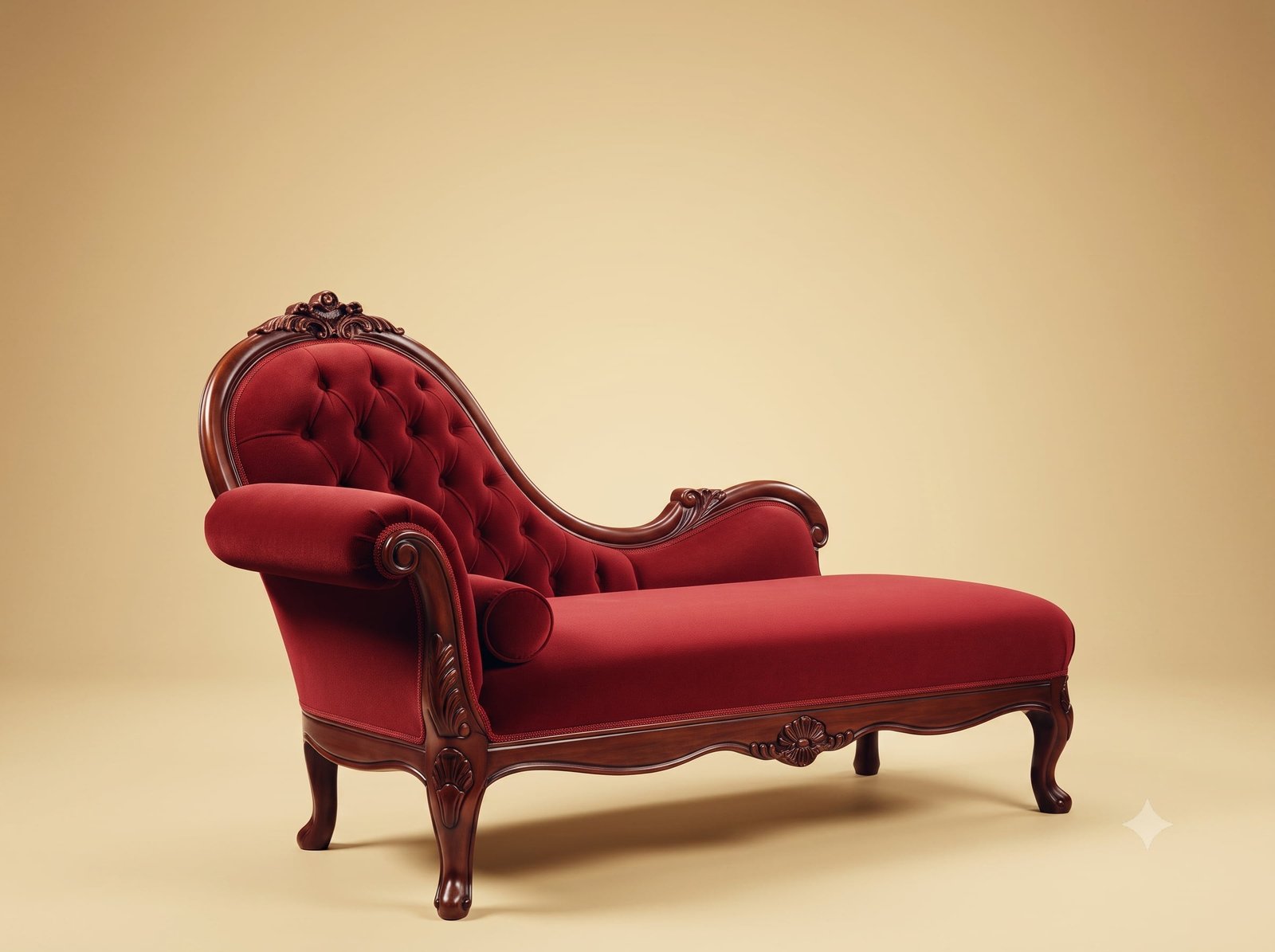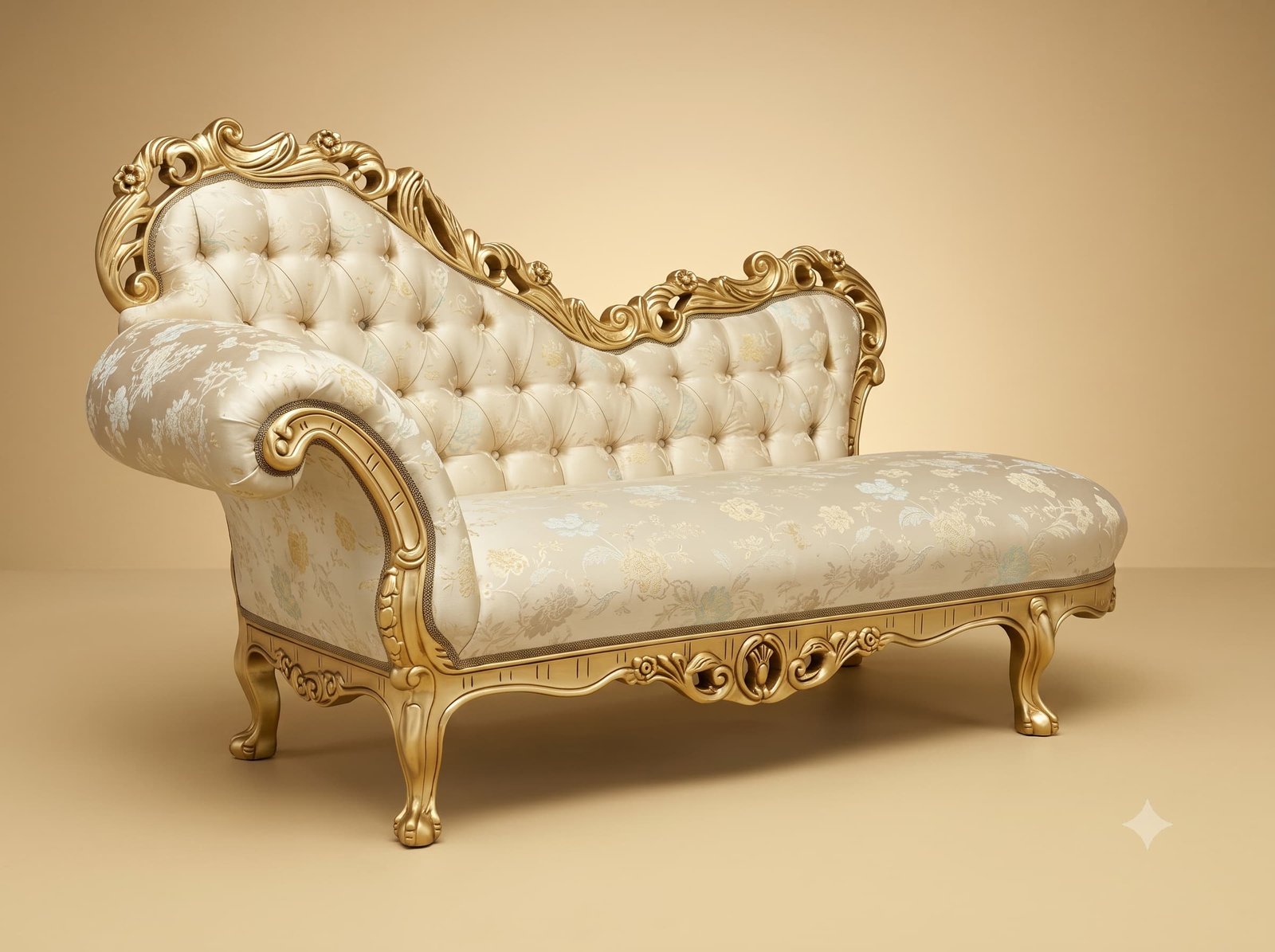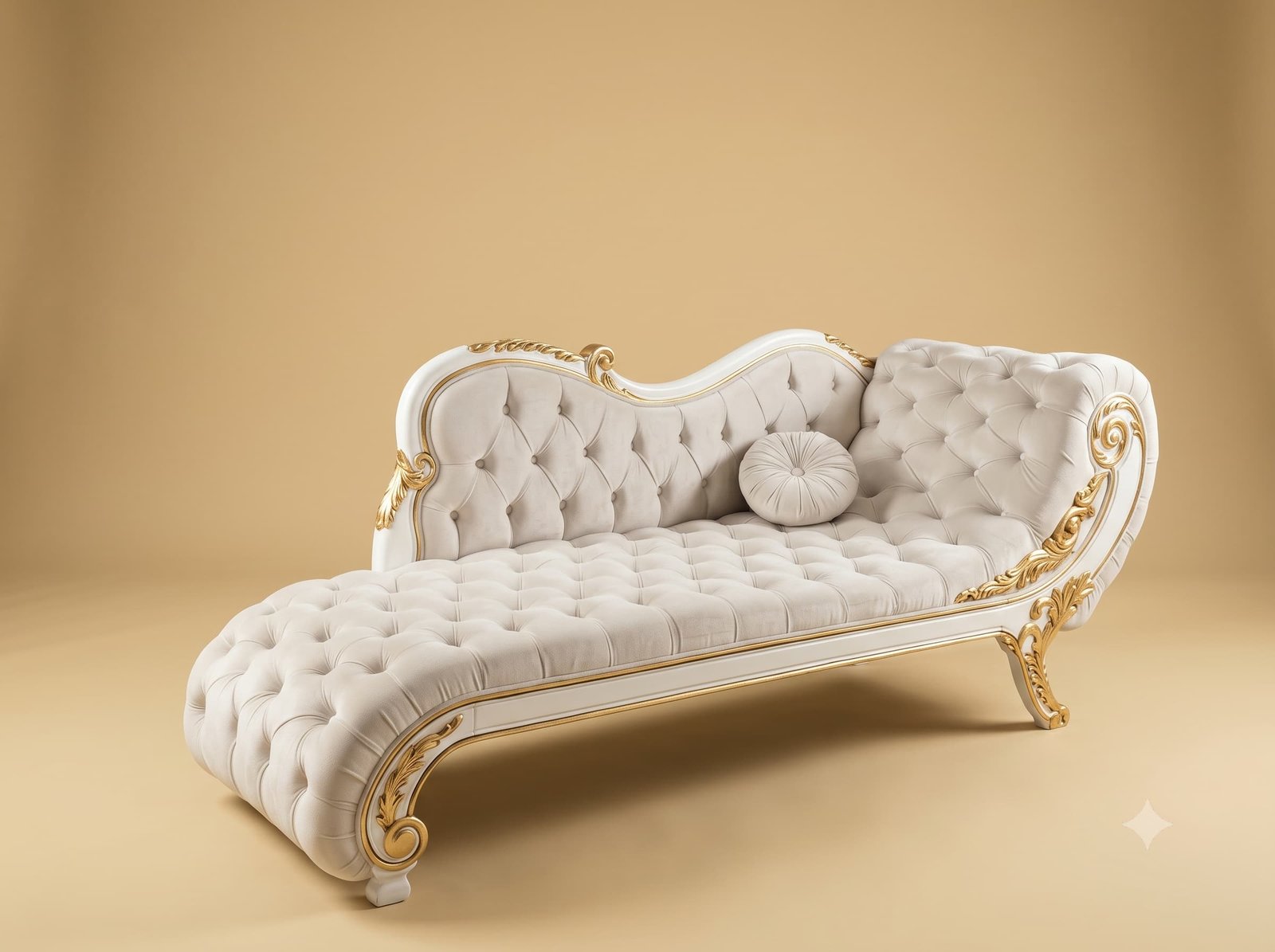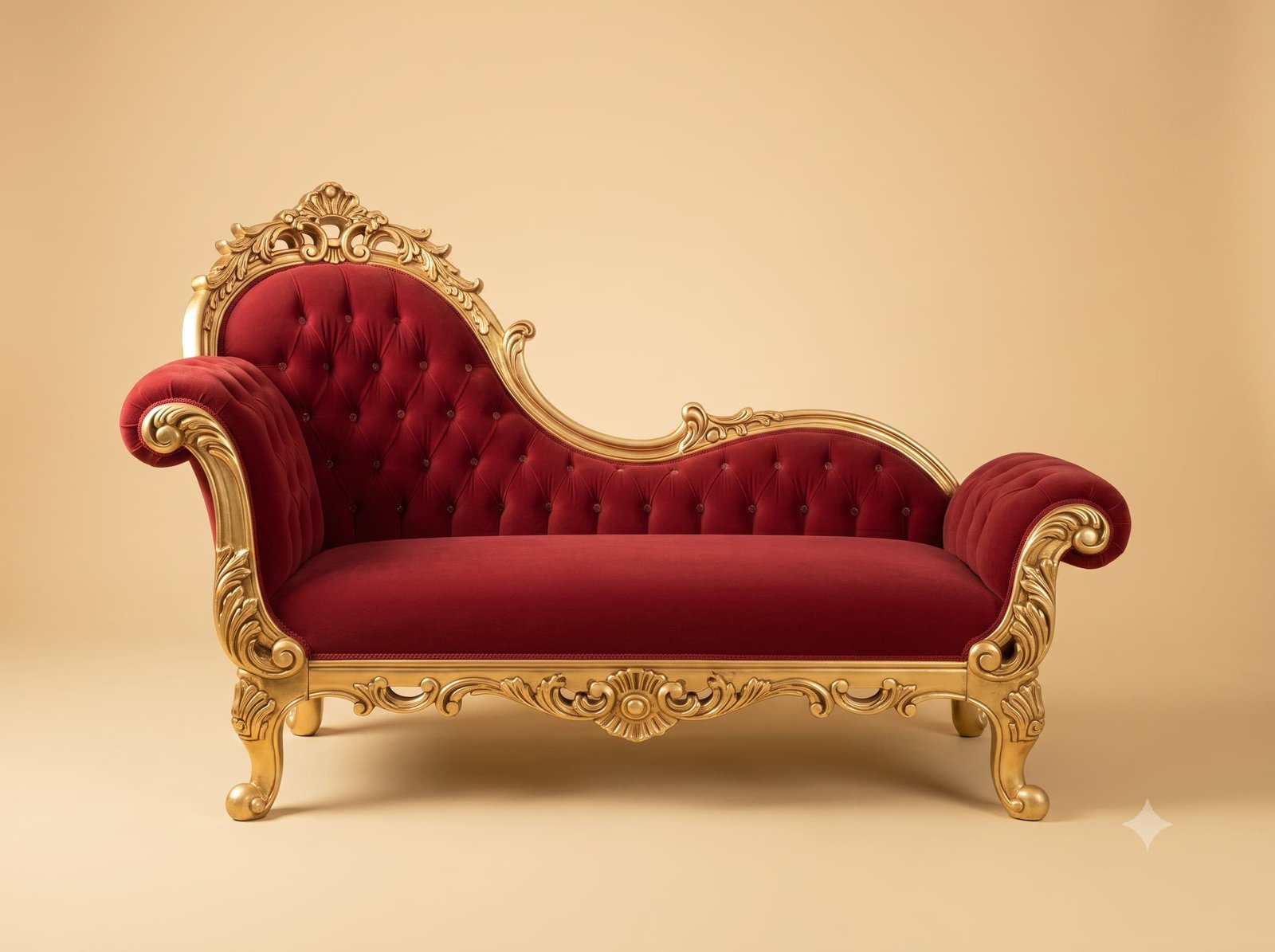
Under the gold on this frame there is a layer of coloured clay, and its colour is chosen for what will happen to the diwan in twenty years rather than for how it looks today.
Traditional gilding is not laid on bare timber. The wood is prepared, then coated with a fine clay ground called bole, and the gold is laid onto that. The bole is what allows the gold to be burnished to a hard brightness - but it is also what will show through when, eventually, the gold wears at the places hands and sleeves touch: the tops of the arm scrolls, the crest of the back, the outer edge of the apron.
Choose a cool grey bole and those worn edges will one day read as pale and thin against the gold around them. Choose a warm red-brown bole and the same wear reads as depth - a warm line under the gold that looks like age rather than damage. Antique gilded furniture is admired for exactly that effect.
So the bole on this diwan is mixed warm, and it is laid heaviest on the parts most likely to be touched. Nobody sees it on the day it arrives. That is the point of it.
 Ask Price On WhatsApp