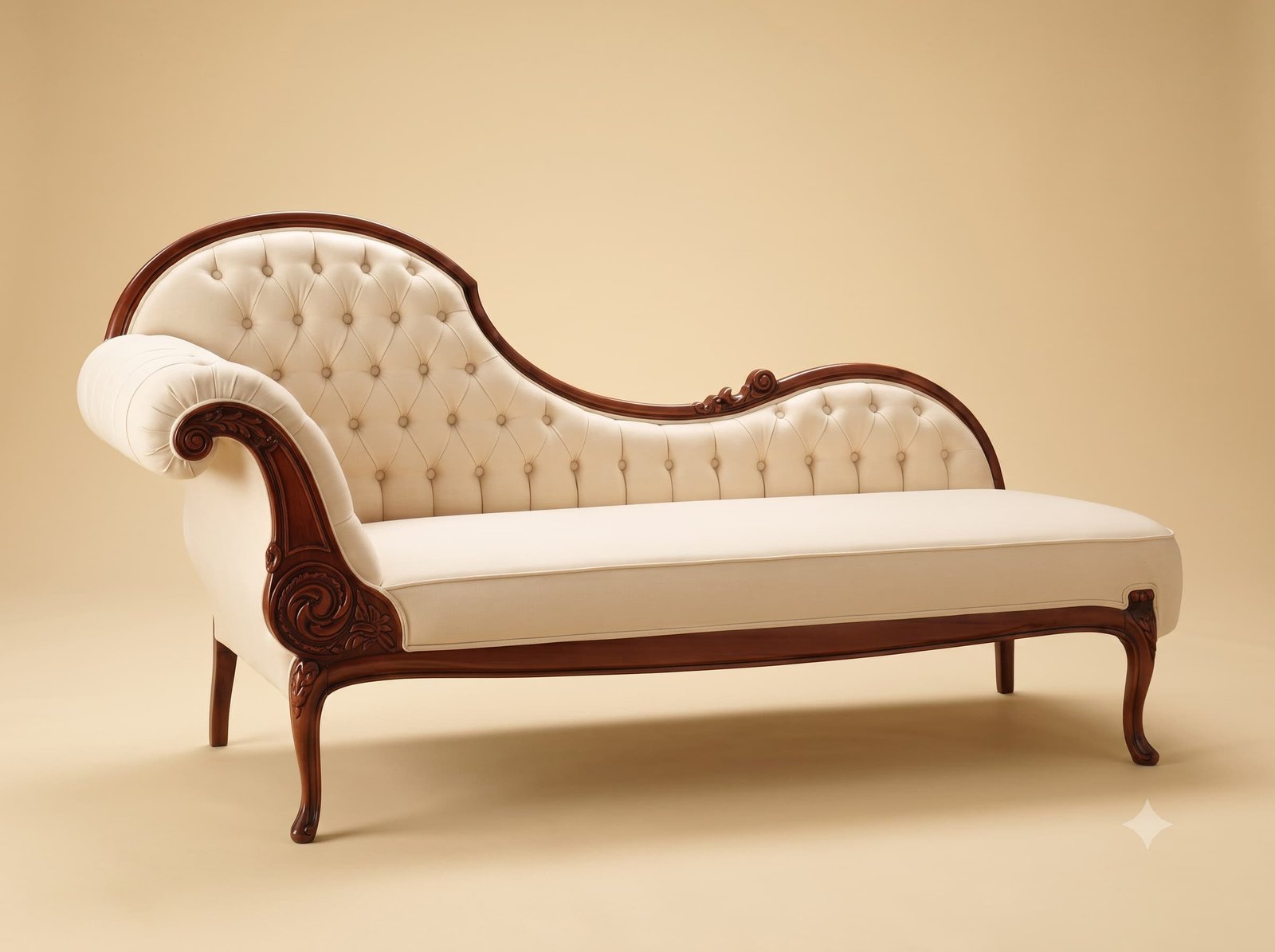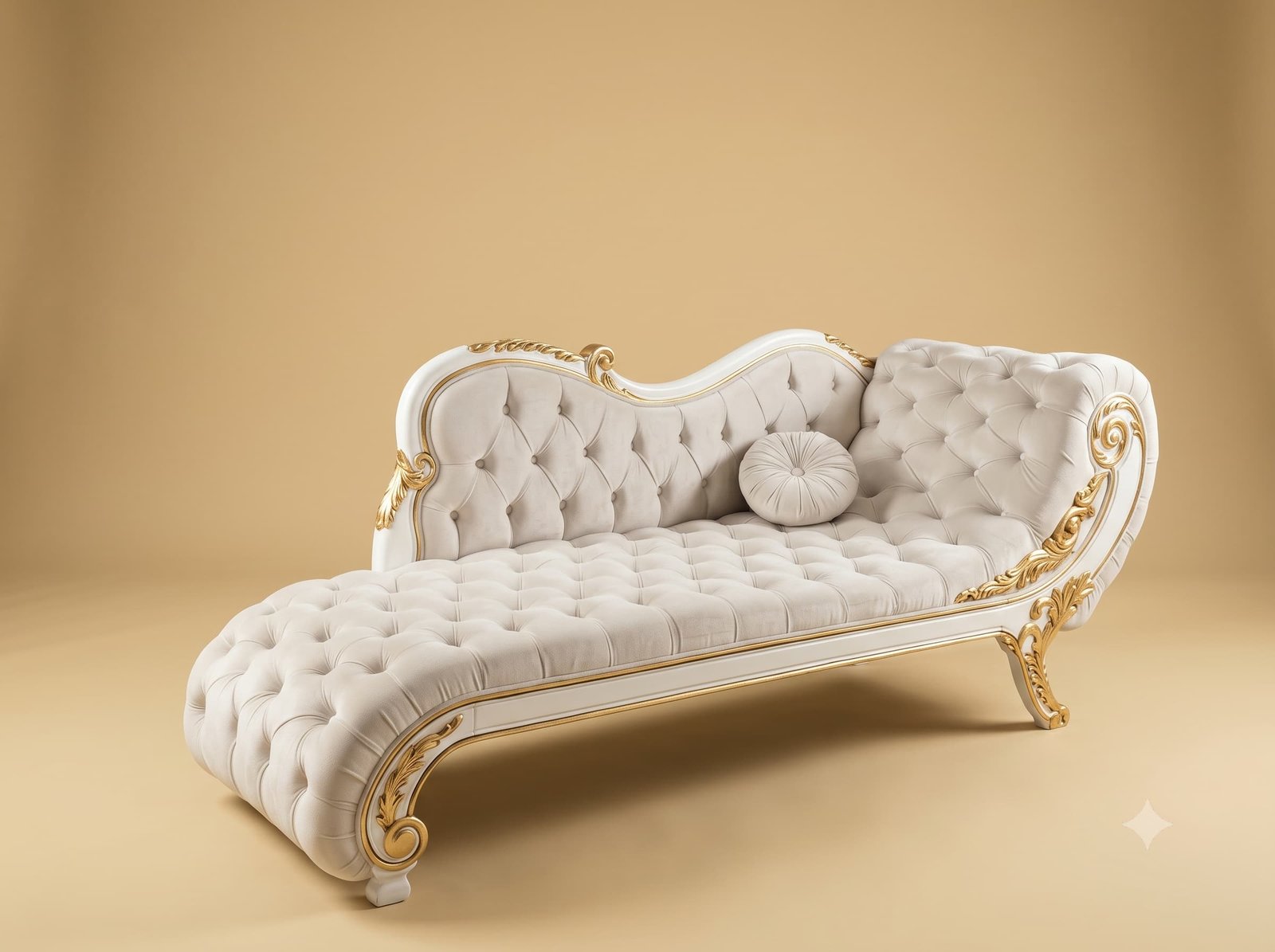
Buttoning a flat surface is one job. Carrying that buttoning over an edge that turns downwards - as this seat does at the foot - is a different one, and the depth of each button has to change as it goes.
A button works by pulling the covering down into the stuffing. On a flat plane every button can be pulled to the same depth, and the result is an even grid.
Where the surface begins to curve away, that stops being true. Pull a button to the same depth on a turning surface and it drags the covering across the curve rather than into it: the material lifts off the shape just below the button, and instead of a soft dome you get a flat facet with a crease at its lower edge. A row of those down a sweeping foot end ruins the curve the frame was shaped to make.
So the depths are reduced progressively as the surface turns - each row a little shallower than the one above it, with the last row barely pulled at all.
Measured on the bench it looks inconsistent. Seen on the finished piece from across the room, every button reads the same depth, because each one is set to the surface it sits on.
 Ask Price On WhatsApp