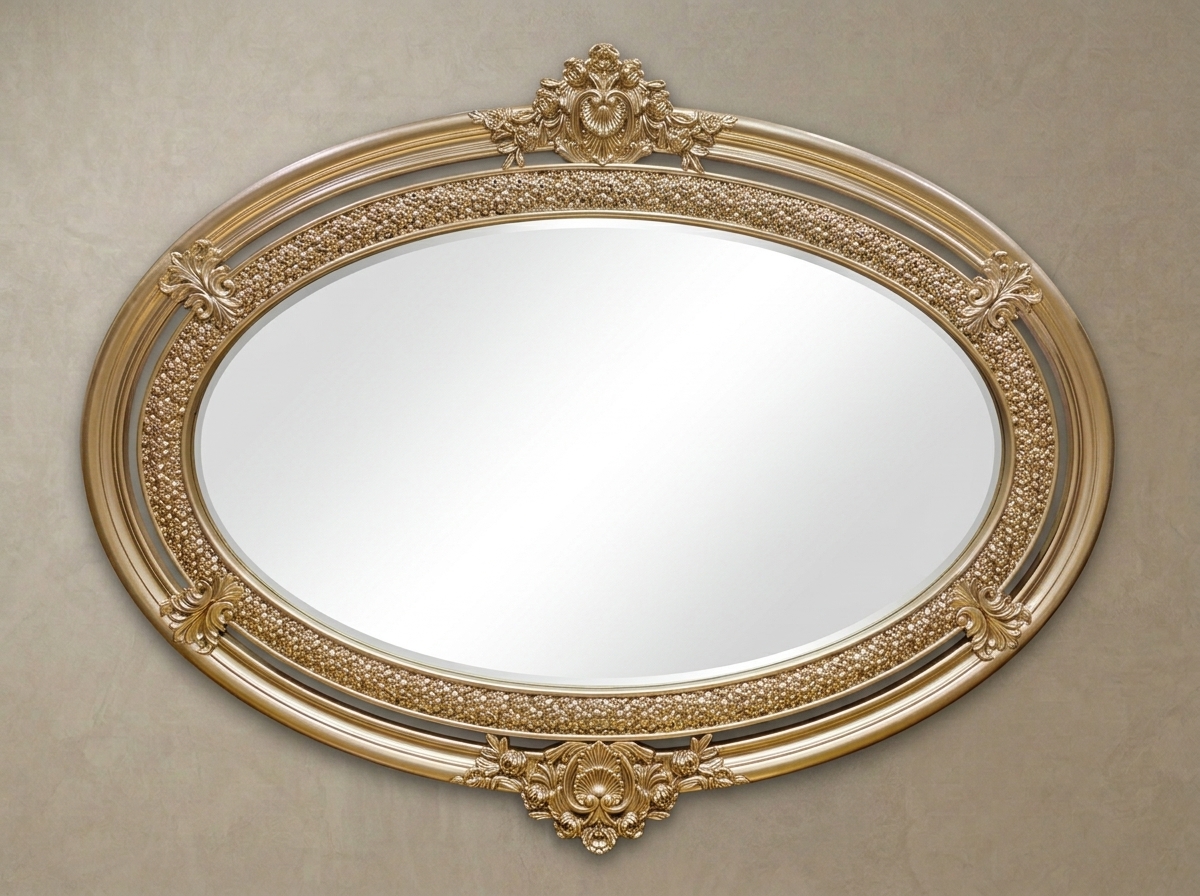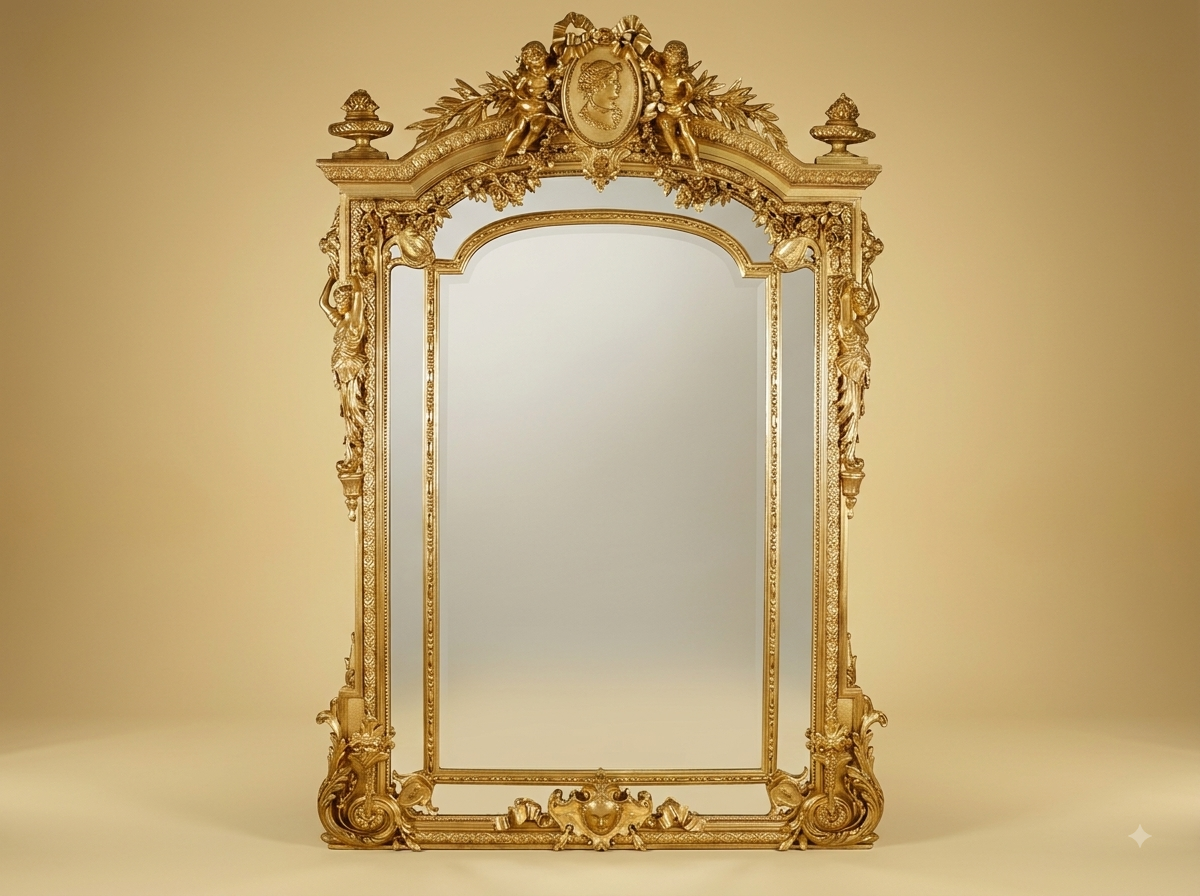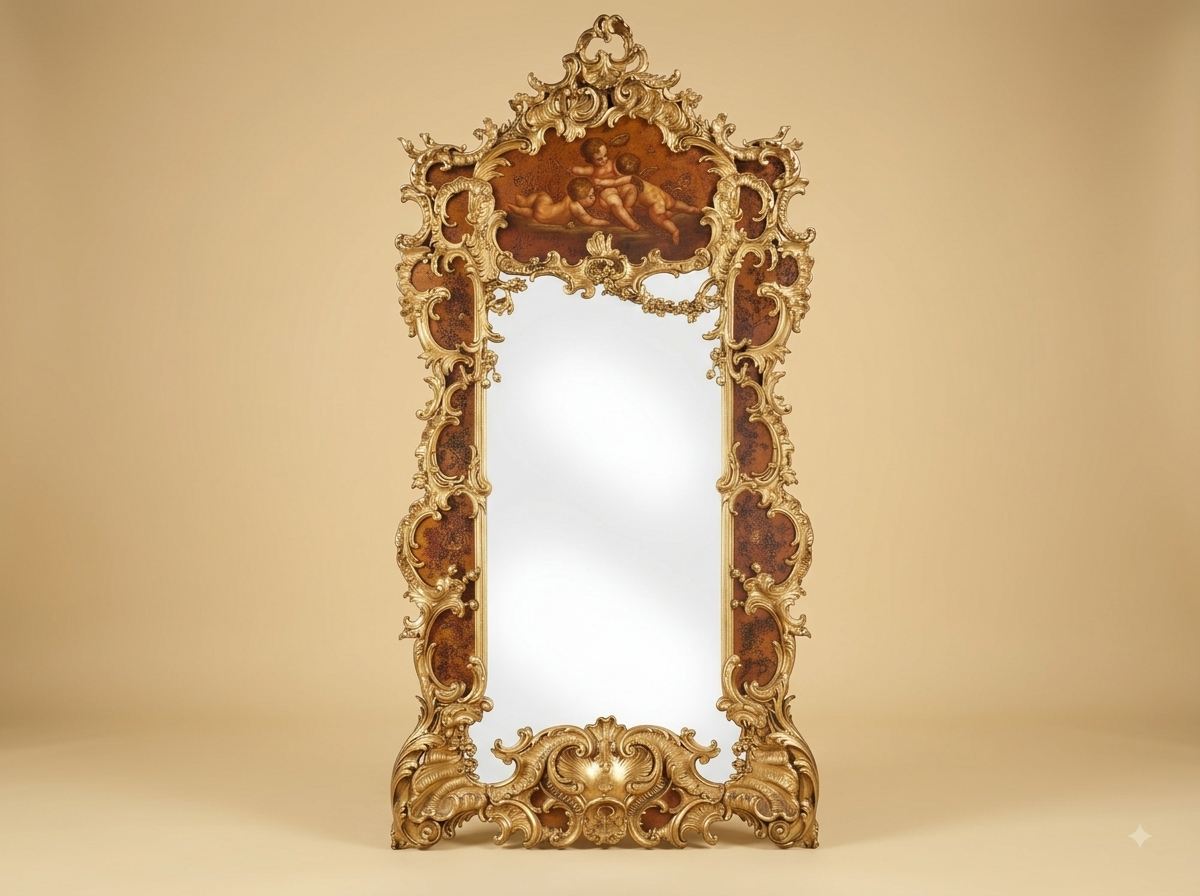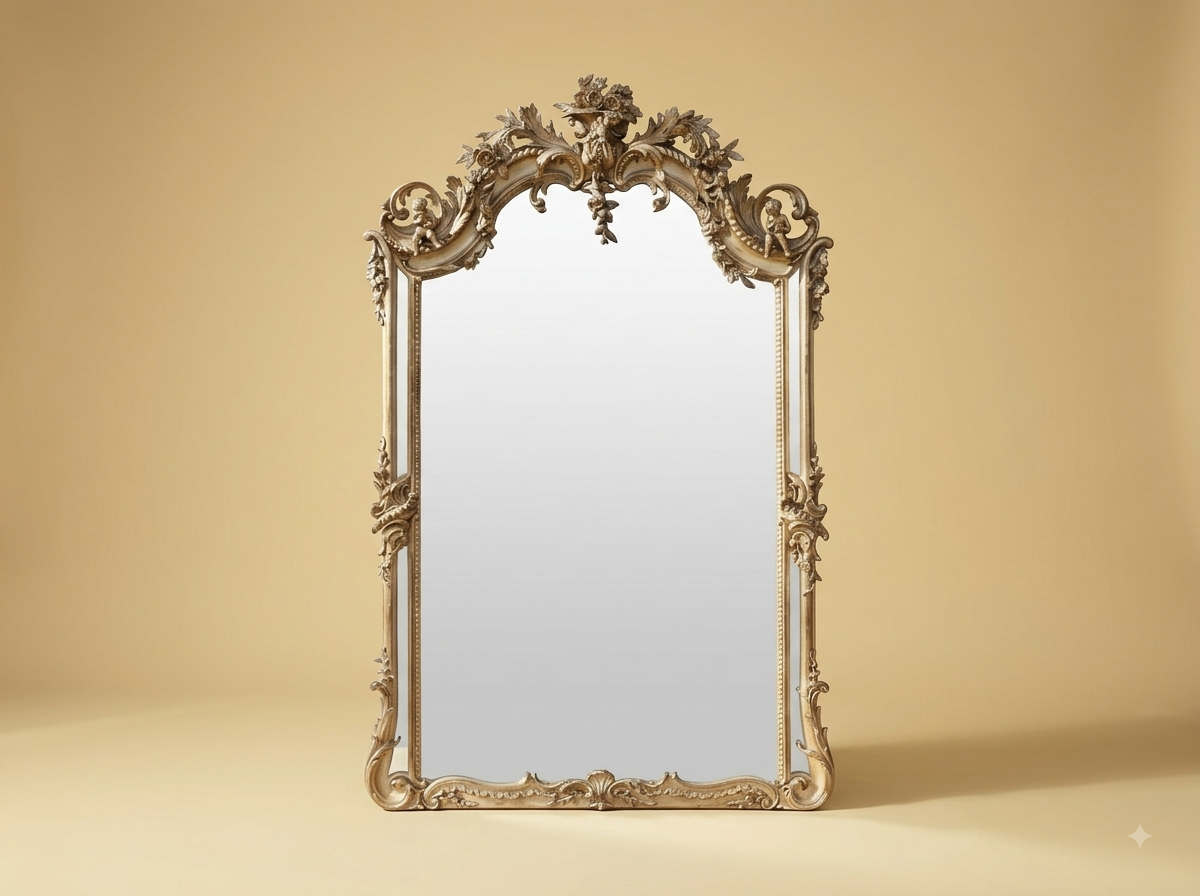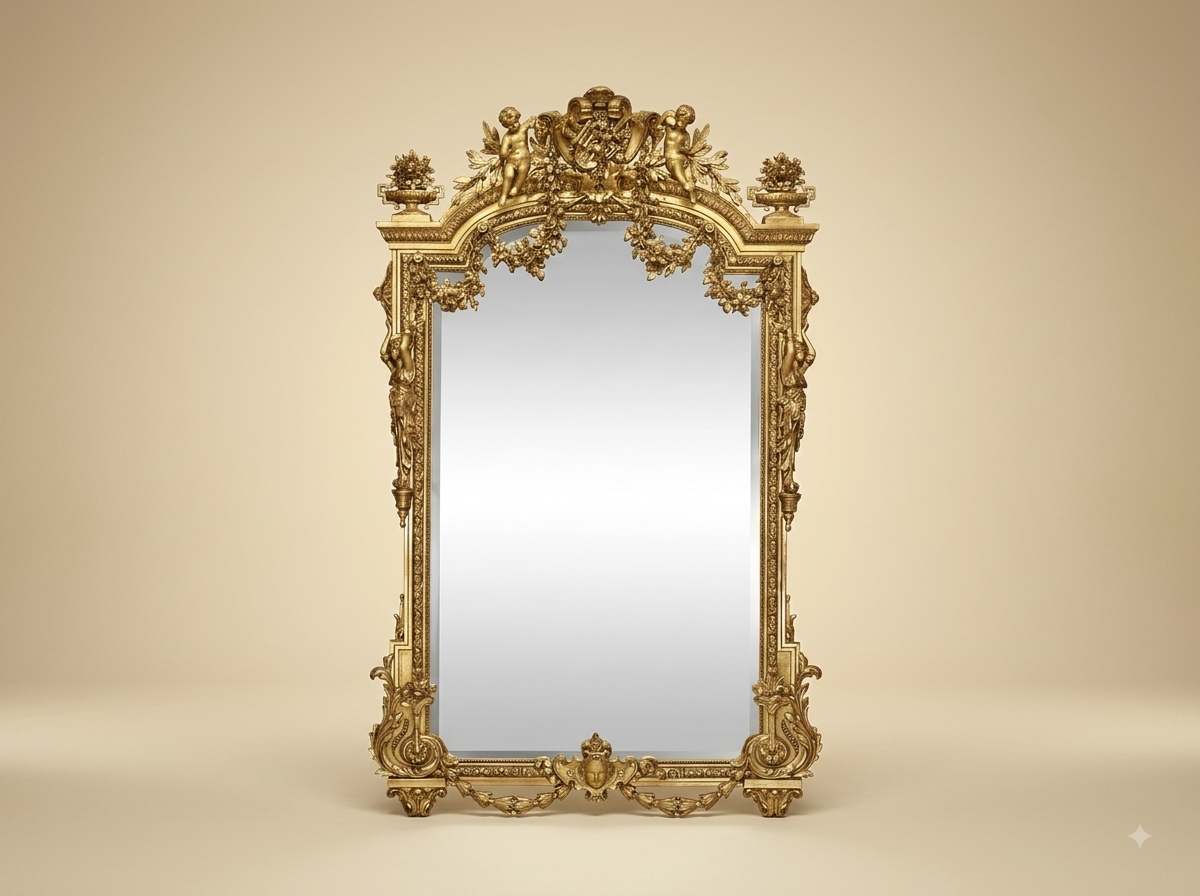
The two cherubs at the top of this mirror are not carved looking straight ahead. Their heads are tipped forward by a few degrees, and their faces are turned very slightly down and inward.
That is because of where they will live. An overmantel crest sits well above eye level - often two metres or more off the floor above a chimneypiece - and a figure carved to look correct on the workbench will, from that height, appear to be gazing at the ceiling with its chin lost in shadow. Our artisans allow for it in the setting-out, tilting the head and lifting the underside of the chin so that from a standing position in the middle of the room the faces read level and open.
The angle depends on how high the piece will hang, which is why we ask for your shelf height and ceiling height before the crest is carved rather than after. On a low chimneypiece the tilt is slight. On a tall one it is pronounced enough to look odd if you ever saw the crest on a bench - and exactly right once it is on your wall.
 Ask Price On WhatsApp