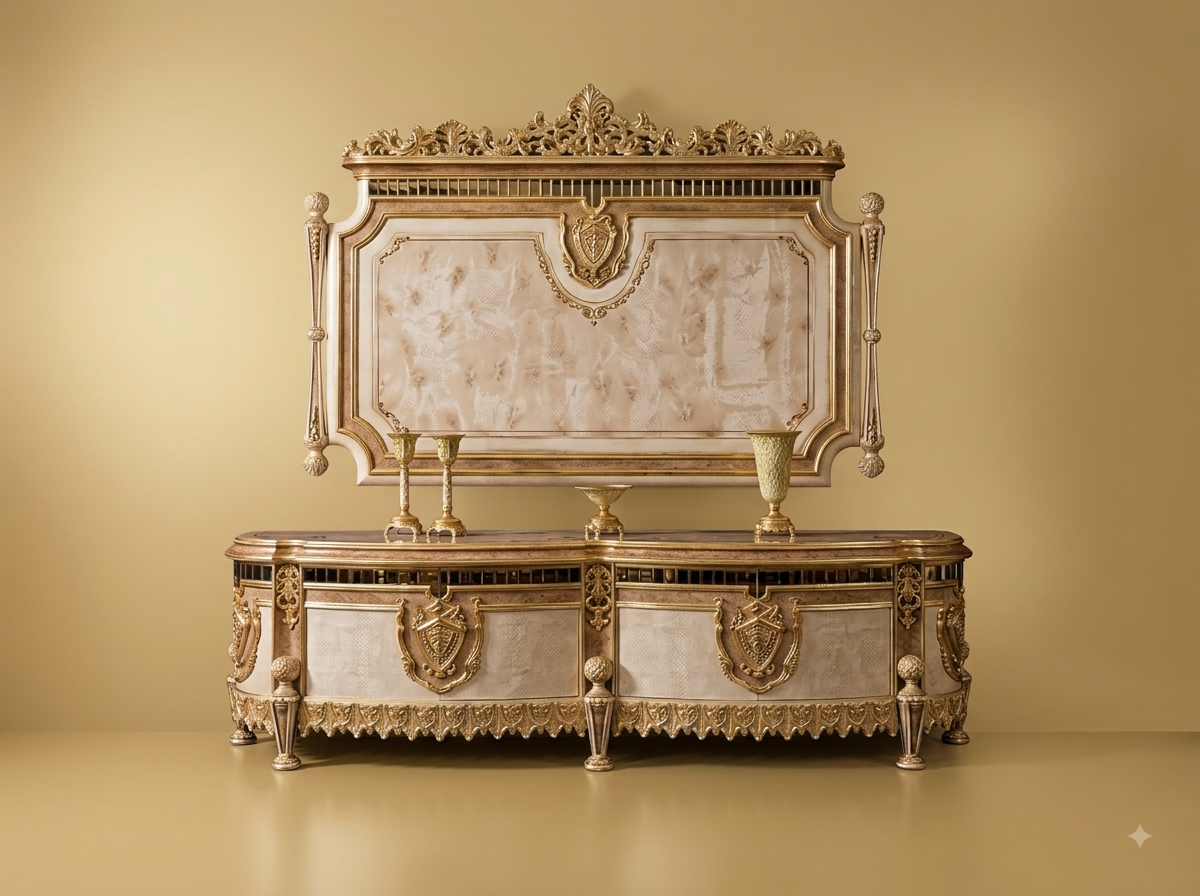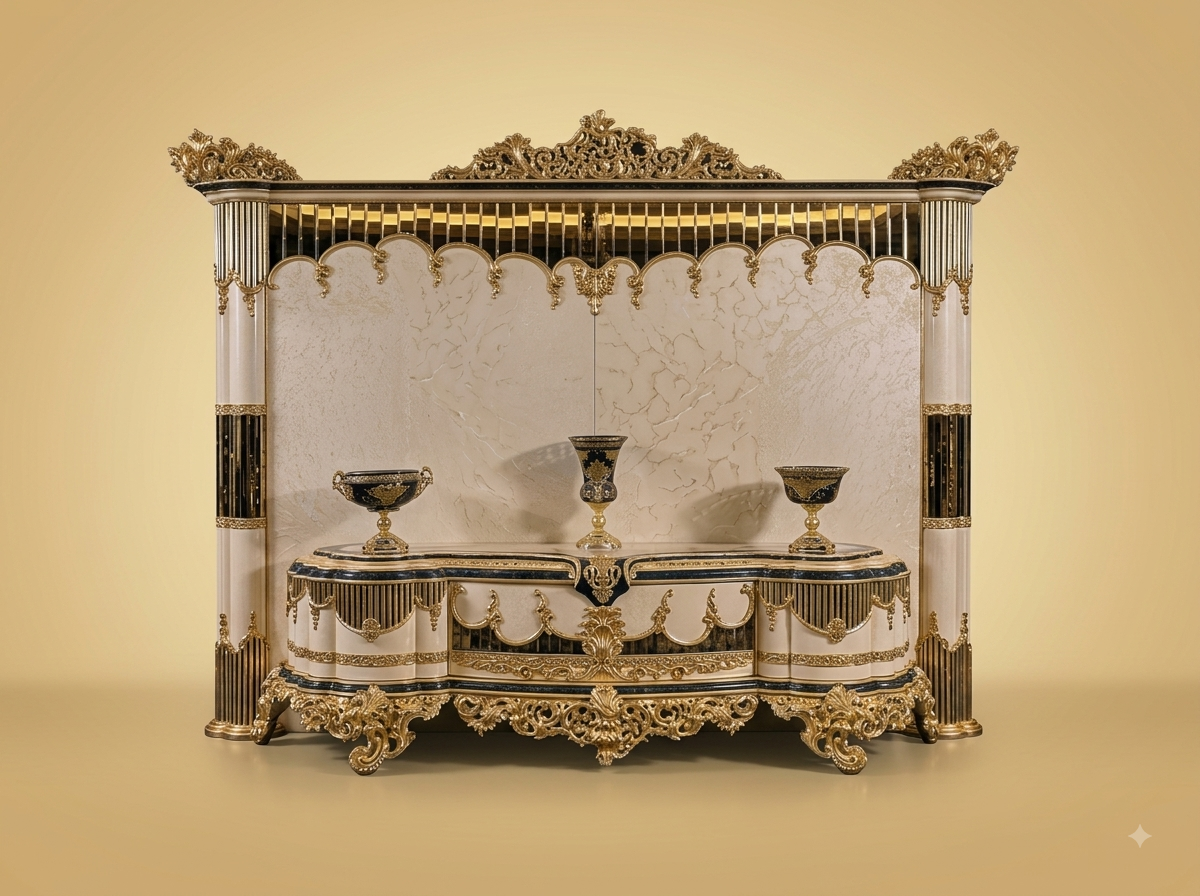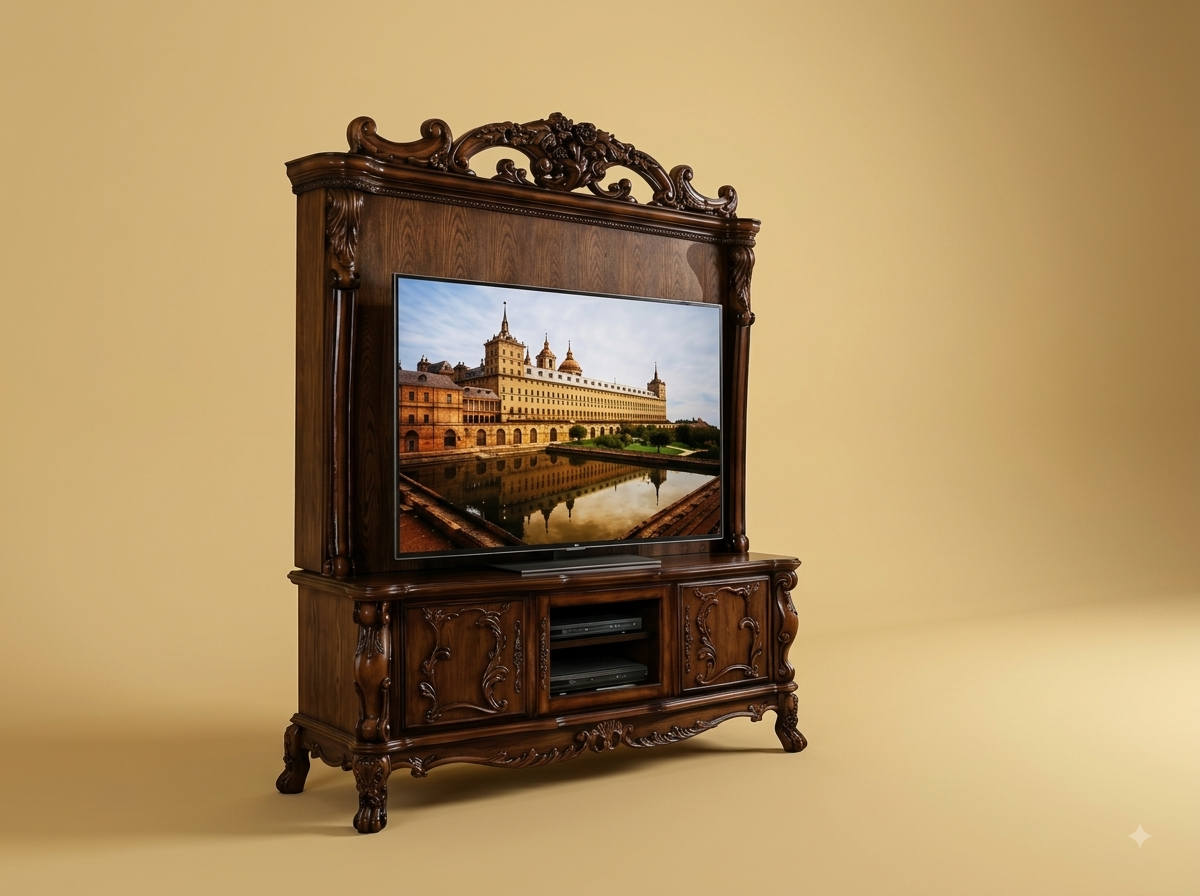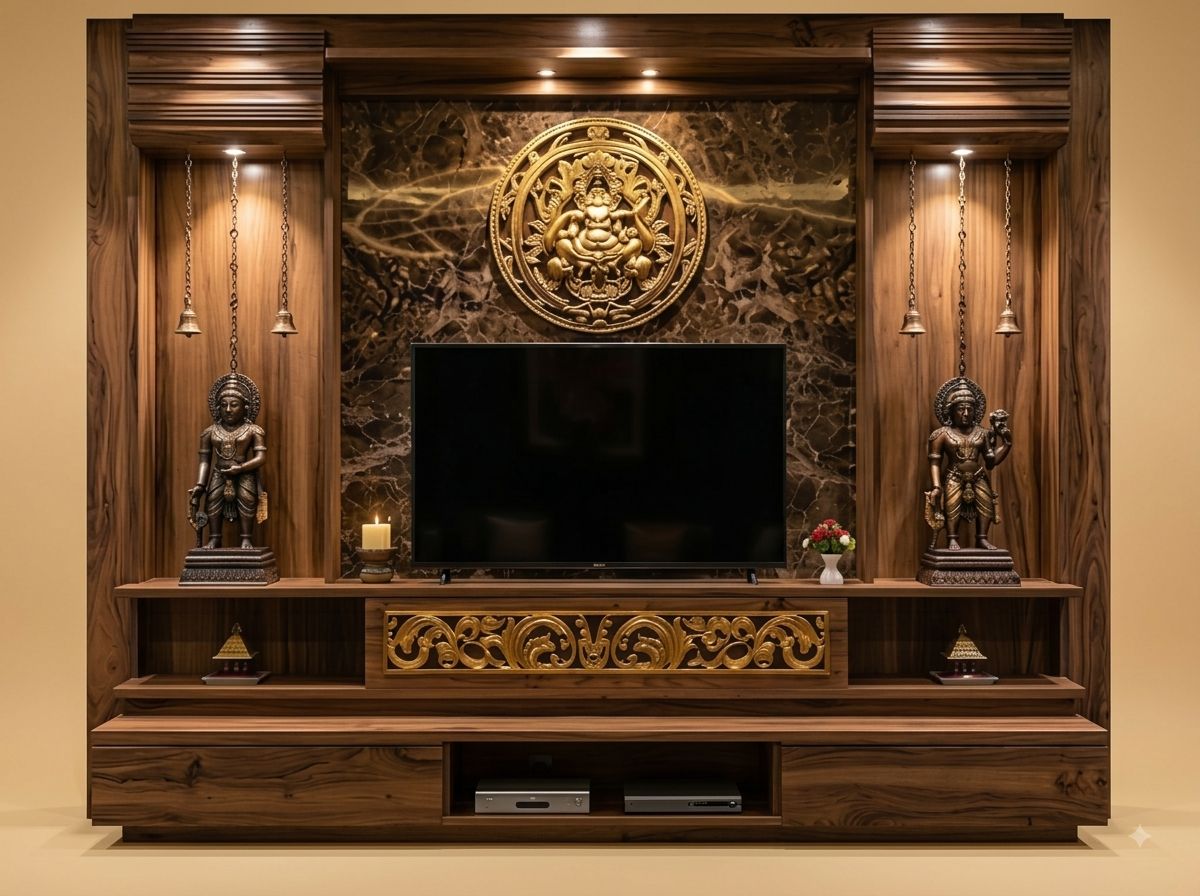
A three-lobed back is a shape drawn with a compass, not by eye - and the radii have to relate to each other or the curves fight.
The centre lobe is set out first, its width taken from the screen it will frame. The two outer lobes are then struck from centres placed so that each curve meets its neighbour tangentially - that is, so the two arcs share a common direction at the point where they touch. Where that is done, the eye runs smoothly from one lobe into the next. Where it is not, there is a visible kink at each junction, and no amount of carving over the joint disguises it.
Our artisans strike the whole outline full size on a board before any timber is cut, and stand back from it. A curve that is mathematically tangential can still look wrong at full scale, and the drawing is adjusted until it looks right rather than until it is correct.
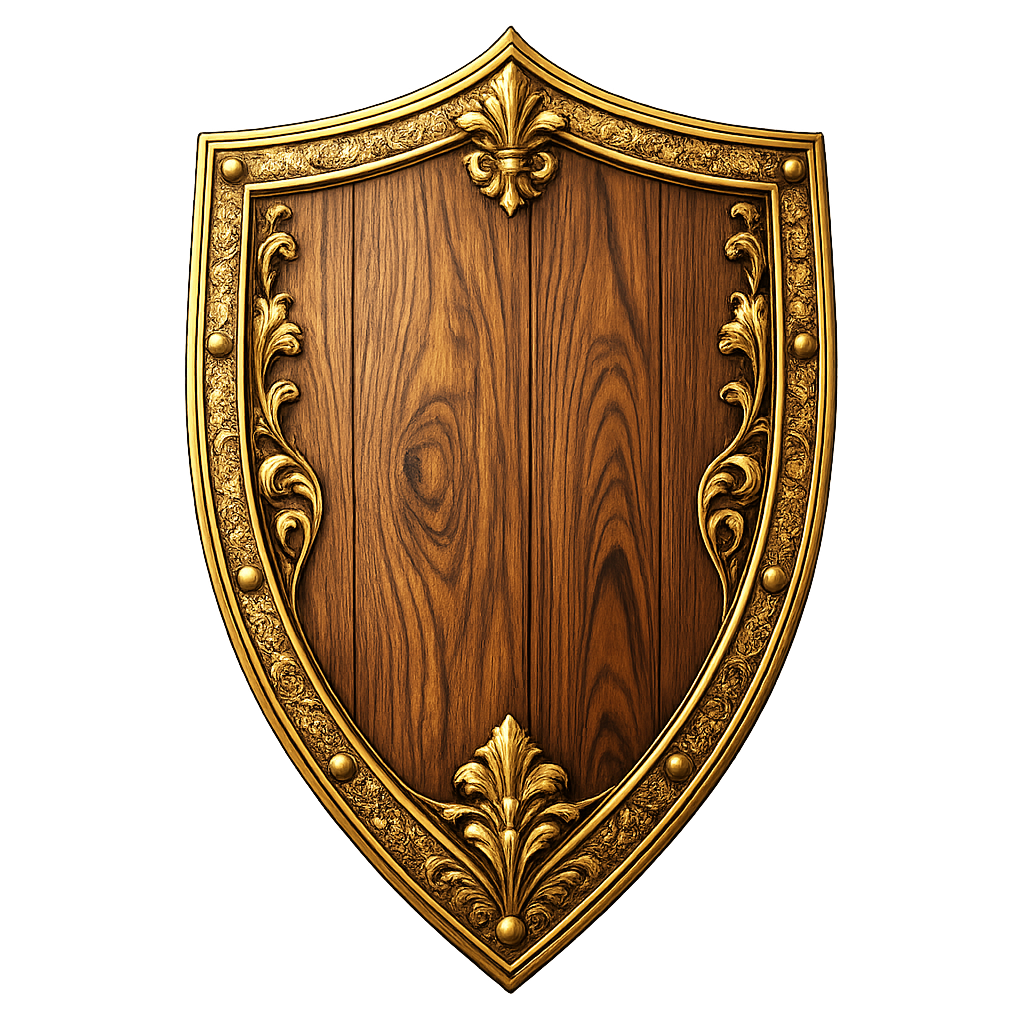
Only then is the crest drawn on top - because a crest sitting on a hesitant outline will always look applied, and one sitting on a confident outline looks inevitable.
 Ask Price On WhatsApp