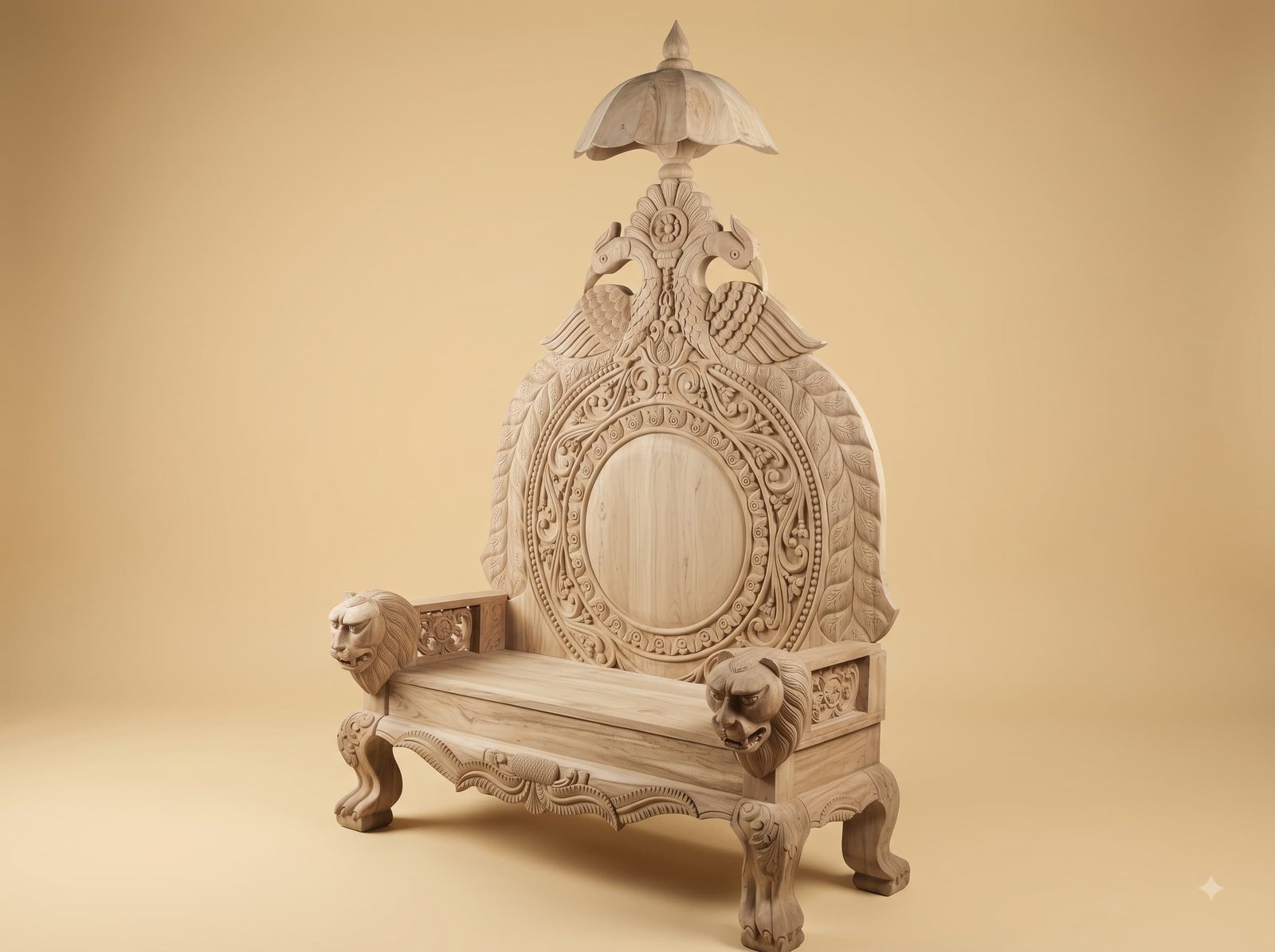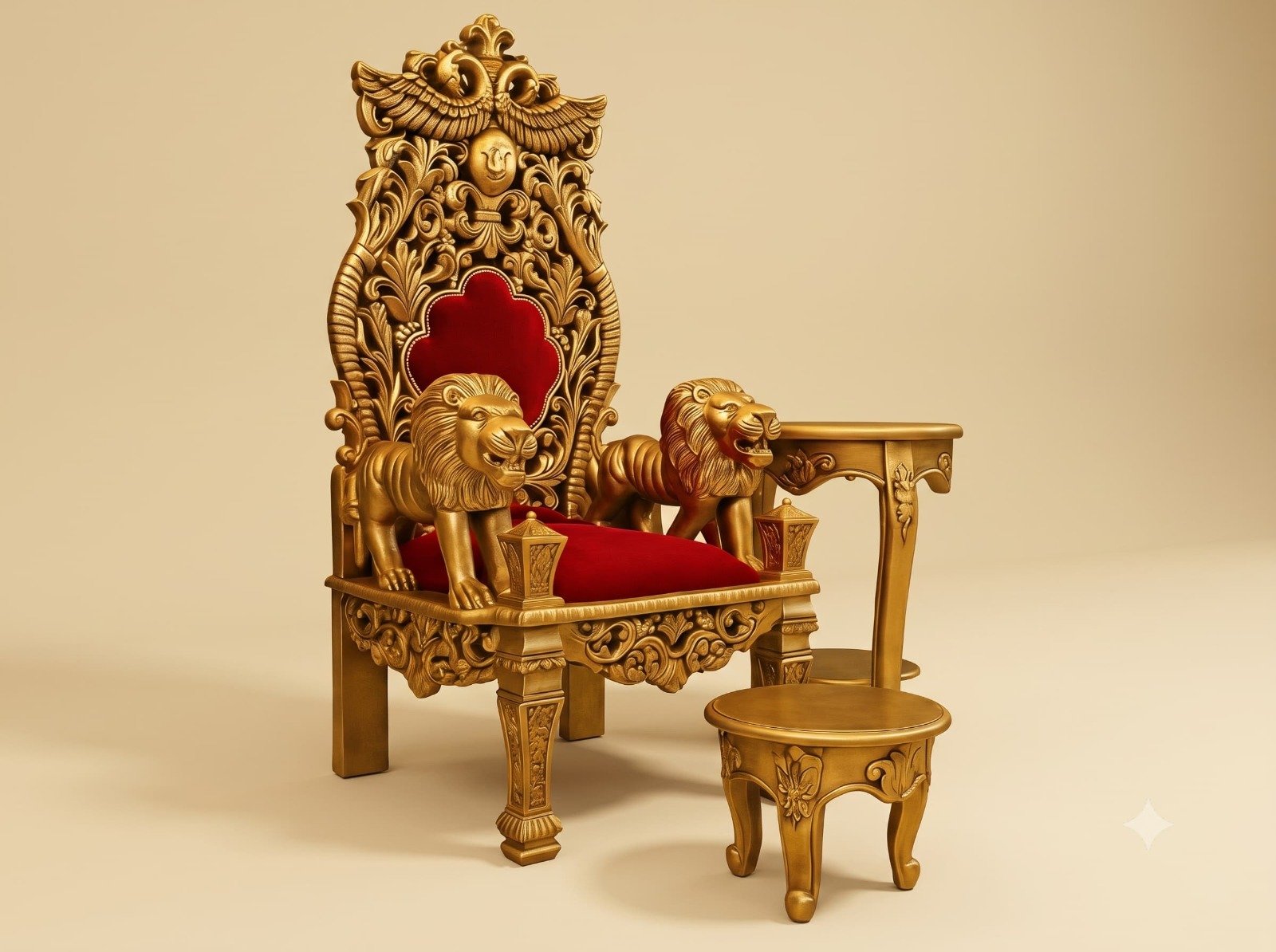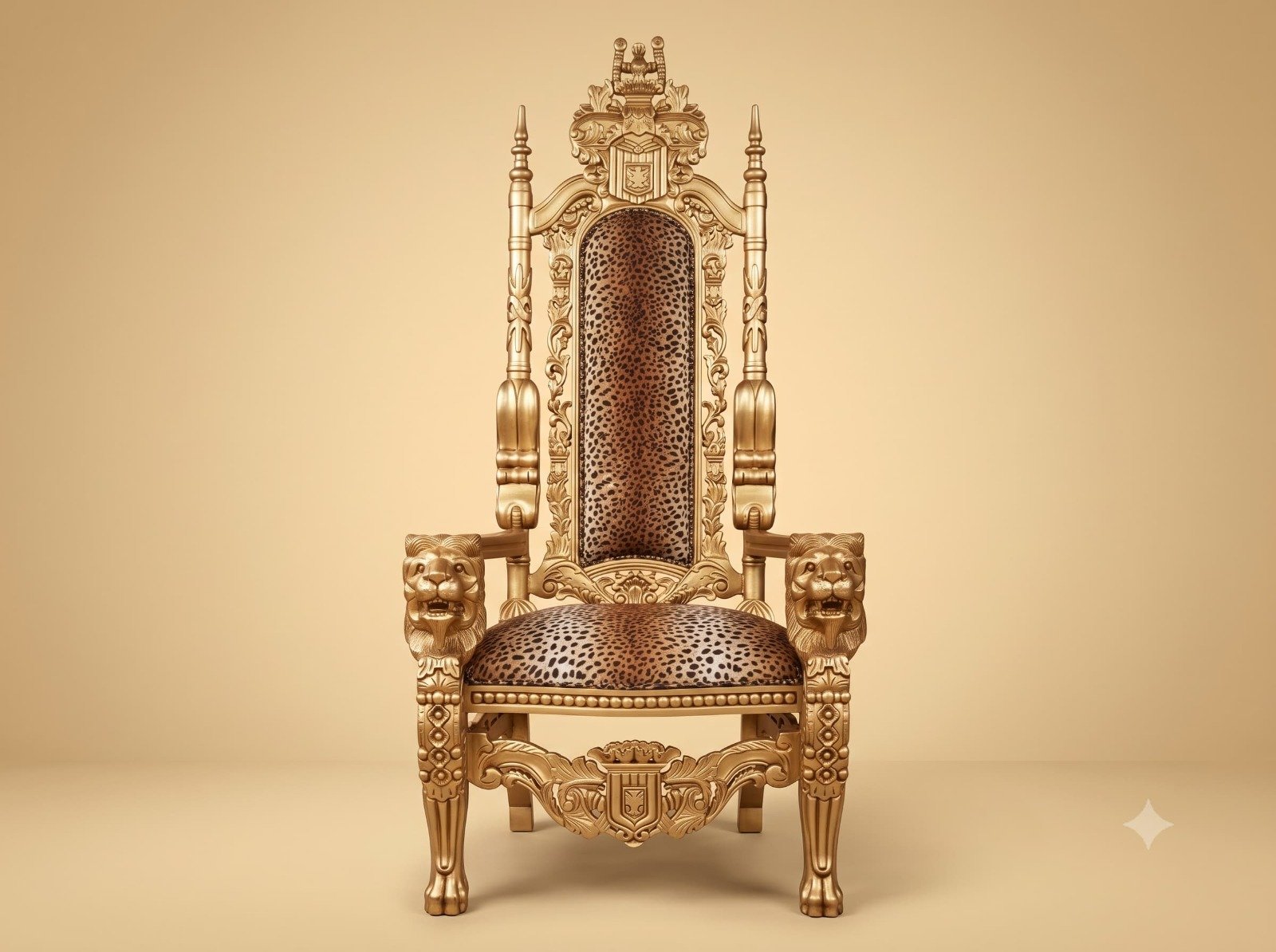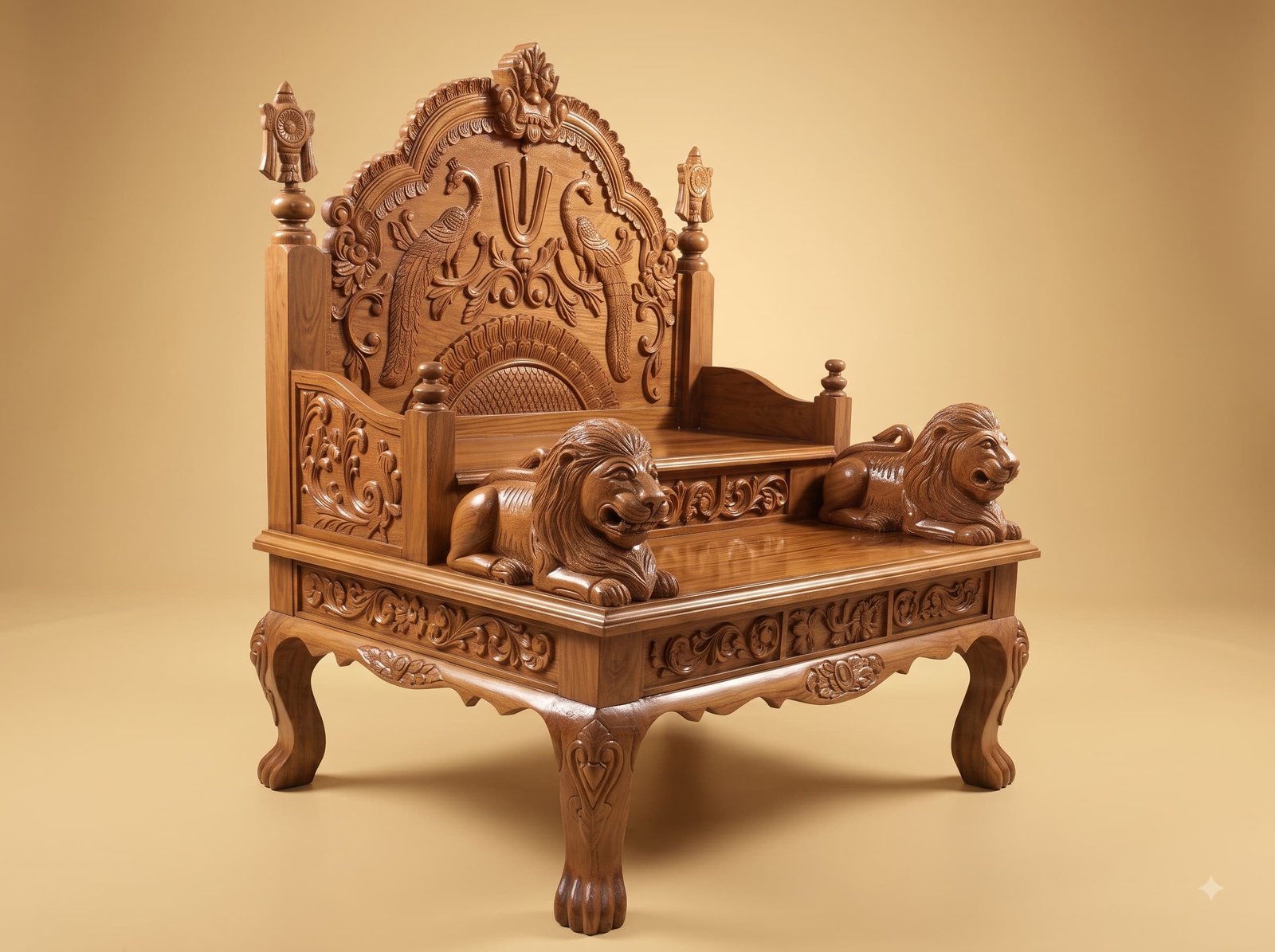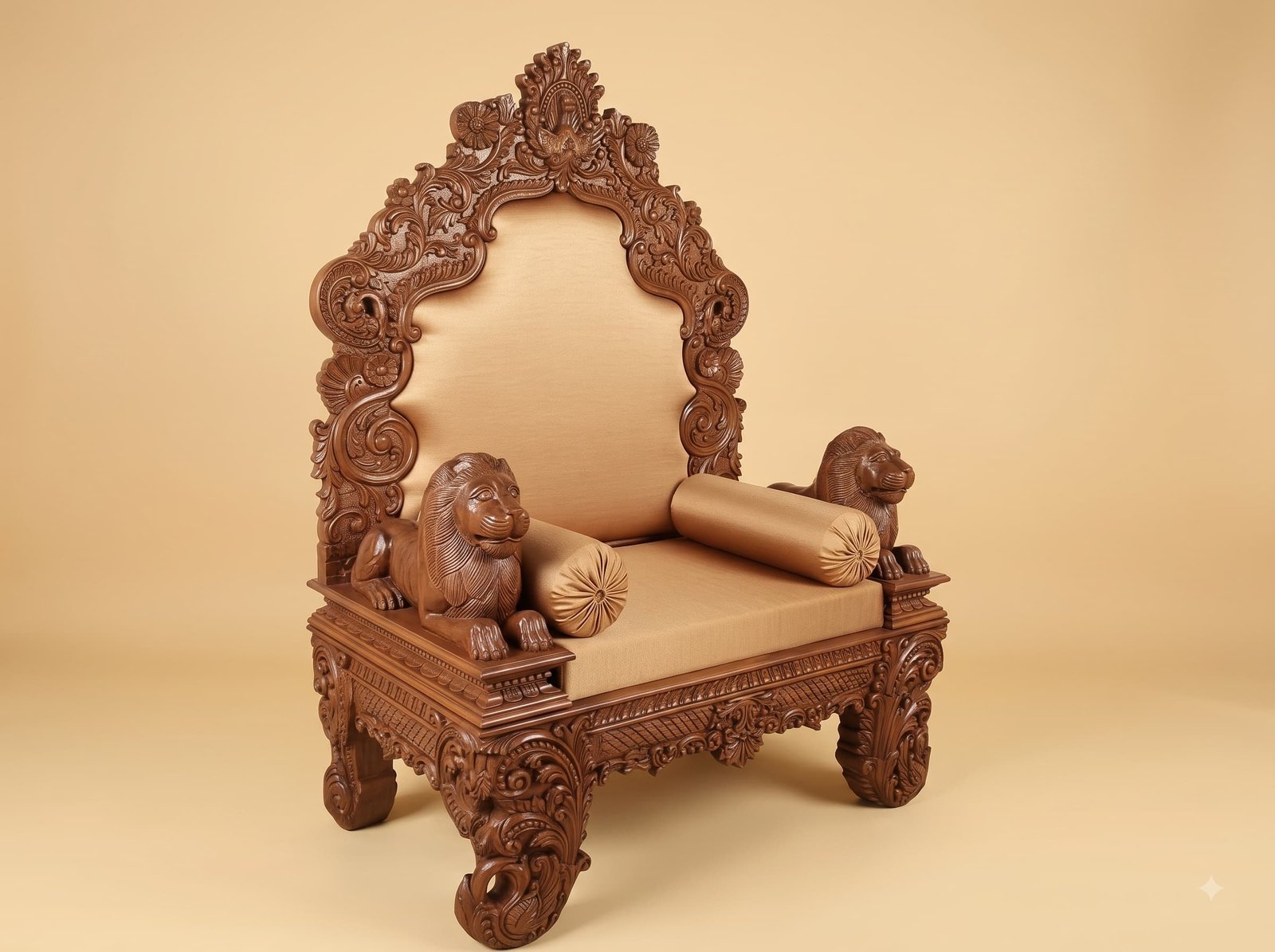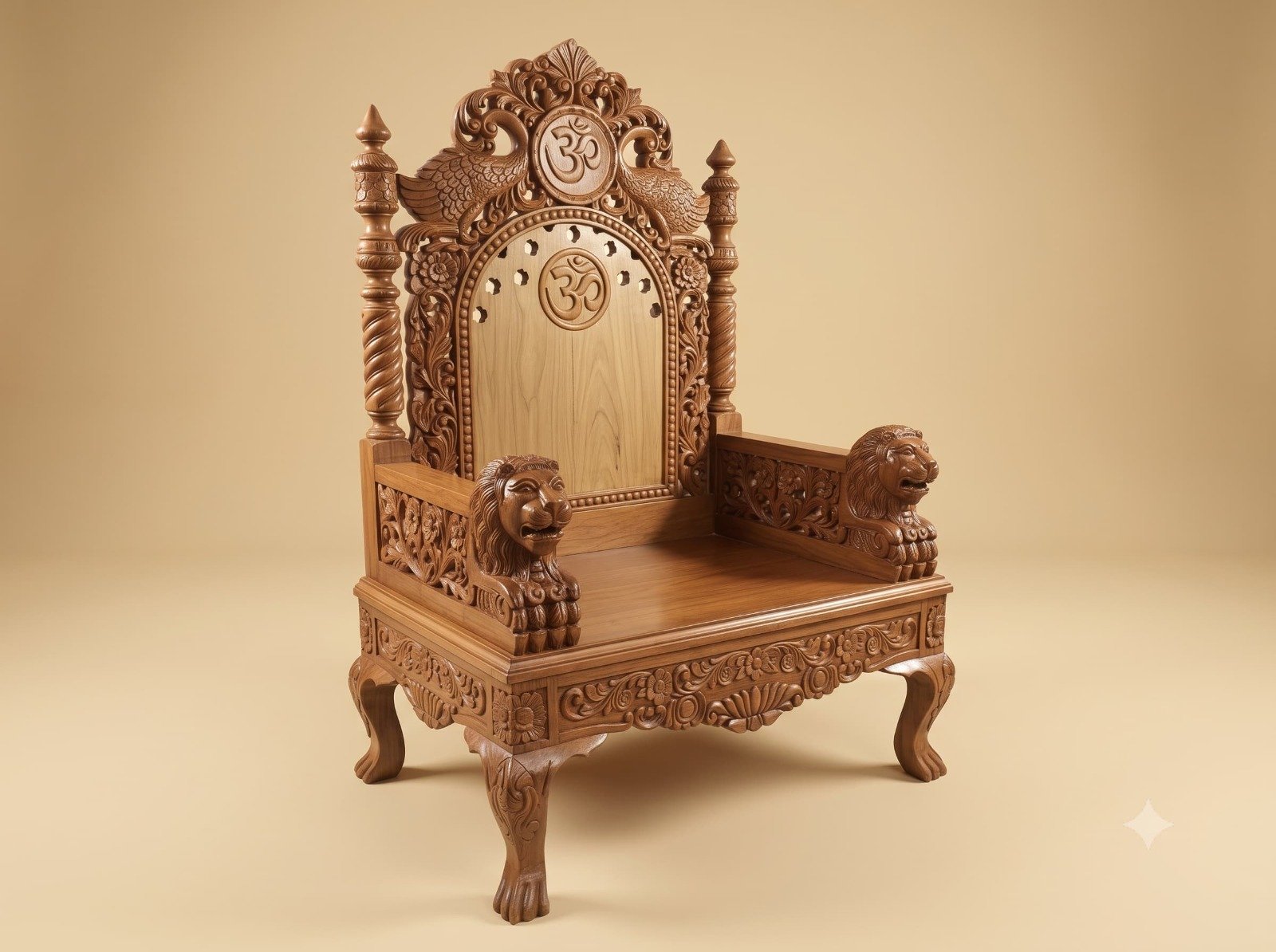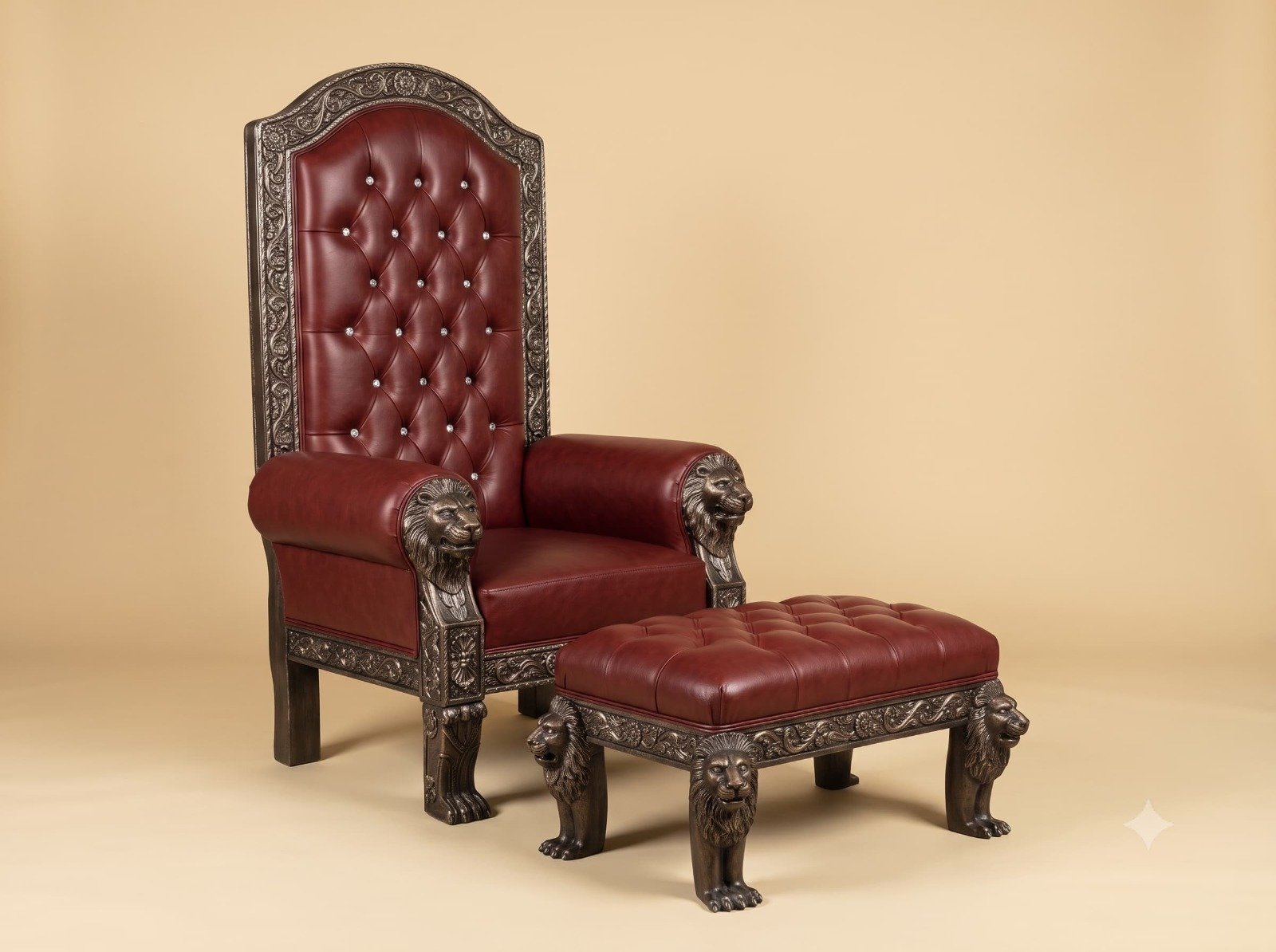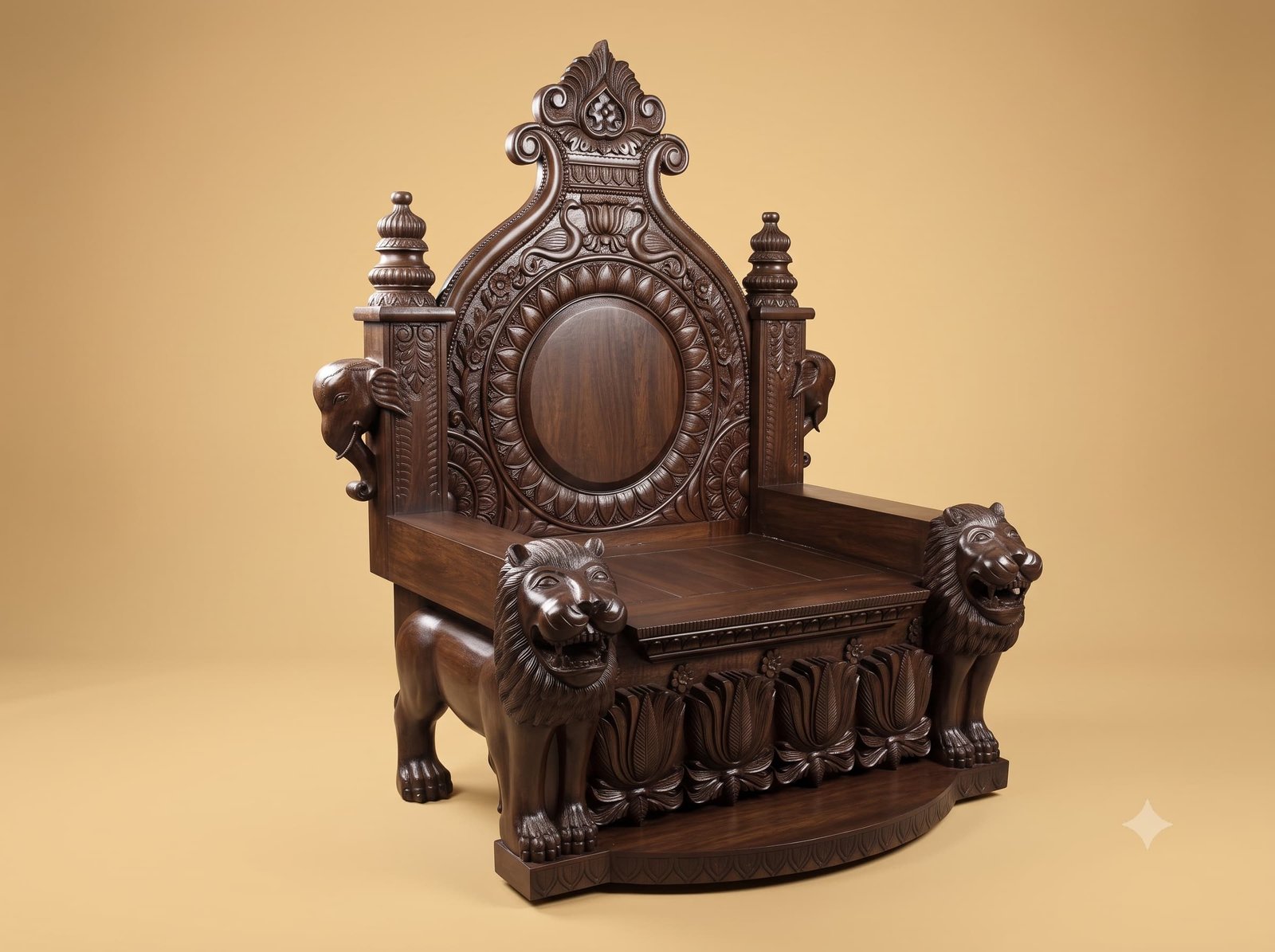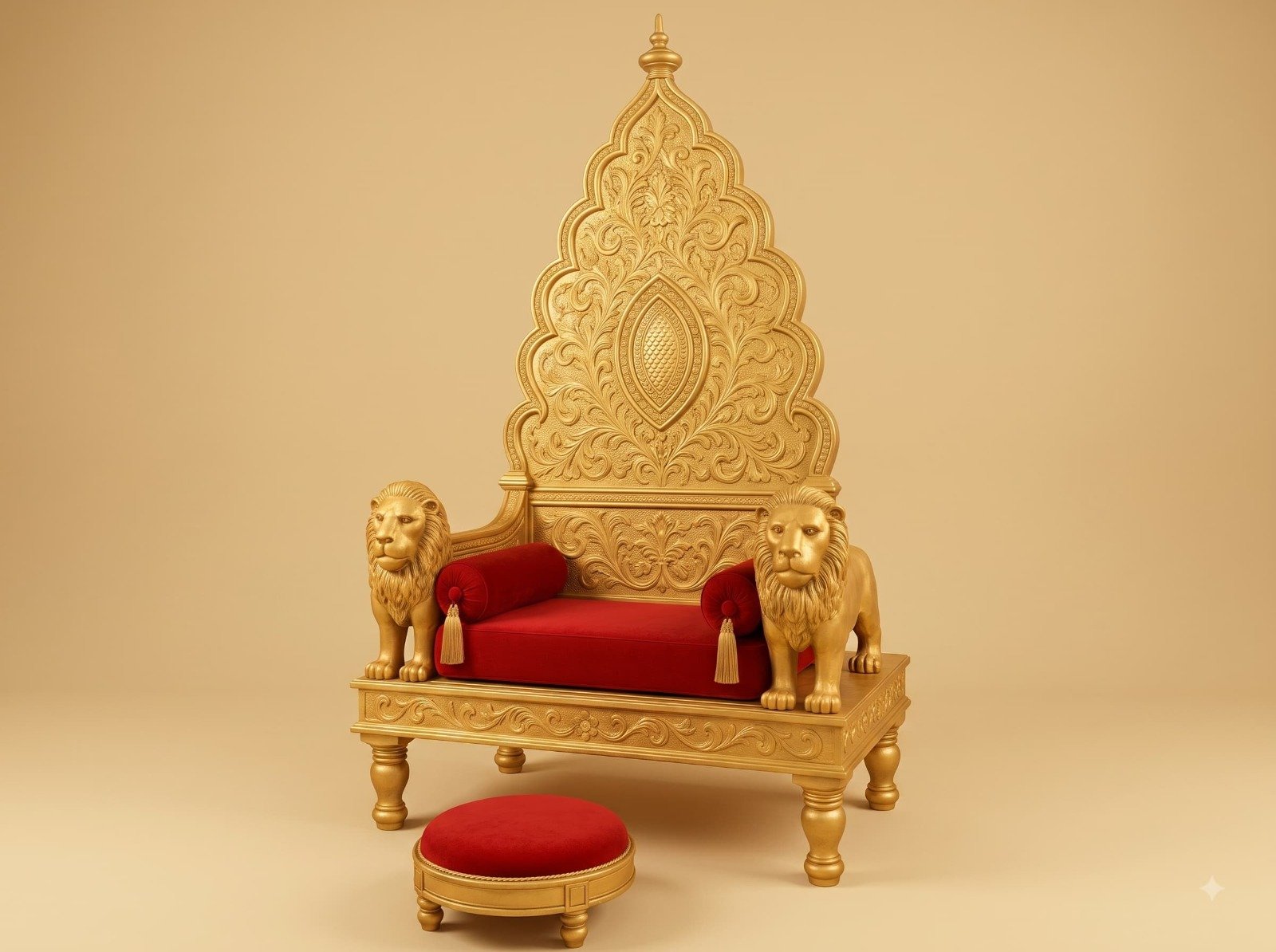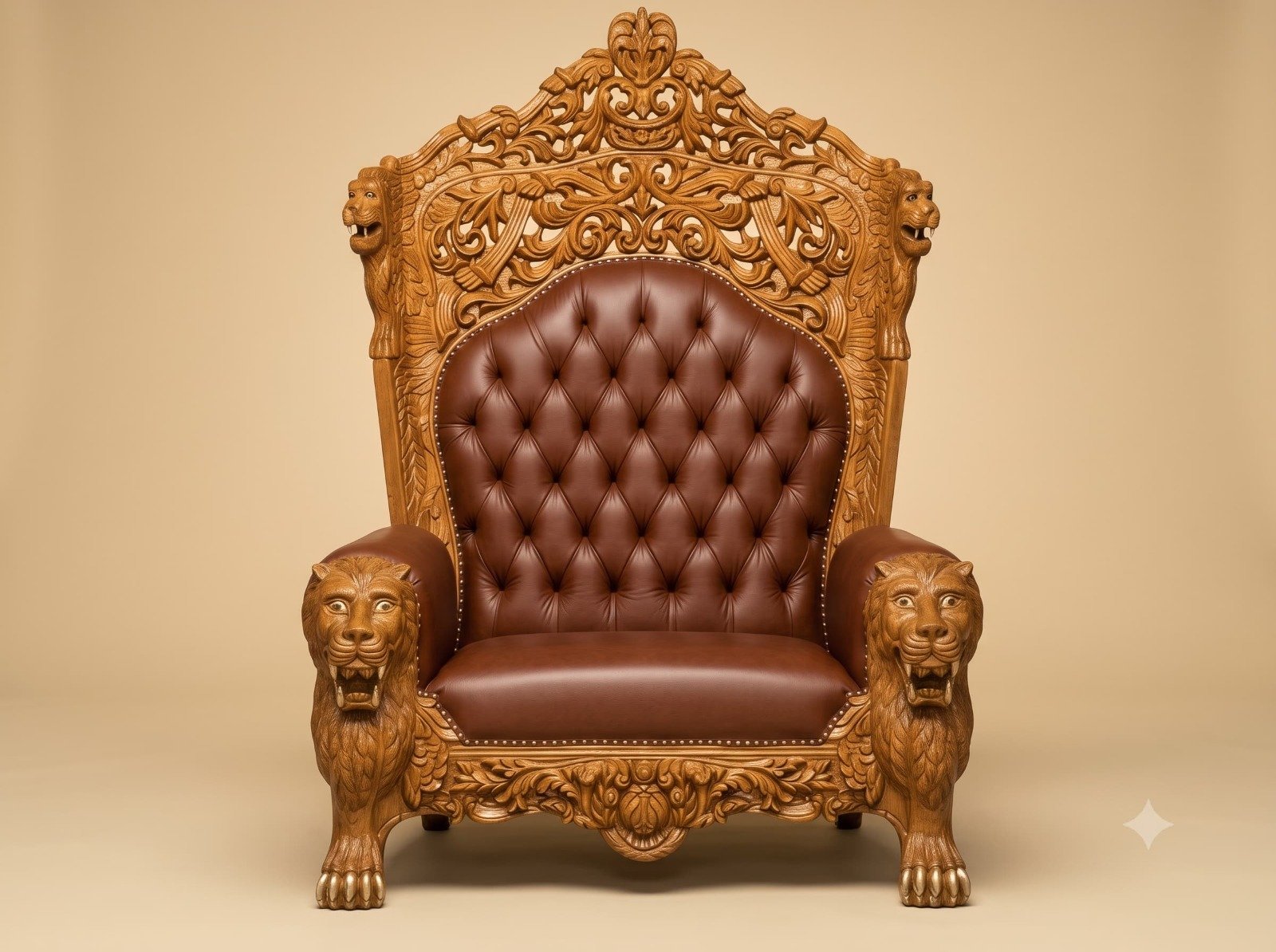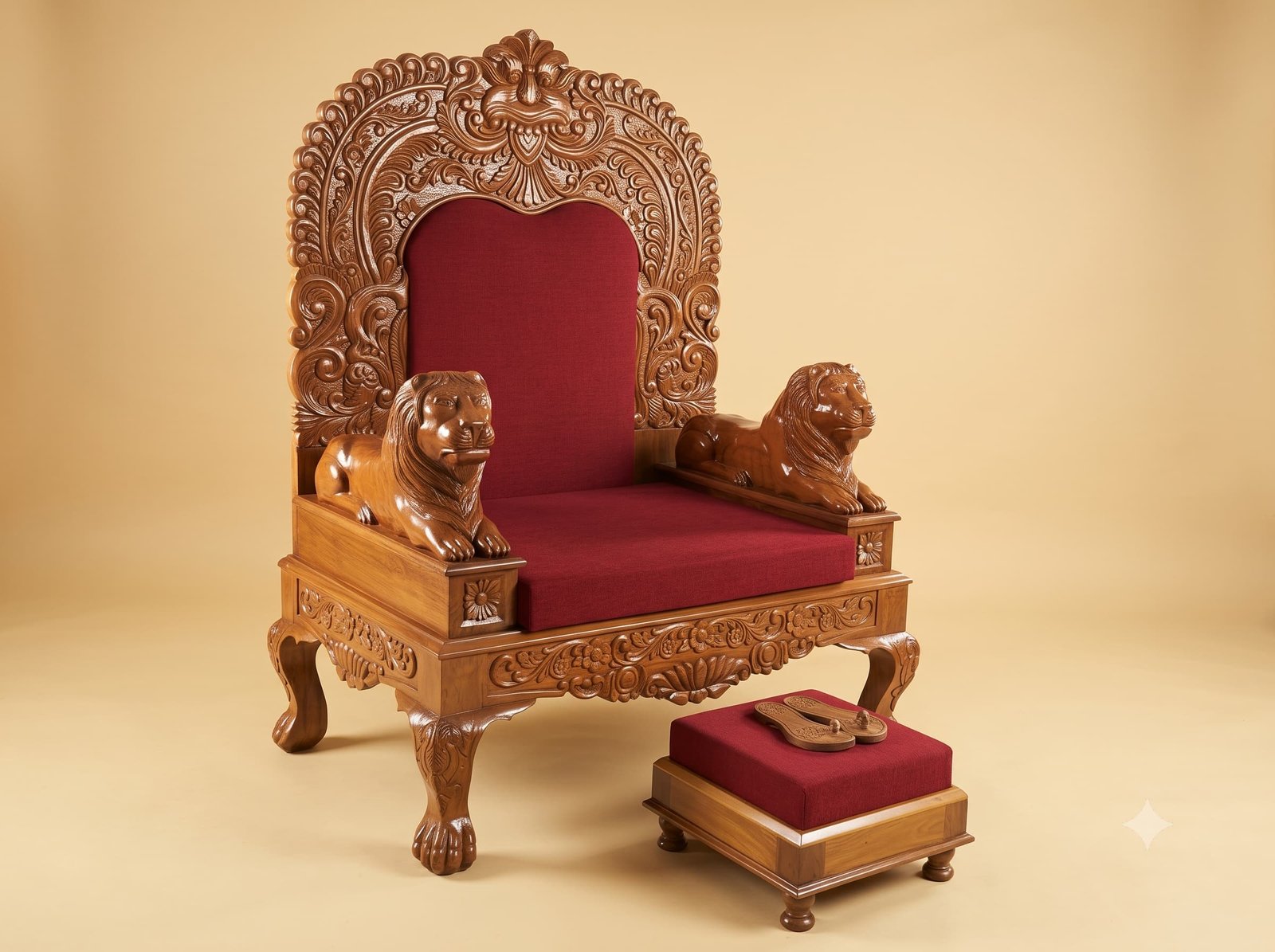
The lions on this chair are lying down, and that is a functional decision before it is an artistic one.
An arm has to be at a particular height and it has to be roughly level, because someone is going to rest a forearm on it. A standing animal puts its spine too high and its back slopes; a seated one puts its head where an elbow wants to go. A lion at rest, stretched along the rail, has a long level topline at exactly the height an arm needs - which is why this pose has been used on seats of honour for centuries, in stone as well as in wood.
The carving follows from that. The block is first cut down to the finished arm height and its top left flat along its length. Only then is the animal drawn onto it, and it has to be drawn so that the line of the back falls on that existing flat. Nothing above that plane survives; the mane, the head and the haunch all rise from it or fall away from it.
What you get is an arm that is genuinely comfortable to use and an animal that does not look flattened - because it was never carved round and then cut down. The flat was there first, and the lion was drawn to include it.
 Ask Price On WhatsApp