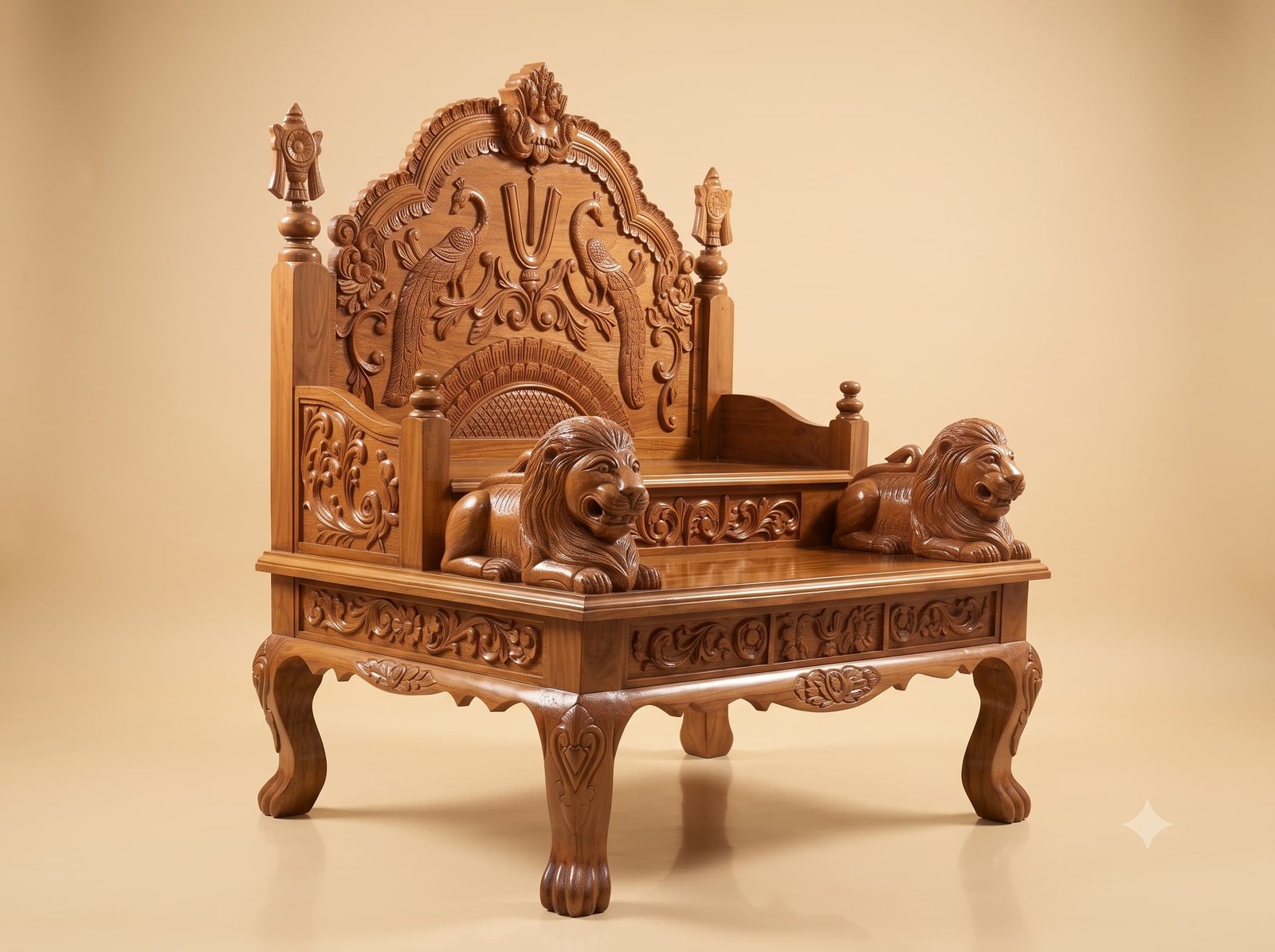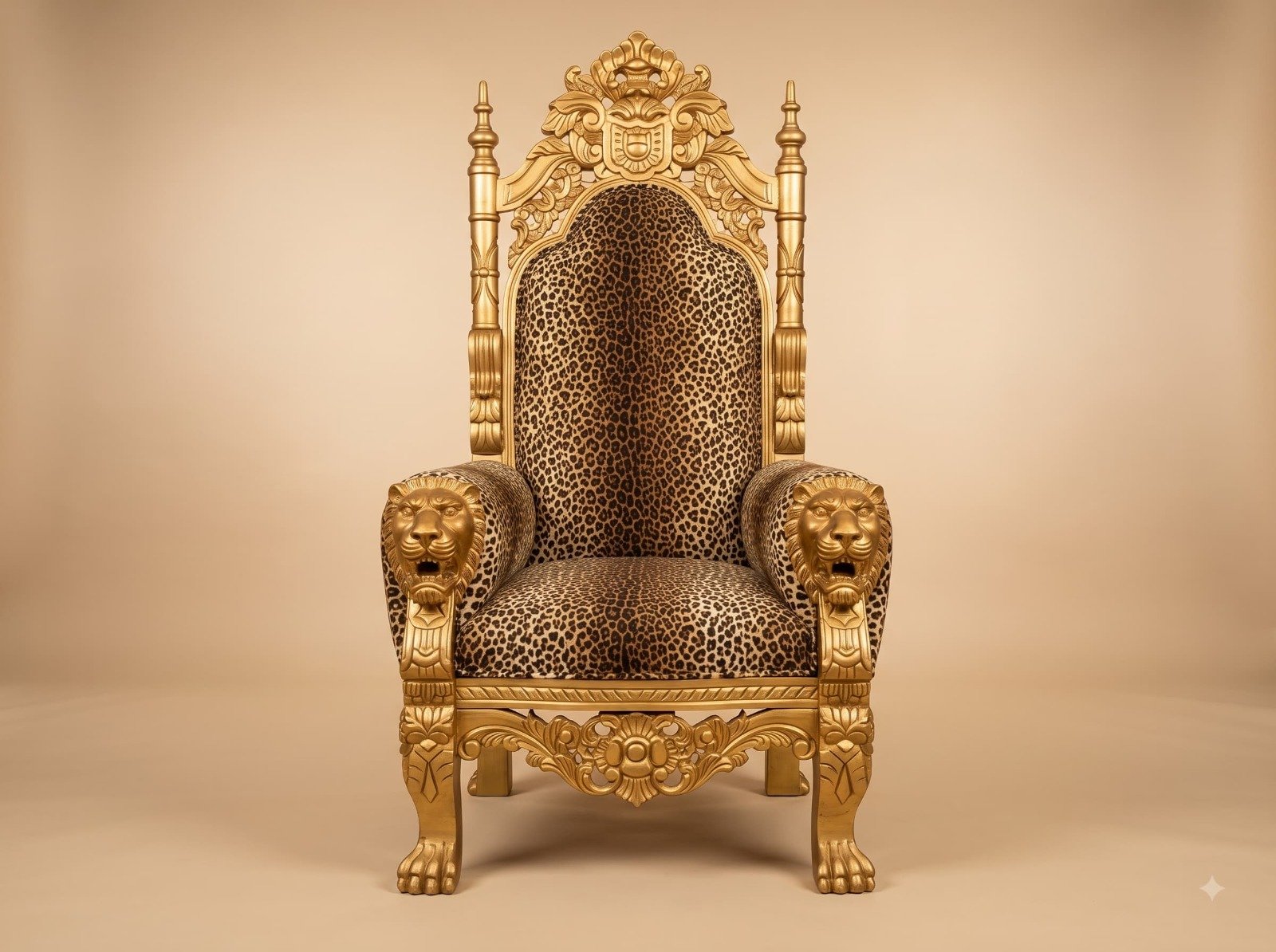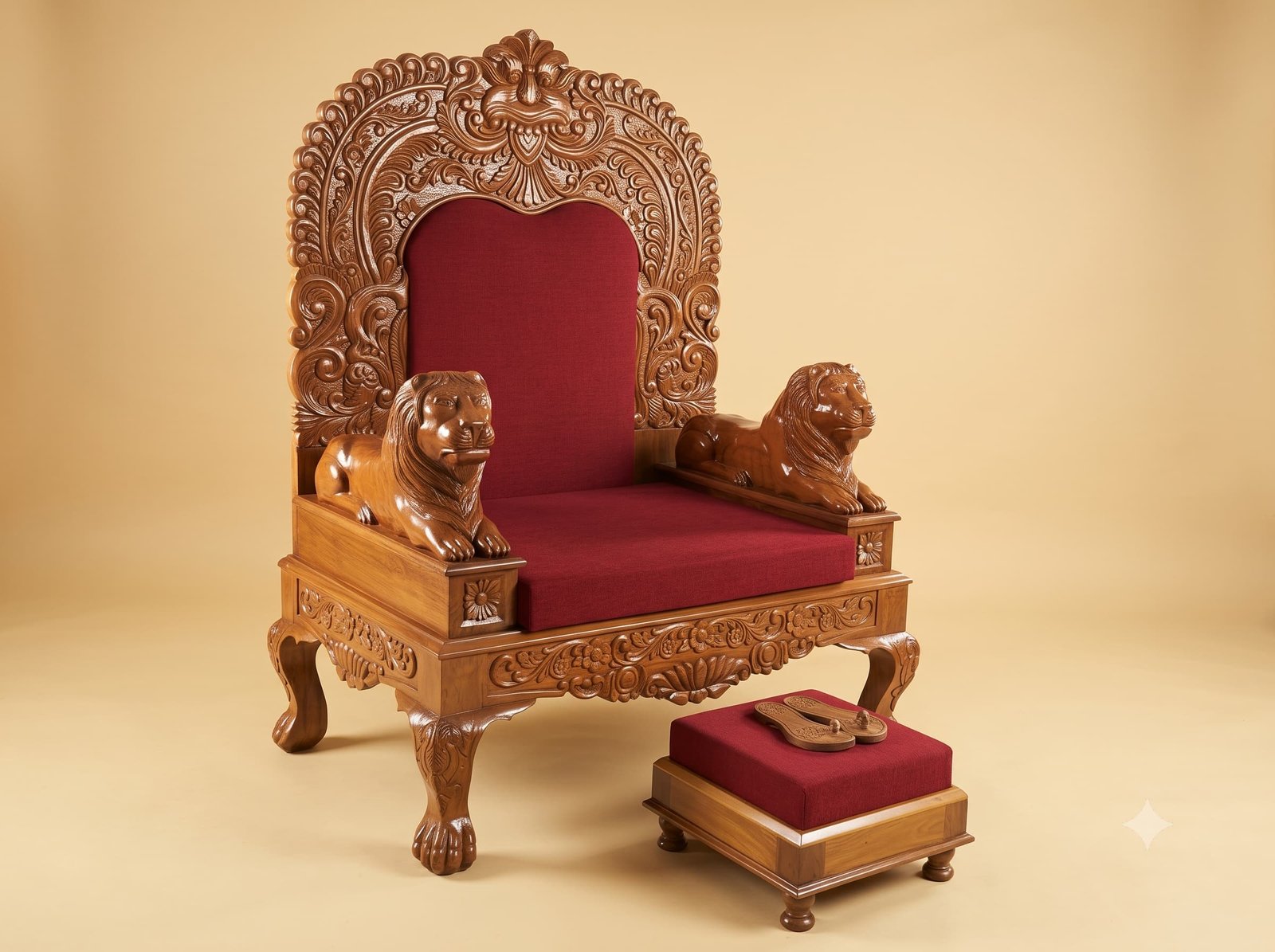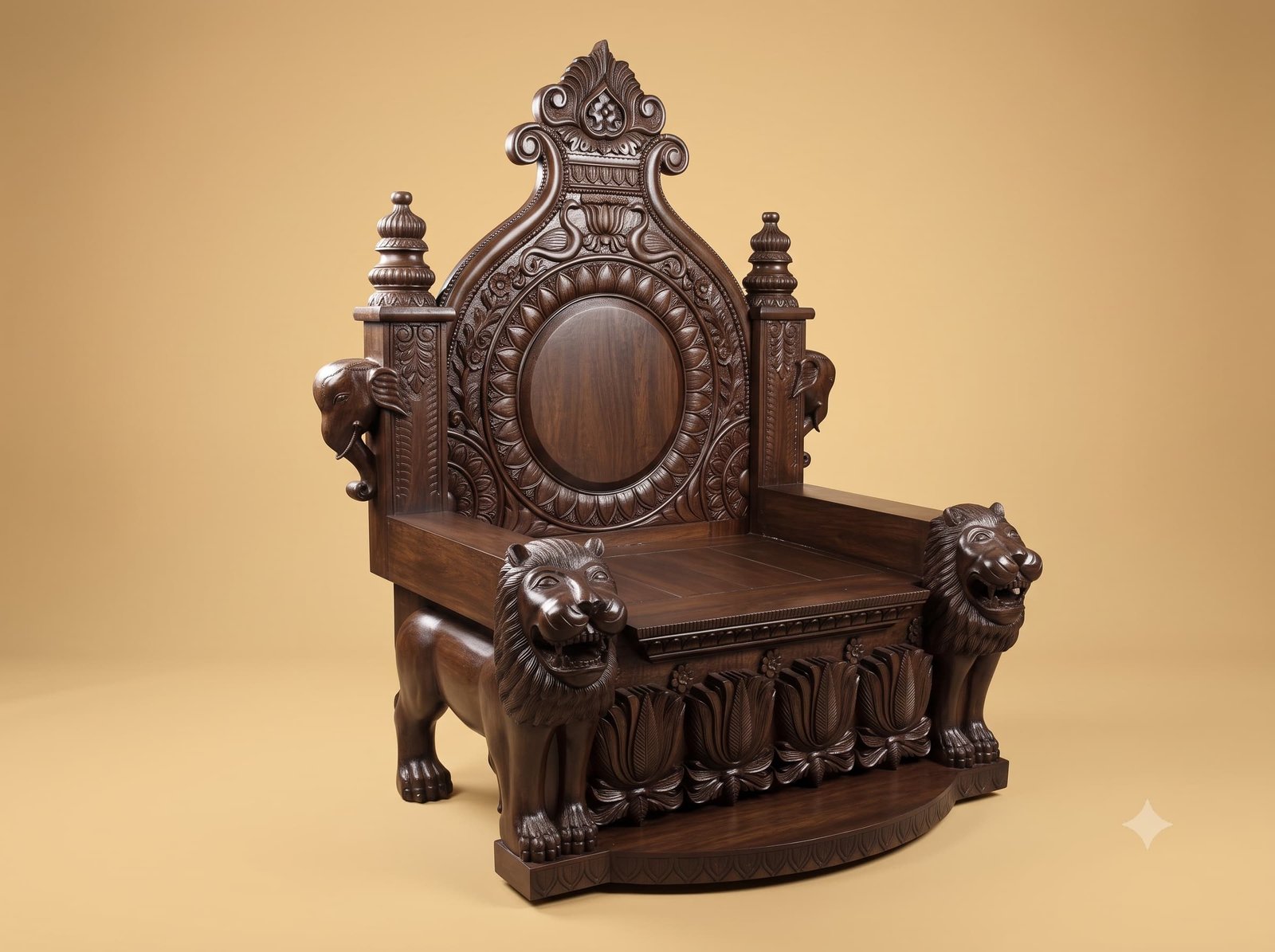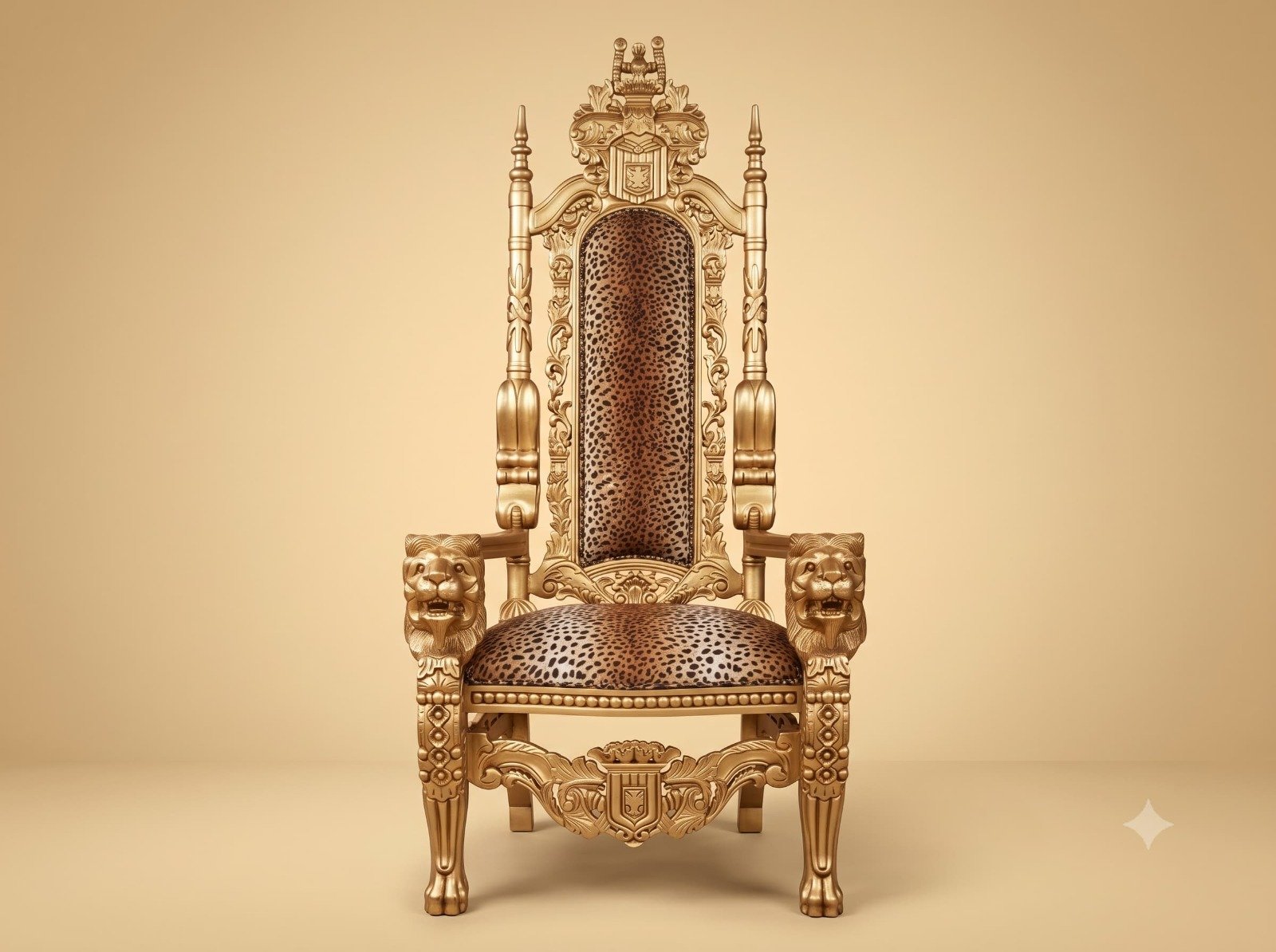
The two columns beside the back look like single long turnings. They are not, and the reason is that a long thin piece of wood cannot be turned accurately in one go.
On a lathe, a slender workpiece held at both ends will flex away from the tool in the middle. The longer and thinner it is, the worse it gets - the wood whips, the cut chatters, and the diameter ends up fatter in the middle than the ends however carefully the turner works. Anyone who has tried to turn a long slim spindle knows the failure well.
So each column here is turned as several shorter elements - the base, the shaft, the collar, the spire - each mounted separately at a length the lathe can hold rigid, and each cut cleanly at its own diameter. They are then jointed together on a central spindle, so what reads as one continuous turning is actually four or five pieces sharing one axis.
Because the joints fall at the collars, where the profile steps in anyway, they are invisible. What you notice instead is that the spire is genuinely slender at the top and genuinely crisp at every bead - which is exactly what a single long turning could not have given.
 Ask Price On WhatsApp