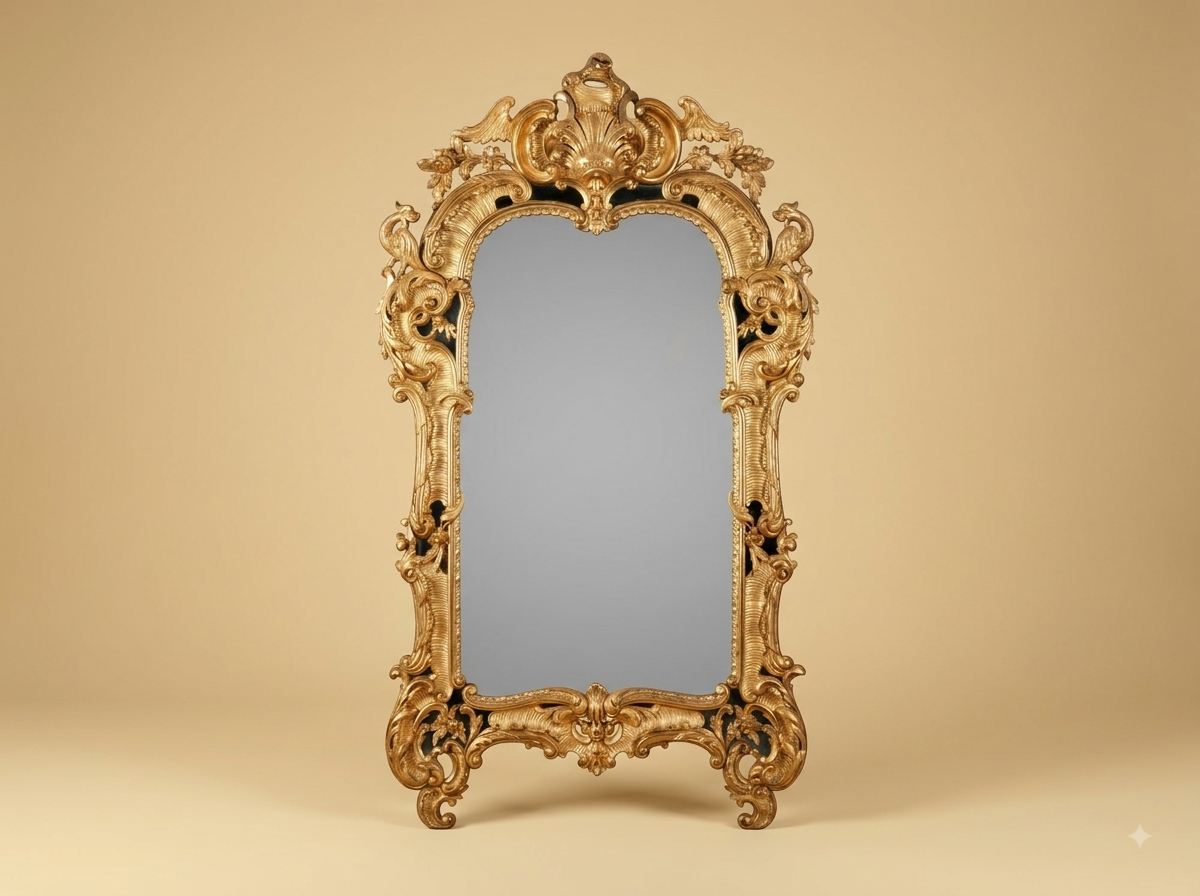
The Story Behind This Mirror
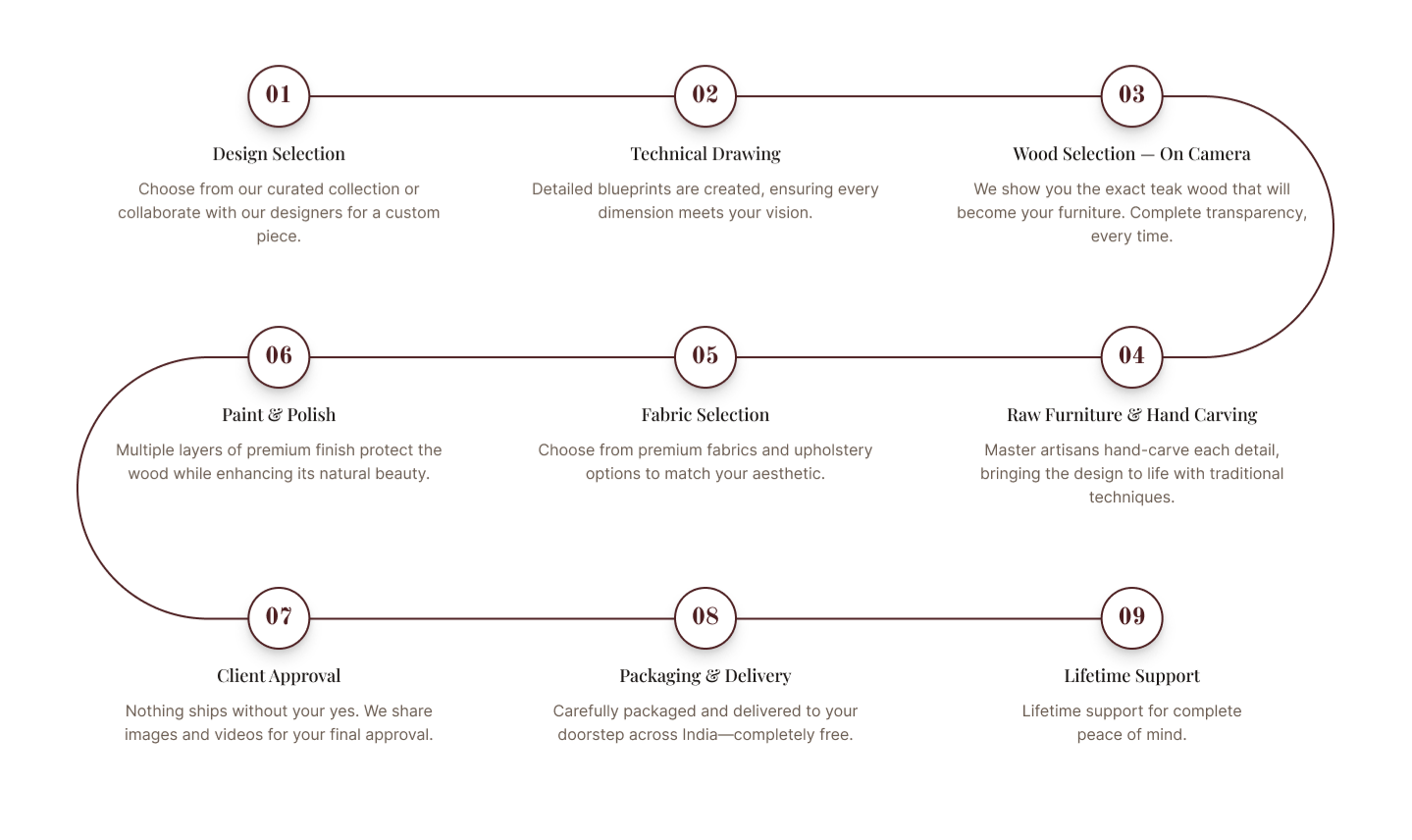
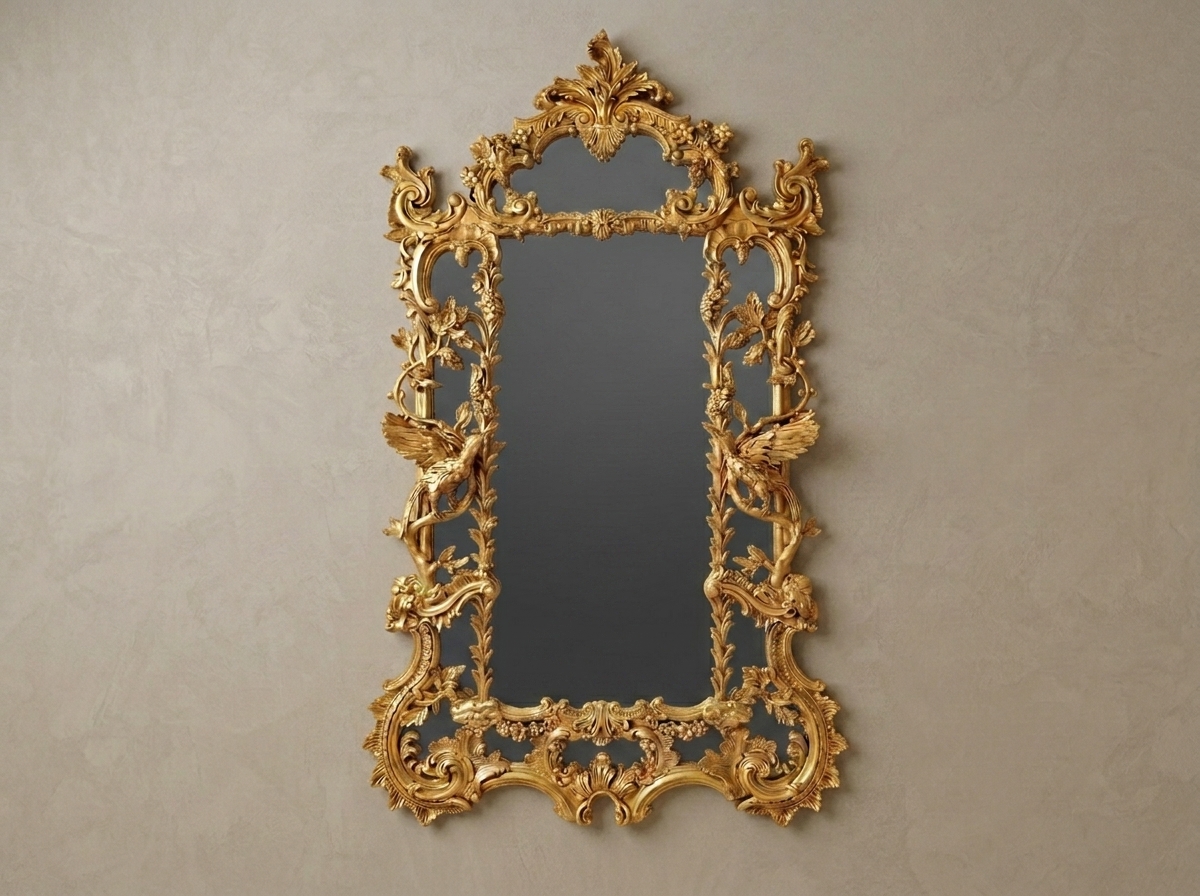
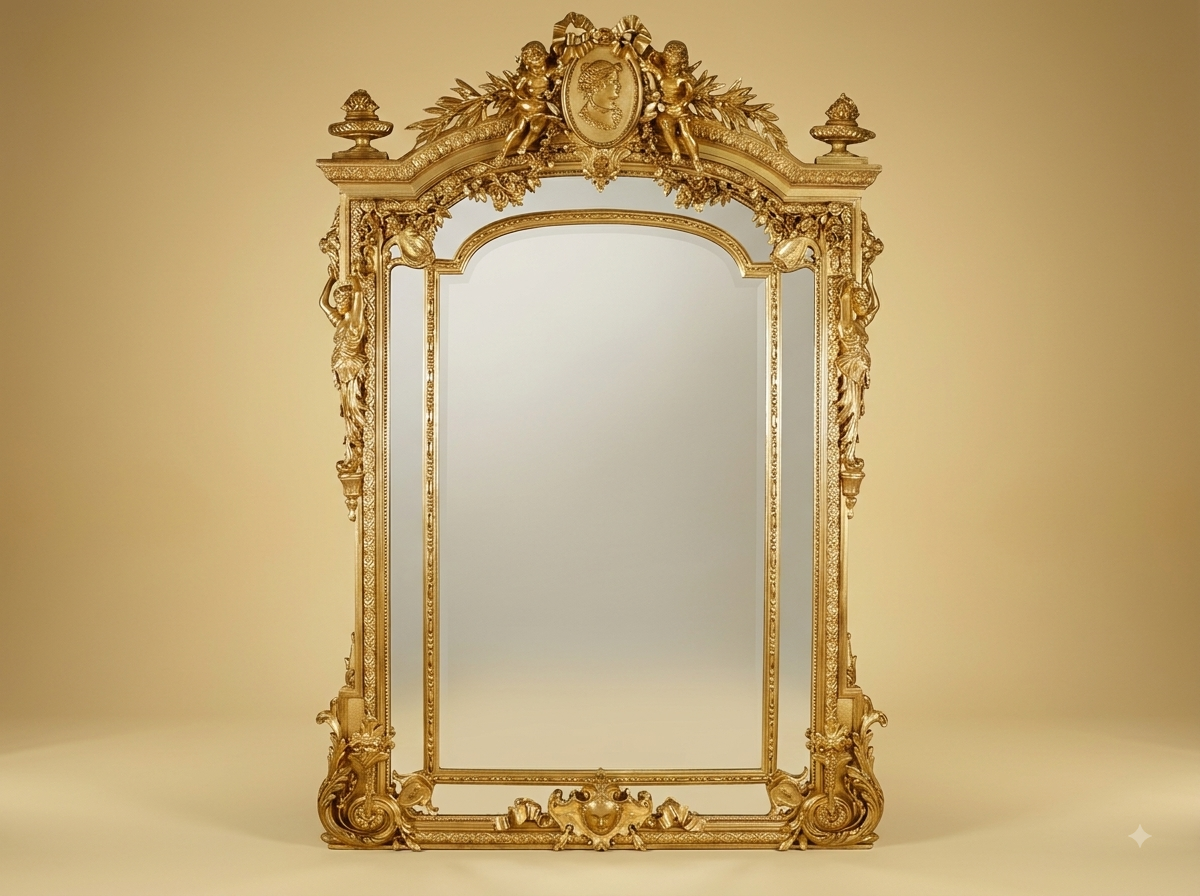
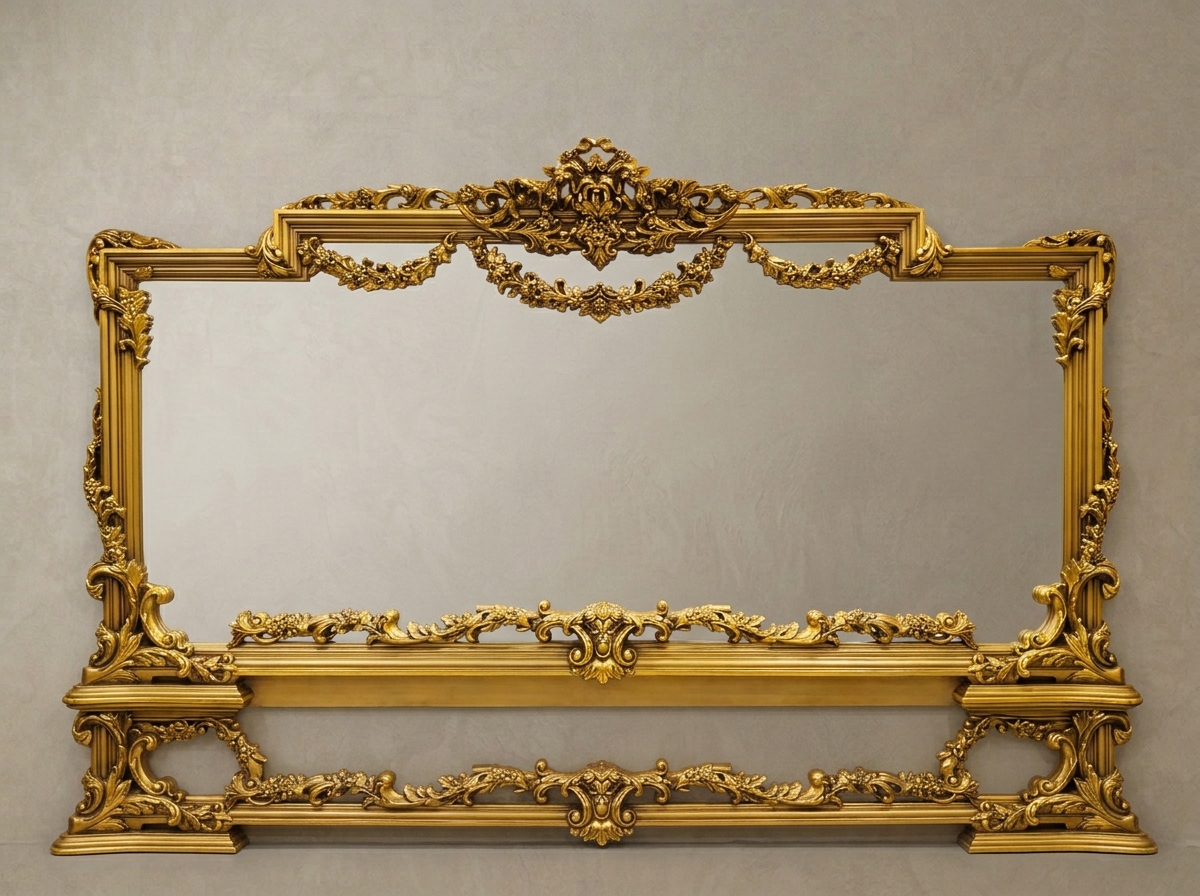
A frame that is mostly holes has to be planned before it is cut. The carver draws the scroll runs full-scale on seasoned teak and reads the grain along every rib, because once the waste is removed there is no adding wood back. Ribs that run across the grain break; ribs that run with it survive a century. That single decision, made before any chisel work, is the difference between a frame that lasts and one that arrives in pieces.
The crest is carved as its own composition - the shell shaped from the solid with its flutes standing proud, acanthus breaking away on both sides, the whole thing pierced so the wall shows behind it. The stiles are then cut in a continuous rhythm so the scrolls do not stutter at the joints, and the feet are worked last so the piece sits visually rather than just stopping. Hand-sanding follows, then gold laid in coats and rubbed back by hand at every raised scroll tip. The margin plates go in before the central arched plate, which is fitted last.
 Ask Price On WhatsApp