The Story Behind This Mirror
Paint is more honest than gold, and that makes it harder. A gilded surface breaks up light and hides small imperfections; a flat pale paint shows every one of them - a tool mark left in a hollow, a slightly uneven ground, a mitre that is a hair off. So a painted frame is sanded further than a gilded one and inspected under raking light before any colour is laid.
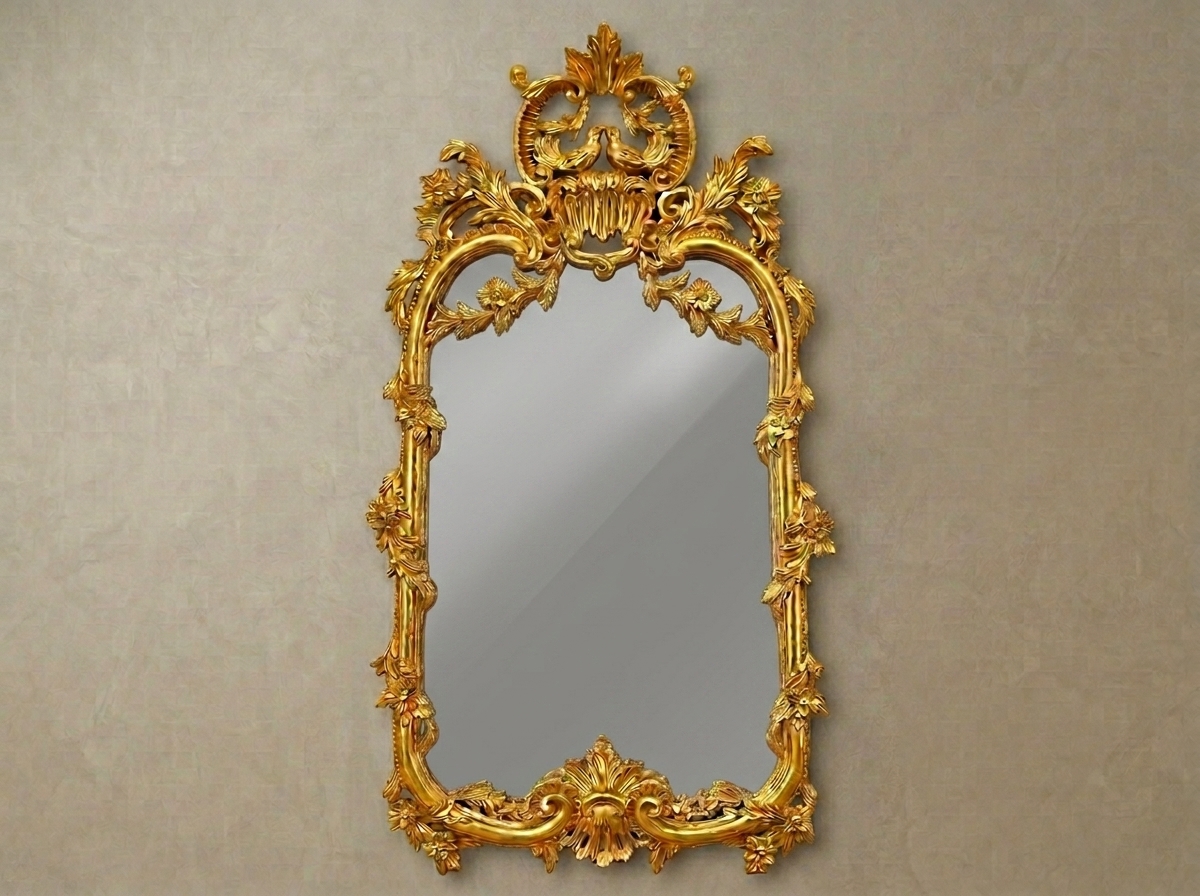
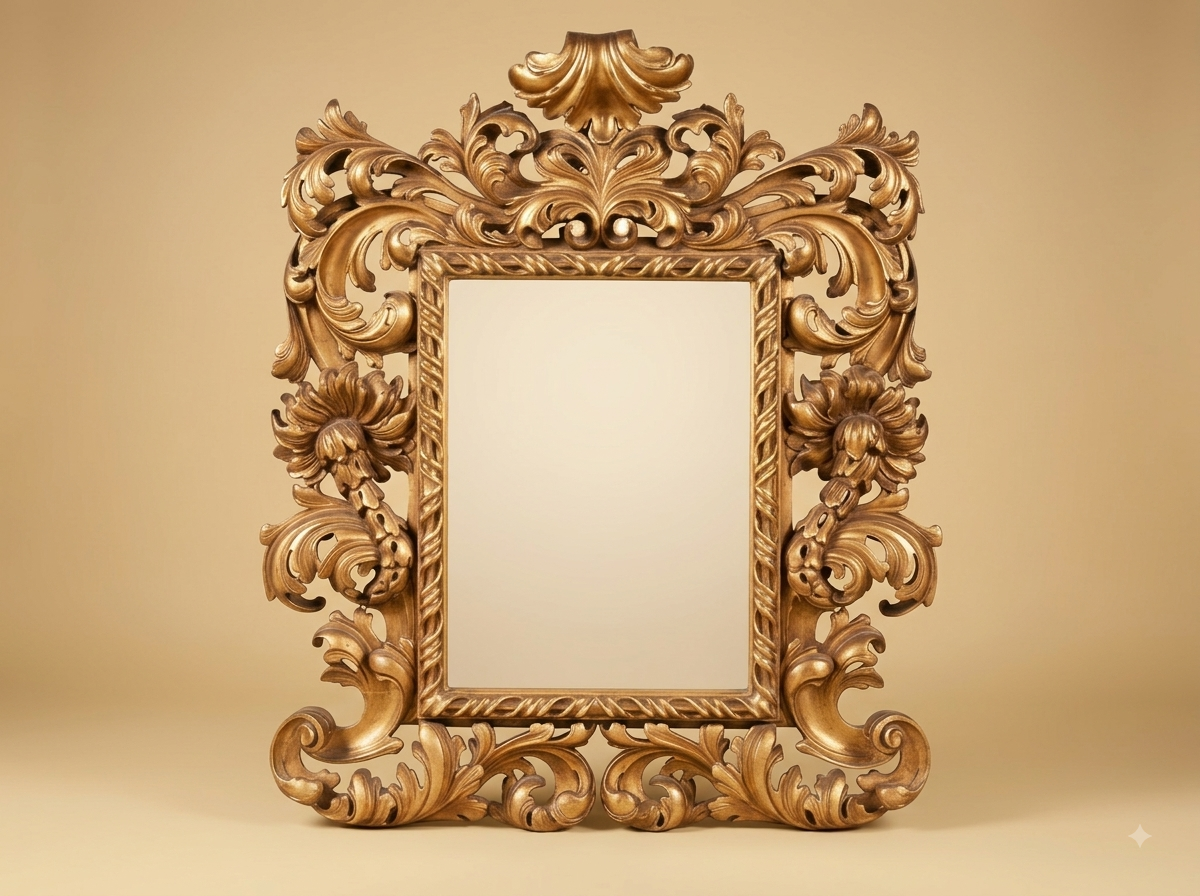
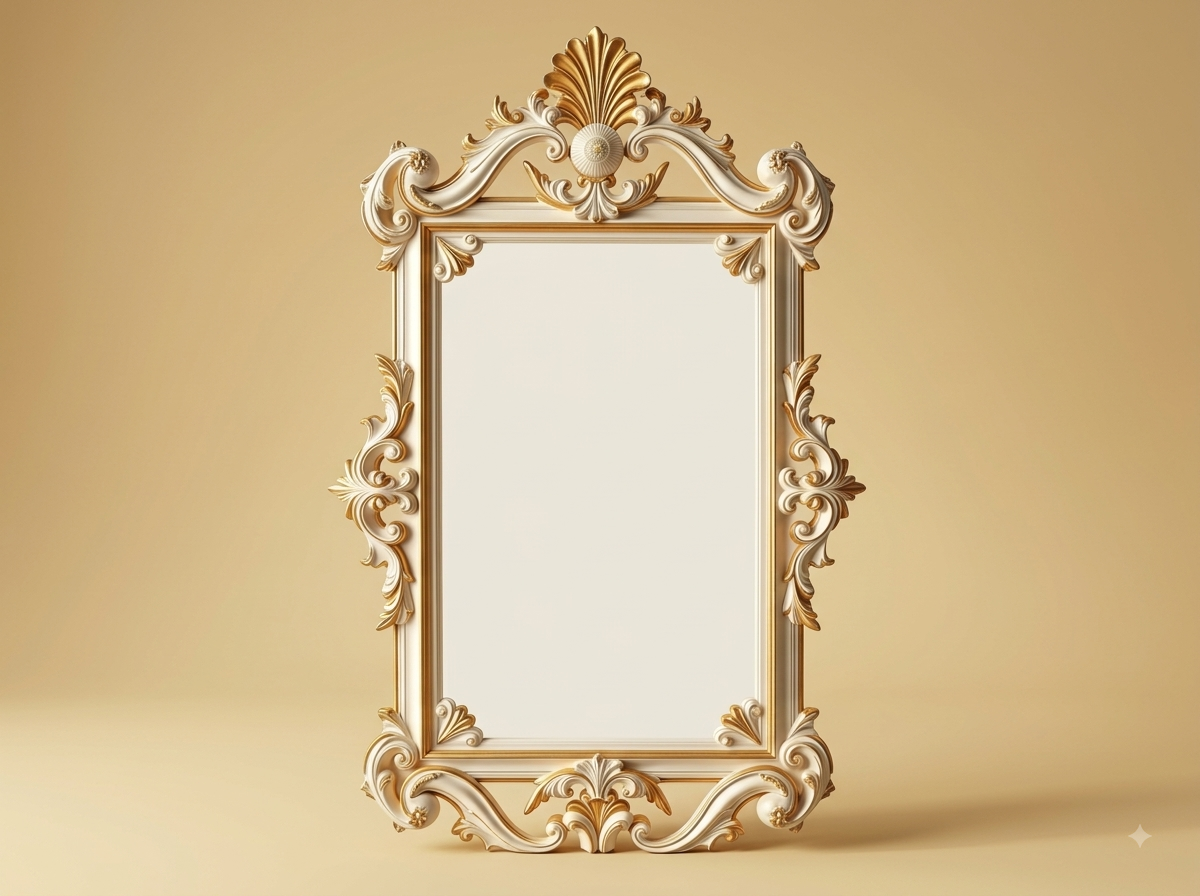
The carving comes first in seasoned solid teak: the shell crest shaped from the solid with its flutes standing proud and the rosette cut at its centre, the corner scrolls undercut so they lift clear of the rails, and the base palmette worked last. Then the ivory is built up in thin coats, each cut back before the next, until the colour sits dense and even without filling the detail - the commonest failure in painted furniture is paint that drowns the carving it is meant to show.
Only then does the gold go on, by hand, along the shell flutes, the scroll ridges, the rosette and the line around the plate, and it is rubbed back at the high points so the piece looks lived with rather than freshly decorated.
 Ask Price On WhatsApp