The Story Behind This Mirror
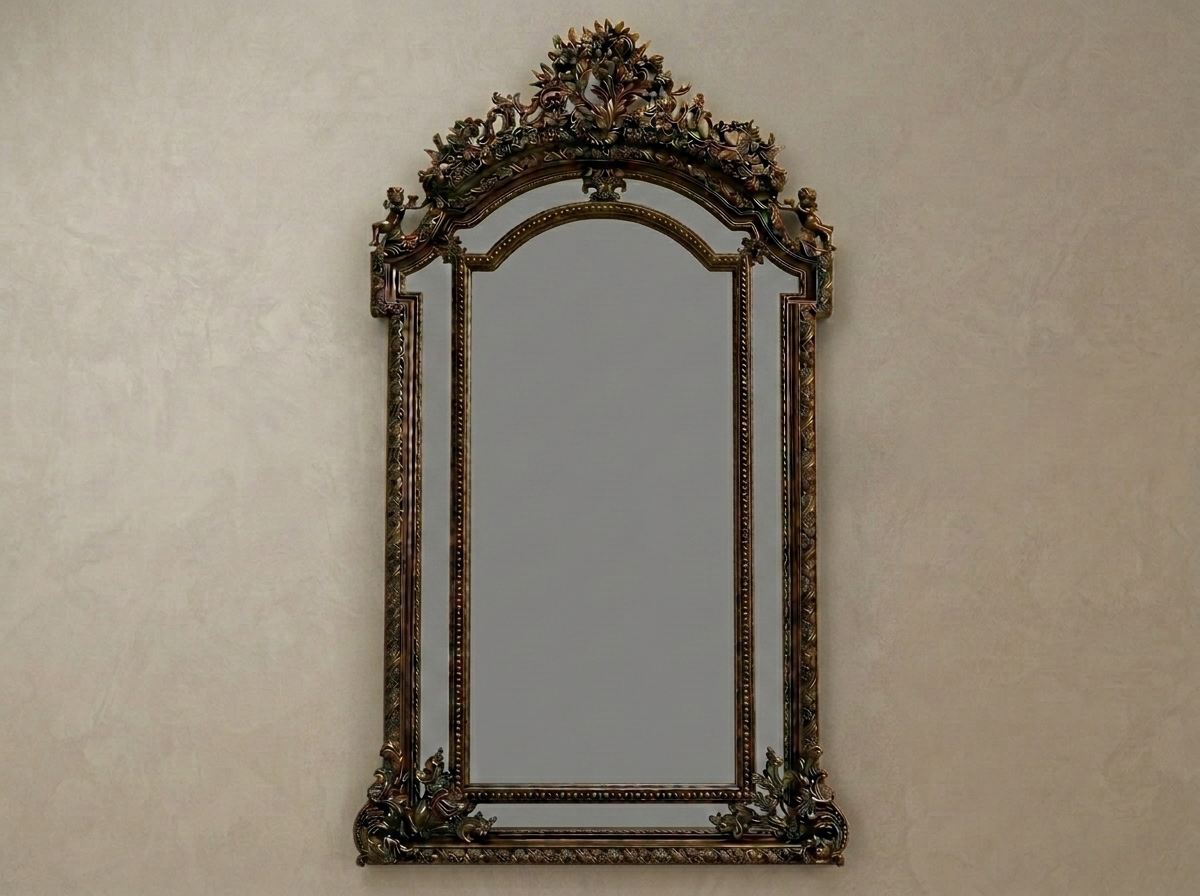
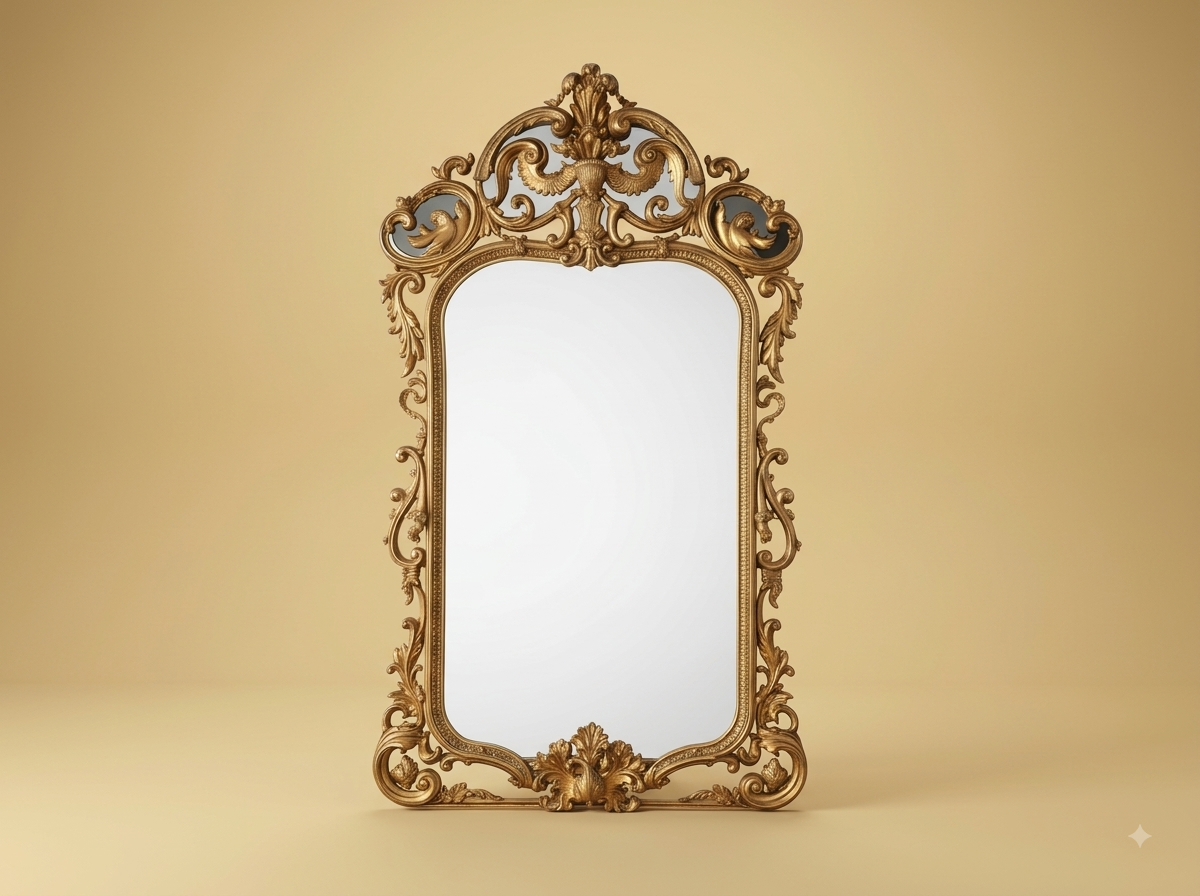
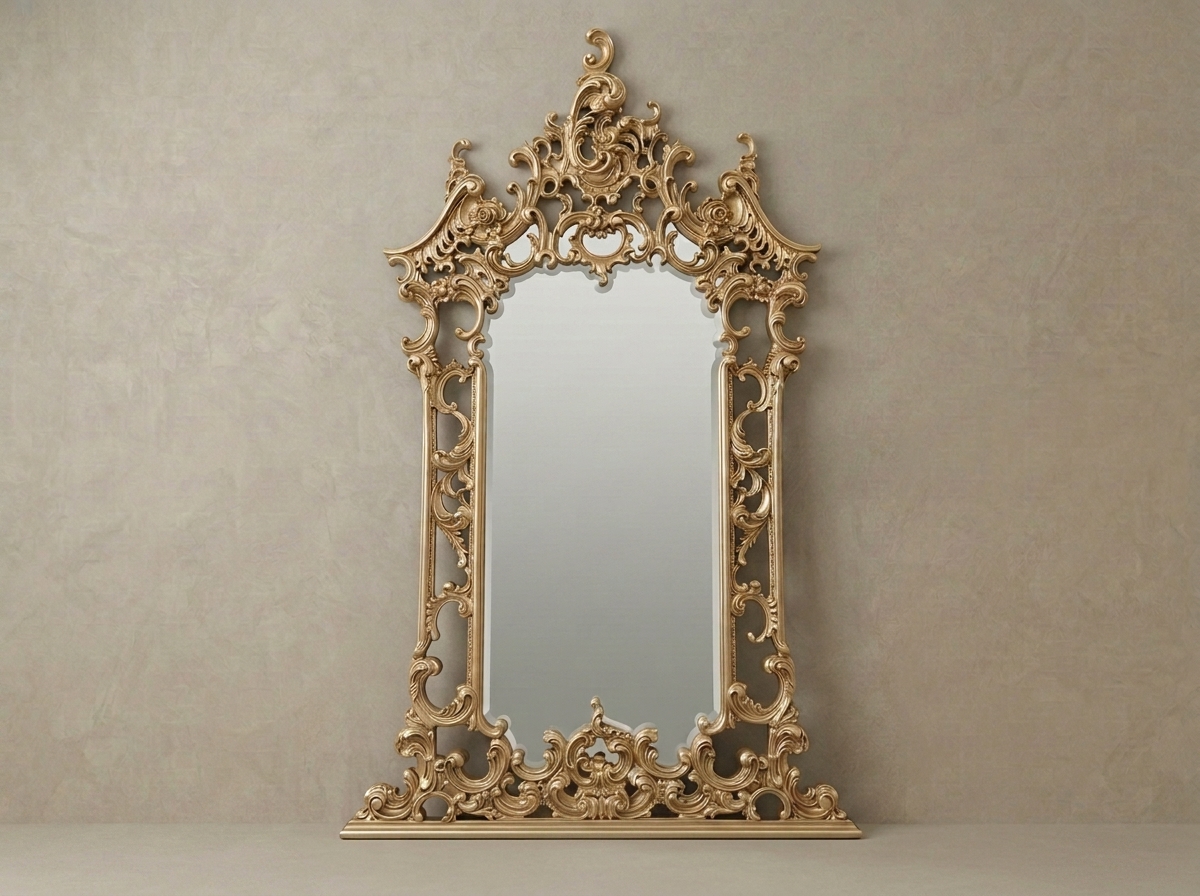
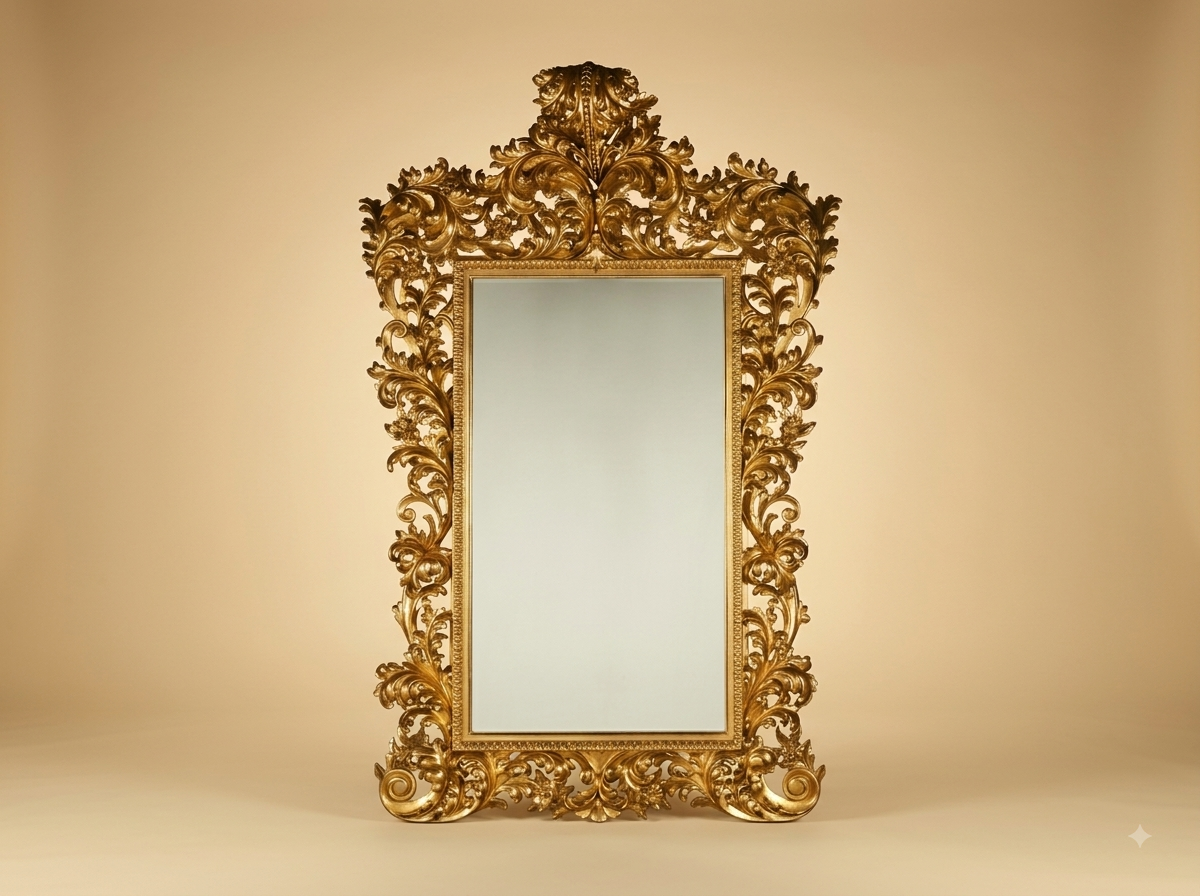
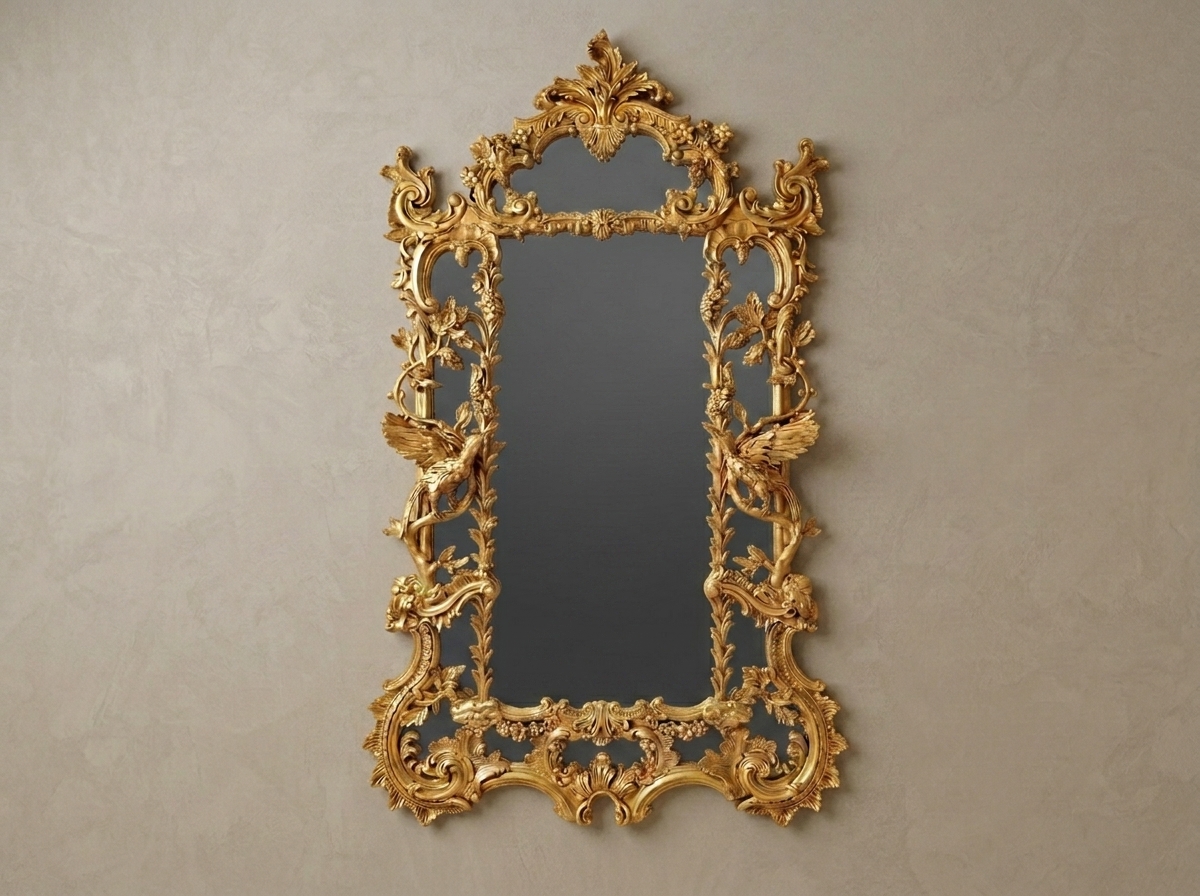
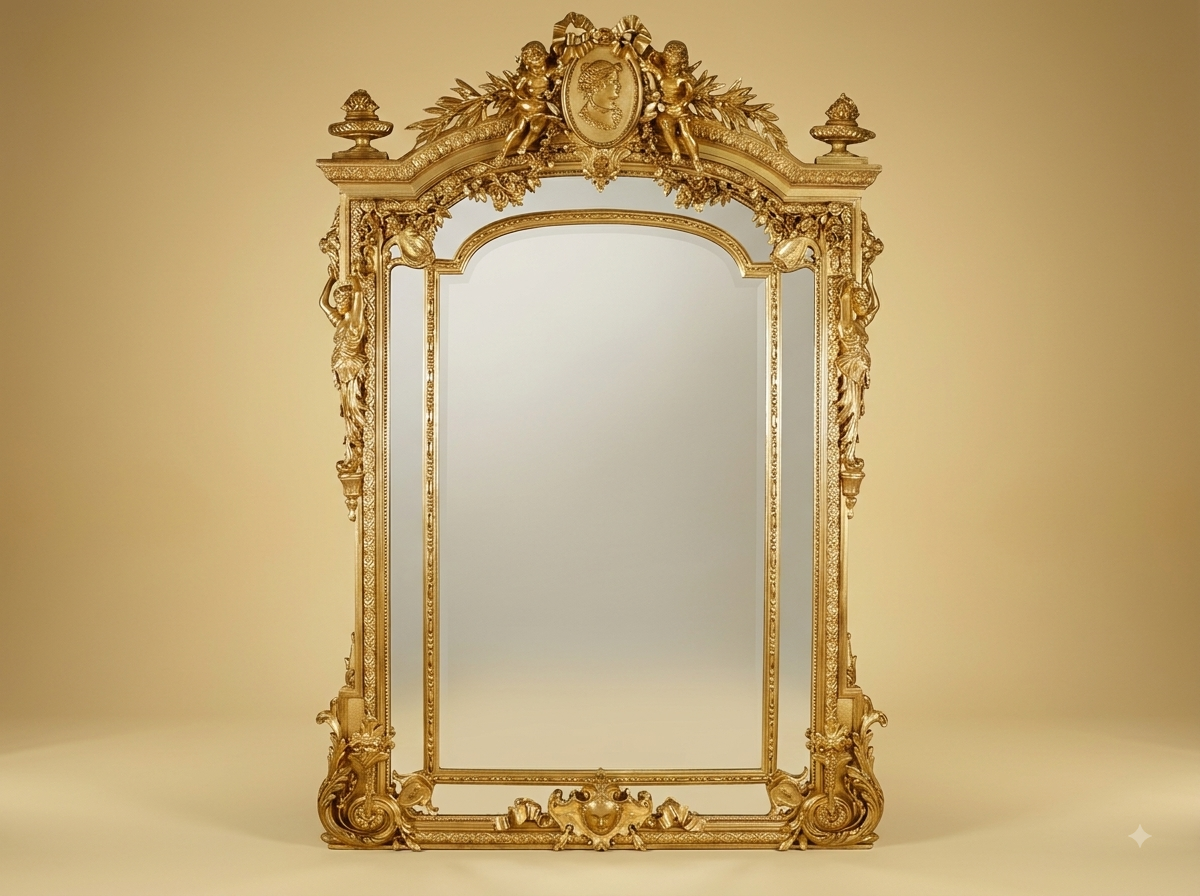
A piece this size is not one carving; it is a dozen carvings that have to agree with each other. The frame is drawn out full-scale first, because the cherubs, the urns, the cameo and the side stiles all have to hold proportion once they are two metres up a wall and seen from below. Only then is the seasoned teak cut and distributed to the bench - the figure work to the carvers who do figures, the mouldings and beading to those who do runs.
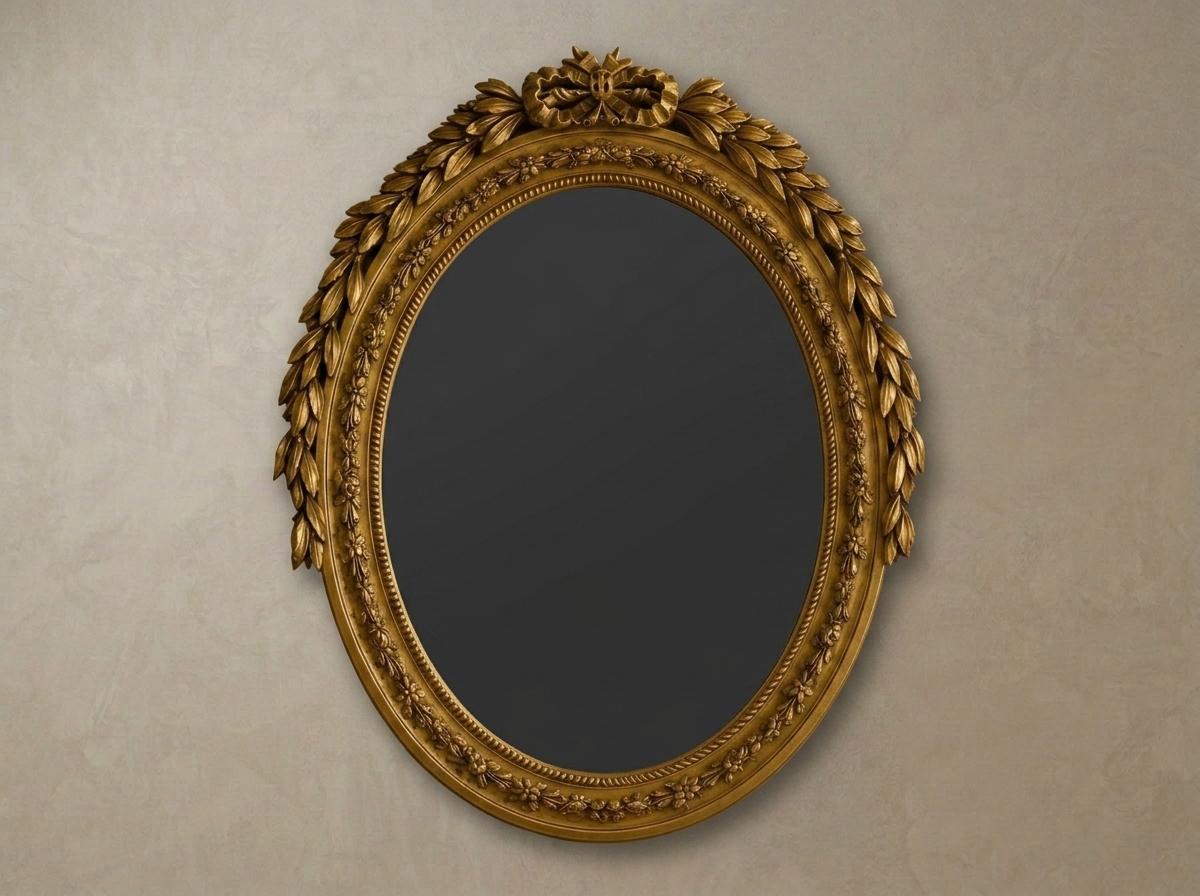
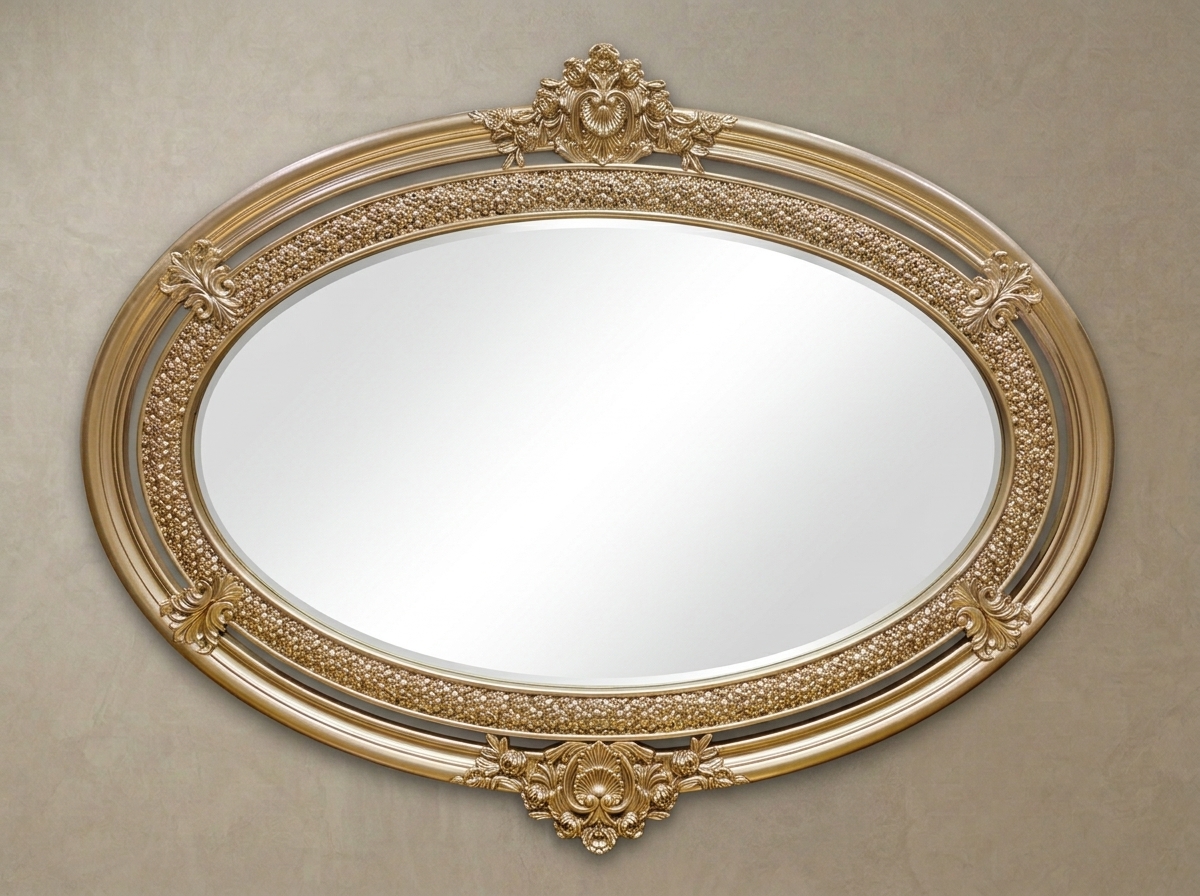
The cherubs are the slowest part. Faces, hands and the fall of drapery are shaped from the solid, and there is no correcting a face that has been cut too deep - the block is finished or it is scrapped. The cameo medallion is carved as a relief portrait and set into its oval, the laurel garlands are cut as continuous runs so the leaves overlap the way real foliage does, and each flame urn is turned before it is carved and fluted. When the components come together, the whole frame is hand-sanded through progressive grits, then the gold is built up in coats and rubbed back by hand along the pediment edges, the urn lips, the garlands and the cartouche - the places a hand or a century would have worn it. Only then is the glass fitted: the central plate first, then the two marginal plates. What leaves the workshop after several weeks is a piece intended to be inherited.
 Ask Price On WhatsApp