The Story Behind This Mirror
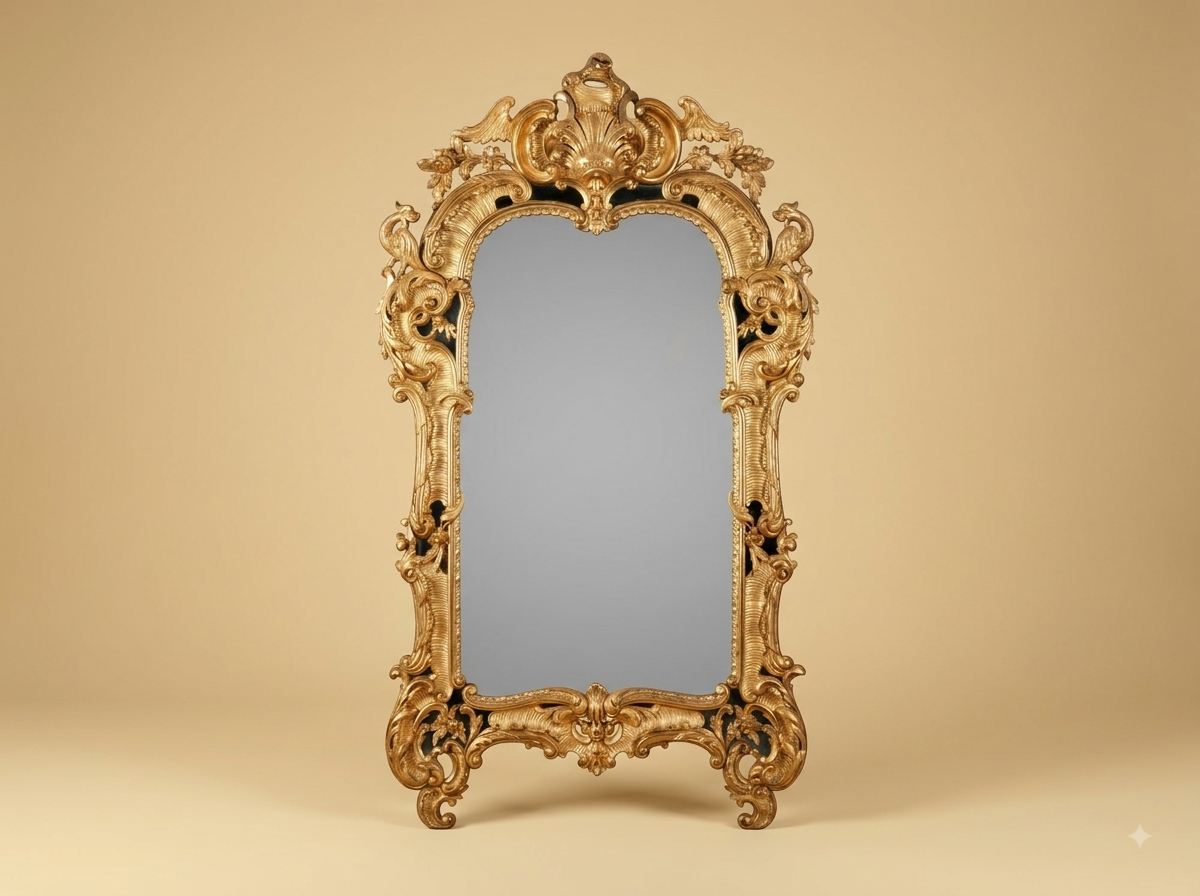
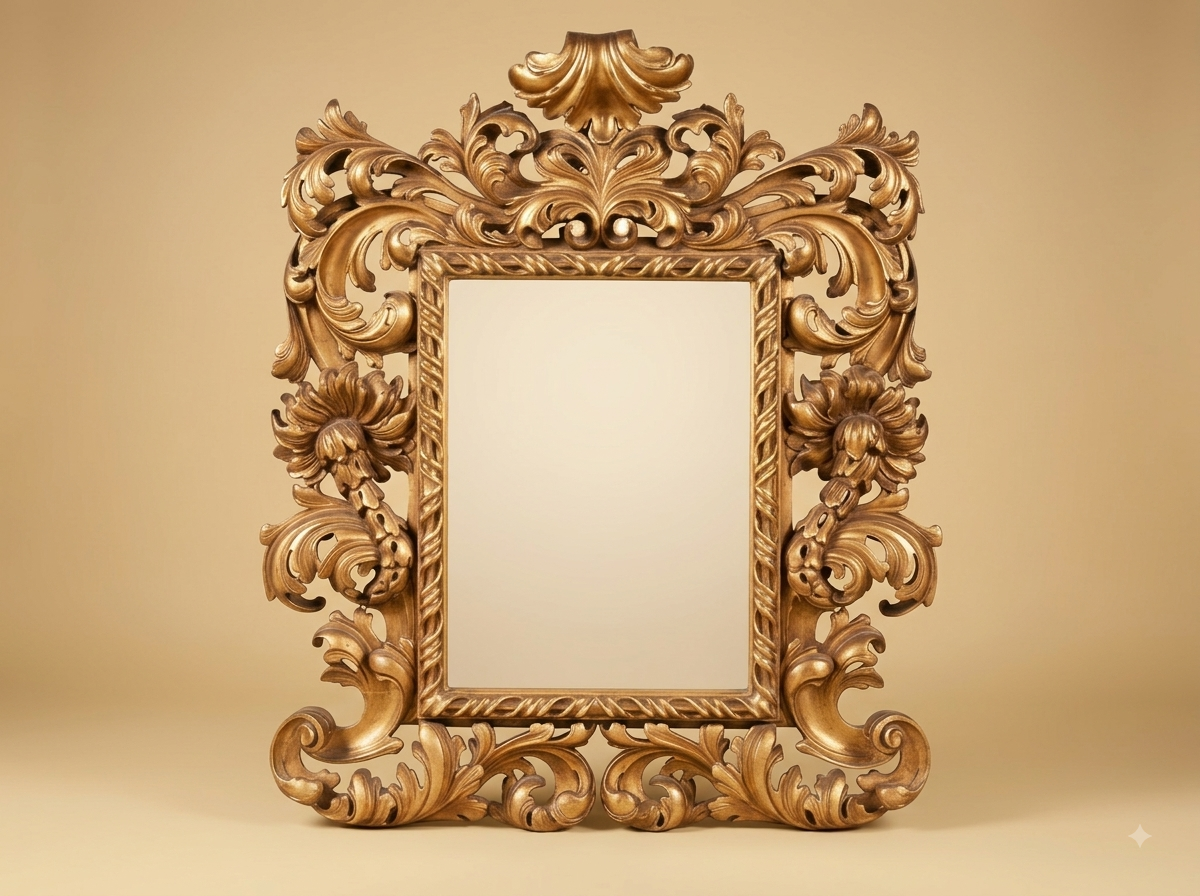
Eight shells on one frame sounds like a repetition problem, and it is. Each has to be cut to the same depth, with flutes at the same spacing and the same sweep, or the regularity that gives the design its rhythm collapses into something that just looks inconsistent. So the shells are set out precisely and carved to a common template of depth and proportion, though each is cut by hand and so is never mechanically identical.
The swept outer profile is worked first and refined with scrapers, because a black finish over a curved surface shows every ripple that gold would hide. The mitres are dry-fitted until they close without pressure, since the flared corners put the joint right where the eye goes.
Finishing takes longer than carving. The ebonised ground is built up in thin coats and cut back between them until it is dense and even across both the flat rails and the carved recesses - laying black into carving without filling the detail is the hardest part of the process. Only then is the gold laid, by hand, on the shells, cabochons, scrolls and beaded inner border alone, and rubbed back at the high points.
 Ask Price On WhatsApp