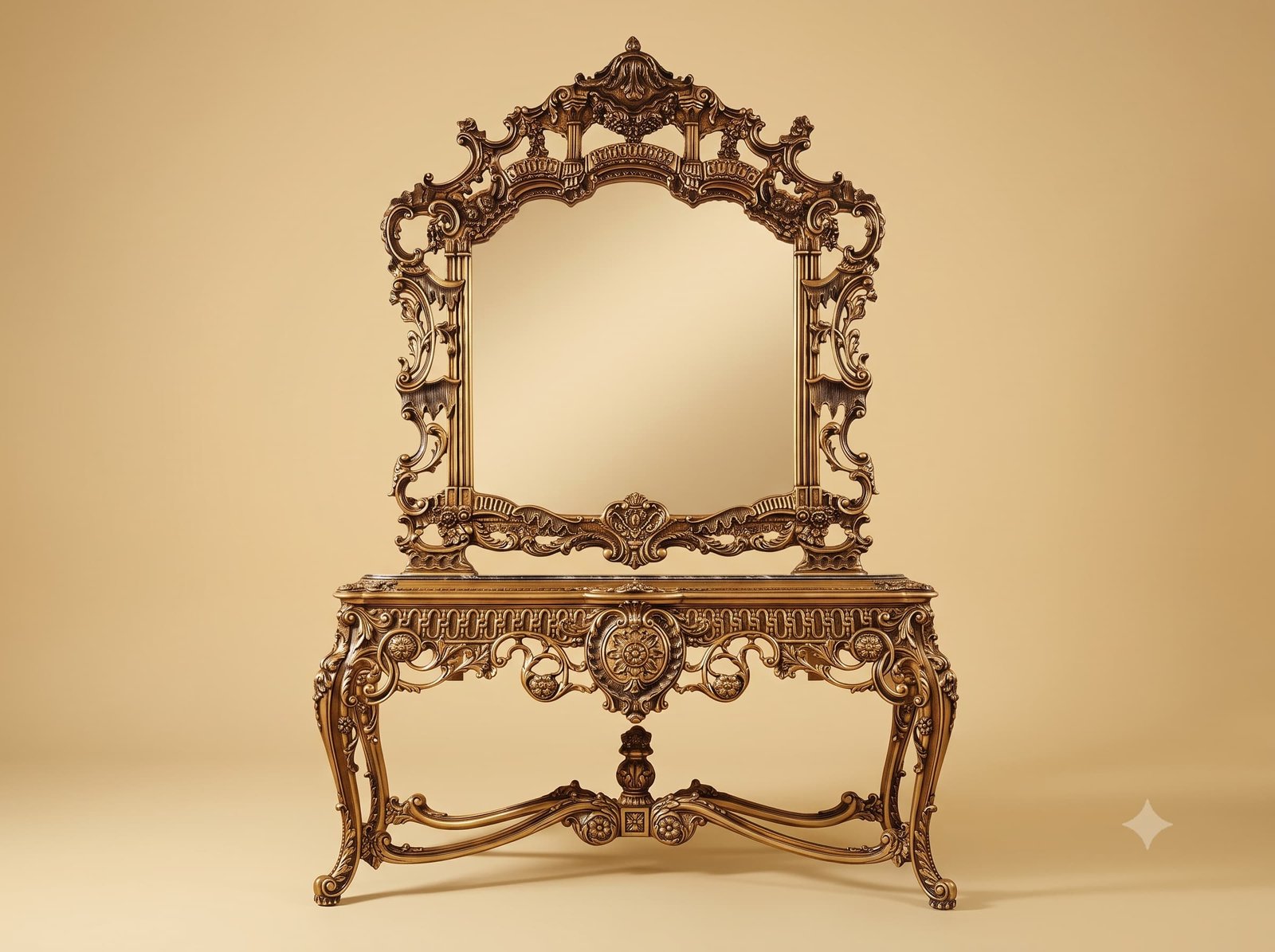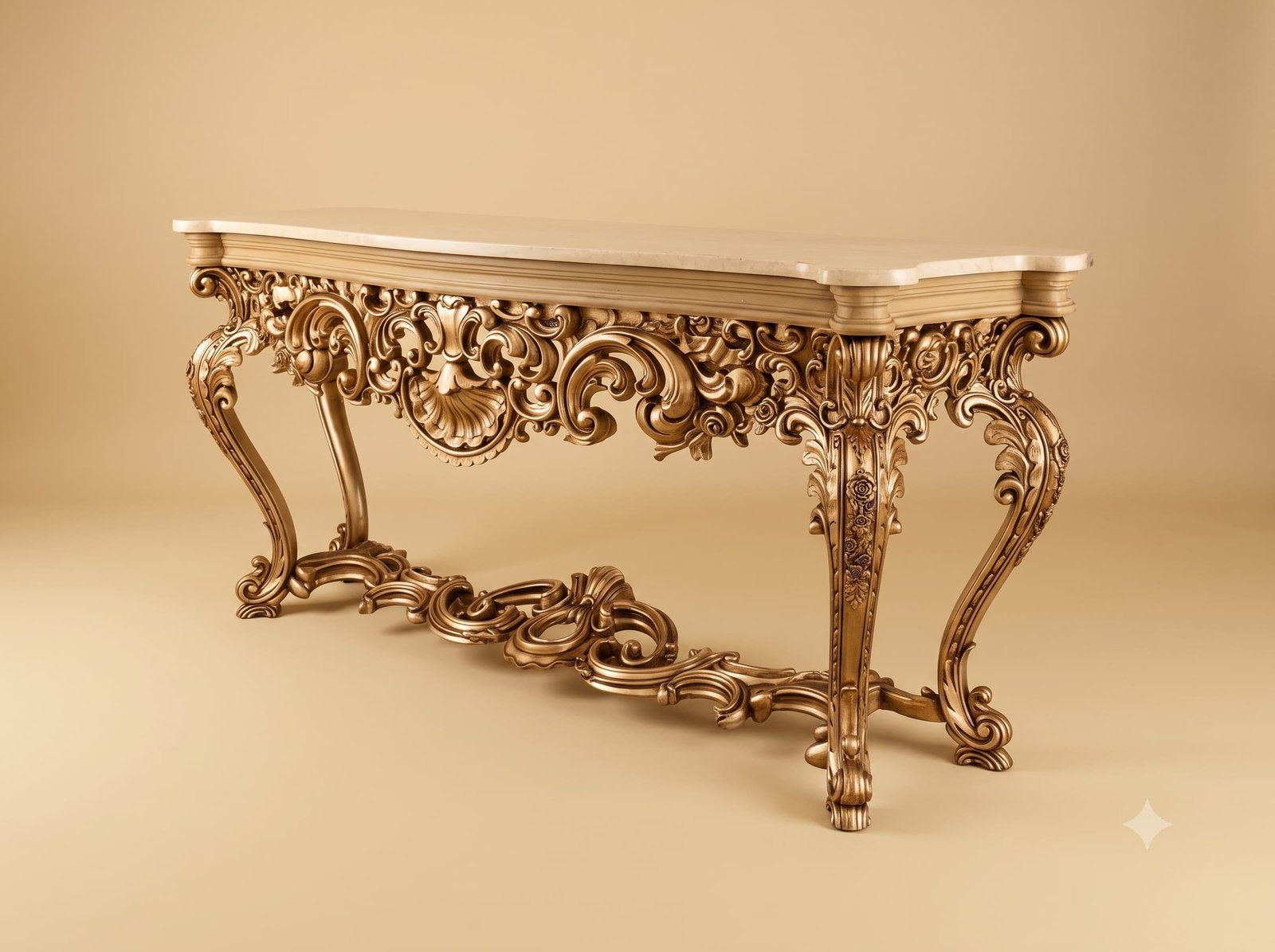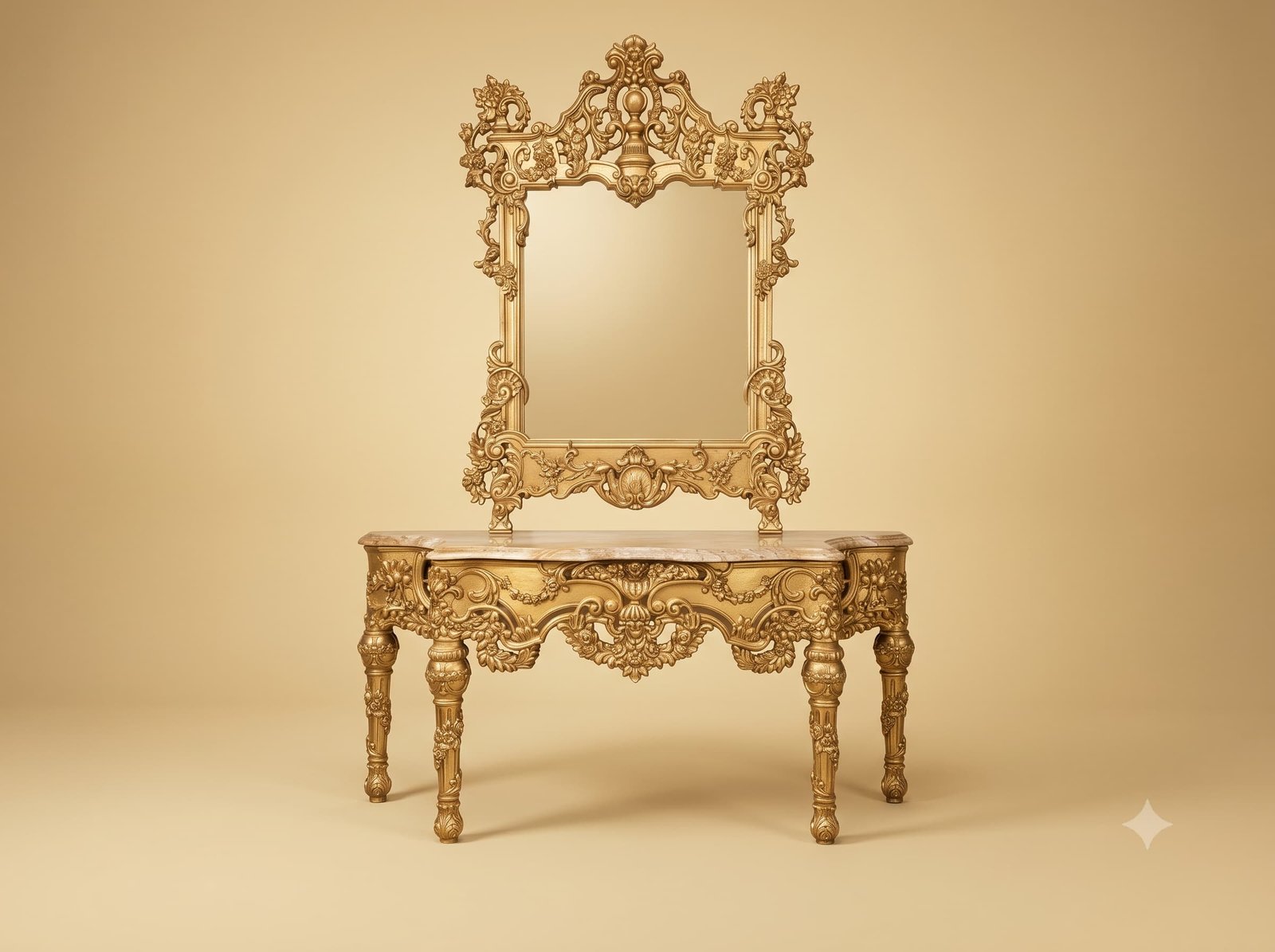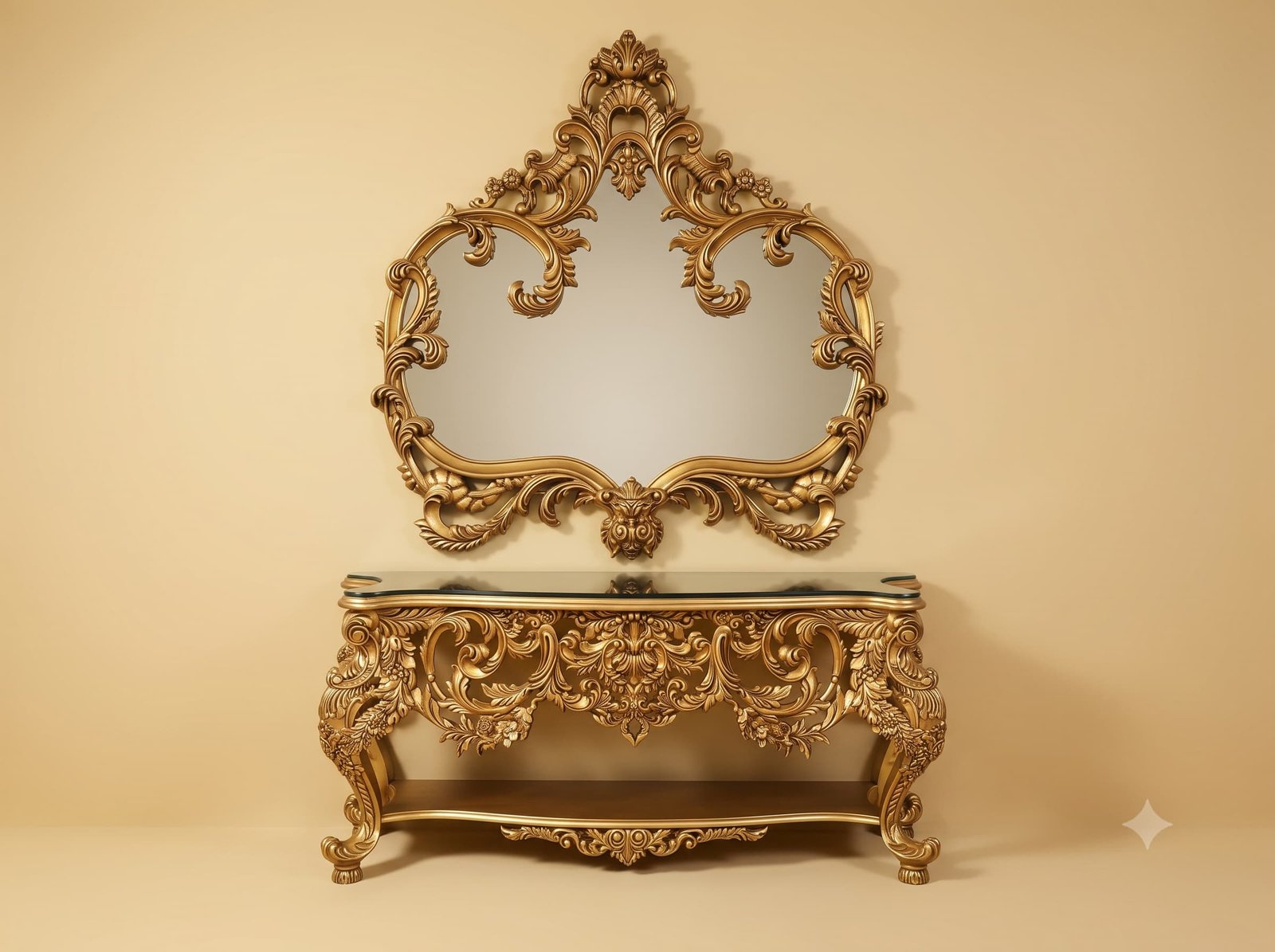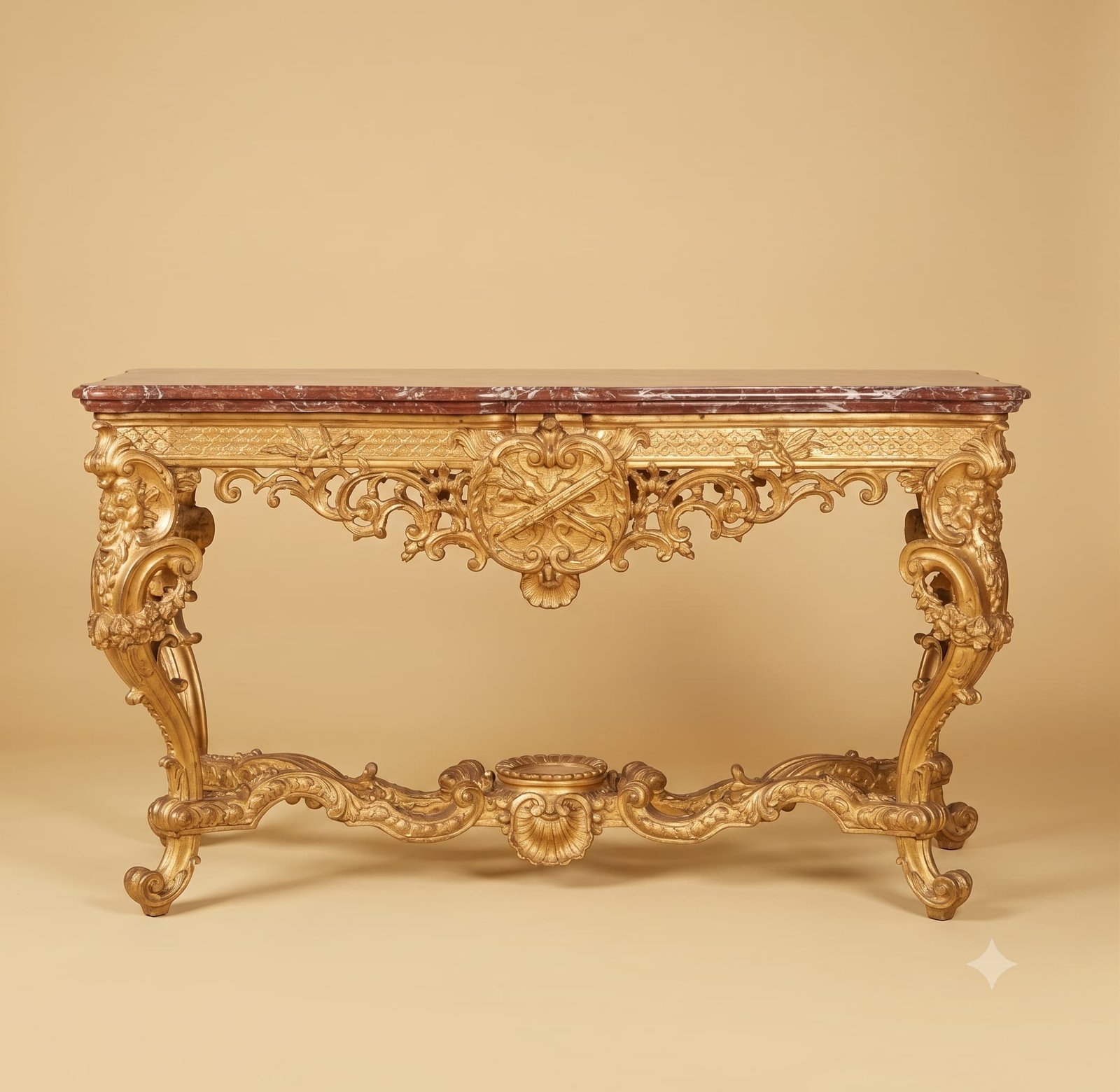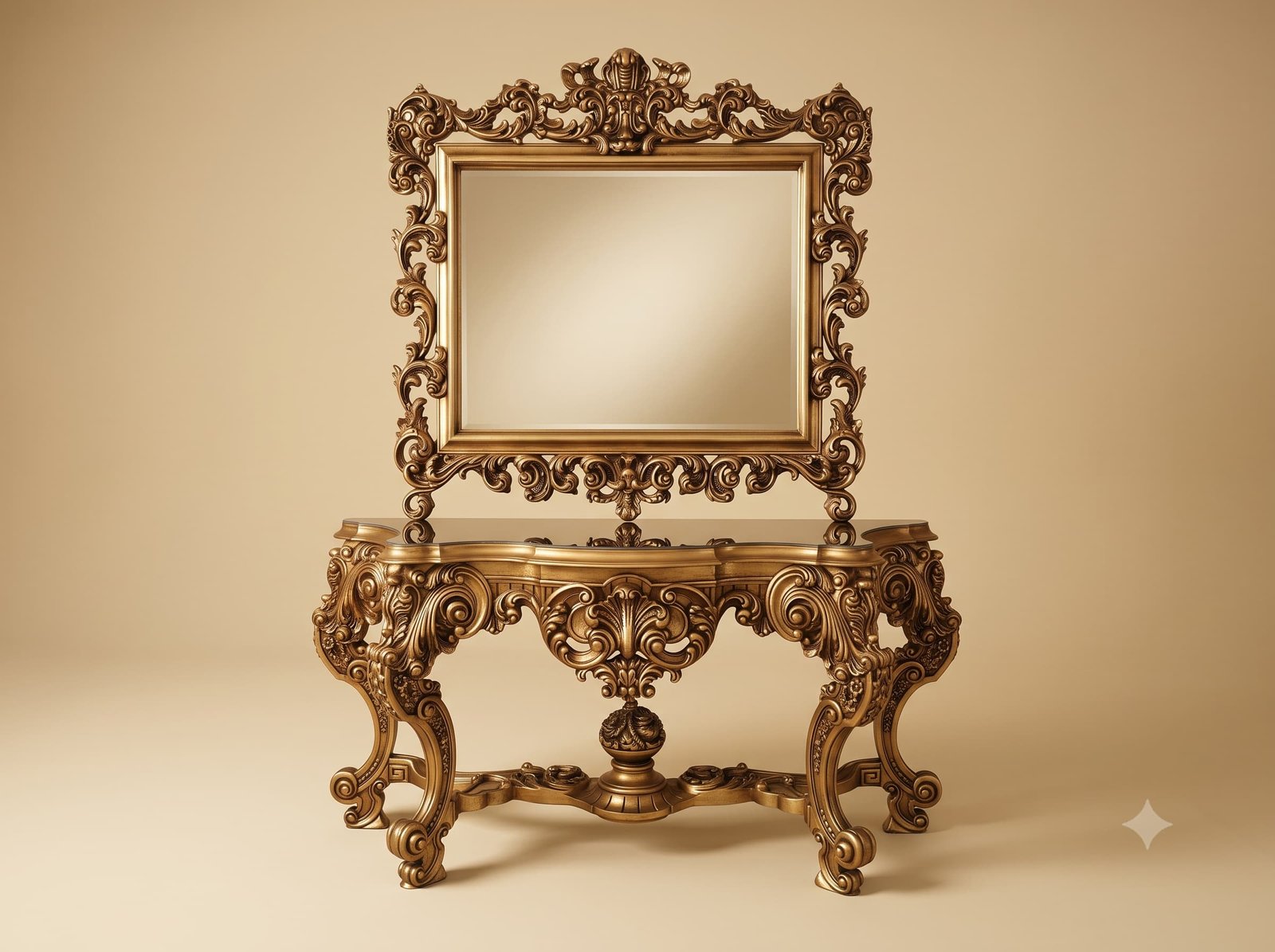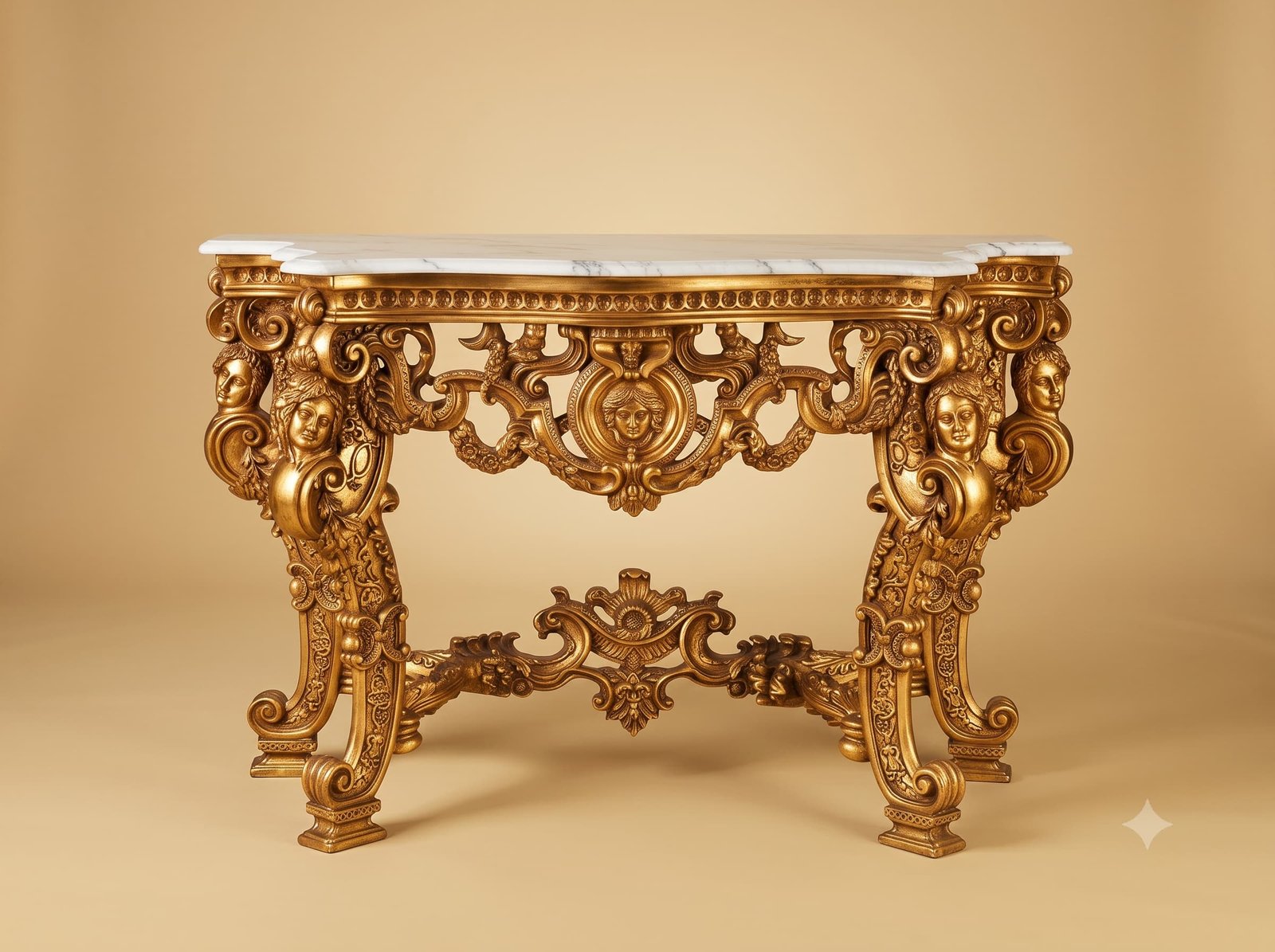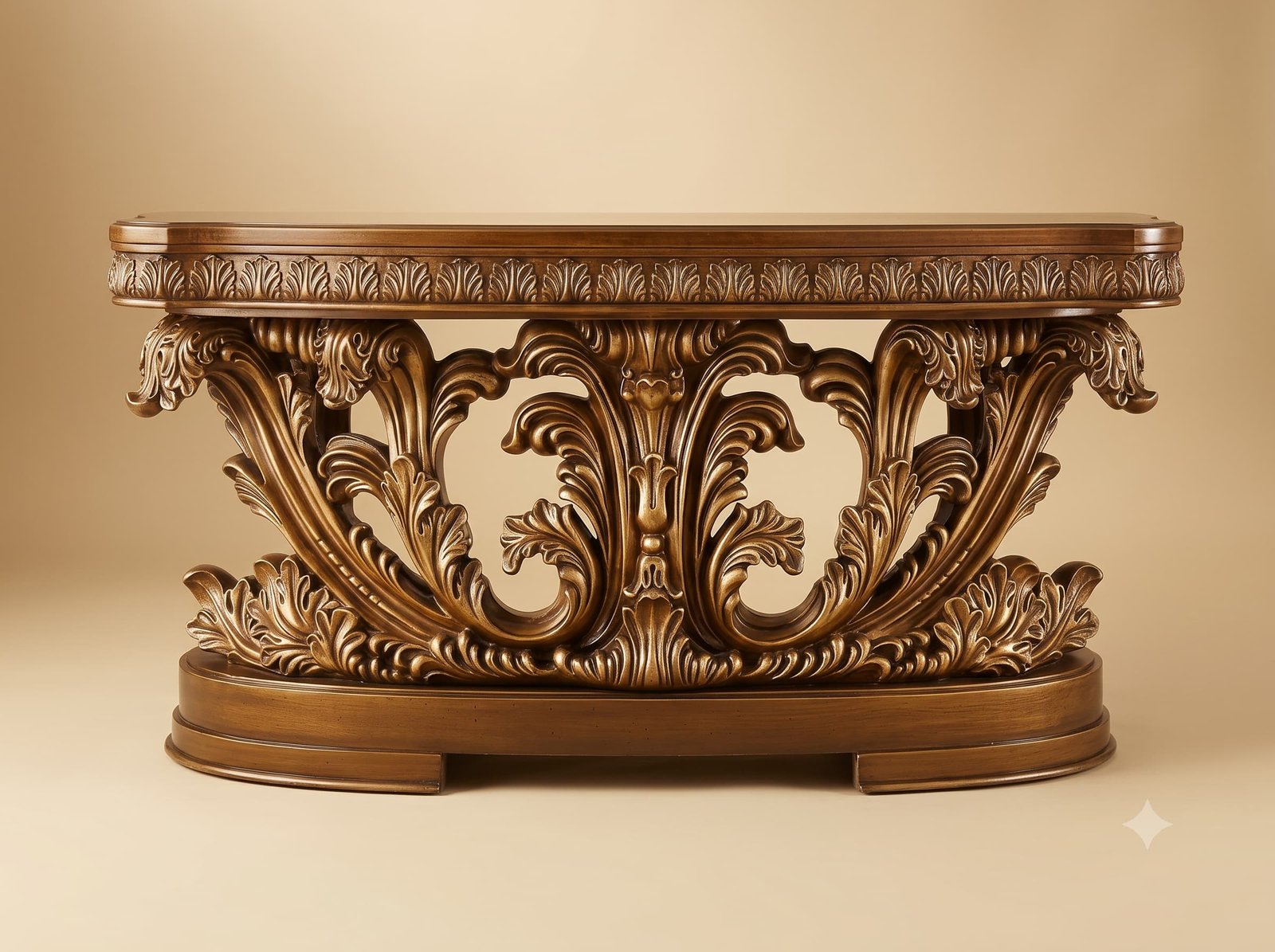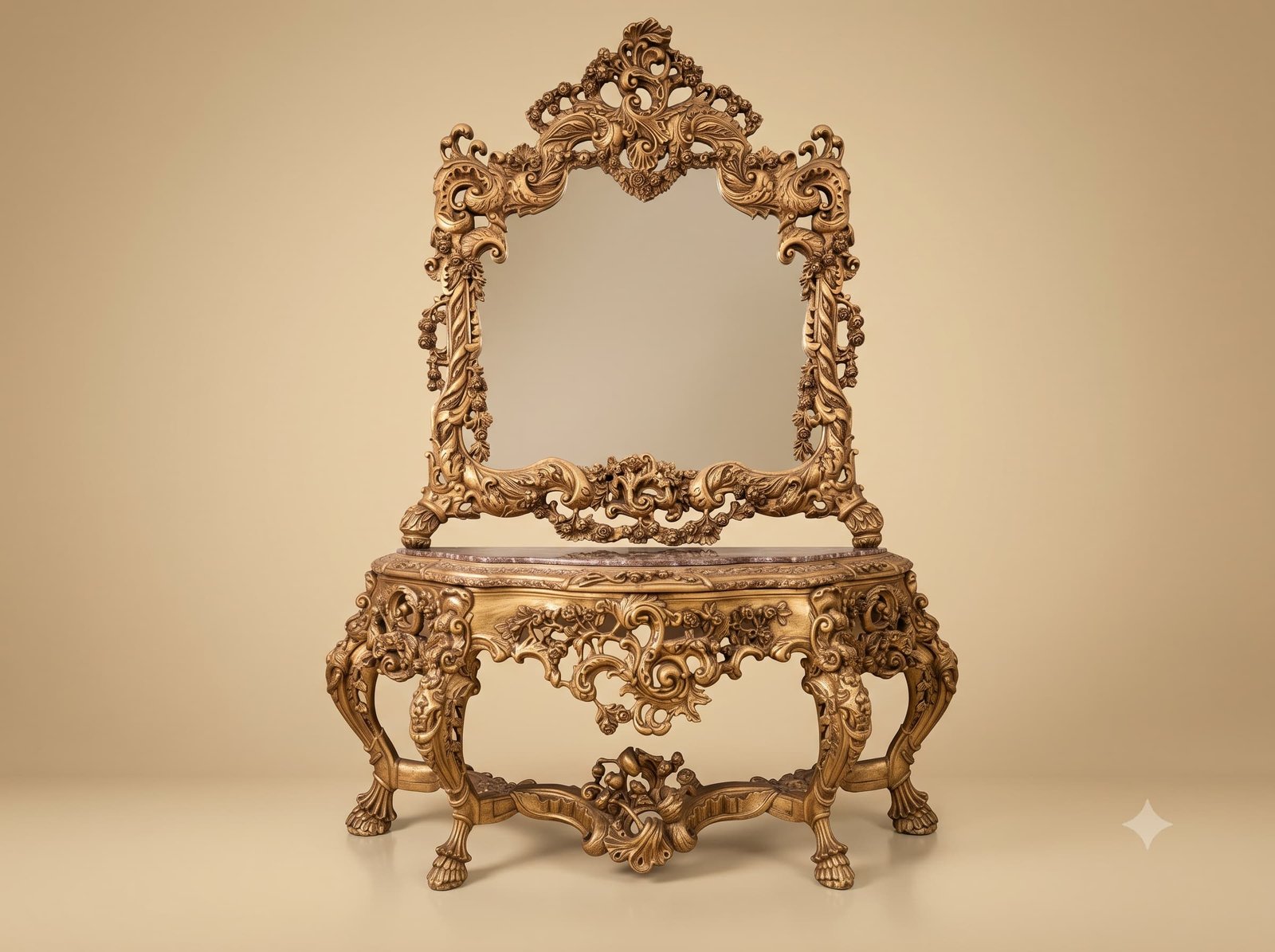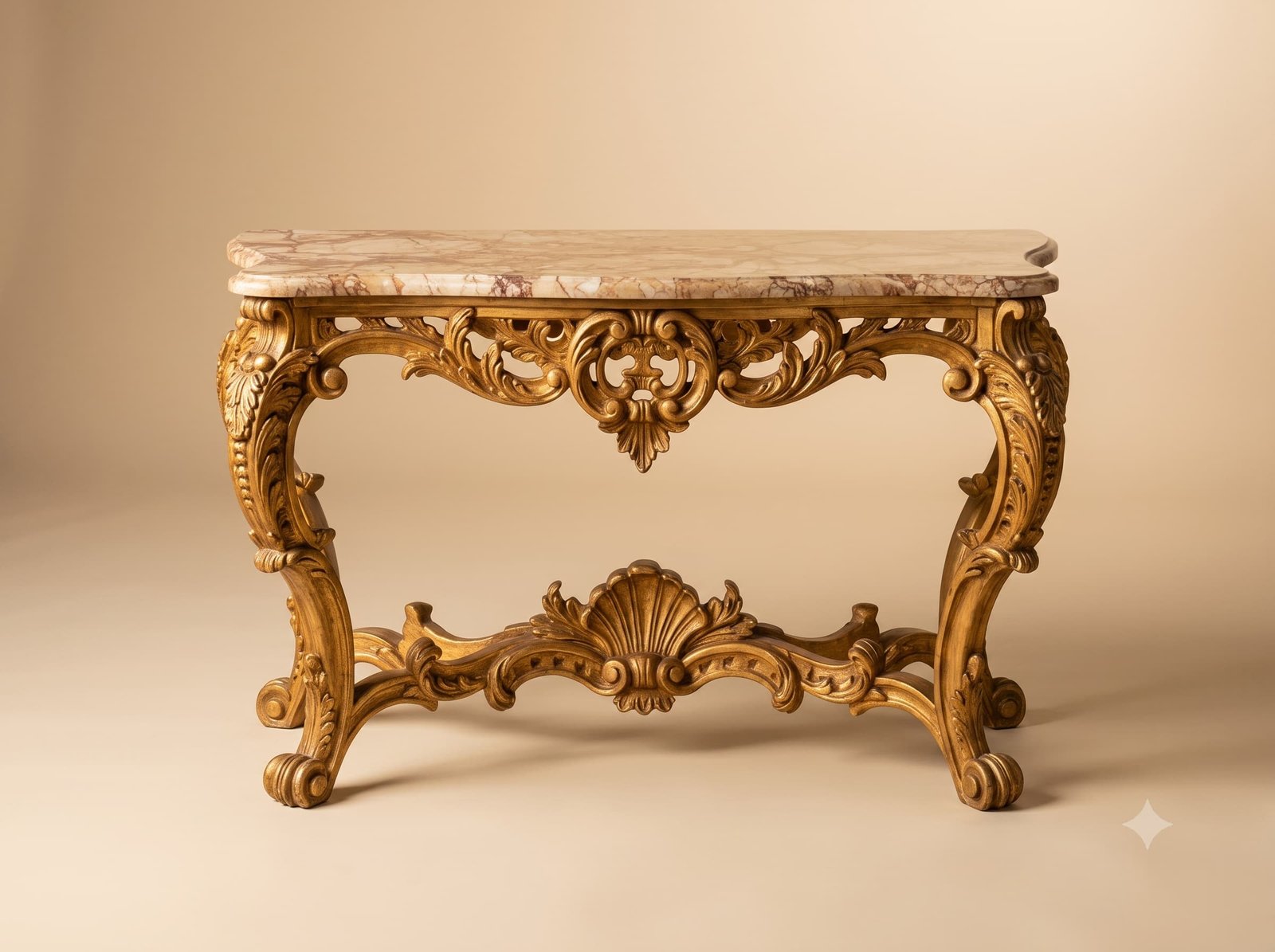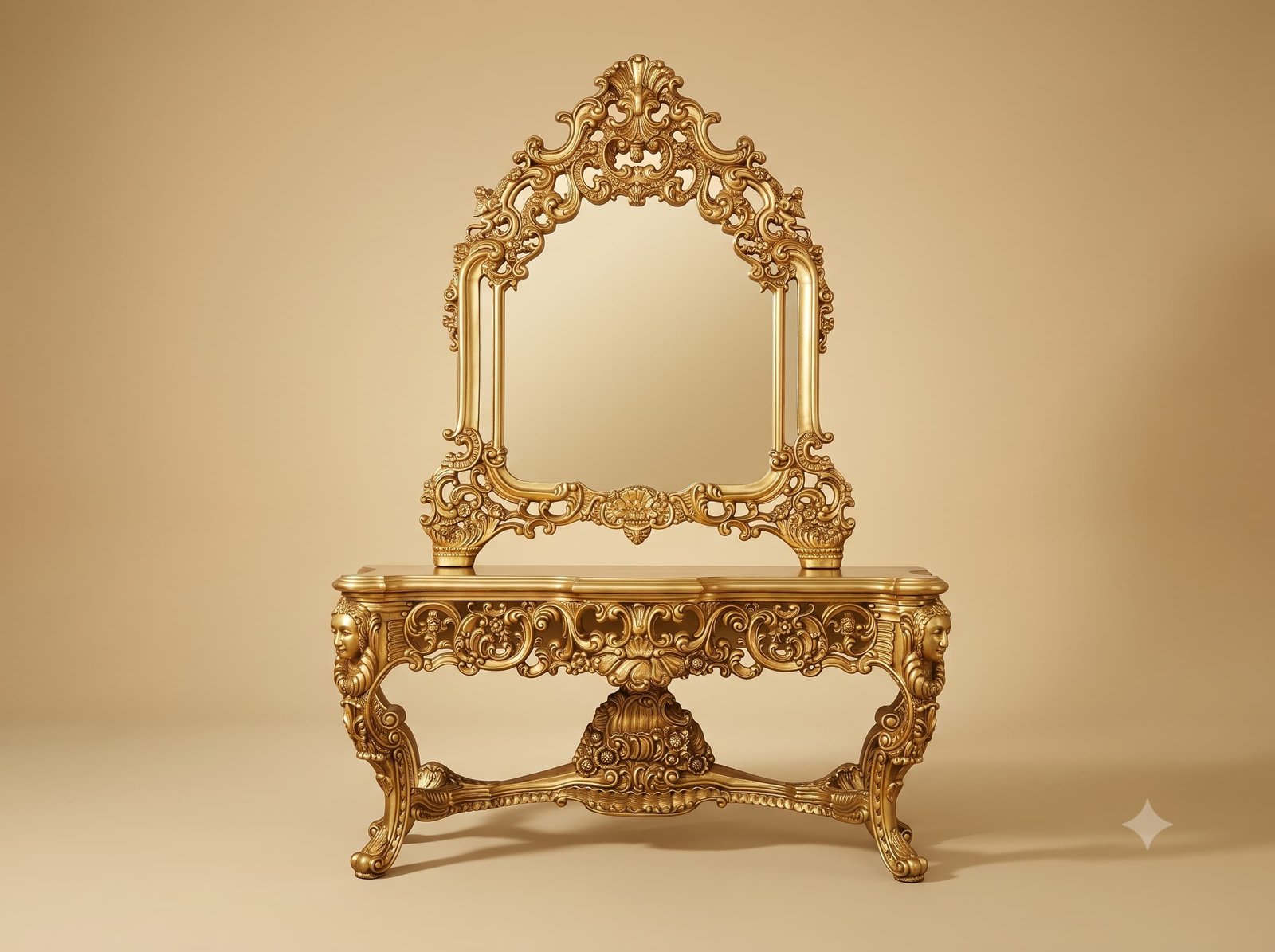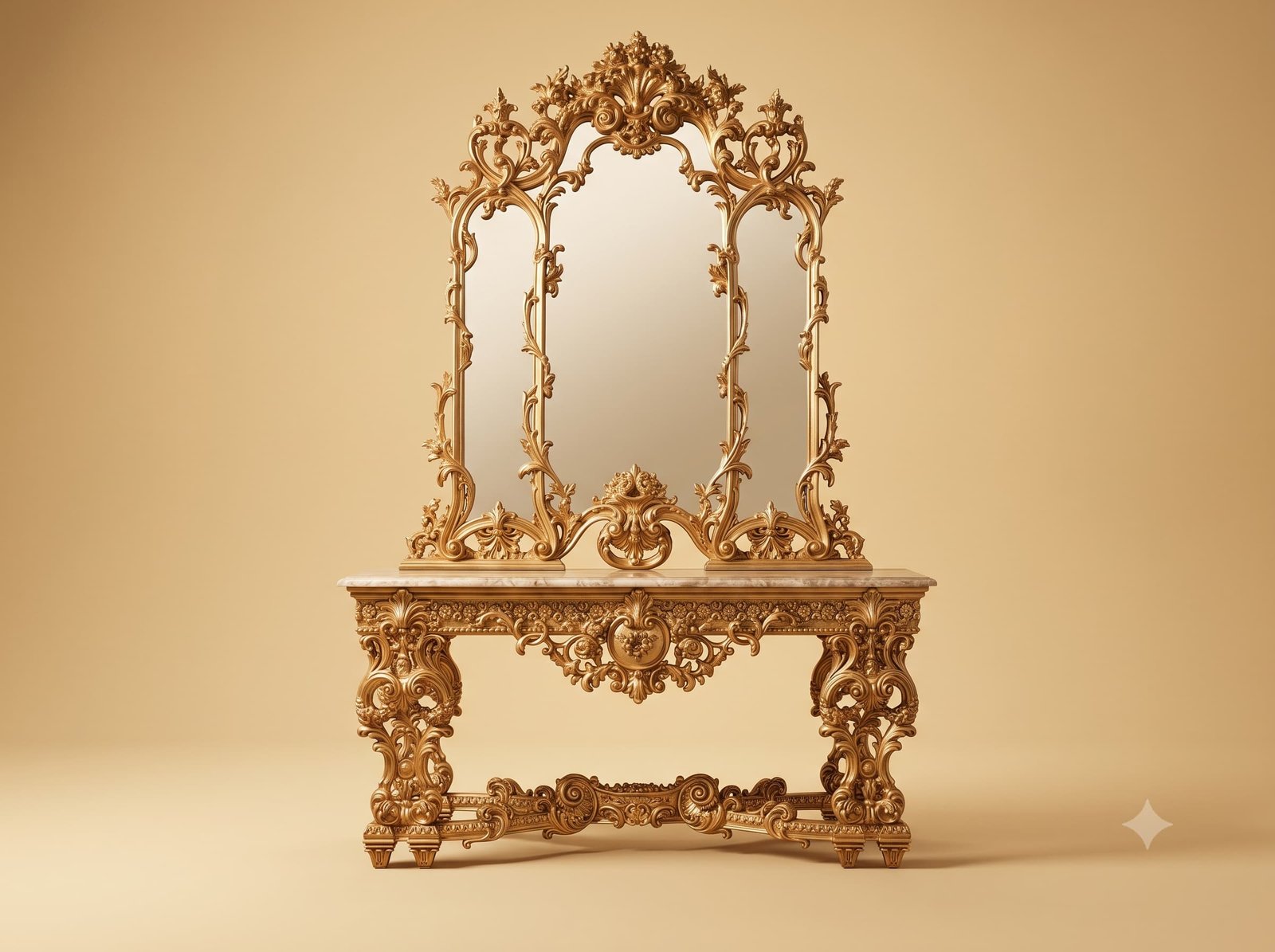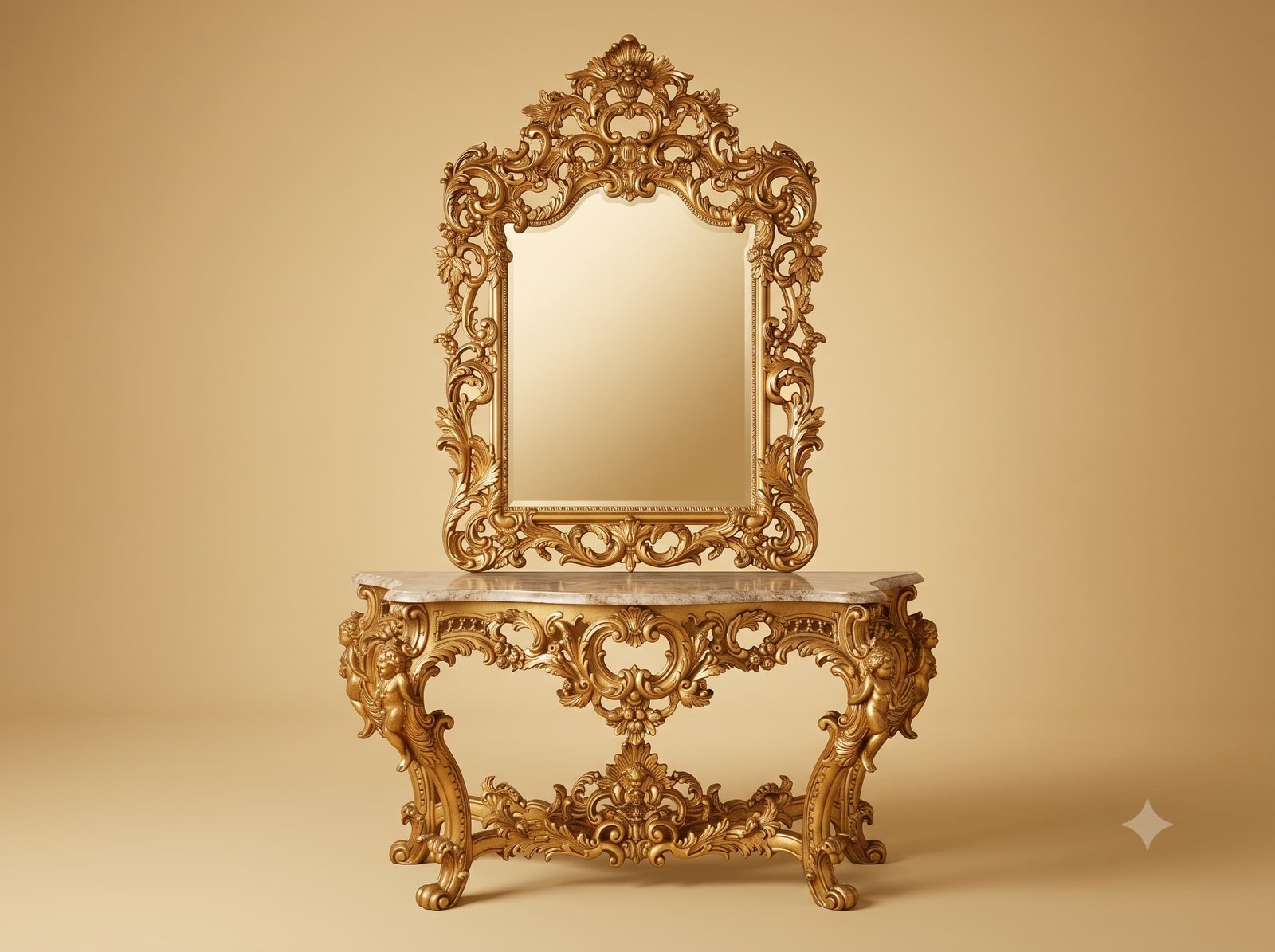
A figure carved on furniture is never carved to look correct in the hand. It is carved to look correct from where it will actually be seen - which for a console leg head means from several feet away and from below.
That changes the proportions the carver works to. Seen from beneath, a head foreshortens: the forehead shortens, the chin advances, and a figure modelled to textbook proportion ends up looking small-headed and slightly wrong. So our master Indian artisans make the head marginally larger than proportion demands and tilt it forward a fraction, which restores it to correct at viewing height. Hold the same carving level with your eye and you can see the exaggeration; stand it on the table and it disappears.
The same correction runs through the whole figure. Detail on the upper surfaces - the top of the shoulder, the crown, the upper arm - is modelled more strongly than detail underneath, because from below those are the surfaces that fall into shadow and would otherwise be lost.
The test is simple and it is the only one that matters: set the piece at its finished height, walk away, and look.
 Ask Price On WhatsApp