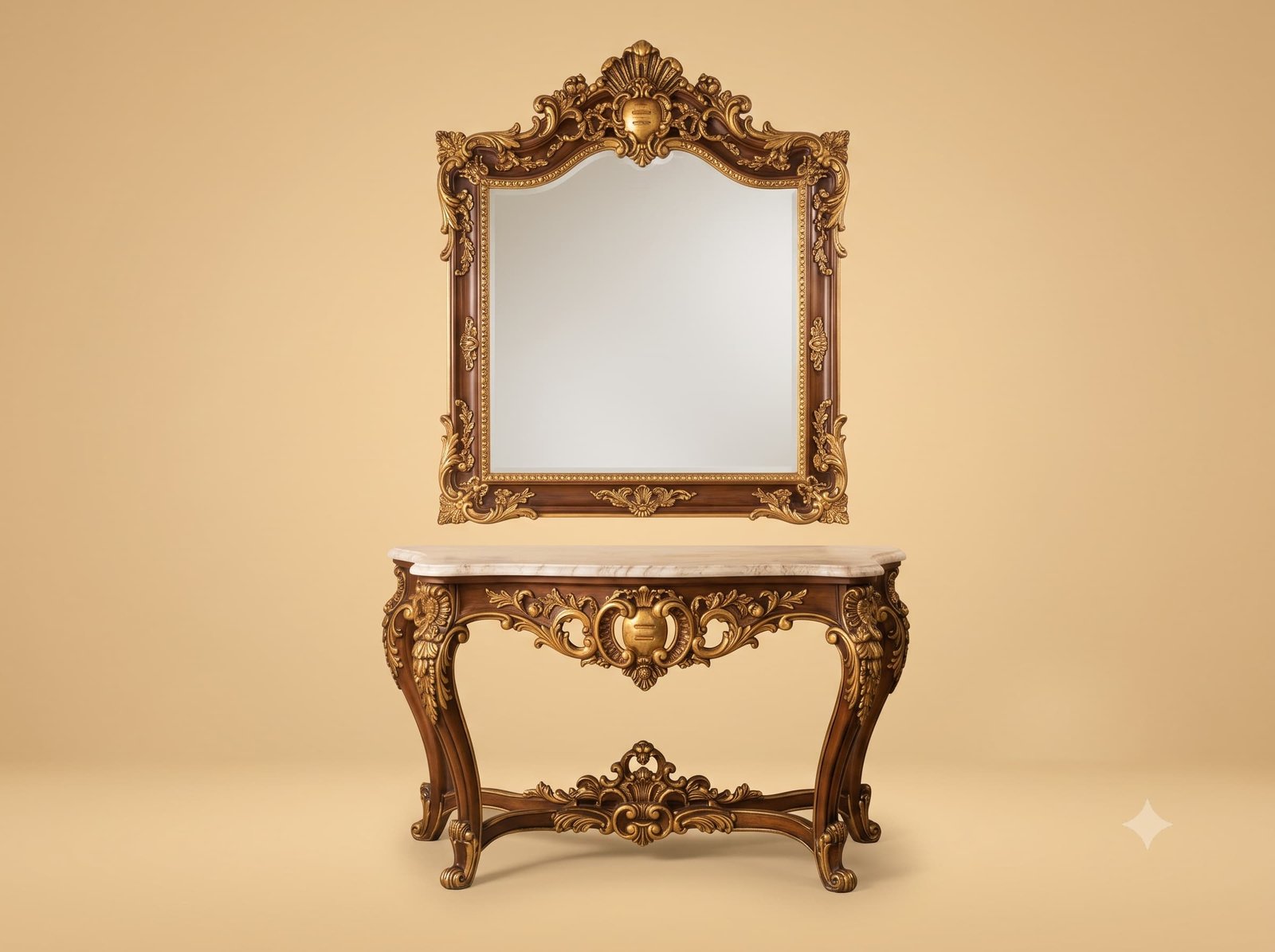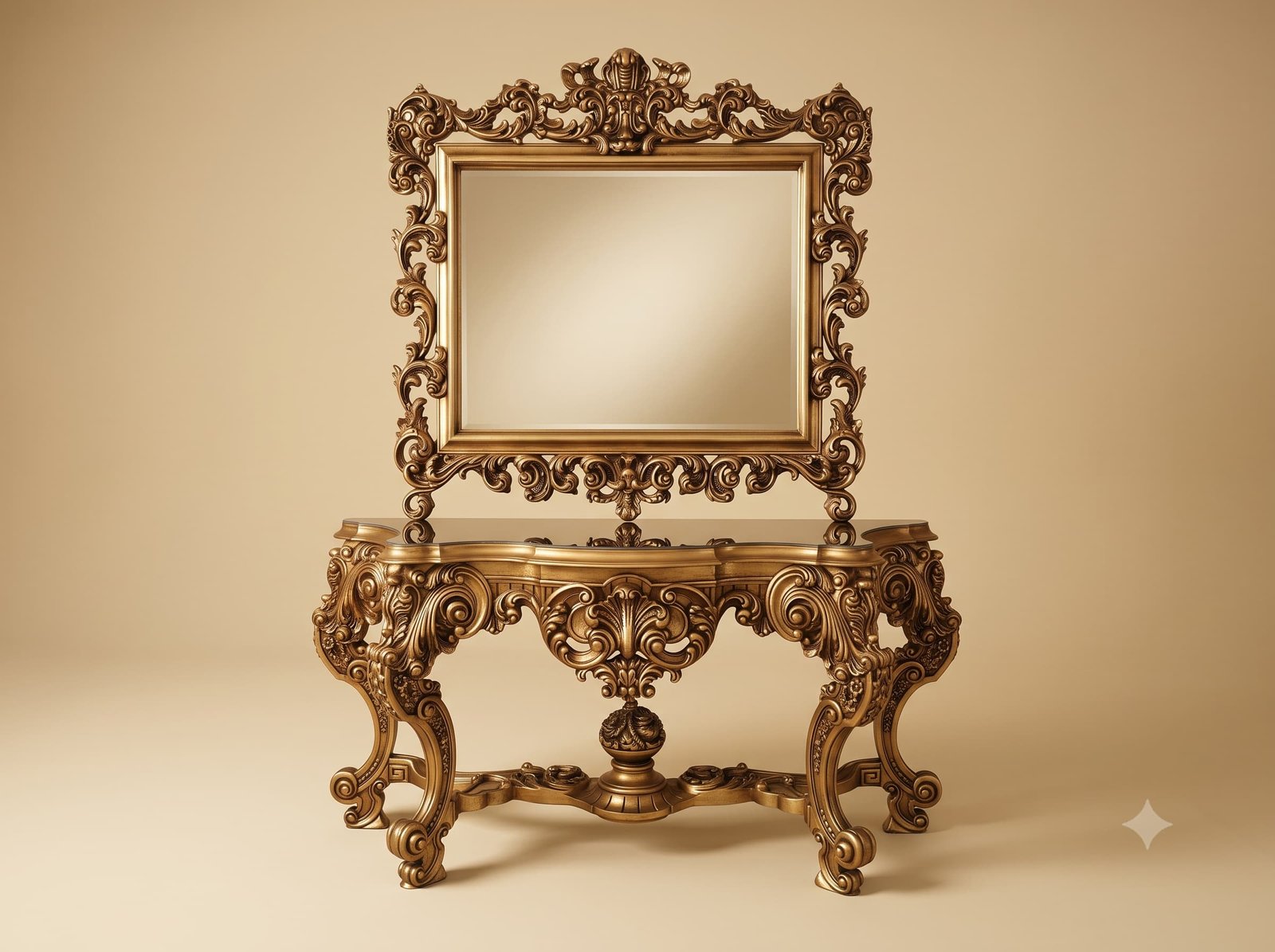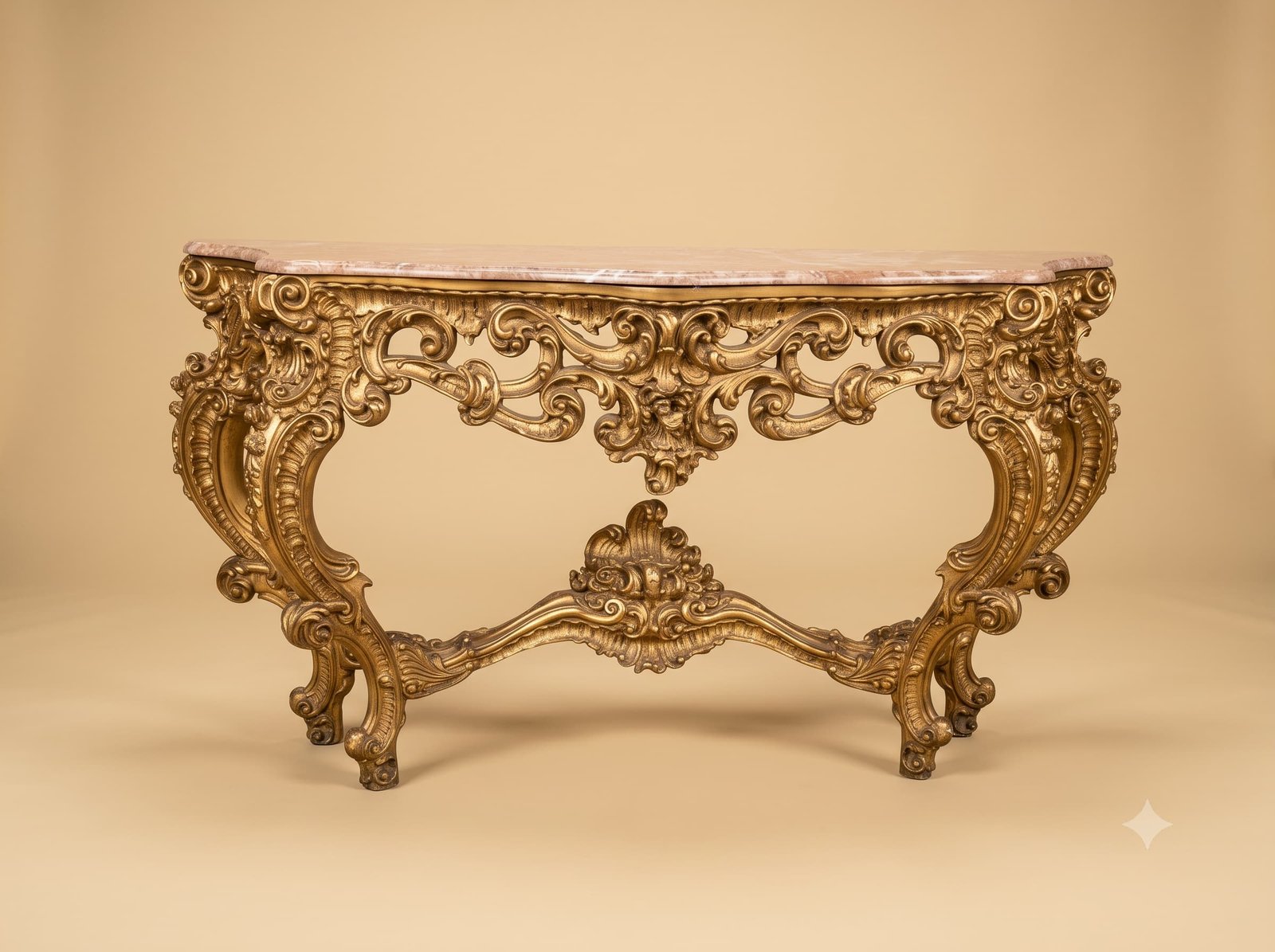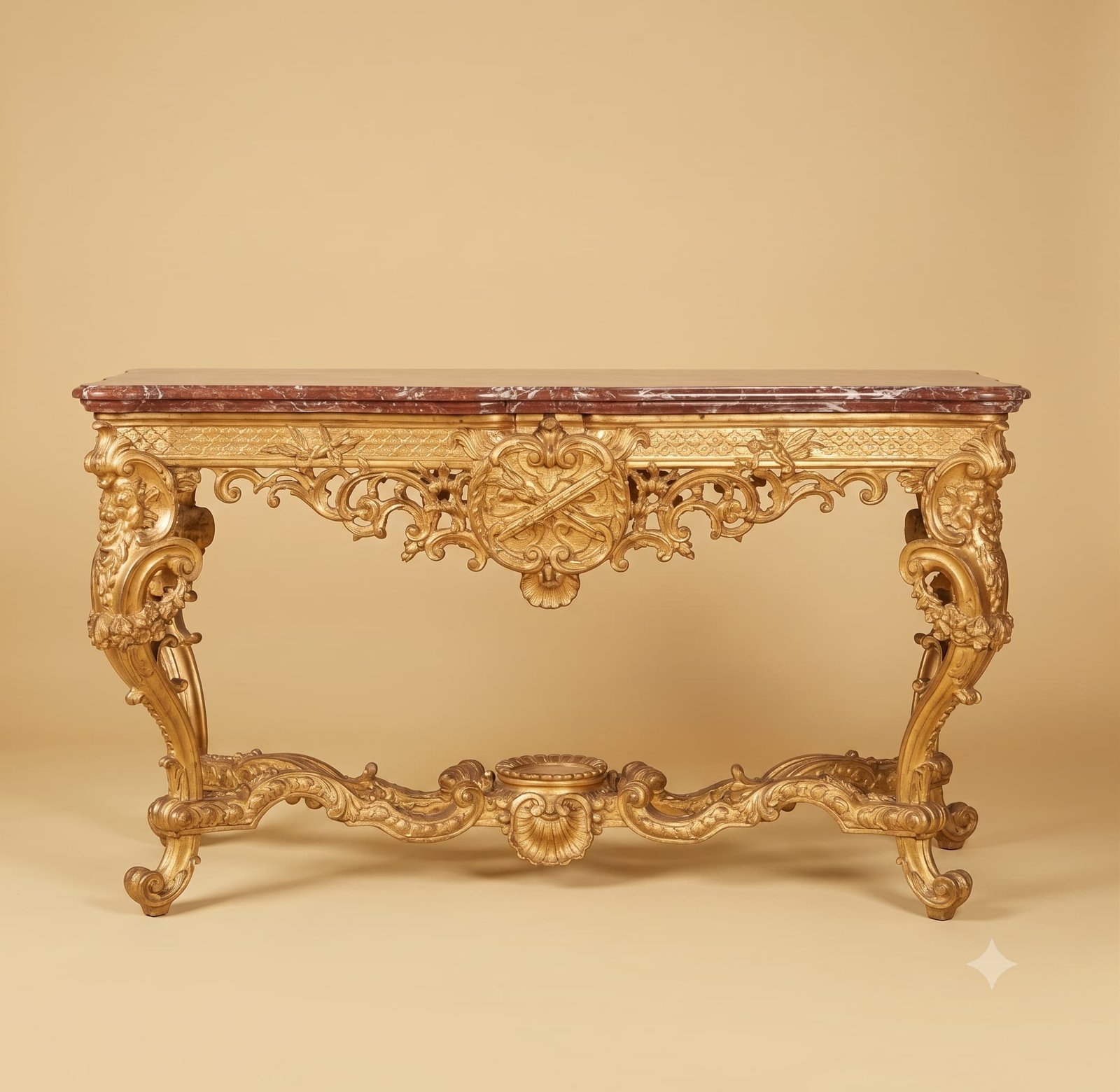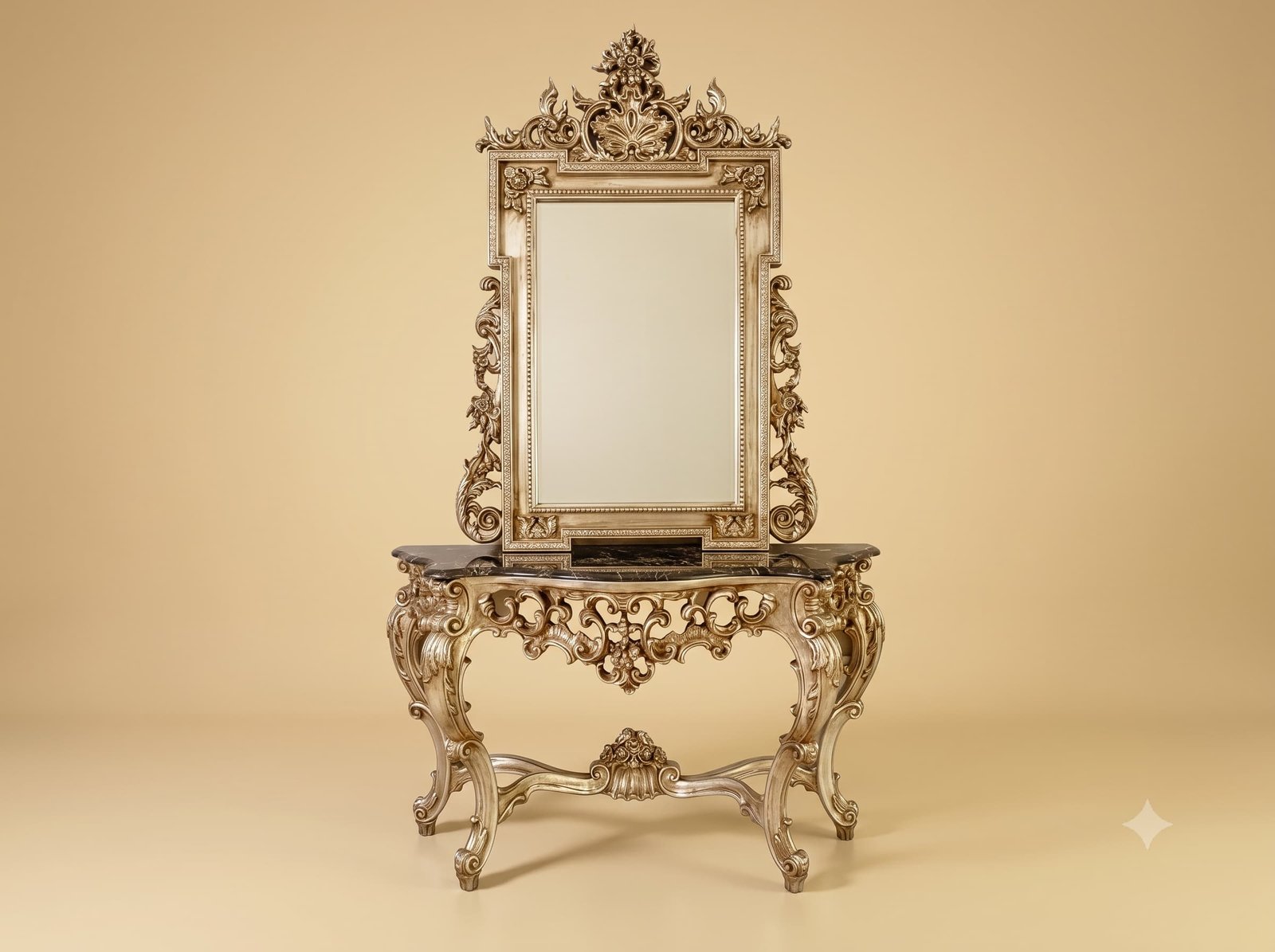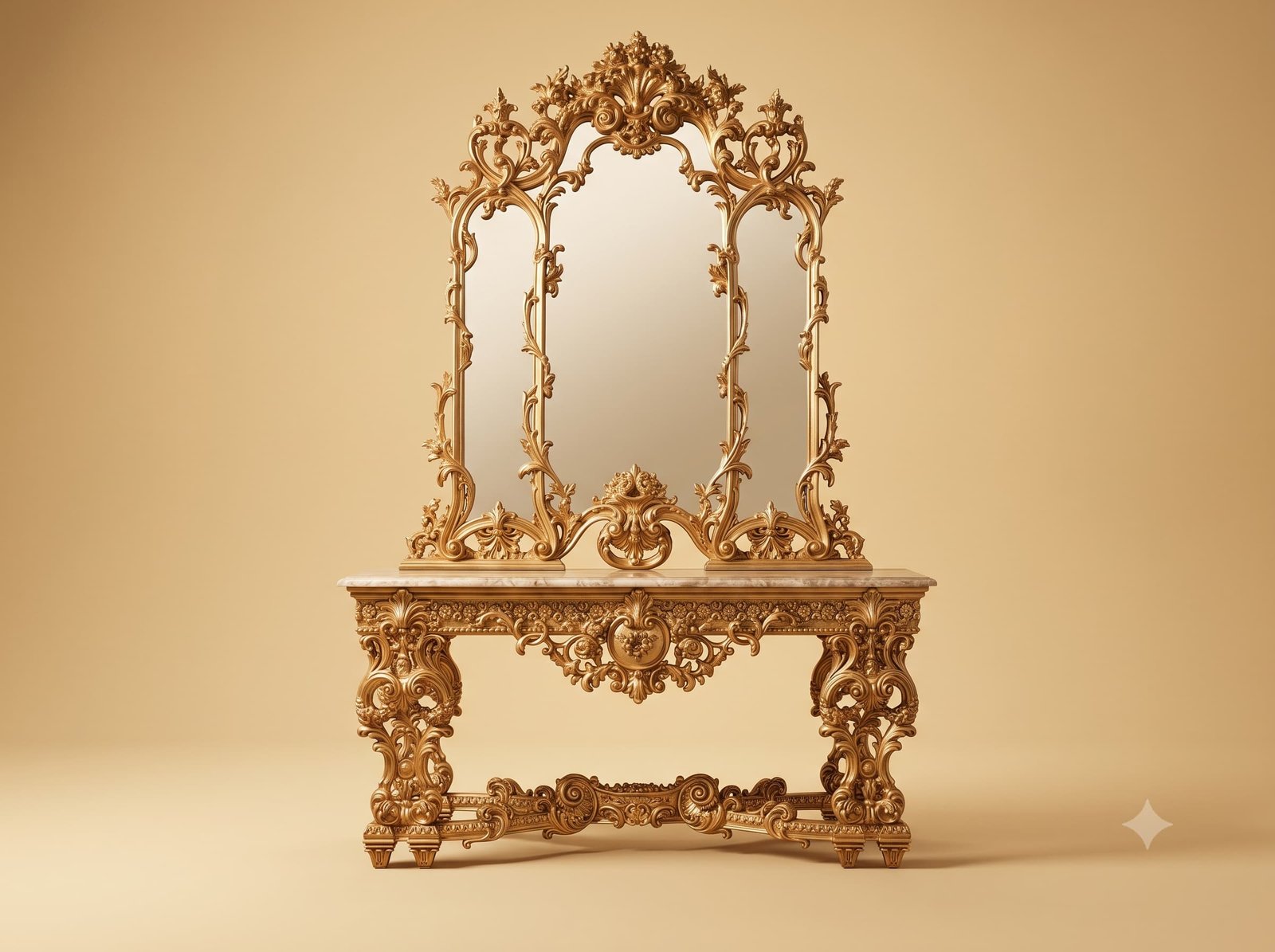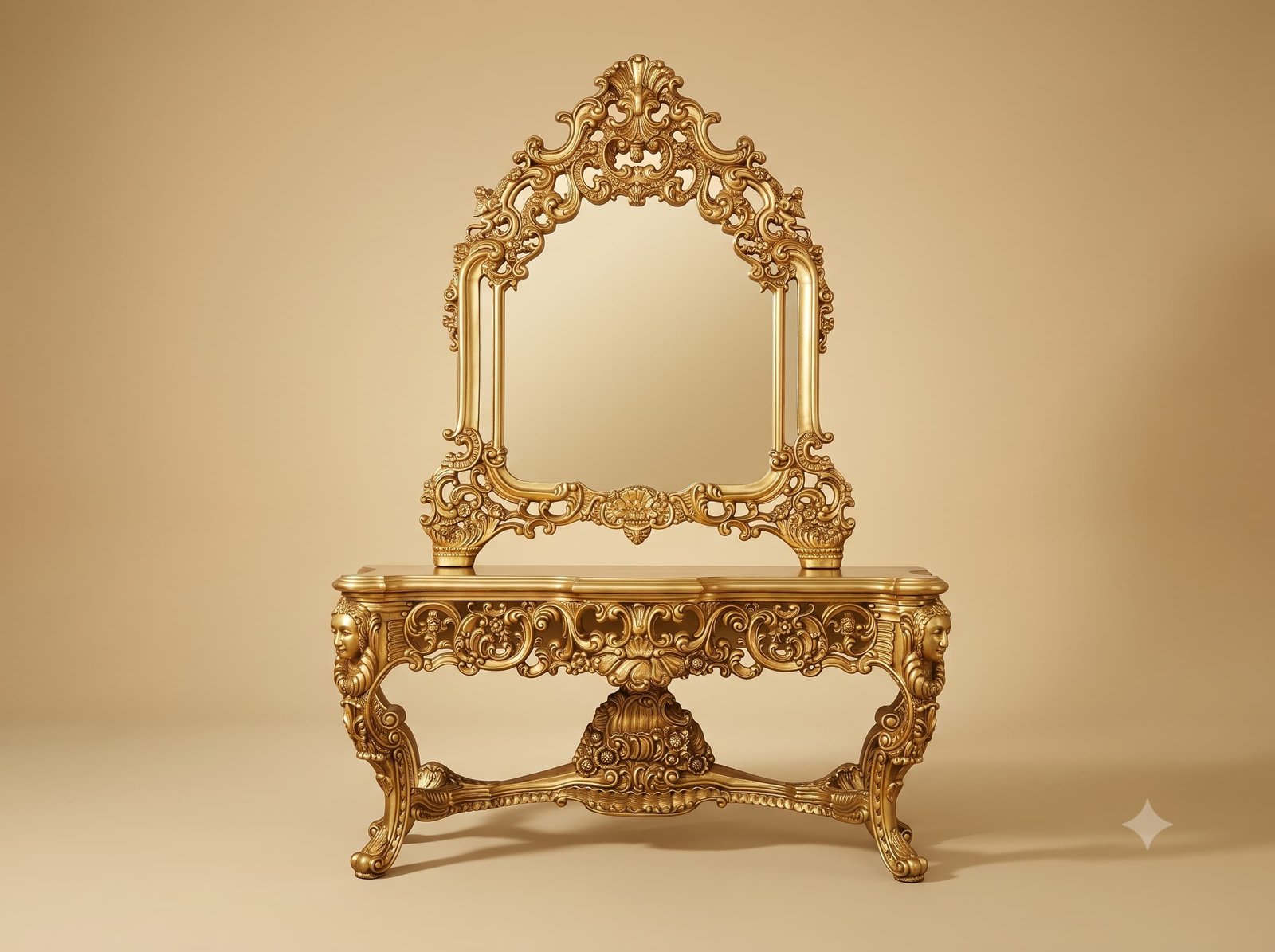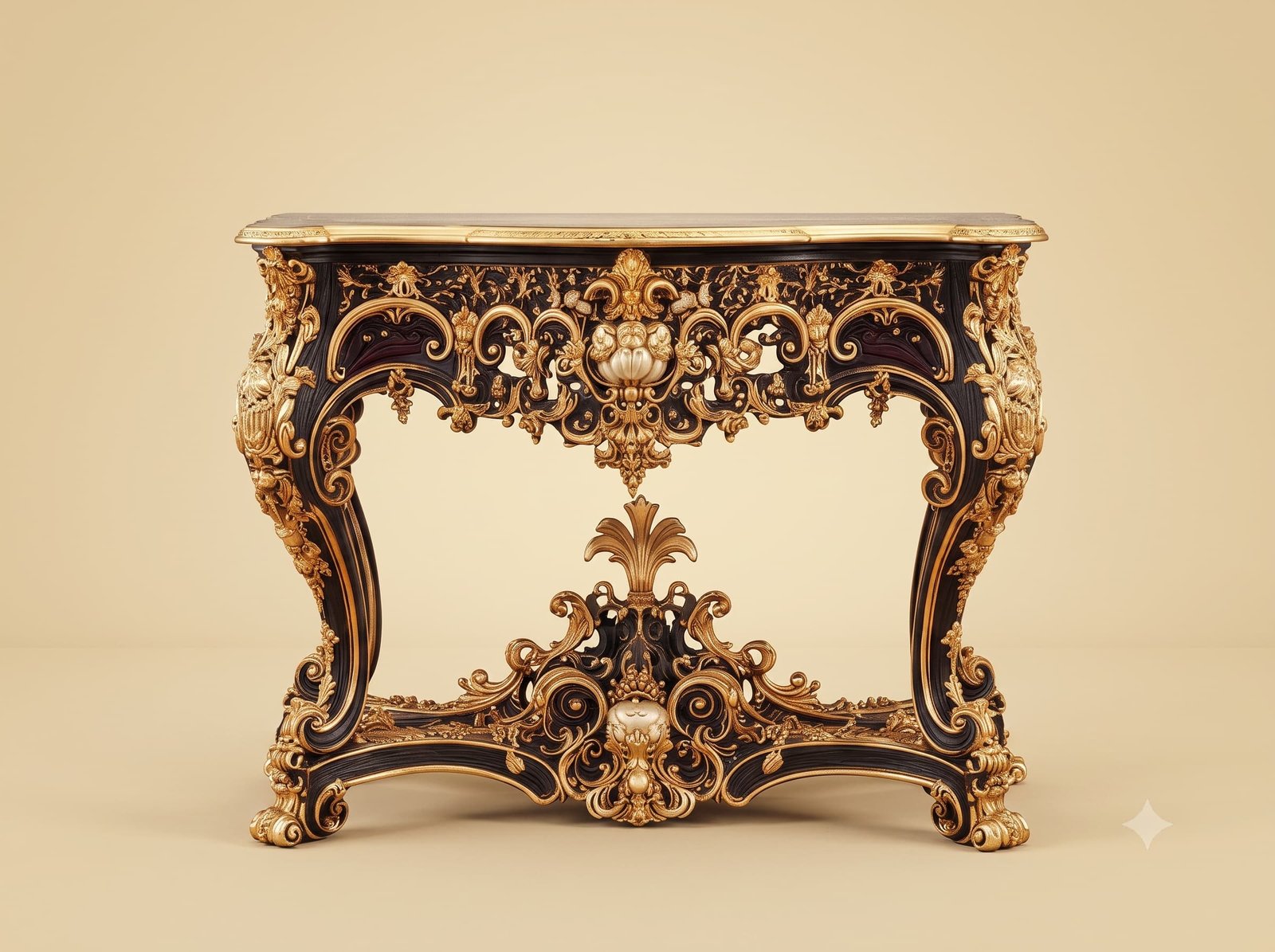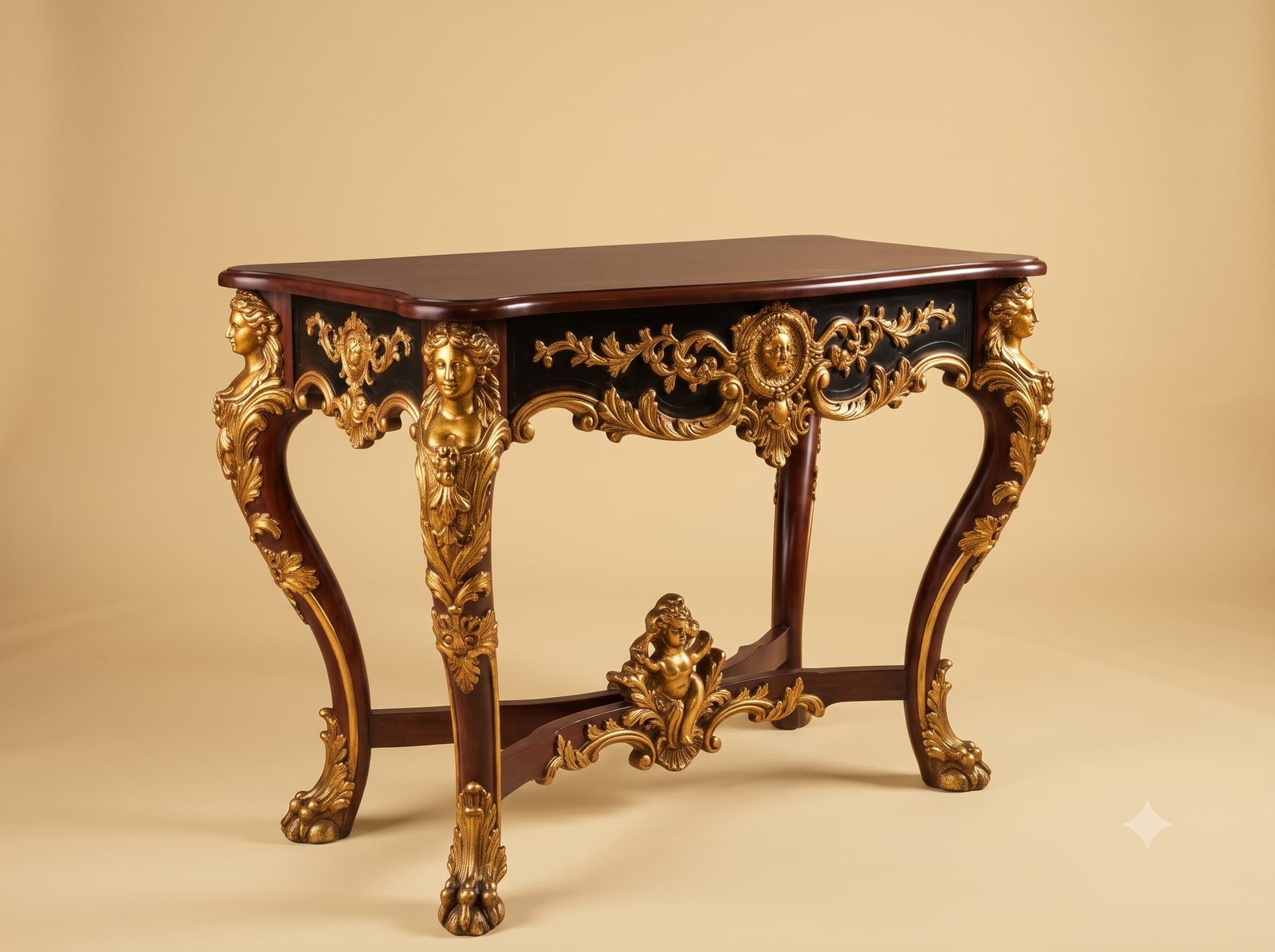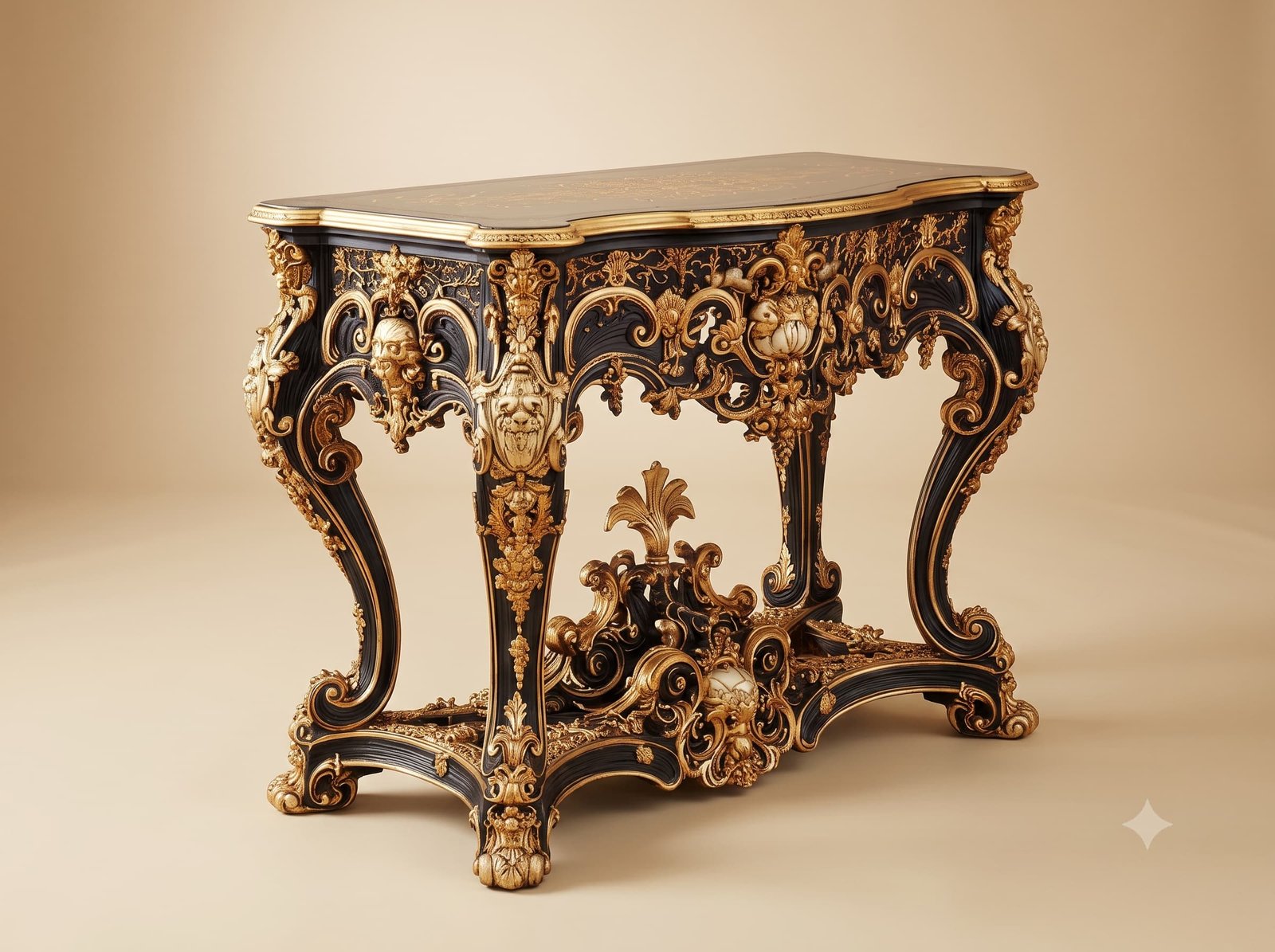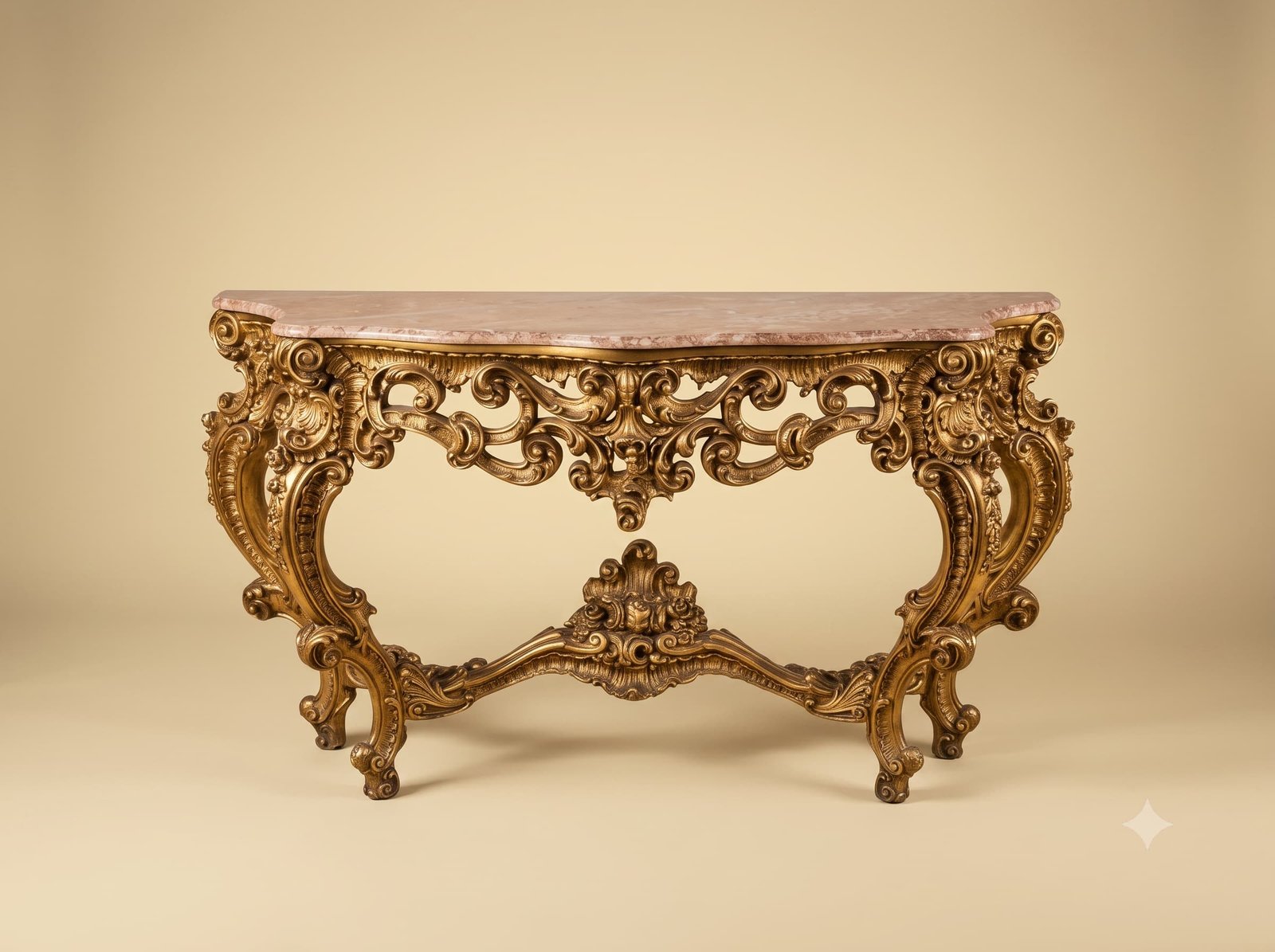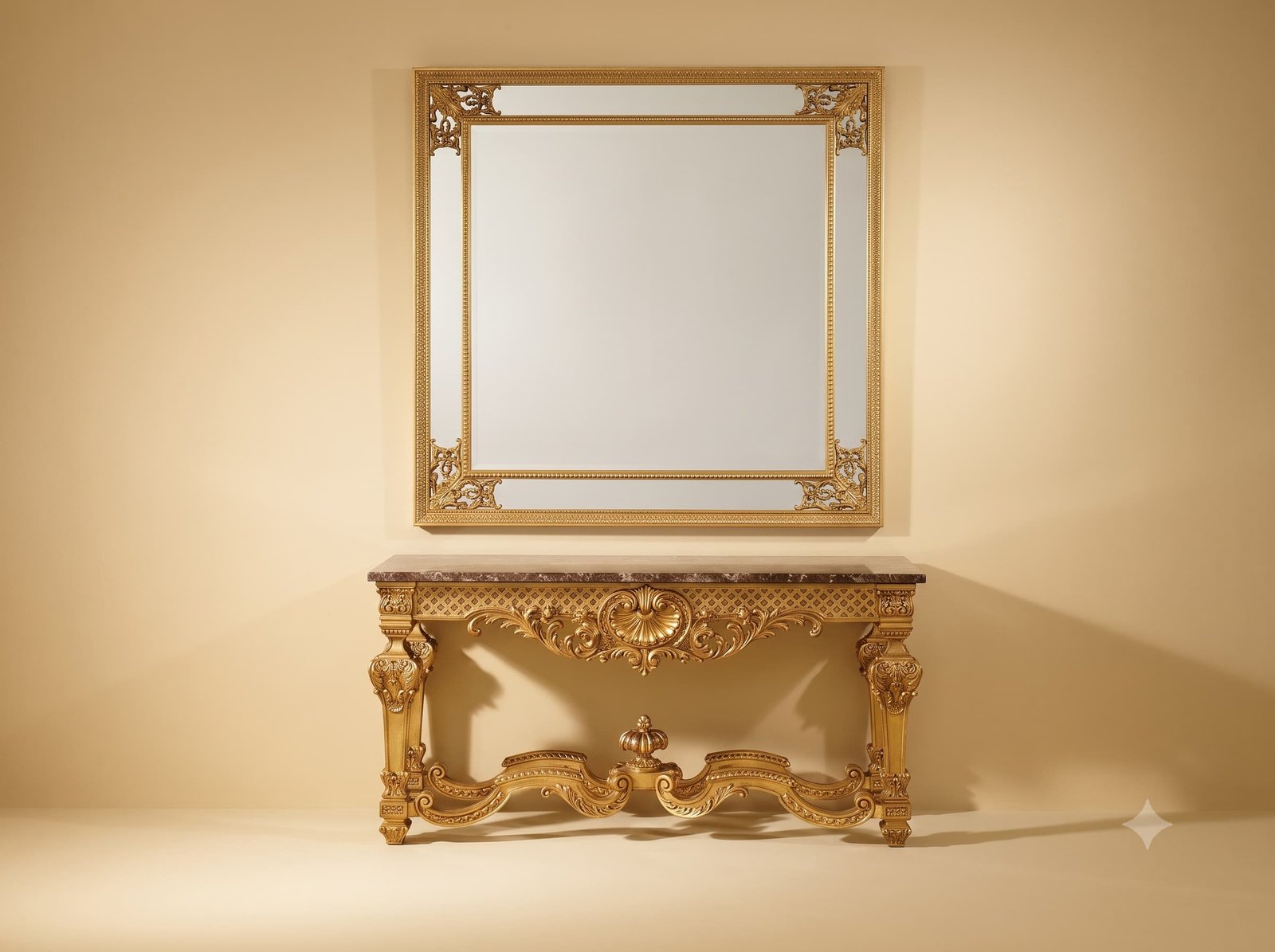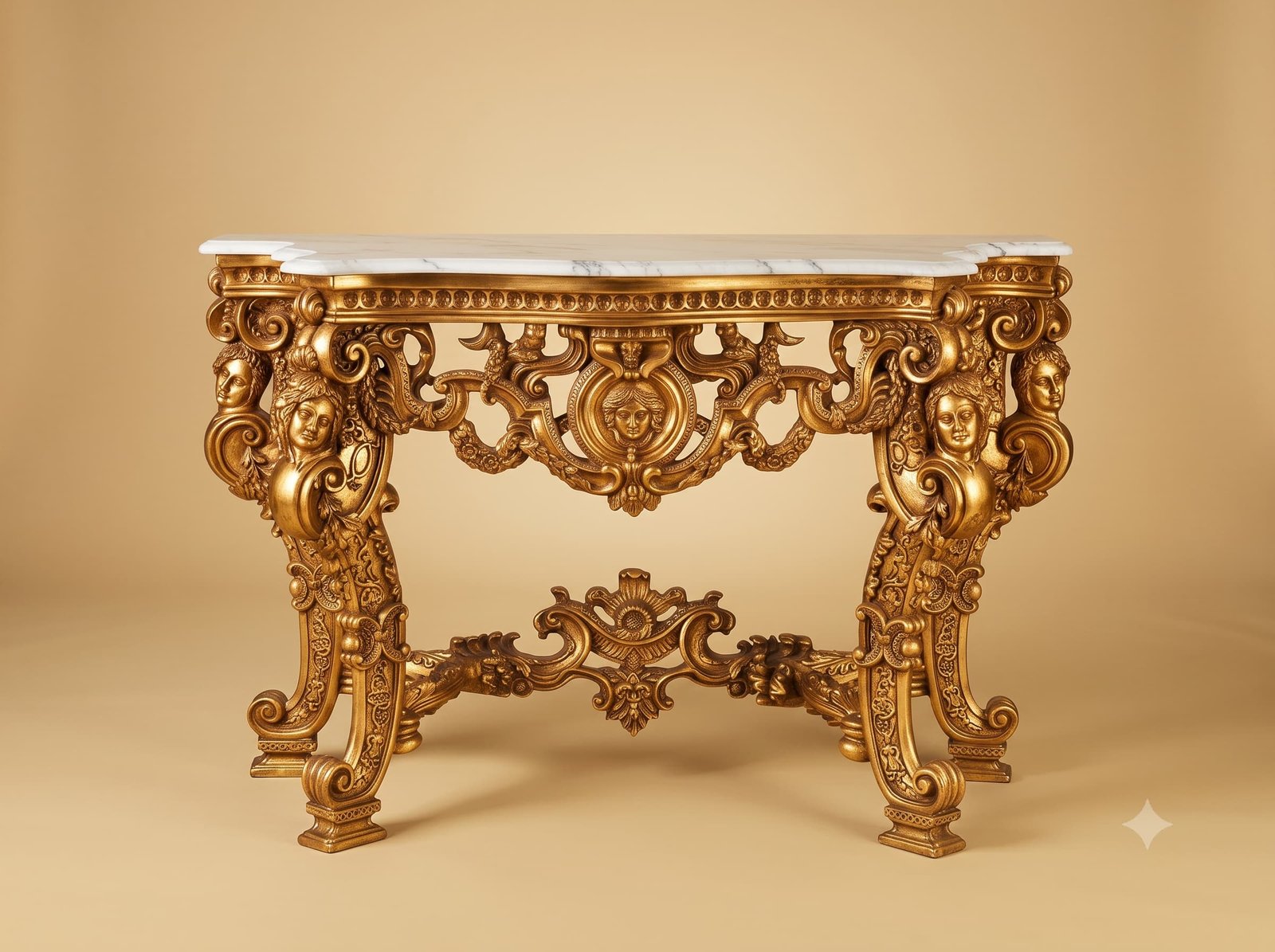
Carving of this kind was invented for candlelight, and candlelight comes from below and from the side. That is why baroque ornament is cut deep - the hollows were meant to fill with shadow from a light source at table height, and the raised surfaces were meant to catch a flame's glow from underneath.
Most rooms today are lit from the ceiling. Light falling straight down does something quite different to the same carving: the top surfaces flare, and the hollows go flat black rather than reading as depth. Cut for candles, lit from above, deep carving can lose exactly the modelling it was cut to show.
So our master Indian artisans decide the depth of the hollows with the room in mind, and we ask about it before production. For a hall lit by downlights, the recesses are cut a little shallower and opened out, so light can reach into them and the modelling still reads. For a room with table lamps, wall lights or a chandelier at eye level, the carving is cut deeper and the shadows are allowed to do their proper work.
It is the same design either way. What changes is which light it was made to be seen in.
 Ask Price On WhatsApp