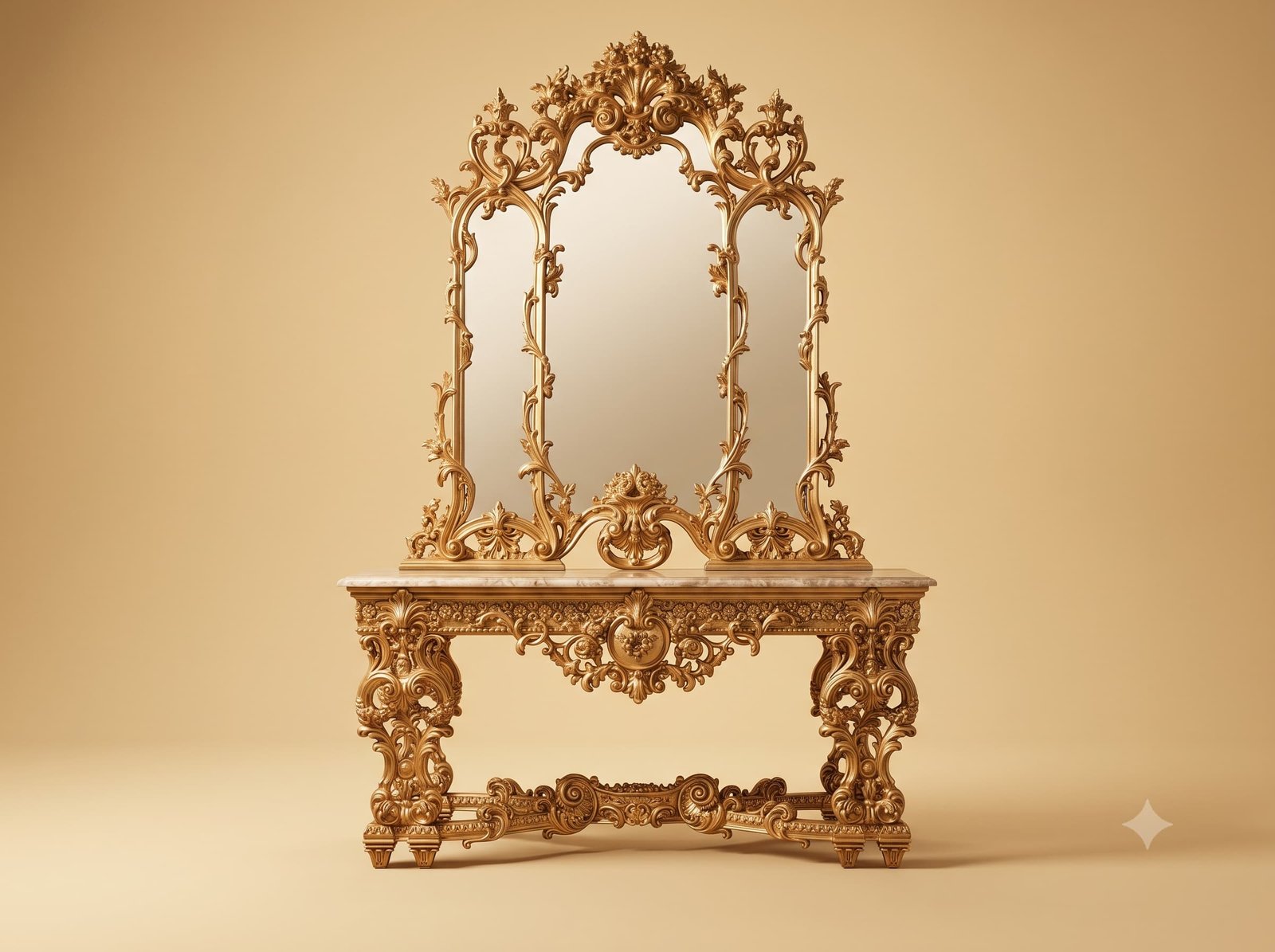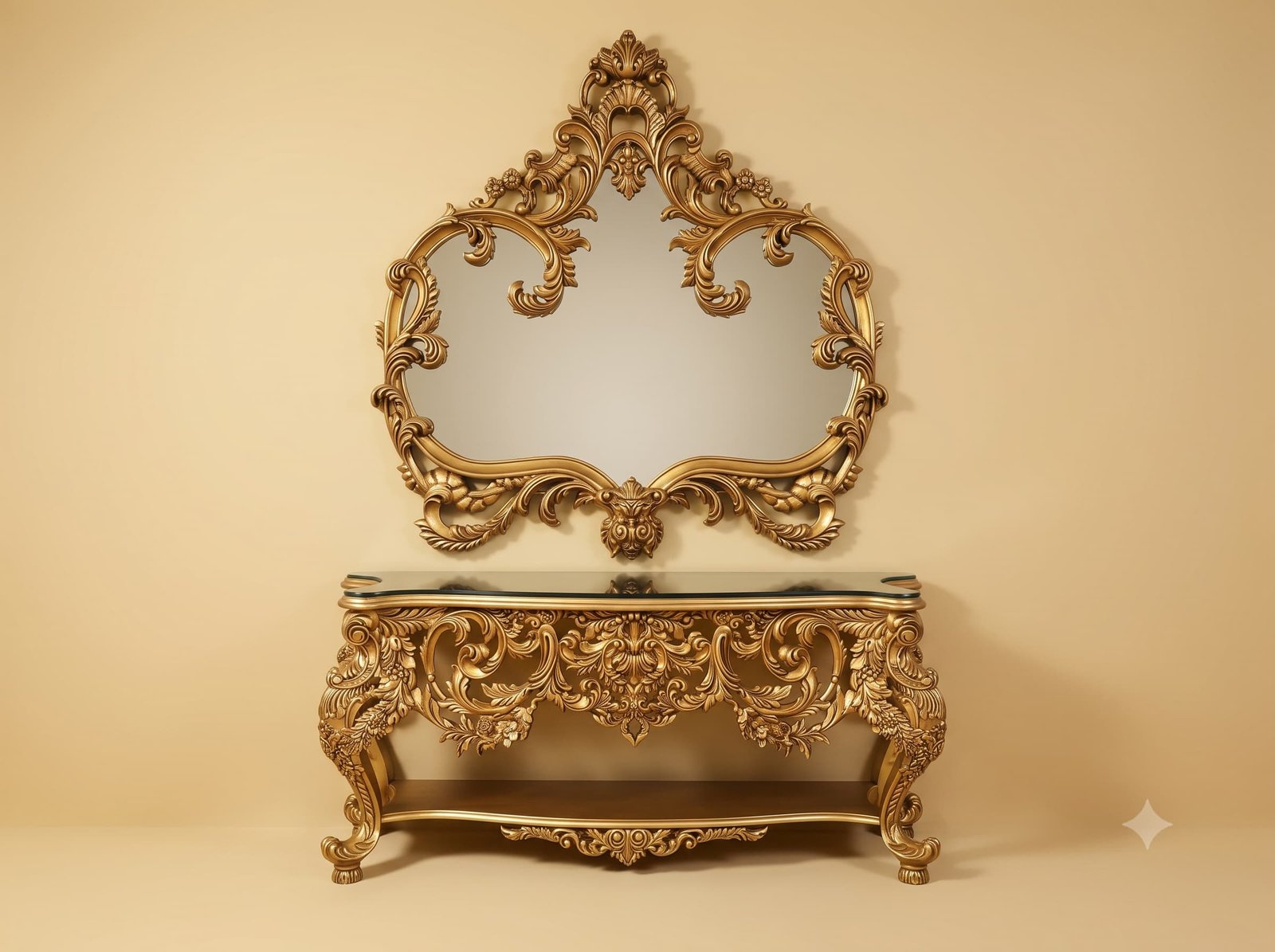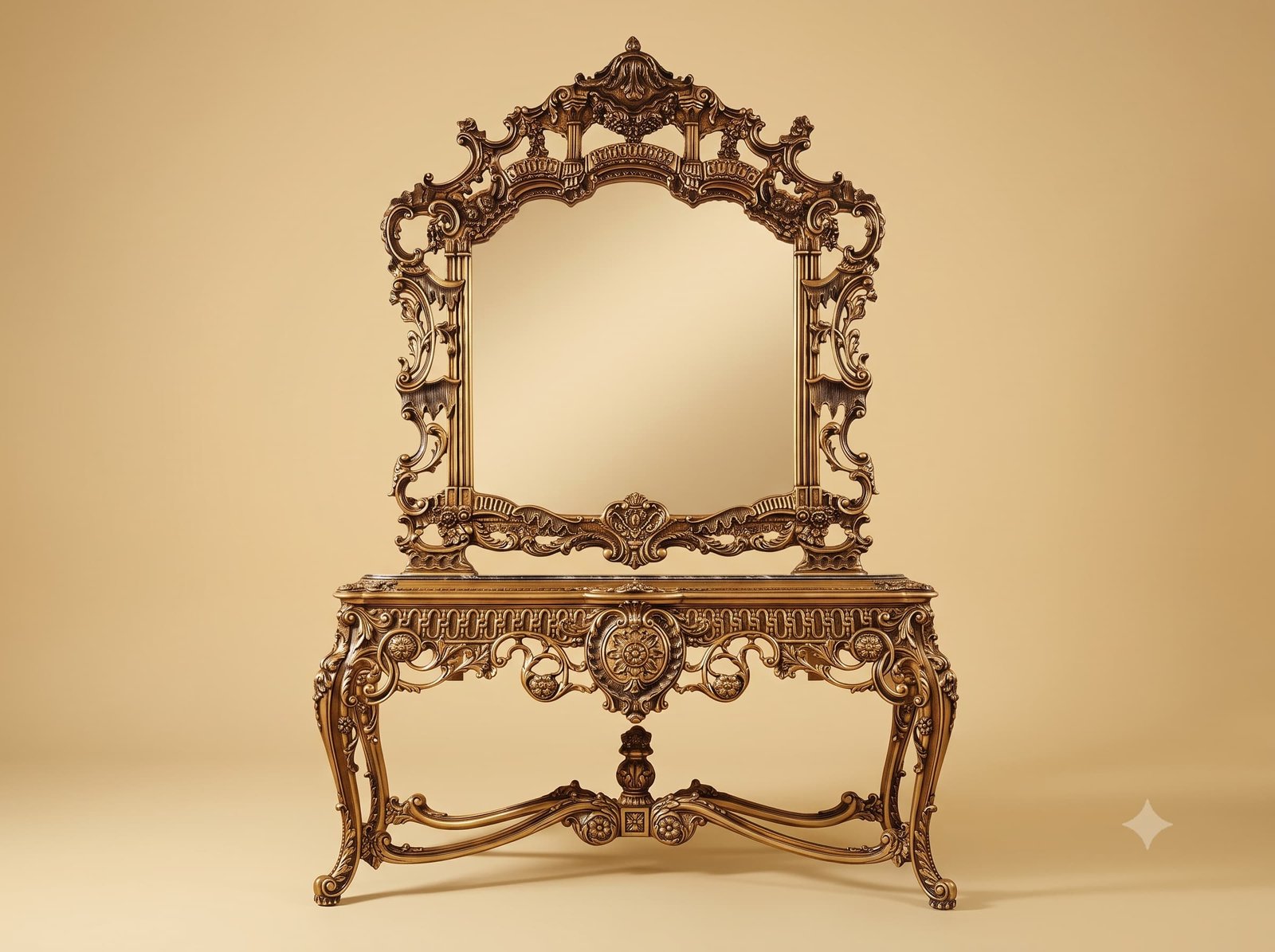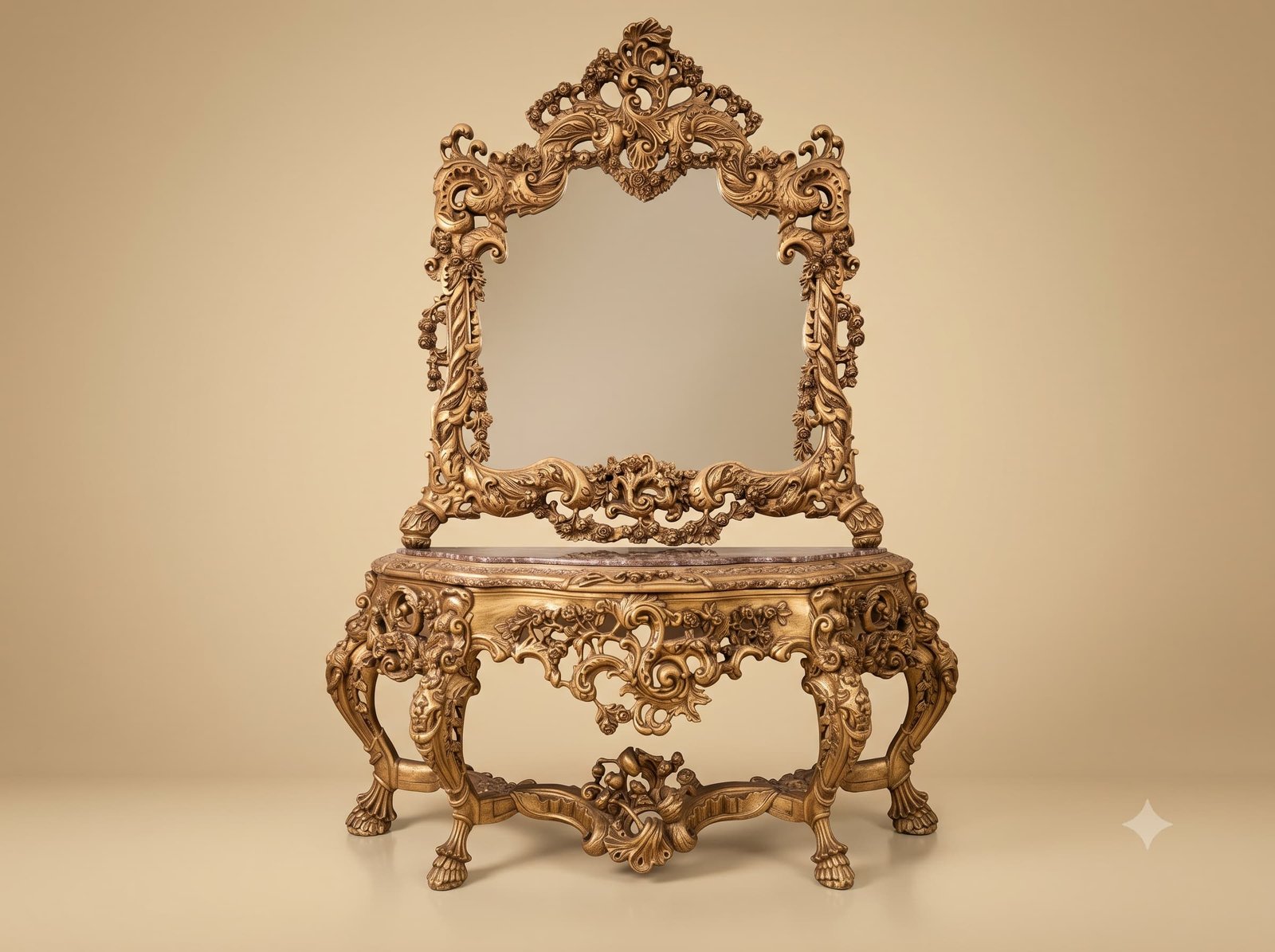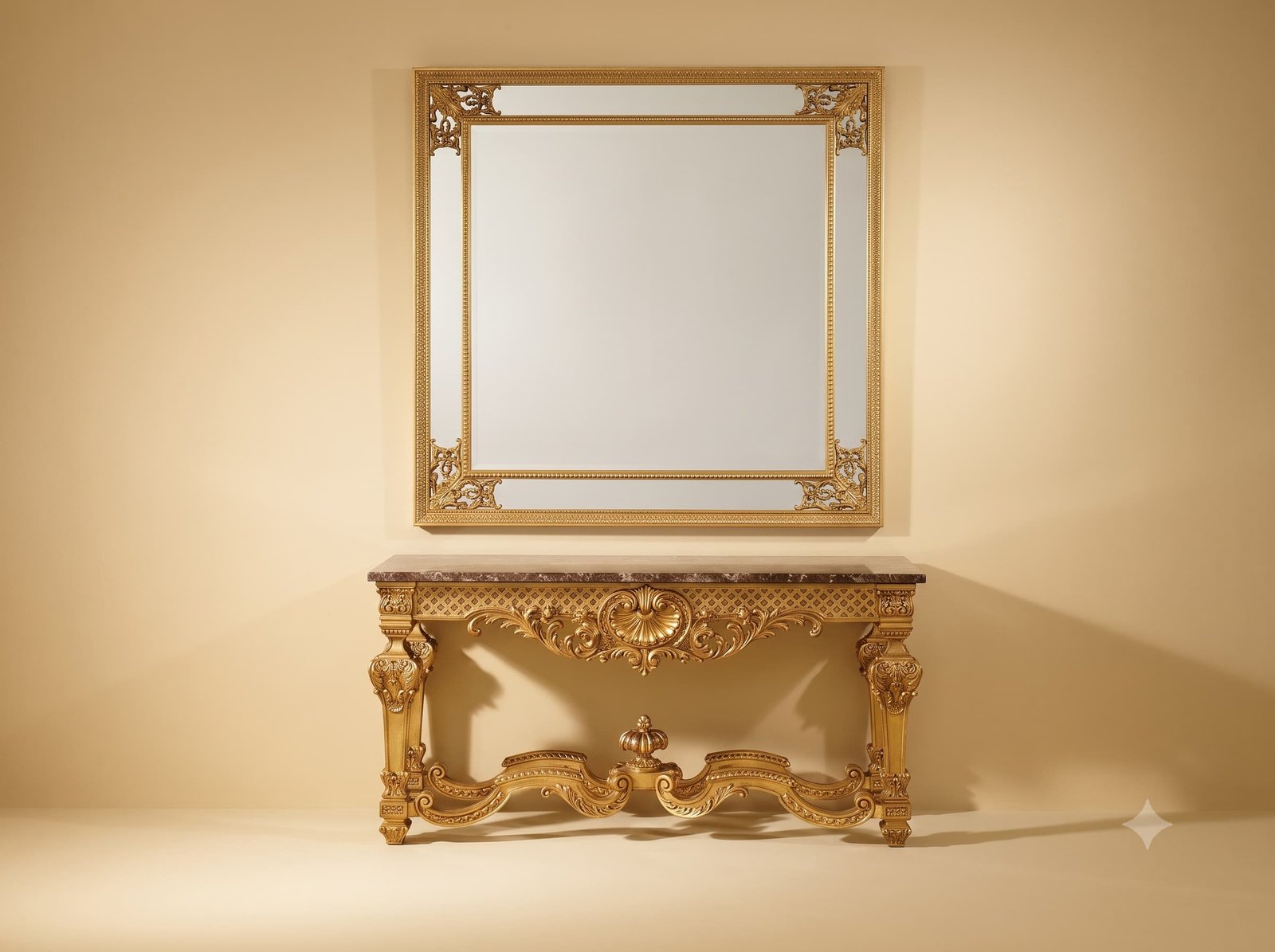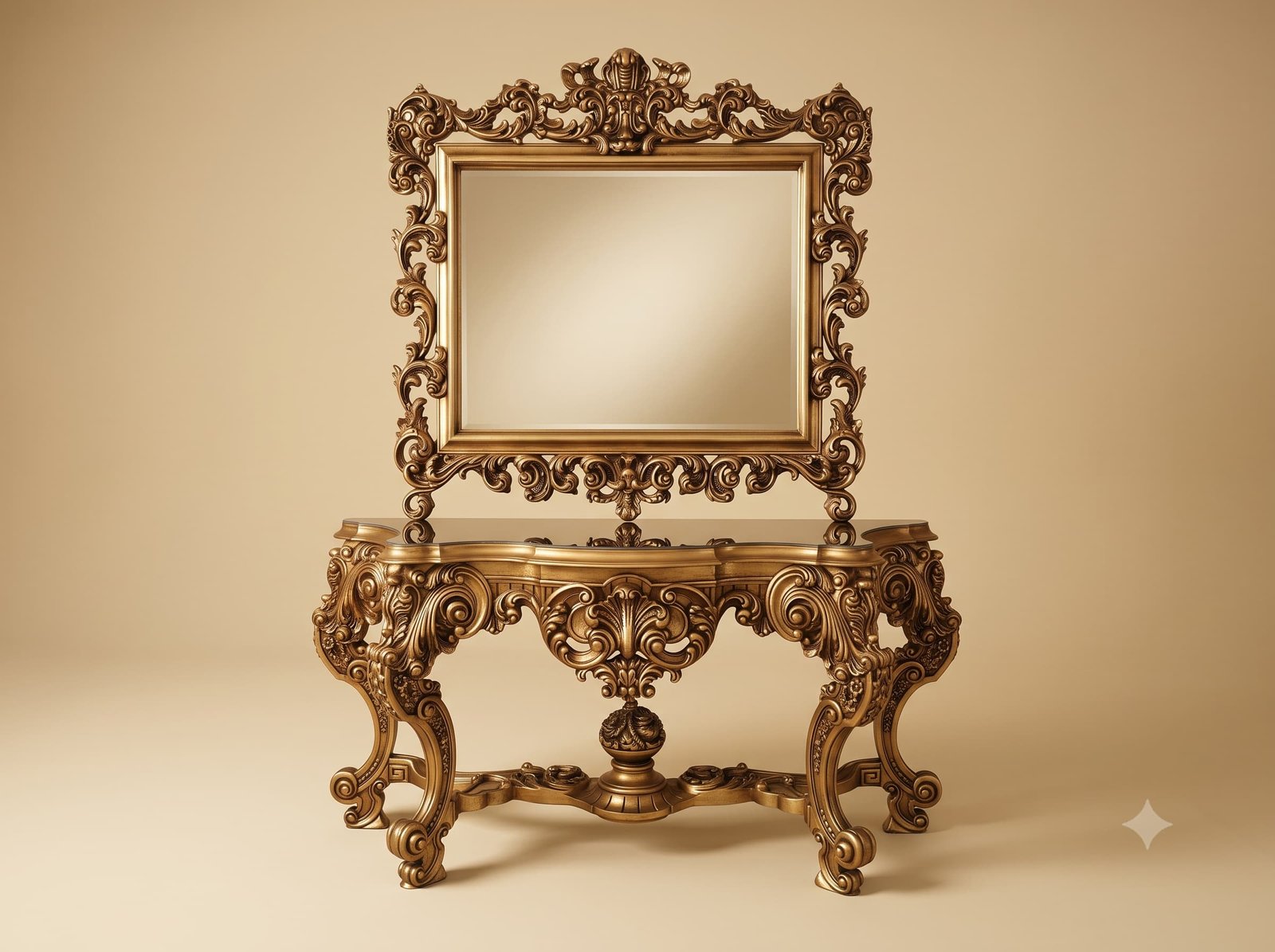
A mirror frame wider than it is tall has one member doing far more work than the rest, and it is the top rail.
In an upright frame, the top rail is short and the two long sides carry the structure. Turn the proportion on its side and it reverses: now the top rail spans the longest distance in the frame, carries the weight of a pierced crest sitting on it, and has the plate hanging beneath it. It is the member that will sag if anything is going to.
So our master Indian artisans cut that rail from a single length of teak running the full width, with the grain unbroken from one corner to the other. It is never jointed at the centre - which is exactly where a maker would be tempted to joint it, because the crest sits there and would hide the join. A joint under the crest is a joint at the point of maximum bending, hidden from the eye and not from physics.
The rail is also cut a touch deeper than the sides. On the finished frame nobody notices, because the carving that covers it reads as ornament. It is structure wearing ornament's clothes, which is most of what good furniture is.
 Ask Price On WhatsApp