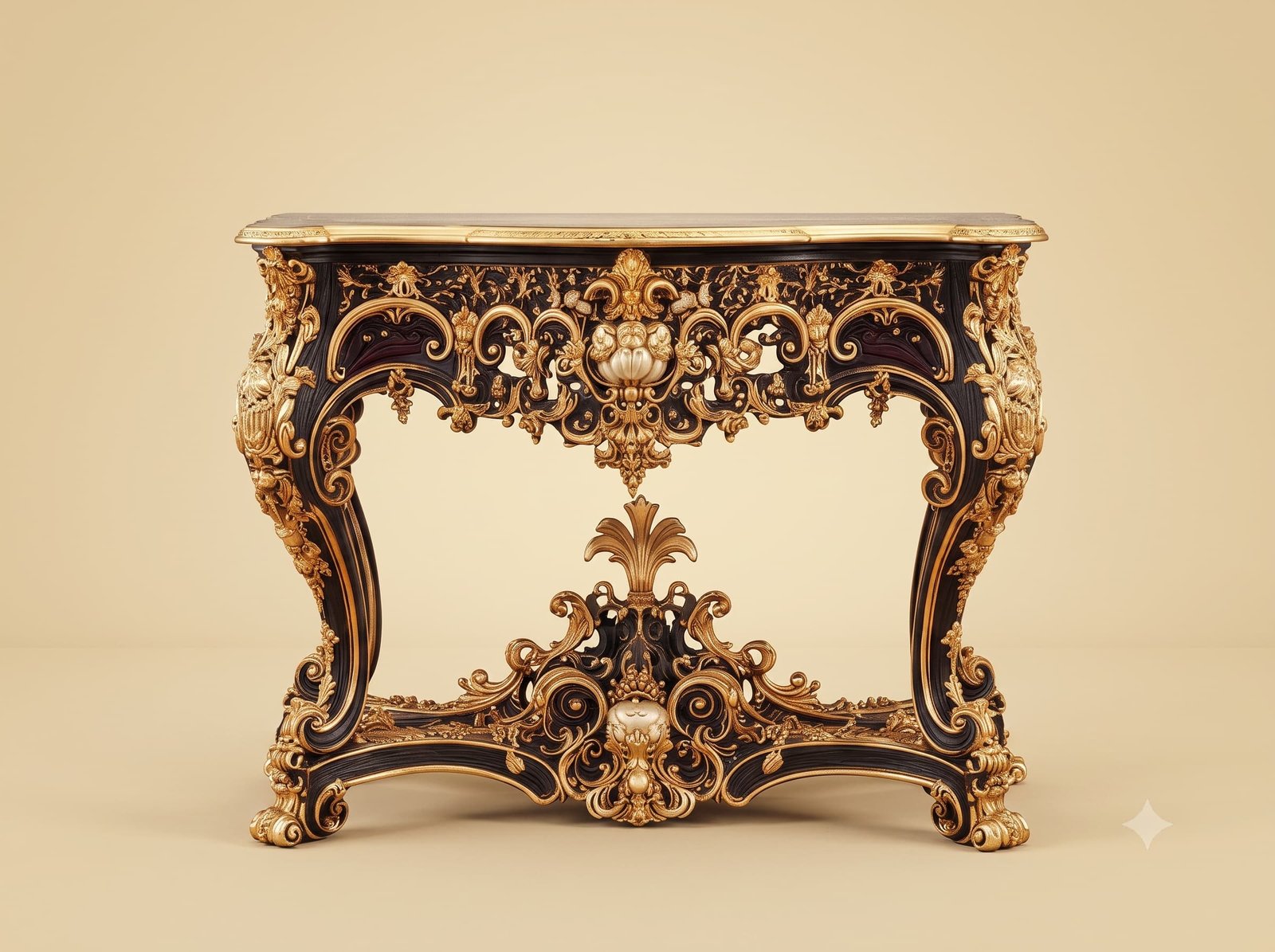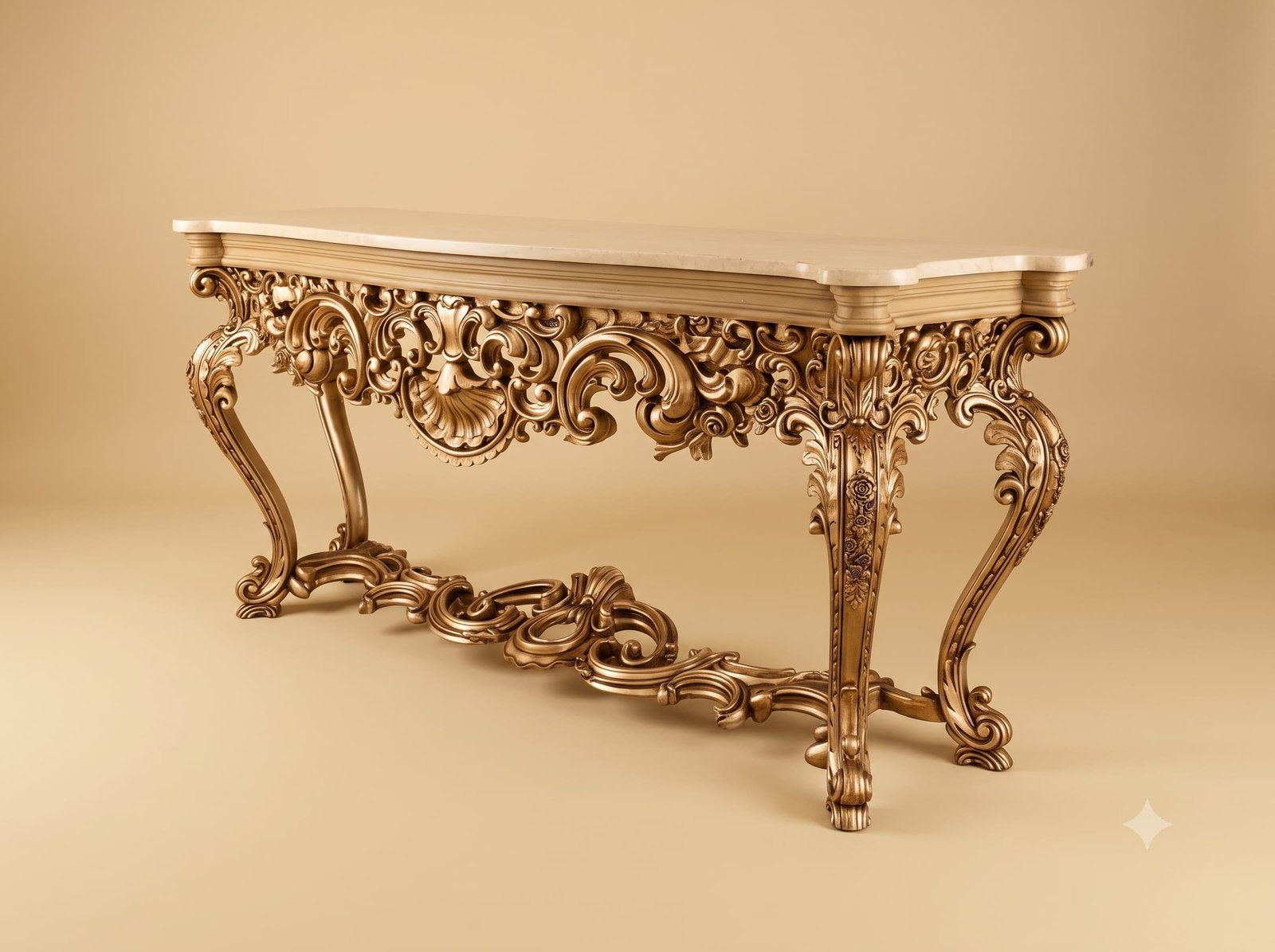
Length is what breaks console tables, and it does it slowly enough that nobody blames the design.
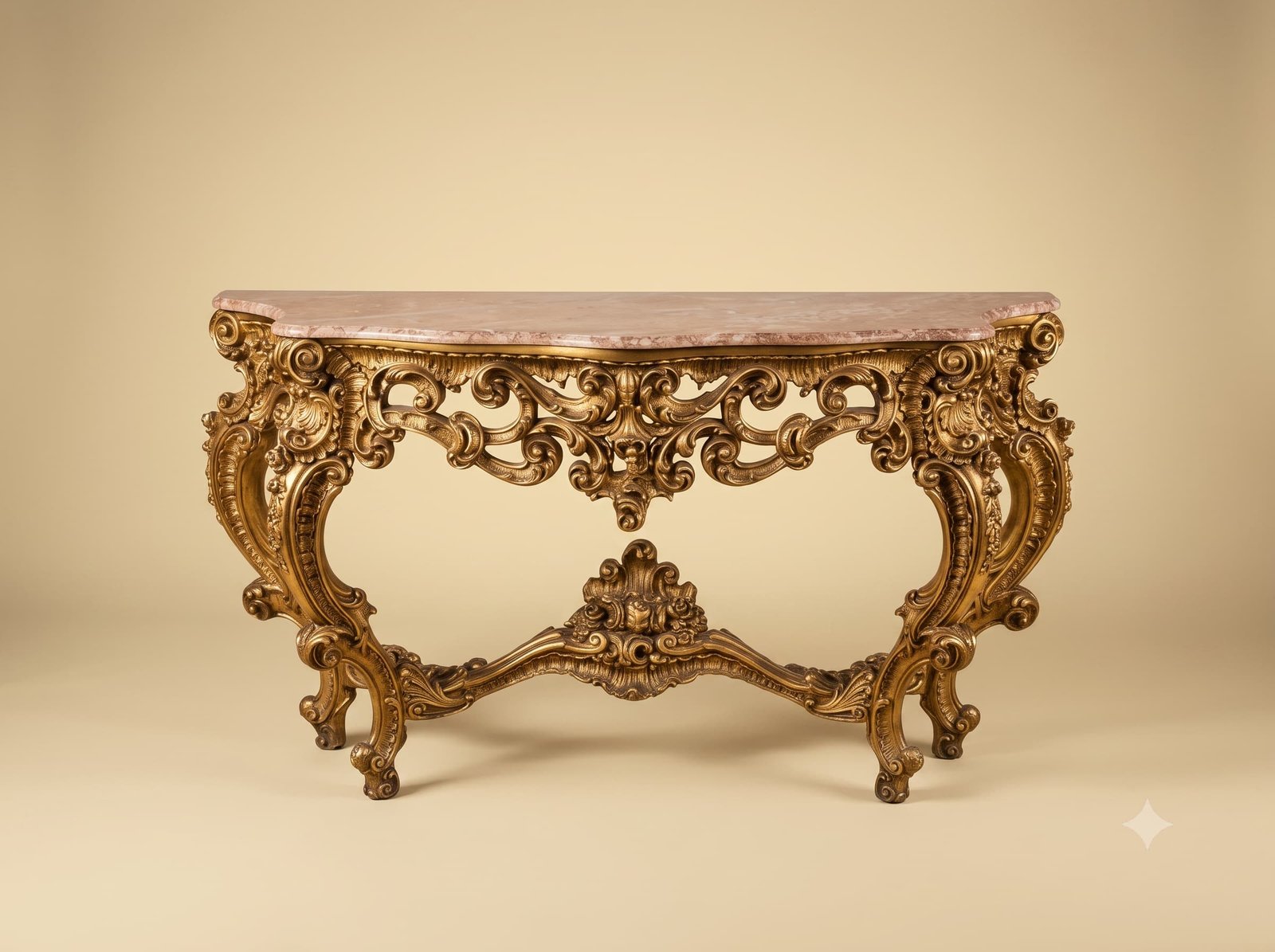
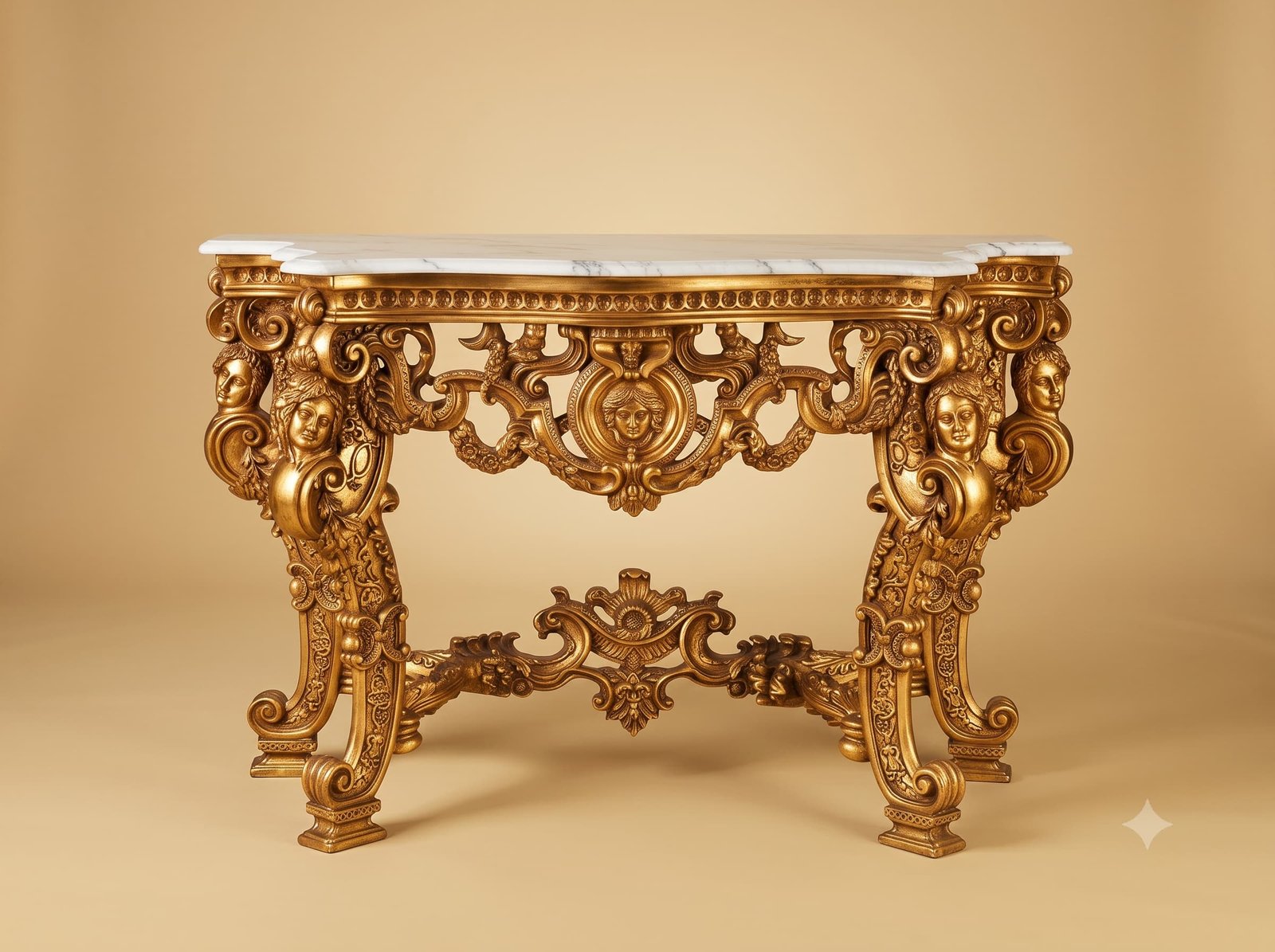
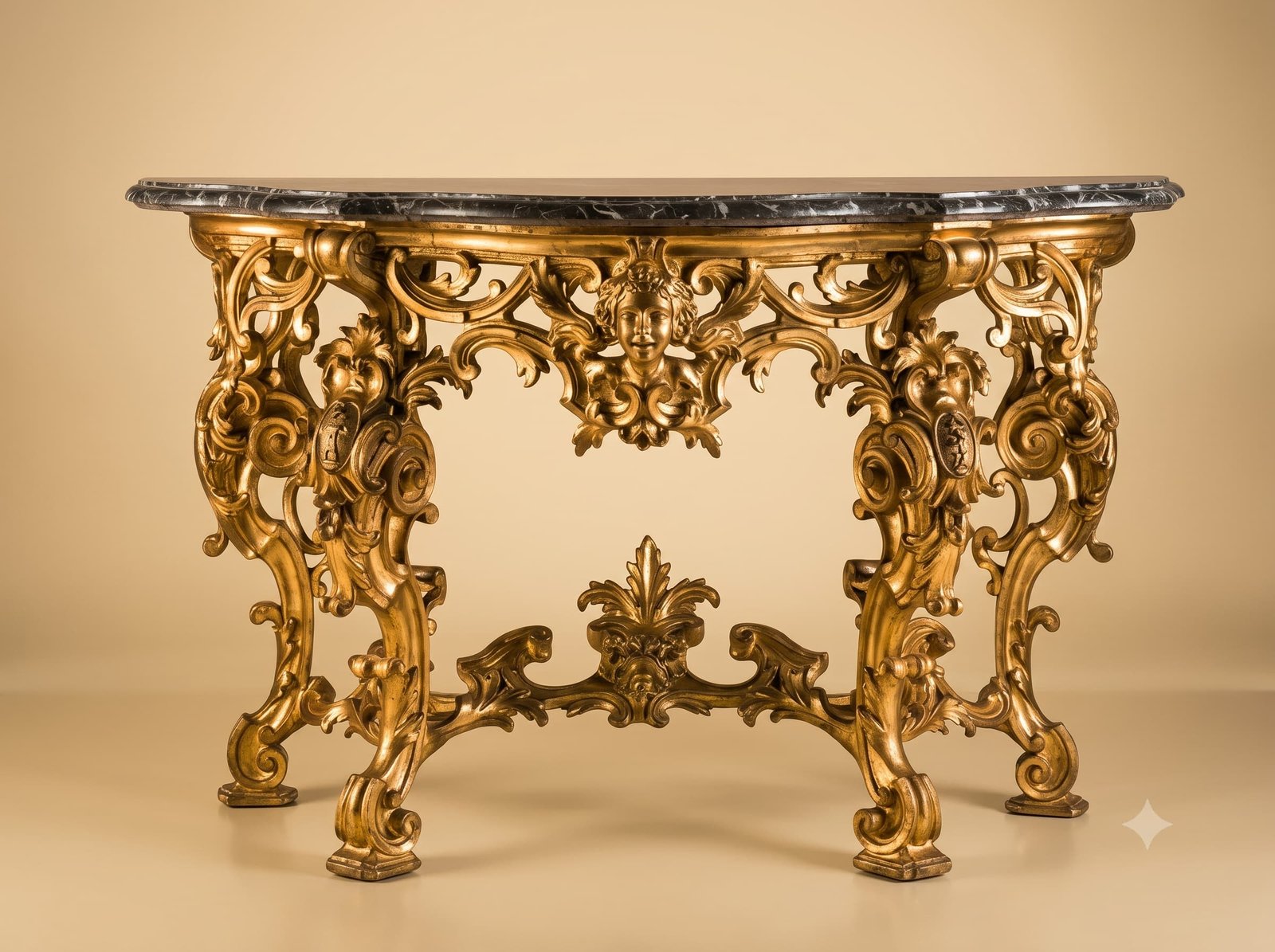
A rail supported only at its ends deflects under load, and that deflection grows sharply with span - double the length between supports and the sag is far more than doubled. On a console carrying a stone top, the load never comes off. So a long console made to the same proportions as a short one will, over years, develop a visible dip in the middle of its front rail, and the stone above it will follow.
The answer is depth, not thickness. A rail resists bending far more through its height than through its width, which is why the apron here is made deep rather than chunky - and why piercing it costs almost nothing structurally, since the material removed is from the middle of the depth where it was doing least.
Past a certain length we add a fifth support at the back, hidden behind the apron and out of sight from the front. It is not something the design shows off. It is the reason a long console still reads straight after twenty years.
 Ask Price On WhatsApp