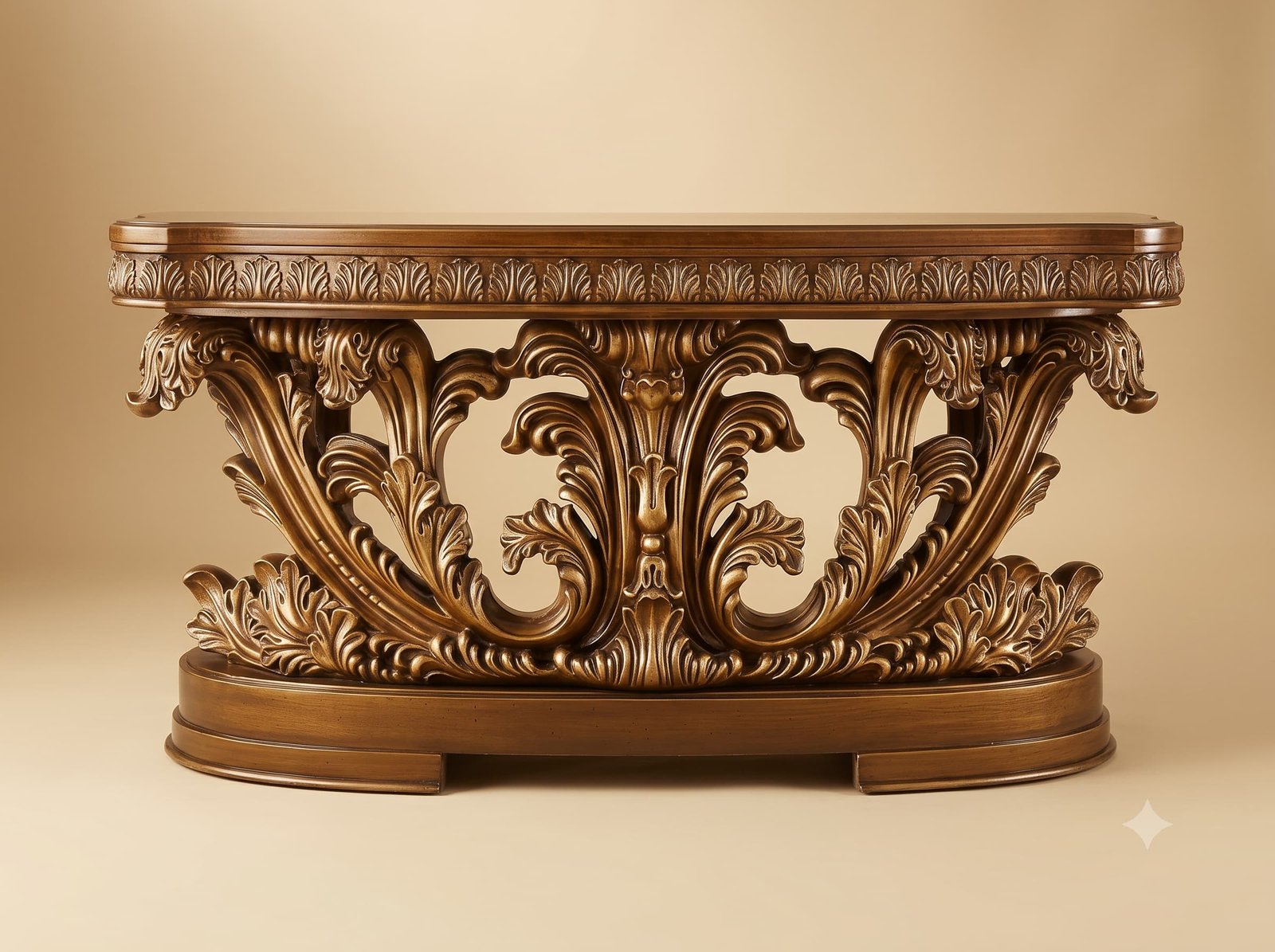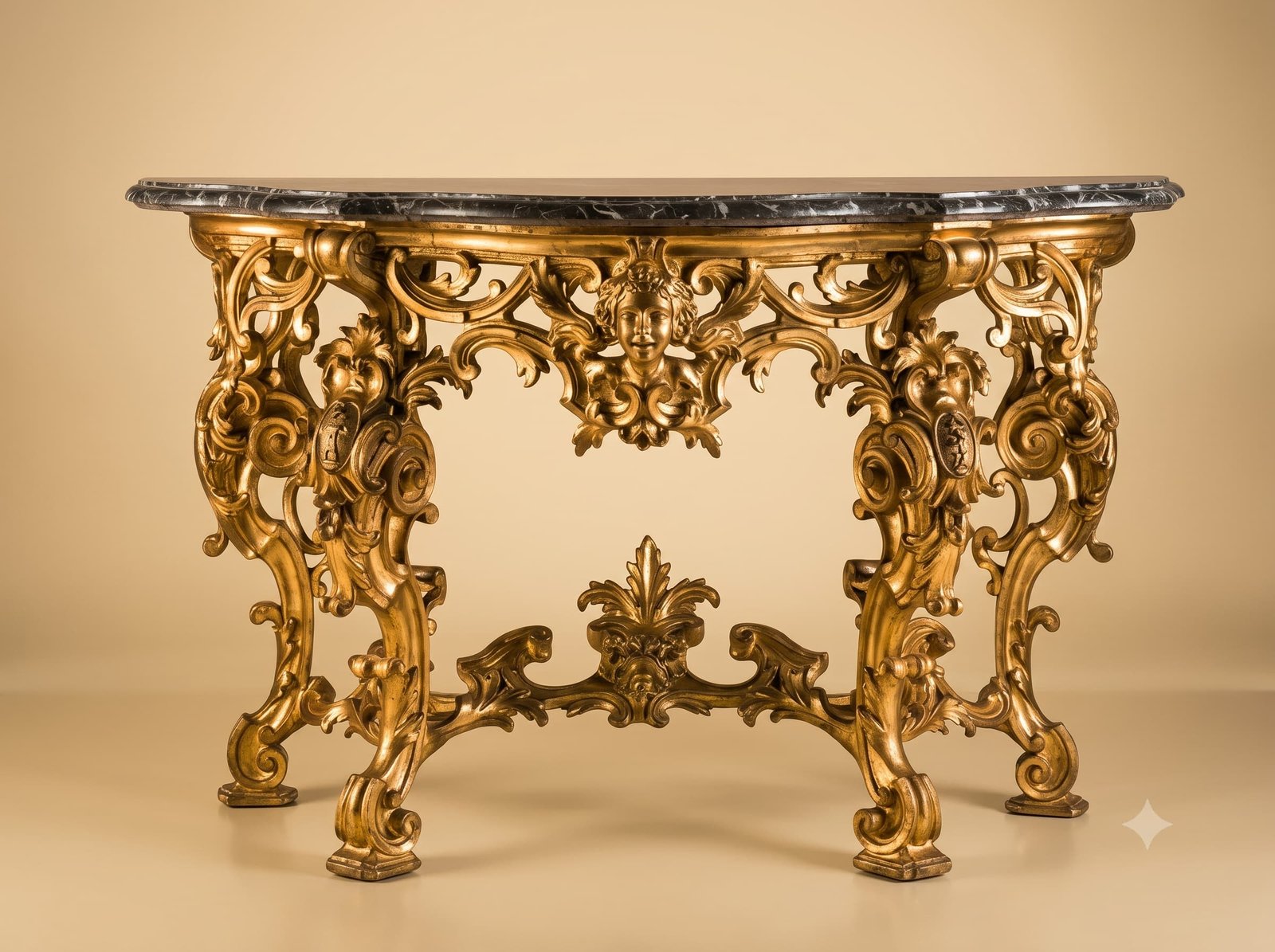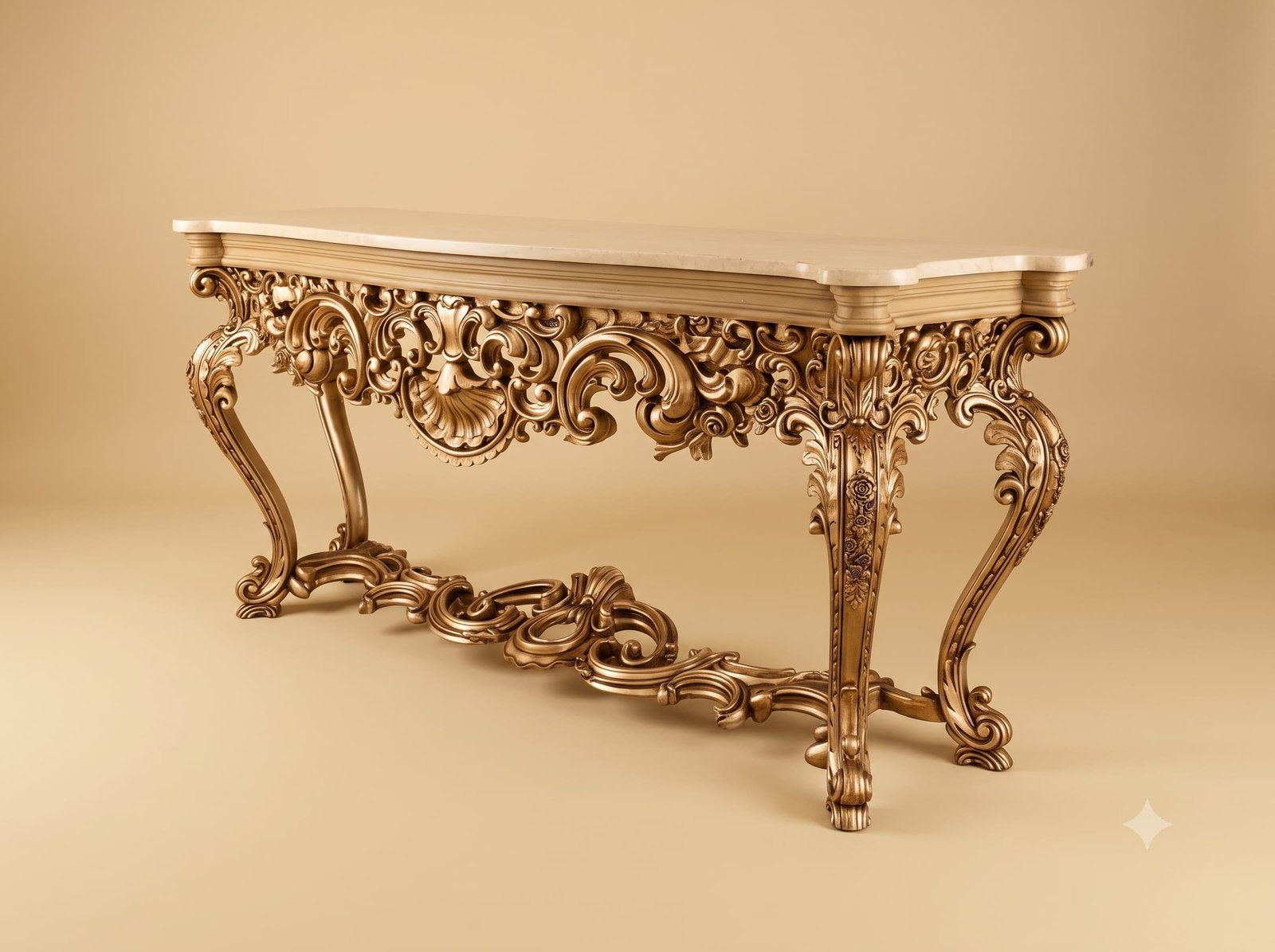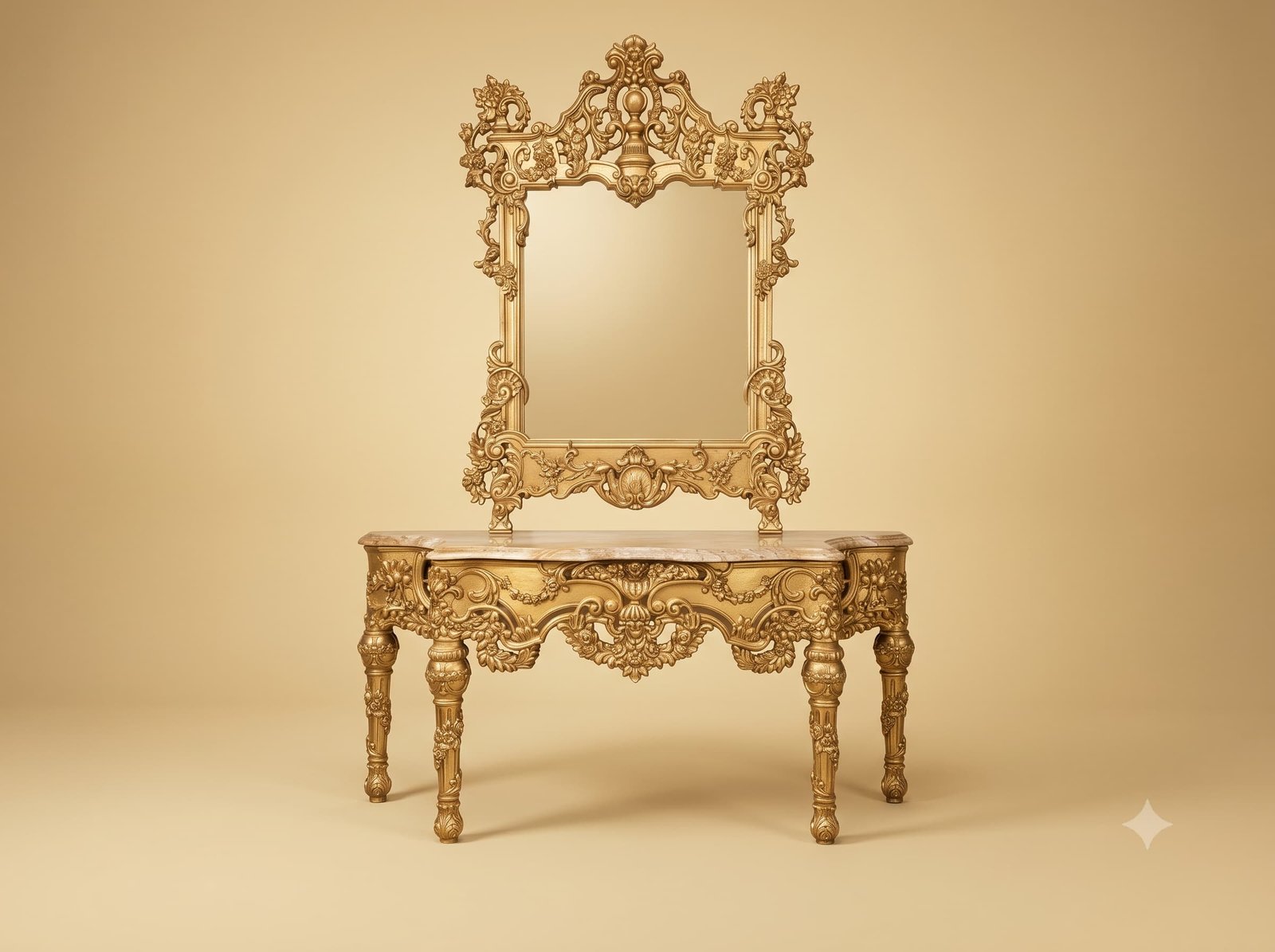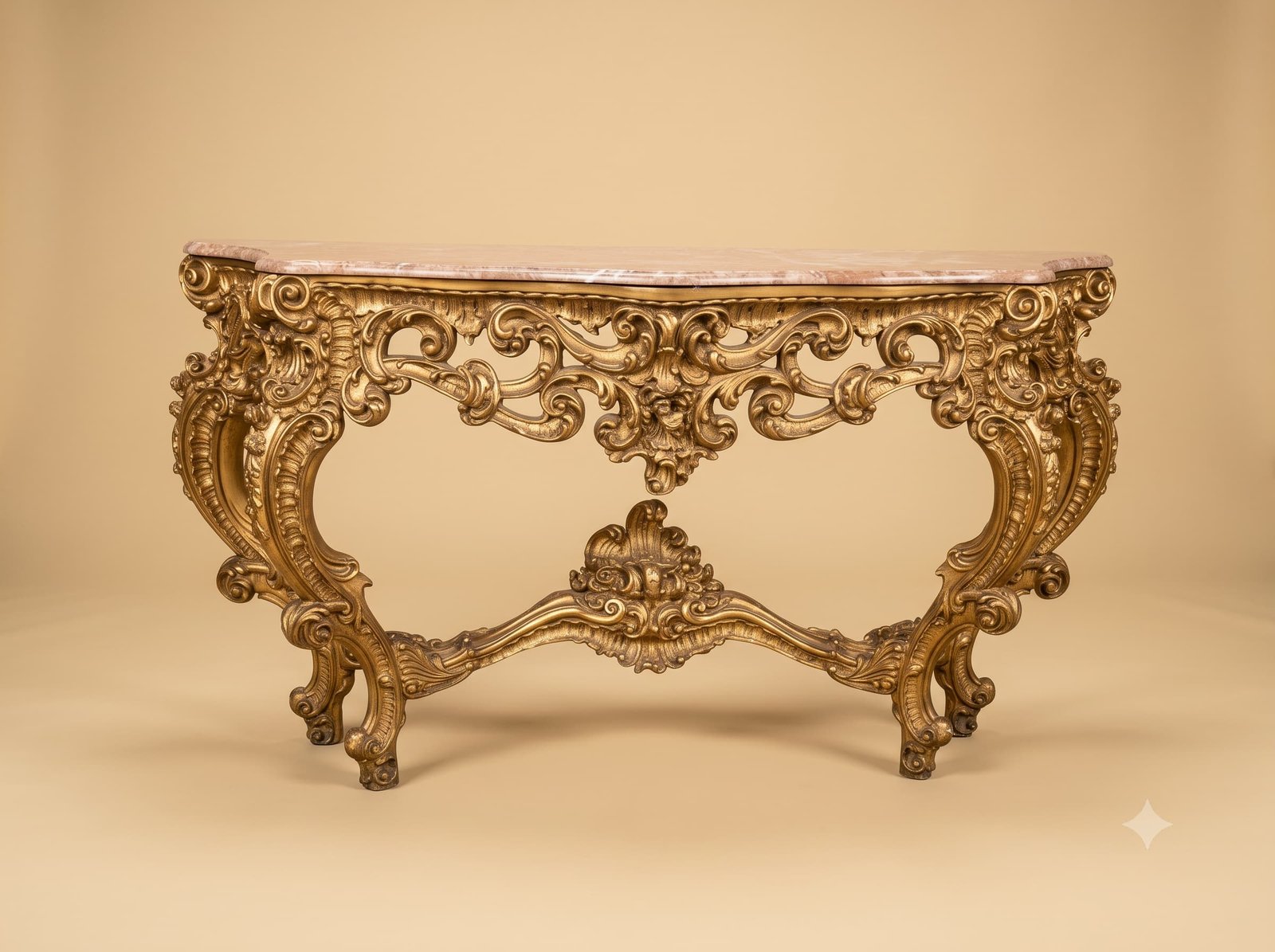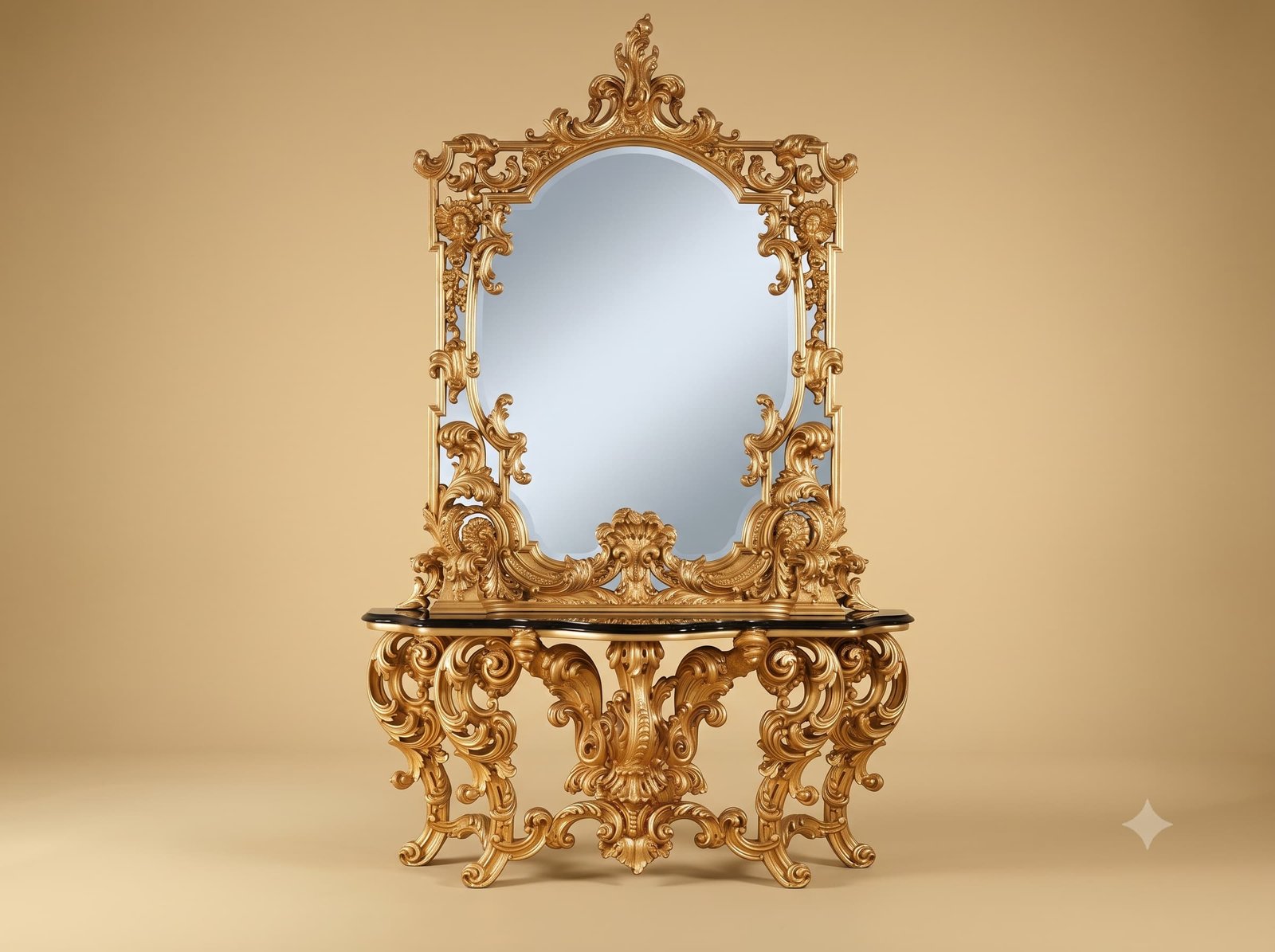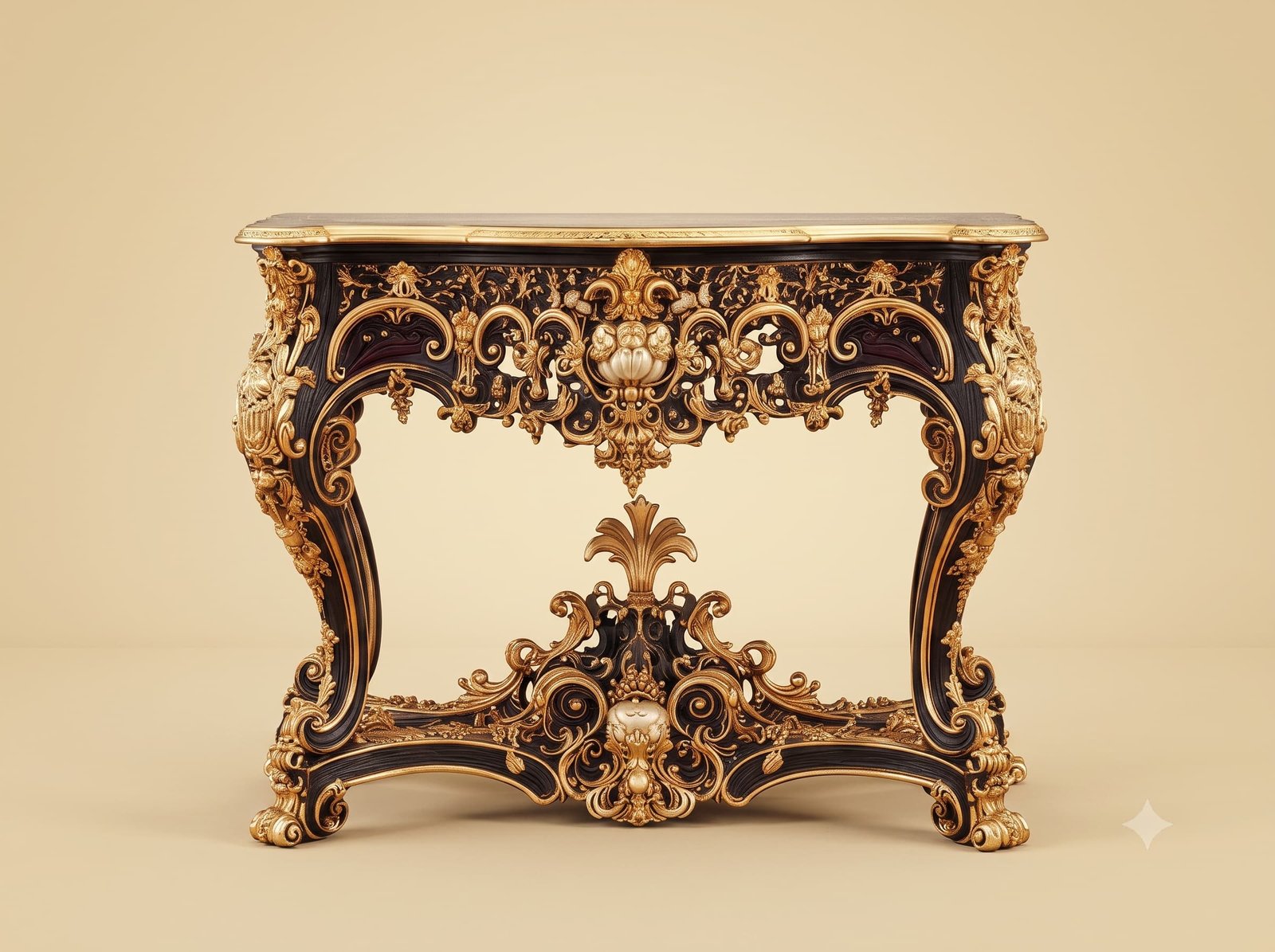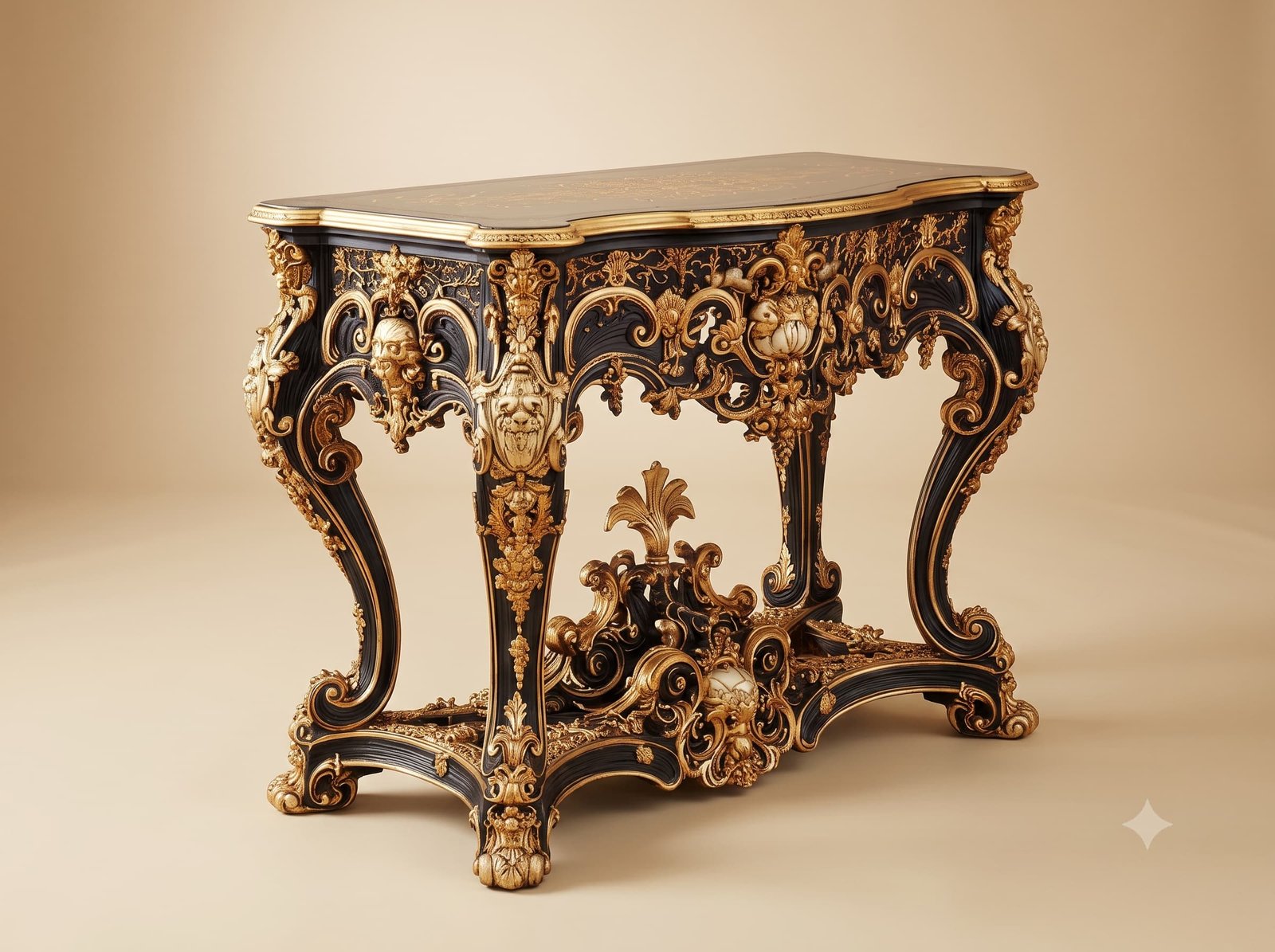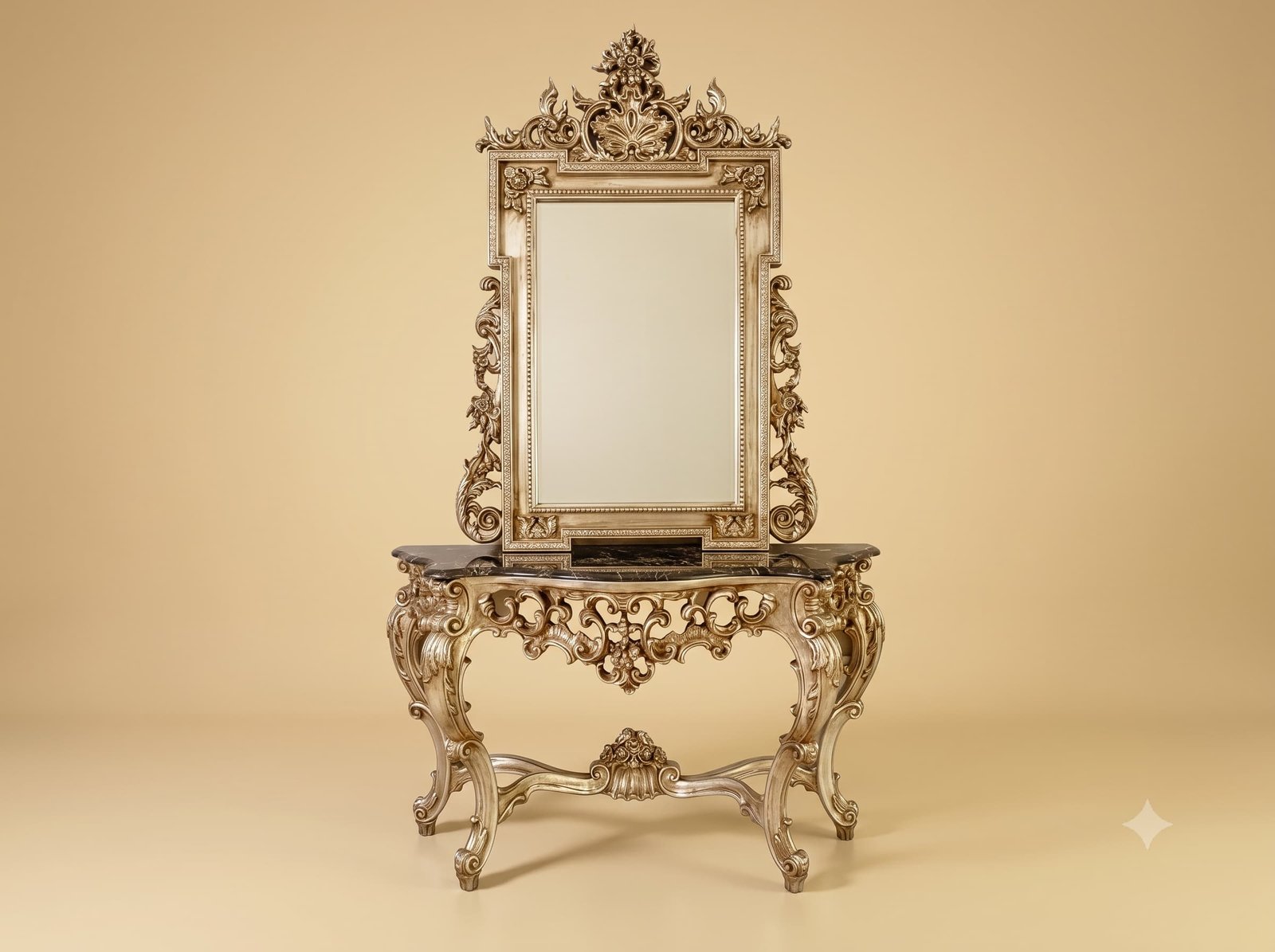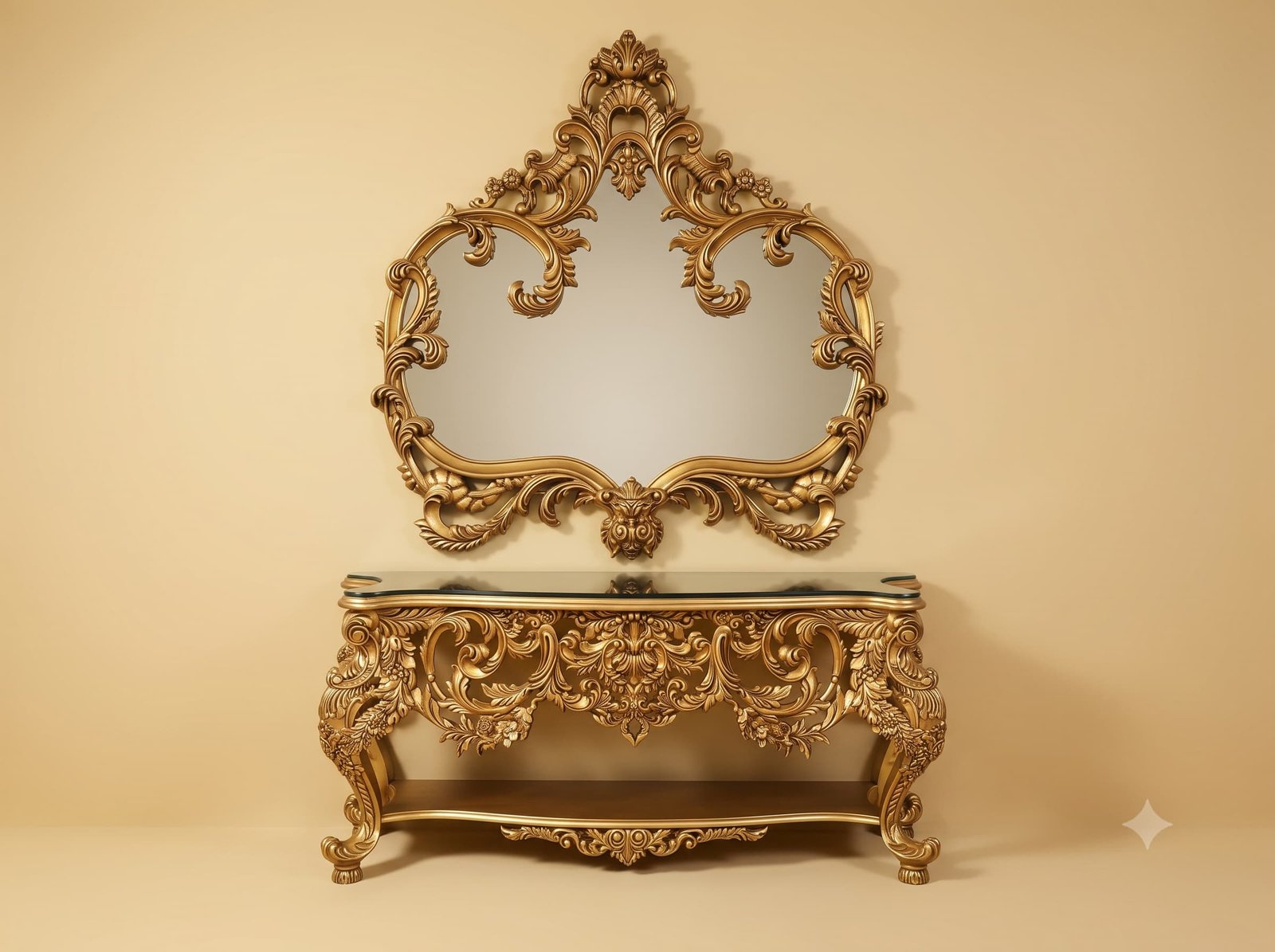
The distance between the top of a console and the bottom of its mirror is a small number that decides whether the pair looks right.
Too much gap and they read as two separate objects that happen to share a wall - the eye sees console, then blank wall, then mirror. Too little and the mirror appears to be resting on the table, which makes the whole arrangement look like it has slipped down. The working range is roughly a hand's width to a hand and a half above the top: close enough to read as one composition, far enough to breathe.
Width matters just as much. A mirror noticeably wider than the console below it looks unsupported; noticeably narrower and the console looks like it has outgrown it. Somewhere between two-thirds and just under the full width is where it settles.
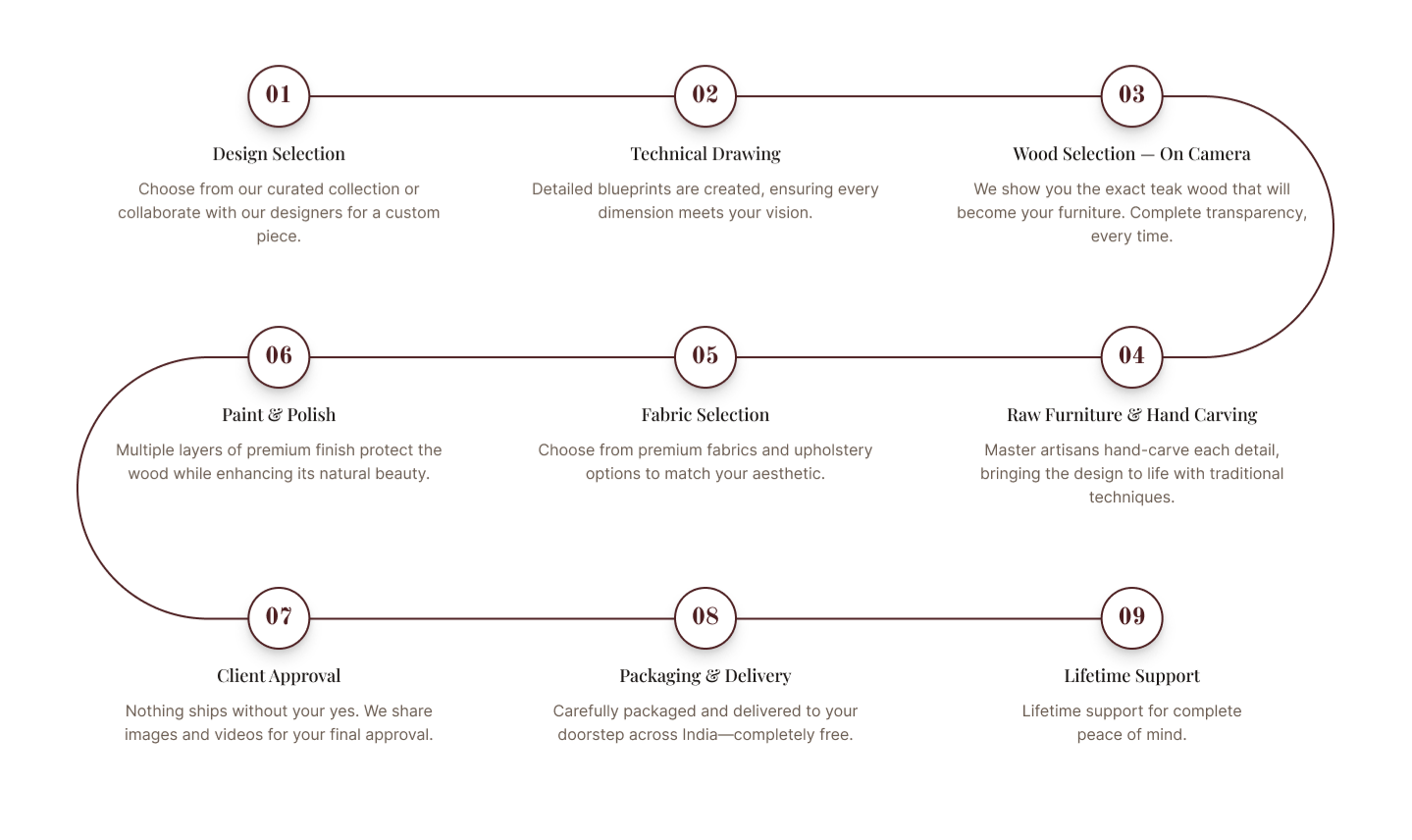
Because we make both pieces together, those relationships are set on the drawing rather than discovered on the wall. Tell us the wall length and the ceiling height at enquiry and we scale the console, the mirror and the gap between them as one design - which is the whole advantage of ordering the pair rather than matching two bought separately.
 Ask Price On WhatsApp