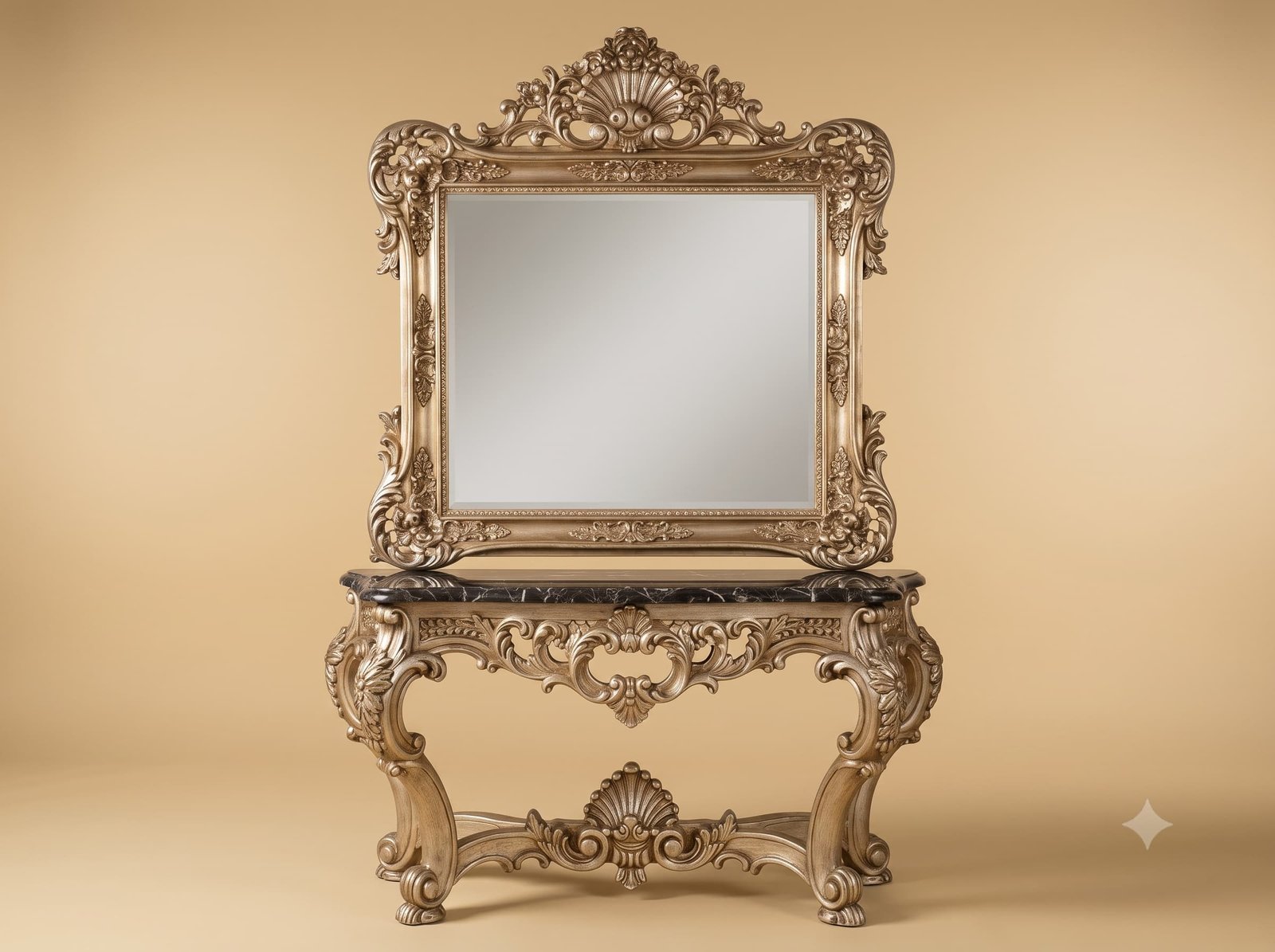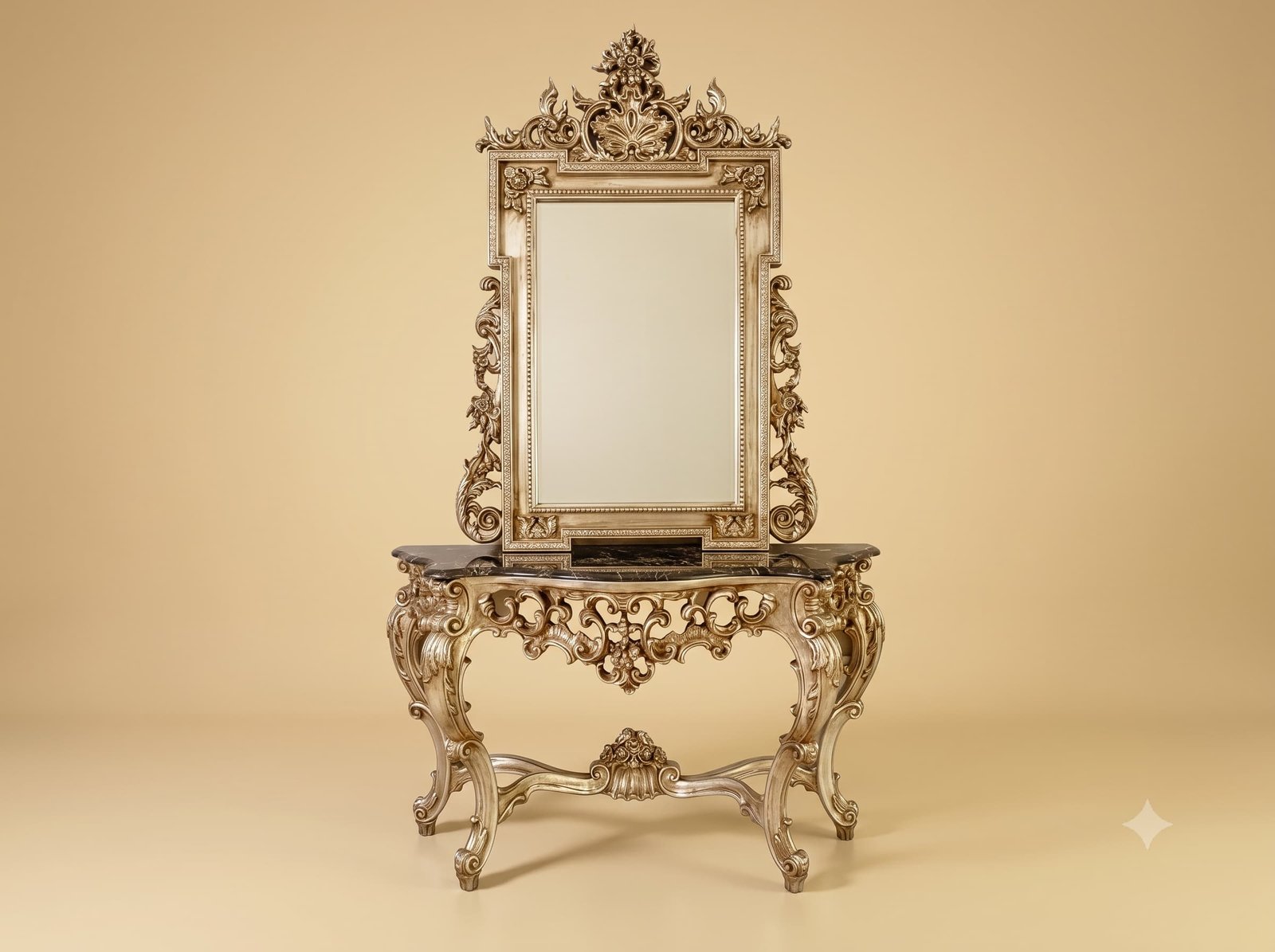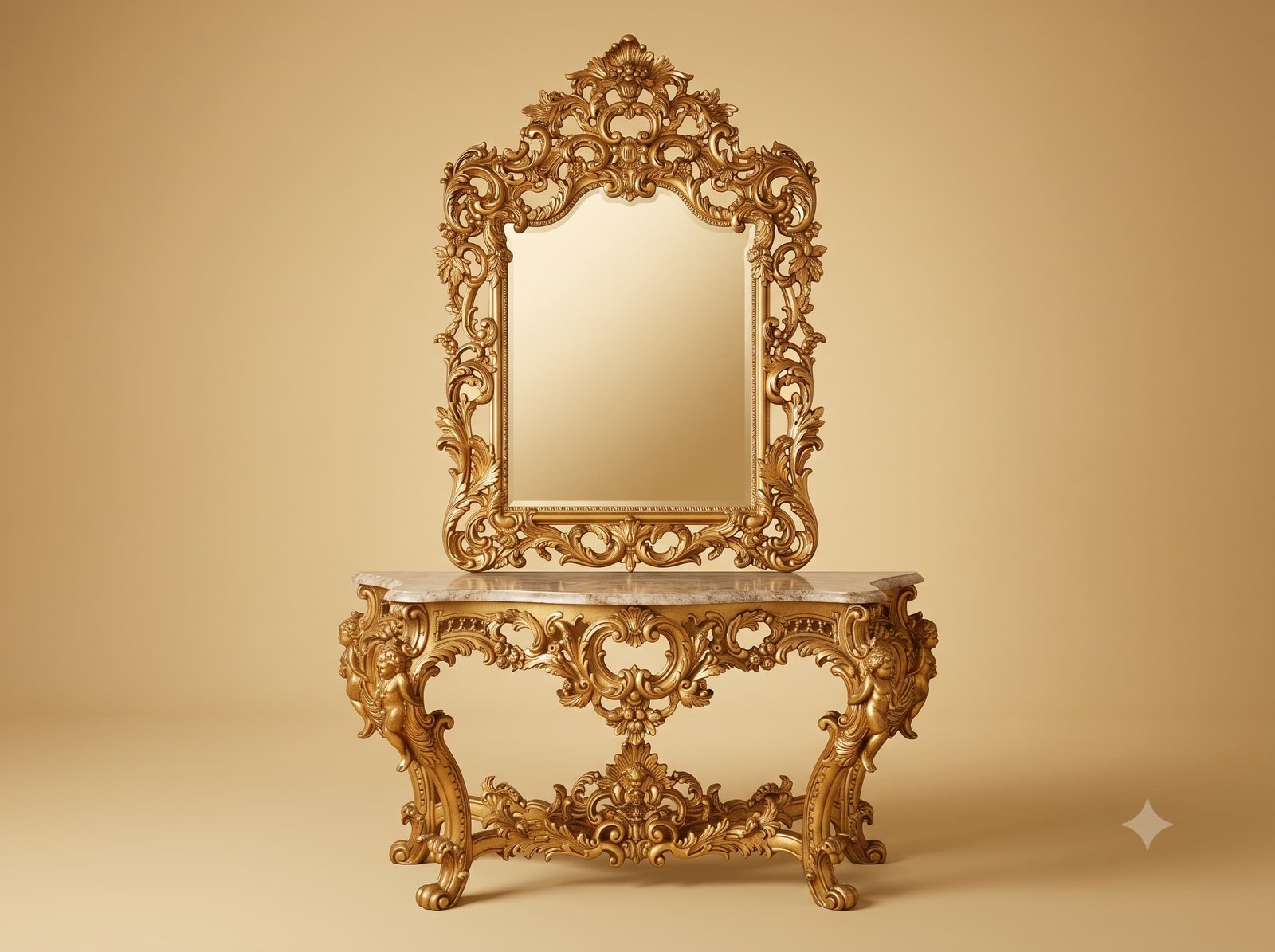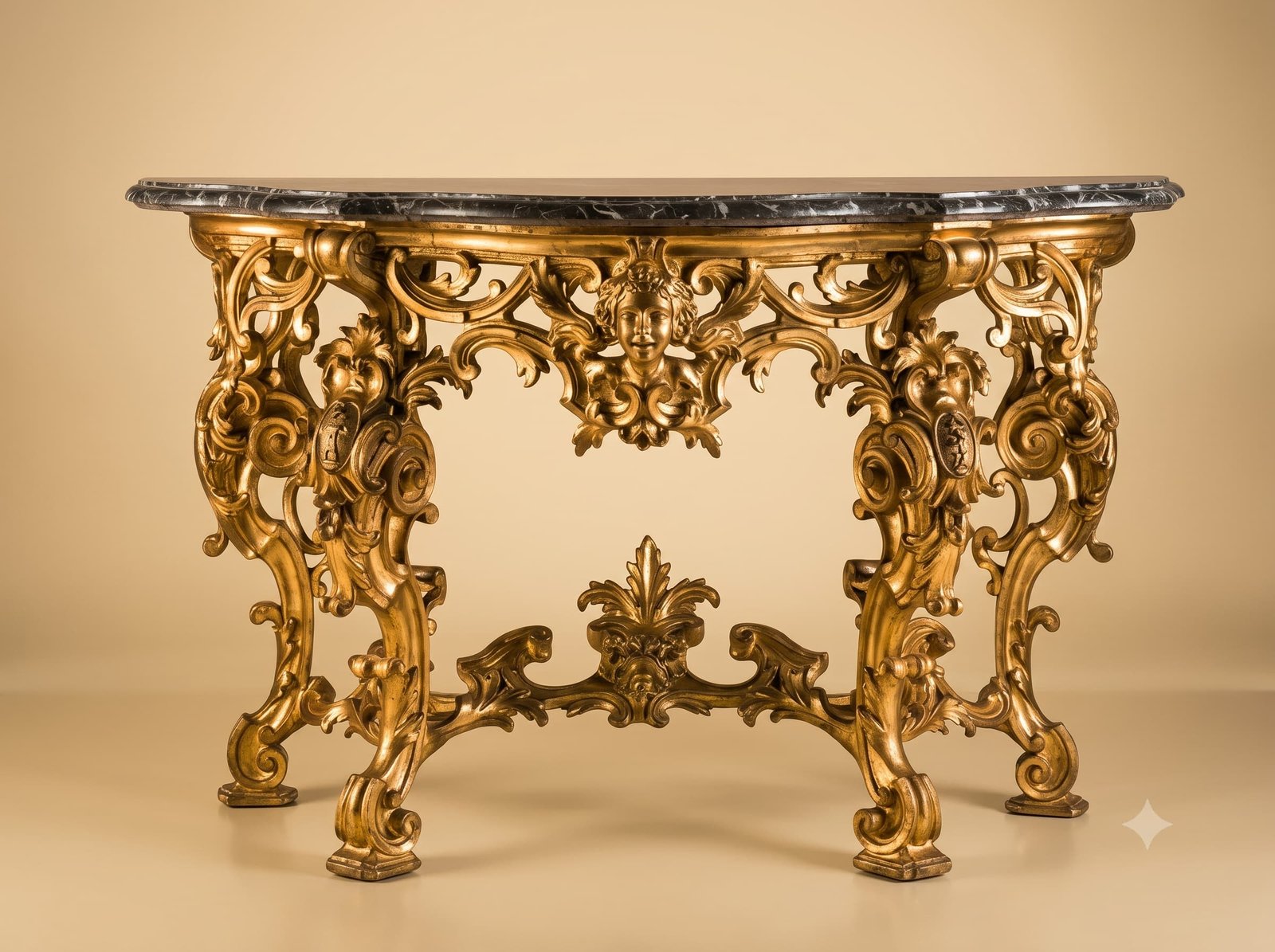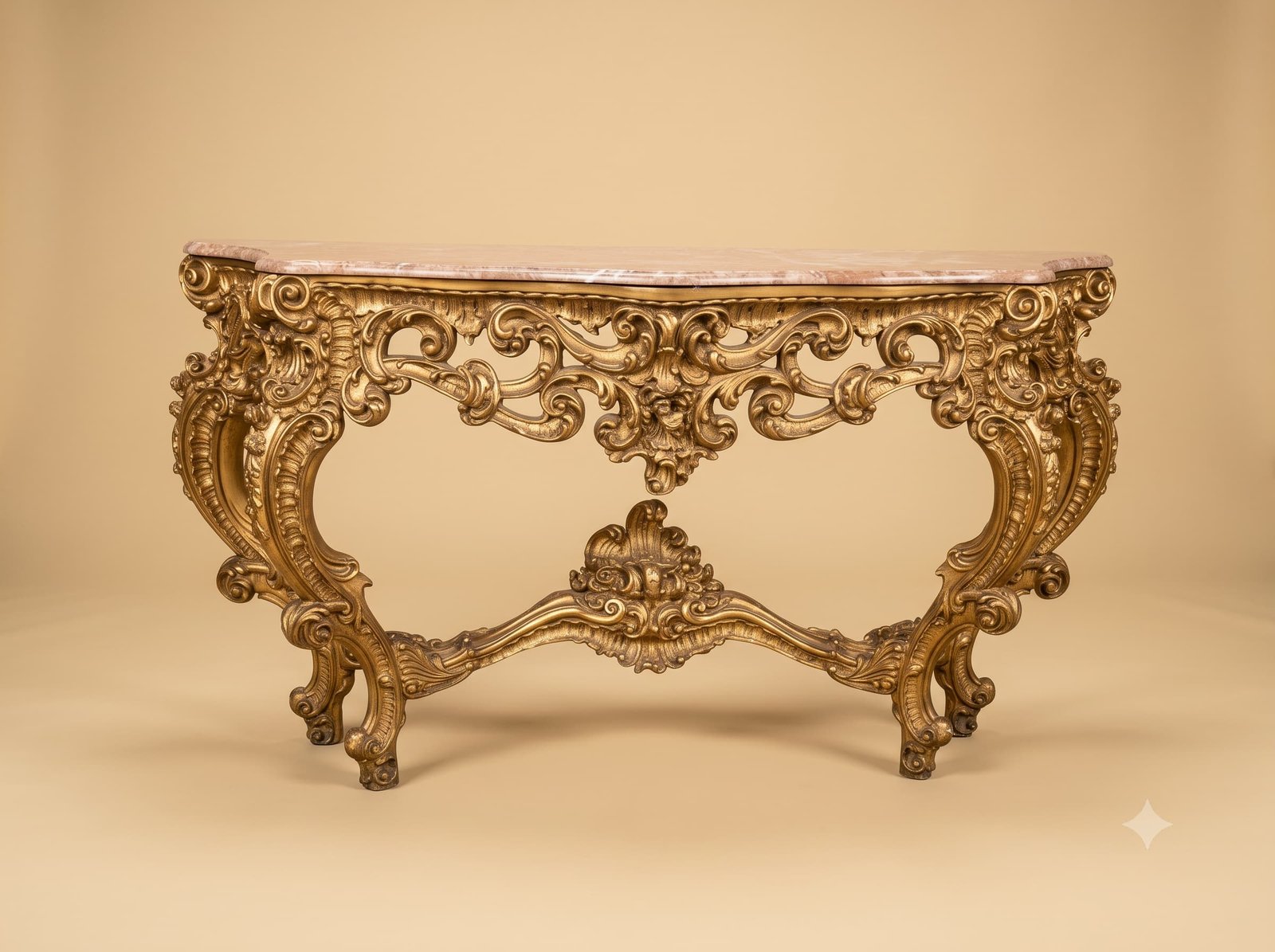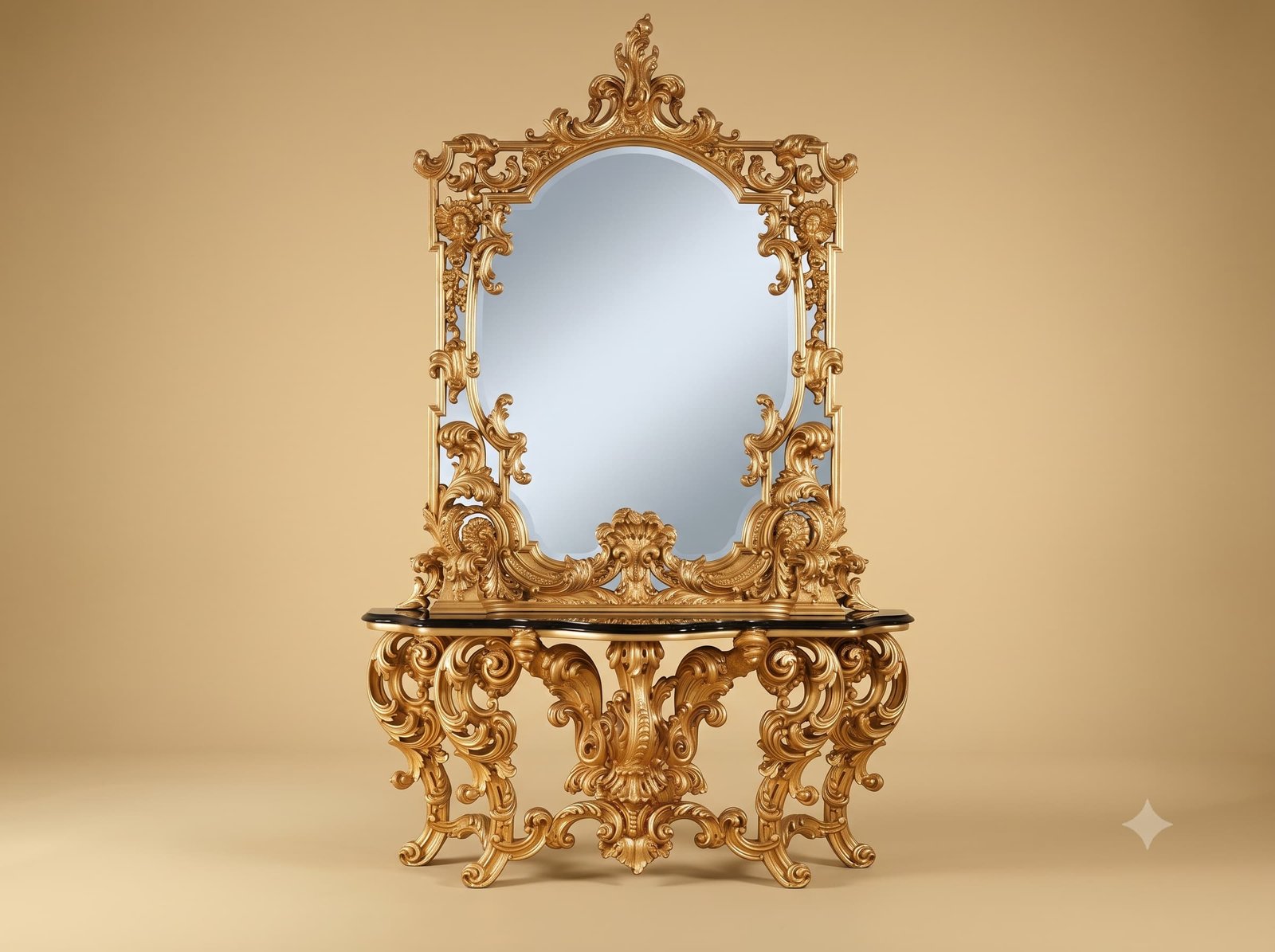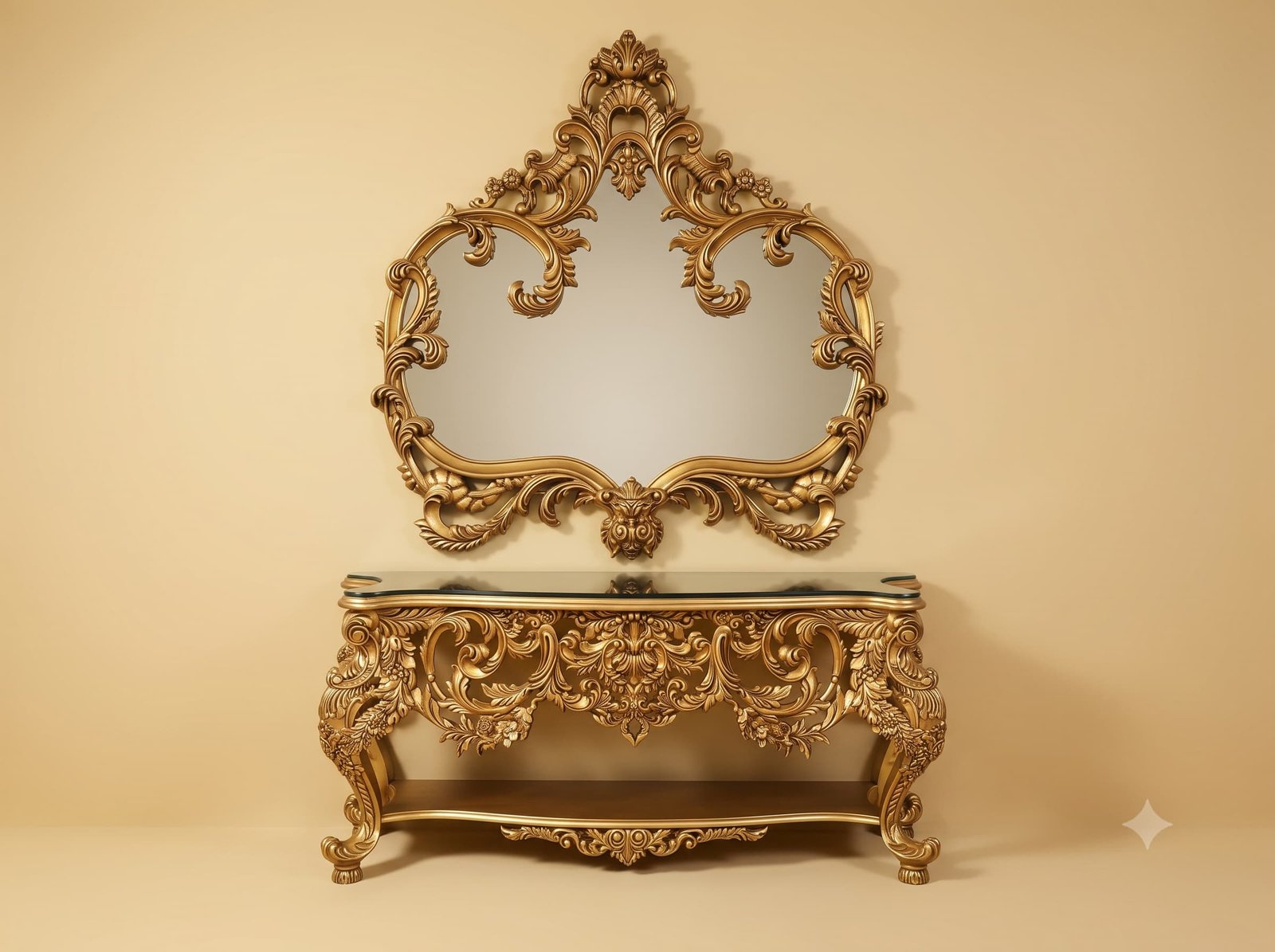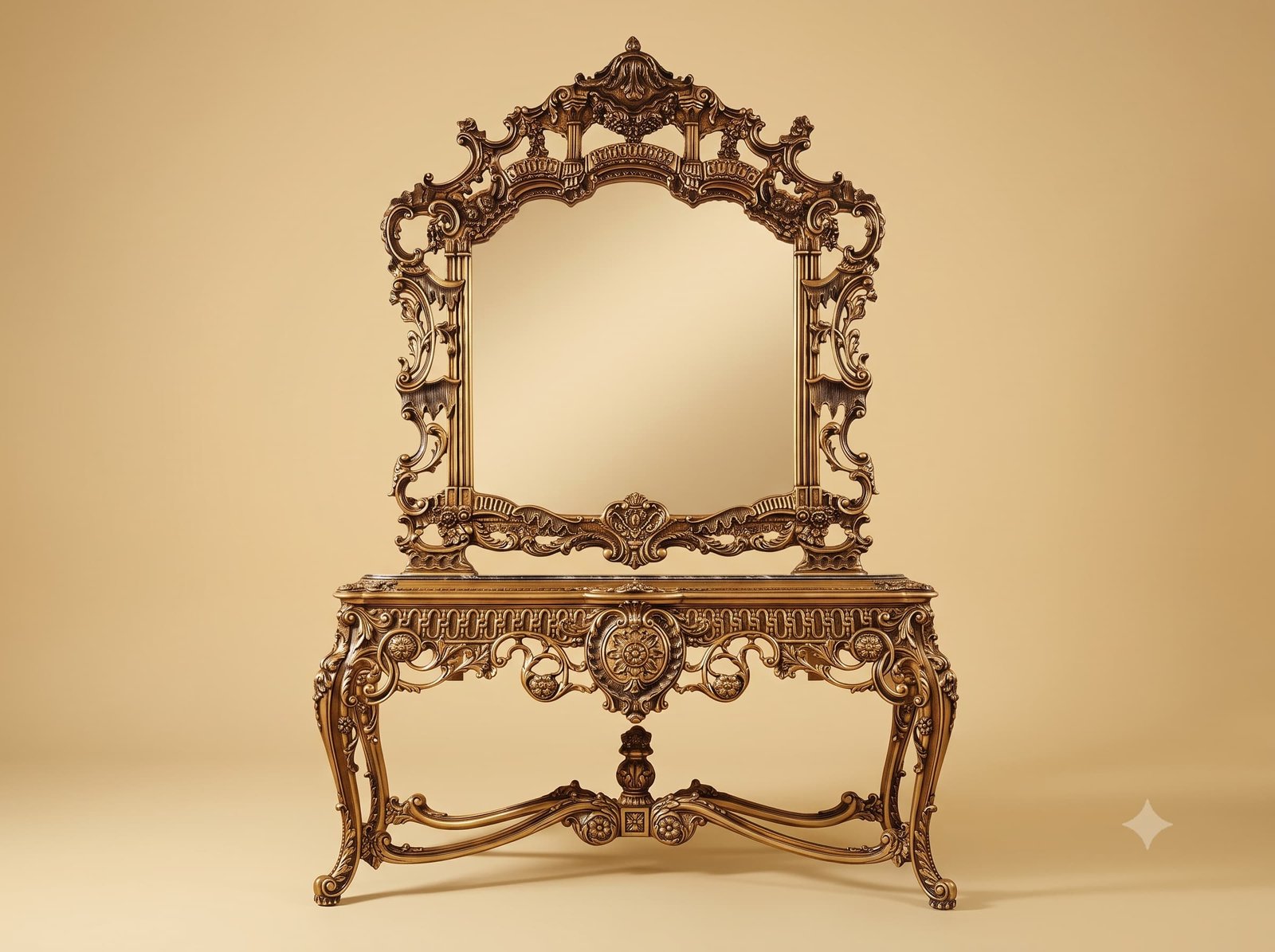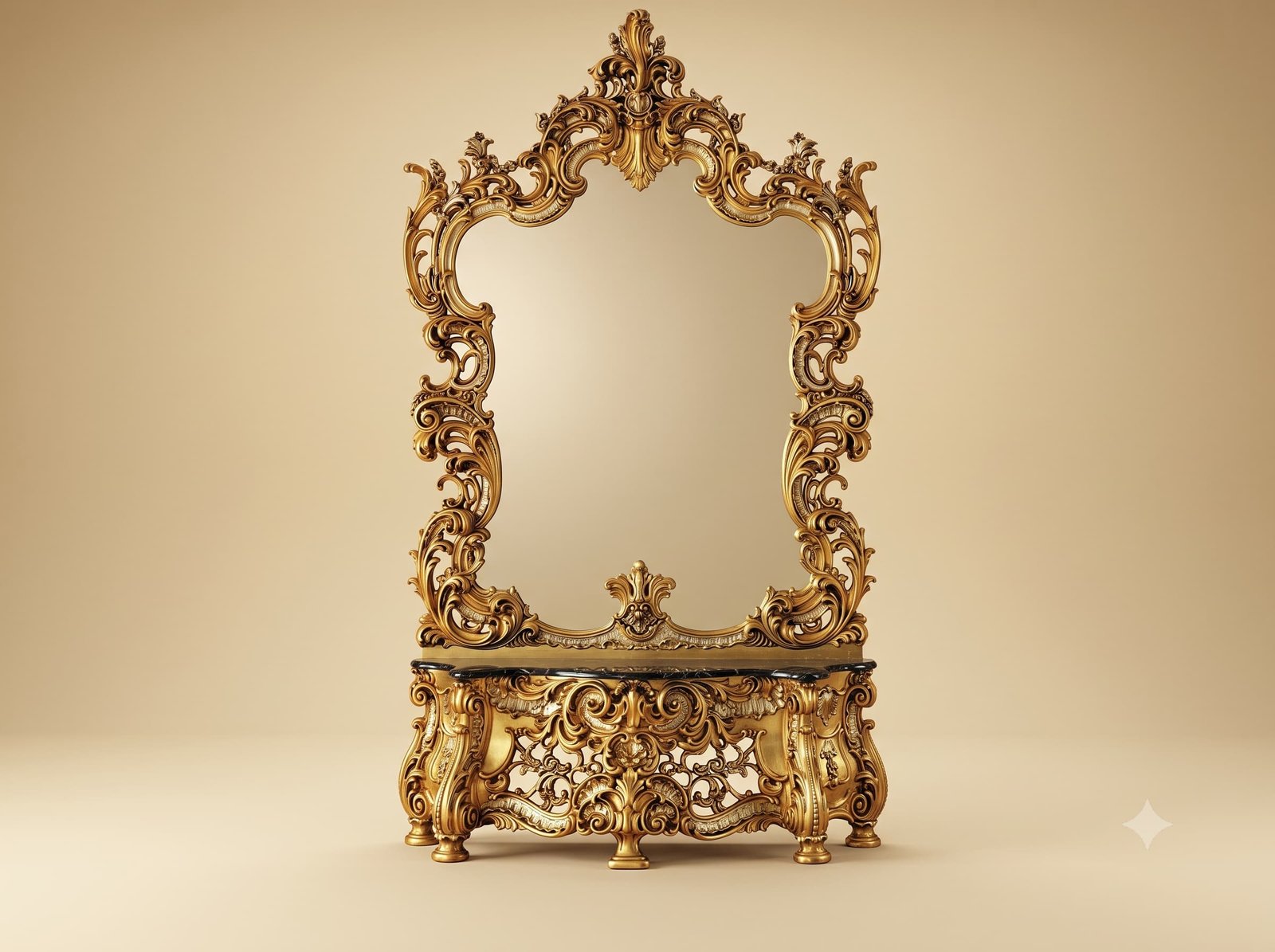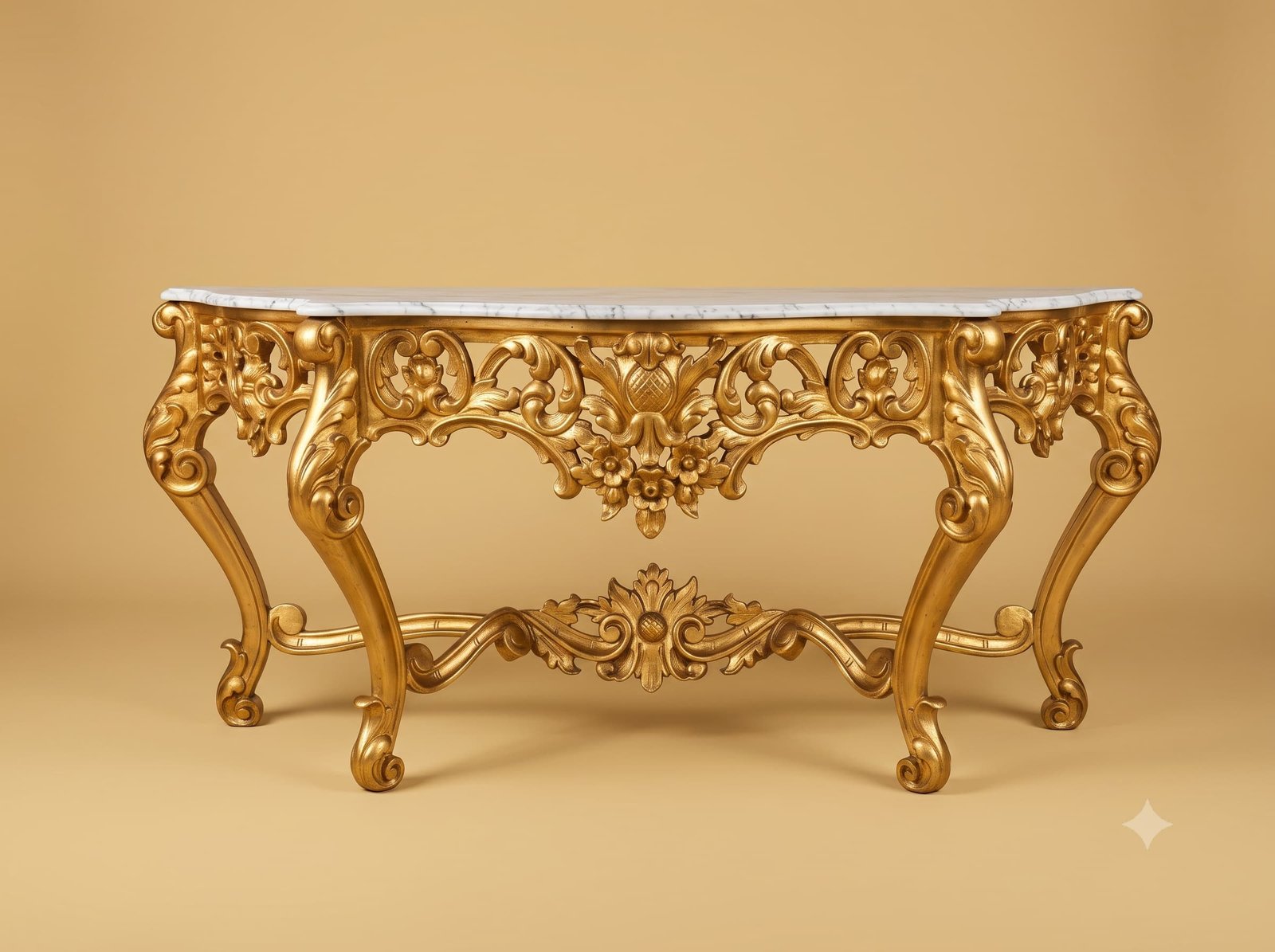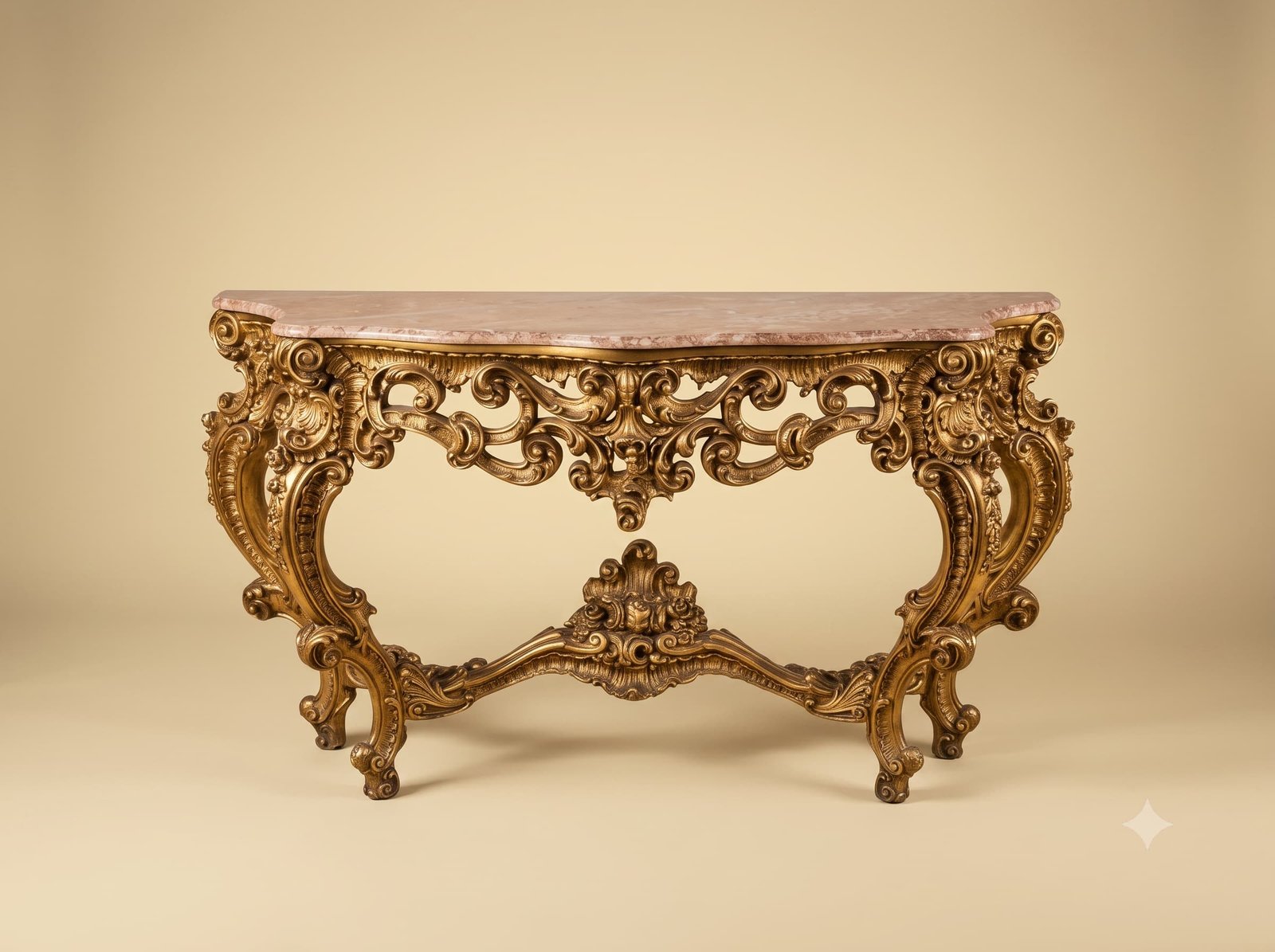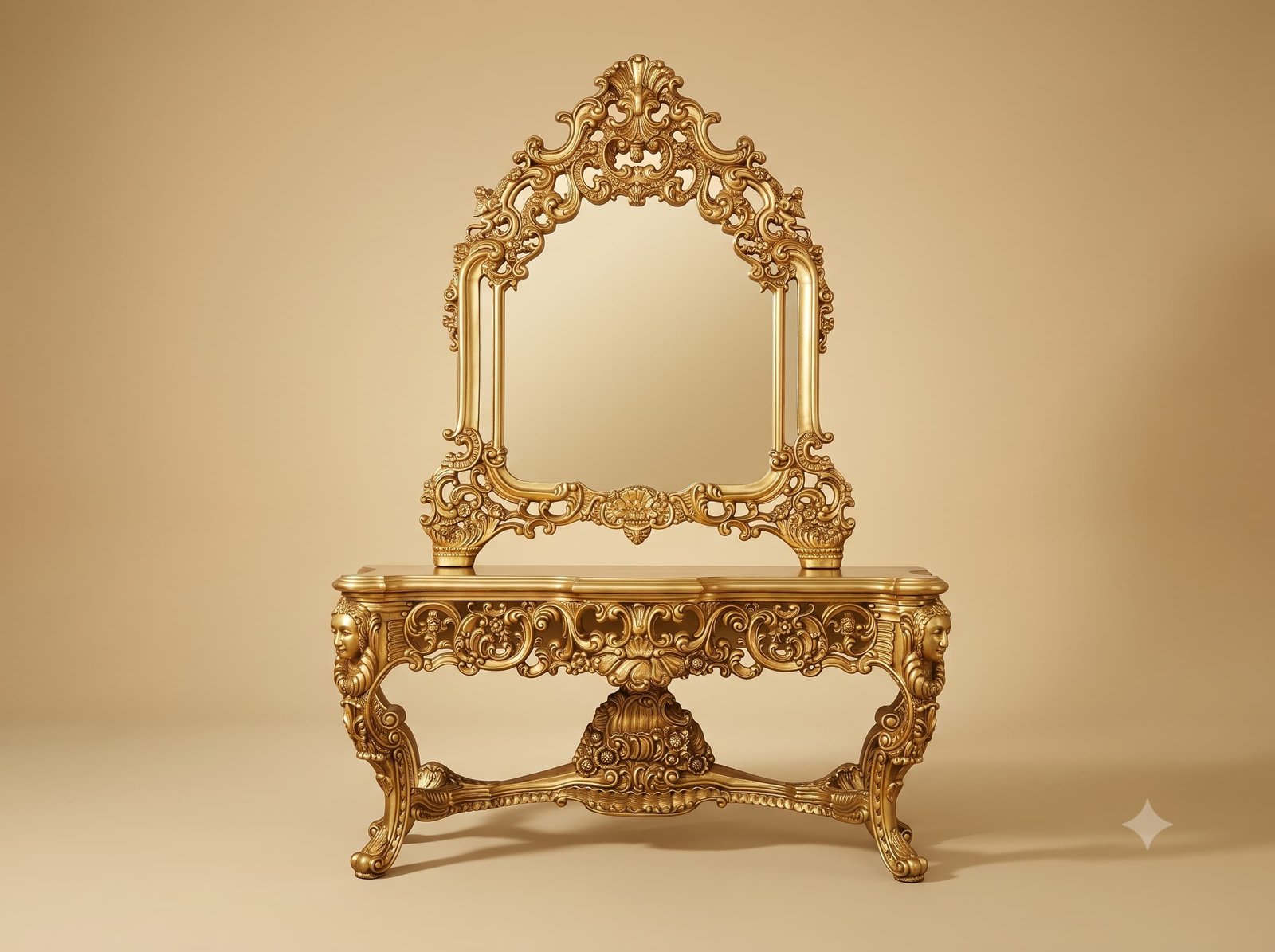
The difficulty with a console and mirror set is not carving either one. It is making the eye read them as a single piece of furniture when they are two objects standing one on top of the other.
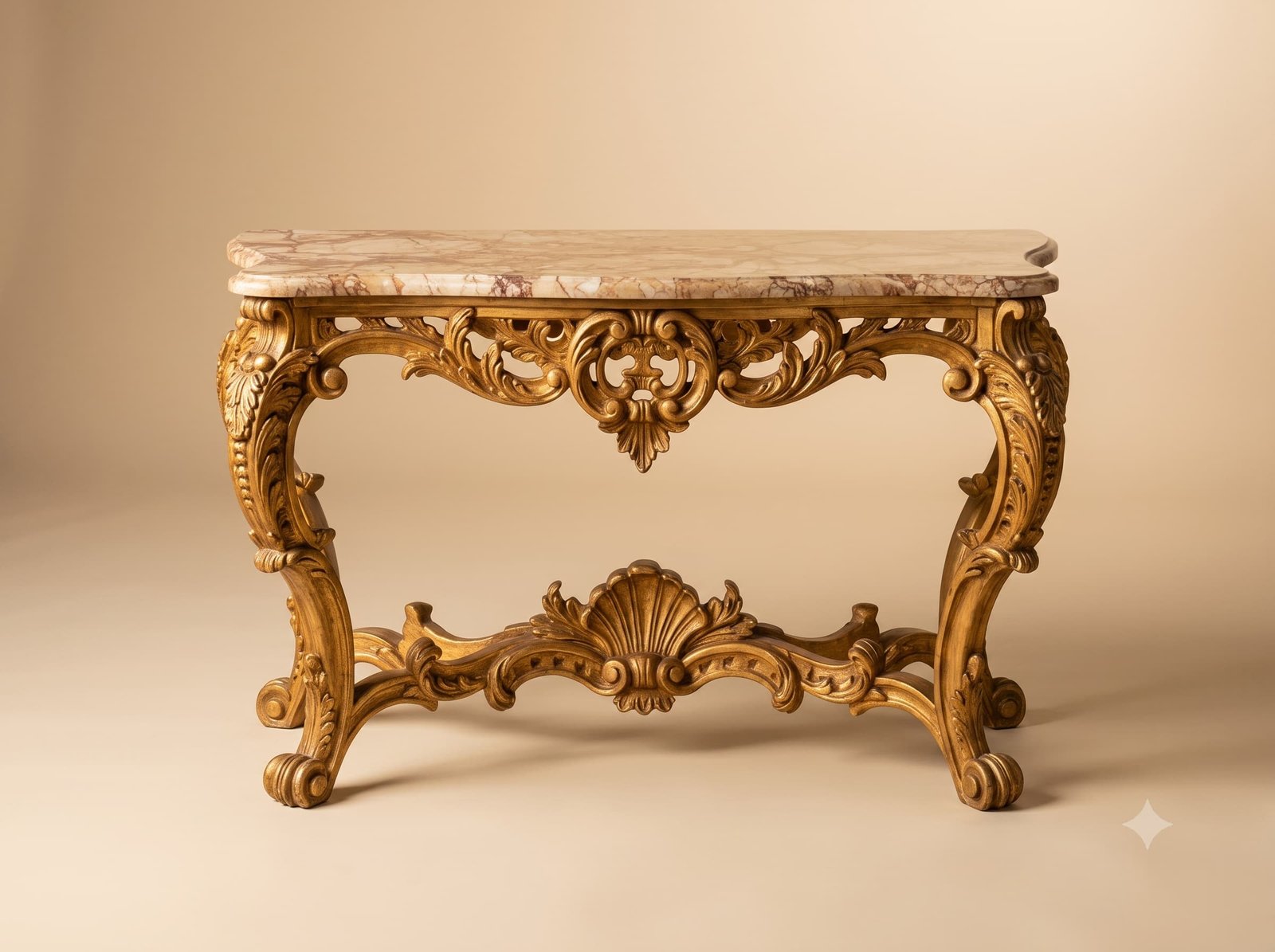
Our master Indian artisans set both out on one full-size drawing, on a common vertical centre line. The cartouche at the middle of the console apron, the boss on the stretcher and the crest at the top of the mirror all sit on that line, so the whole assembly has one spine running through it.
The second rule is width. The mirror's outer frame is deliberately drawn narrower than the console top, and its base rail narrower still, so the set tapers as it rises. Draw the mirror the same width as the console and the pair reads as a wall, not a piece.
The third is scale. Ornament near the floor is cut large and deep; the same motif on the mirror crest is cut smaller and shallower. Carved at equal scale, the upper piece looks heavy and appears to lean forward. Stepping the scale down is what makes the arch look like it is rising.
 Ask Price On WhatsApp