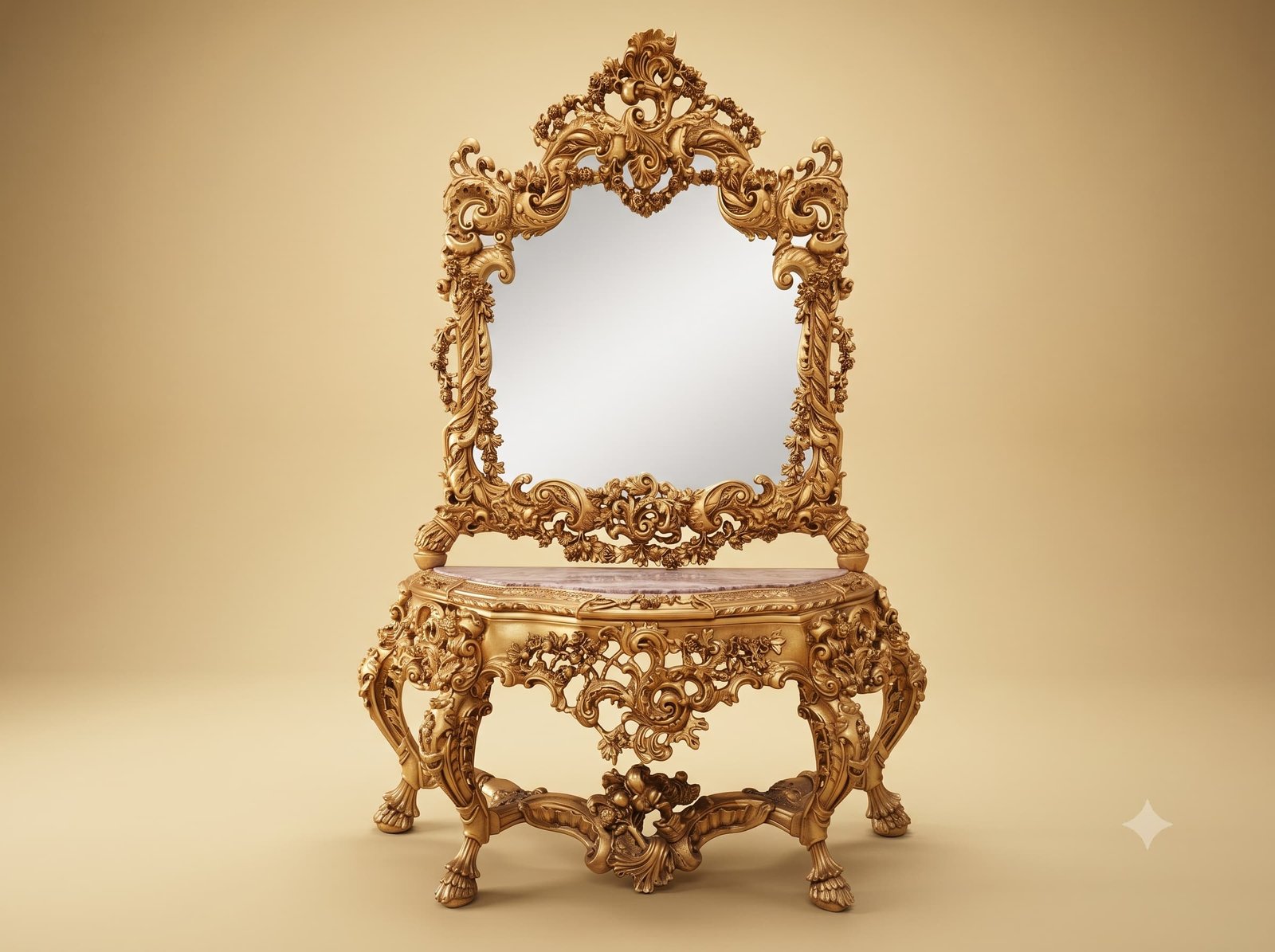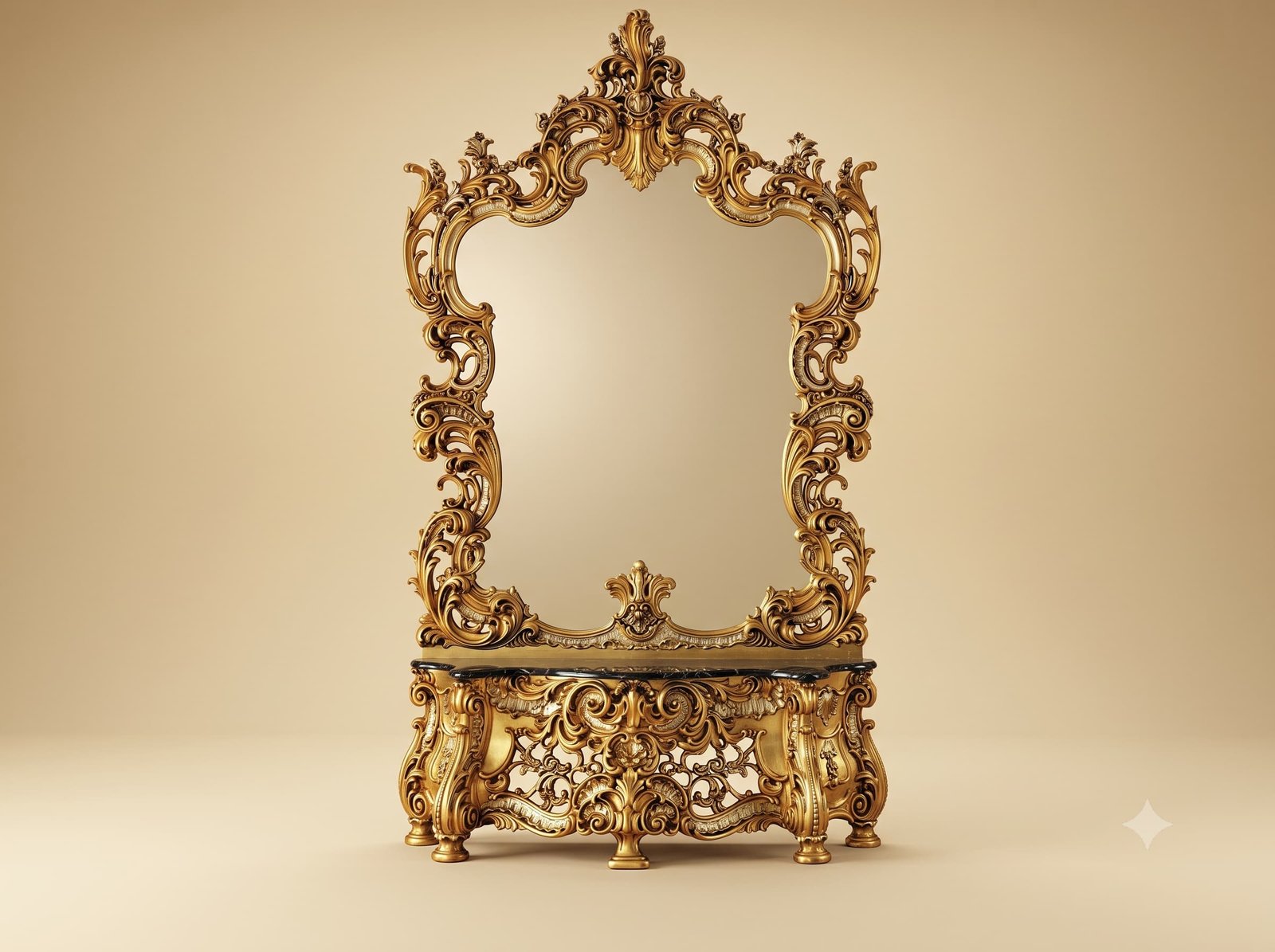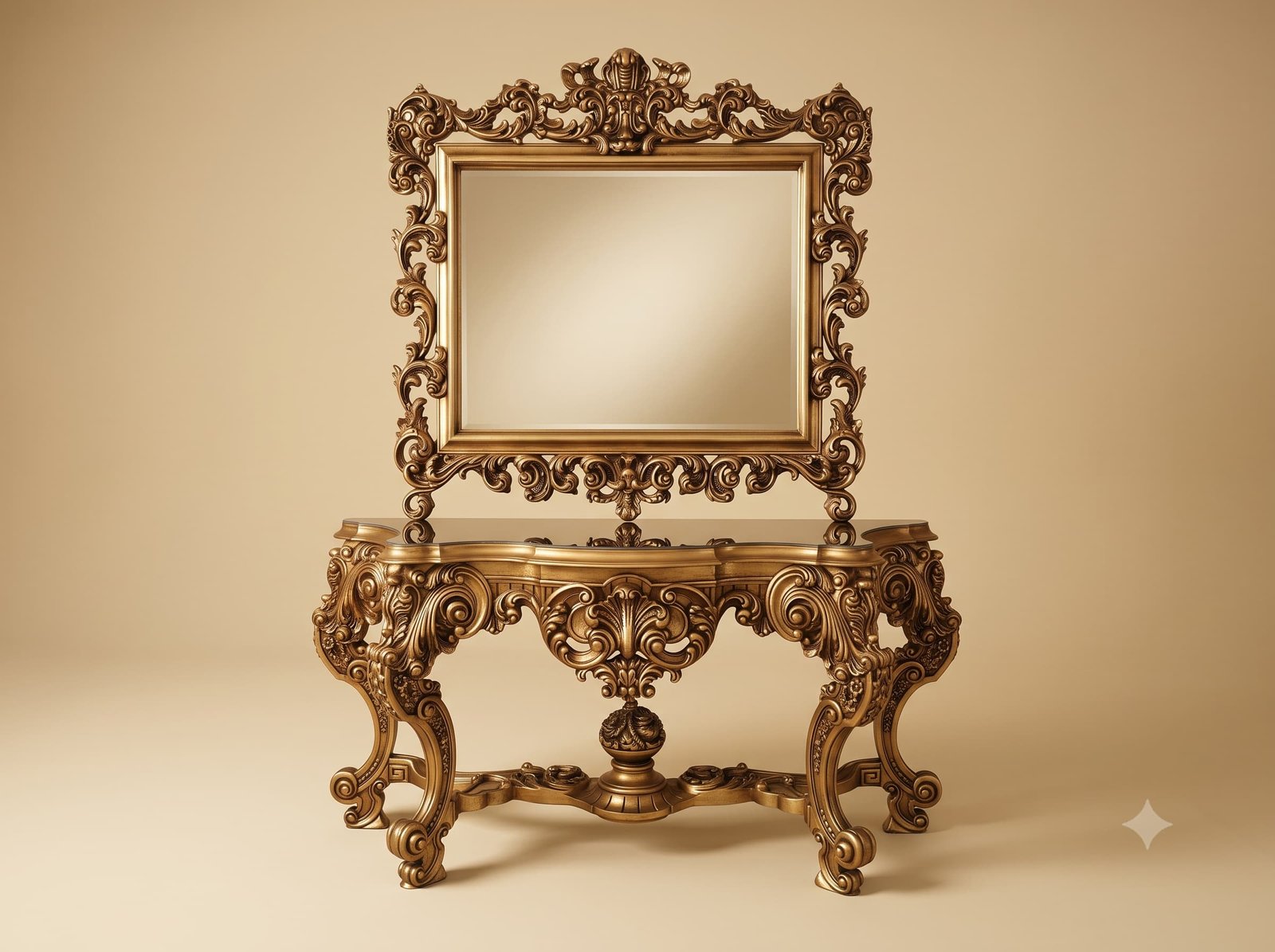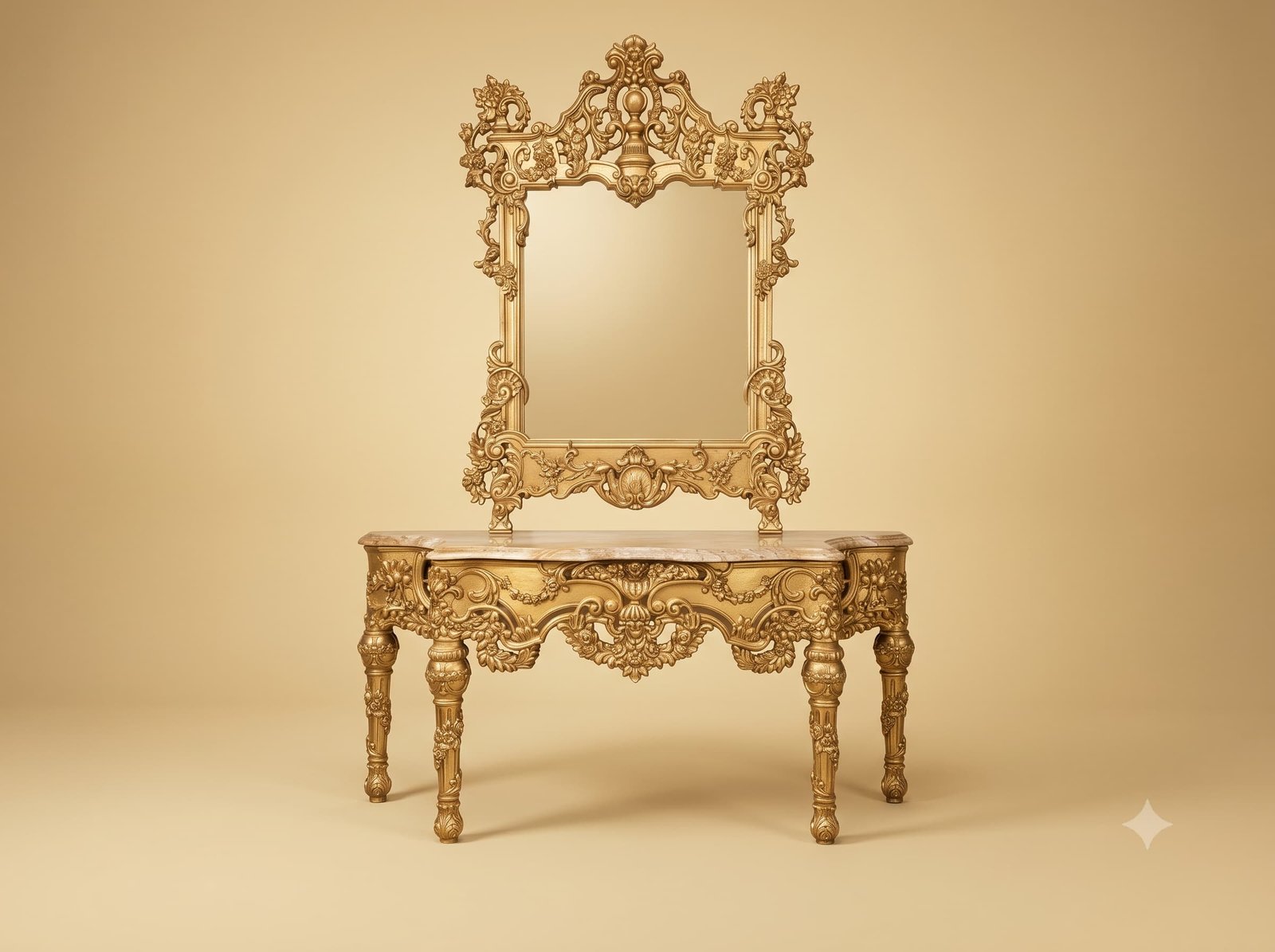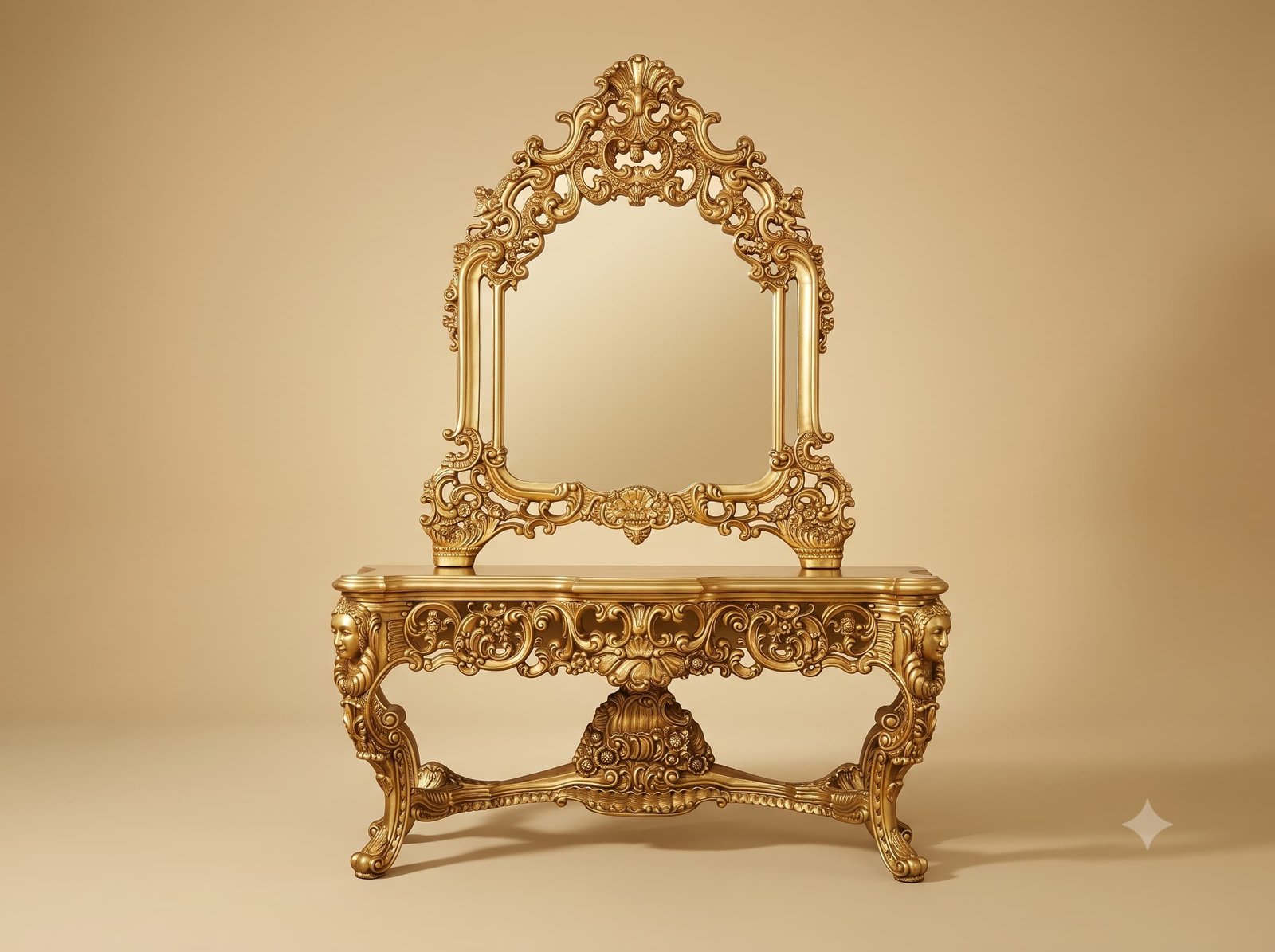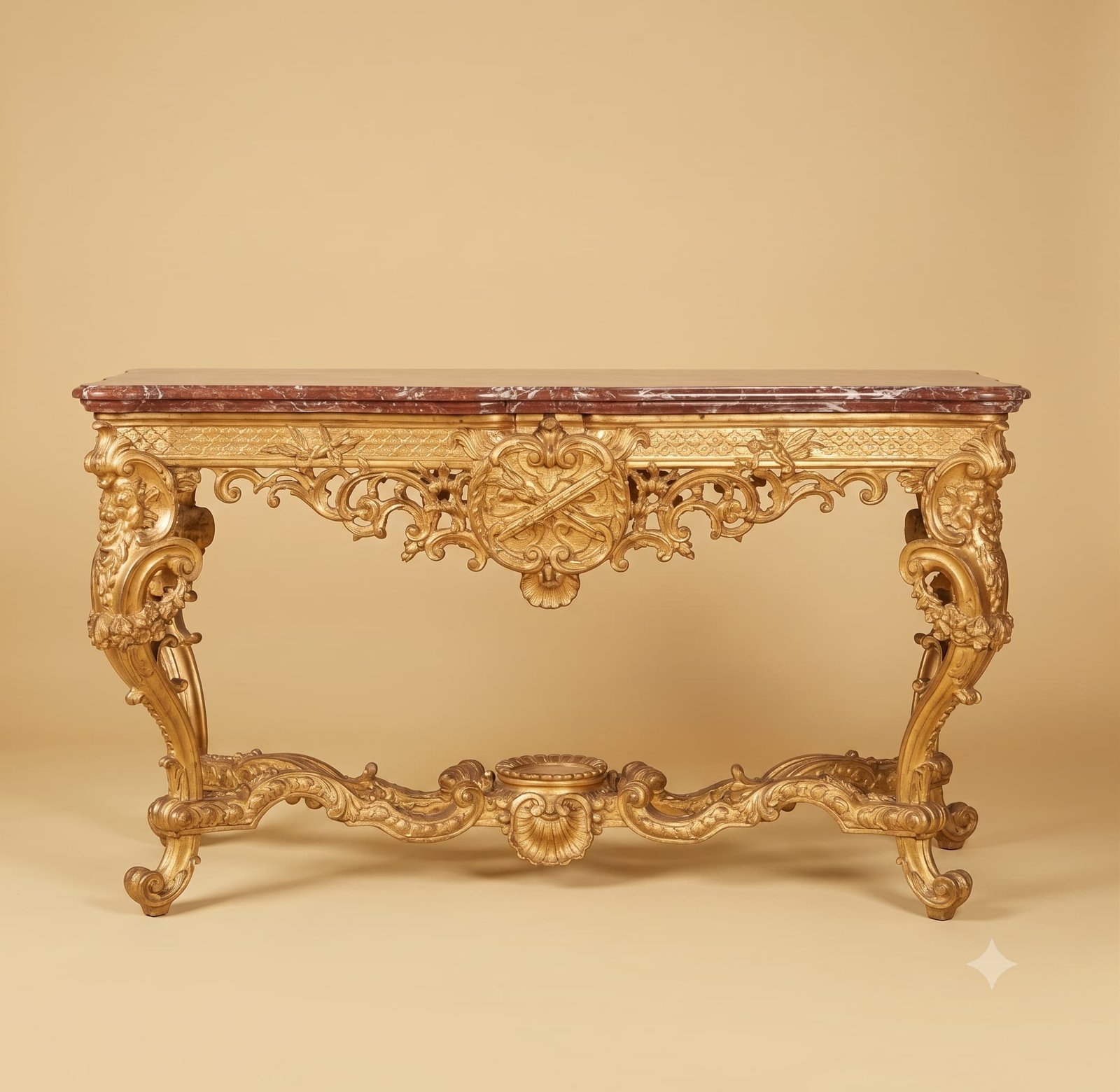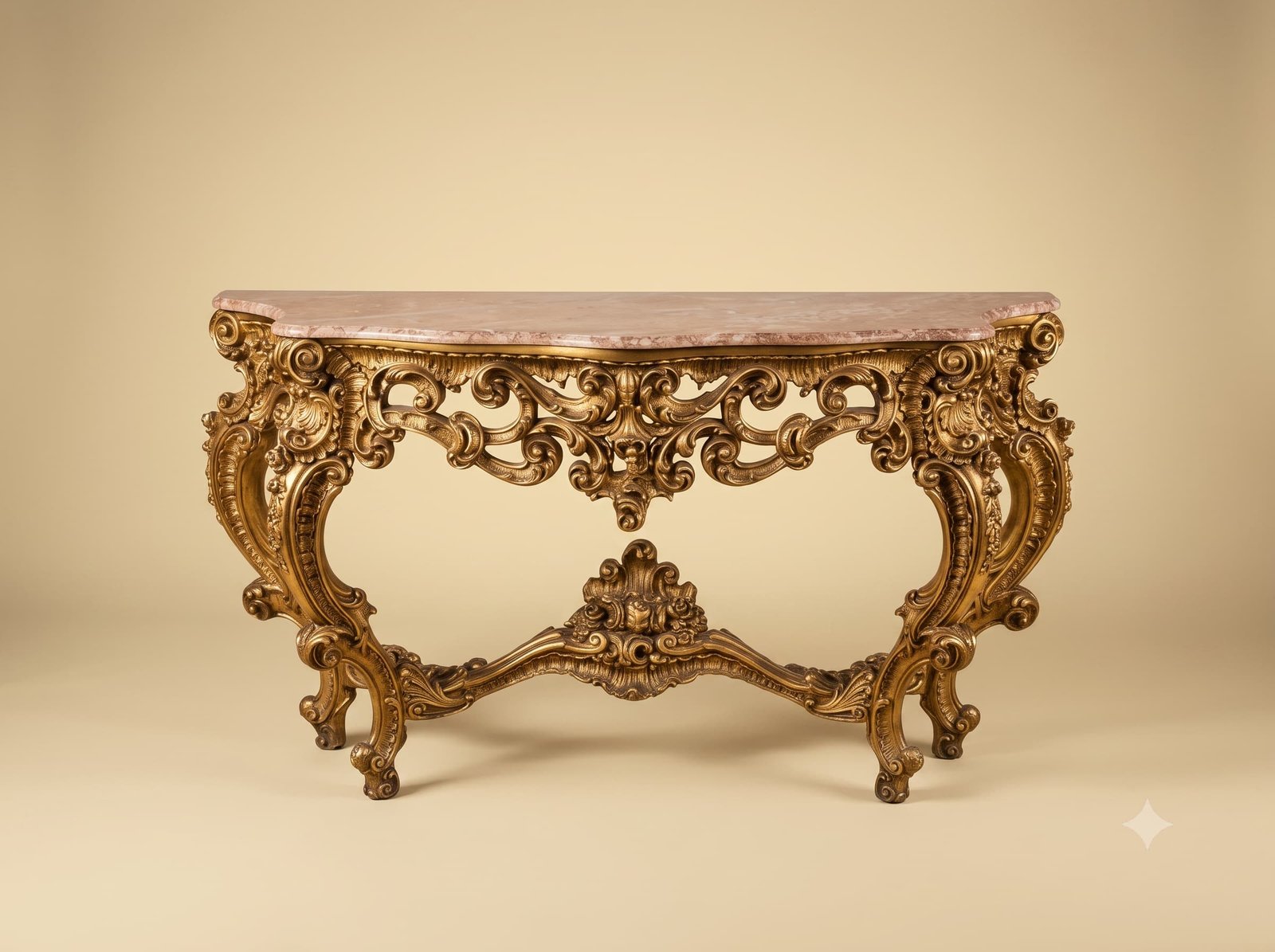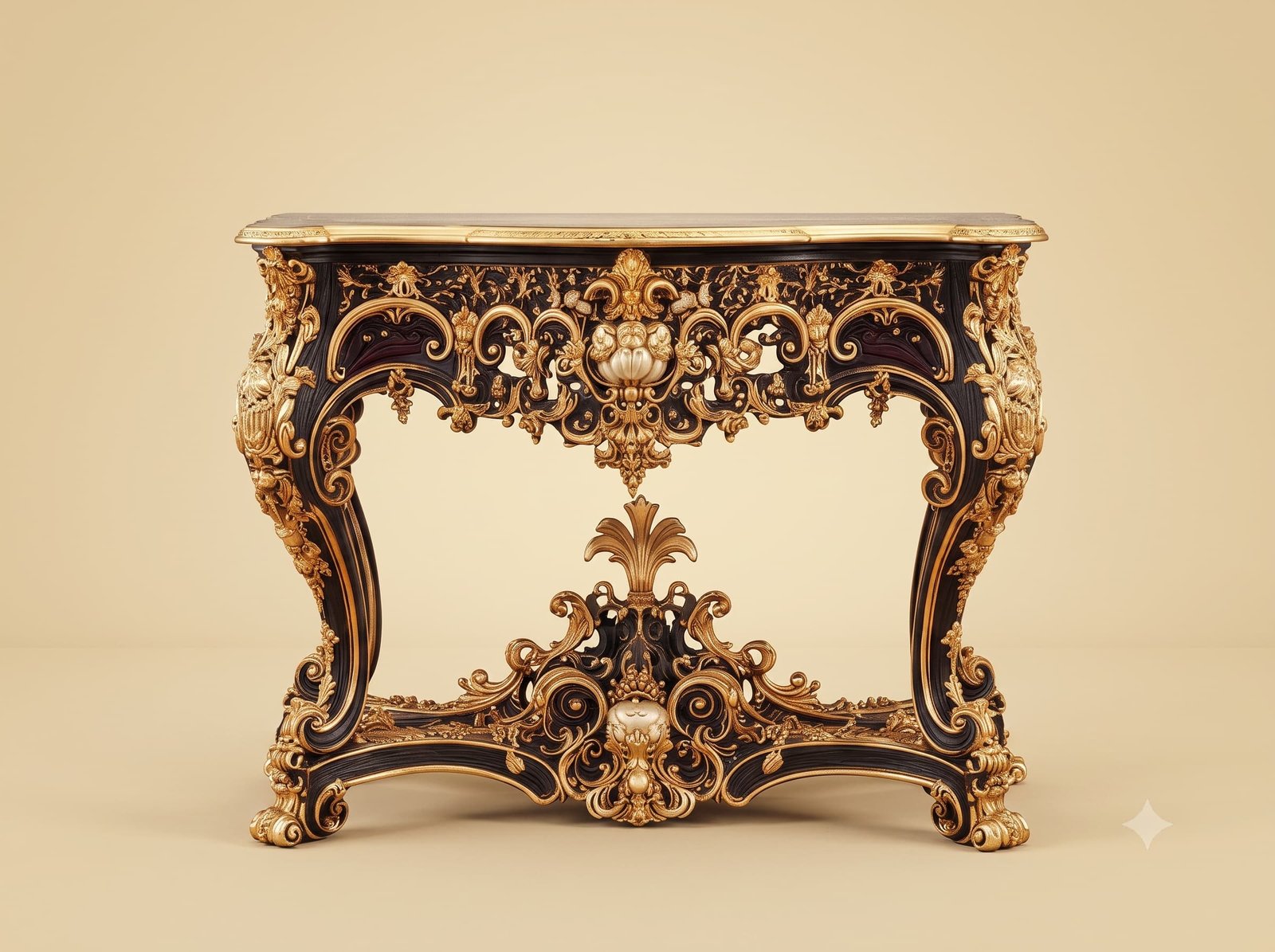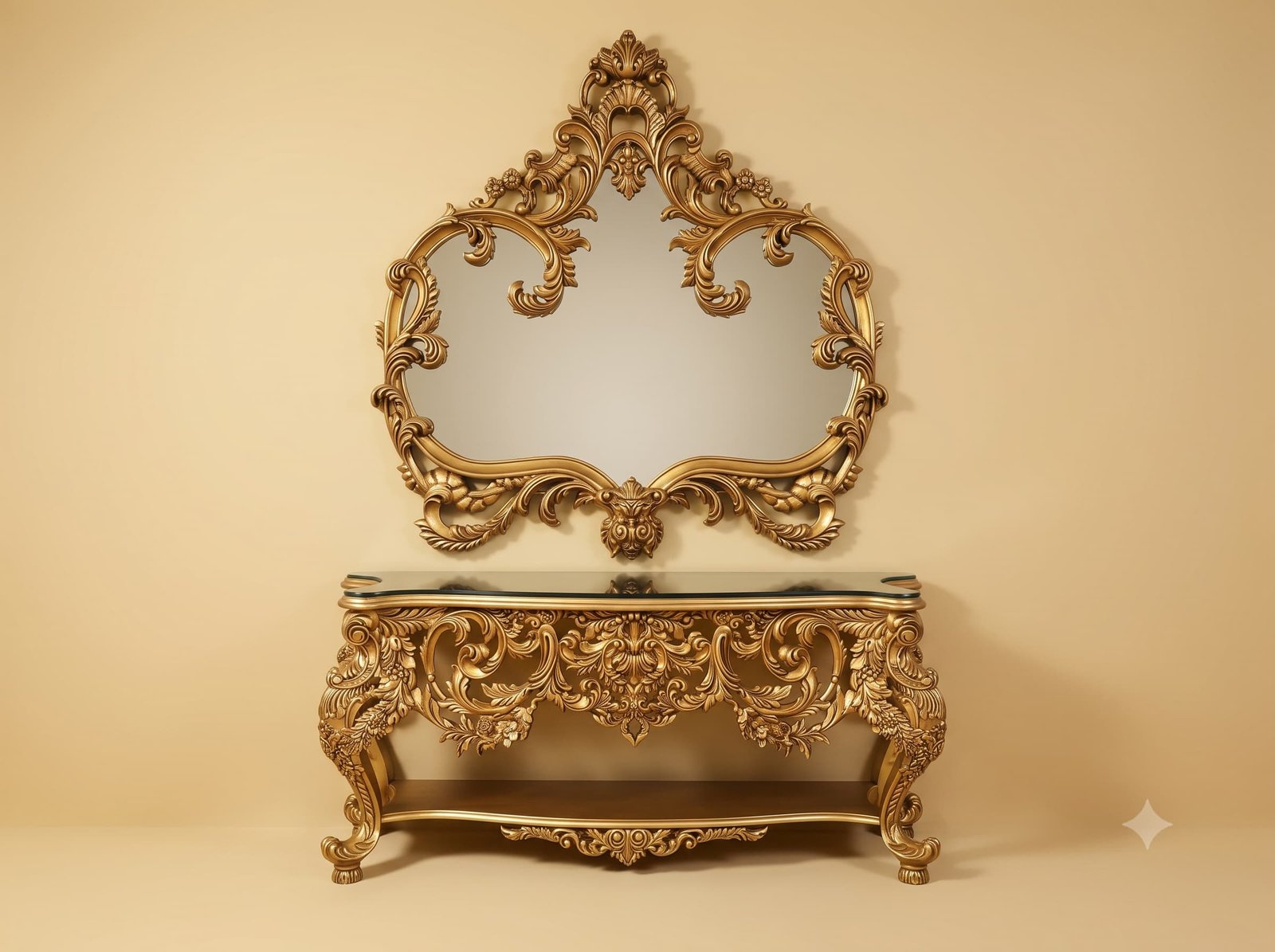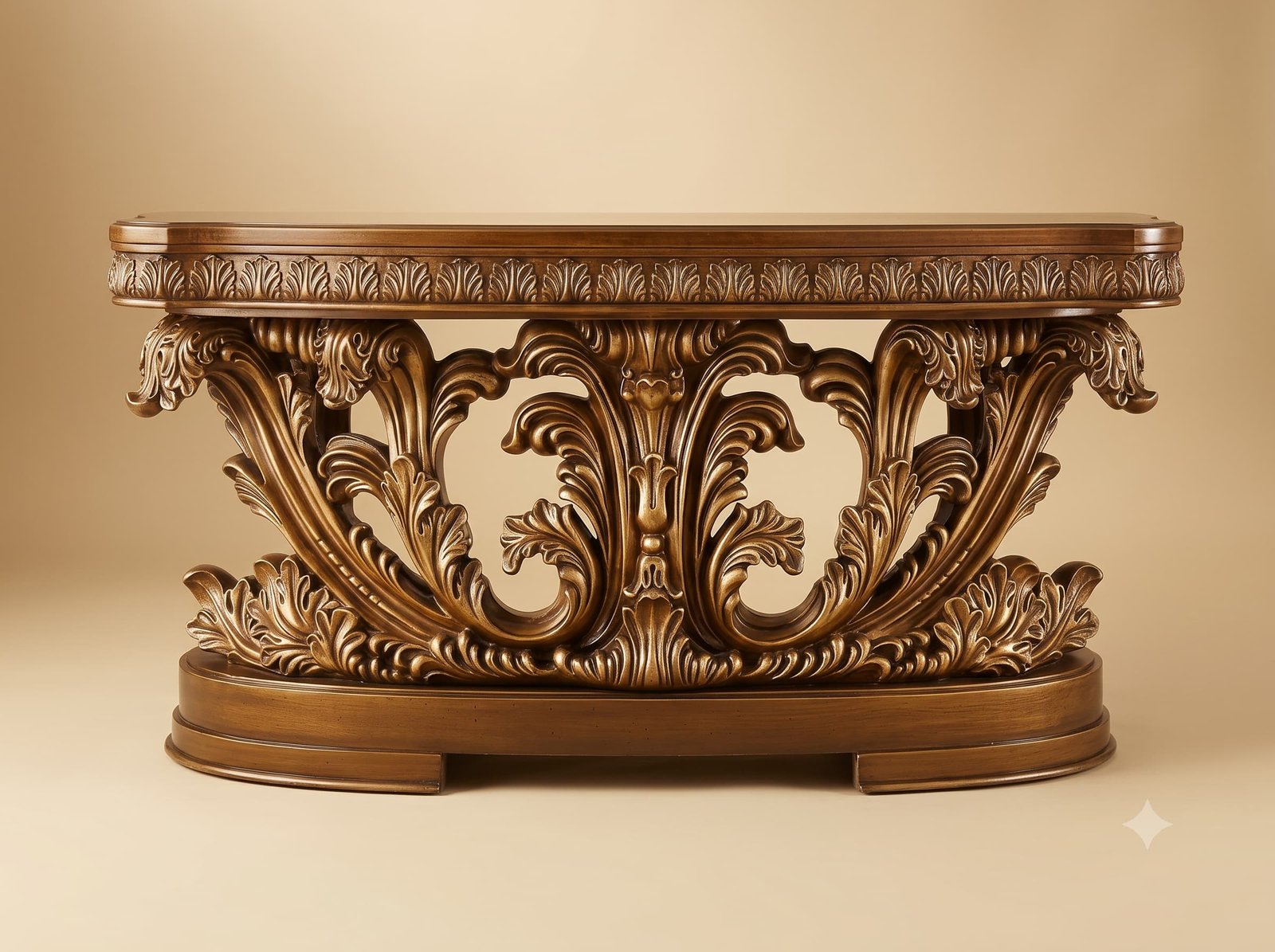
Ornament on a curved surface cannot be designed on flat paper. It is one of those rules that sounds fussy until you have seen the result of ignoring it.
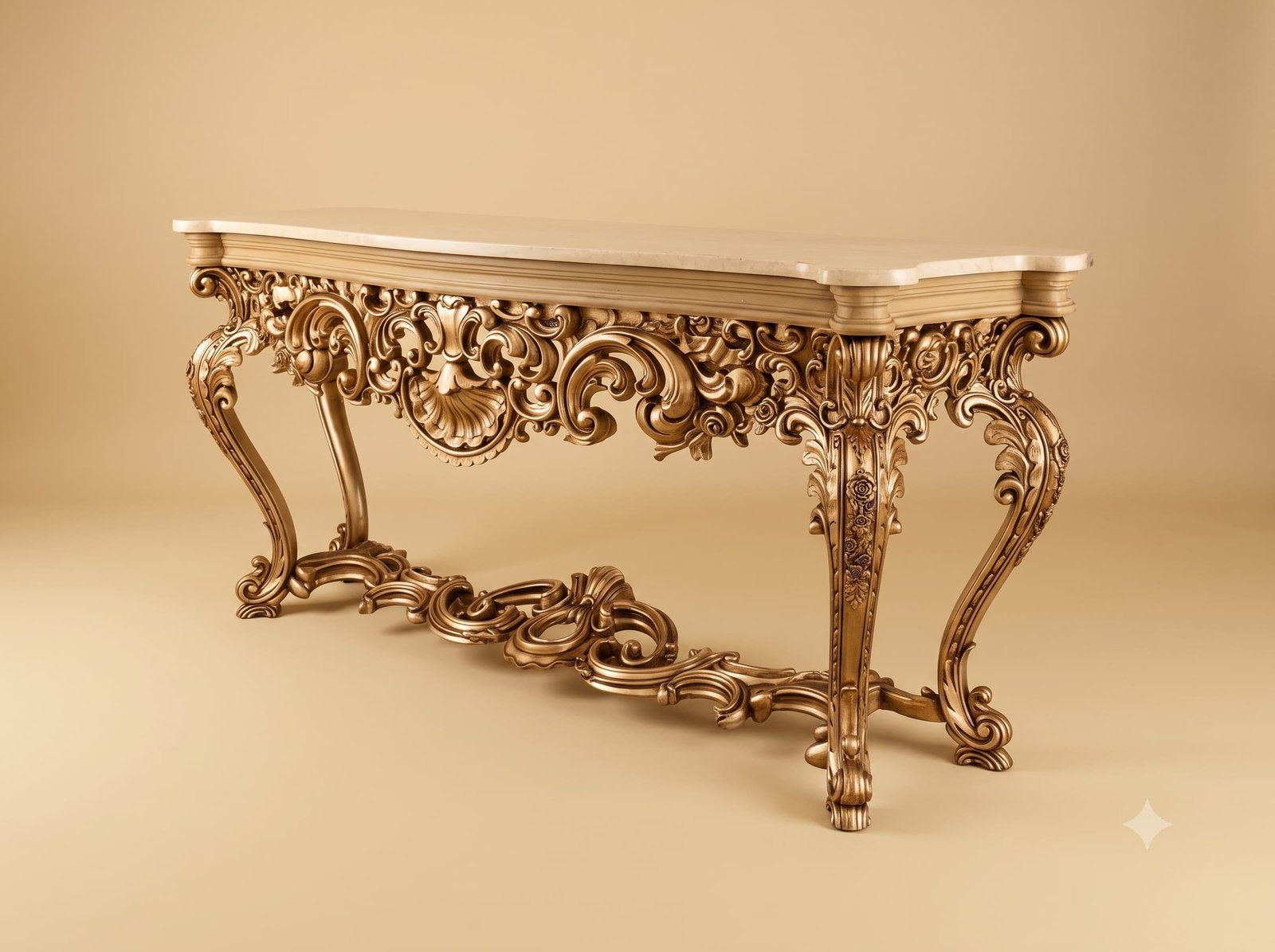
Draw an acanthus leaf full size on a sheet, wrap the sheet round a bow front, and the leaf arrives distorted - narrowed and crowded at the ends where the curve turns away, stretched across the middle where it faces you. The drawing was true on a flat plane and the surface is not one.
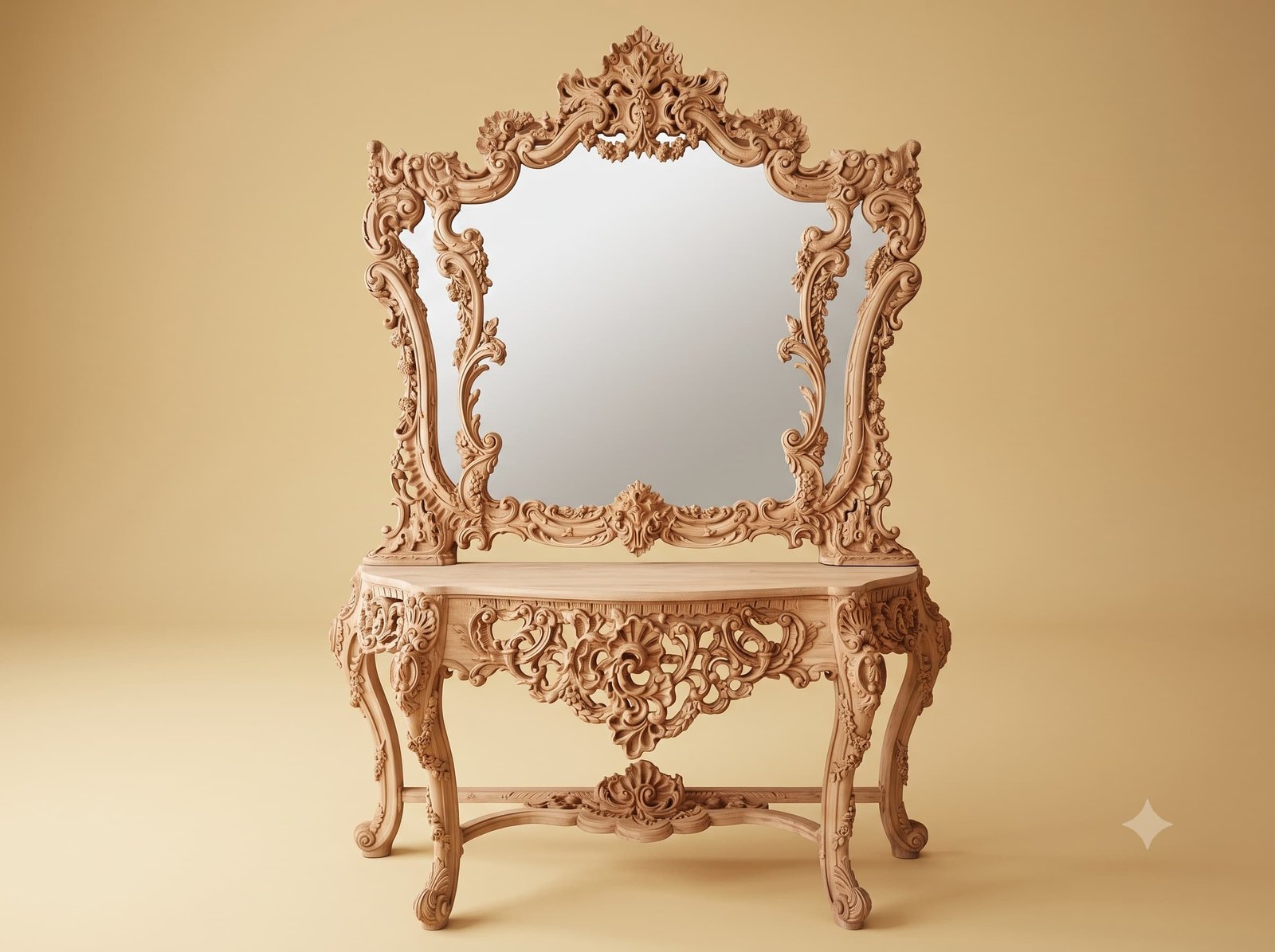
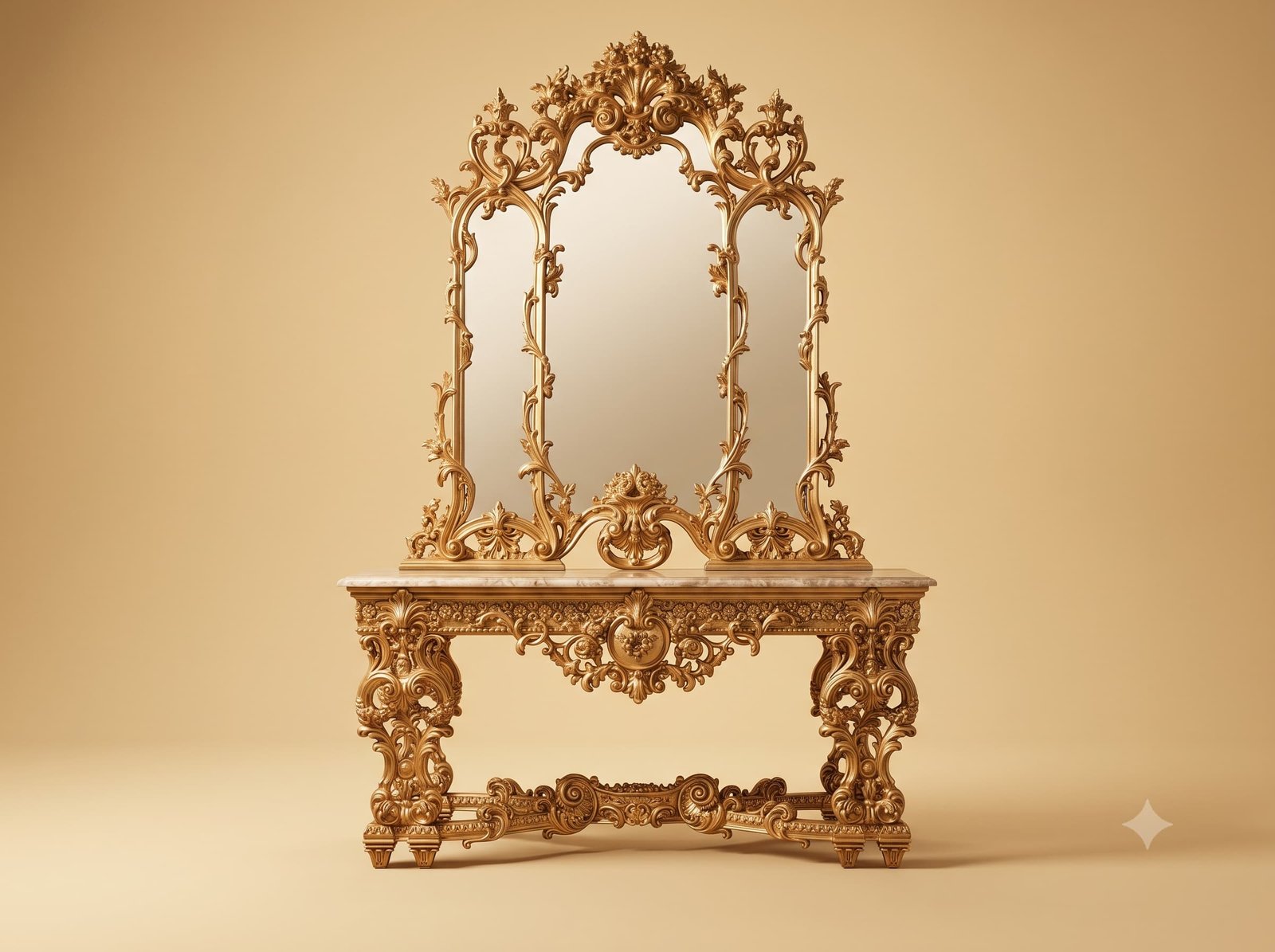
So our master Indian artisans mark straight onto the shaped blank after it is cut to its curve. A thin flexible batten is sprung round the bow to strike the horizontal lines, because a batten bent round a curve gives a true line on that curve where a straight rule cannot. The leaf centres are stepped round the curve itself with dividers, so their spacing is measured along the surface the eye will actually travel.
Then the carving is checked from the two places it will be seen from - straight on, and from either end where the curve foreshortens hardest. Leaves at the ends are cut a fraction deeper so they hold their shape when seen at that angle.
 Ask Price On WhatsApp