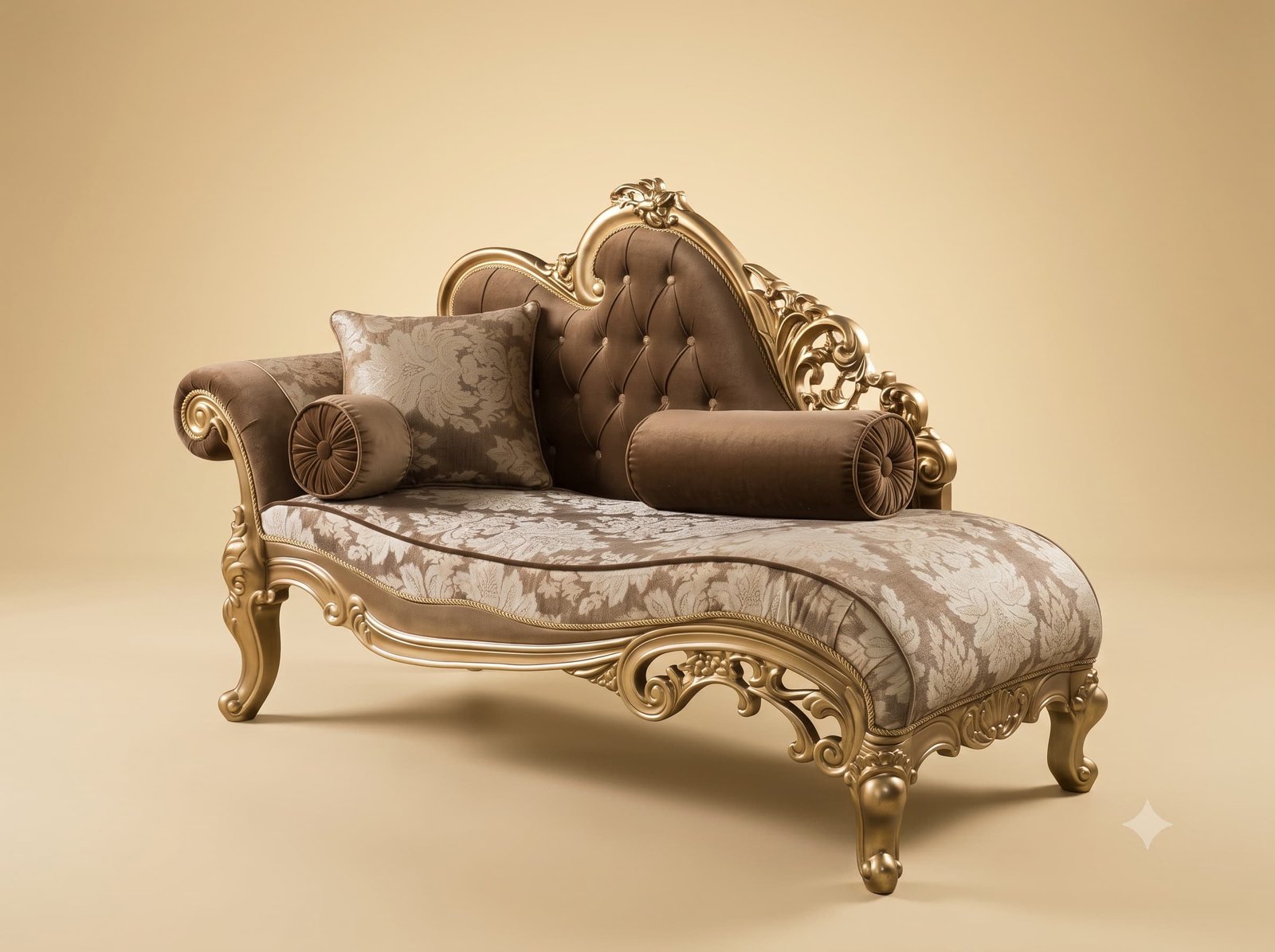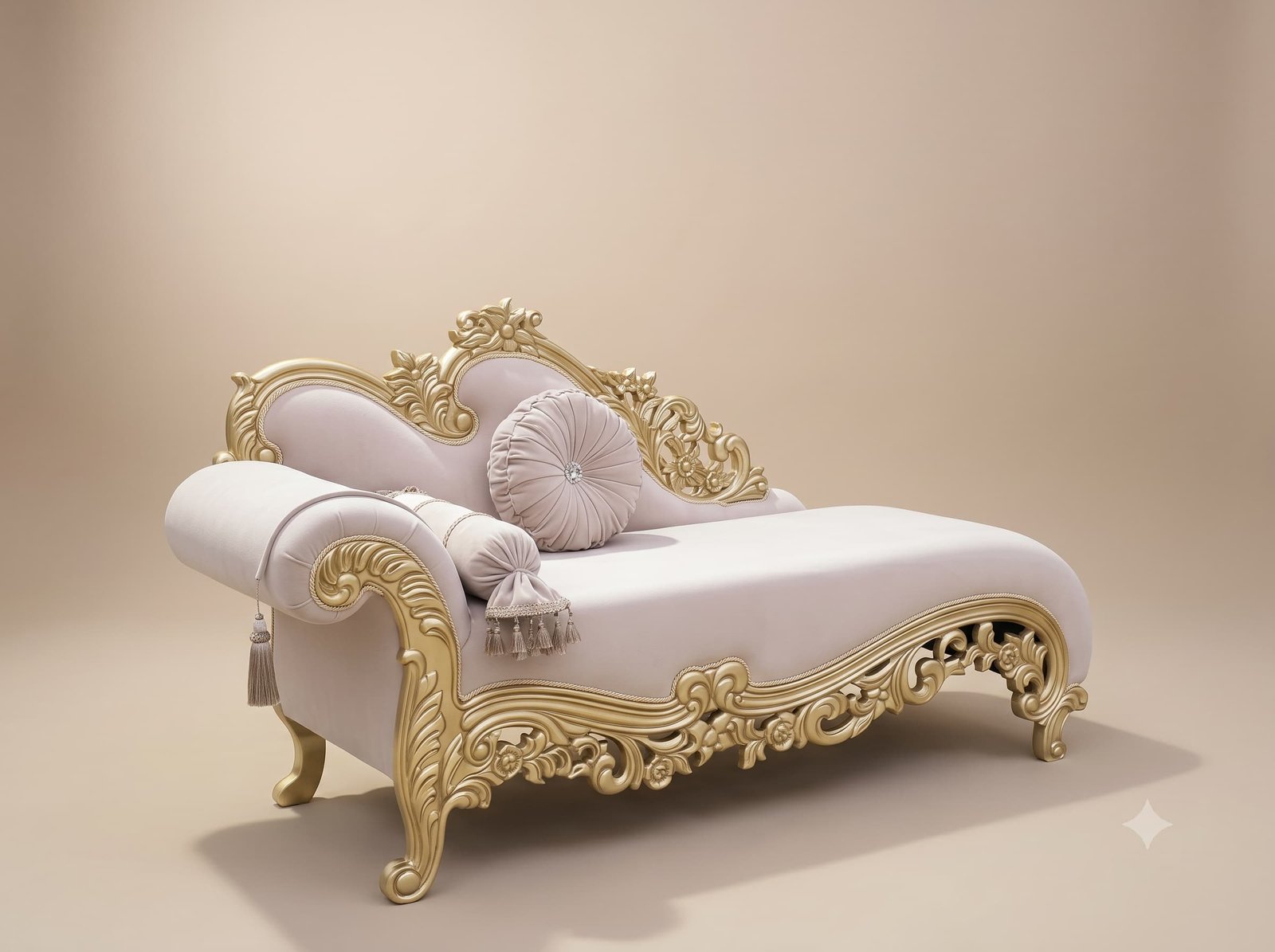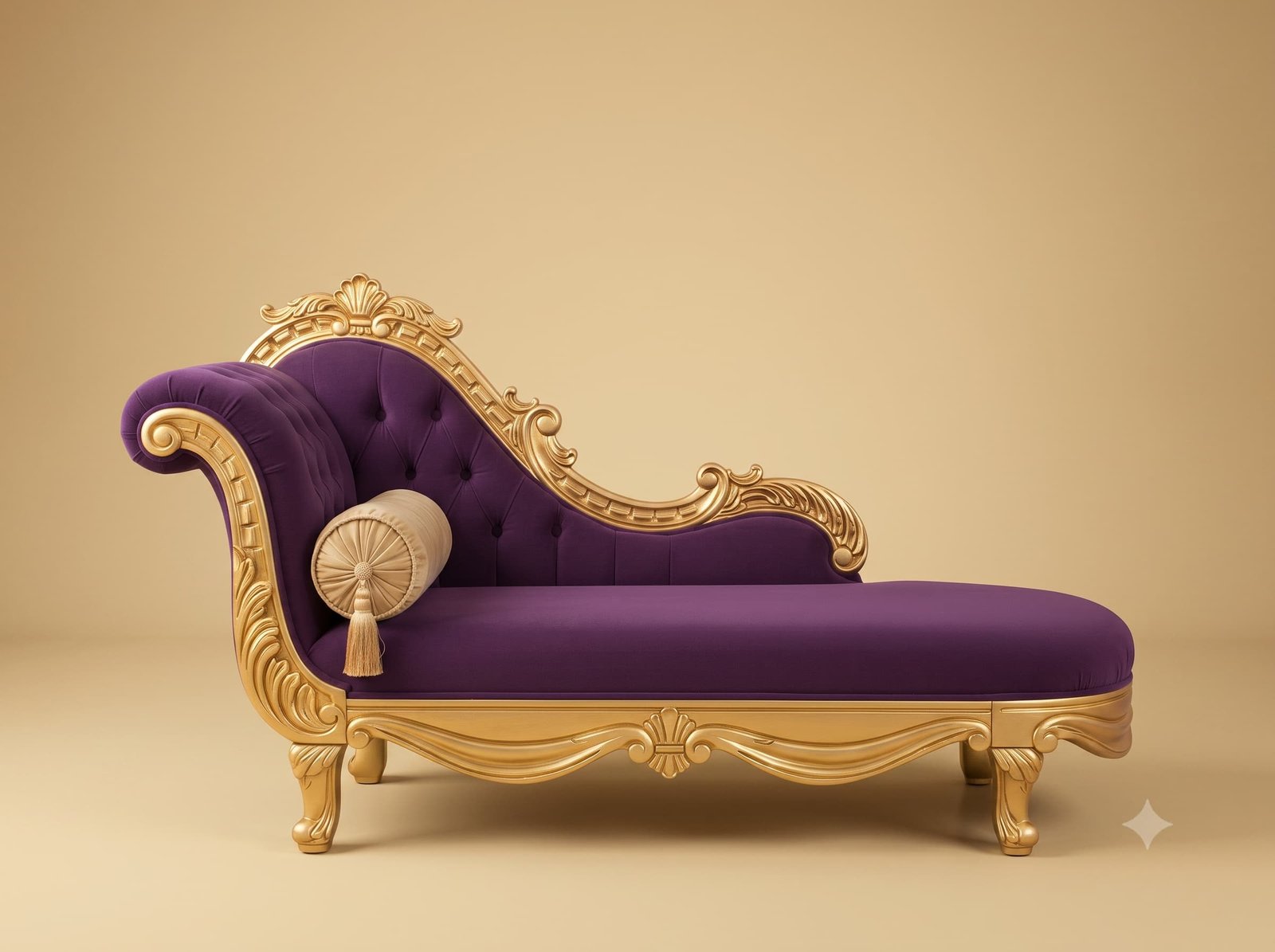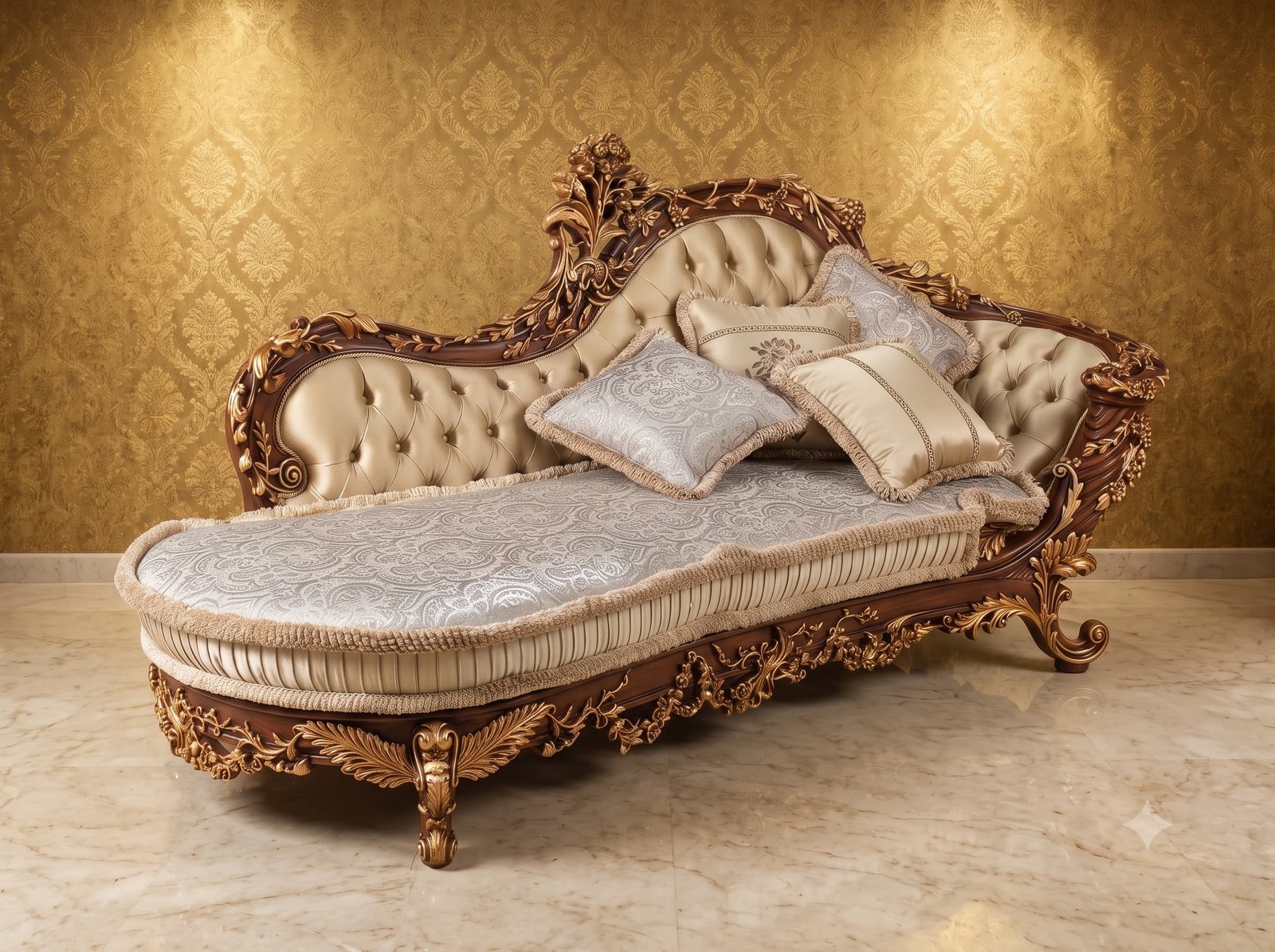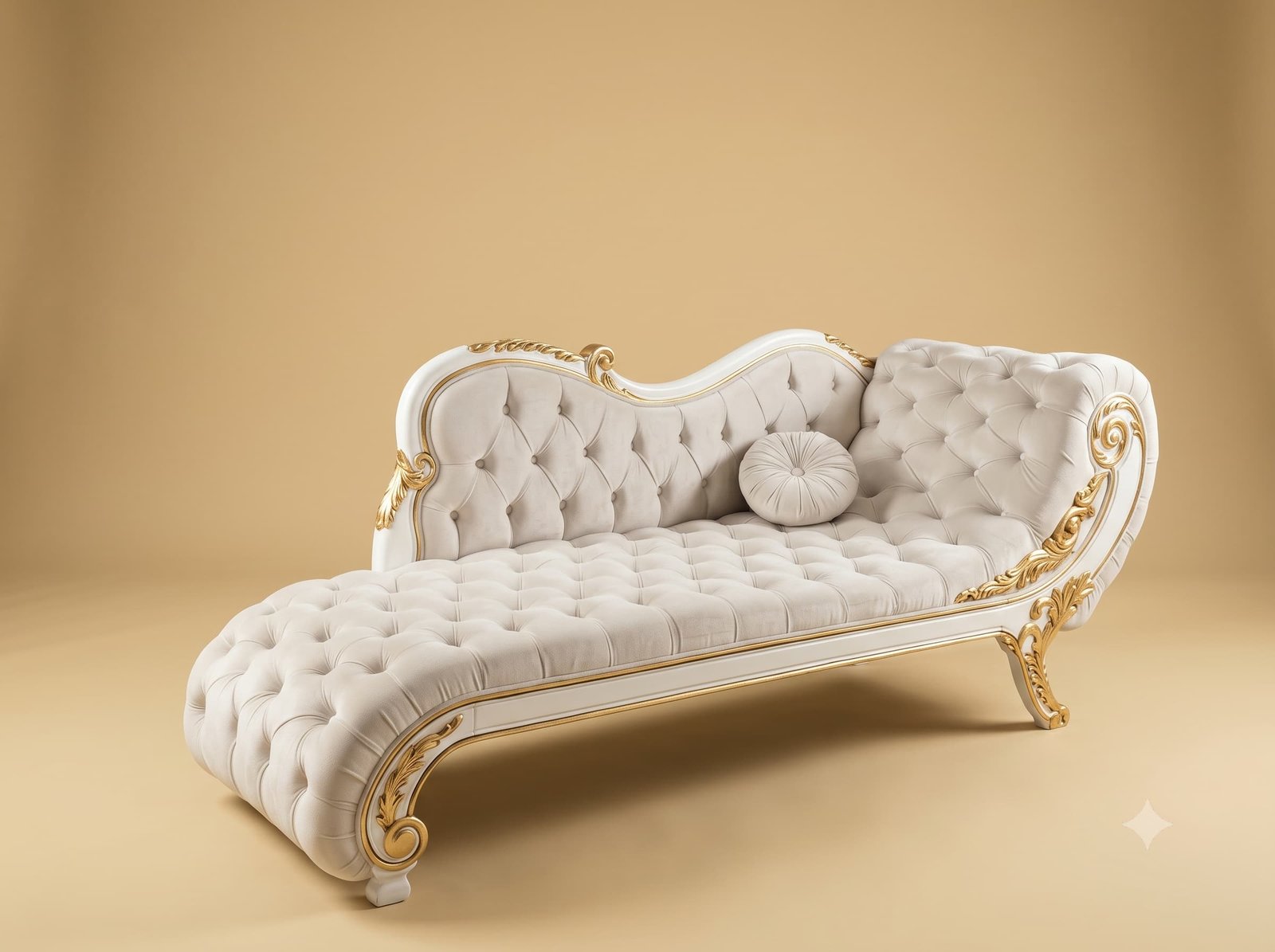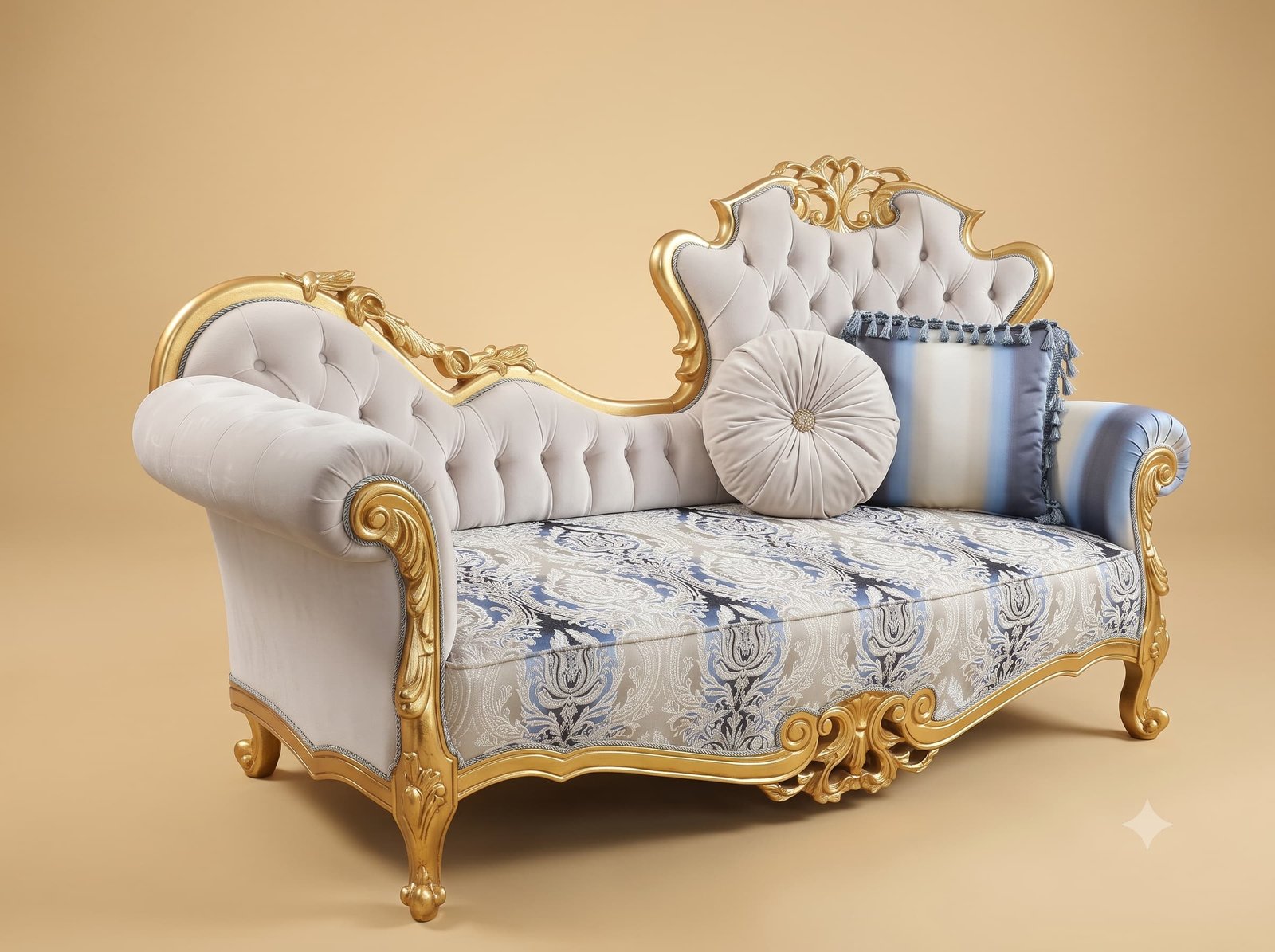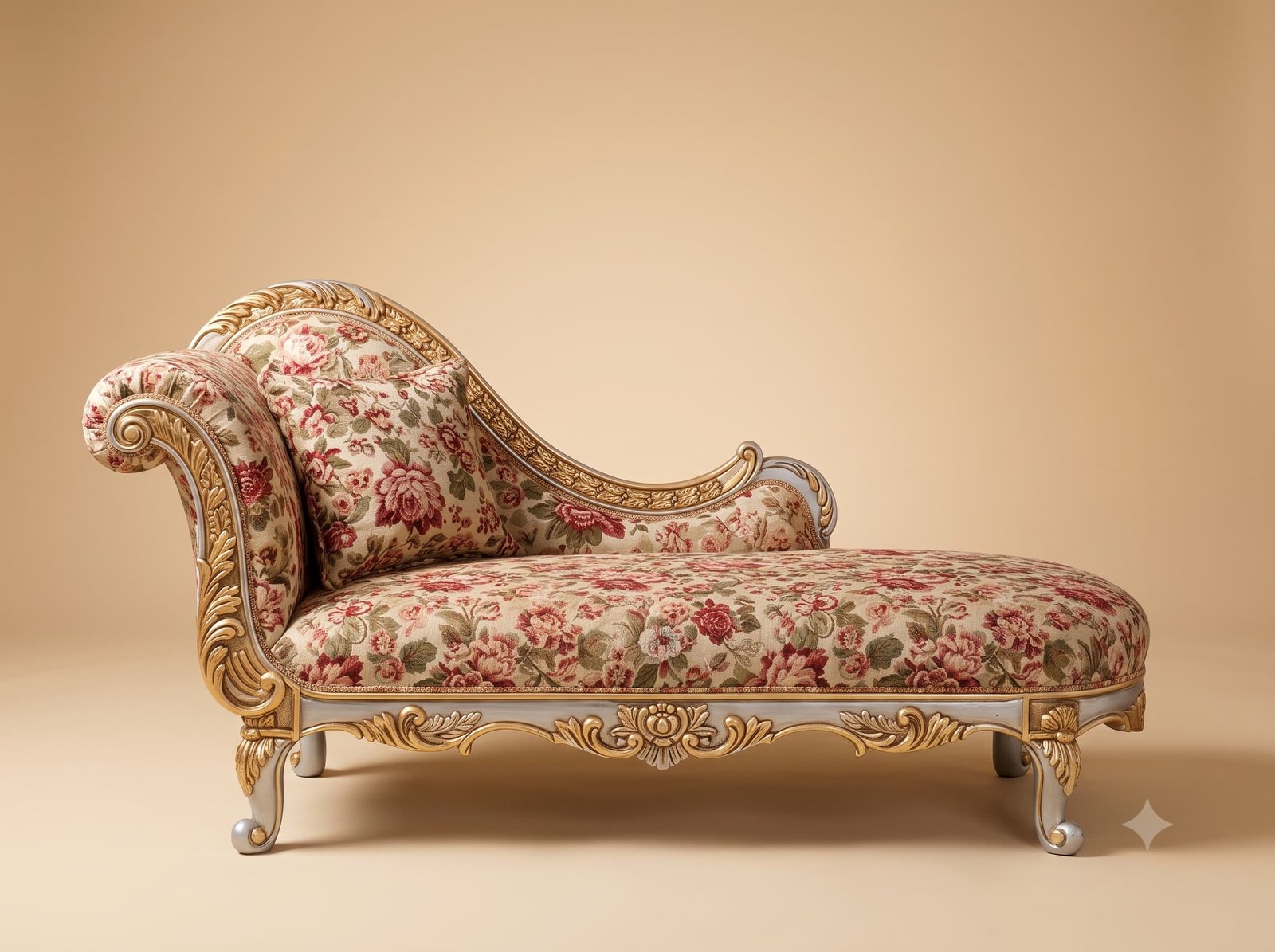
Covering a whole diwan in one large-repeat tapestry is a cutting problem before it is an upholstery problem, and it is solved on the cloth with chalk.
A tapestry like this has a repeat that may be as large as a cushion. Cut the panels economically - nesting them to waste as little cloth as possible, which is how most fabric is cut - and the pattern falls wherever it falls. One rose lands dead centre on the seat, another is cut in half at the front edge, and two identical clusters end up sitting side by side on the back. Nothing is technically wrong and the whole piece looks accidental.
So the cloth is laid out full length and the entire piece is planned on it first: seat, back, arm, outer faces and bolster all chalked in position before a single cut is made. The main motif is centred on the seat and again on the back; panels that will sit next to each other are taken from different parts of the repeat so no cluster is doubled; and cuts are placed so that no flower is severed at a visible edge.
It uses noticeably more cloth than cutting economically. It is the difference between fabric applied to furniture and fabric that looks woven for it.
 Ask Price On WhatsApp