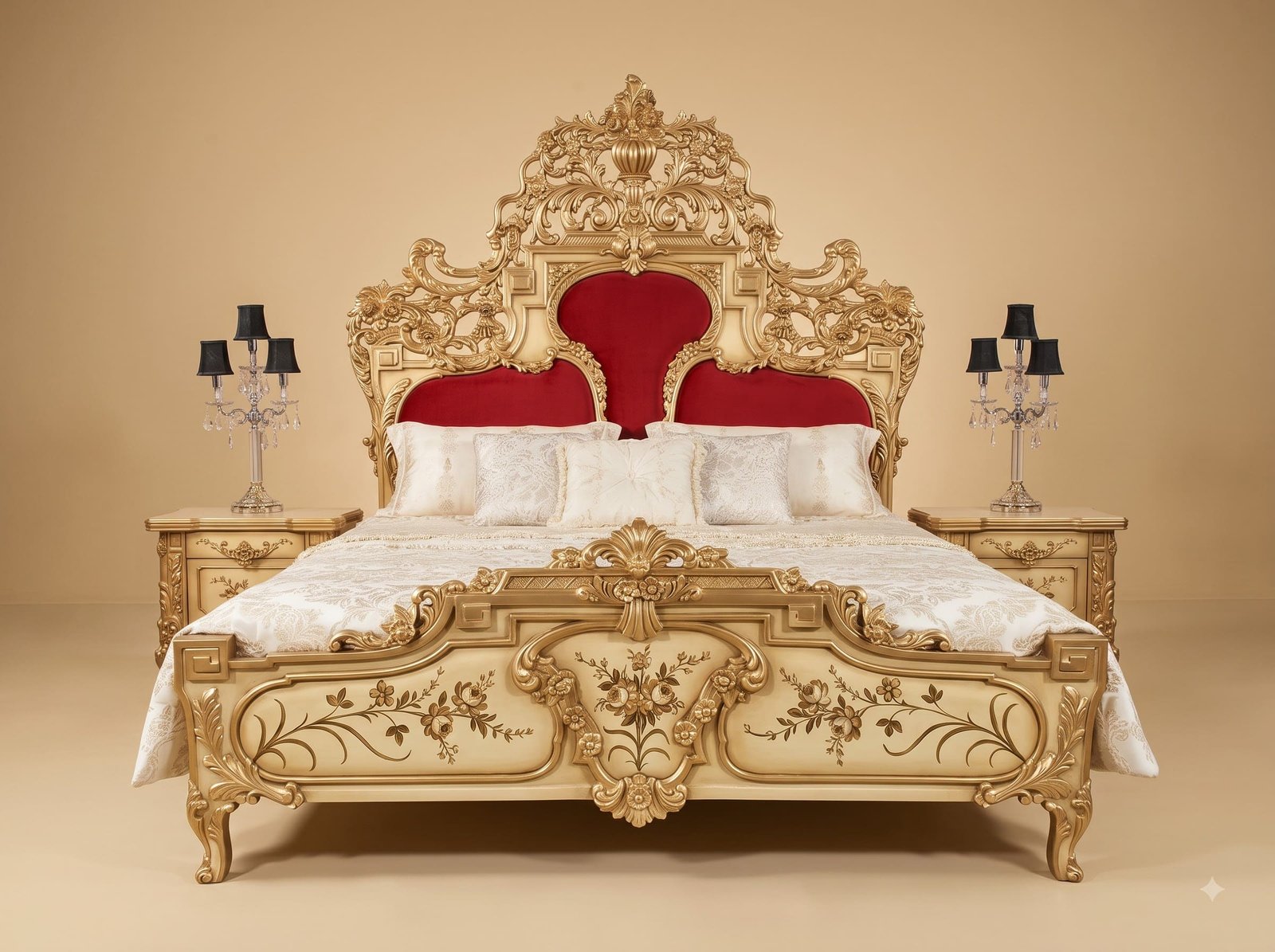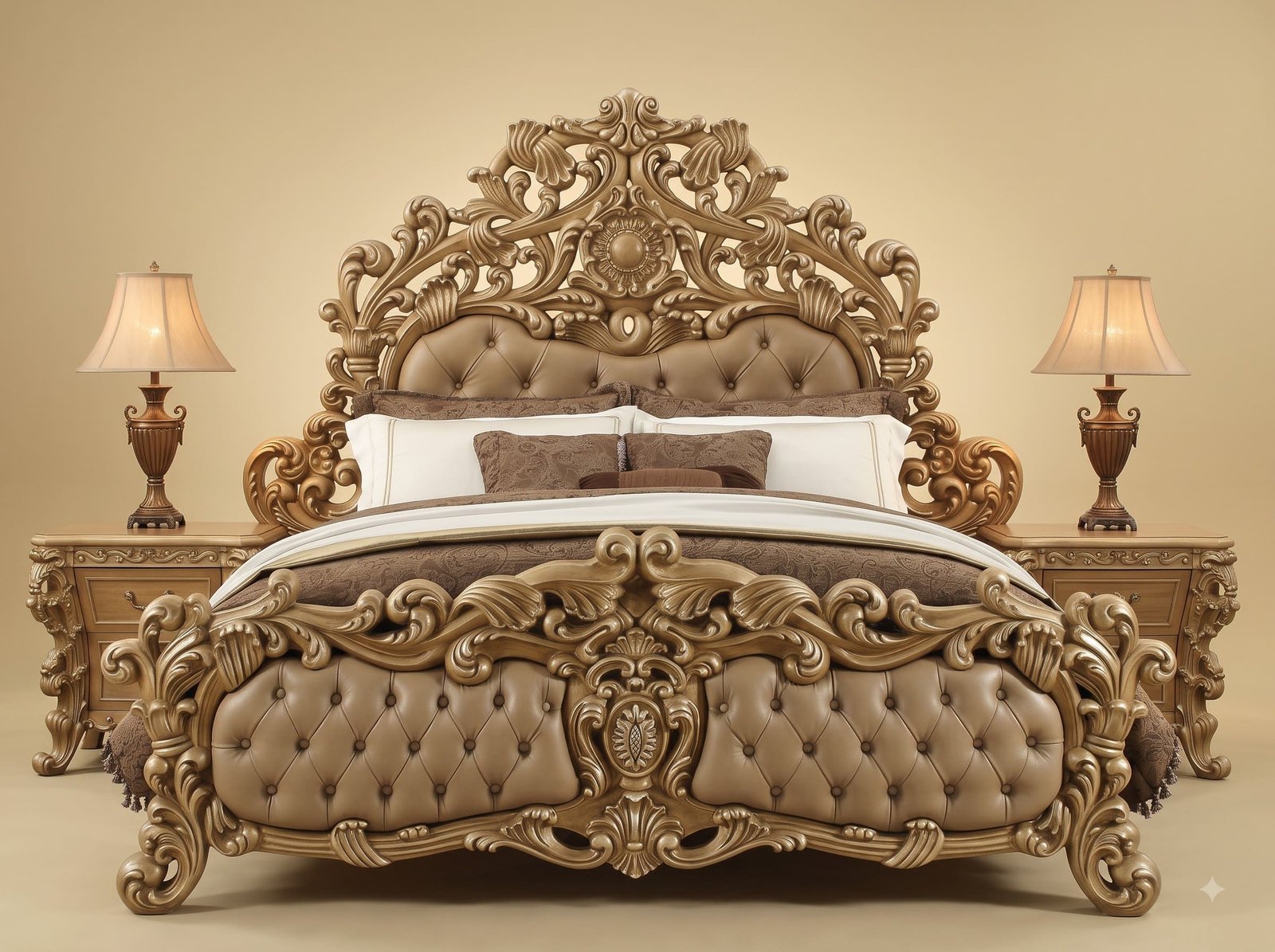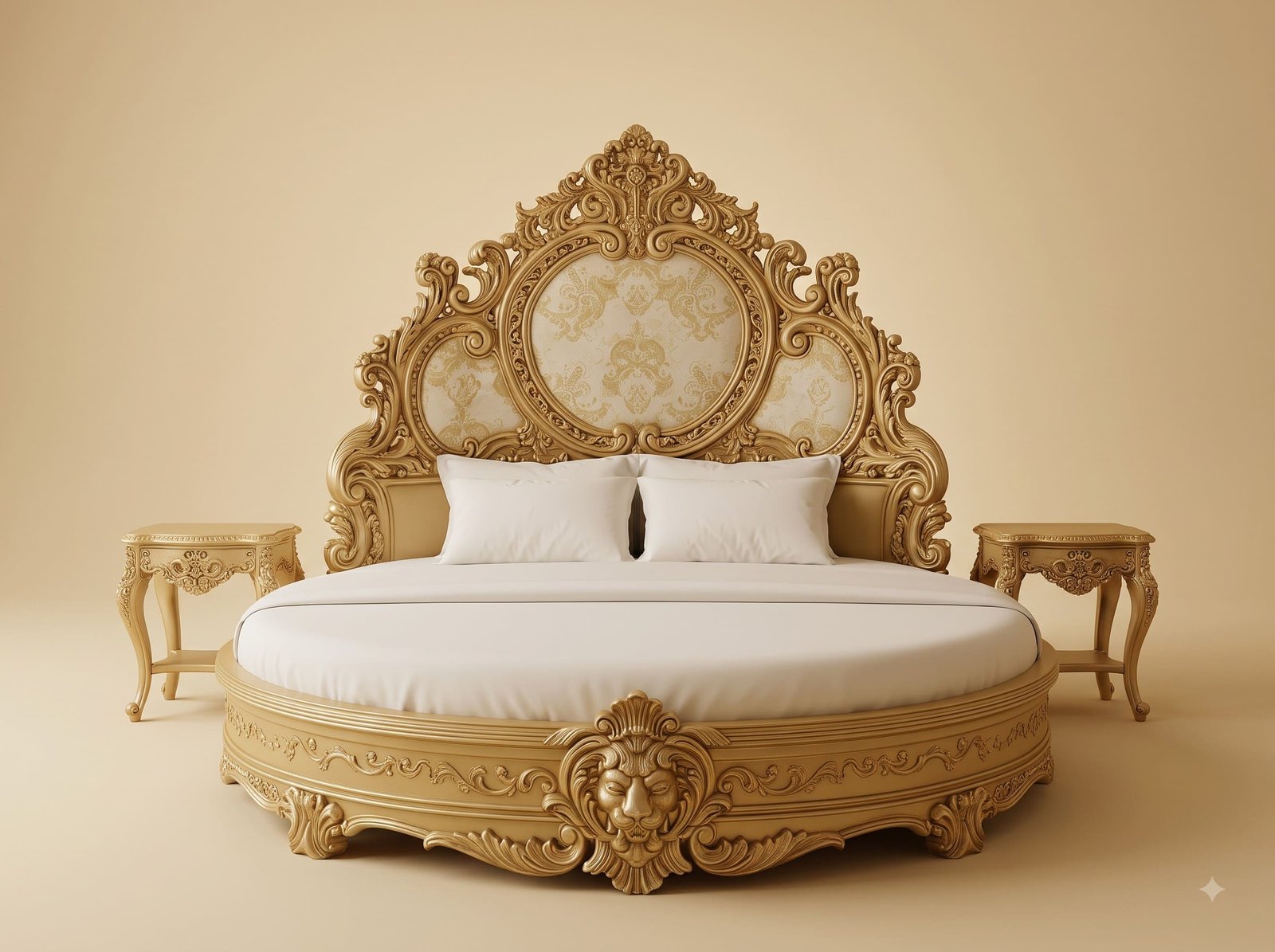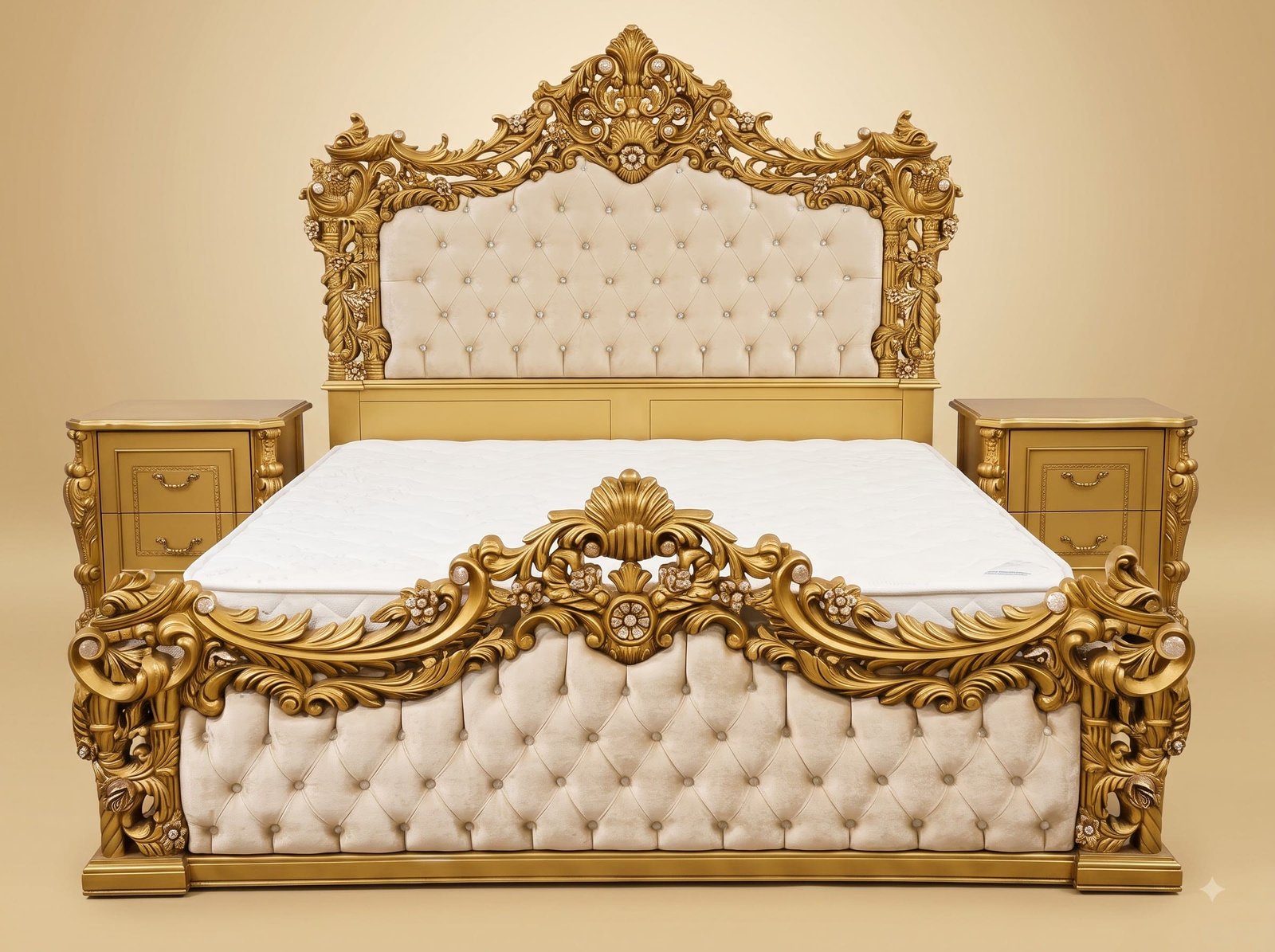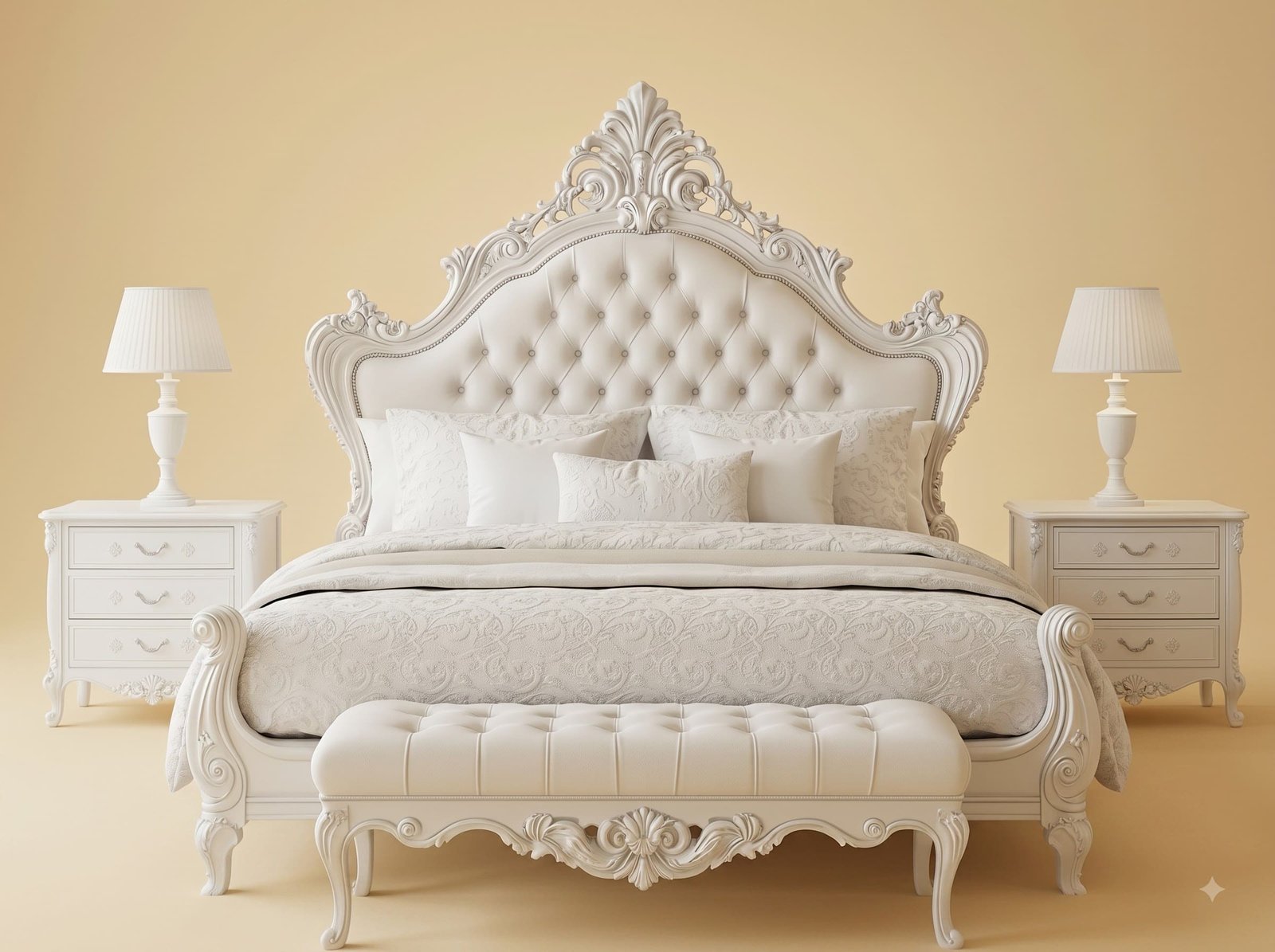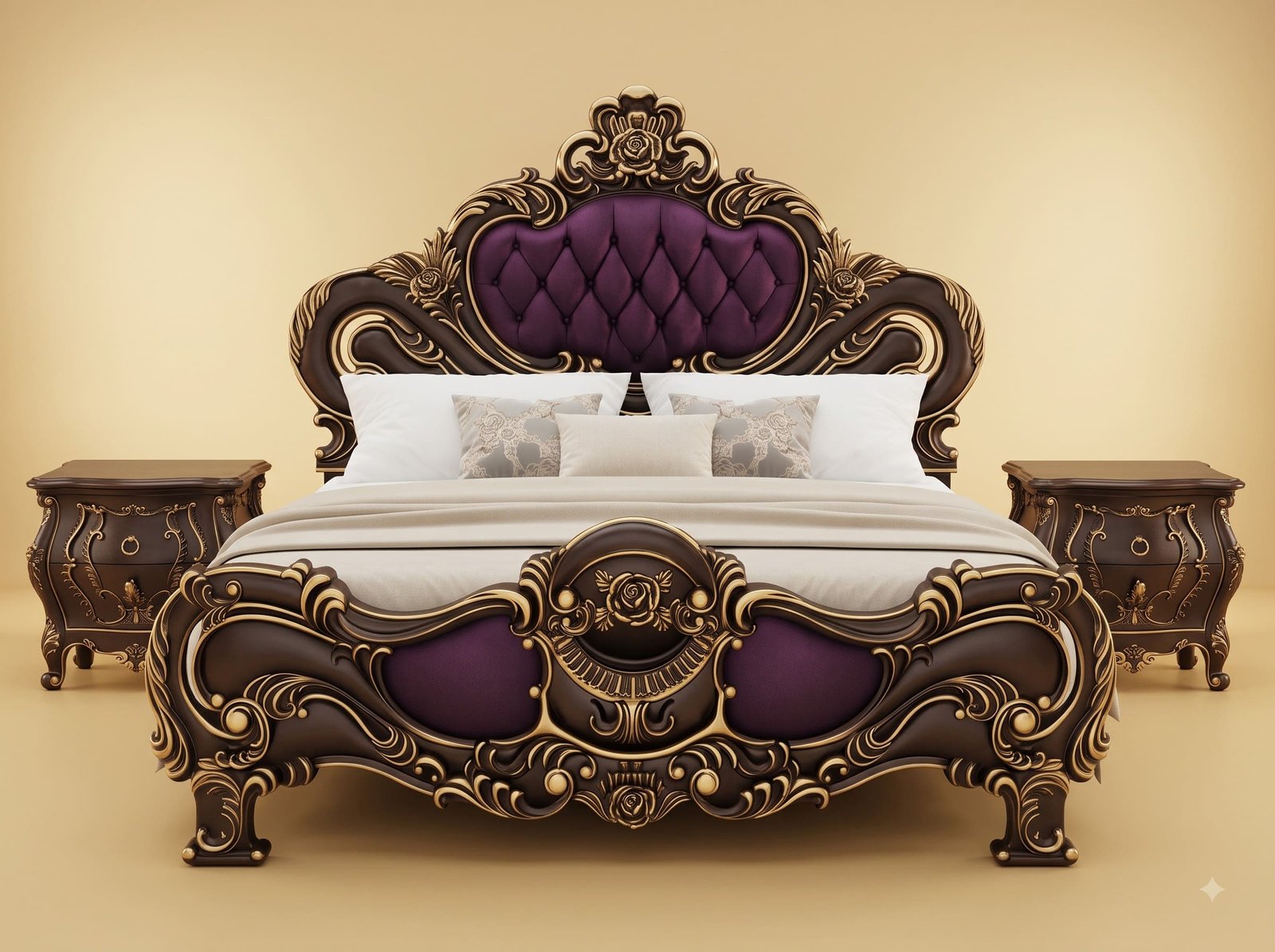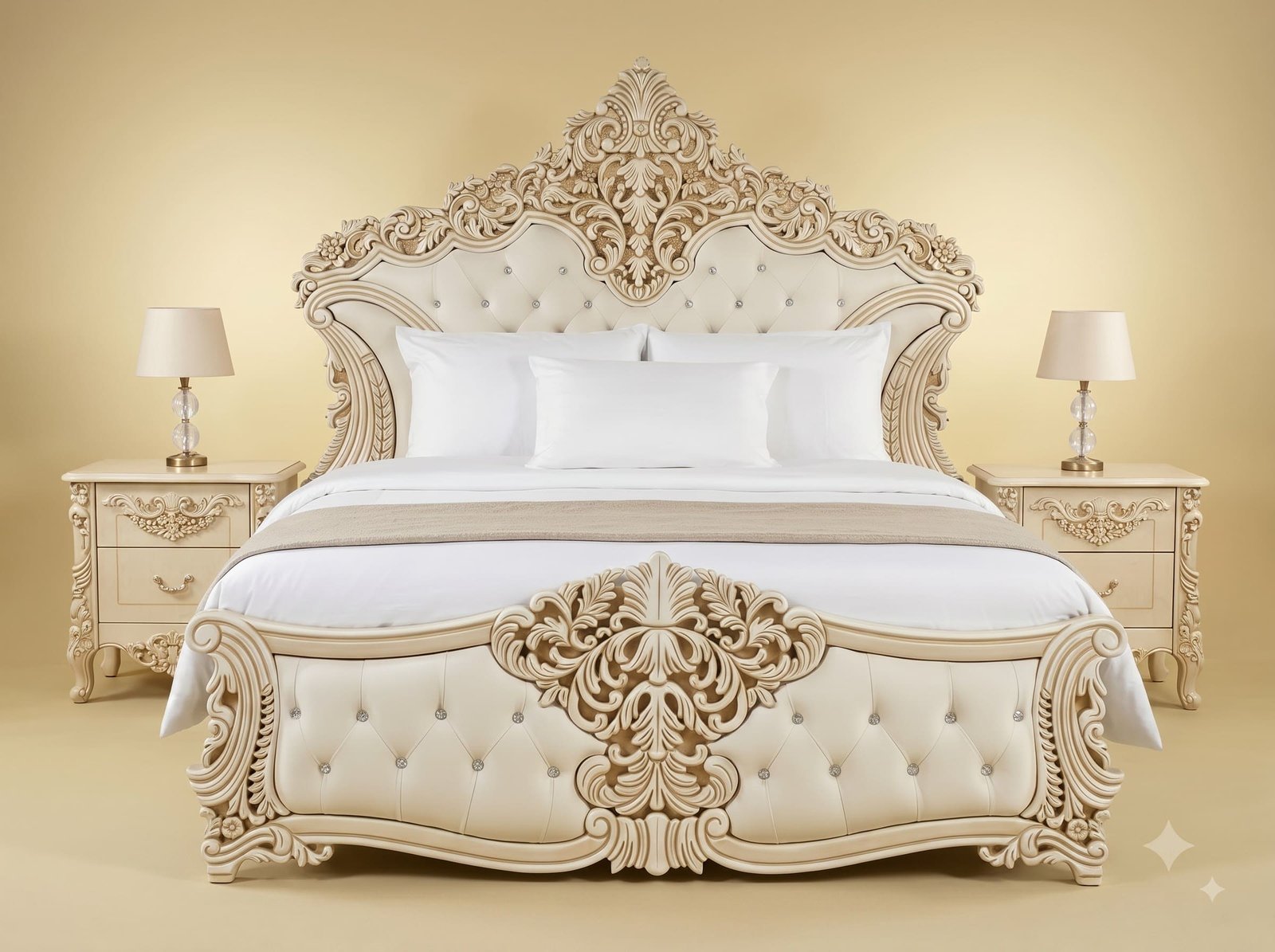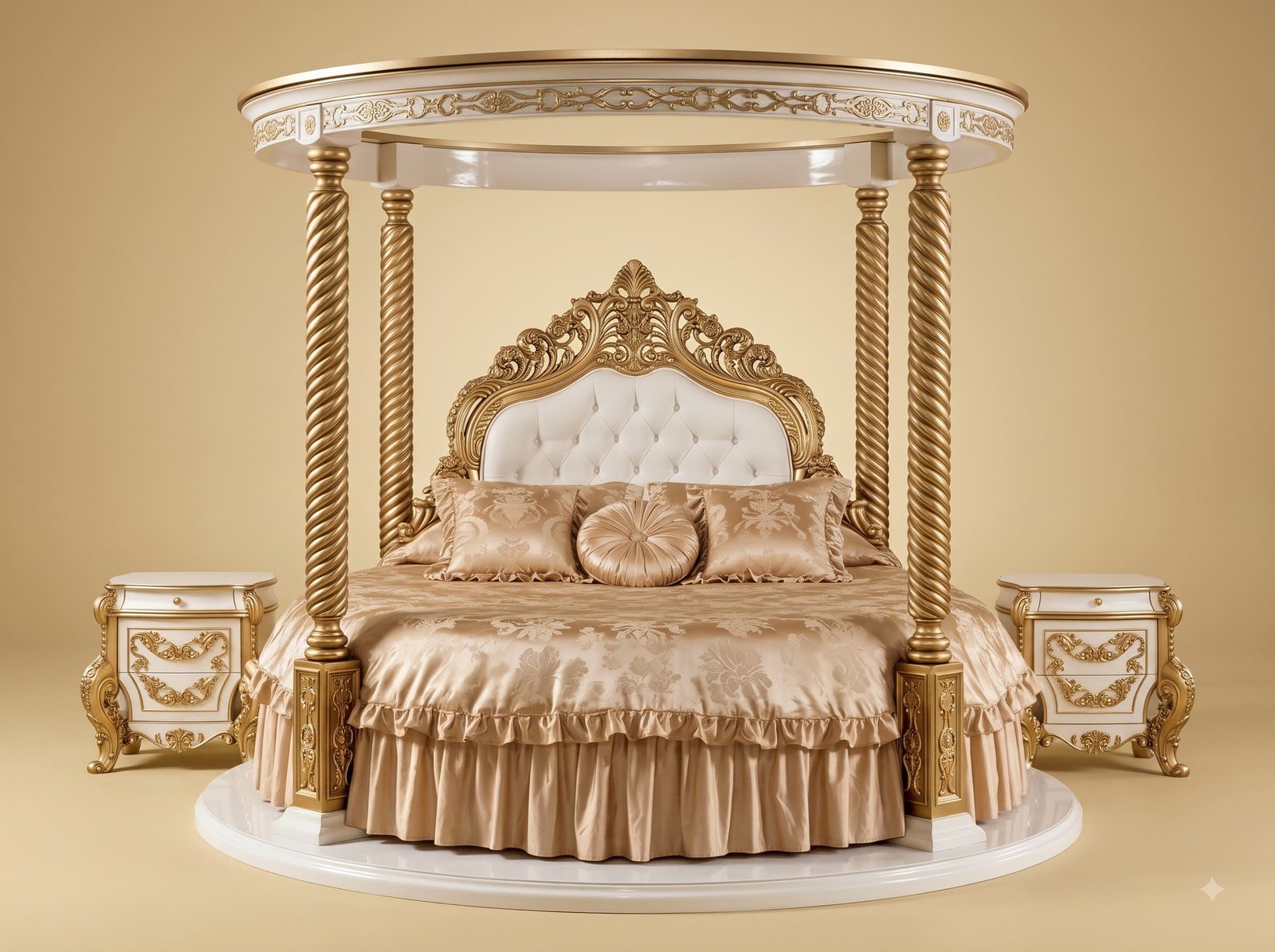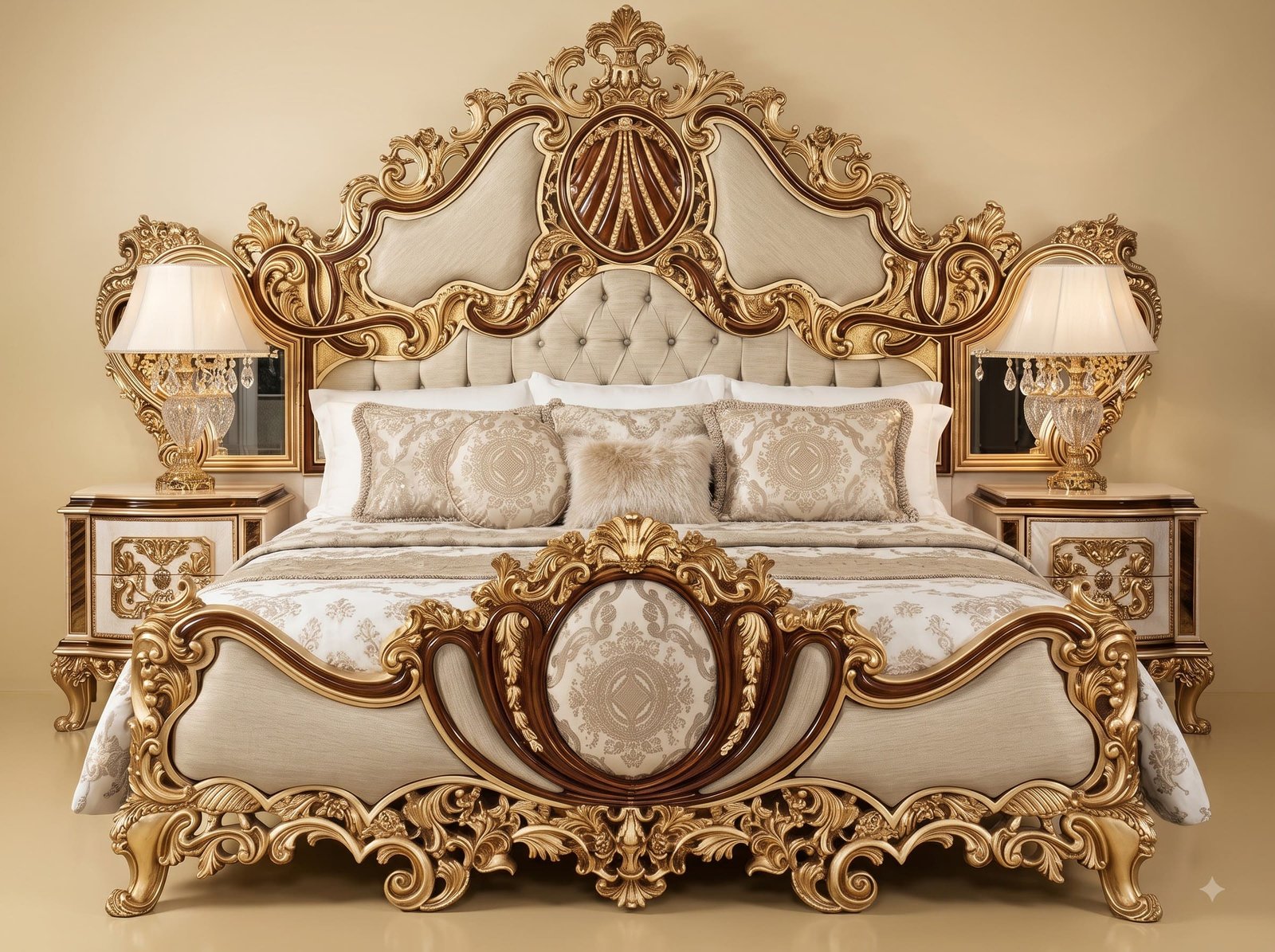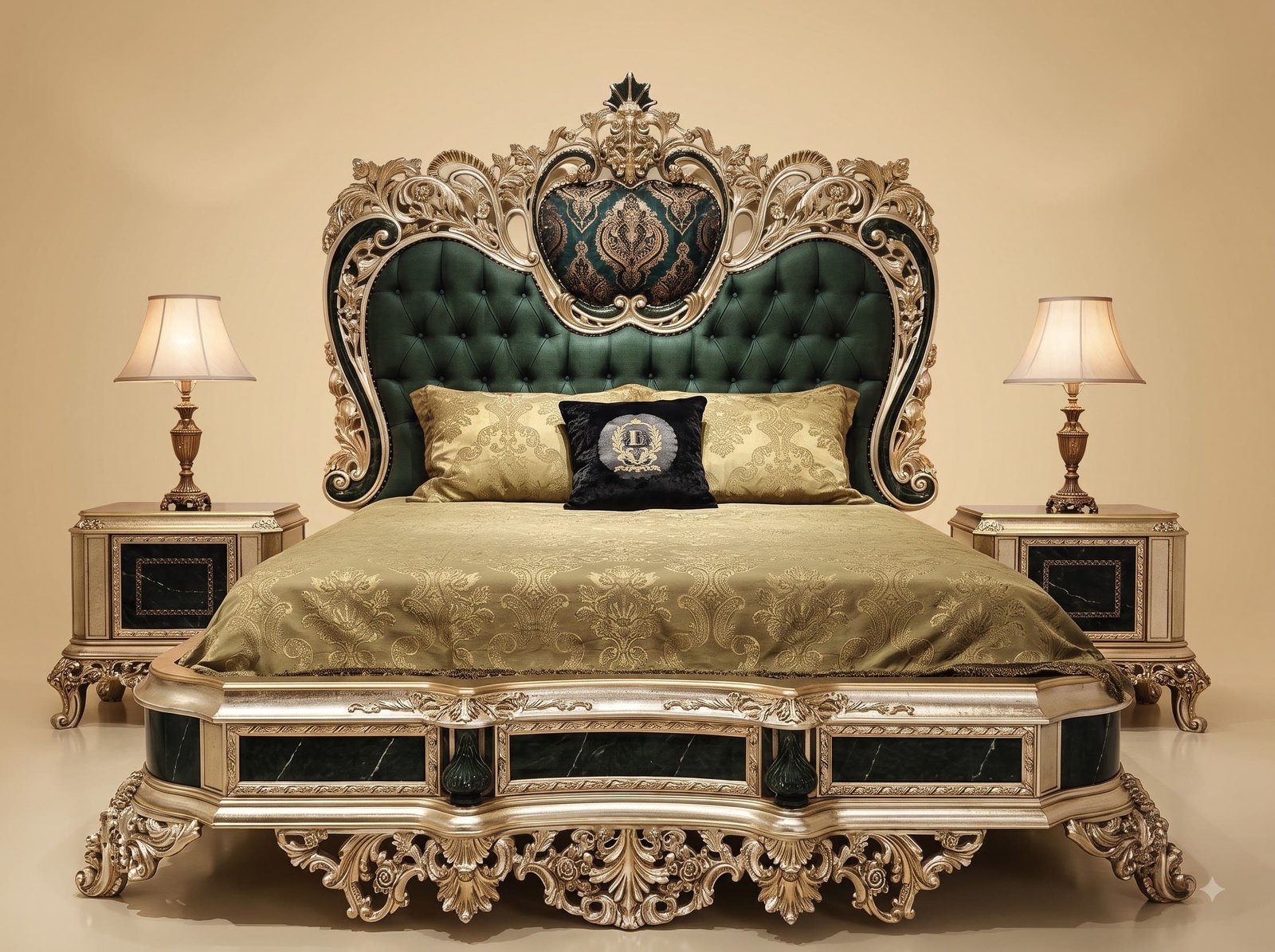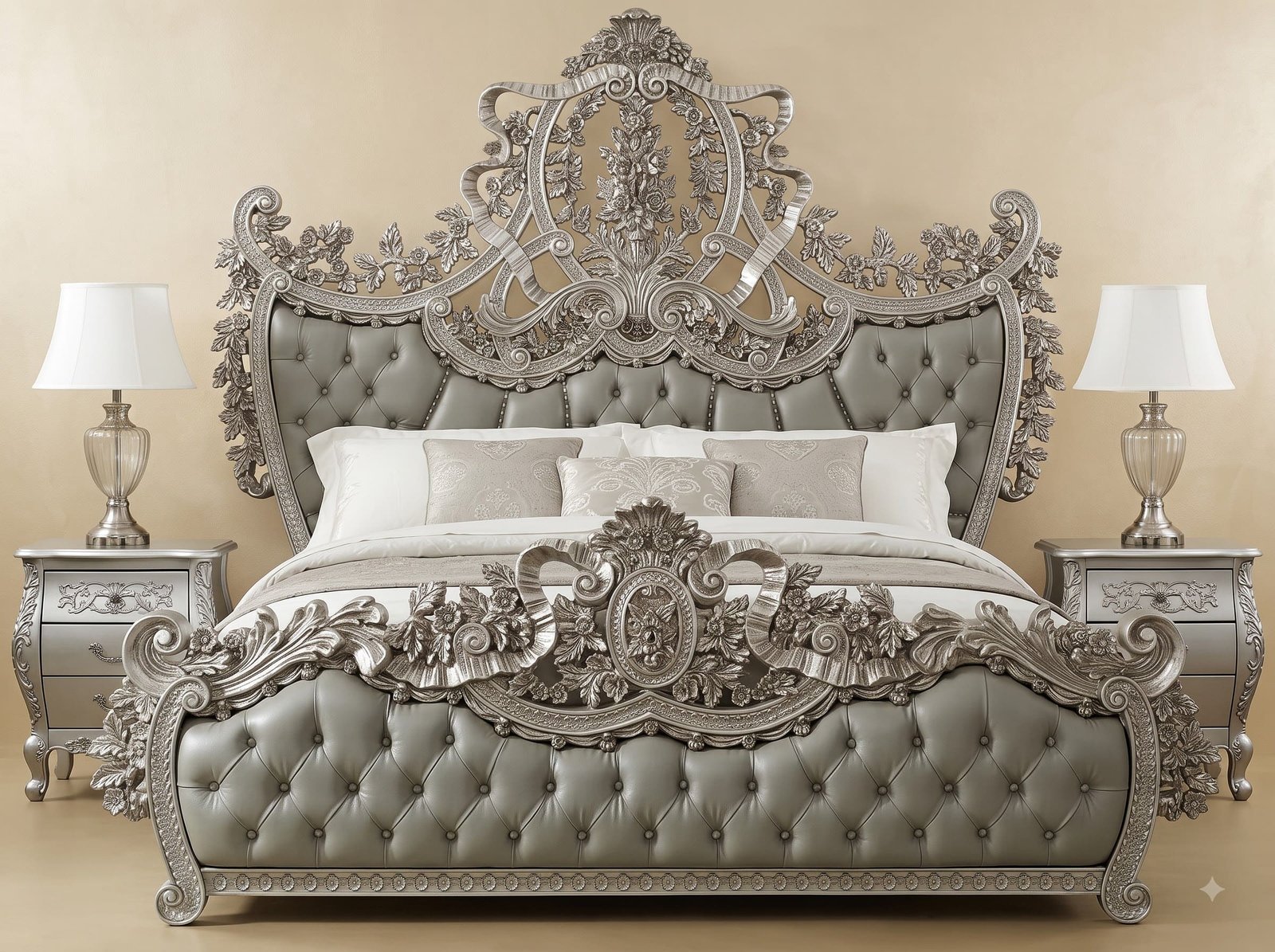
The carved ribbon is one of the great showing-off motifs in woodwork, and it earned that status honestly. A ribbon has to look like cloth - thin, flexible, twisting so you see its underside - and it is being cut from a solid block. That means undercutting behind every fold, leaving a band of wood a few millimetres thick that curves in two directions at once. Grinling Gibbons built a reputation on it in the seventeenth century, and carvers have used it as a proving piece ever since.
The flower garlands hanging from the ribbons are the same test at smaller scale. Each blossom is undercut so it stands away from the surface behind it, which is why the garland reads as hanging rather than as drawn on.
Silver leaf is the finish that shows this best. It is cooler and more reflective than gold, so it picks out the top edge of every fold and leaves the undercut hollow dark - and our master Indian artisans tone the recesses slightly to push that contrast further, because a ribbon you cannot read as a ribbon is just a band of metal.
 Ask Price On WhatsApp