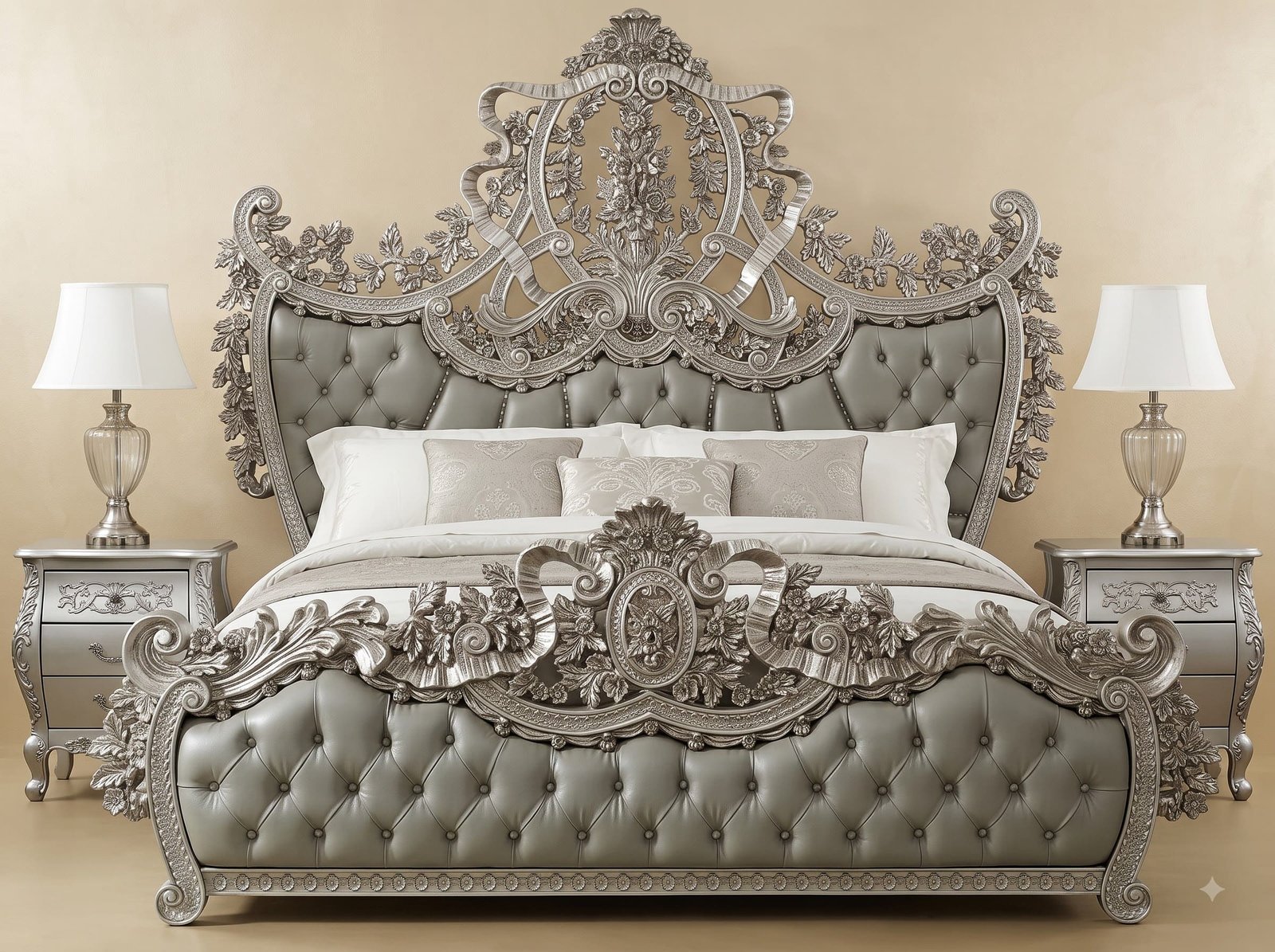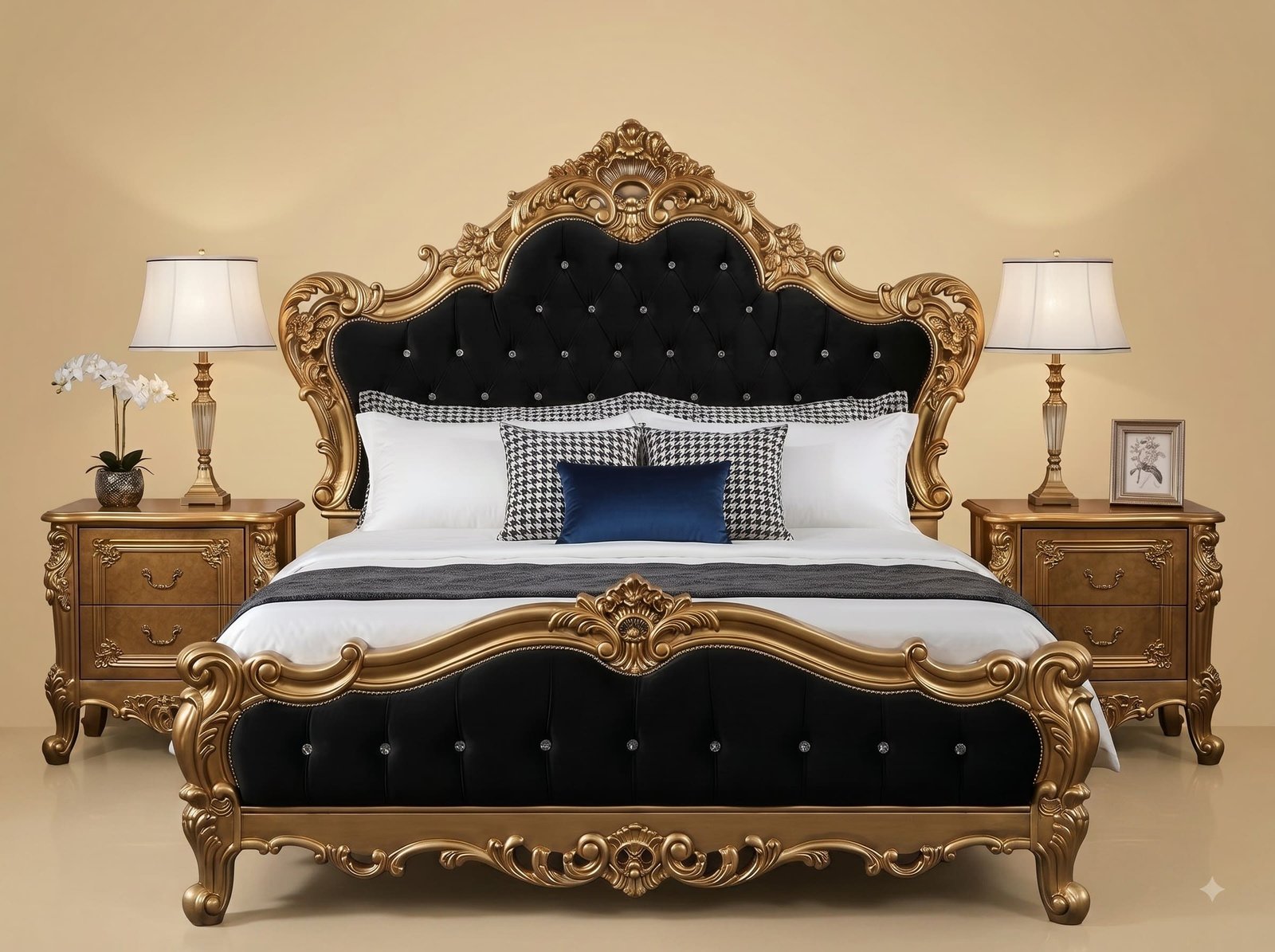
A Carving That Has to Work Without Gold
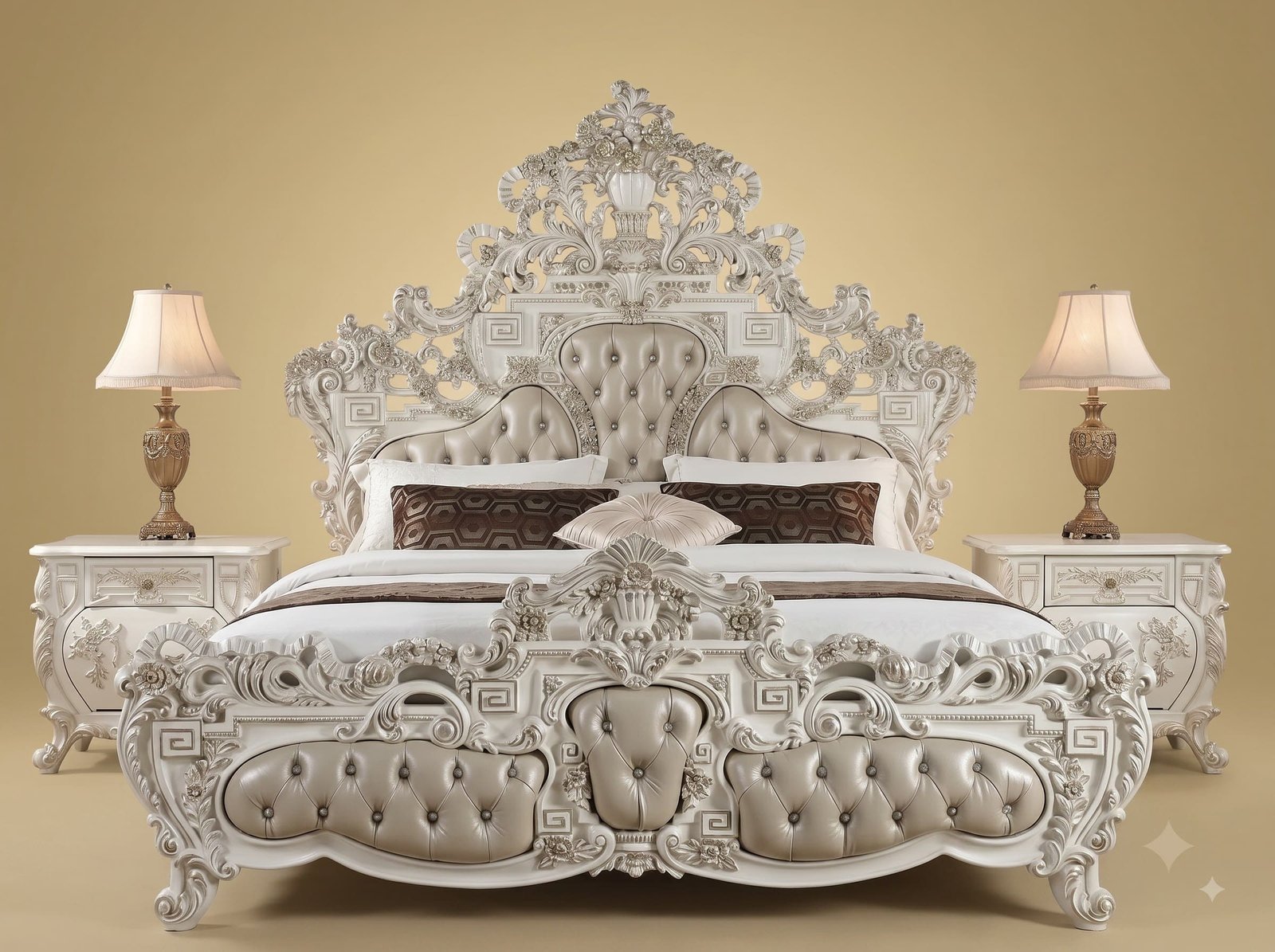
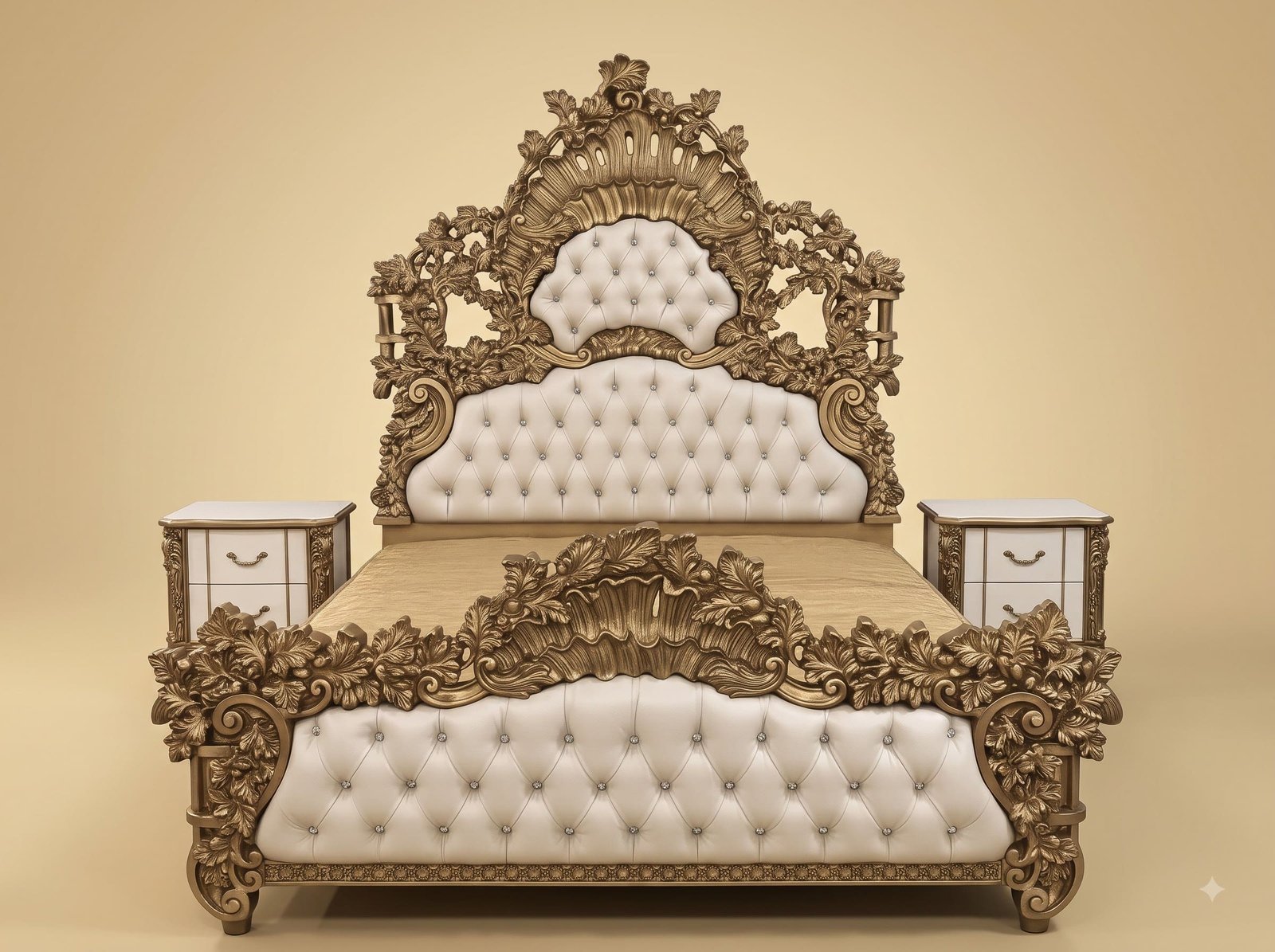
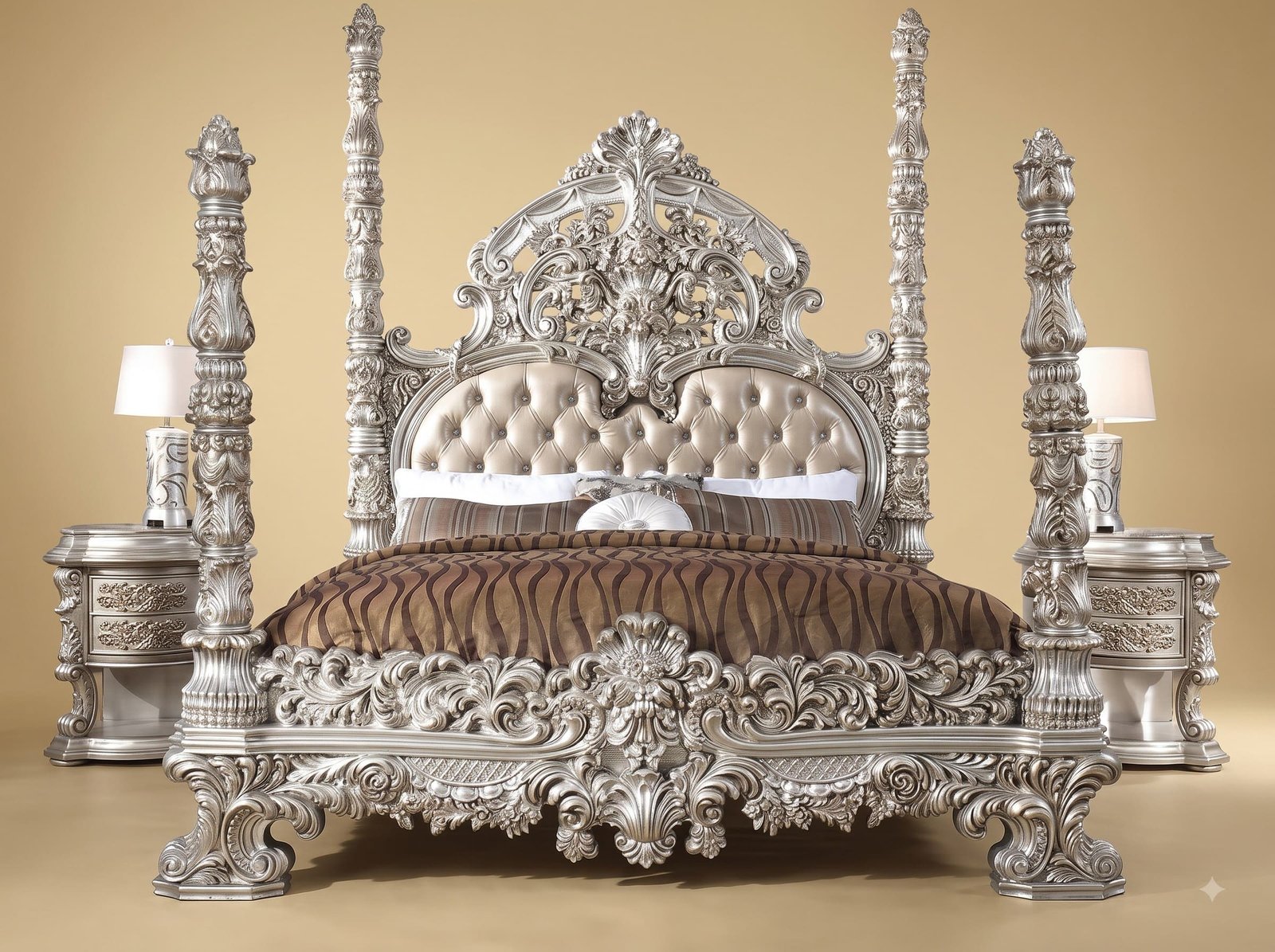
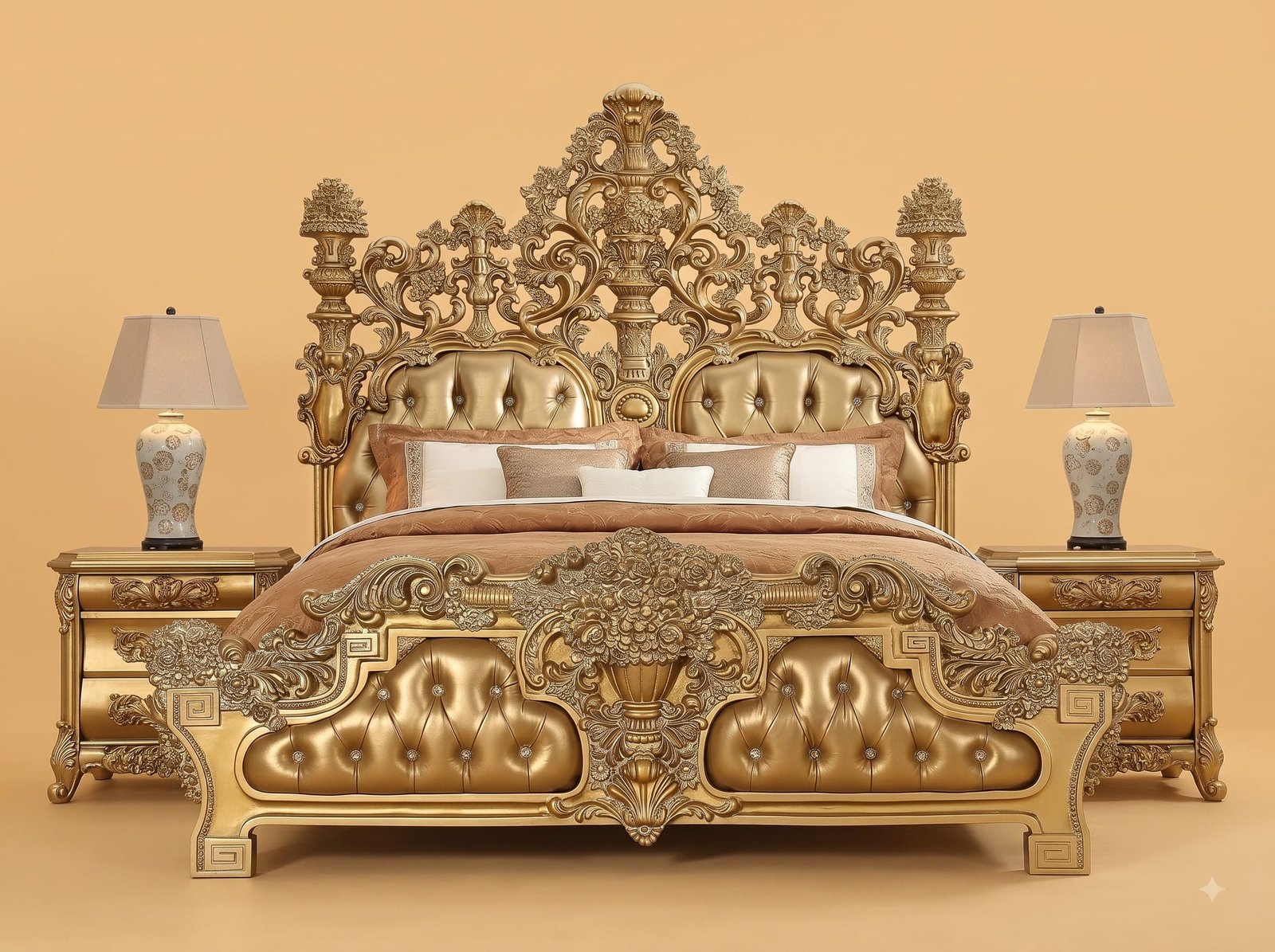
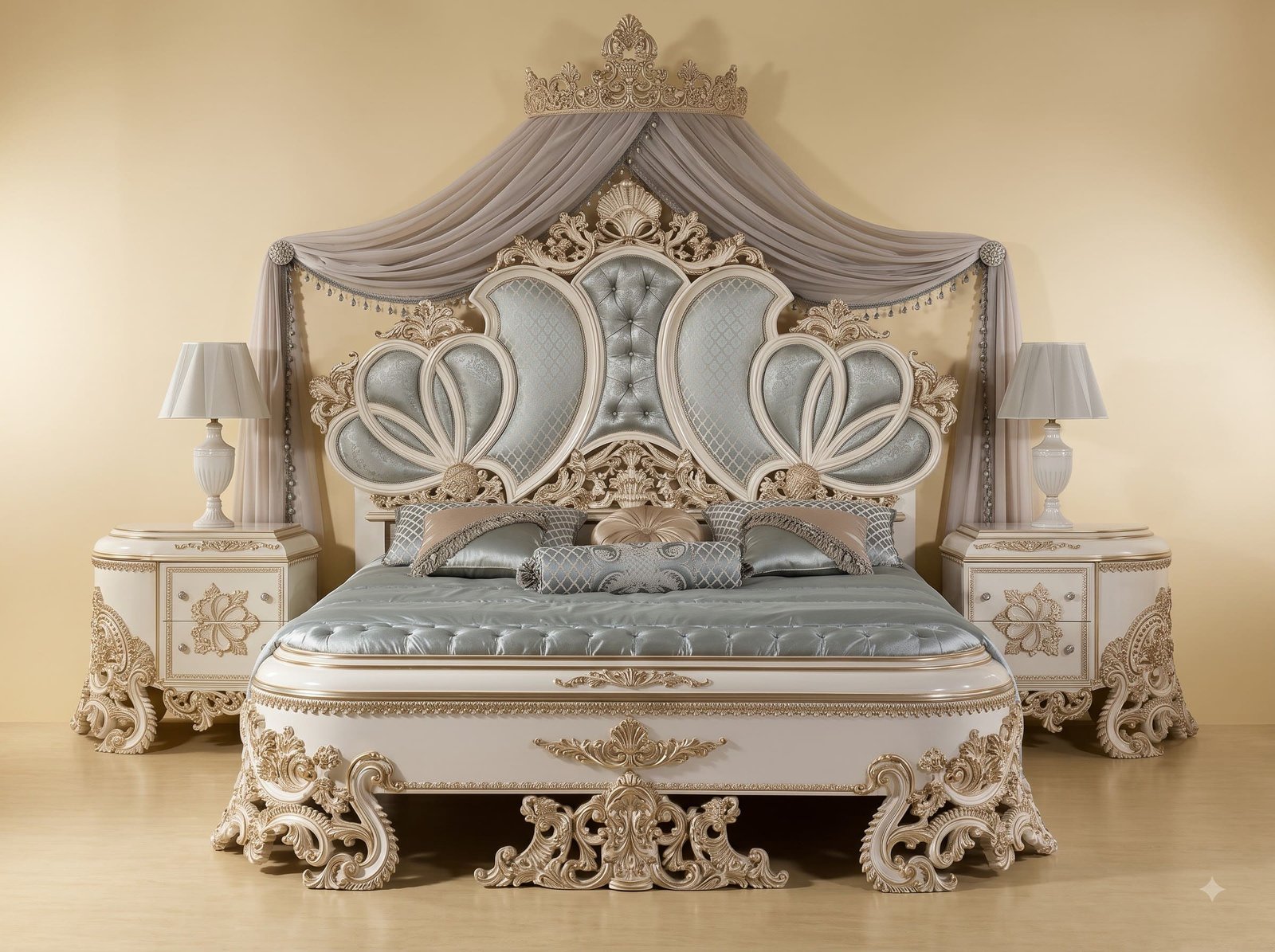
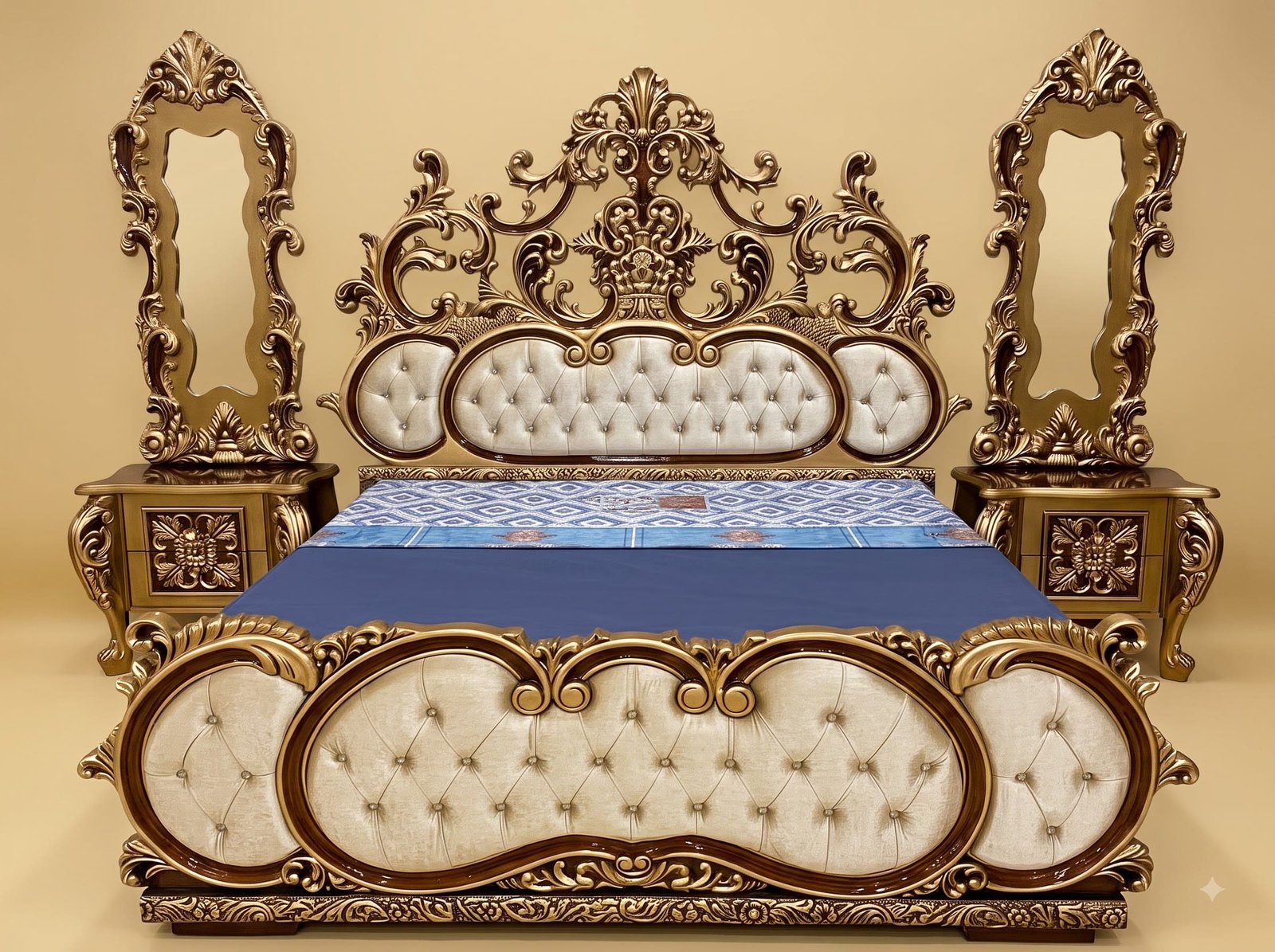
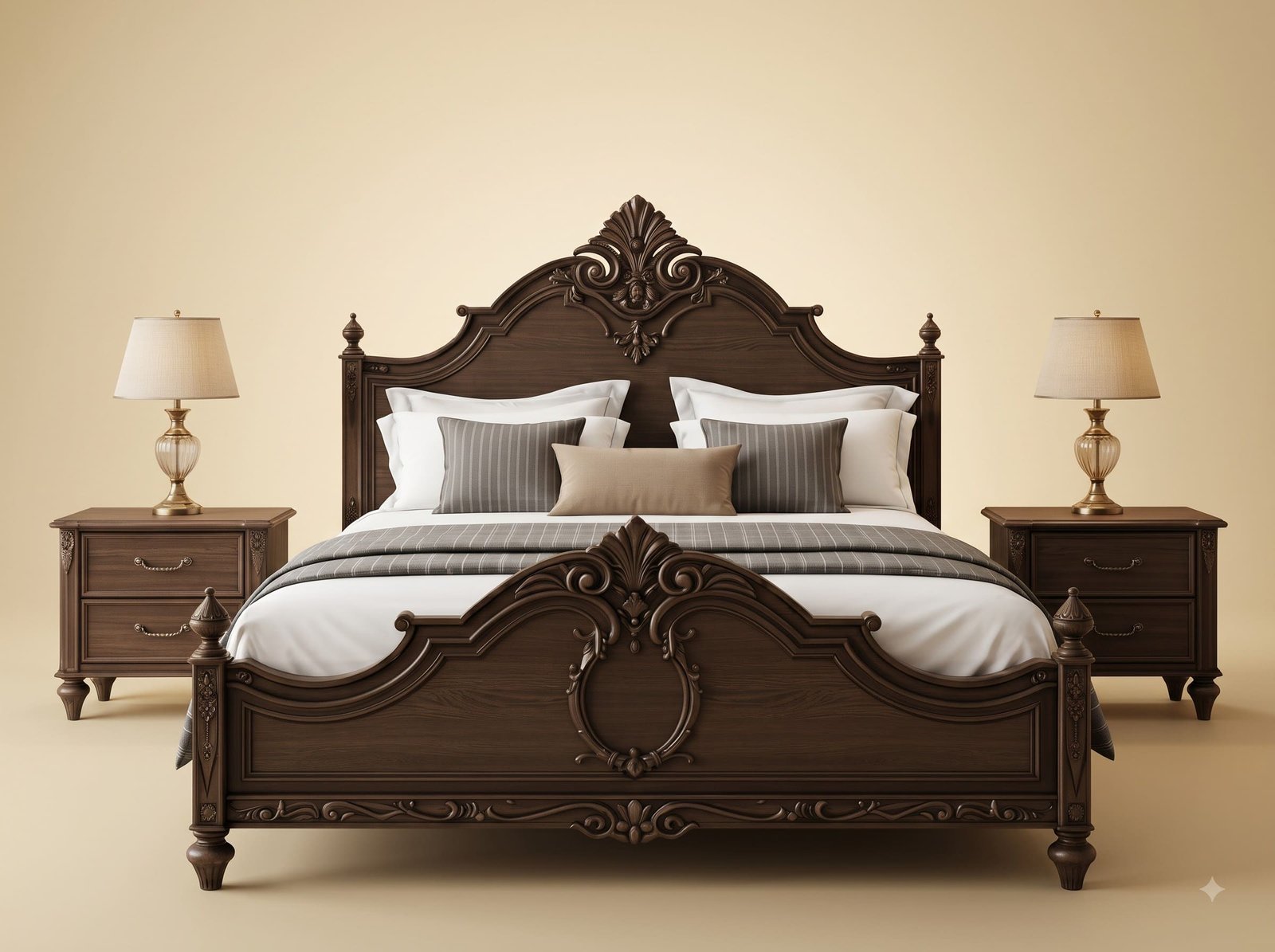
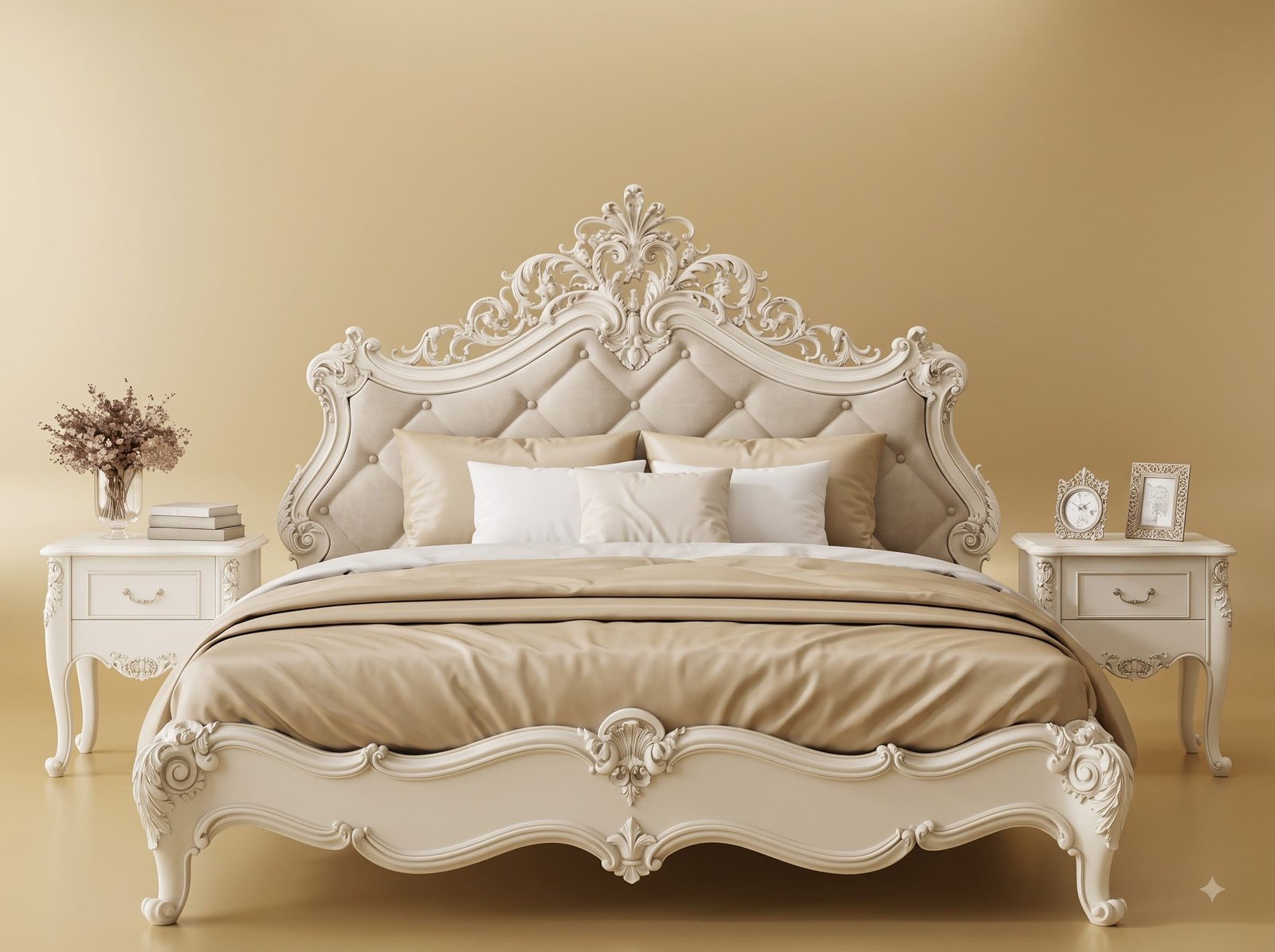
Adding gold highlighting to carved furniture is partly decorative and partly a rescue. Metallic edging picks out relief that would otherwise flatten under paint, which means shallow or approximate carving can still look impressive once it is gilded. Take the gold away and there is nowhere to hide. That is the discipline behind this bed: finished in a single antique white, its crest, its scrolls and its footboard shell only read because they are cut deep, undercut at the edges and pierced through where the design calls for open space. If the carver were working quickly, you would see it immediately.
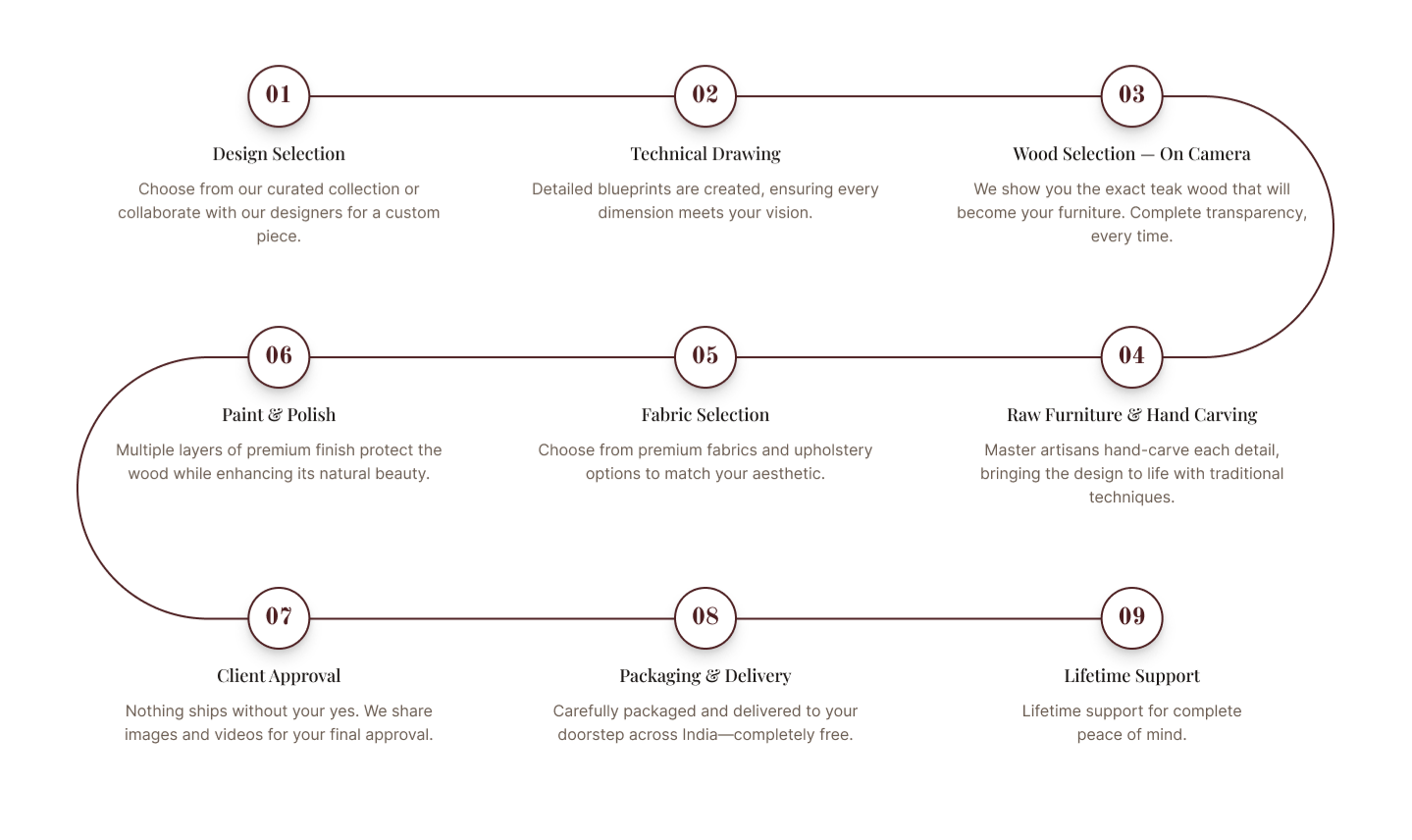
The openwork crown is the slowest part of the build. Each void has to be cut through solid teak by hand without splitting the narrow bridges of wood that remain, and a single mistake means starting the component again. Once carved, the surface is sealed, primed and hand-finished in antique white with a soft aged tone worked into the recesses so the piece does not look freshly painted. Master Indian artisans do all of it by hand, which is why no two crests are identical, and why the photographs here are of the real piece rather than a rendering.
 Ask Price On WhatsApp