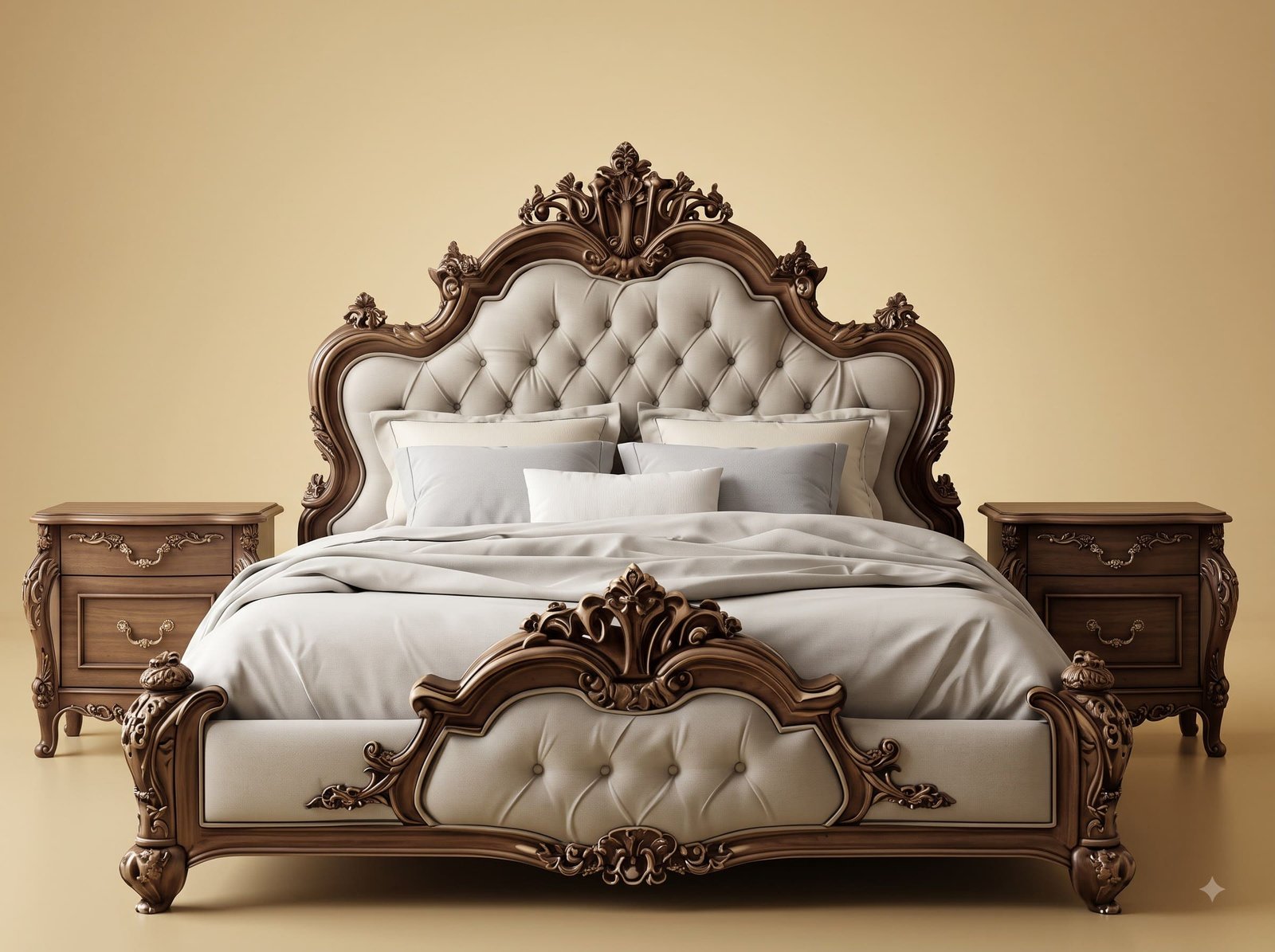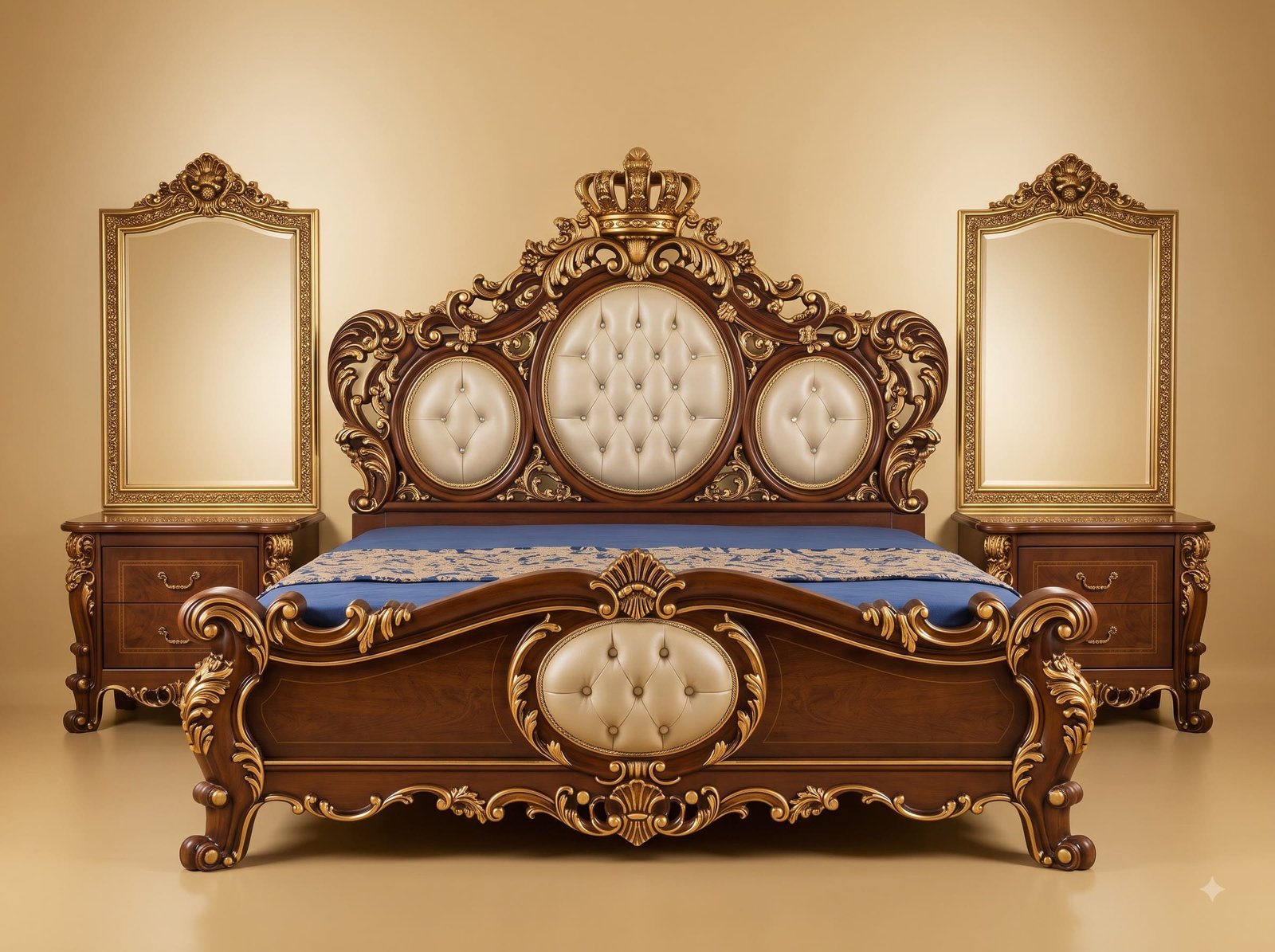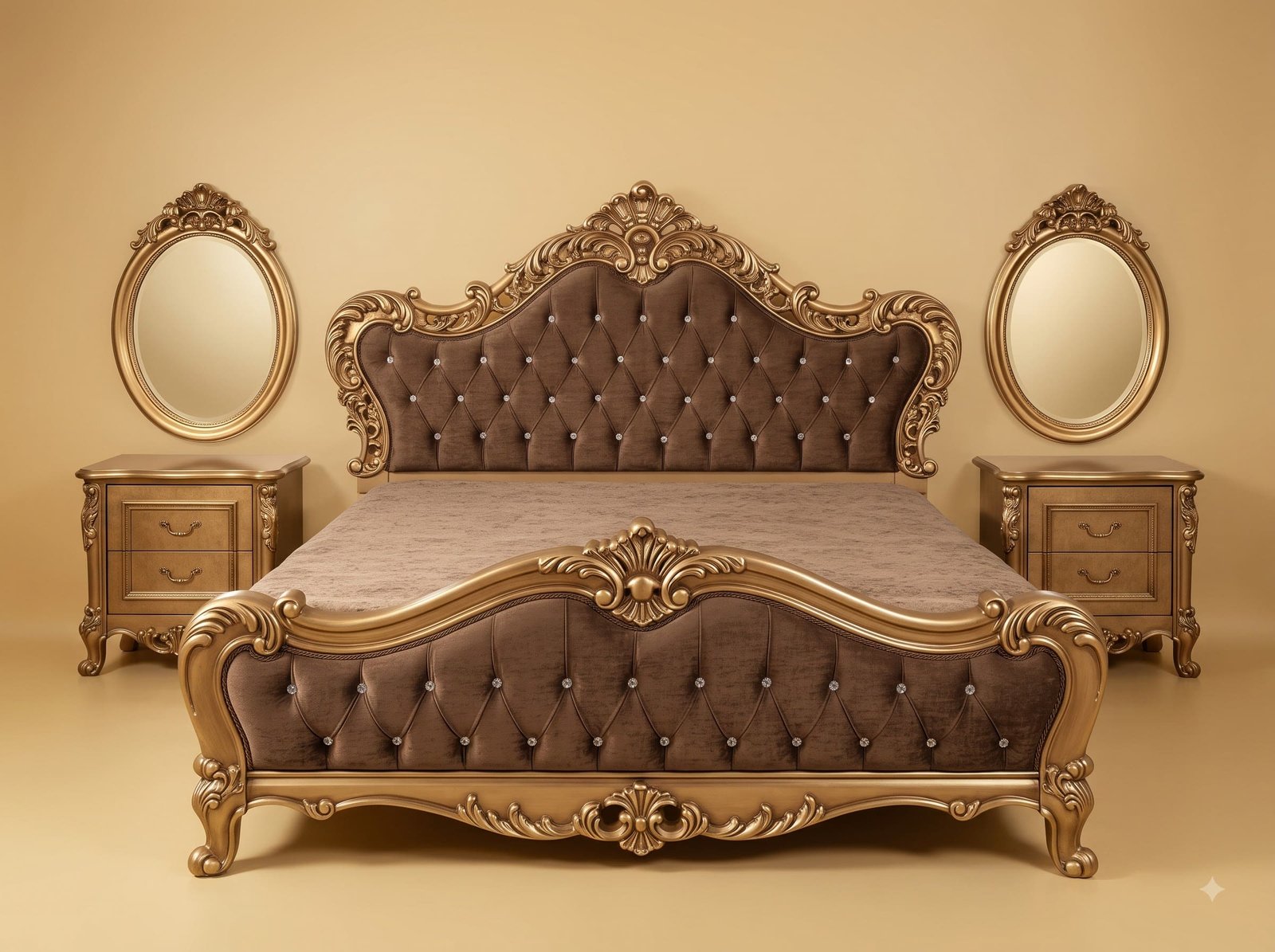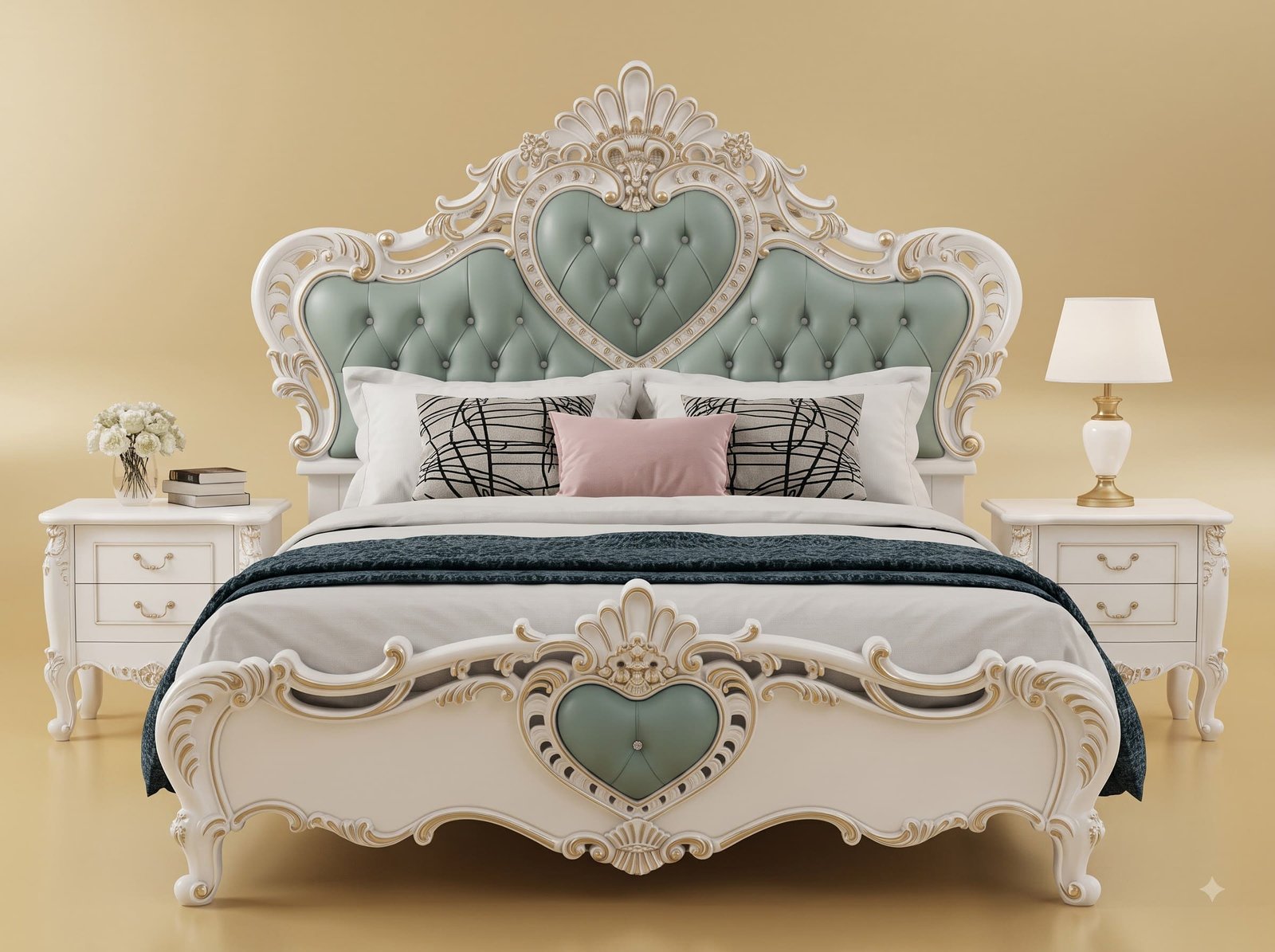
Repeating a motif at different scales is one of the oldest tricks in furniture design and one of the least noticed. A shape used once is decoration; the same shape used again, smaller and somewhere else, becomes a language - the eye recognises it without consciously registering why the pieces feel related. Cathedral builders did it with arches, cabinetmakers with shells and paterae.
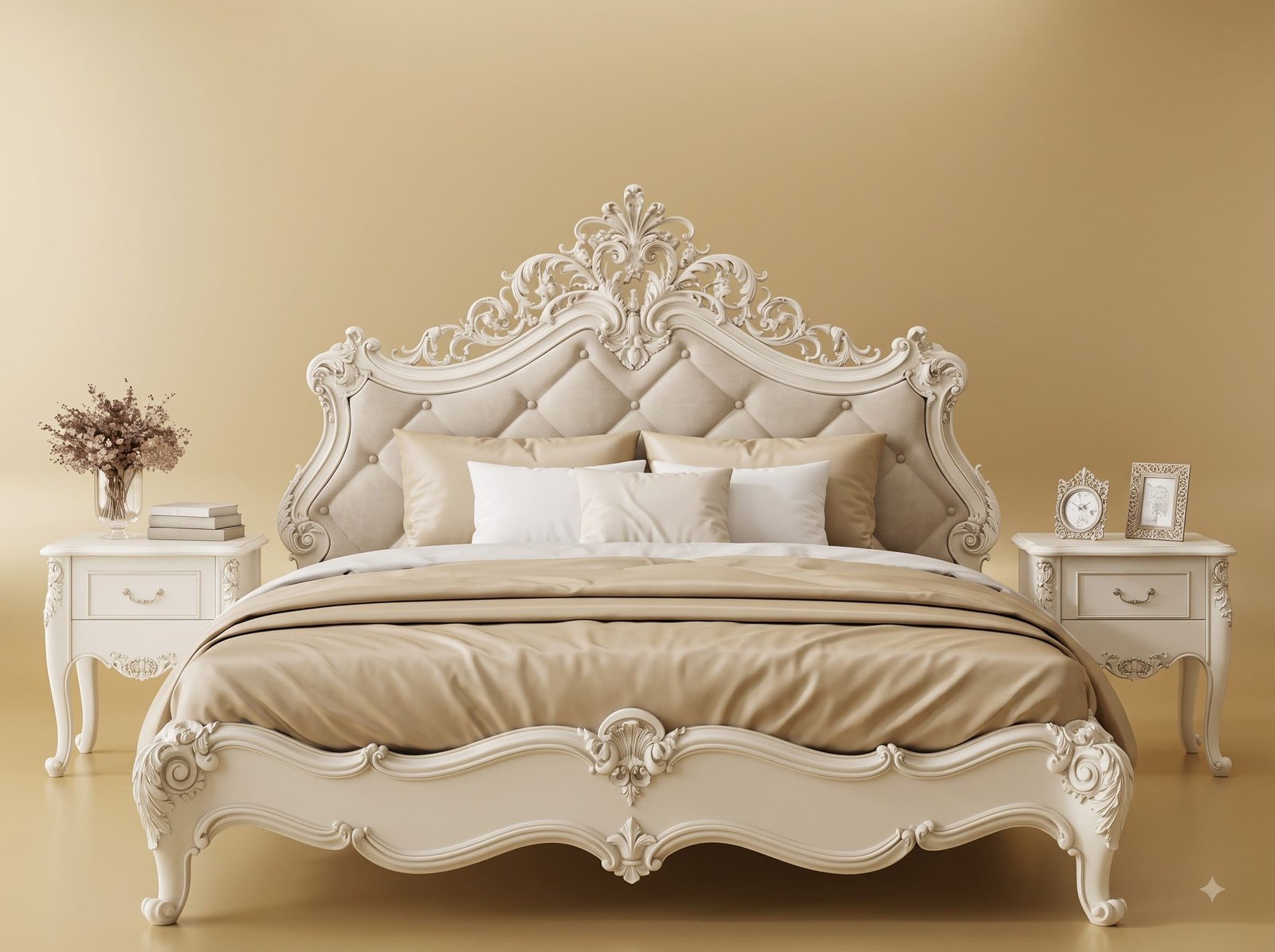
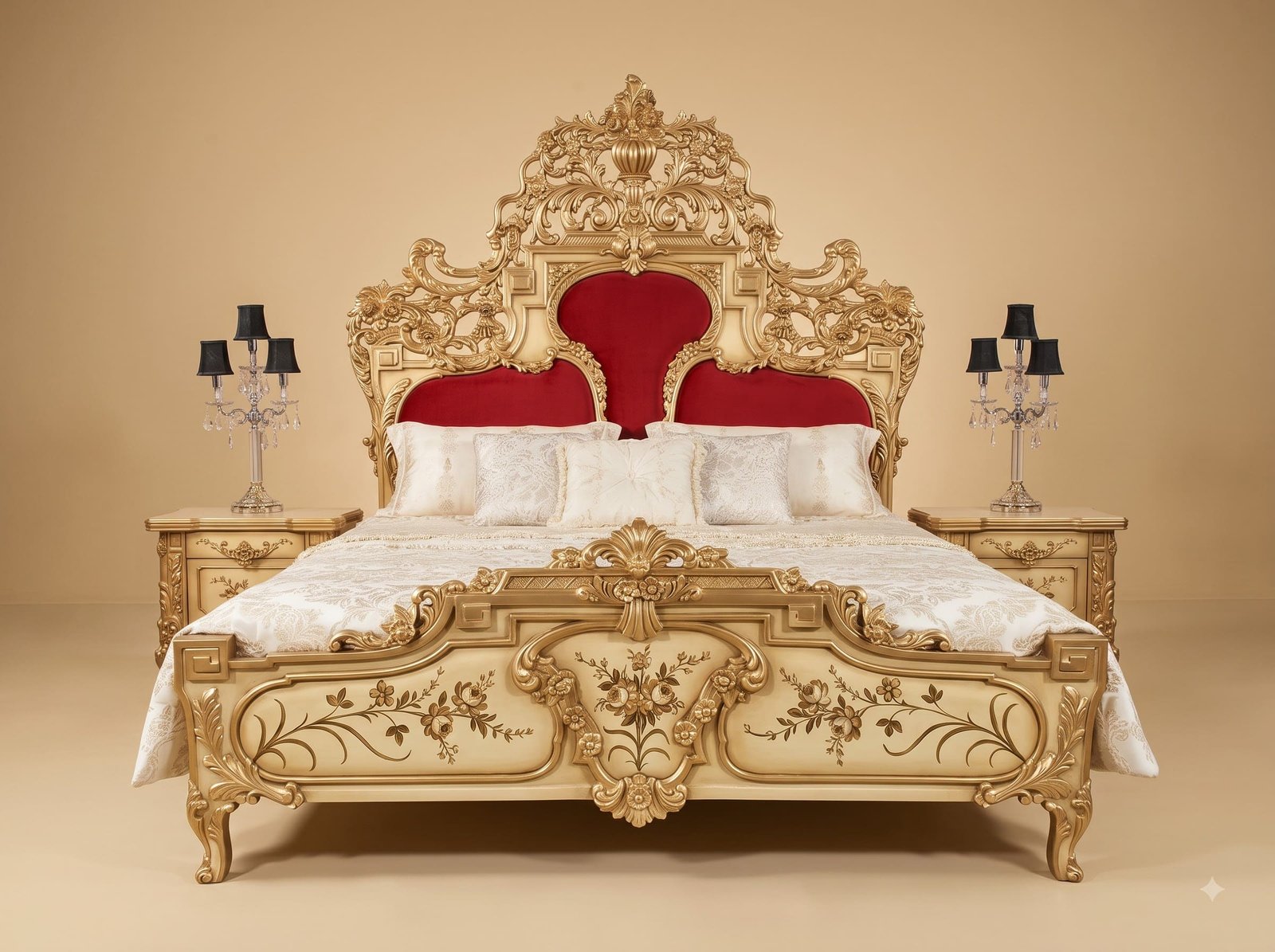
Here the heart carries it: large at the head, small at the foot. Nothing else needs to match for the two ends to agree.
The pale gold on the raised edges is the other quiet decision. It is applied so finely that from across a room you would not name it as gold - you would only notice that the carving has more definition than white alone would give it. Our master Indian artisans lay it along the top edge of each scroll only, never into the hollows, because gold in a recess reflects nothing and simply muddies the colour. It is a technique that takes far longer than gilding a whole surface and is meant to be invisible as technique.
 Ask Price On WhatsApp