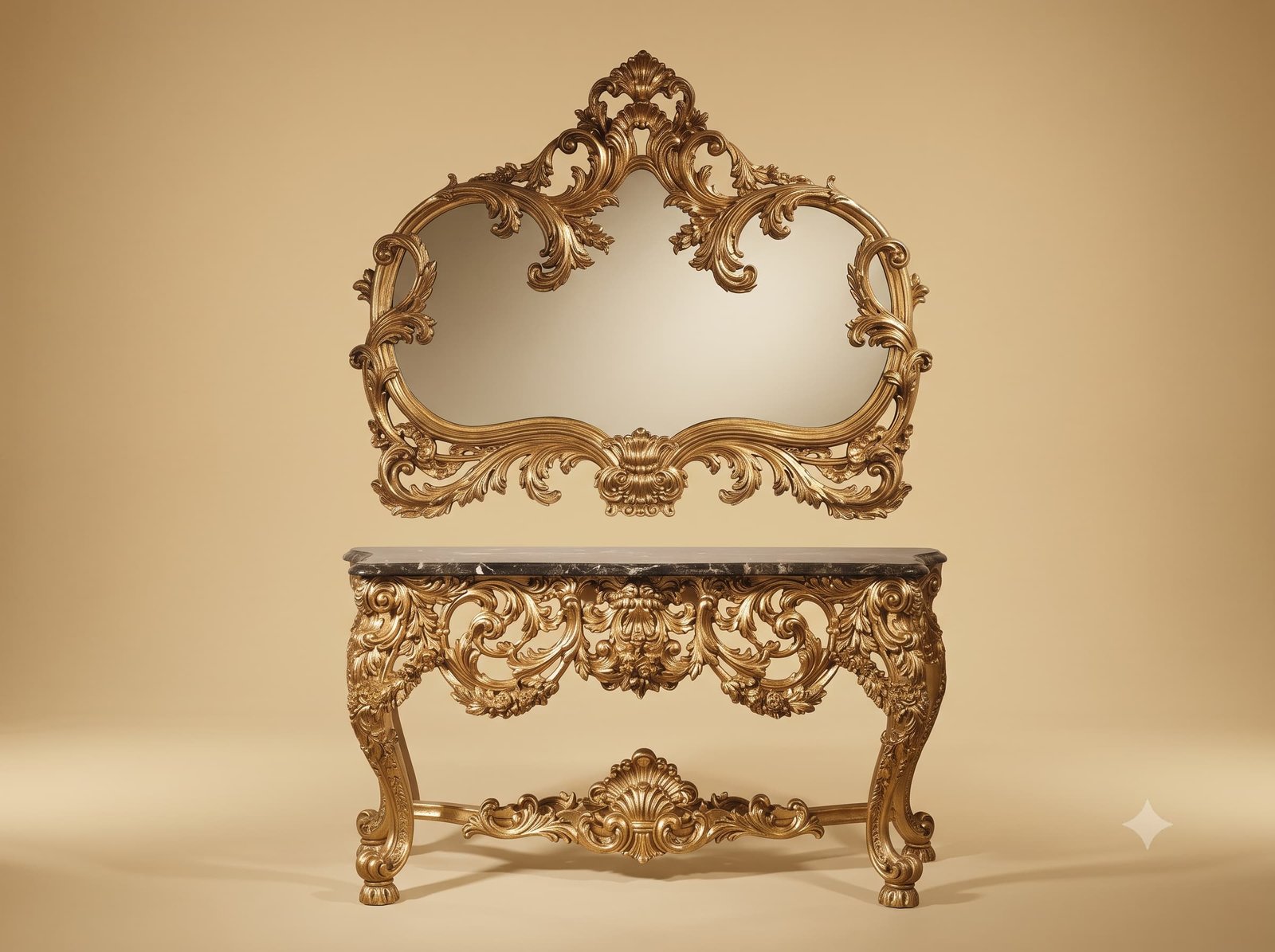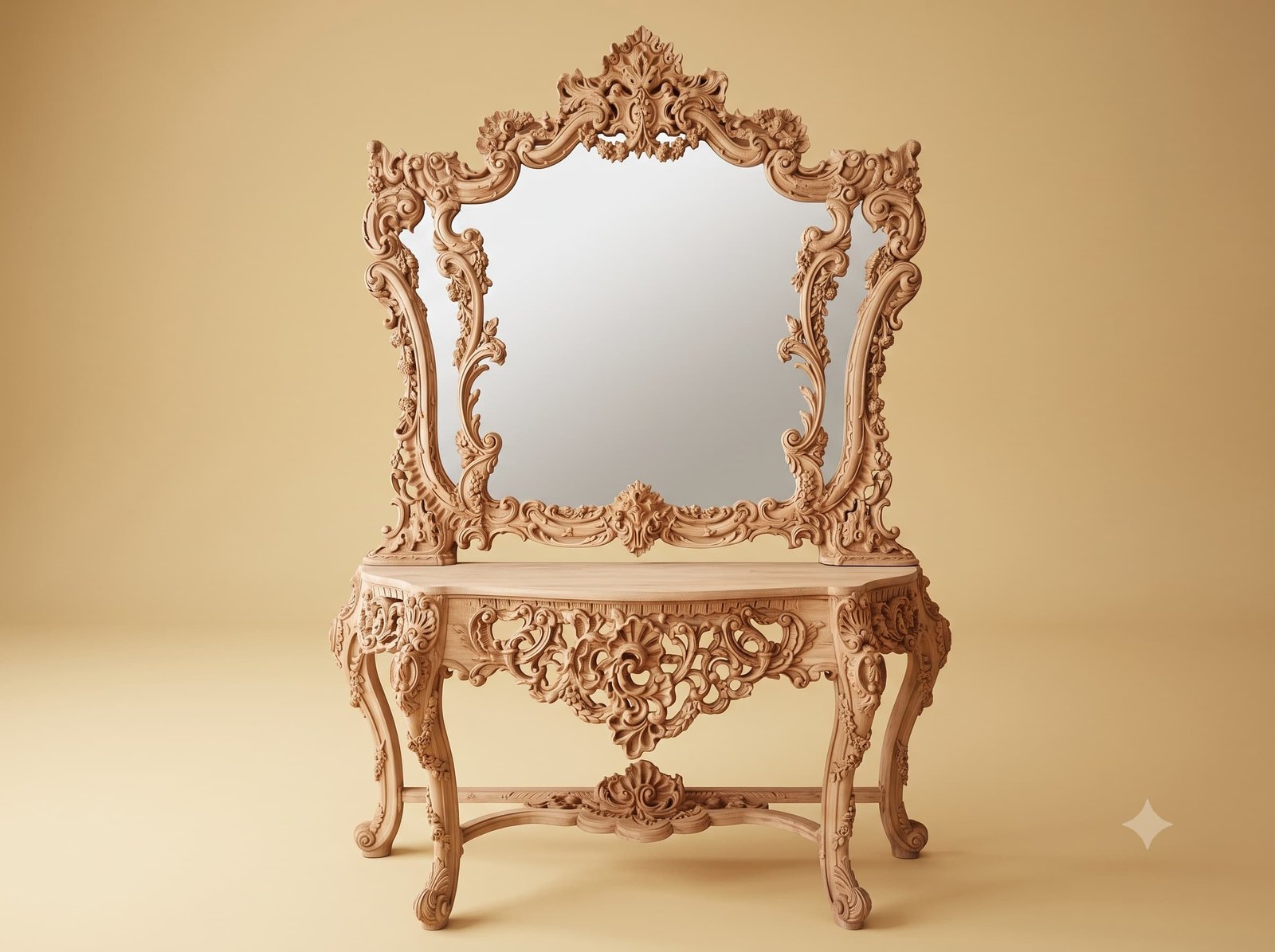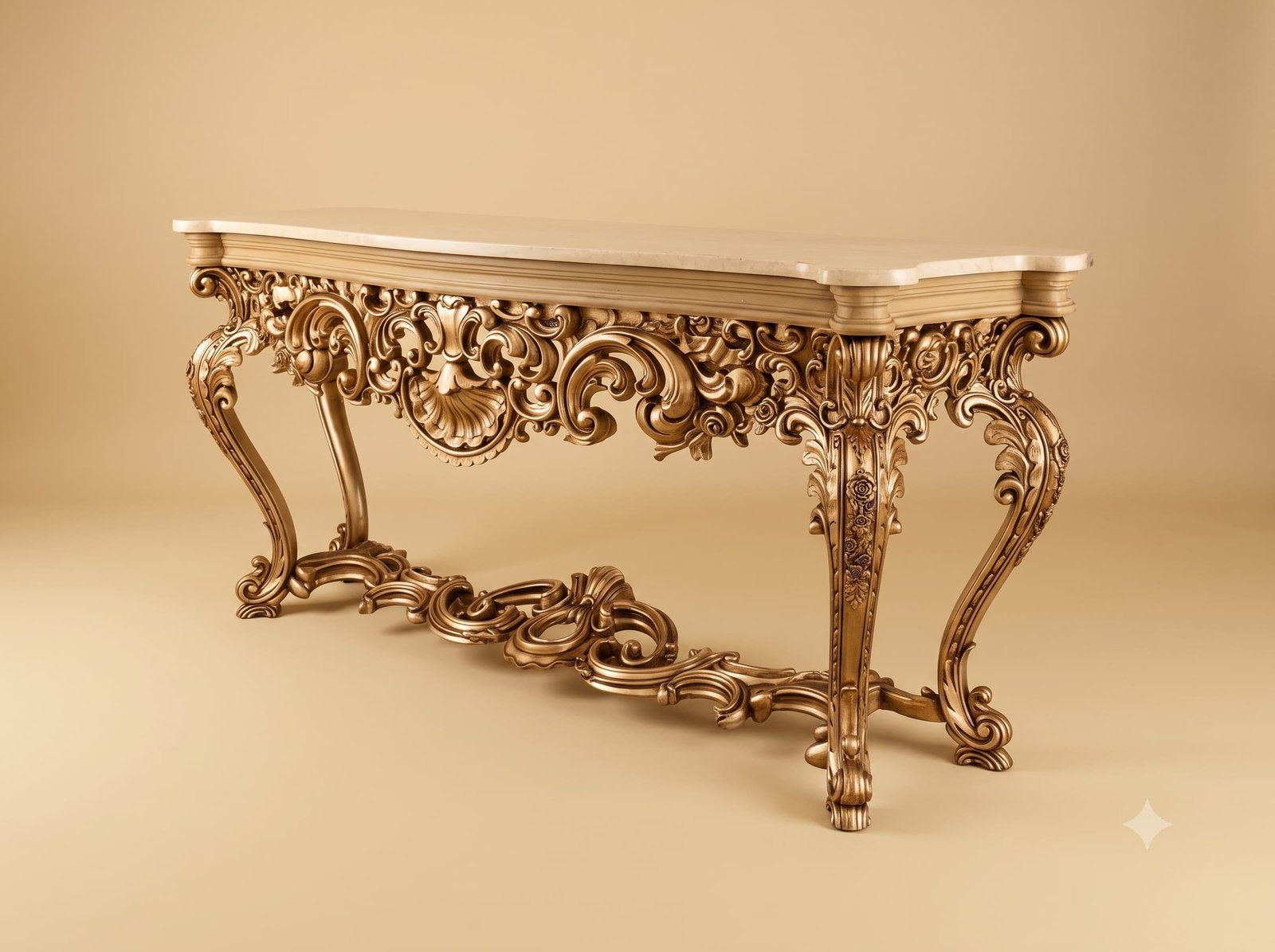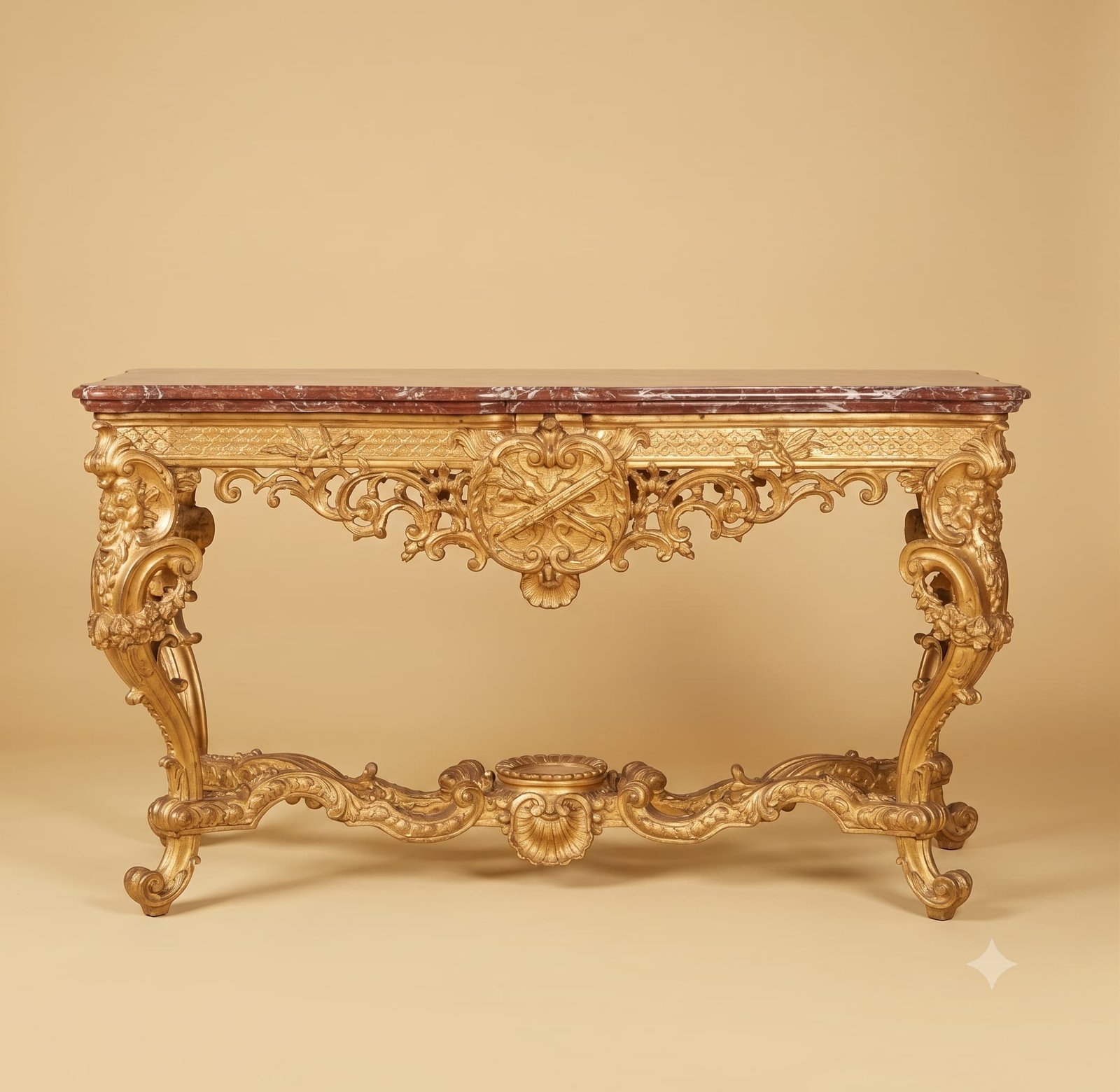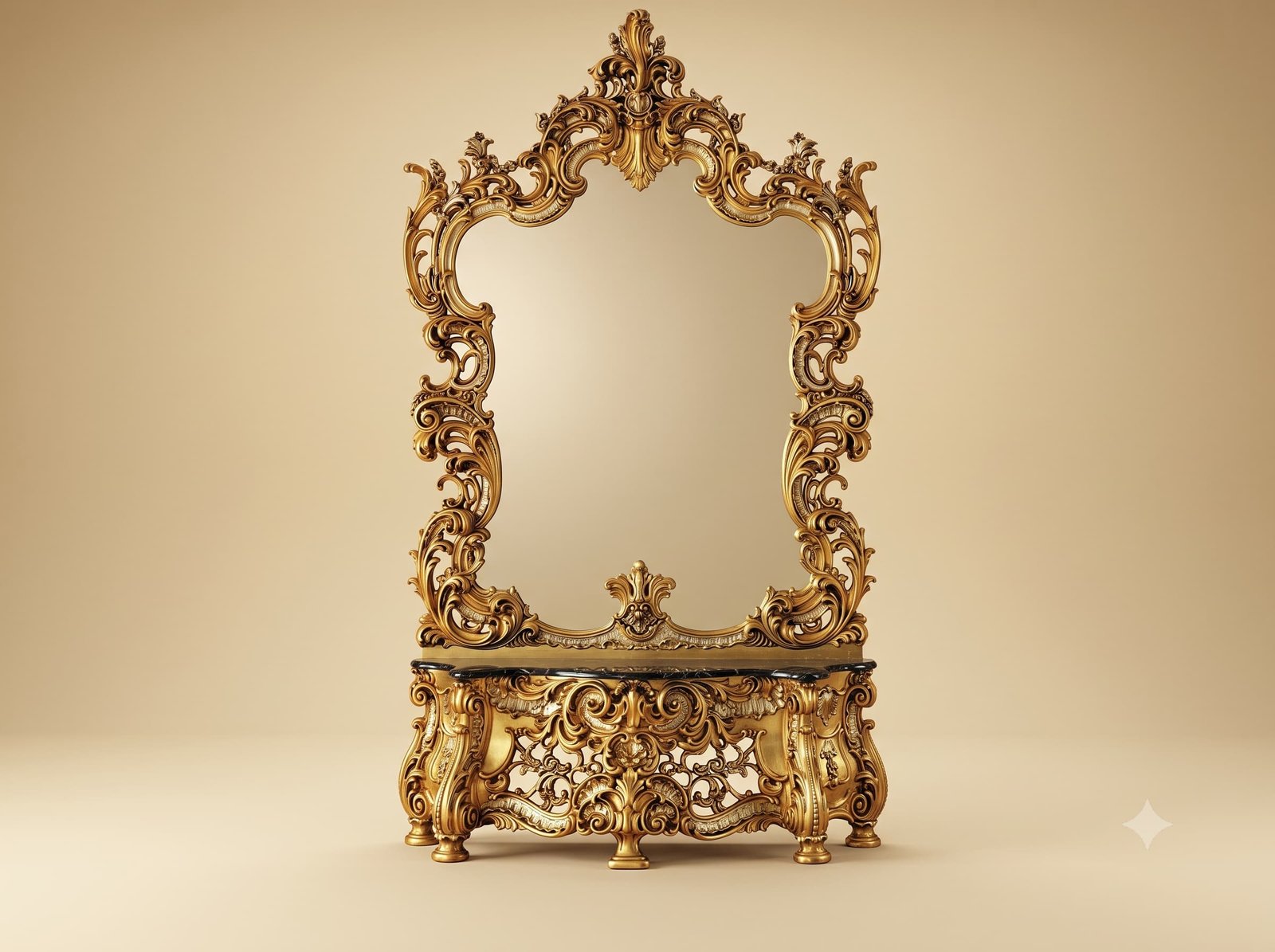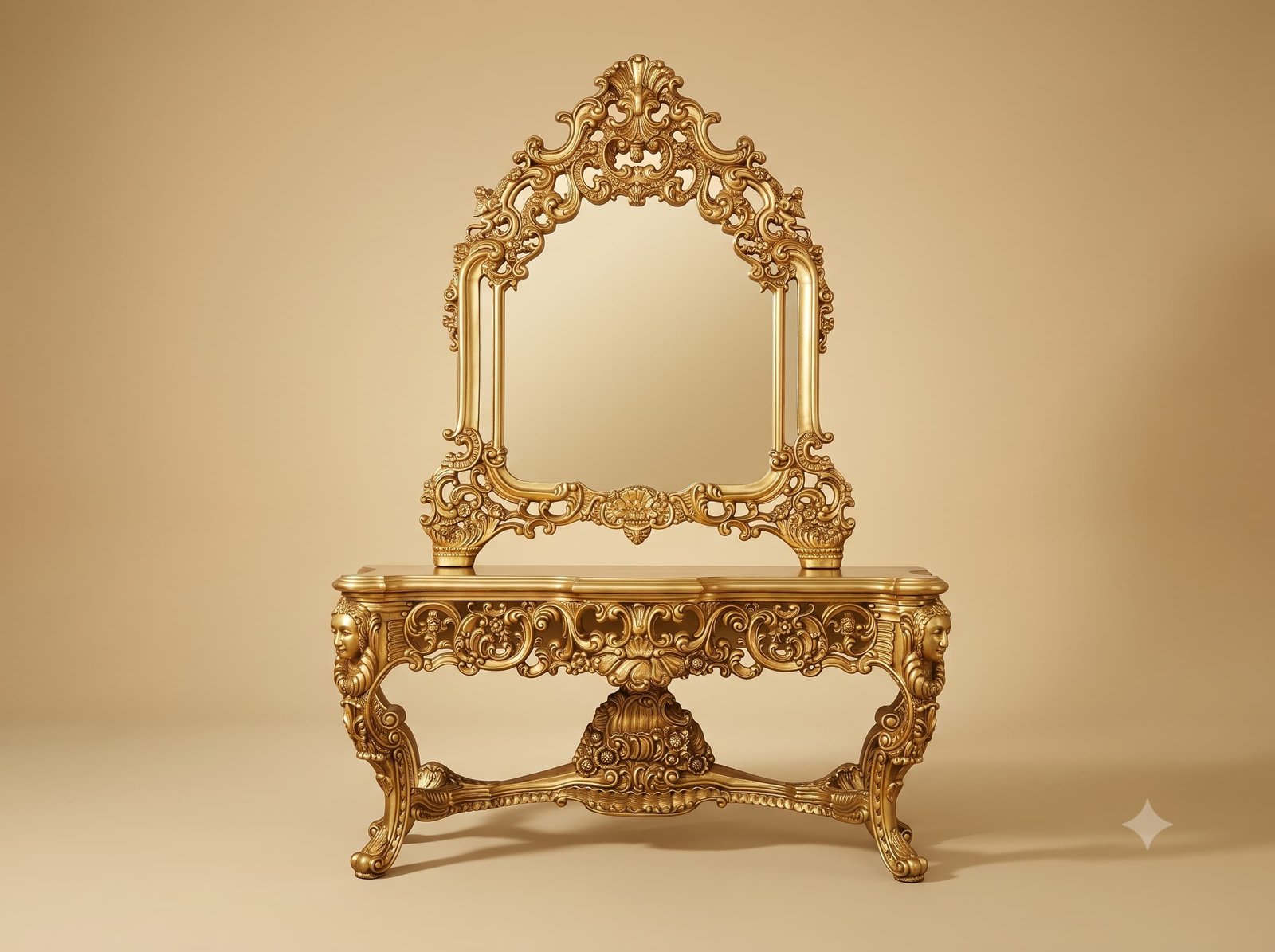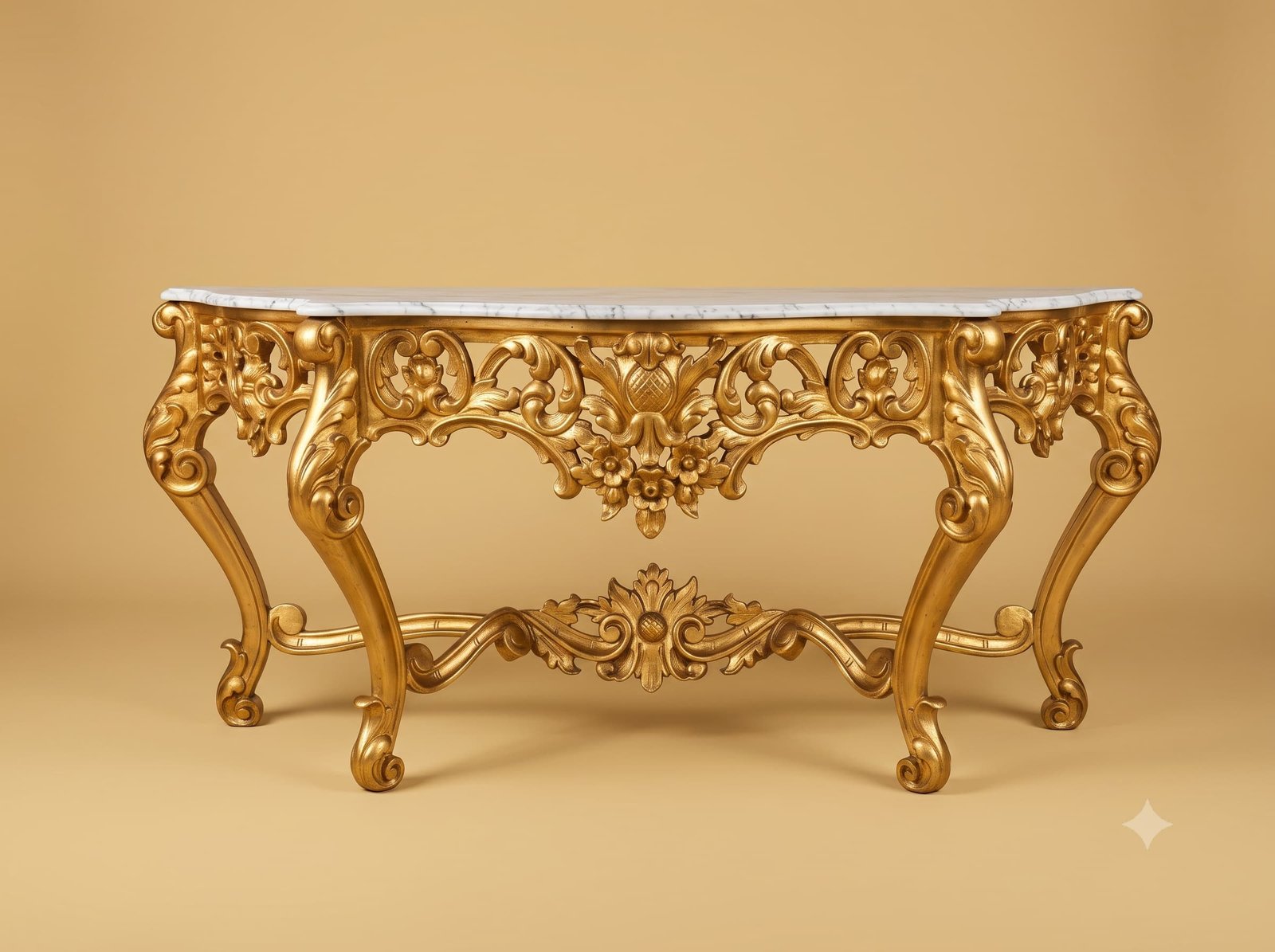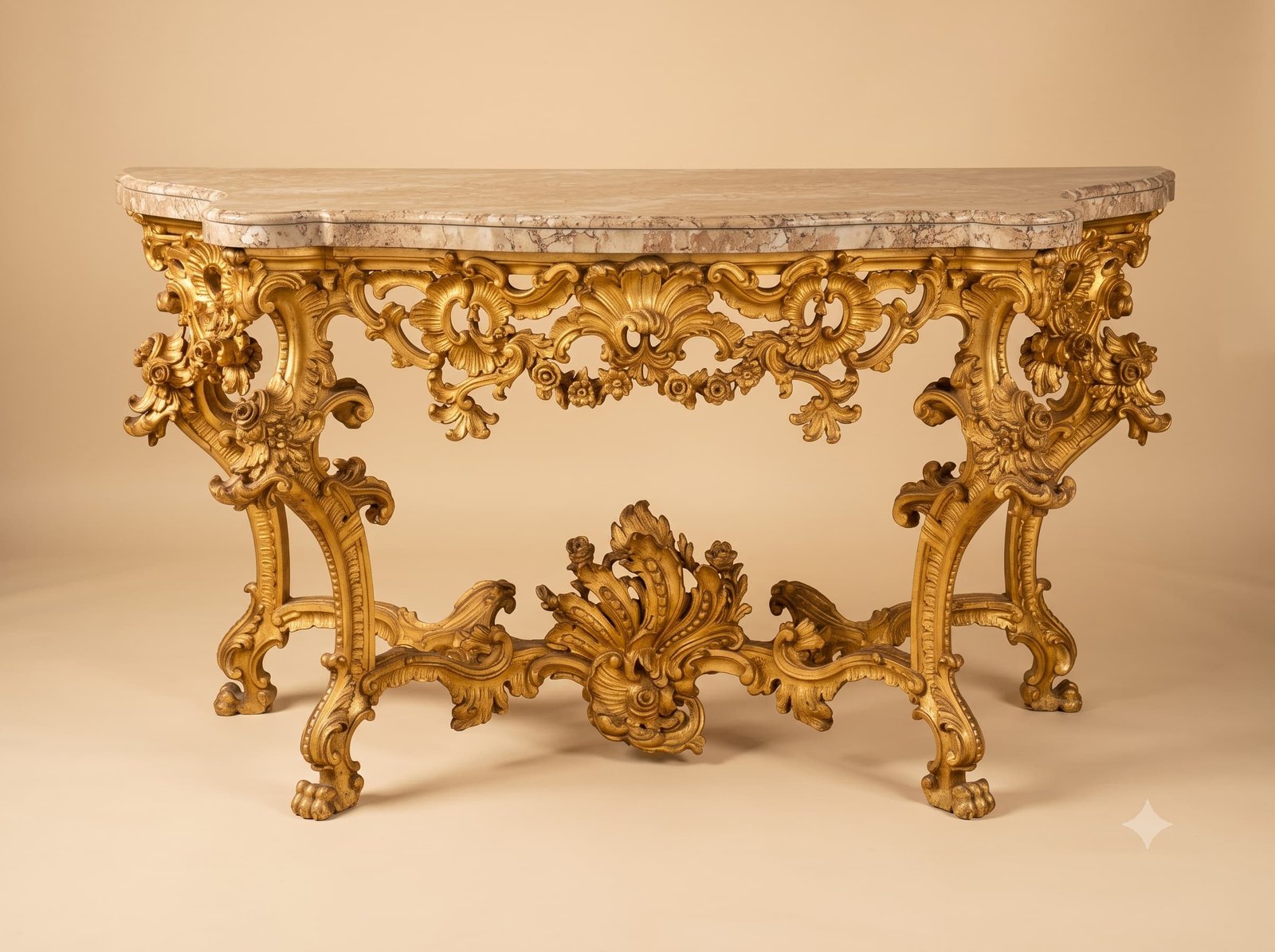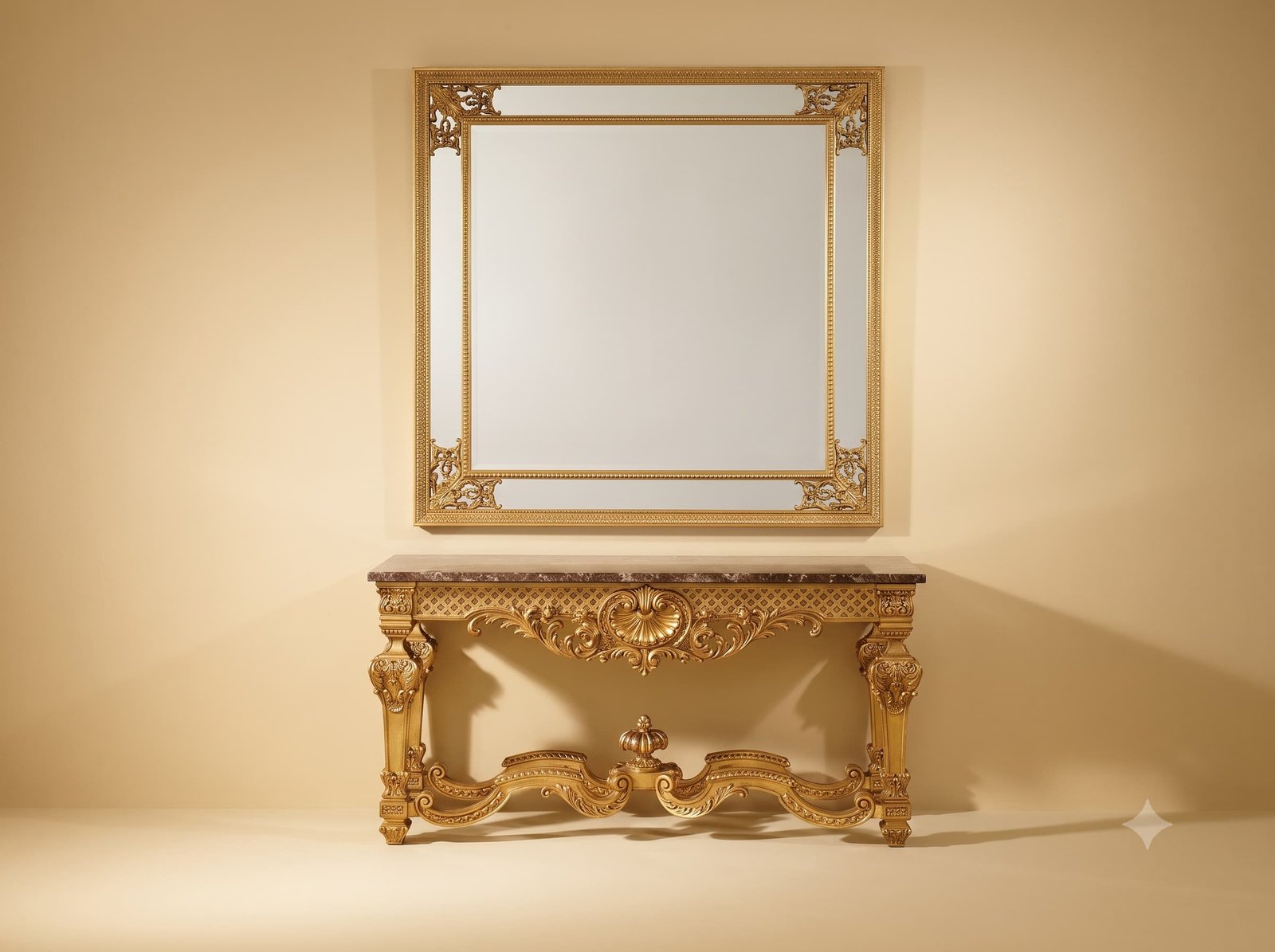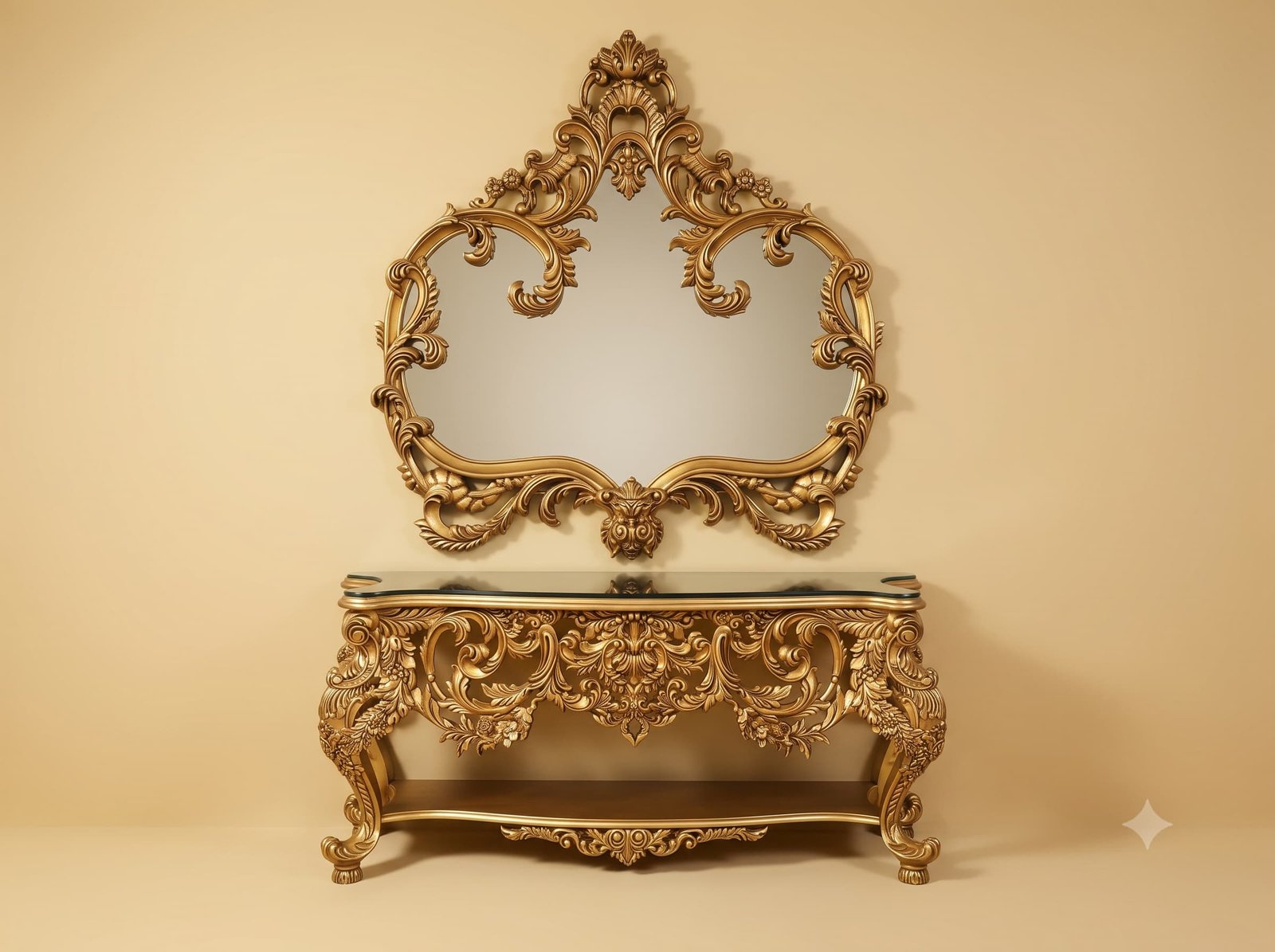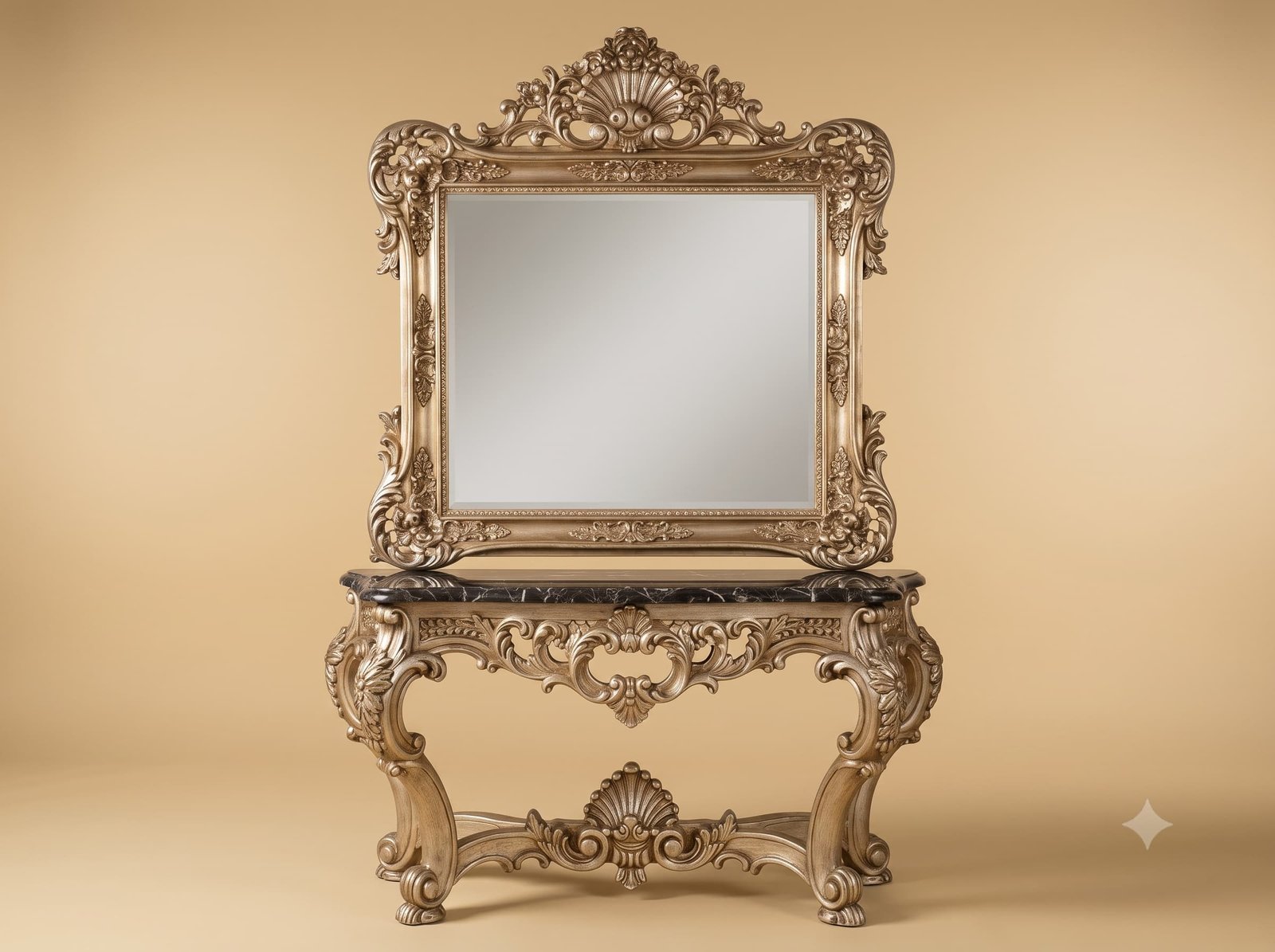
The shell appears twice in this set - large at the top of the mirror, small at the centre of the stretcher - and that repetition is doing a specific job. It is what makes two separate objects read as one piece of furniture.
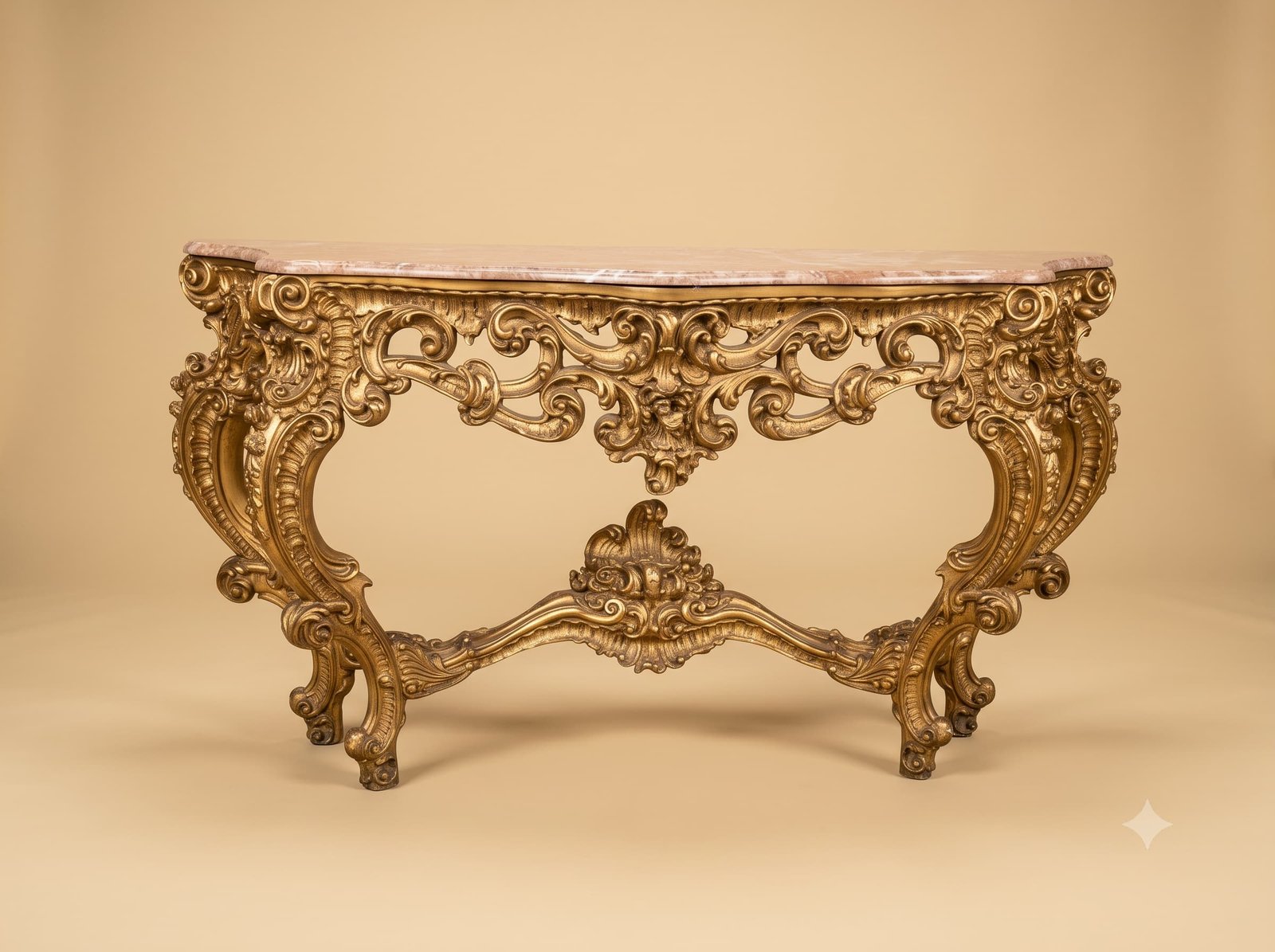
But a motif repeated identically at two sizes looks mechanical, like the same stamp pressed twice. So our master Indian artisans change it as it changes scale. The crest shell is fanned wide and cut shallow, because it sits high and is seen from below and from a distance, where a deep shell would fill with shadow and lose its shape. The stretcher shell is drawn narrower and cut deeper, because it sits low, is seen close, and needs the shadow to be visible at all near the floor.
The number of flutes changes too - fewer on the small one, so the ribs stay legible at that size rather than crowding into a texture.
The result is two shells that are recognisably the same idea and demonstrably not the same carving. The eye ties the pieces together without ever registering why.
 Ask Price On WhatsApp