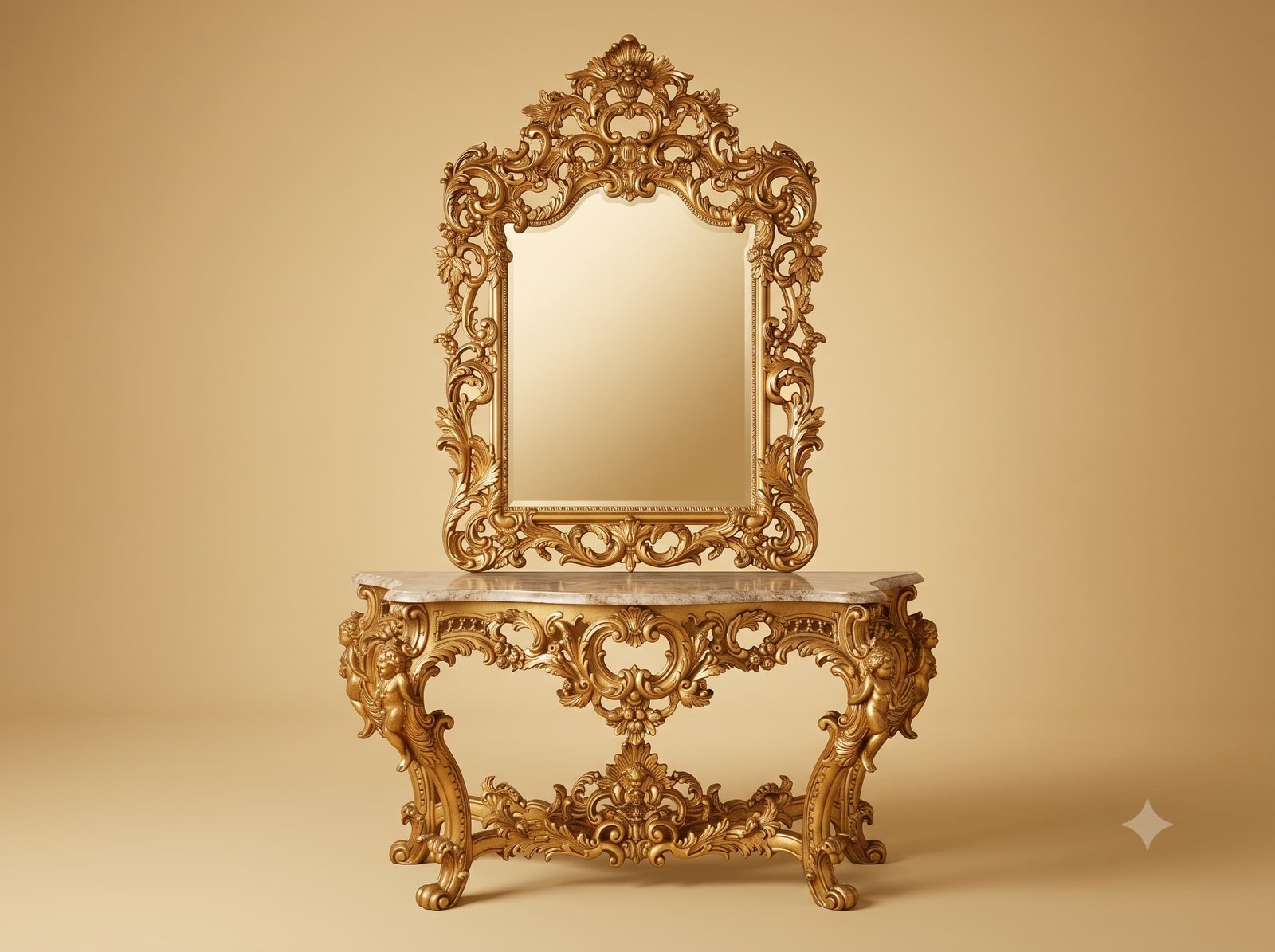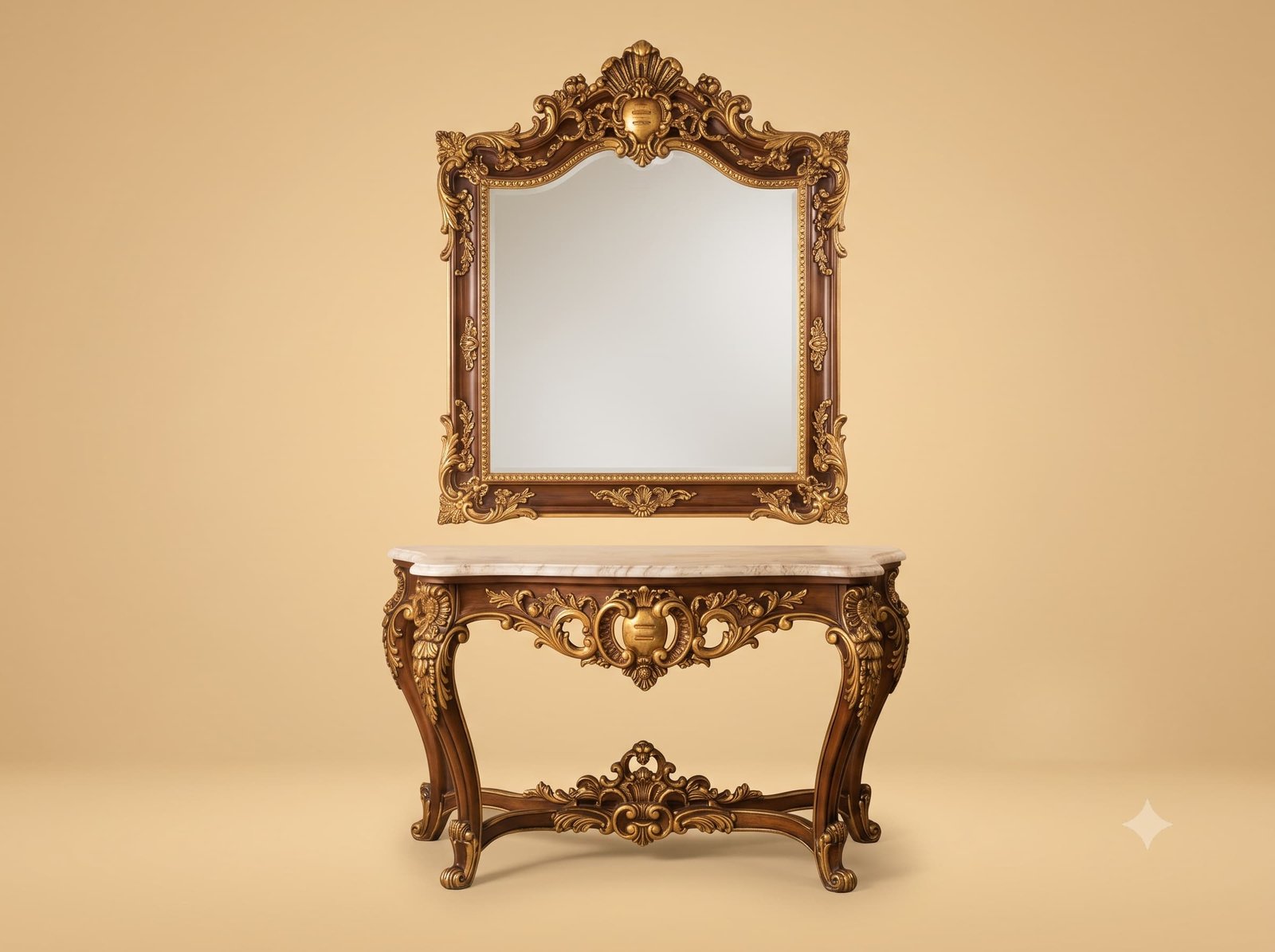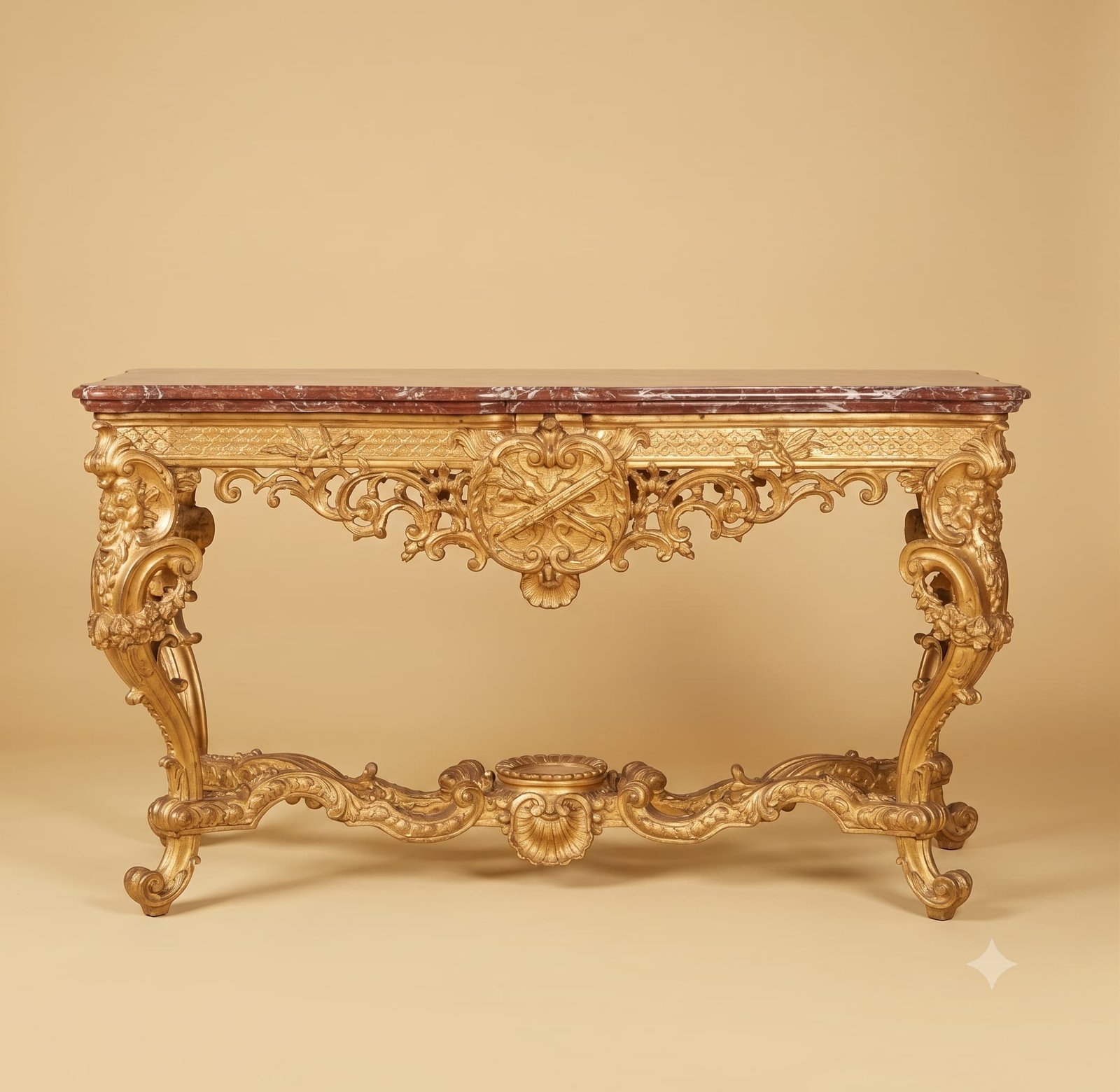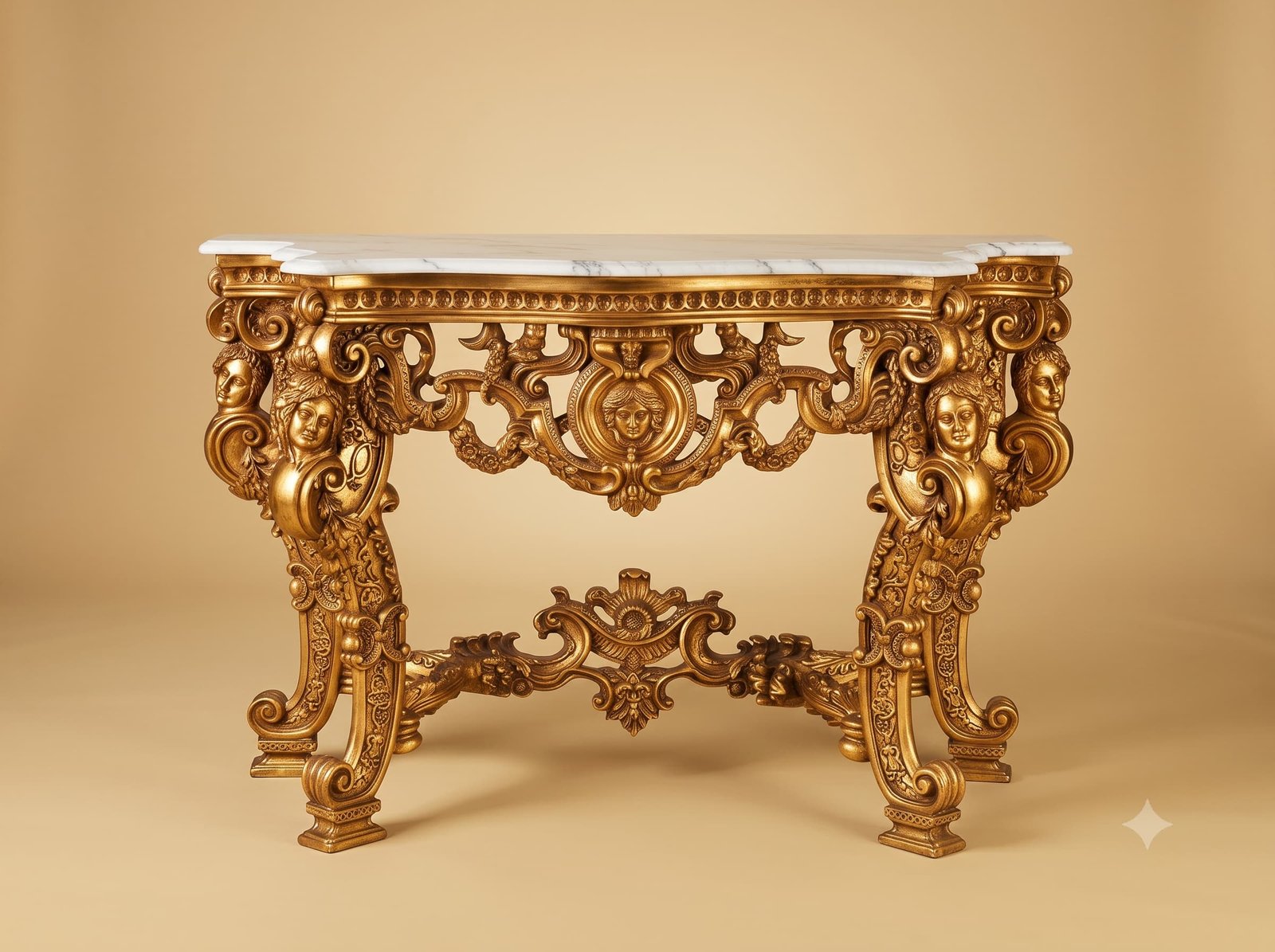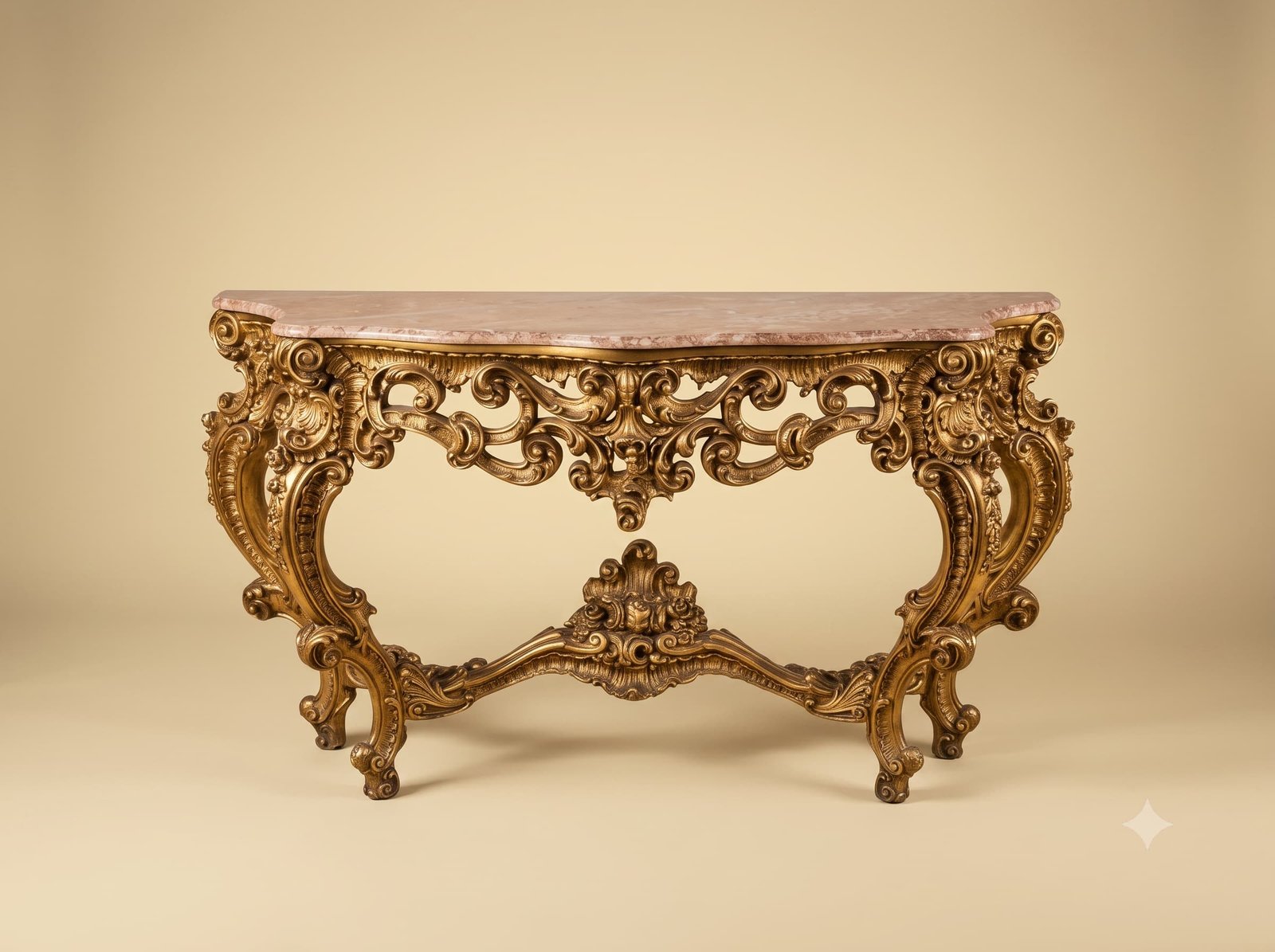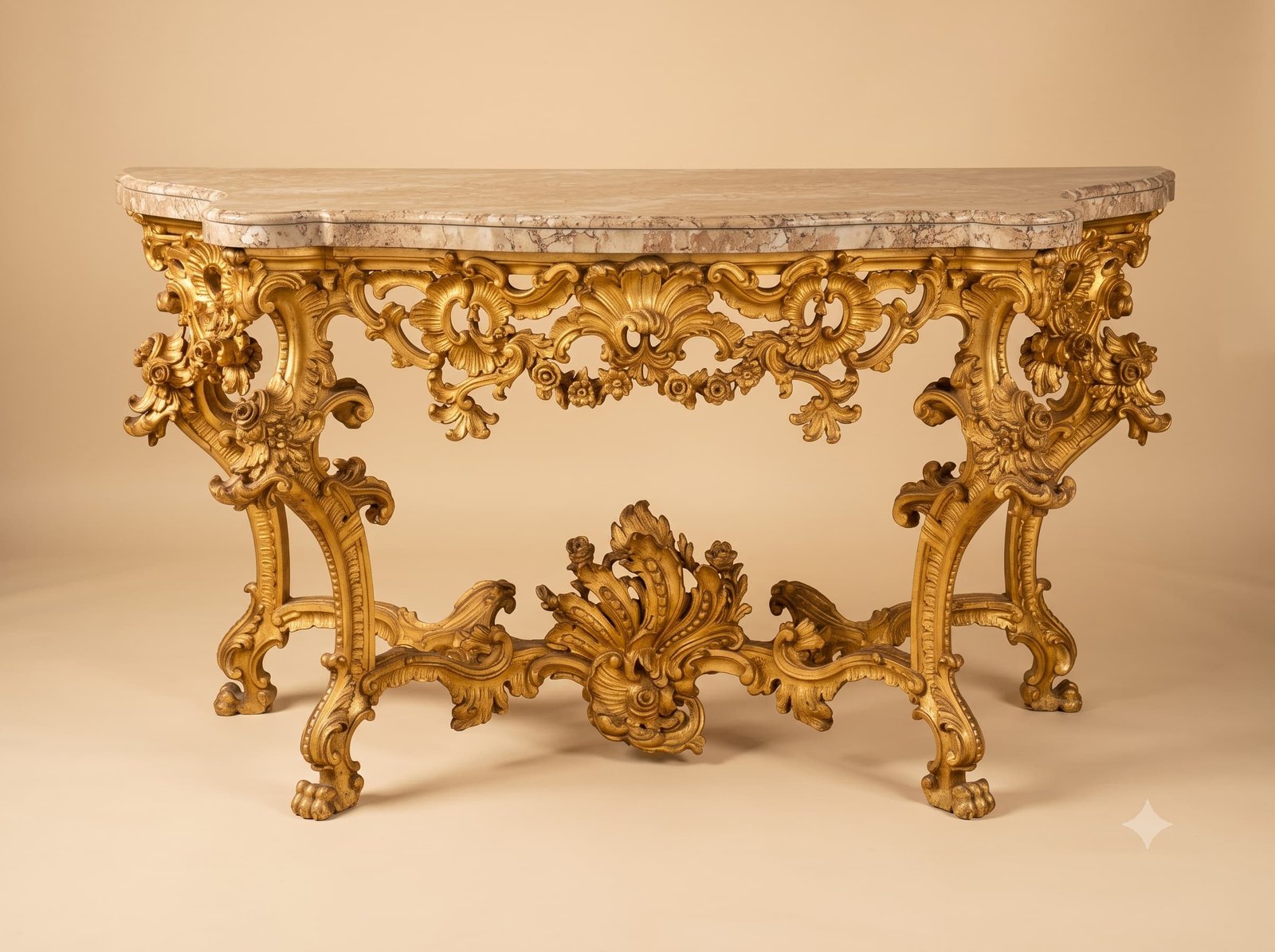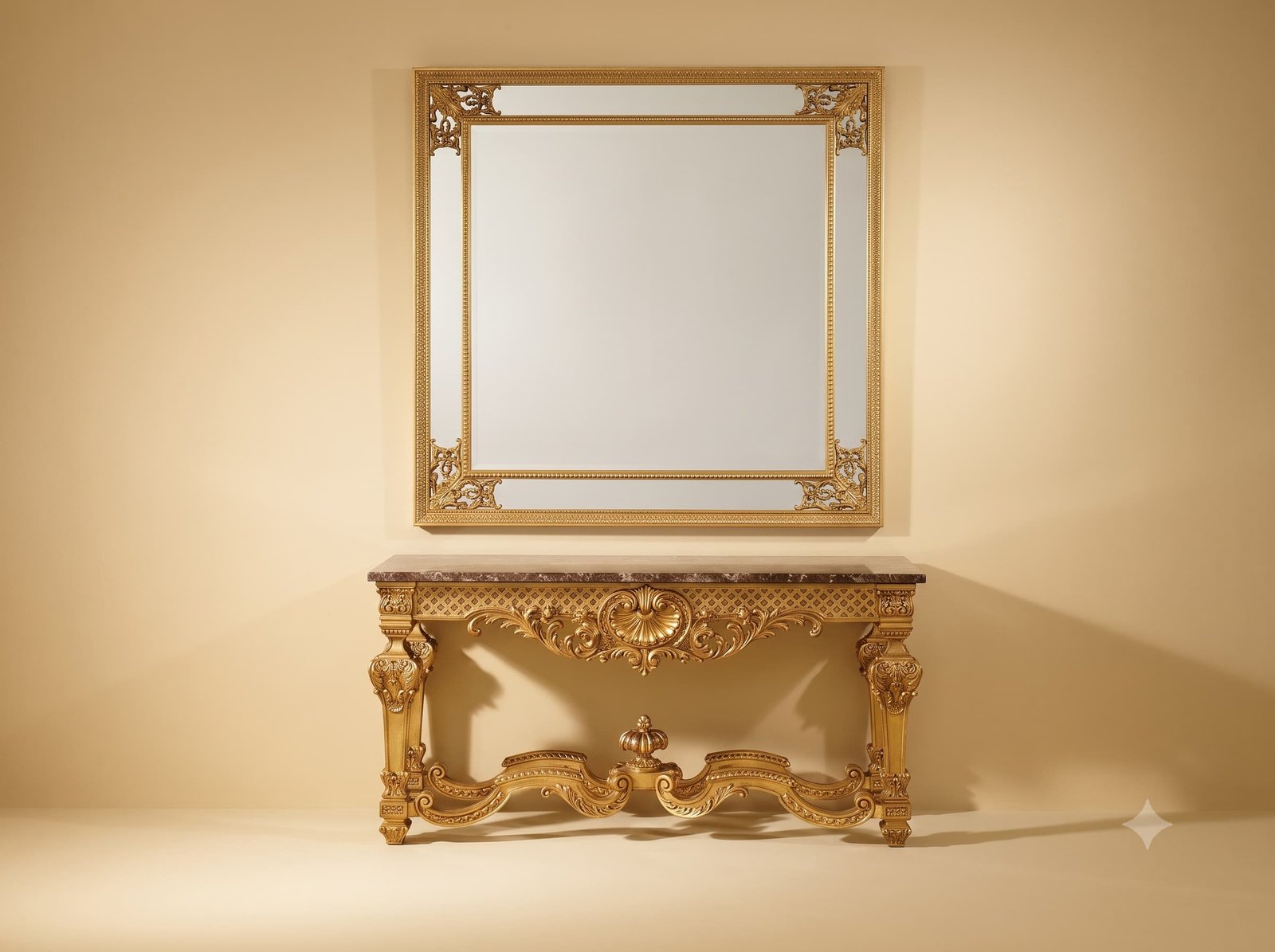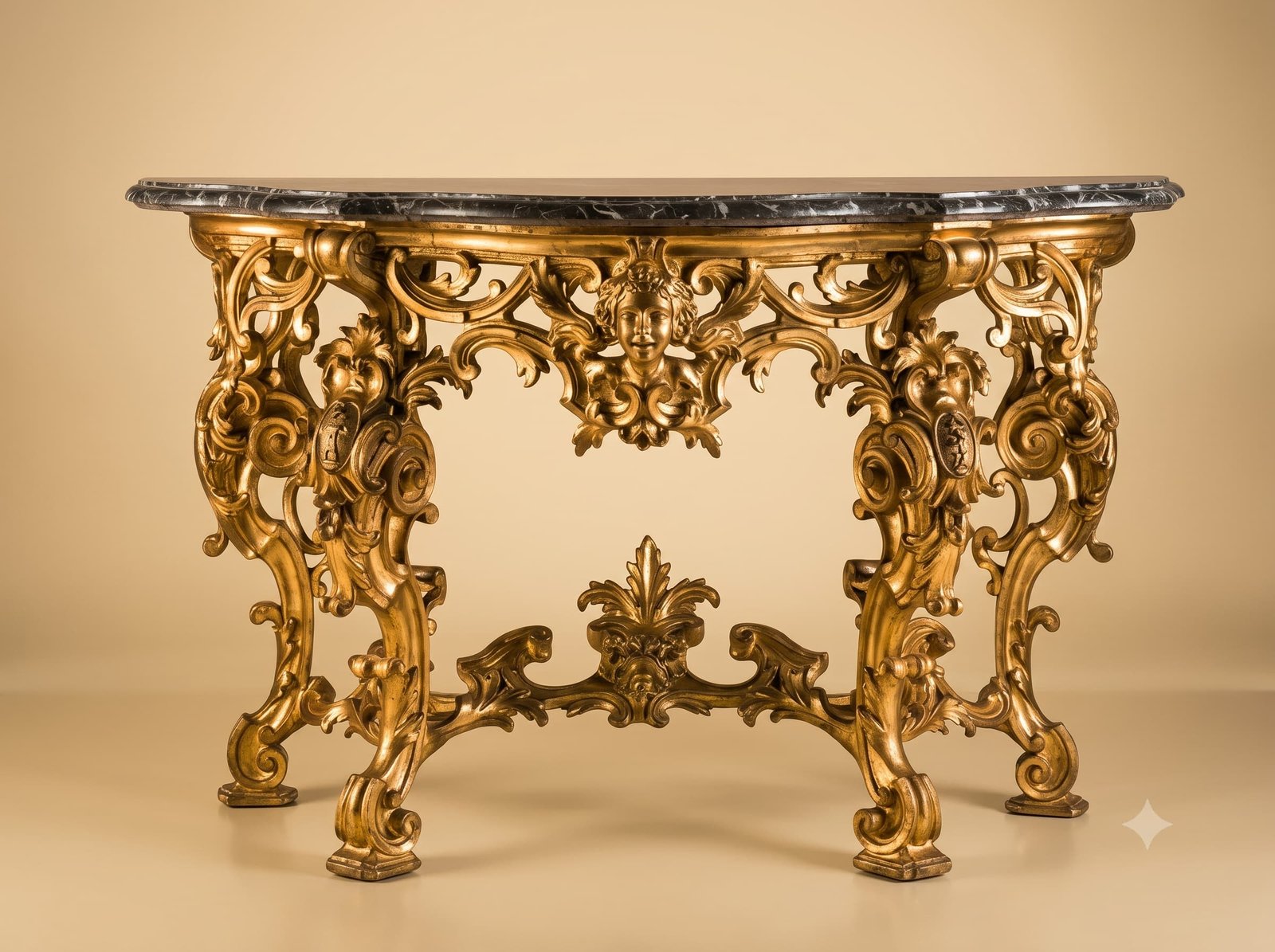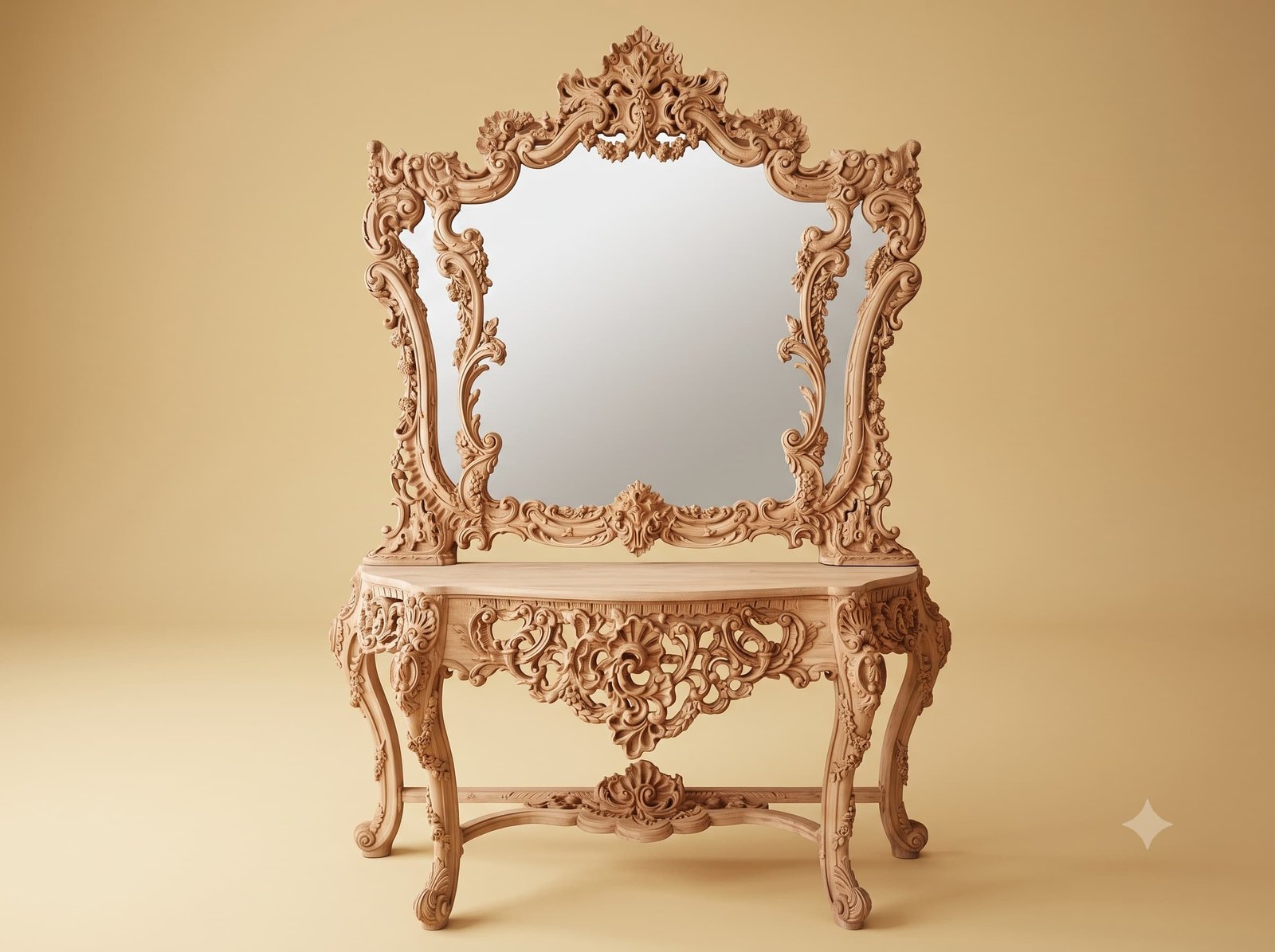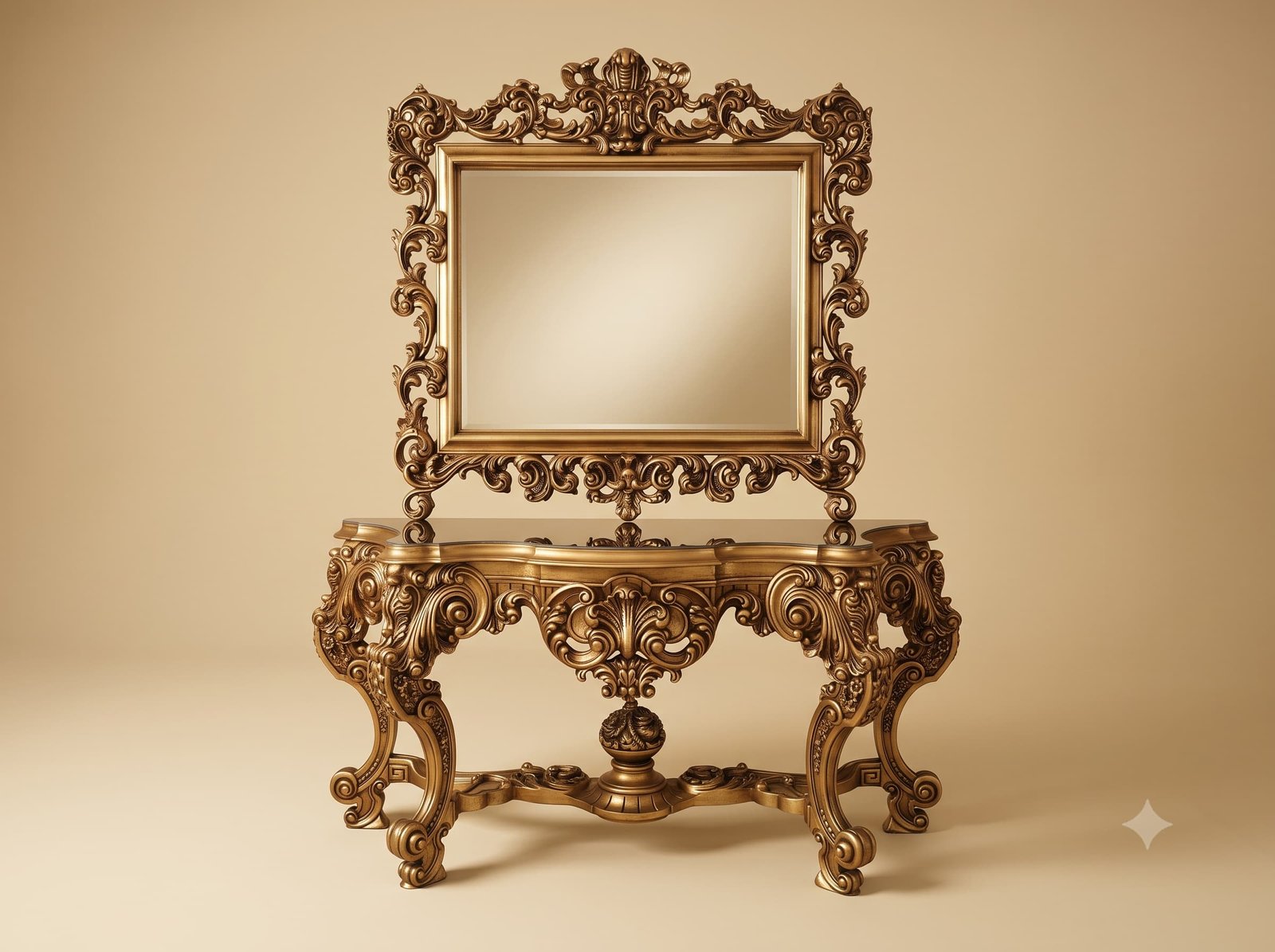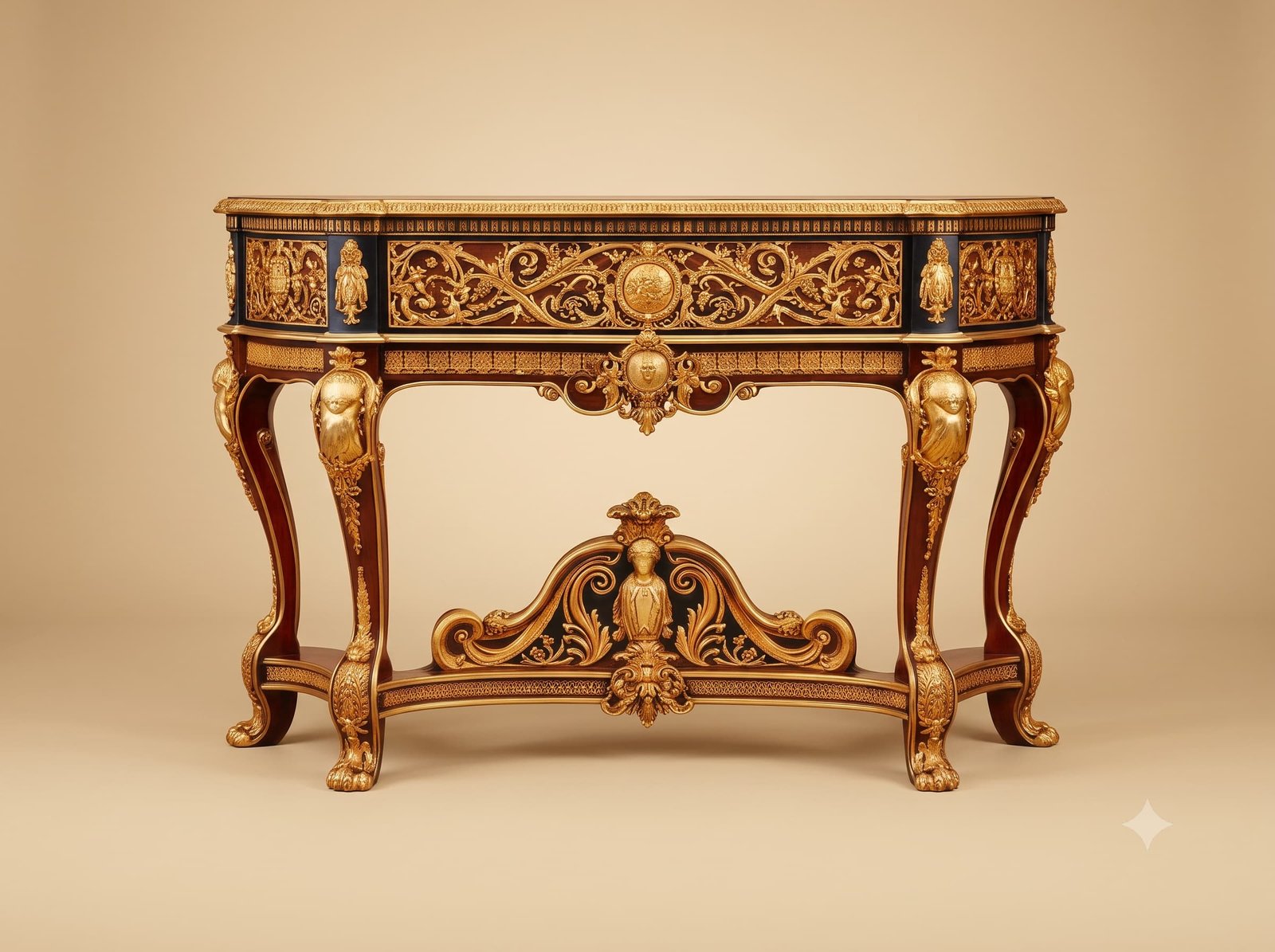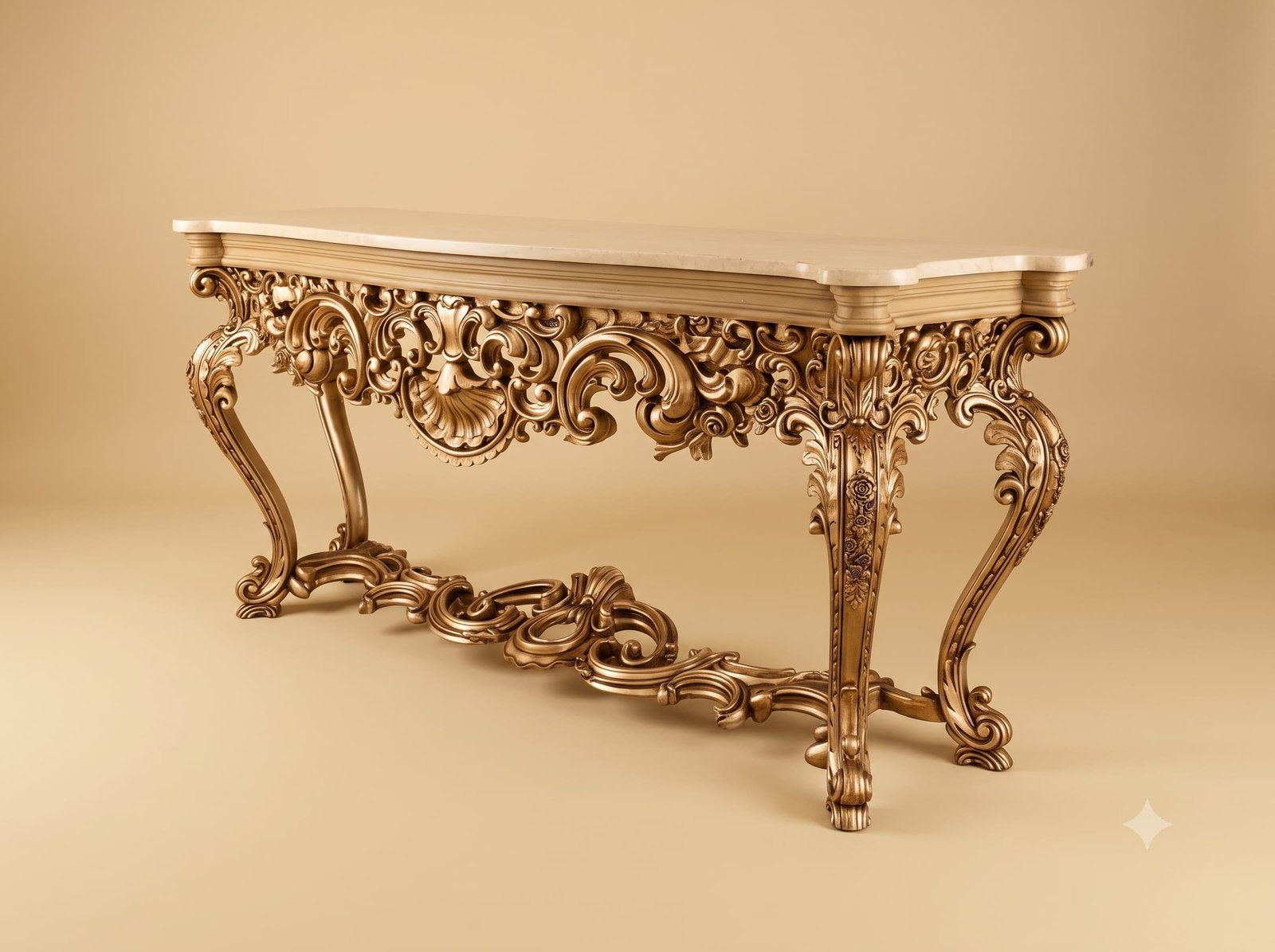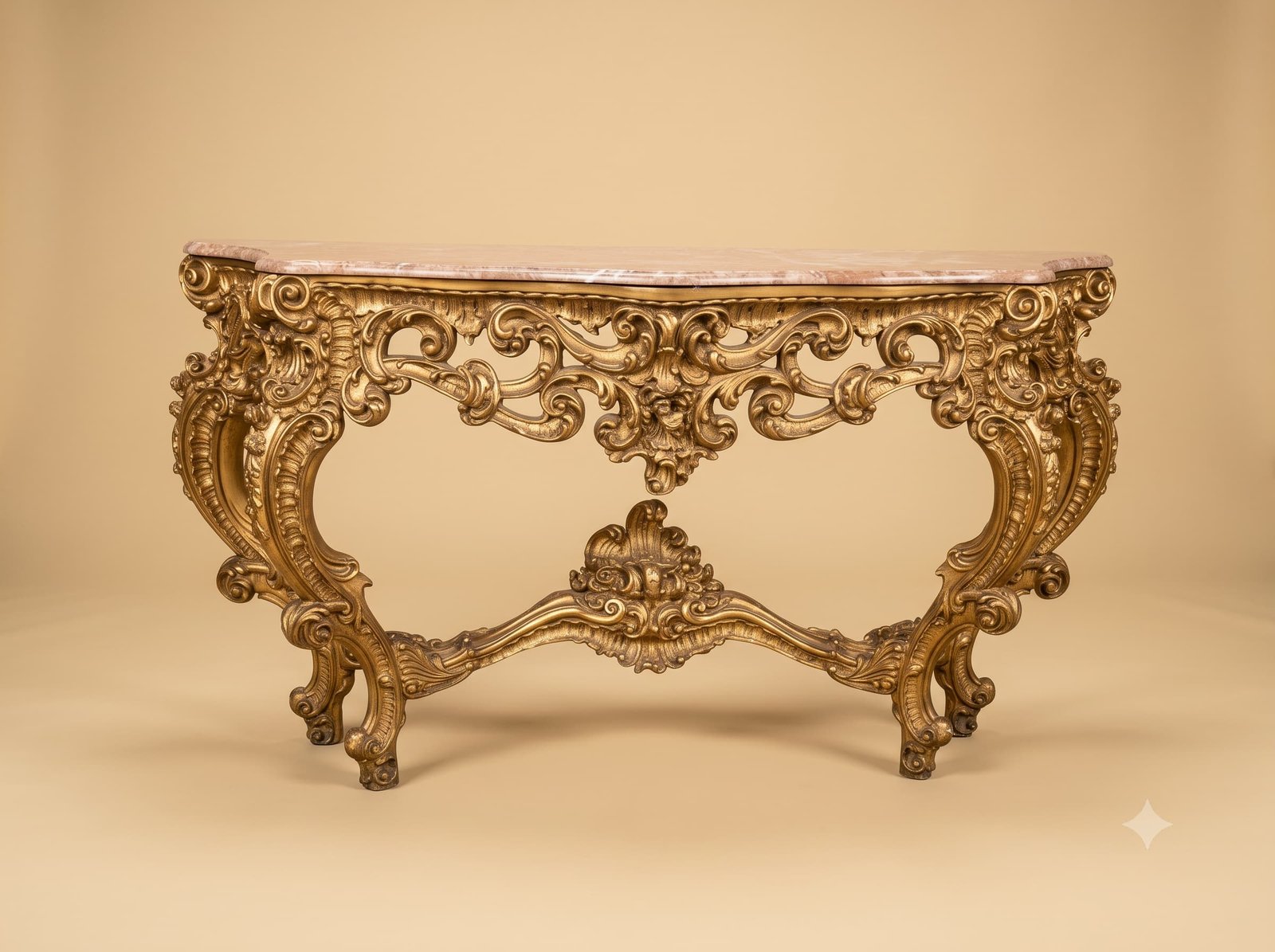
An apron like this is built from just two shapes: the C-scroll, which turns one way, and the S-scroll, which turns and then turns back. Everything on the front of this table is one of those two, joined end to end. The difficulty is that the eye is unforgiving about curves in a way it never is about straight lines.
A straight line is either straight or it is not, and you can check it against a rule. A curve has no rule to check against, so our master Indian artisans check it by hand and by light. The carver runs a thumb along the arris of the scroll, feeling for a flat spot where the curve momentarily stops turning, or a kink where it changes rate too quickly. Both are invisible in a drawing and obvious on a finished gilded surface, because gold turns every change of rate into a change of brightness.
Then the piece is turned to the light and looked at along the run of the apron rather than face on, which is how a flat spot shows itself as a dull patch in an otherwise travelling highlight. Only when the highlight runs continuously from one scroll into the next is the carving considered finished.
 Ask Price On WhatsApp