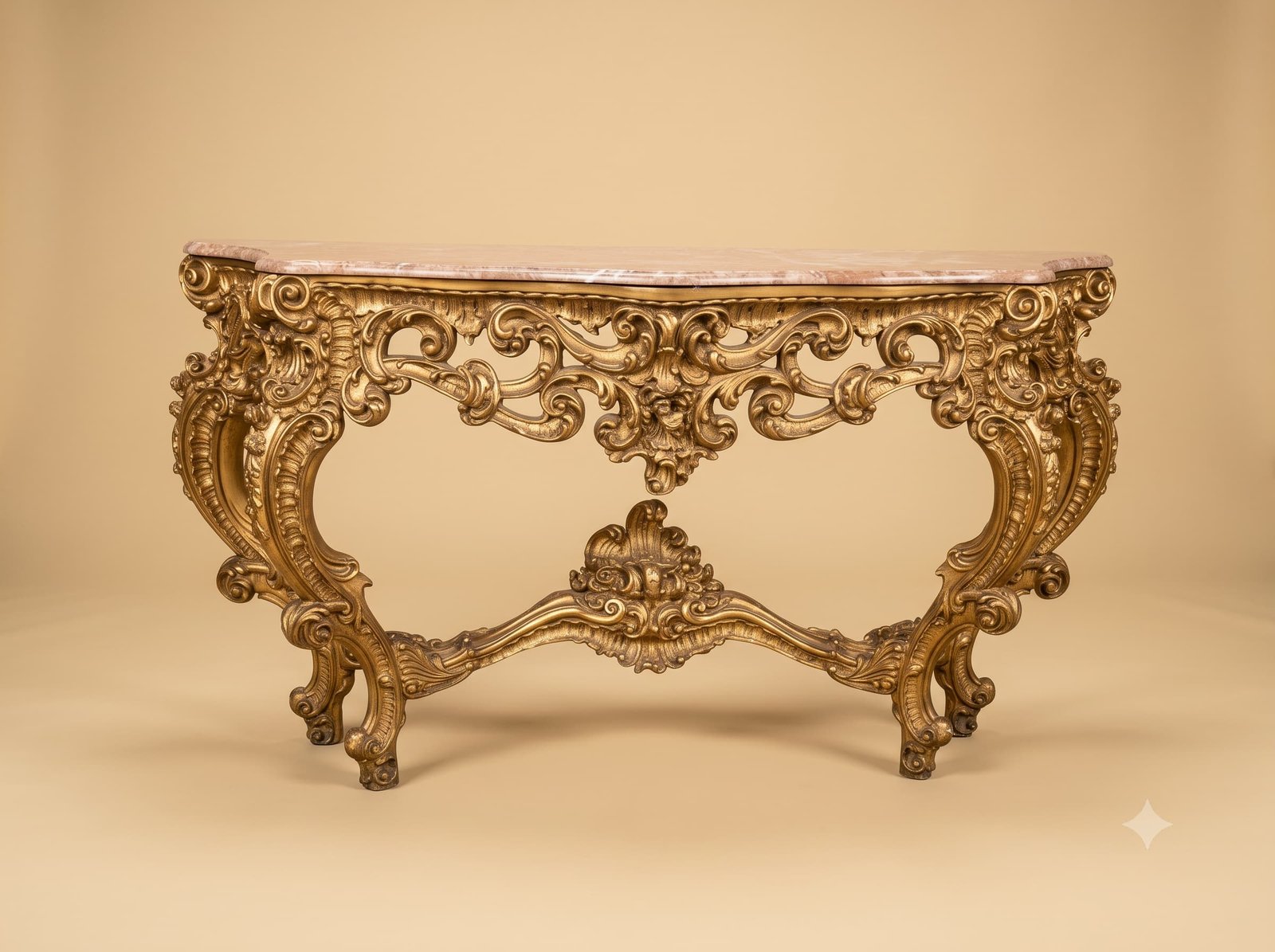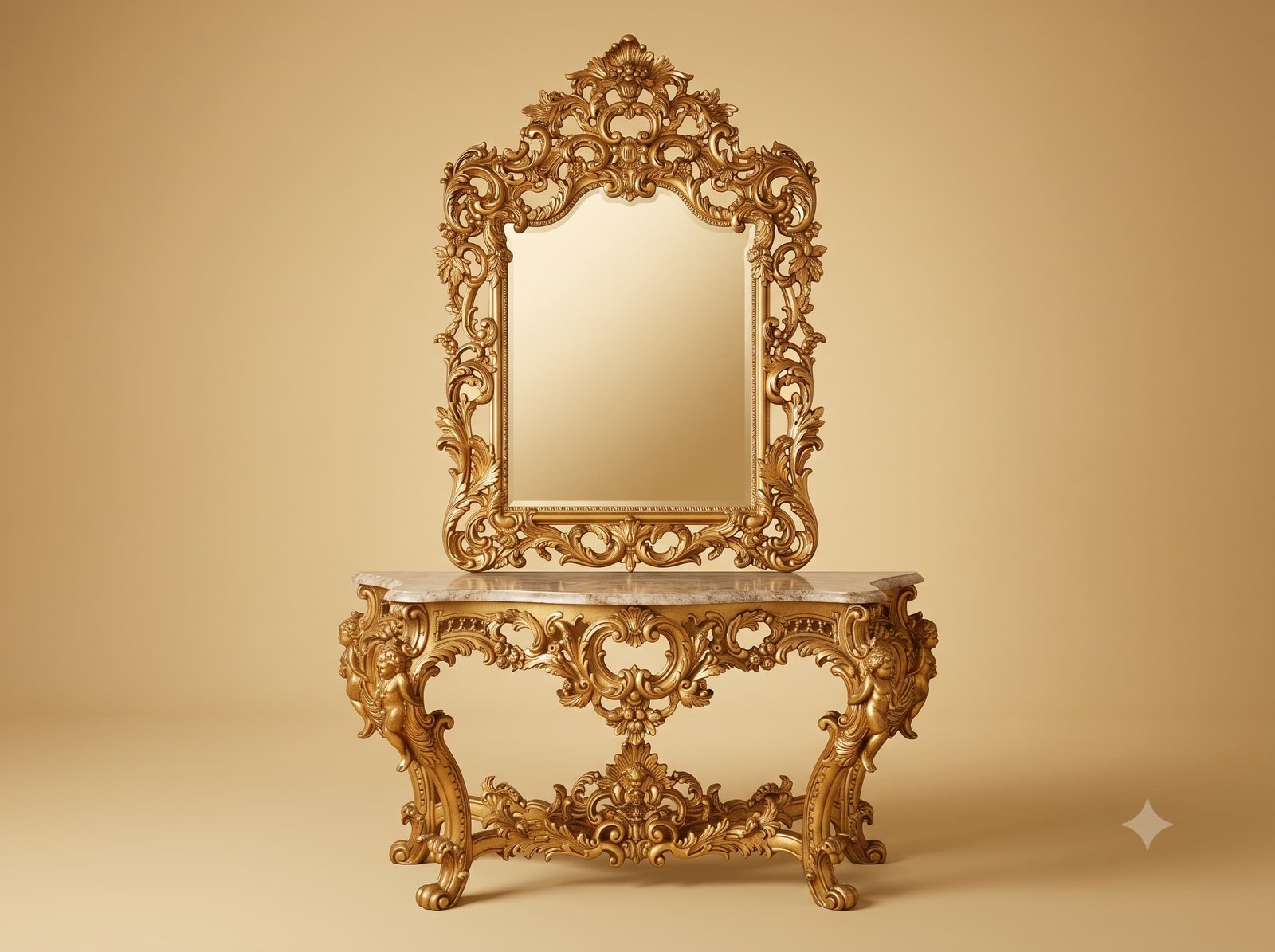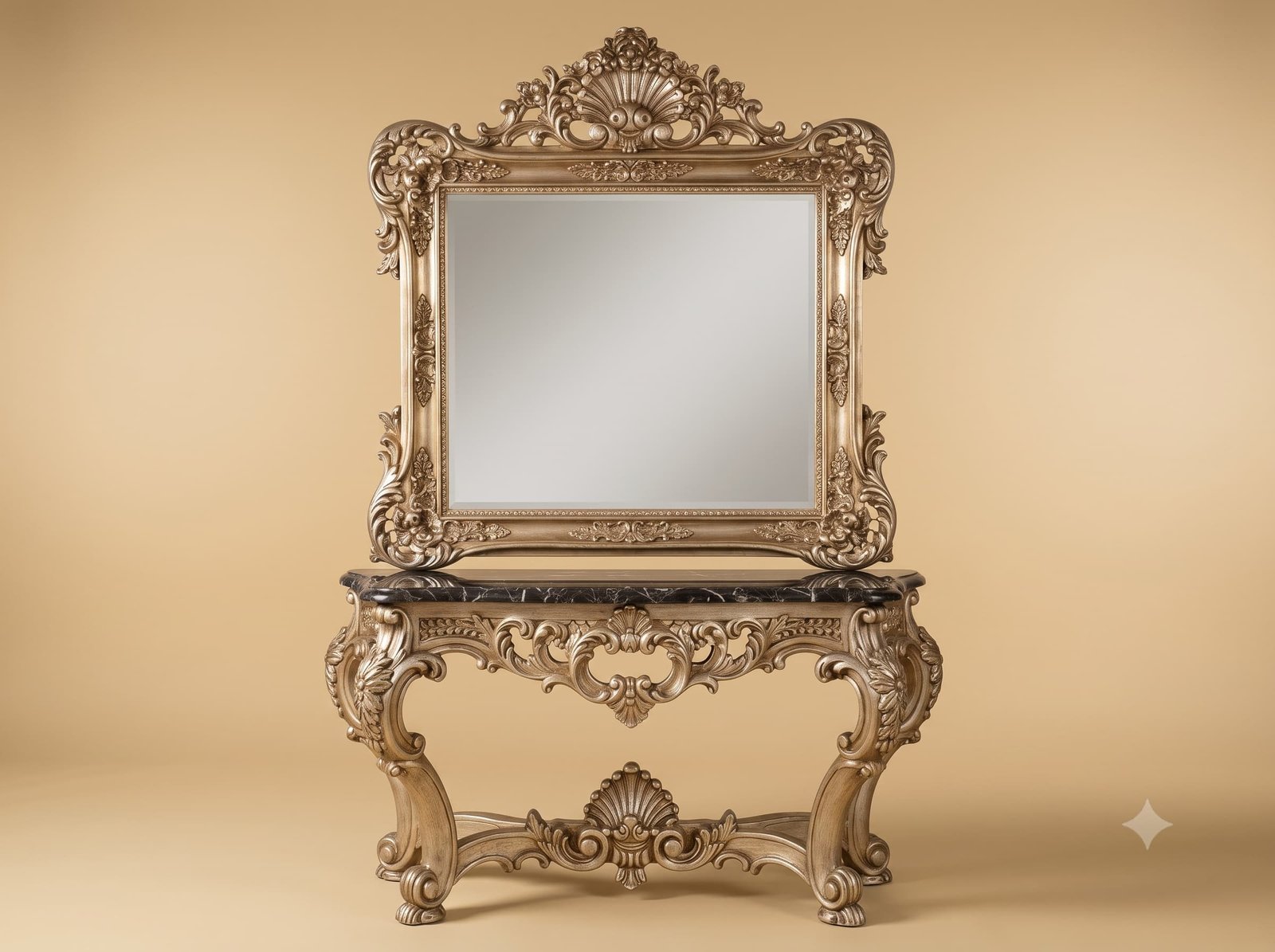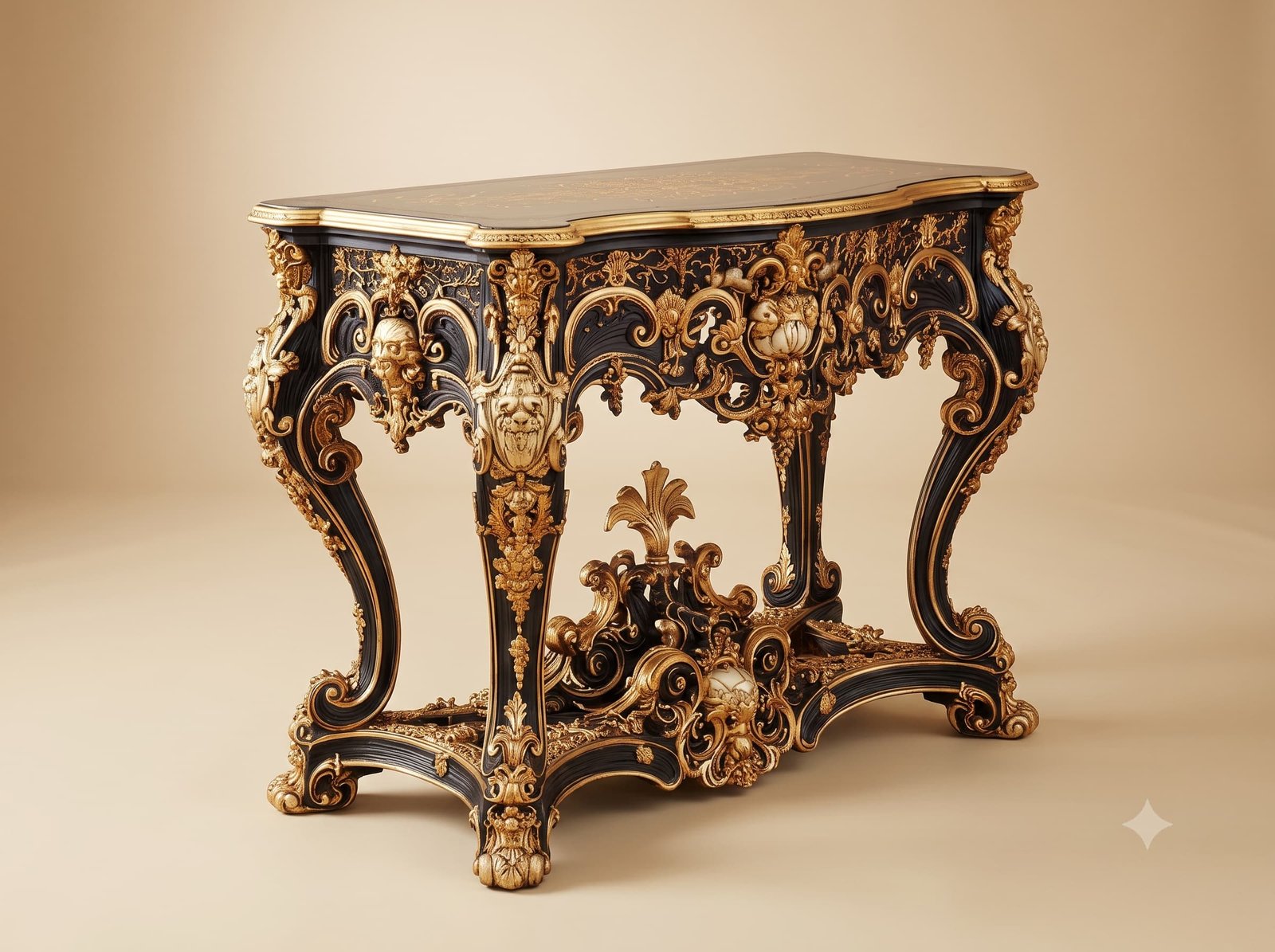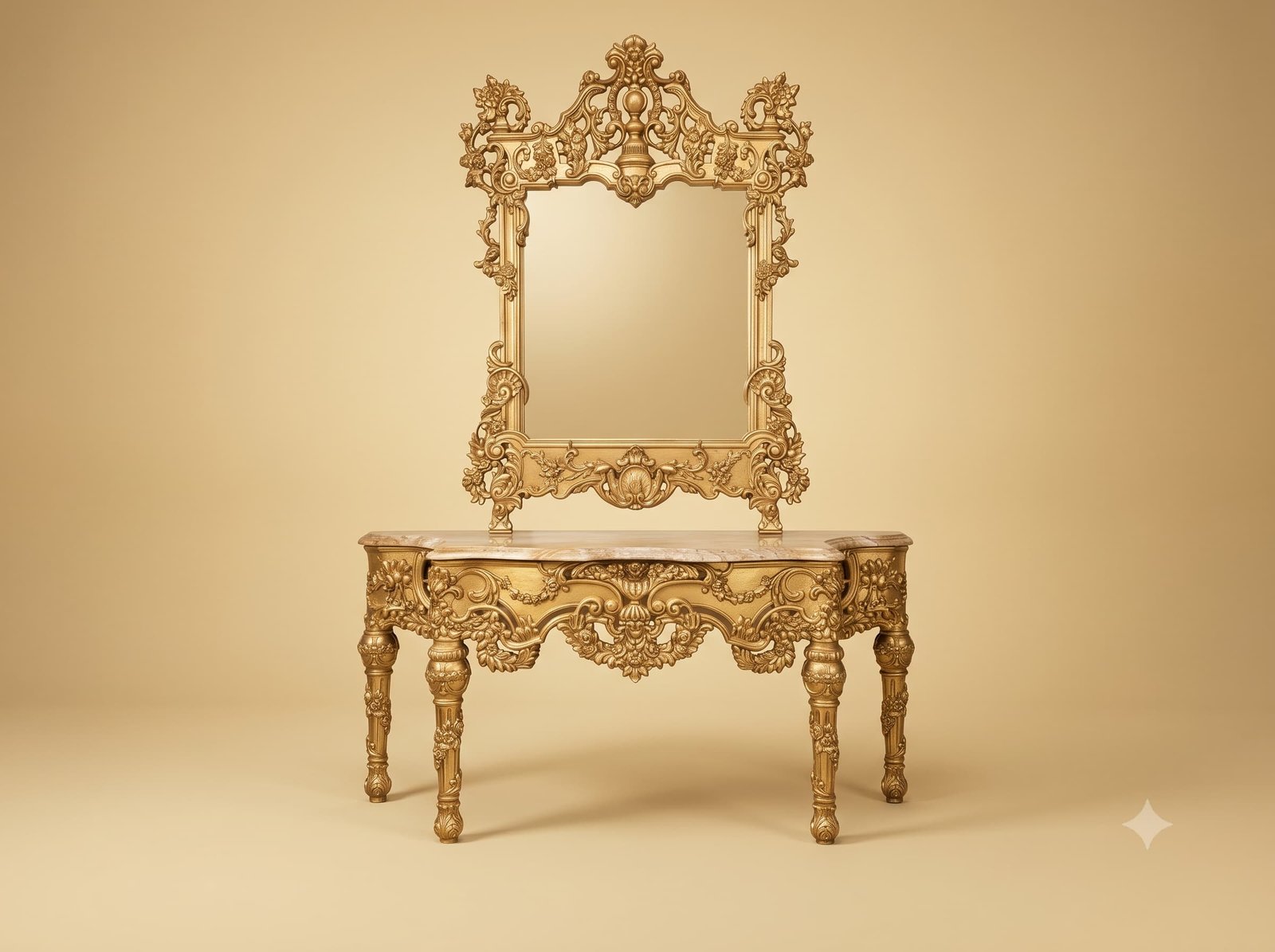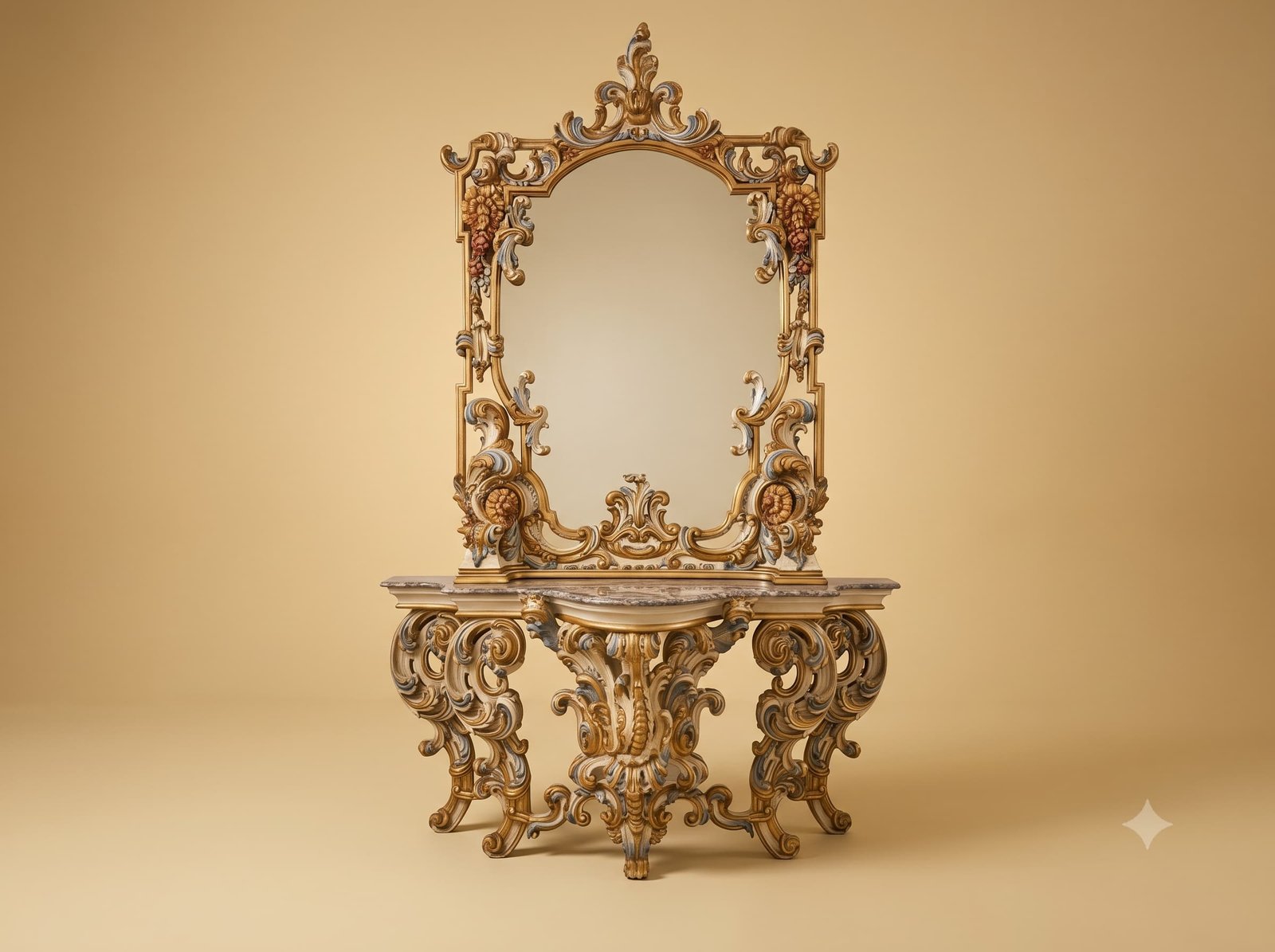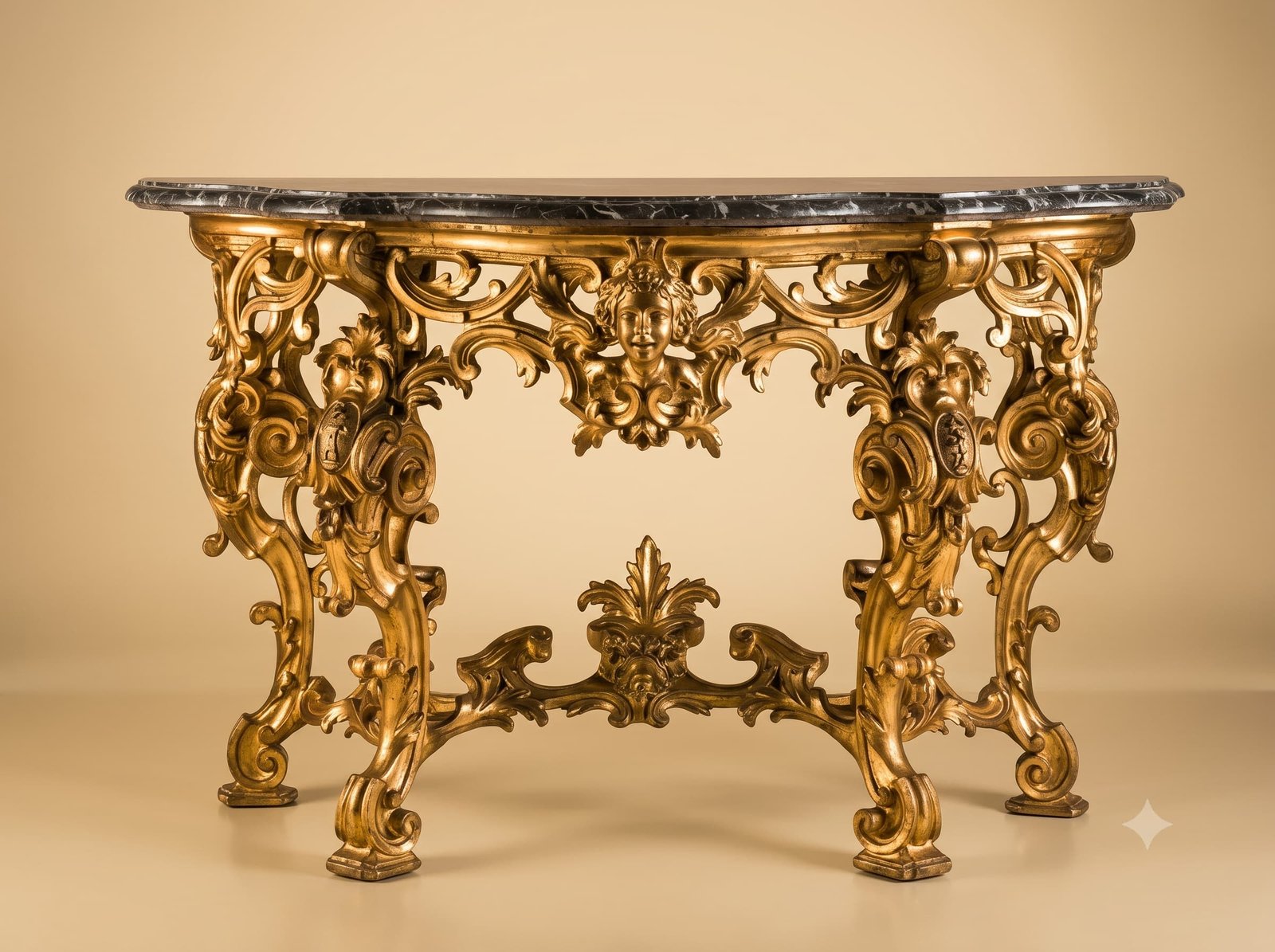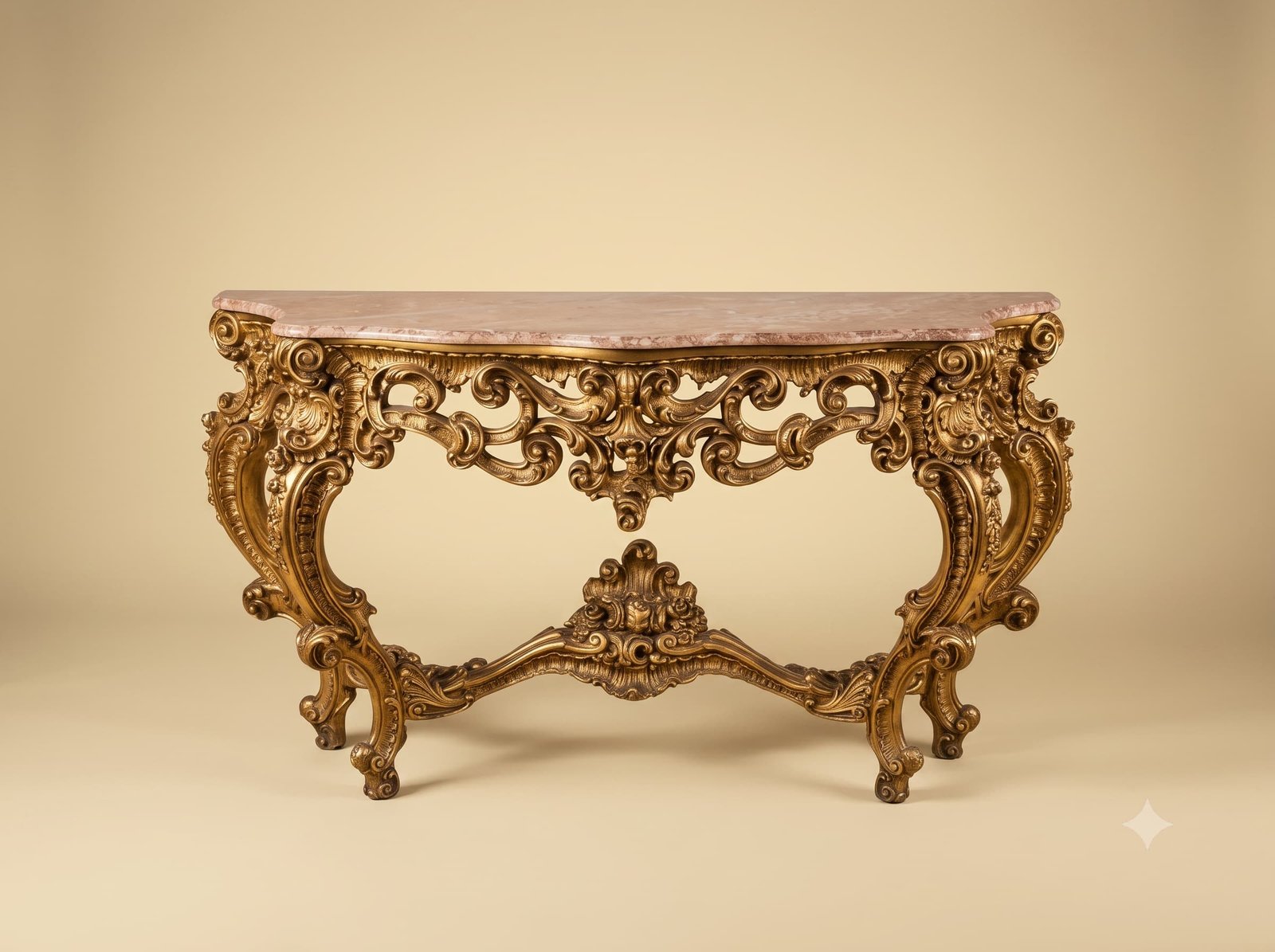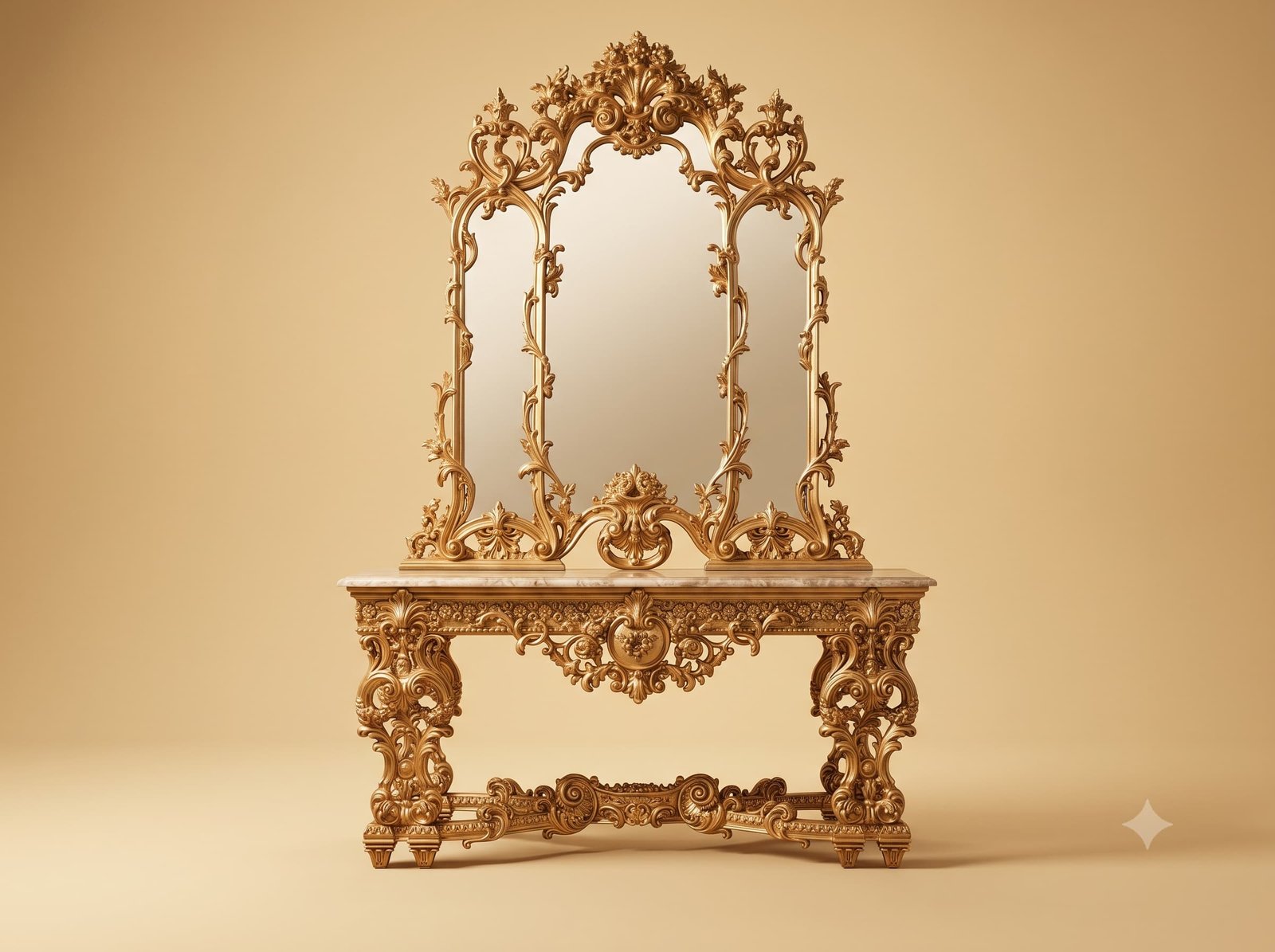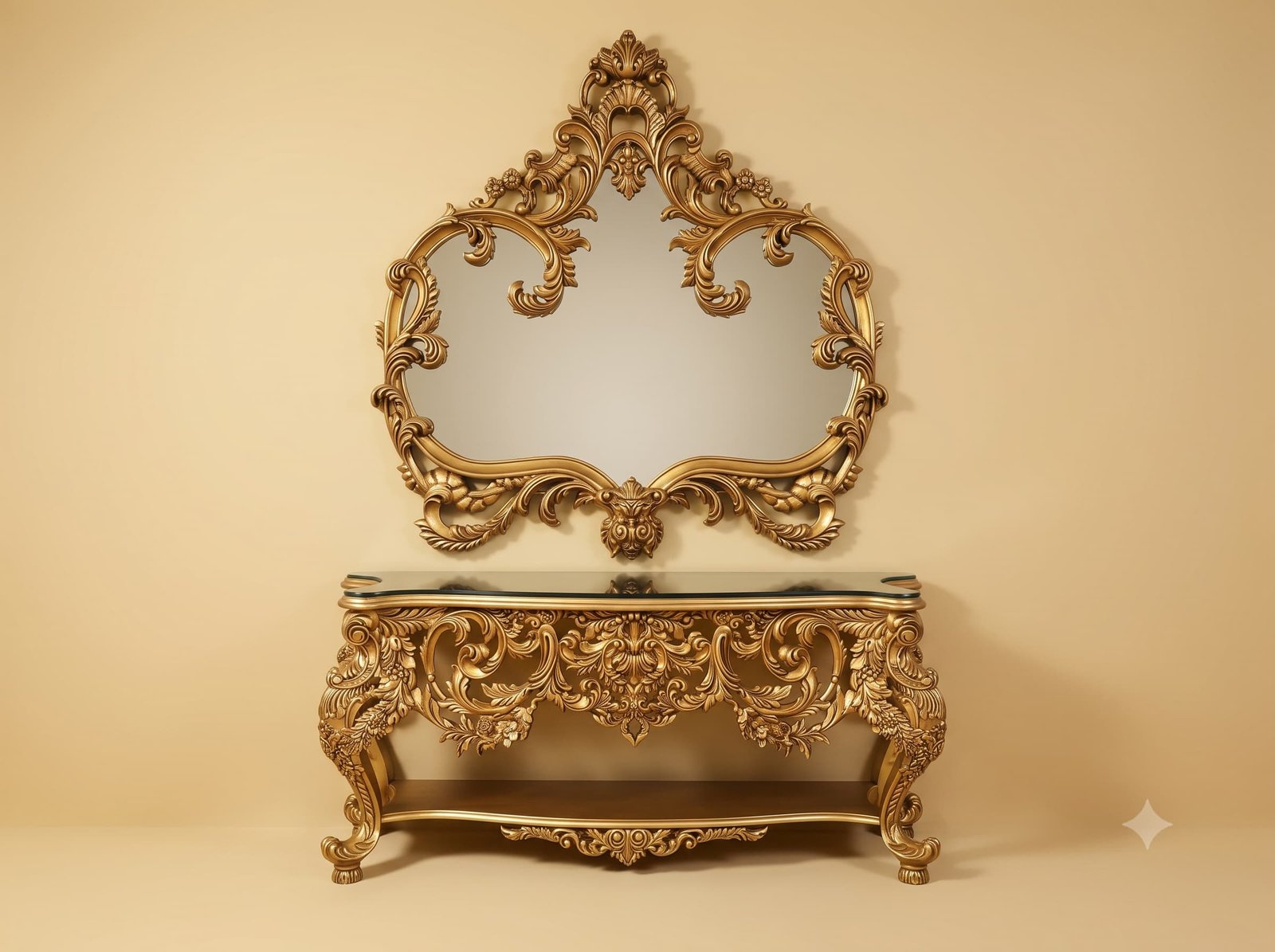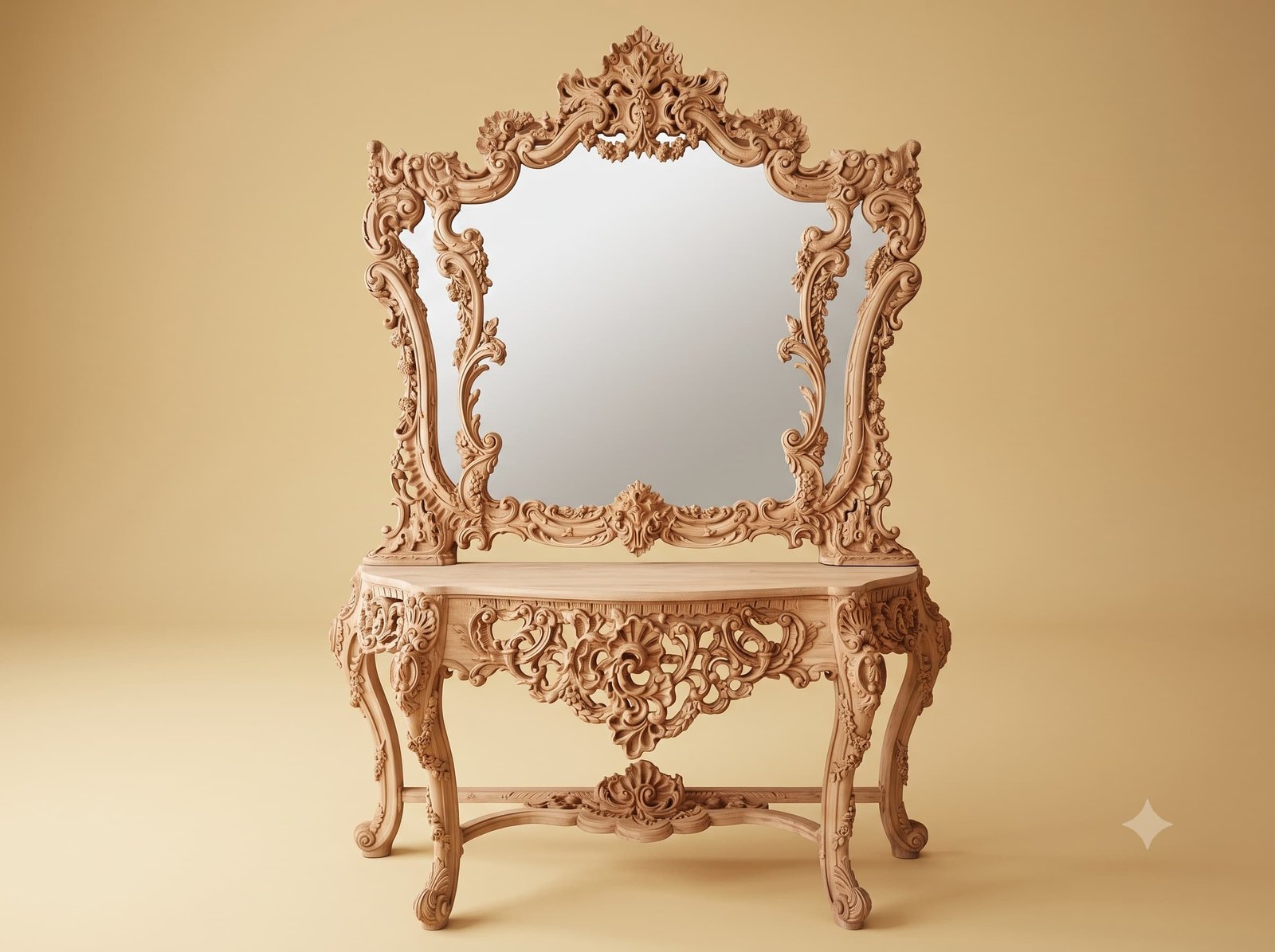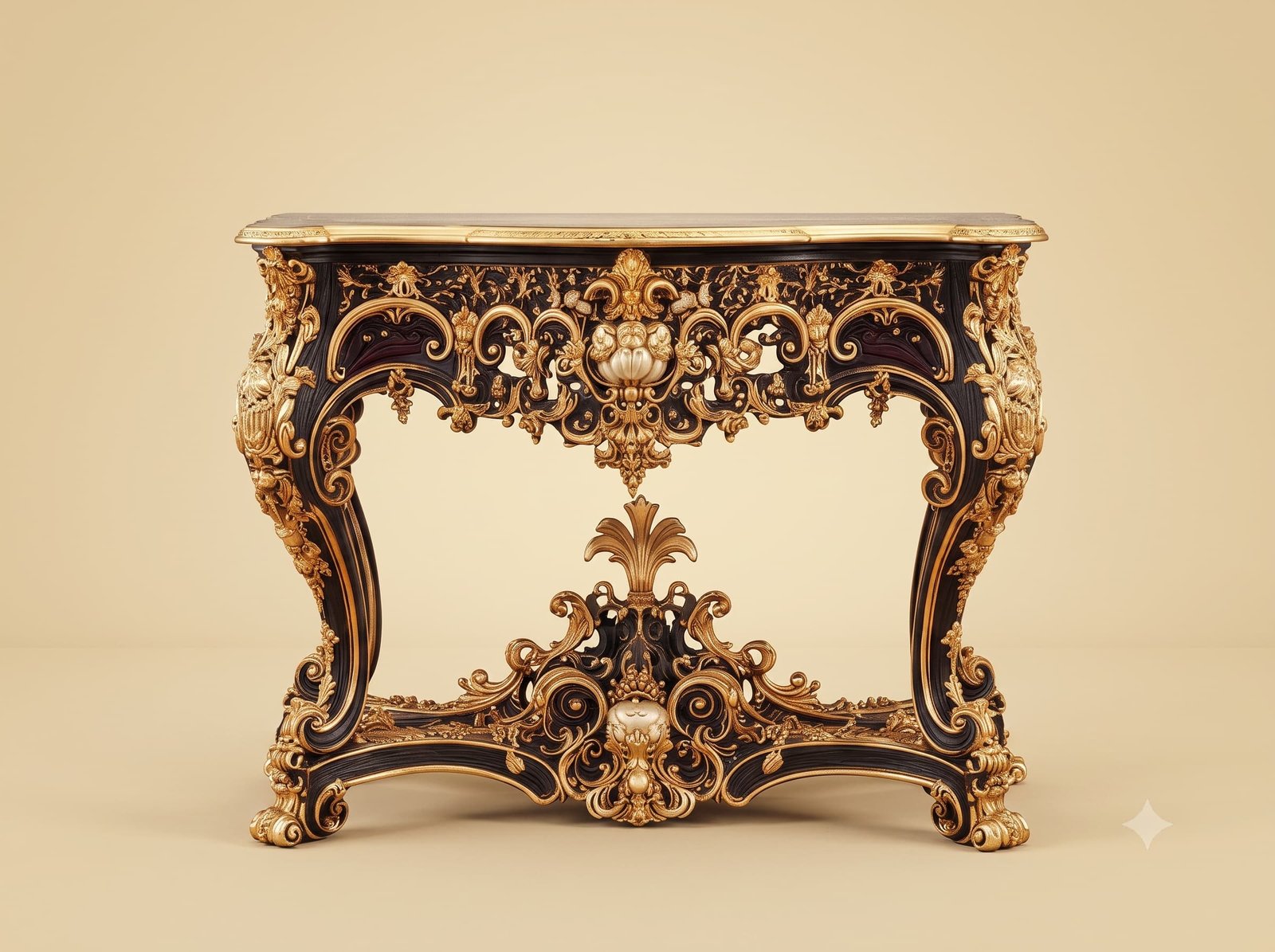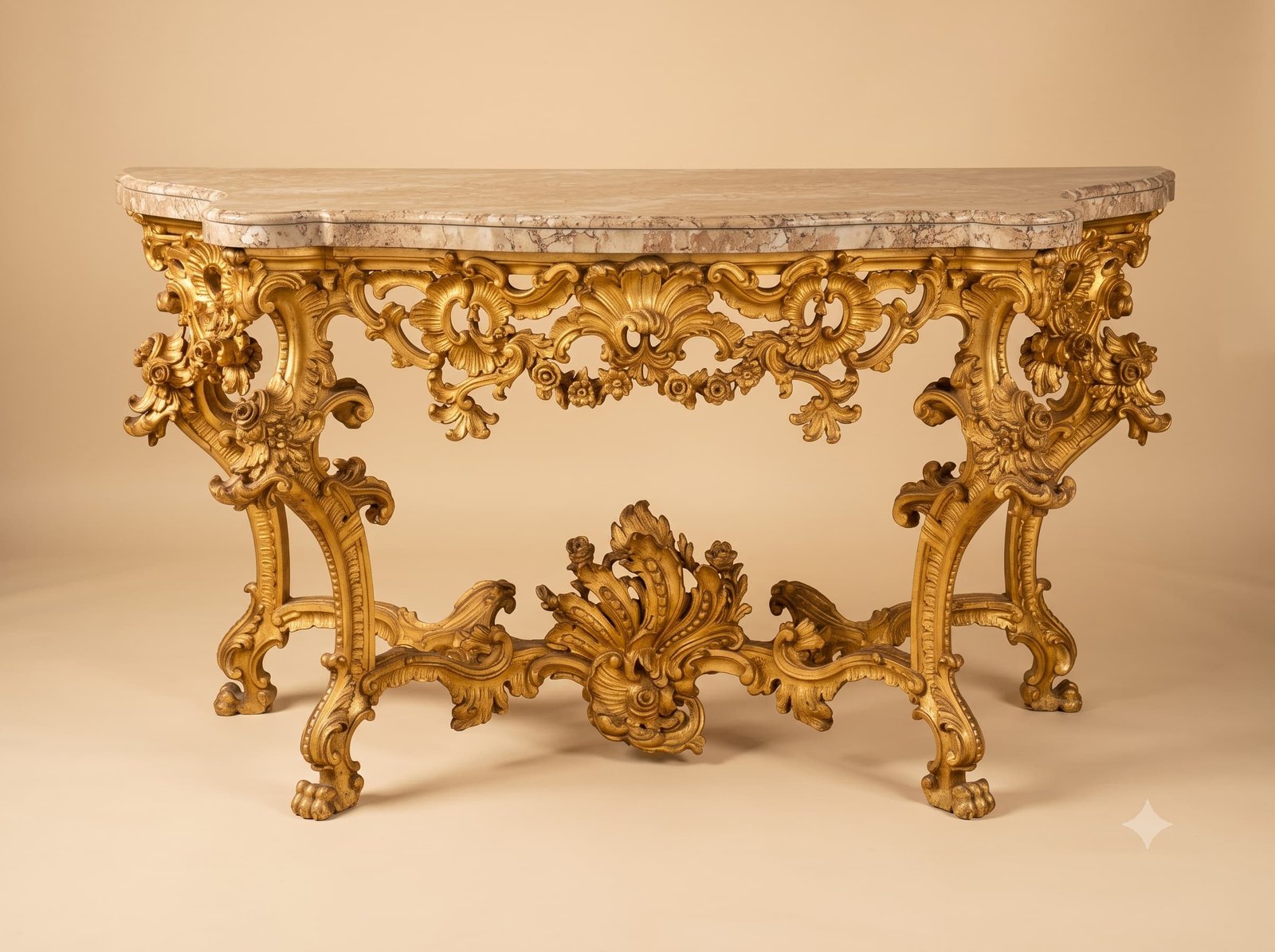
Deep carving is not really about shape. It is about shadow. A scroll that sits flat against its ground reads as a drawing; the same scroll with air behind it reads as an object. Getting air behind it is called undercutting, and it is the last thing a carver does and the most easily ruined.
Our master Indian artisans finish the front surface completely first - every curve modelled, every leaf edge settled - because once the tool goes behind the ornament there is no putting material back. Then they work from beneath with bent gouges, cutting inward under the raised edges until the ornament stands free of the ground everywhere except where it is genuinely attached.
How far to go is decided at the root, not at the edge. Each element is anchored to the frame at one or two points, and the carver leaves those roots heavy while cutting away everything between them. Take the undercut past the root and the ornament becomes decoration waiting to be knocked off; stop well short of it and the whole apron stays flat and lifeless.
What you see on the finished table are those decisions, one at a time, several hundred of them.
 Ask Price On WhatsApp