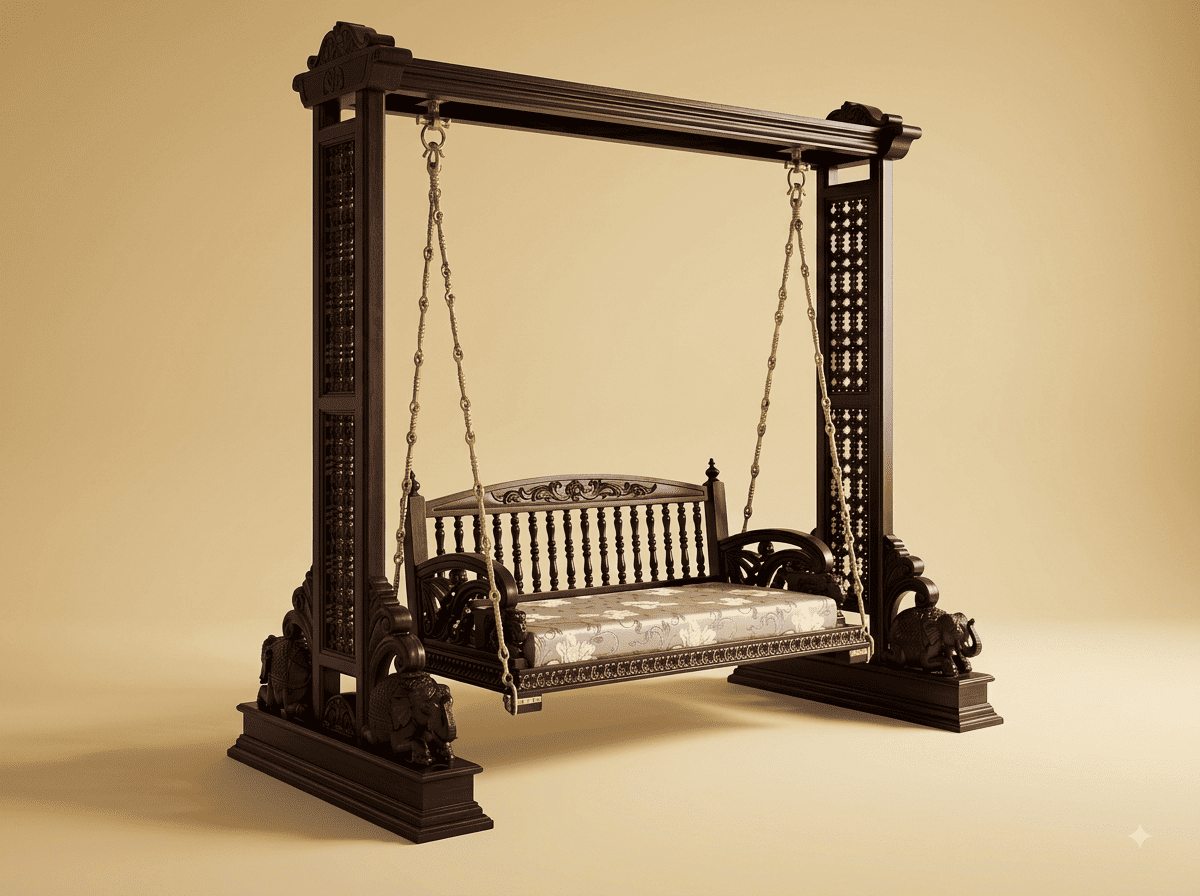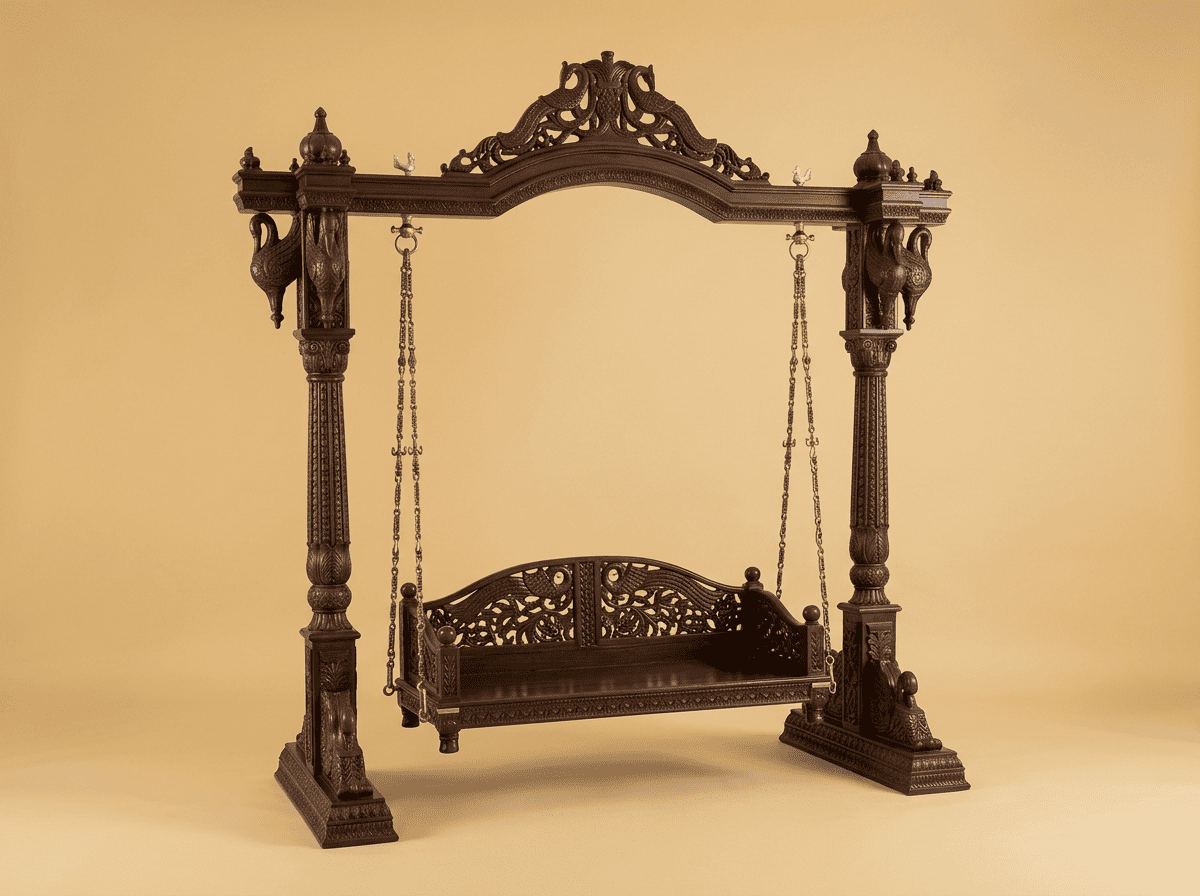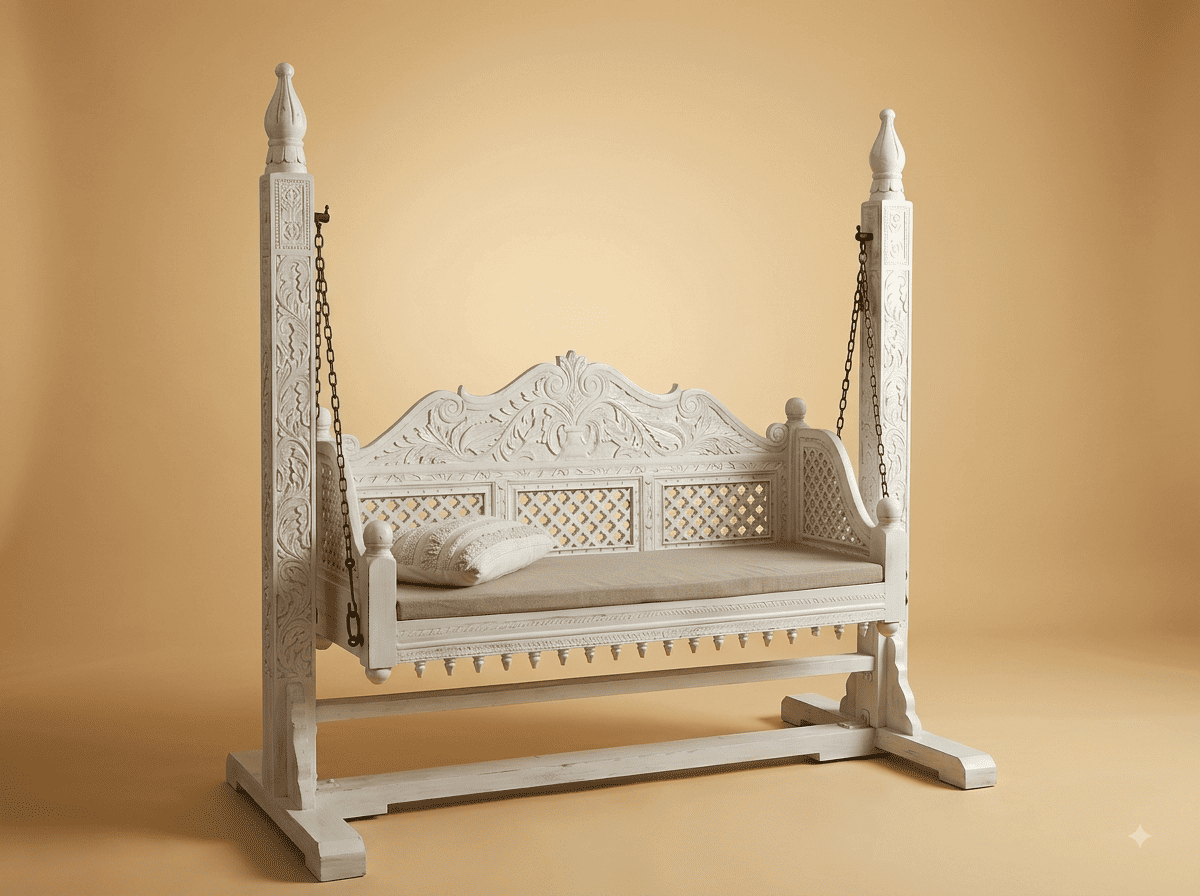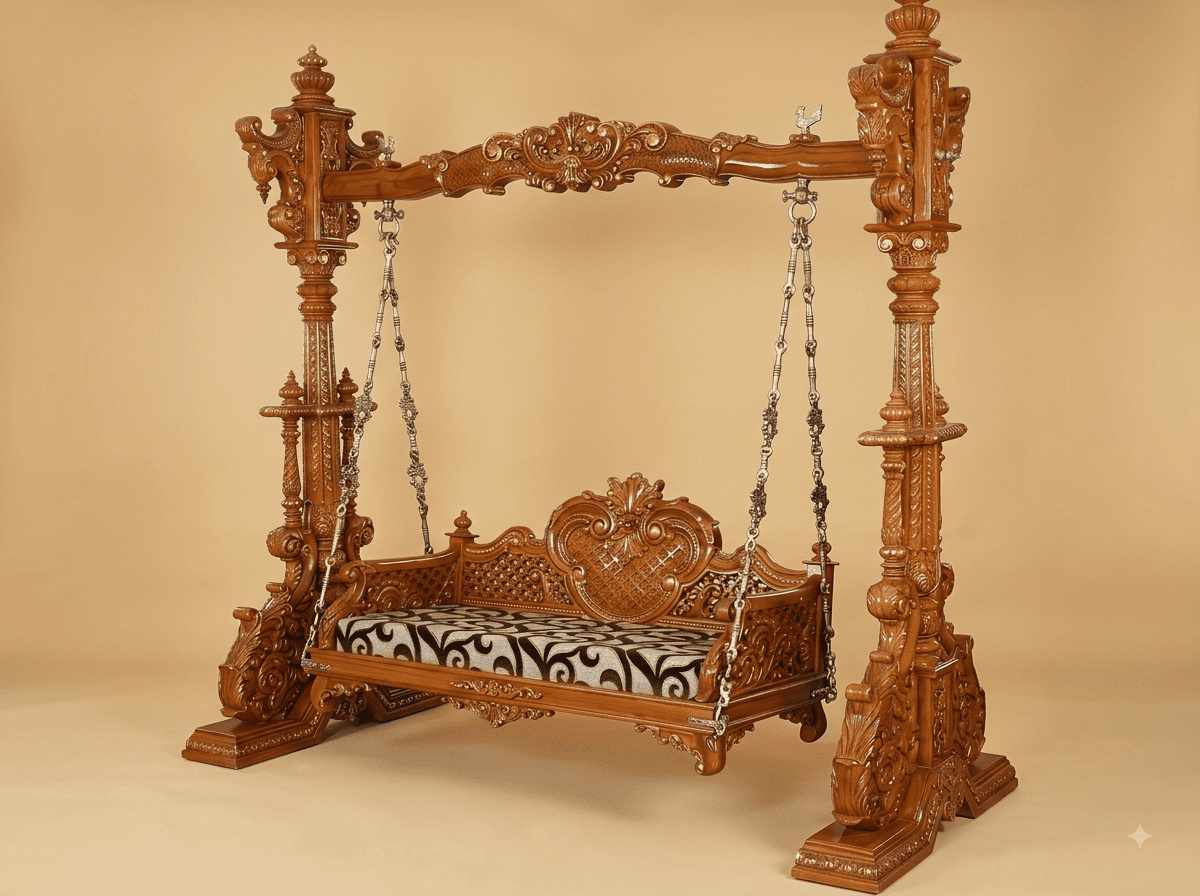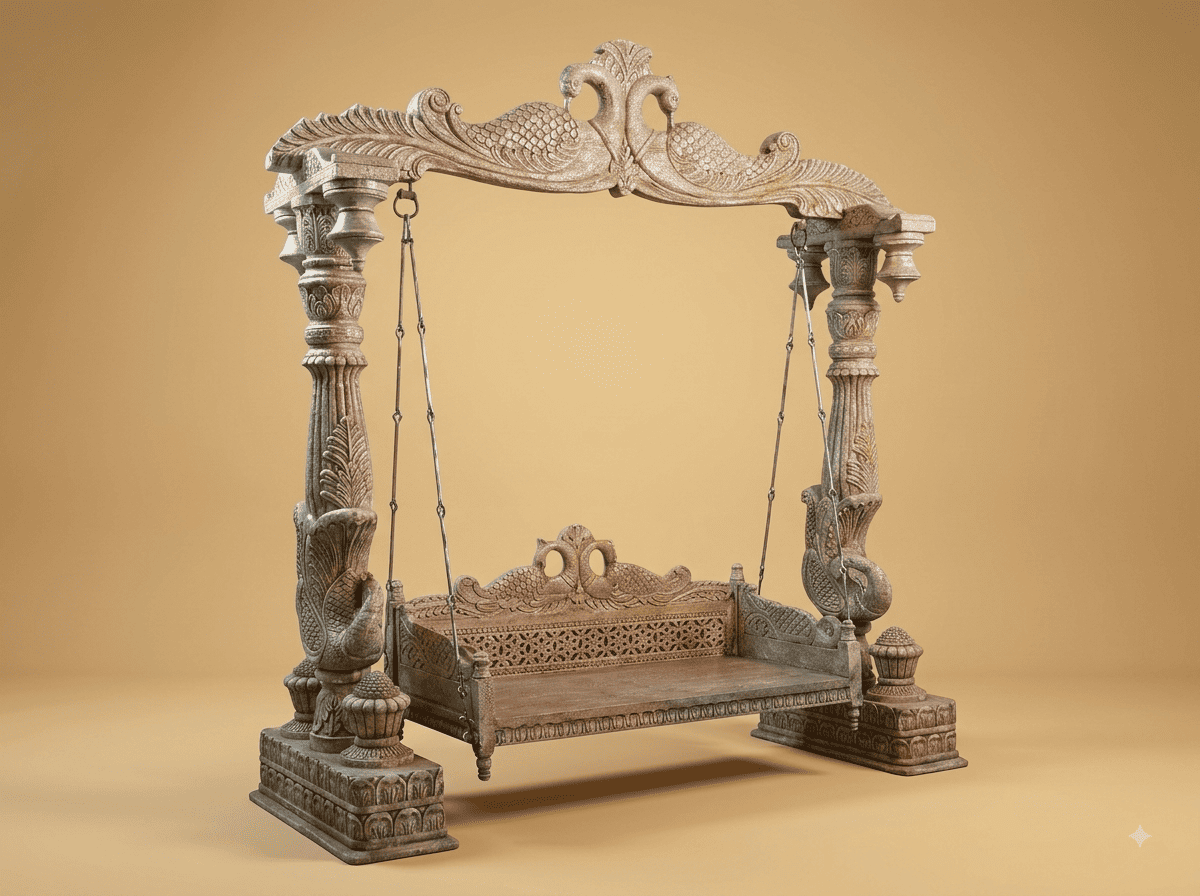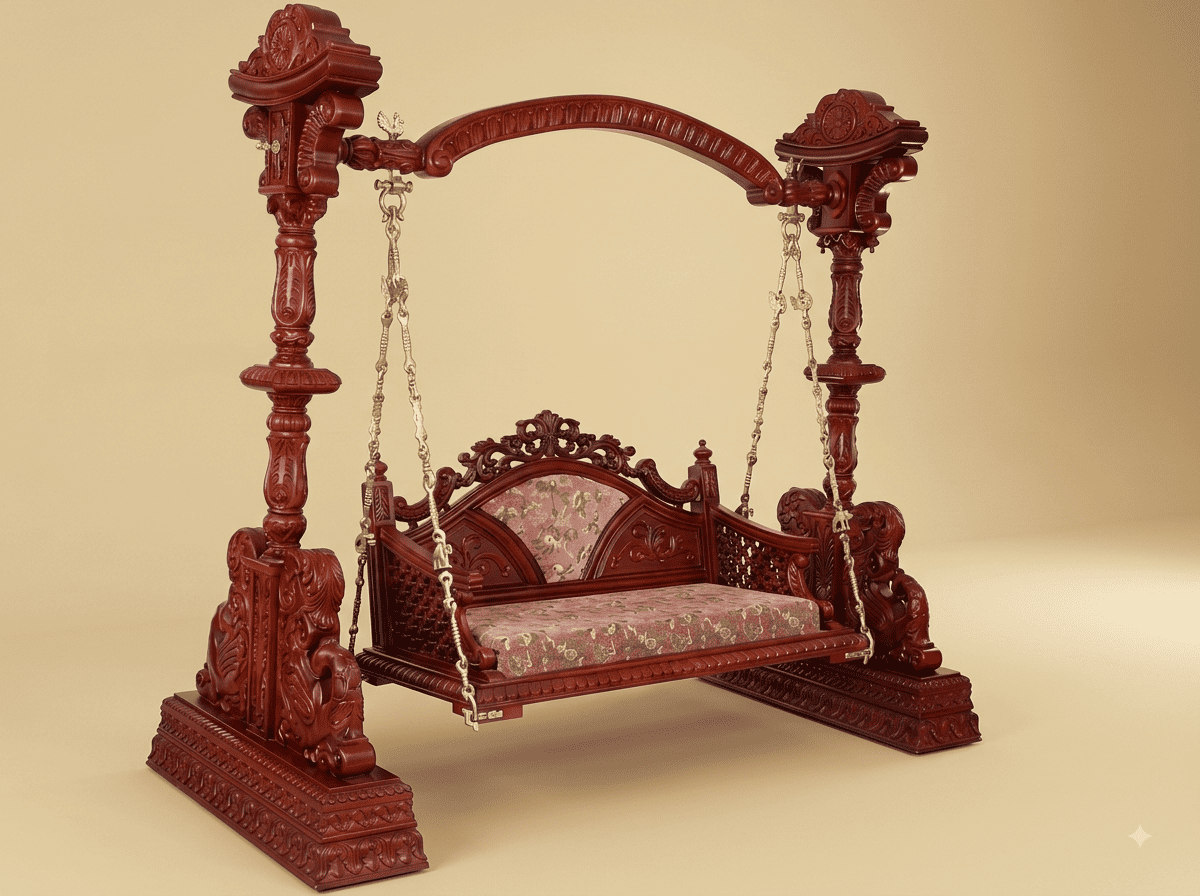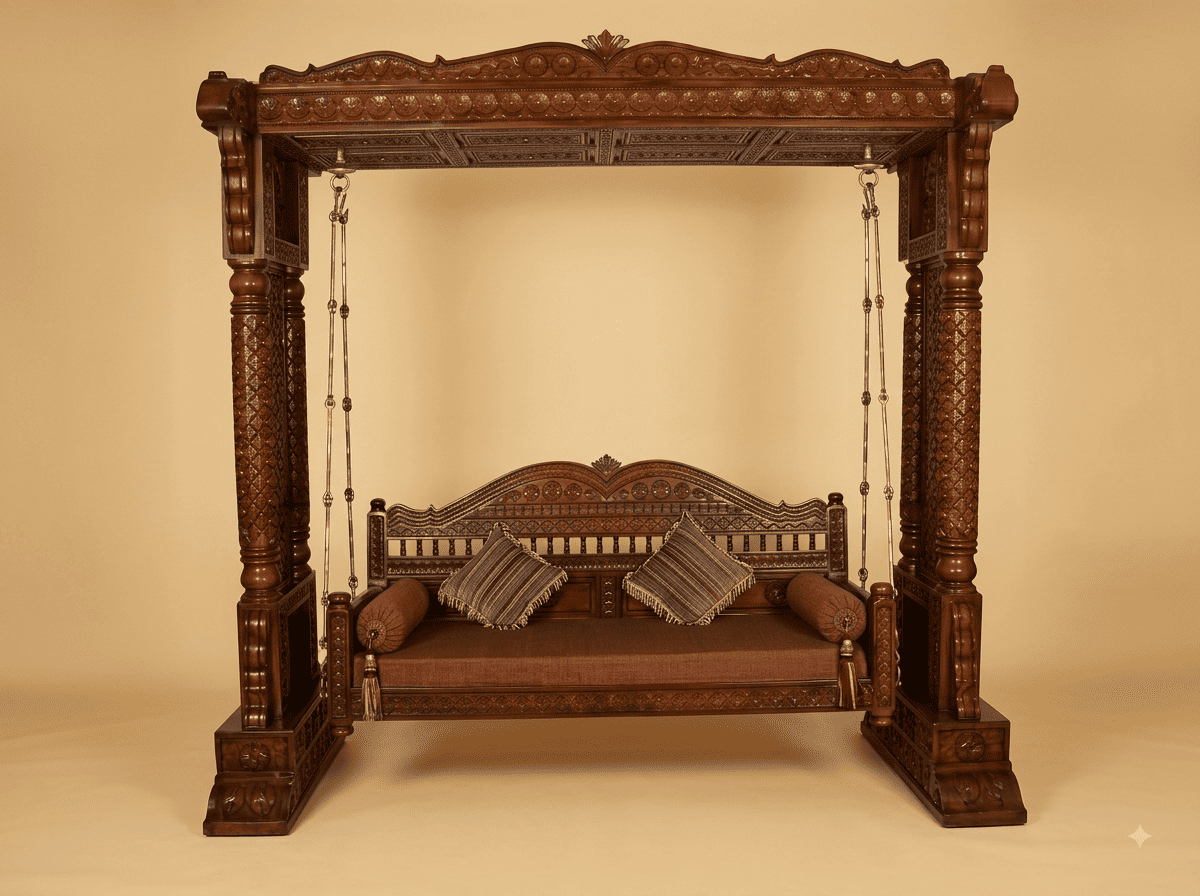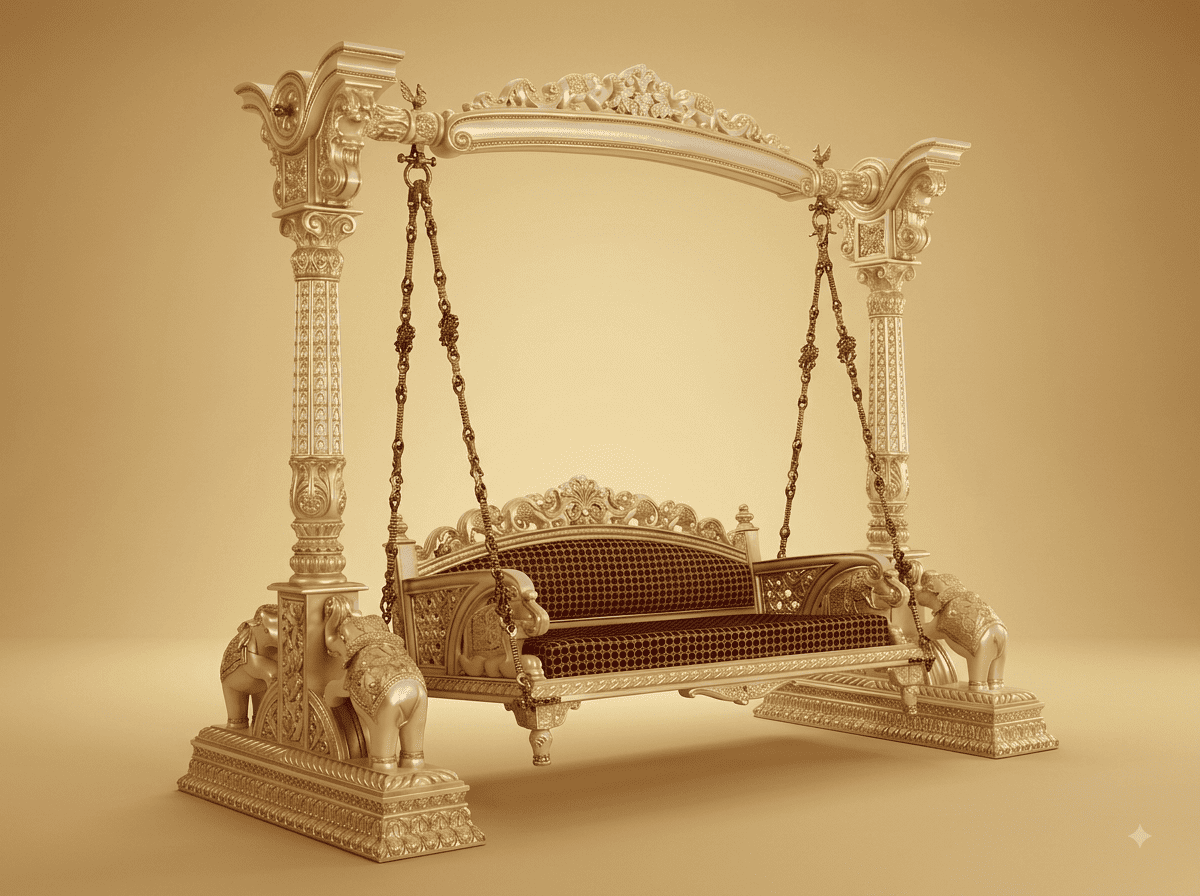
Elephants at the base of a swing are not decoration for their own sake. In Indian court furniture the elephant is the bearer, the animal that carries what matters, and putting four of them under a jhula tells you where the weight of the piece is meant to be read as going. It is a visual argument, made in wood, that this thing is grounded.
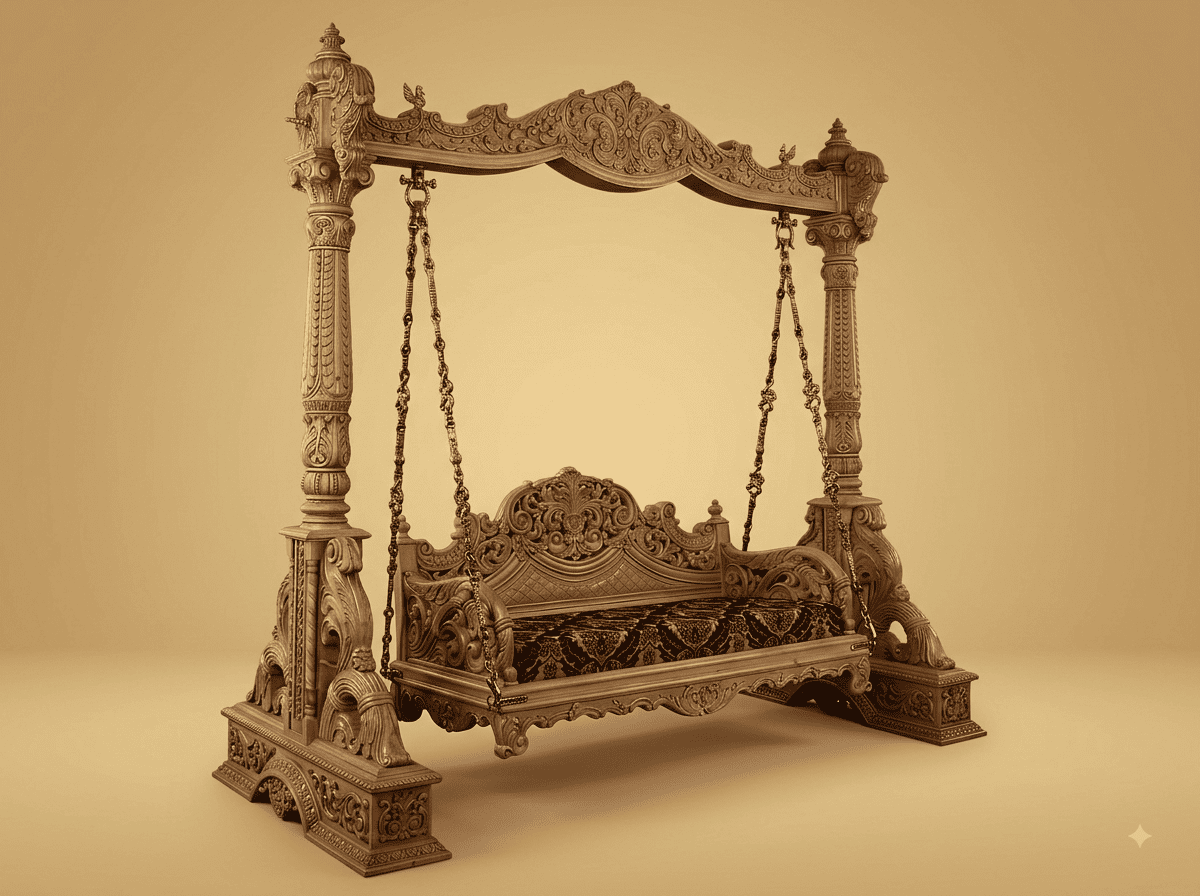
The ivory and gold finish comes from the same court tradition. Palace interiors used pale grounds with gilded relief because the gilding catches lamplight and lifts the carving out of a room that would otherwise swallow it after sunset. In a modern home with warm lighting the effect is the same, and the swing stays visible in the evening rather than fading into the wall behind it.
Our master Indian artisans carve the elephants freehand from solid blocks, then work the diaper pattern on the columns cut by cut, which is what gives that surface its slight irregularity and its life. The whole piece is handcrafted Indian luxury in the older sense: made slowly by people who learned it from people.
 Ask Price On WhatsApp