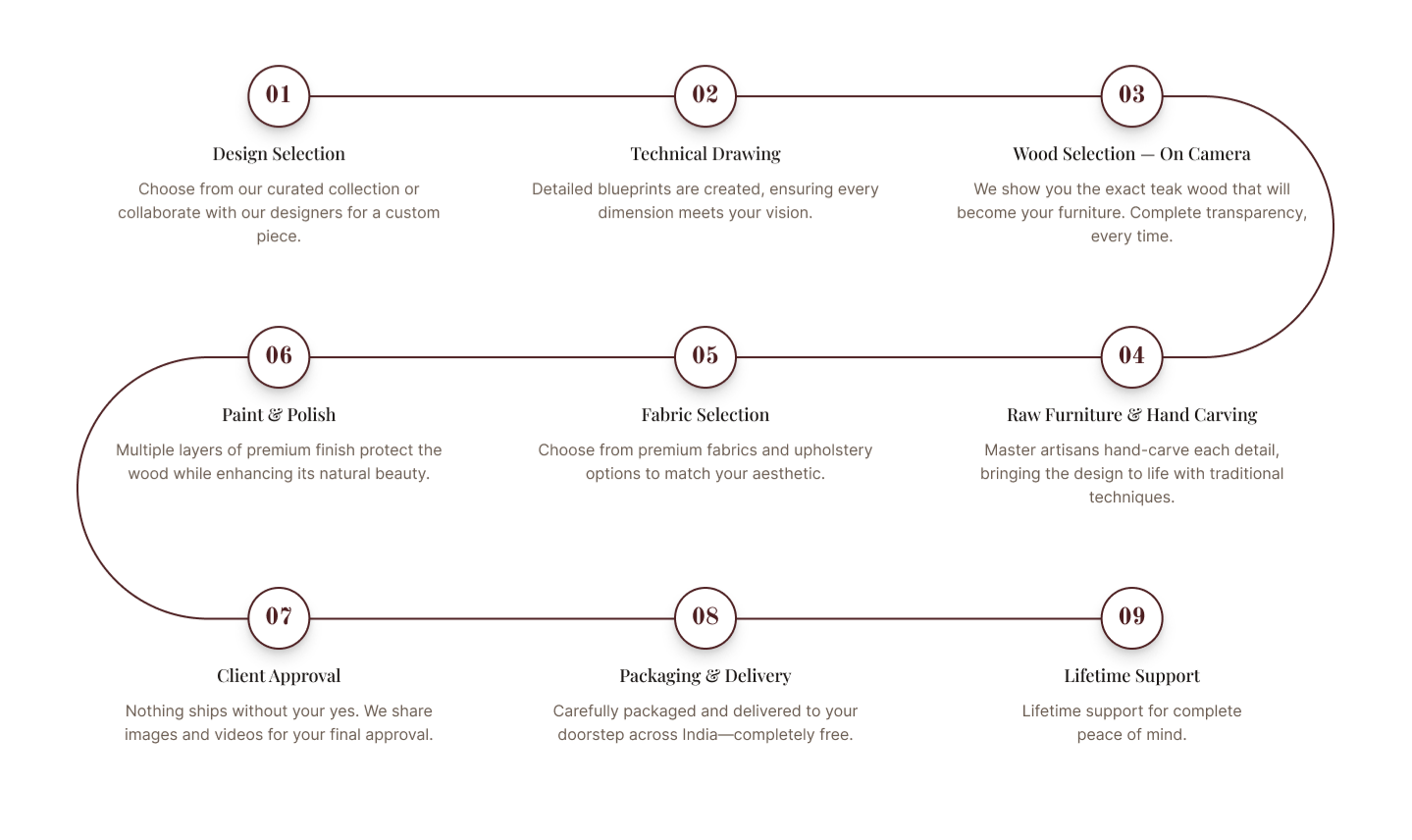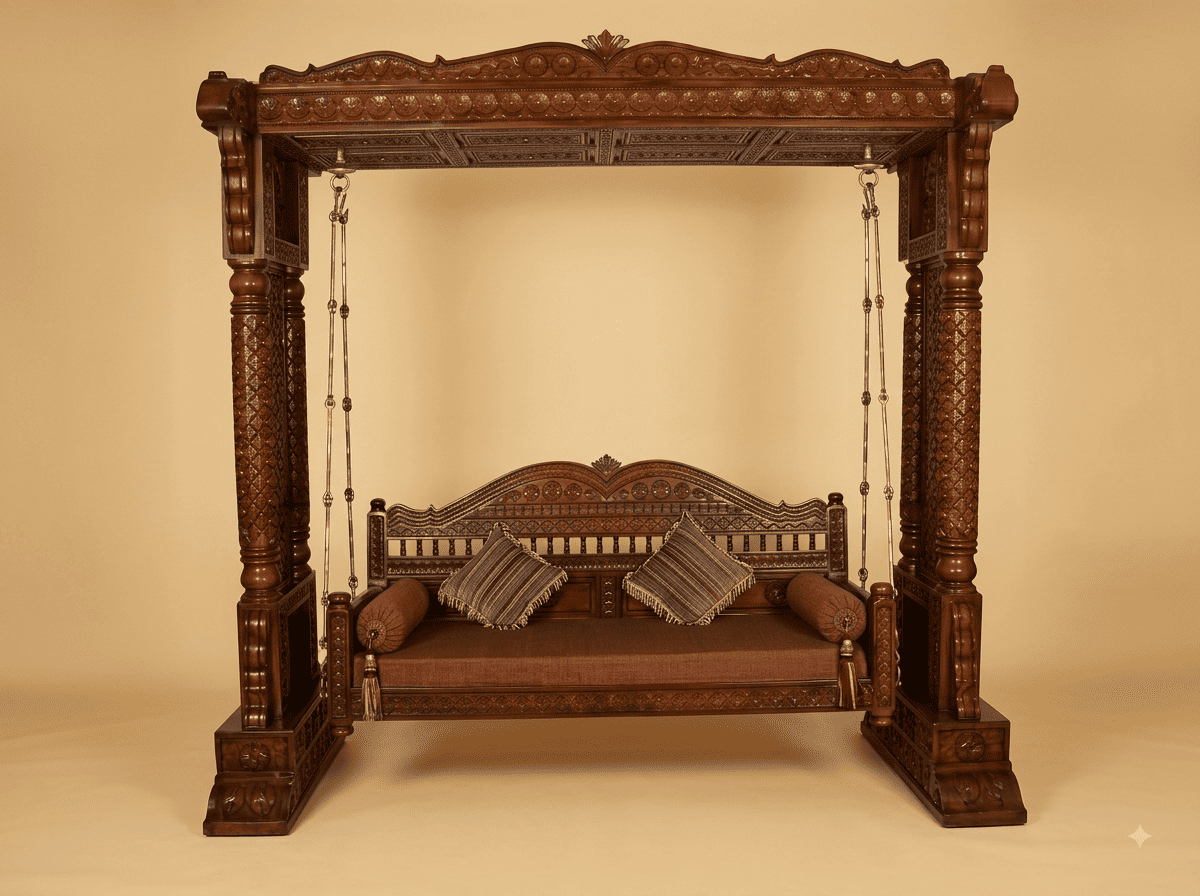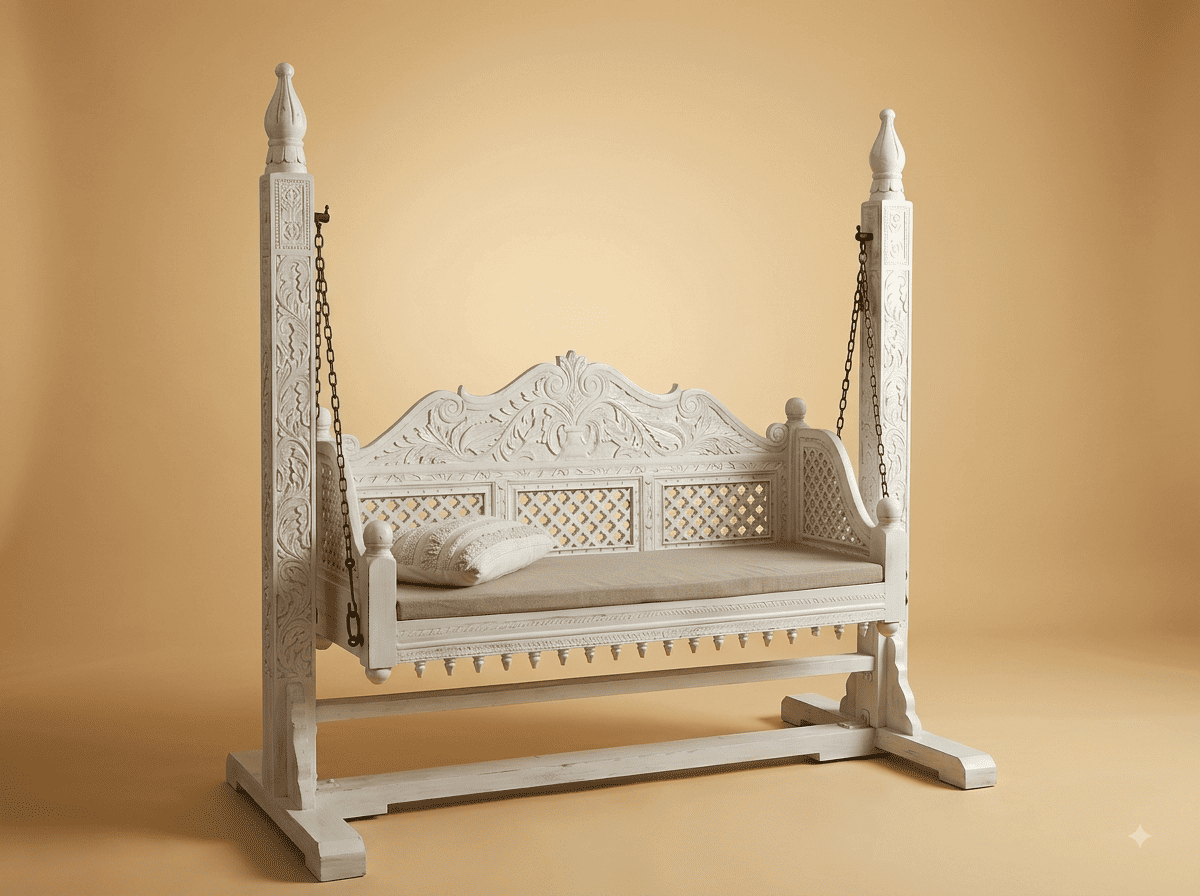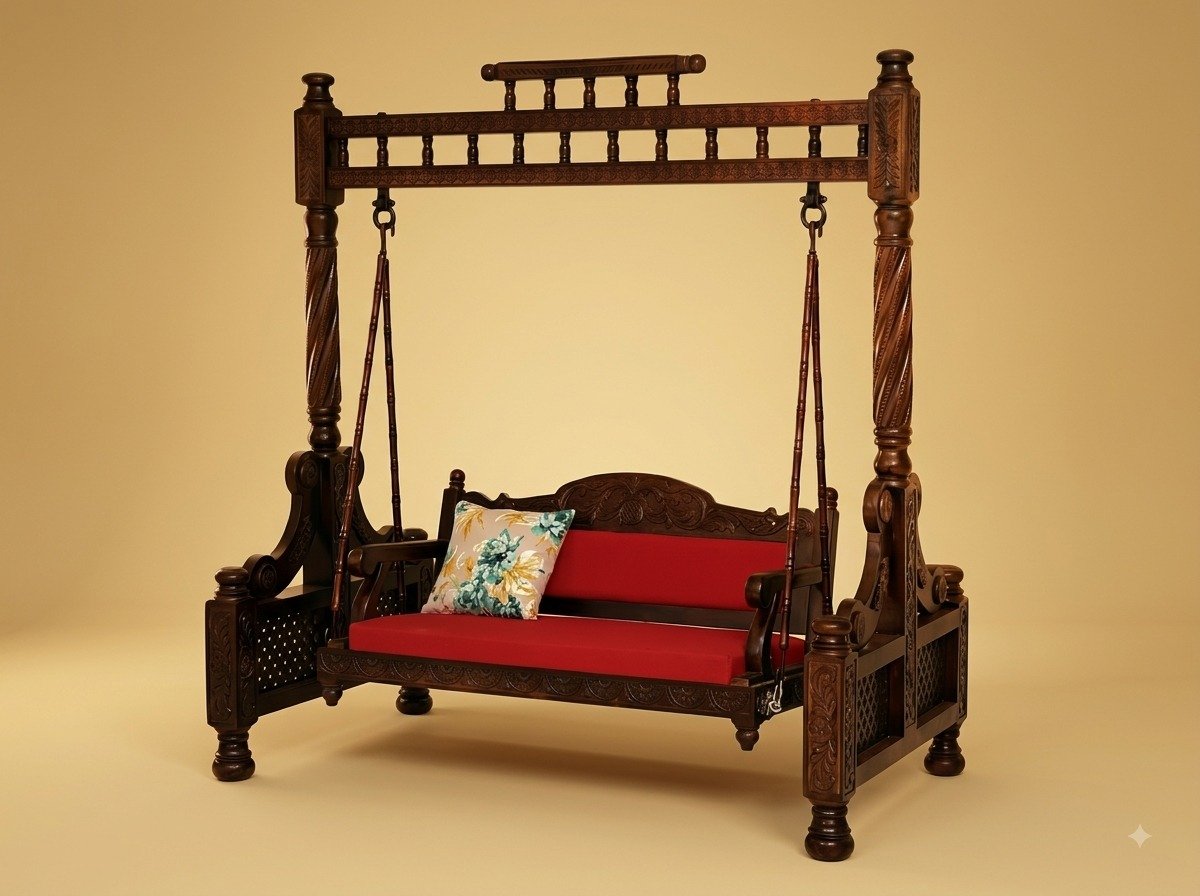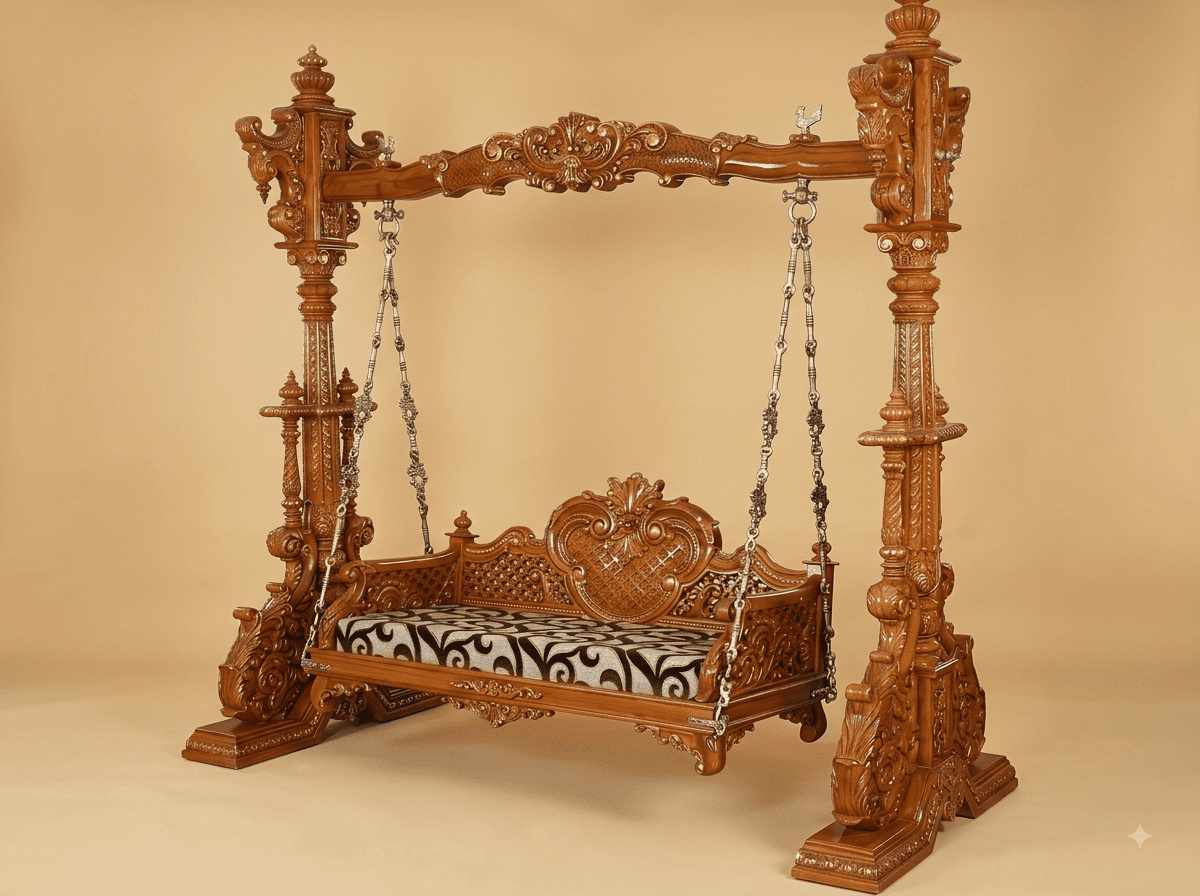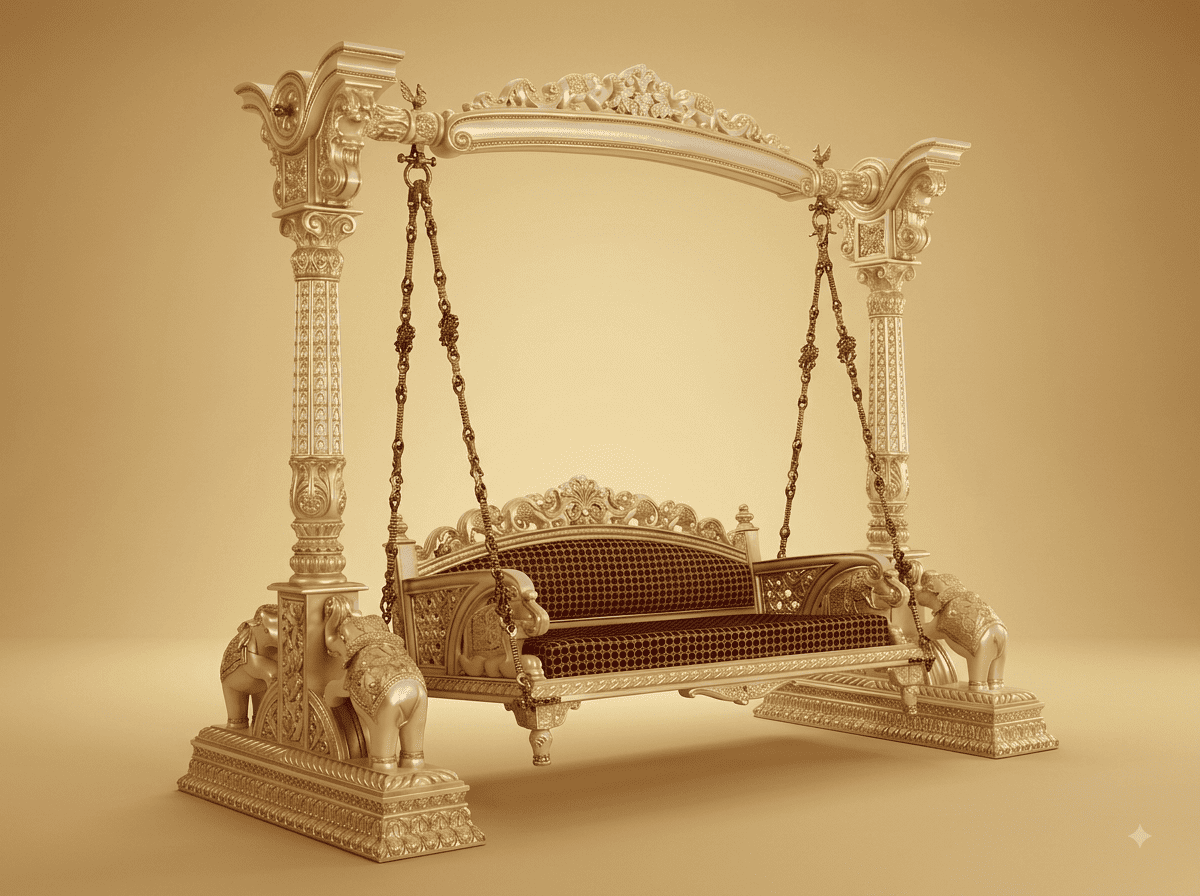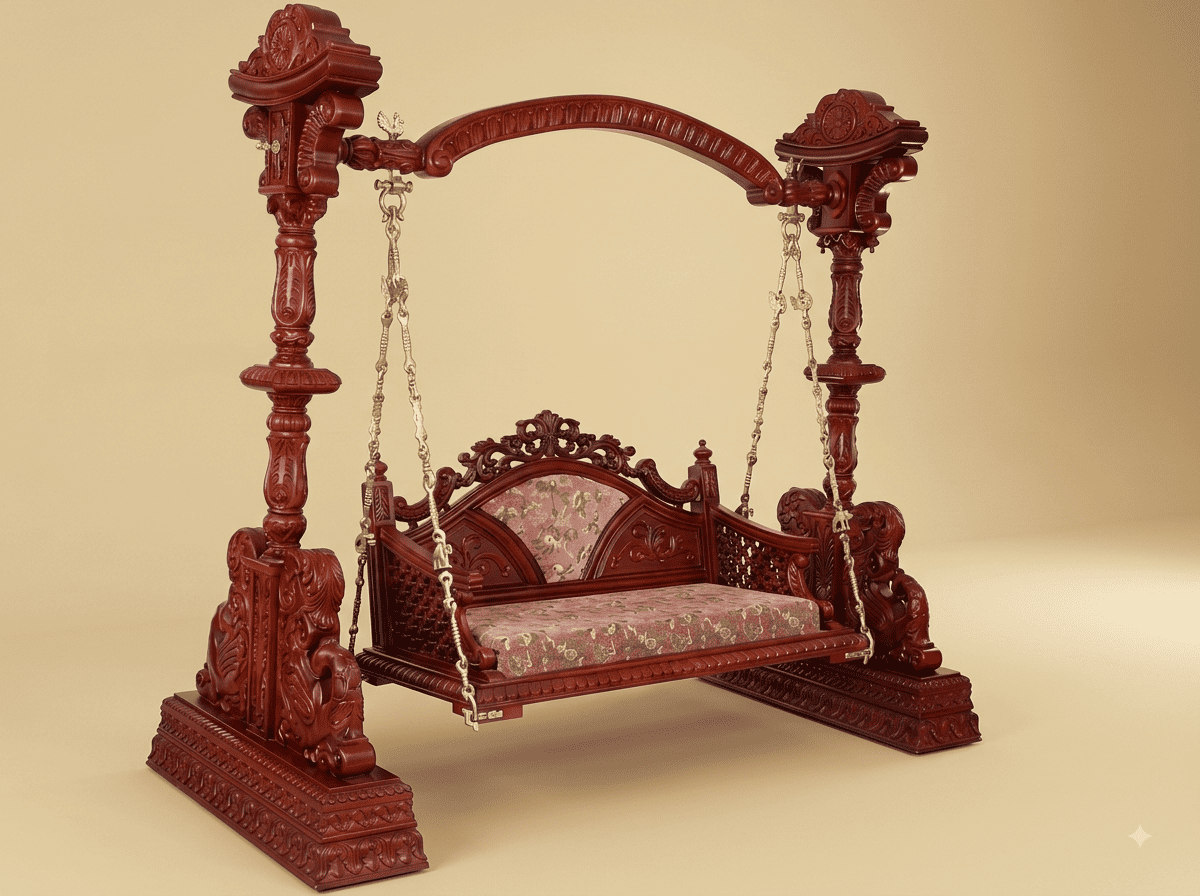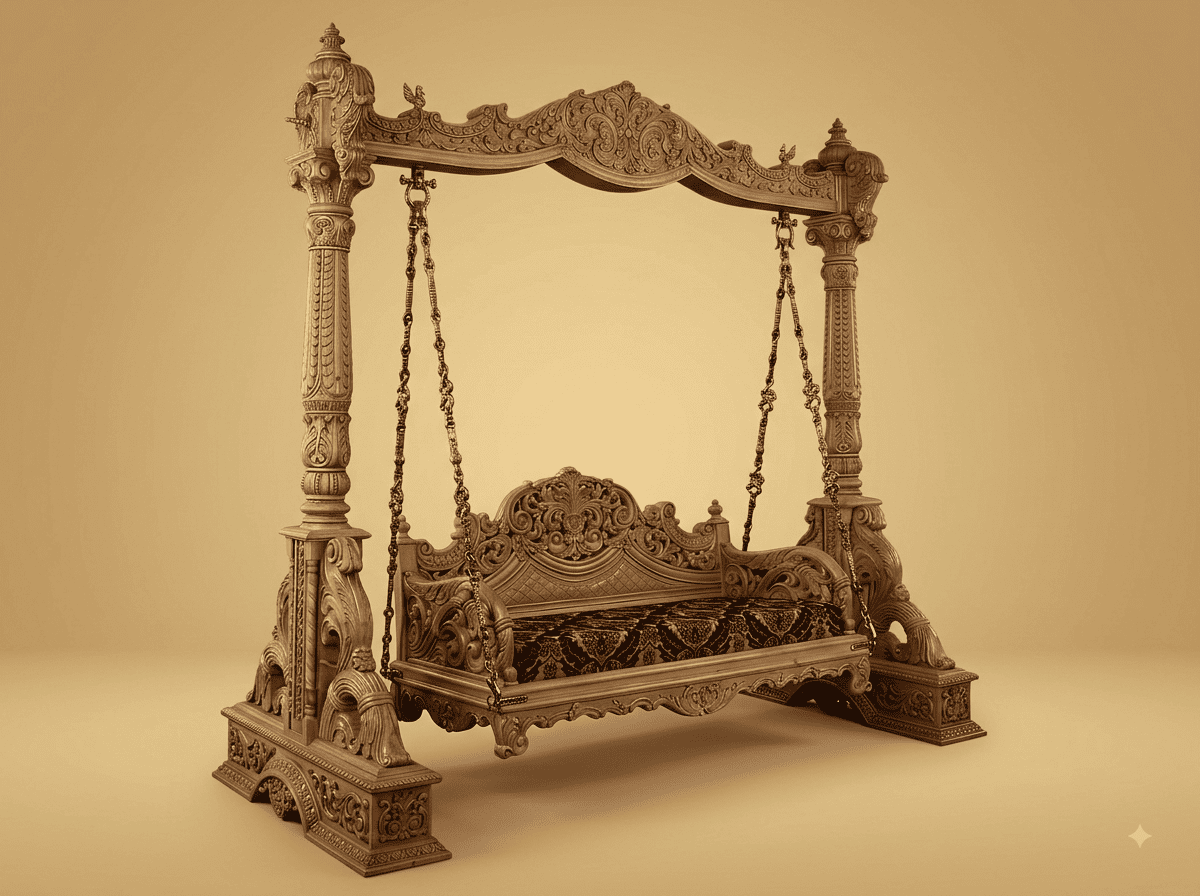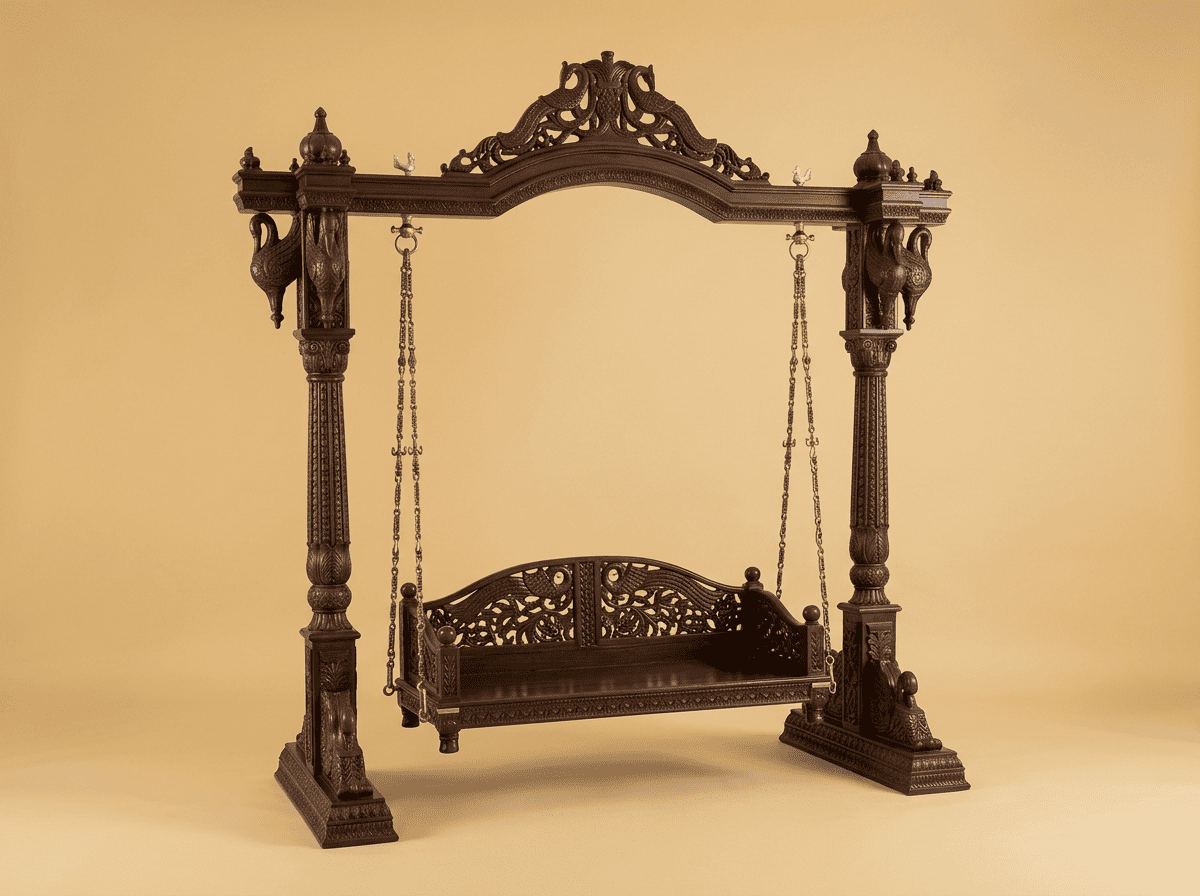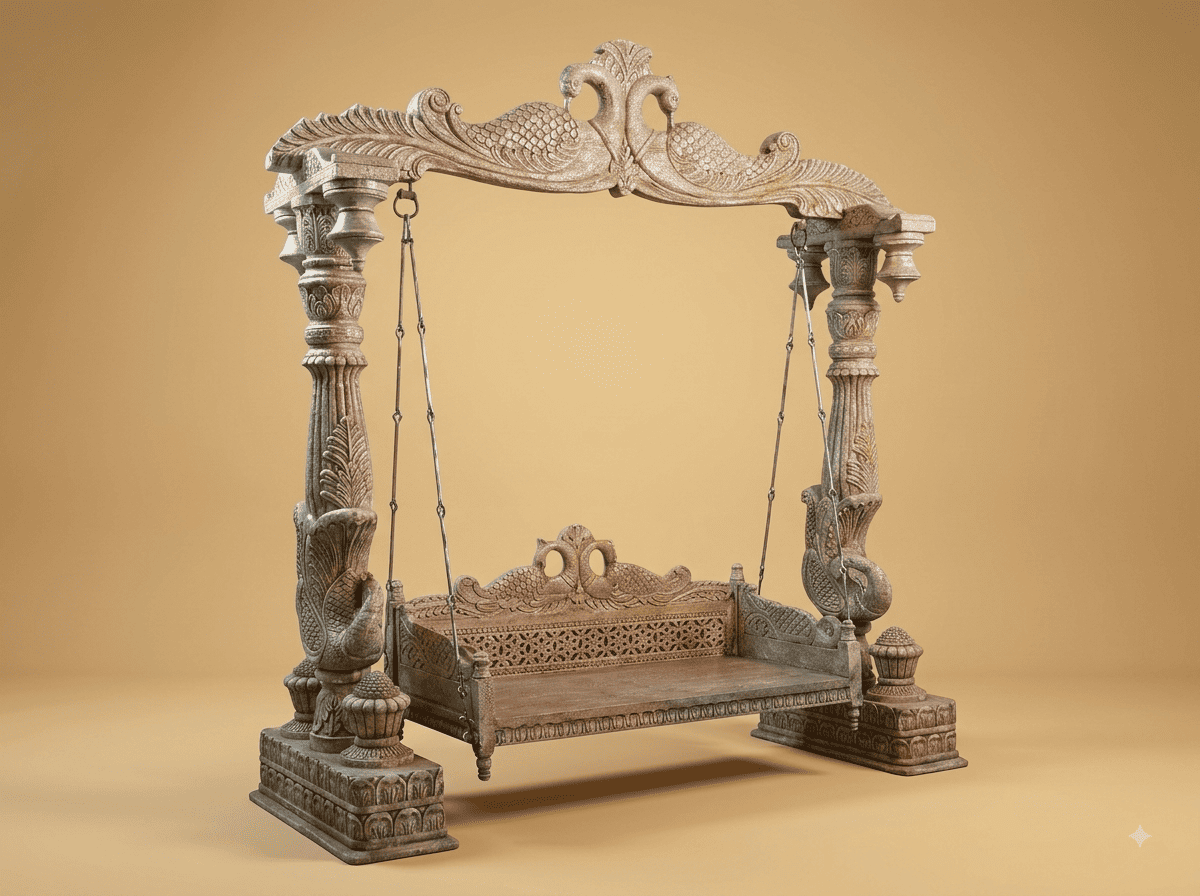
The peacock has been the courtyard bird of Indian homes for as long as those courtyards have existed, and it found its way onto the jhula for a simple reason: the swing hangs in the open air, where the bird belongs. Carvers placed a pair of them facing one another because the crest beam is symmetrical by nature, and two birds meeting at the centre gives the eye somewhere to rest.
The tails are the part worth watching. Each feather is cut individually into a scale, which is why the crest changes as you walk past it, catching light in one row and shadow in the next. That effect only comes from hand carving; a moulded or machine-routed version reads flat because every feather is identical.
Our master Indian artisans build the crest as a single deep beam and carve into it, so the ornament and the structure are the same piece of teak. The peacocks are not applied to the frame. They are the frame. That is also why the crest can span the full width of the swing without needing a bracket in the middle of your view.
 Ask Price On WhatsApp