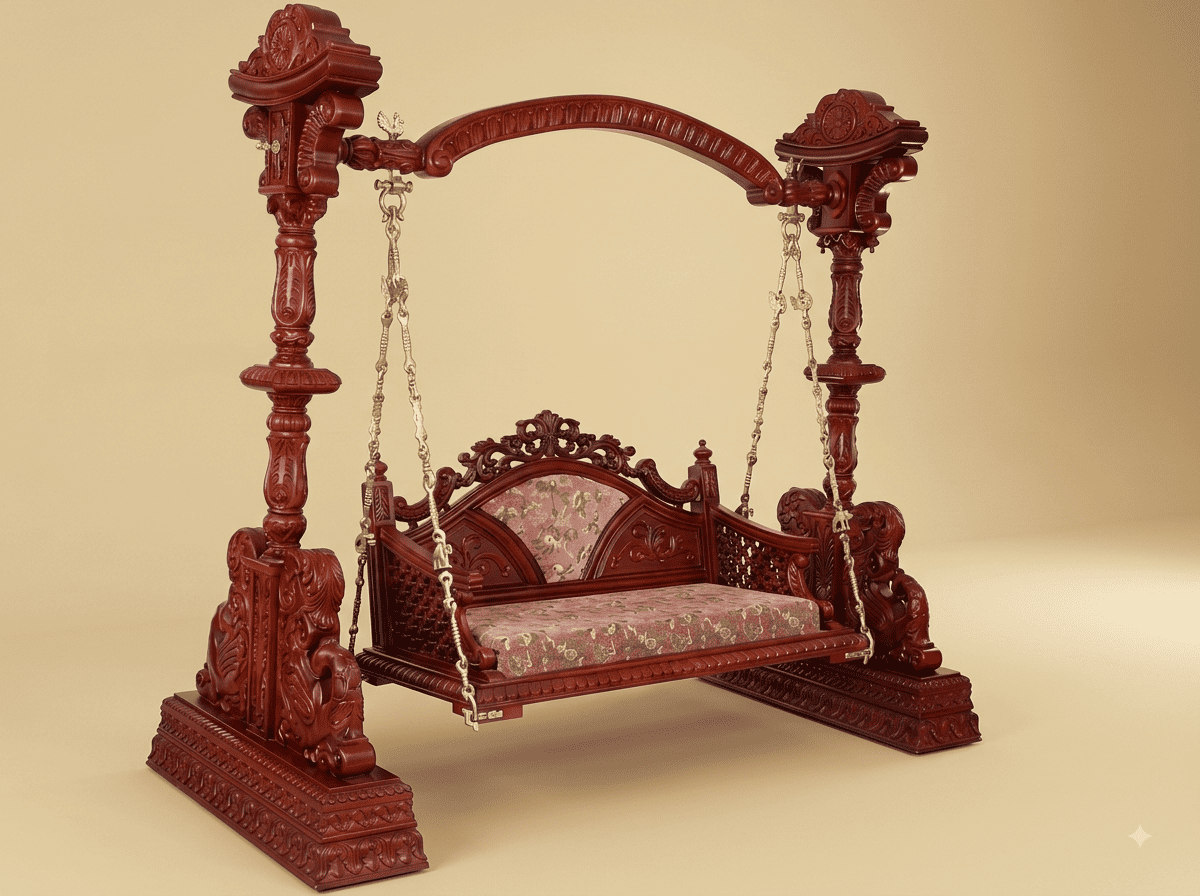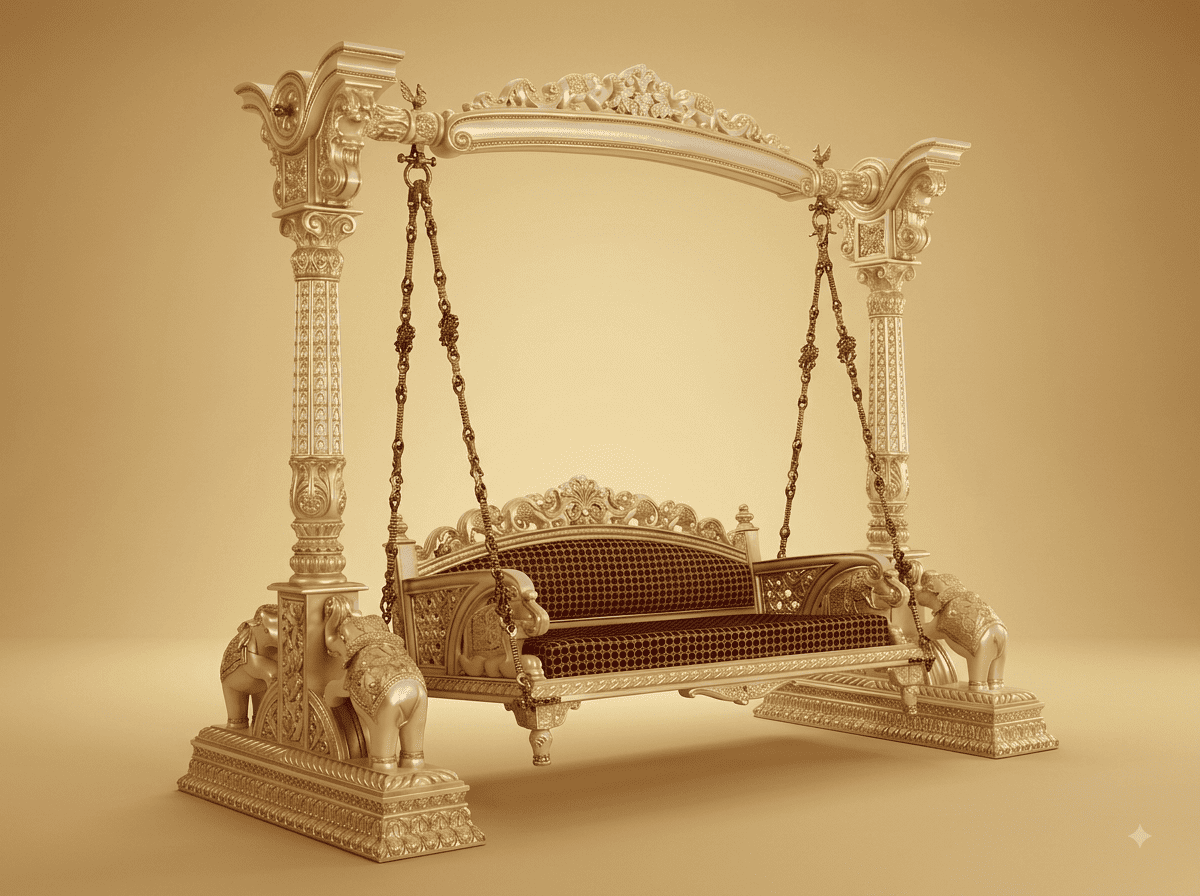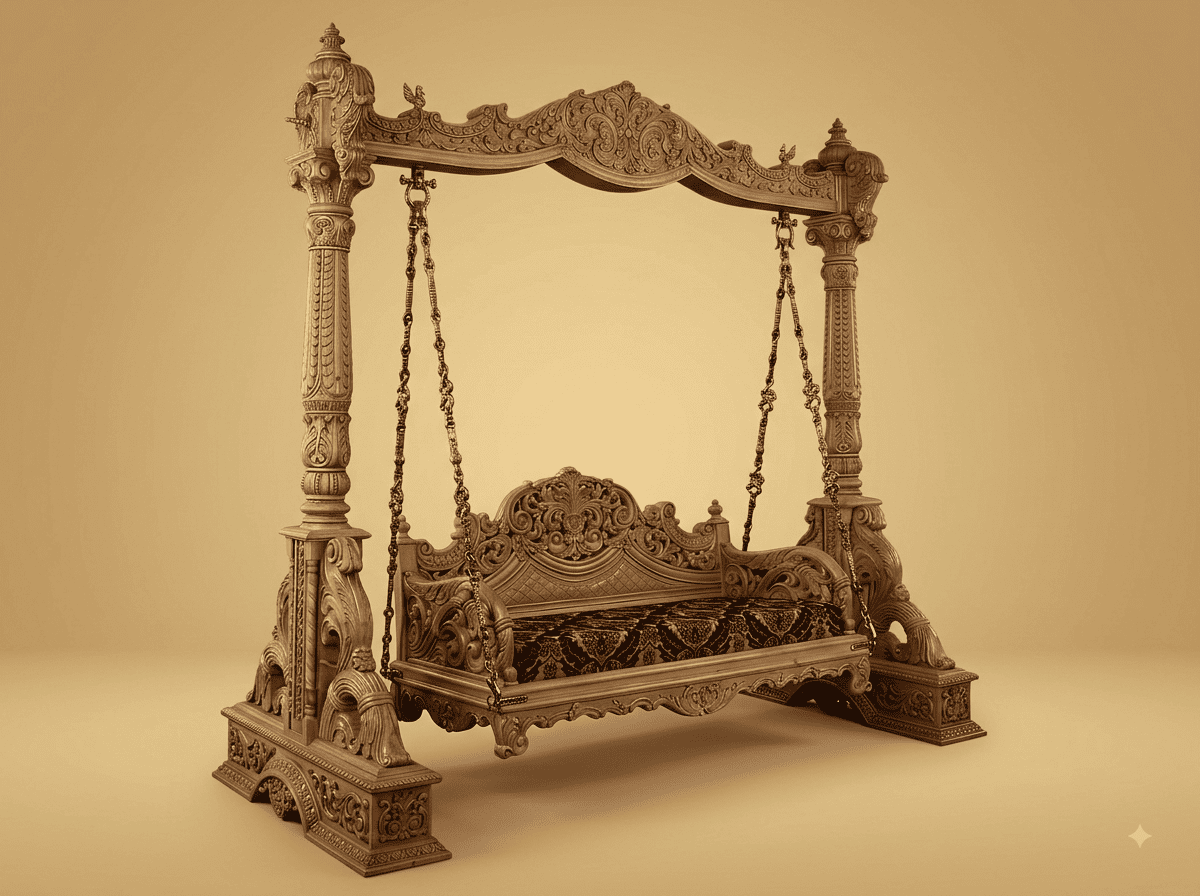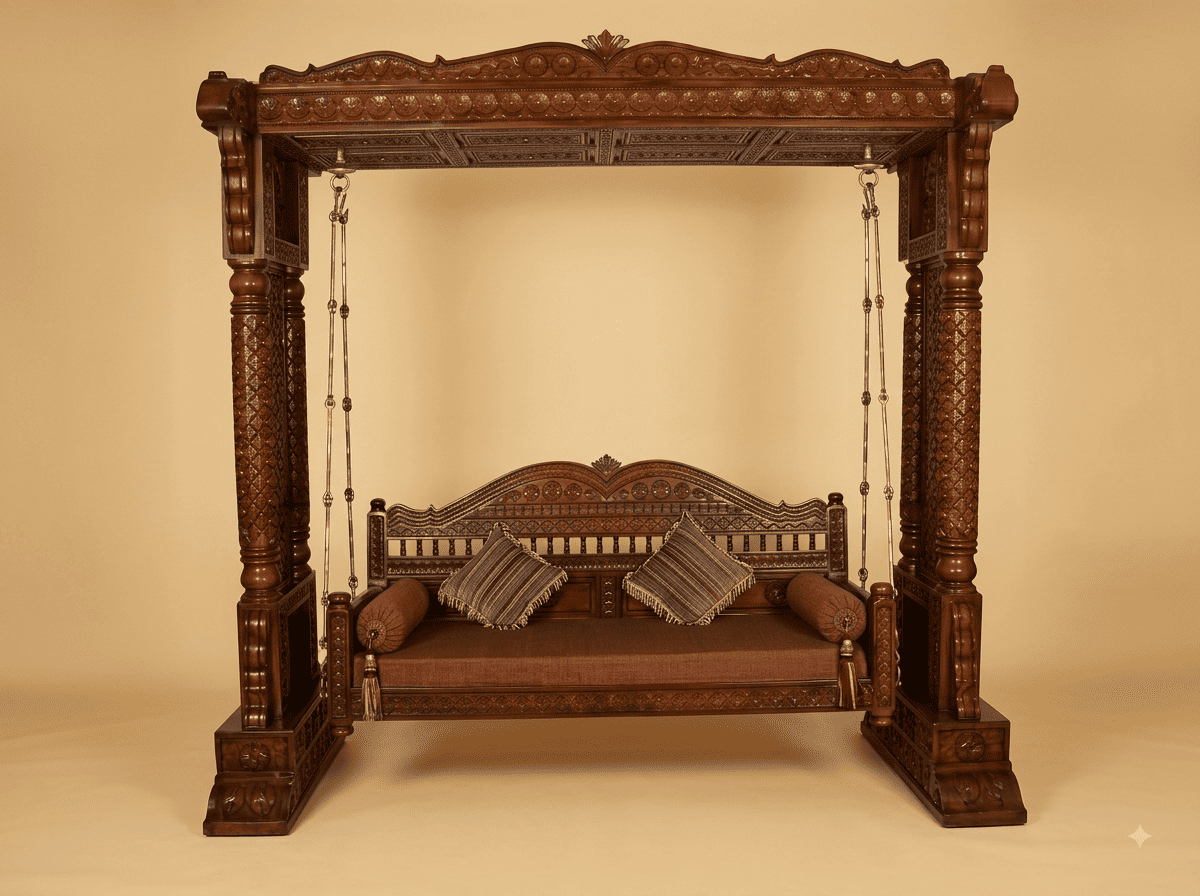
What a White Jhula Does to a Room
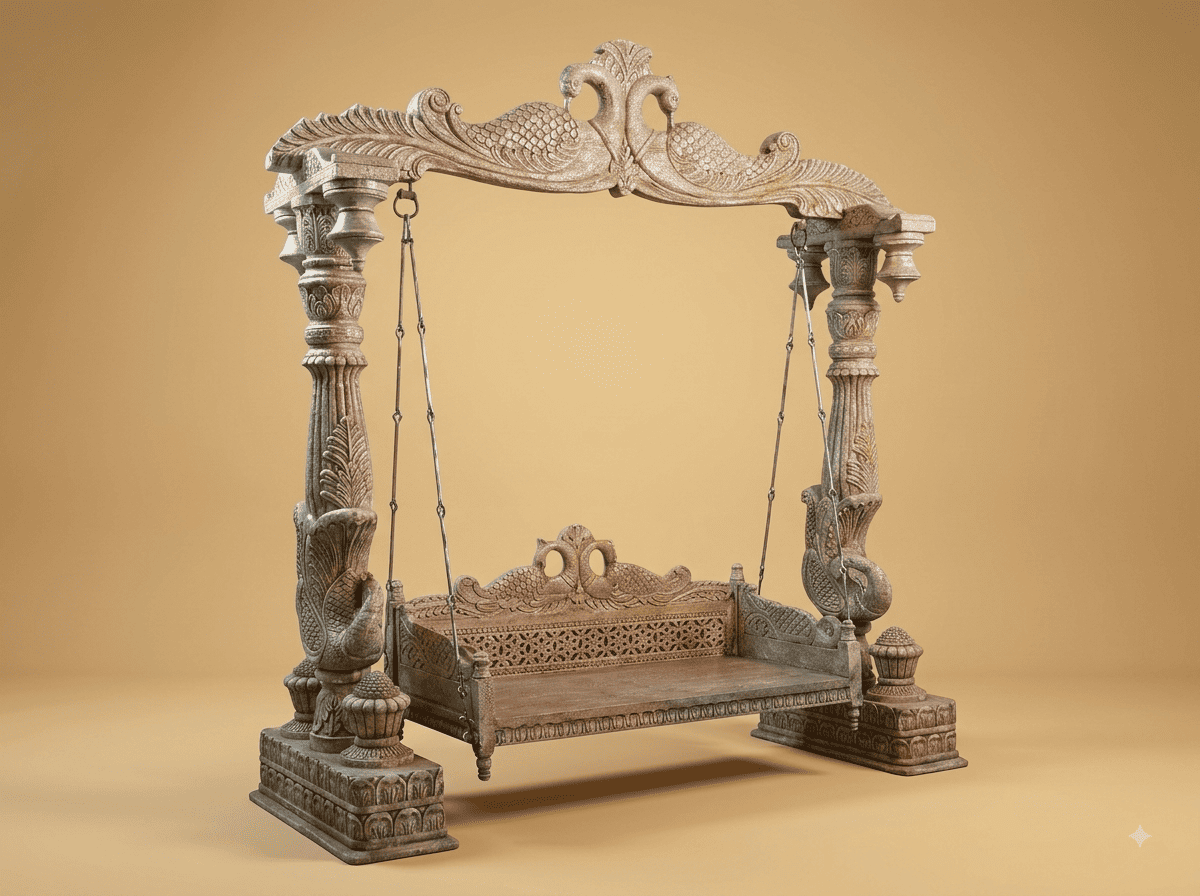
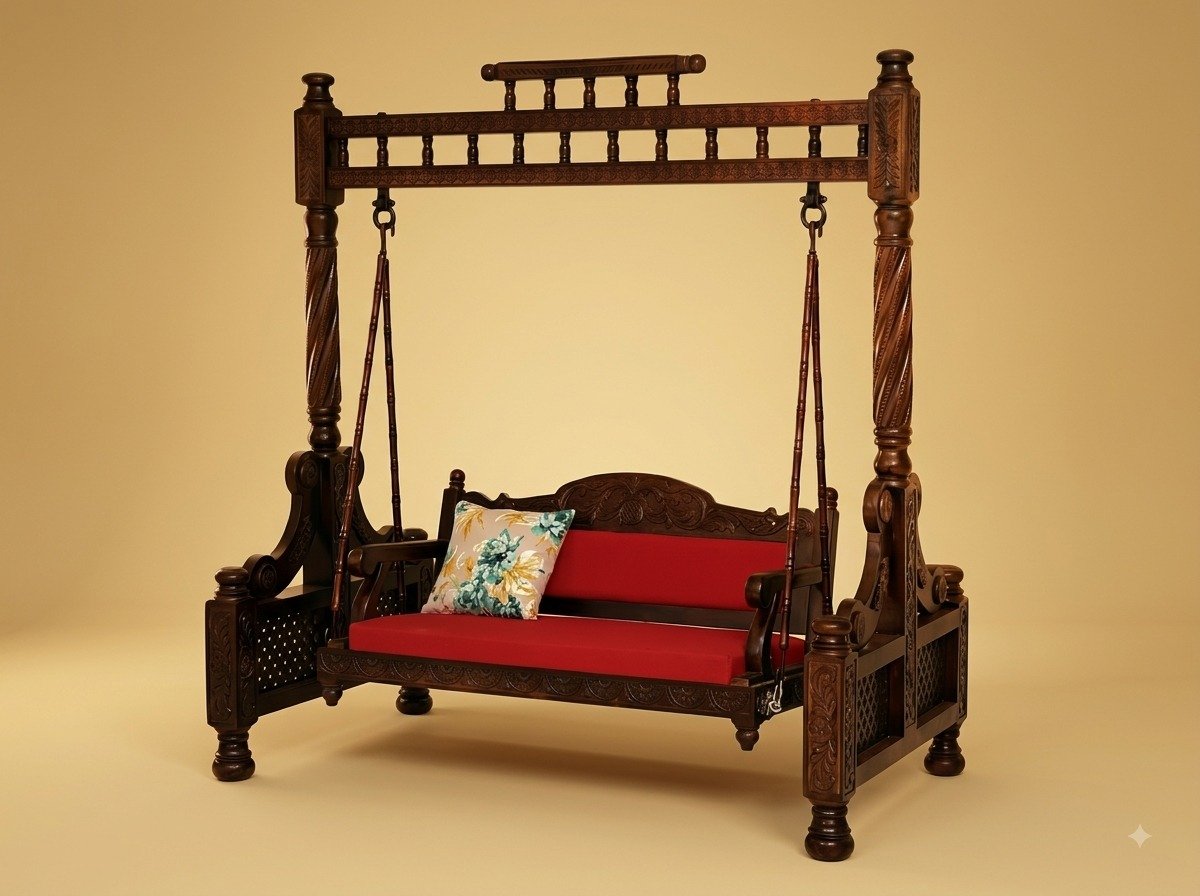
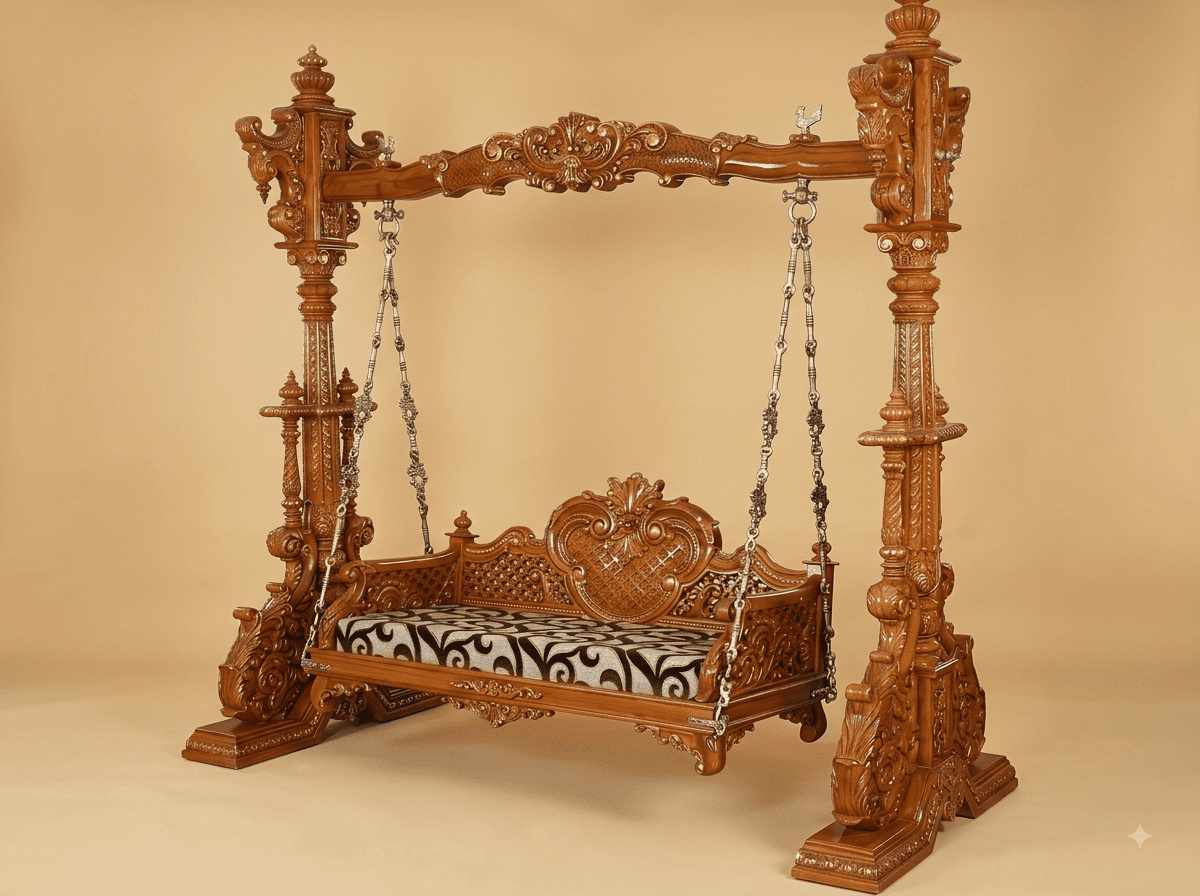
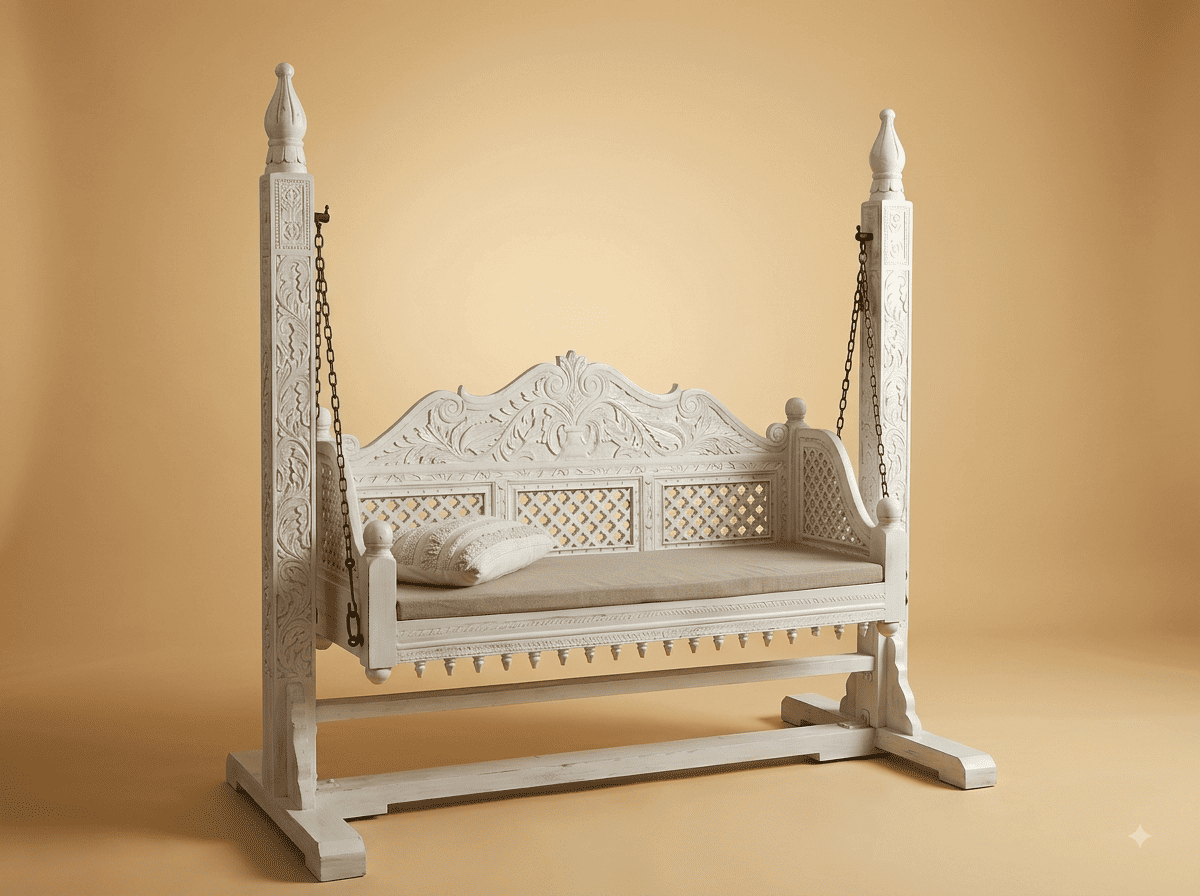
Colour decides how much space a piece of furniture appears to take. A dark polished jhula is the first thing you see when you walk in, and it anchors the room around itself. A white one does the opposite: against a pale wall it settles back, the frame reads as line rather than mass, and what comes forward is the carving, seen as texture and shadow rather than as ornament in a contrasting colour. In a verandah, a sunlit corner or a balcony with a view, that lightness is exactly what you want, because the room and the light stay the subject.
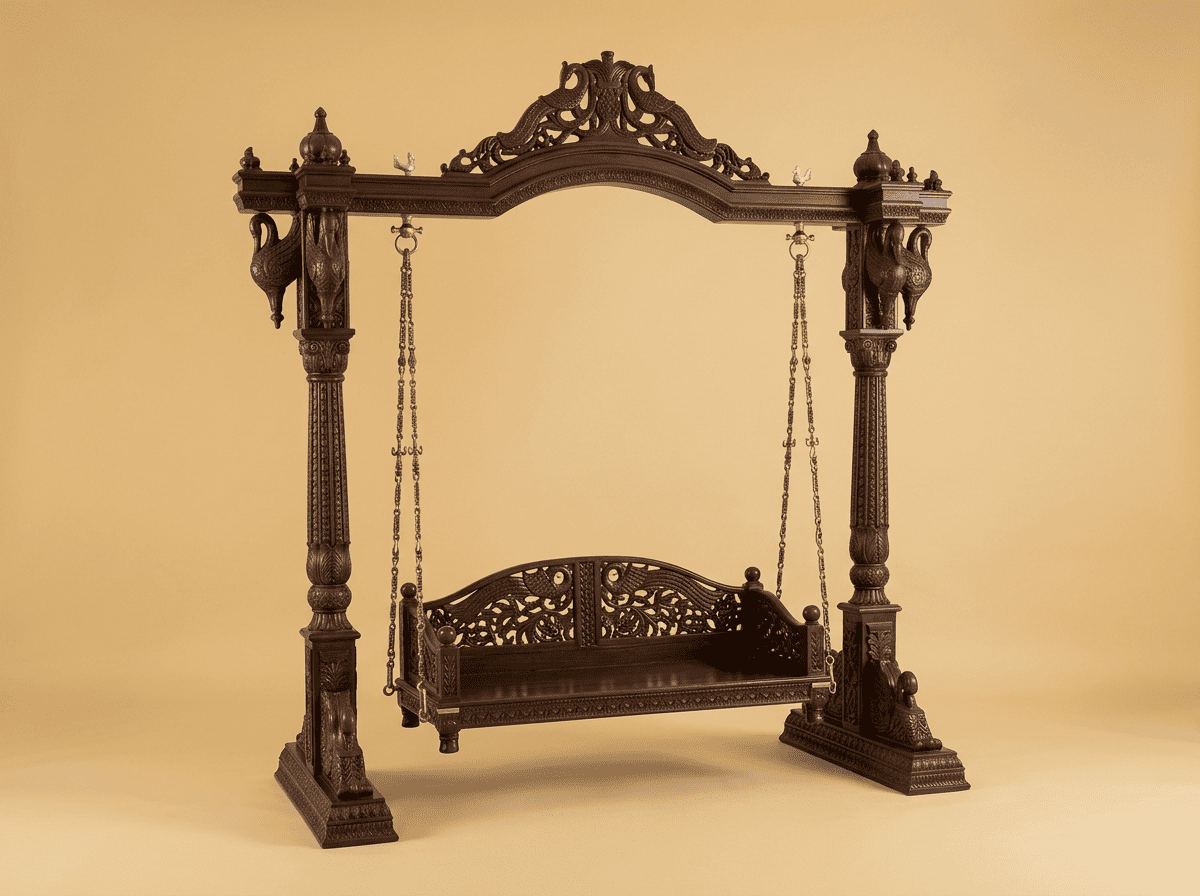
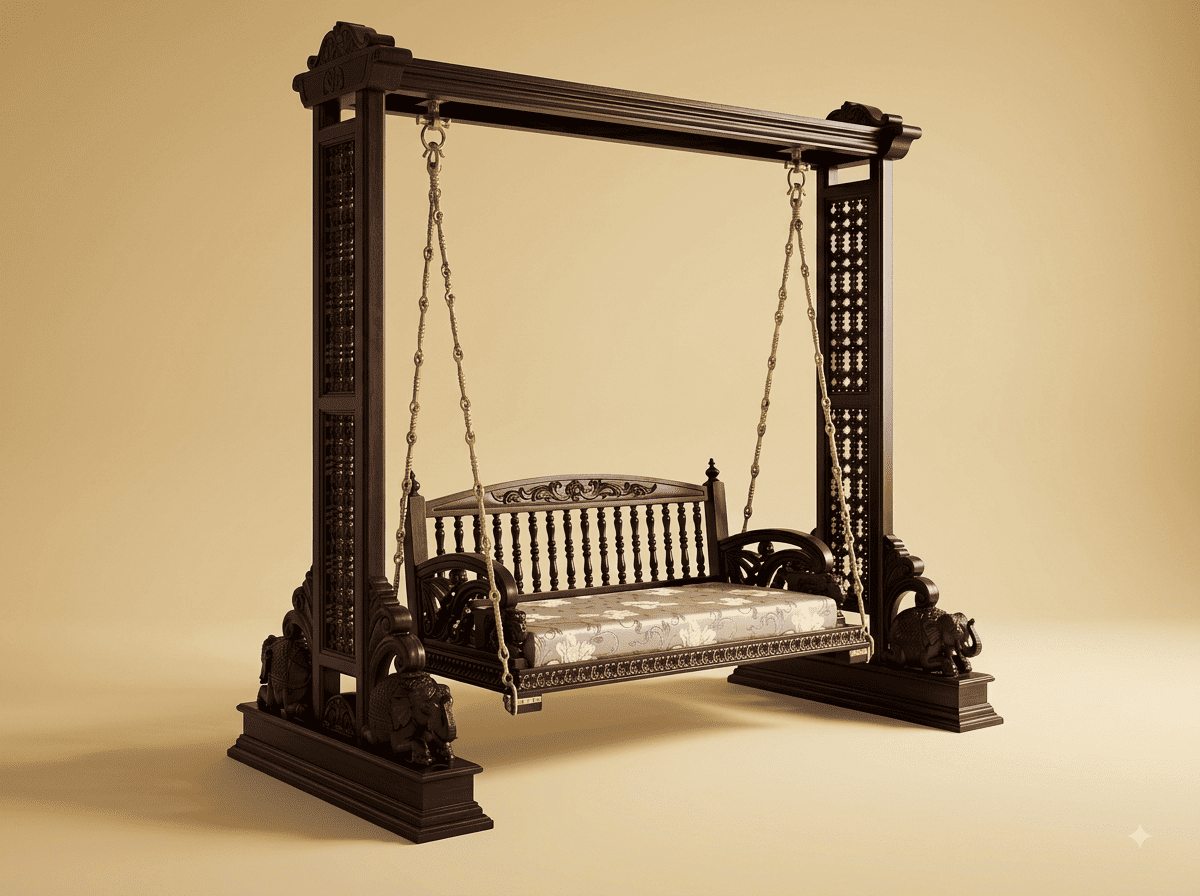
Achieving it takes a particular kind of finishing. The white is worked so the grain and the relief still read through it rather than being filled and buried, which is what keeps the piece looking like carved wood rather than painted board. The trestle frame supports the same intention: tying the two posts together with a floor stretcher lets them be slimmer than separate plinths would allow, since the stretcher makes the whole stand act as one rigid structure. Everything is carved and finished by hand by master Indian artisans, and the photographs show the actual jhula.
 Ask Price On WhatsApp