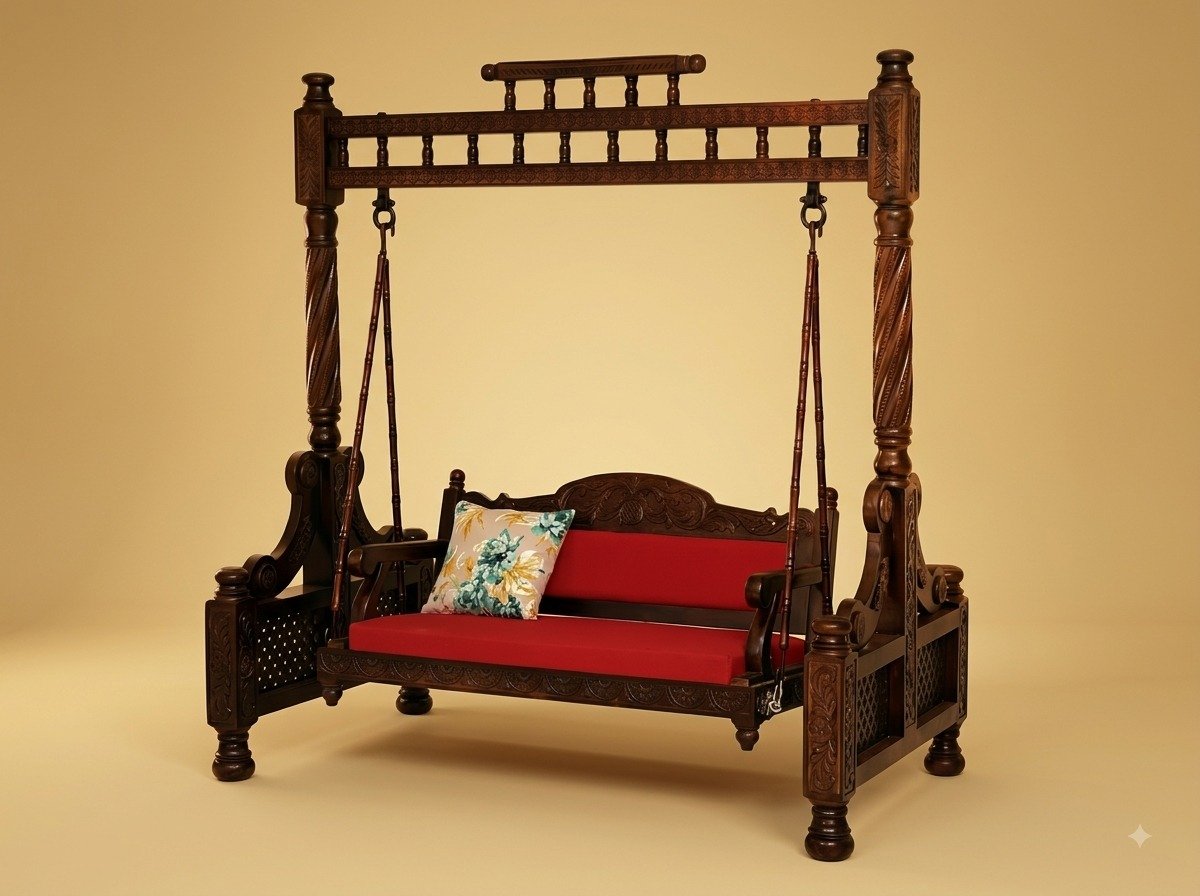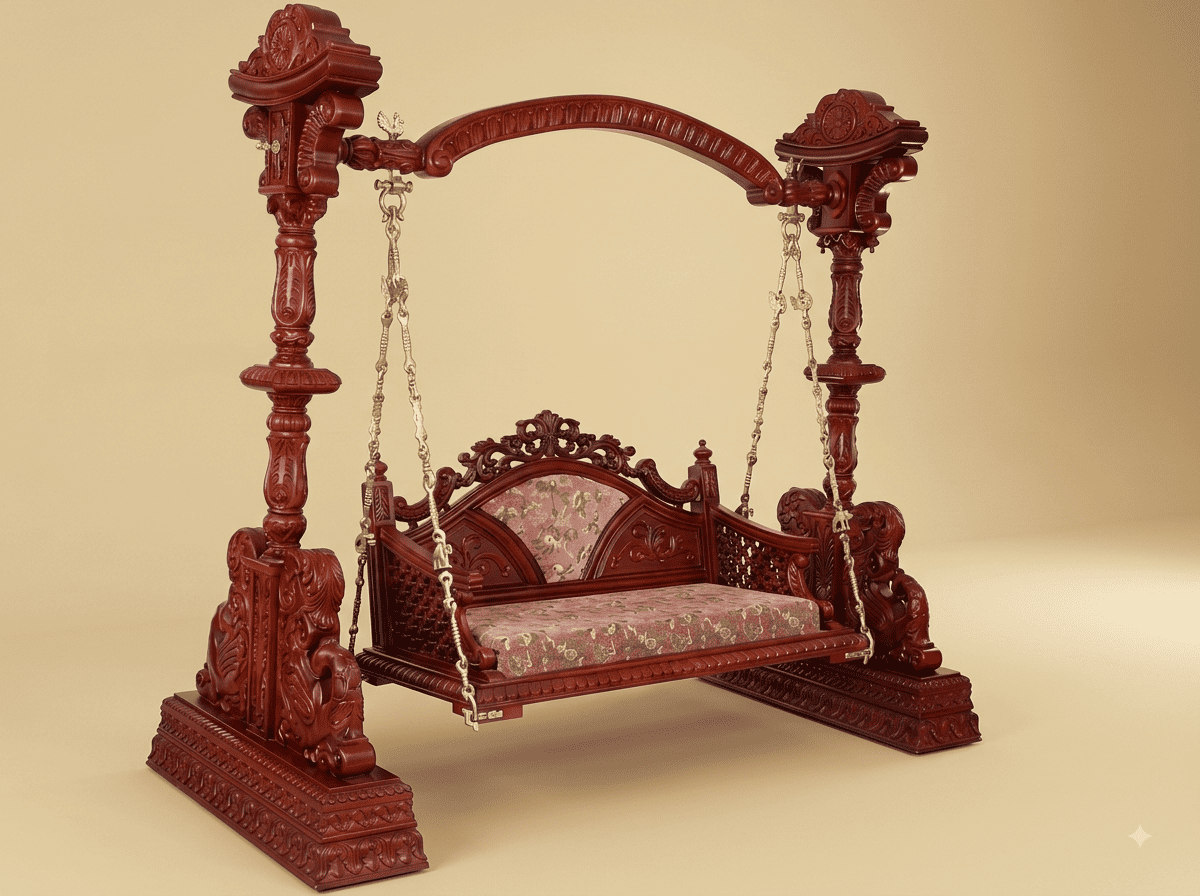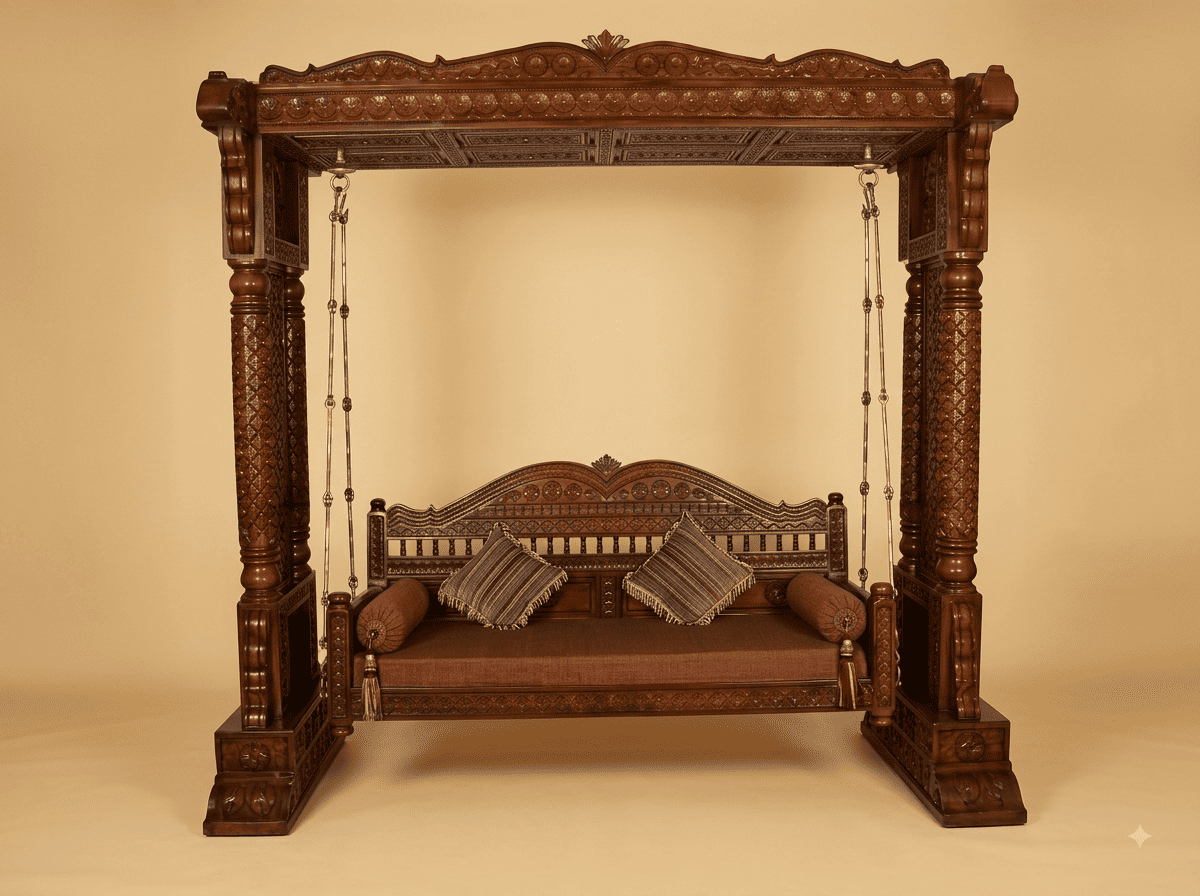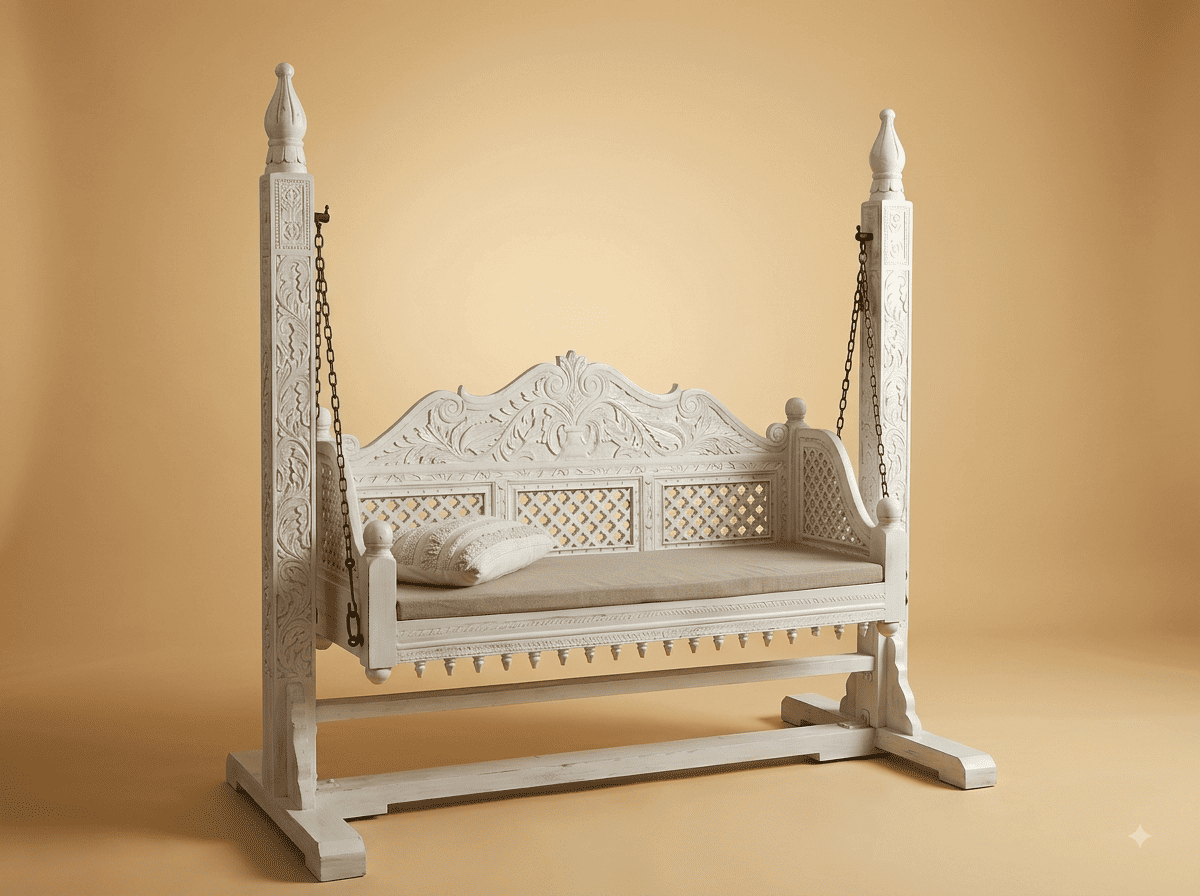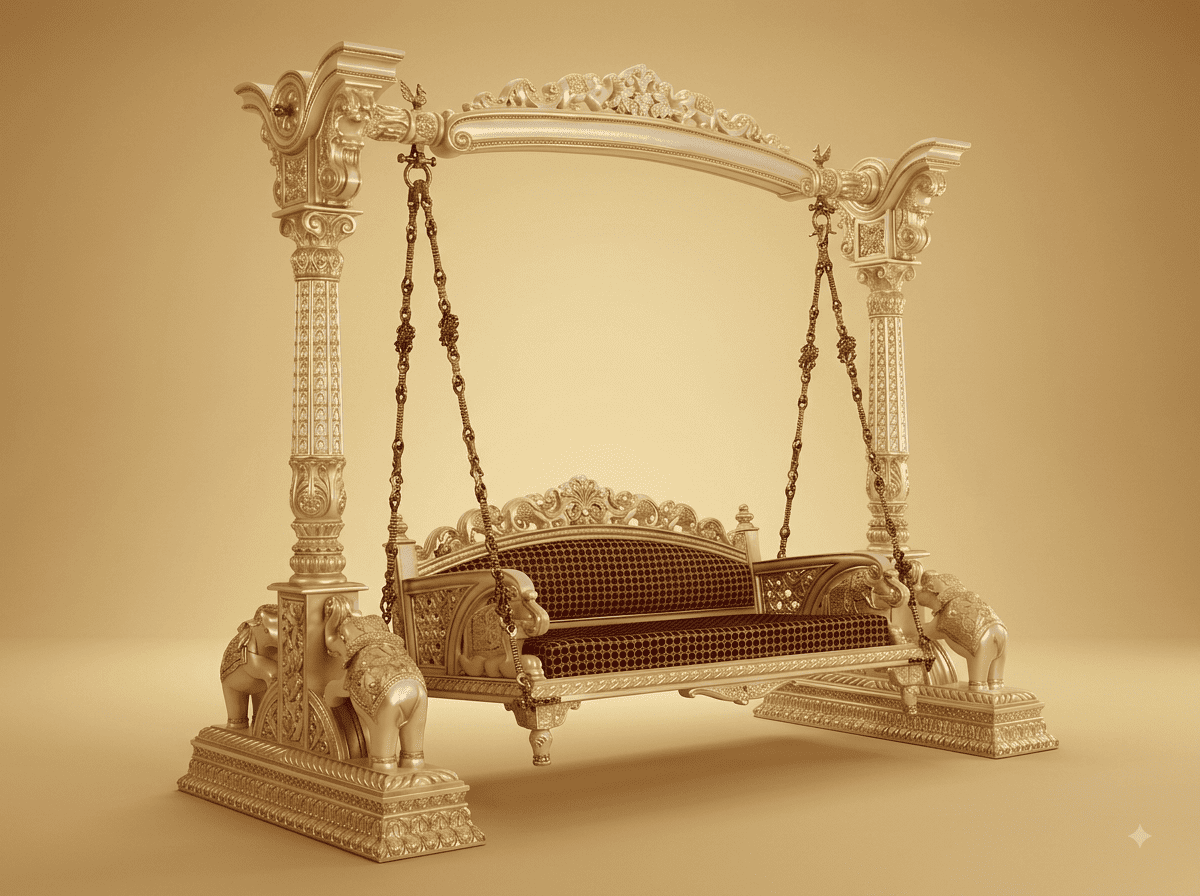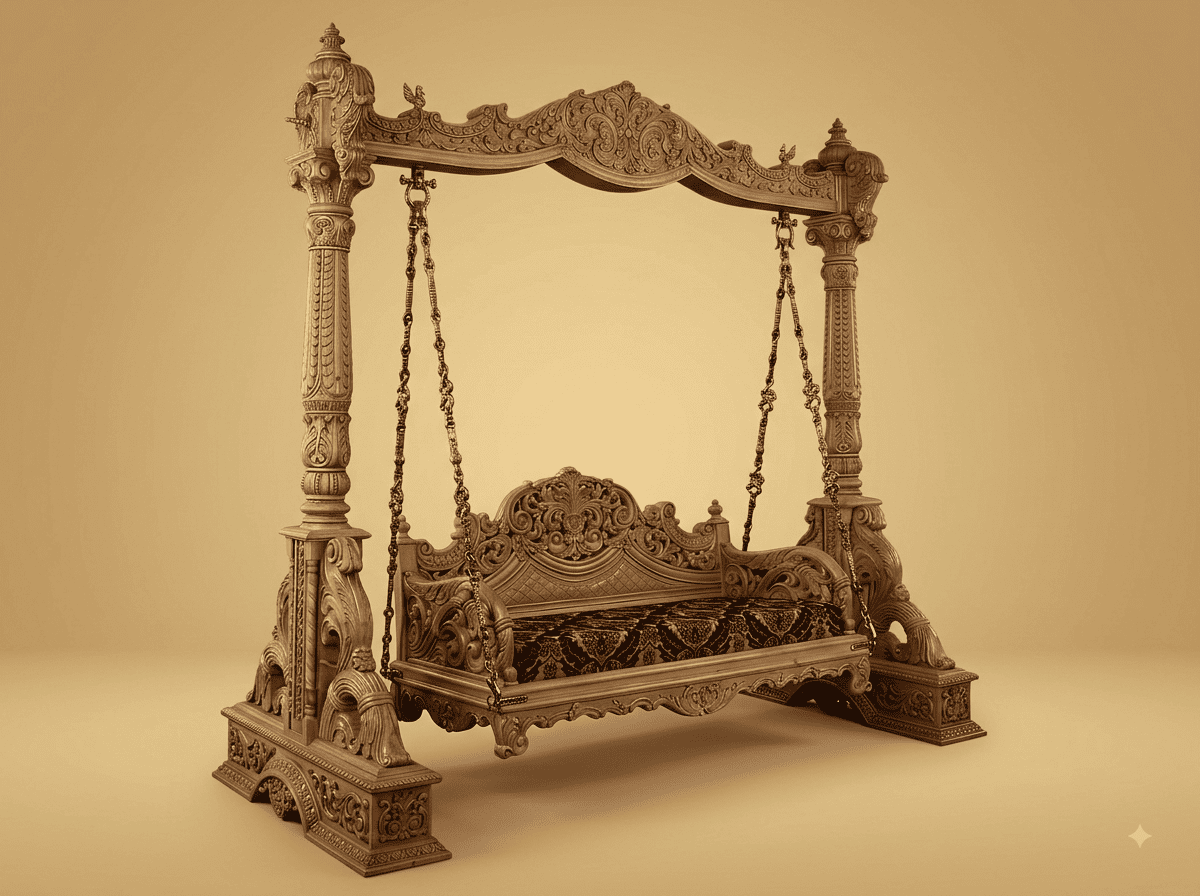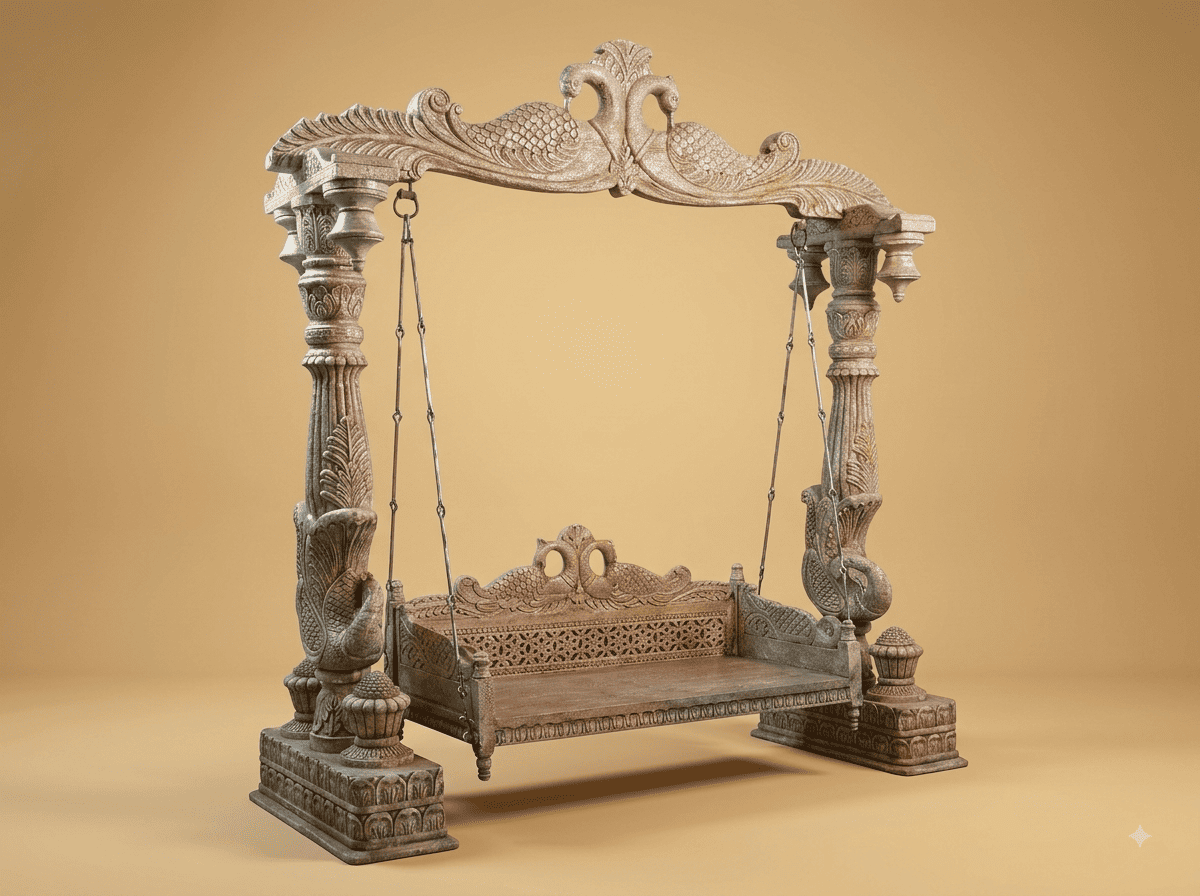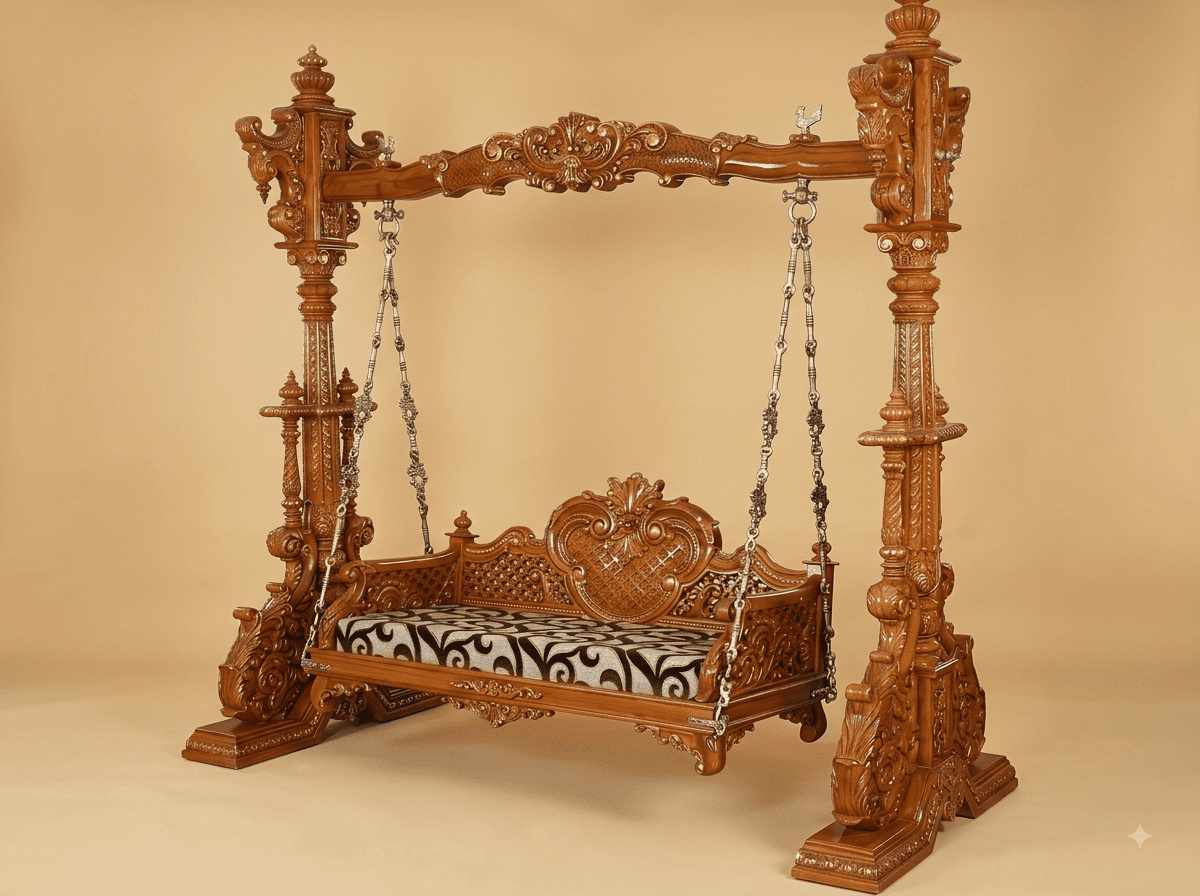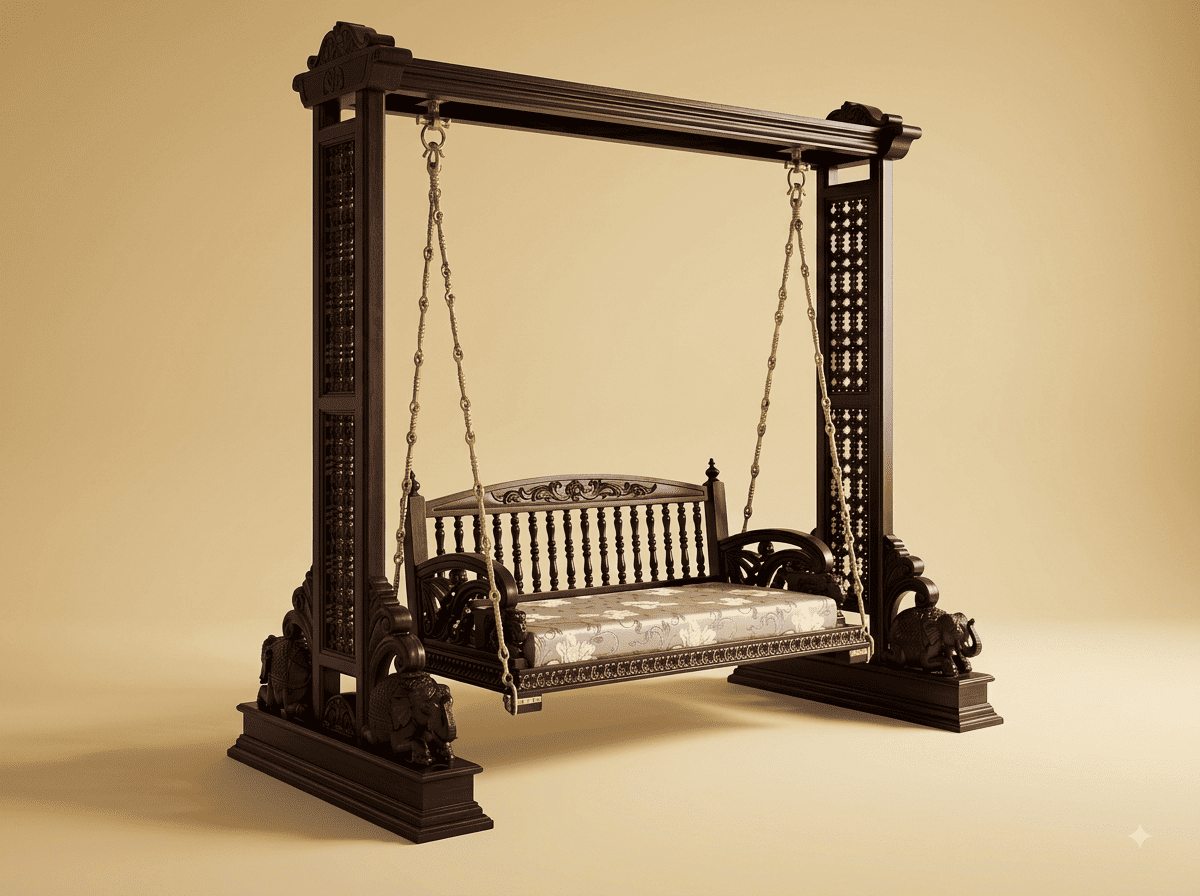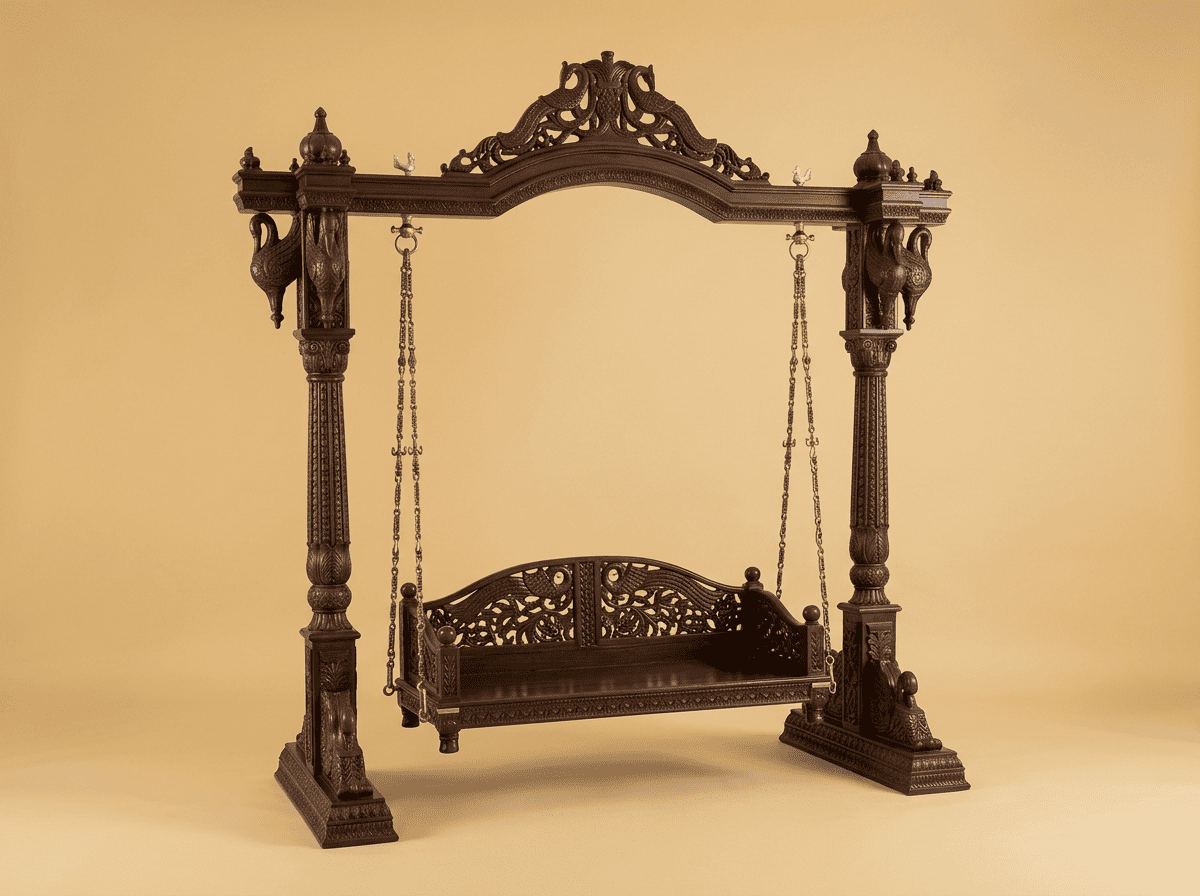
The ogee arch on this crest is borrowed from doorways, not from furniture. Walk into an old Indian haveli and the openings between courtyards curve exactly this way, rising and then turning back on themselves before meeting at a carved keystone. A jhula set under such an arch inherited its shape, and eventually carried it up onto its own frame.
What the arch does for a swing is practical as well as decorative. The curve puts the deepest section of timber where the chains hang and lets the beam taper towards the centre, so the crest looks light while staying strong exactly where the load sits.
The pierced crown above it is cut through the wood rather than carved into its face, which means light passes through the scrollwork and the pattern changes as the room changes. Our master Indian artisans cut that openwork by hand, following the grain so each scroll runs along the wood's strength rather than across it. That is why this kind of pierced crest survives generations of use, and it is the sort of decision that only comes from carving the same forms for a lifetime.
 Ask Price On WhatsApp