A Swing That Is Also a Screen
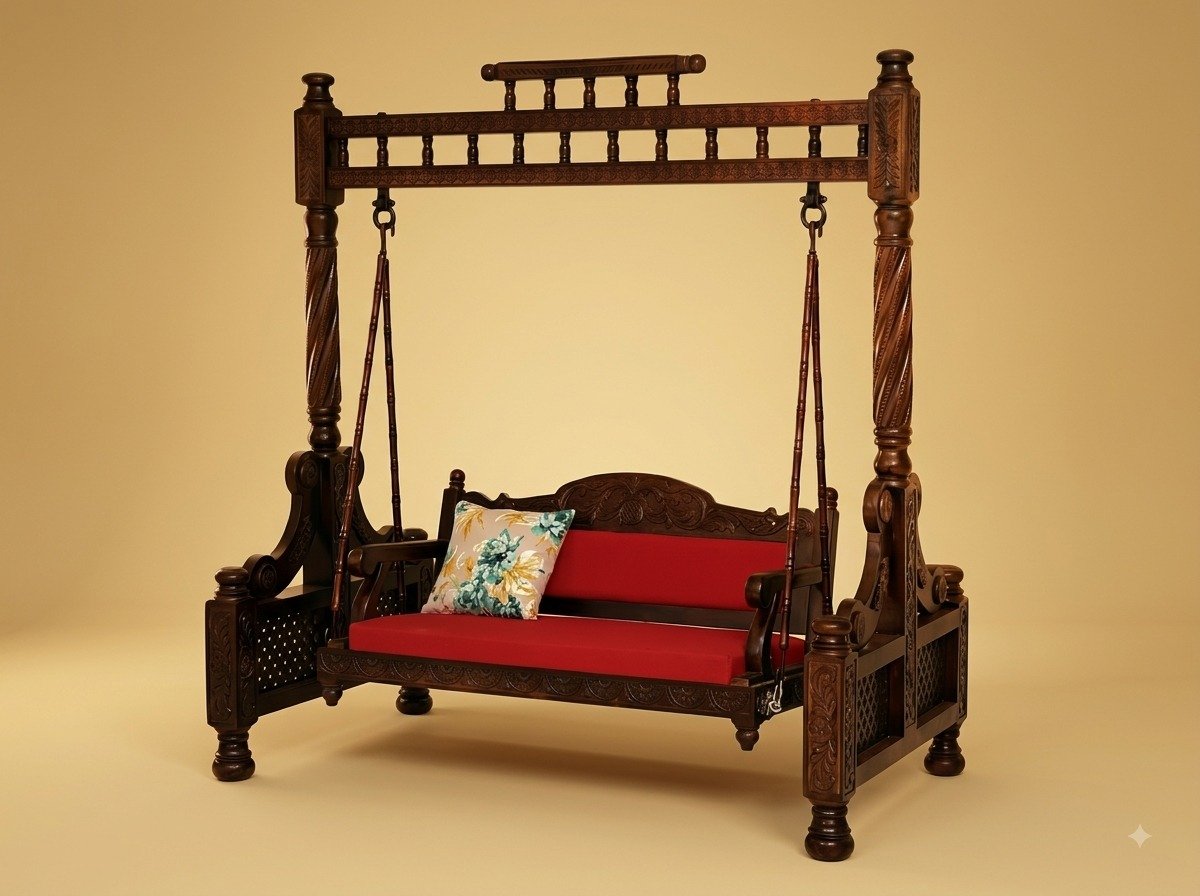
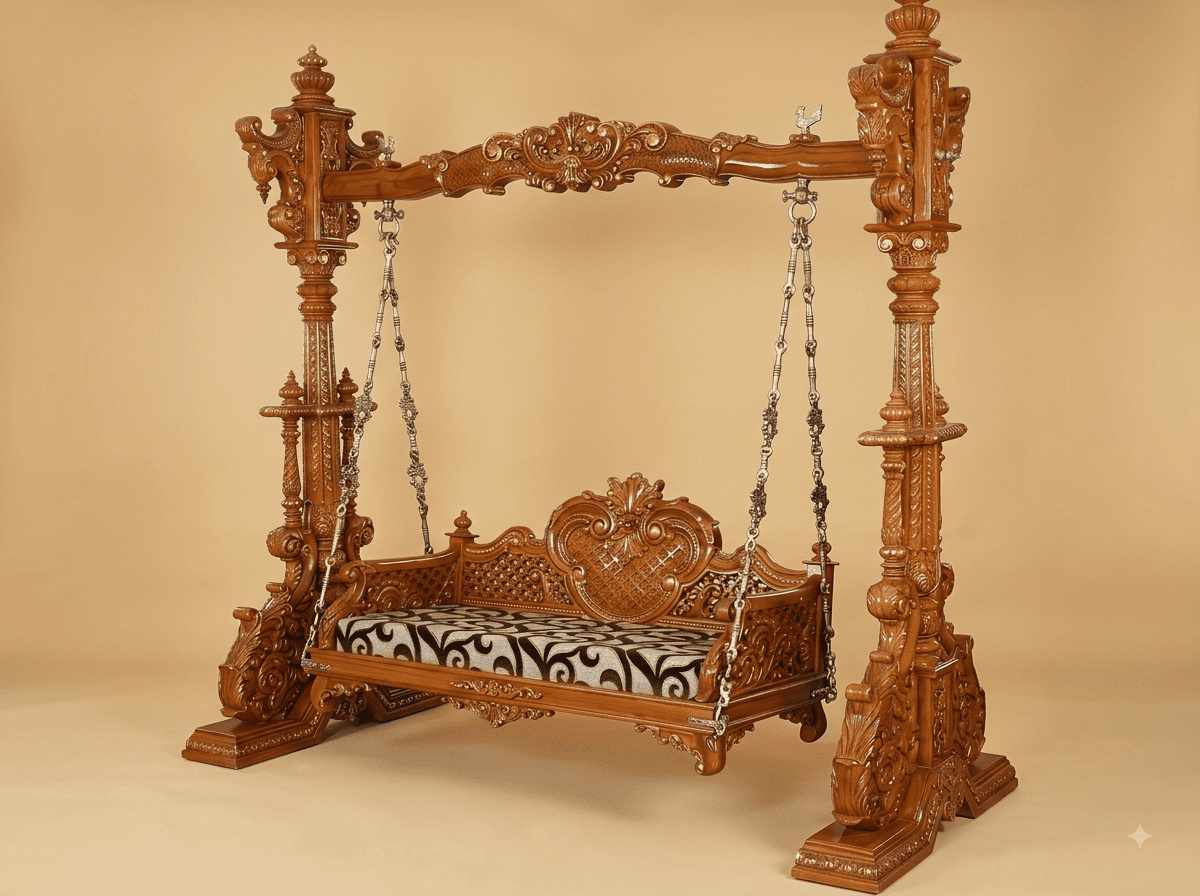
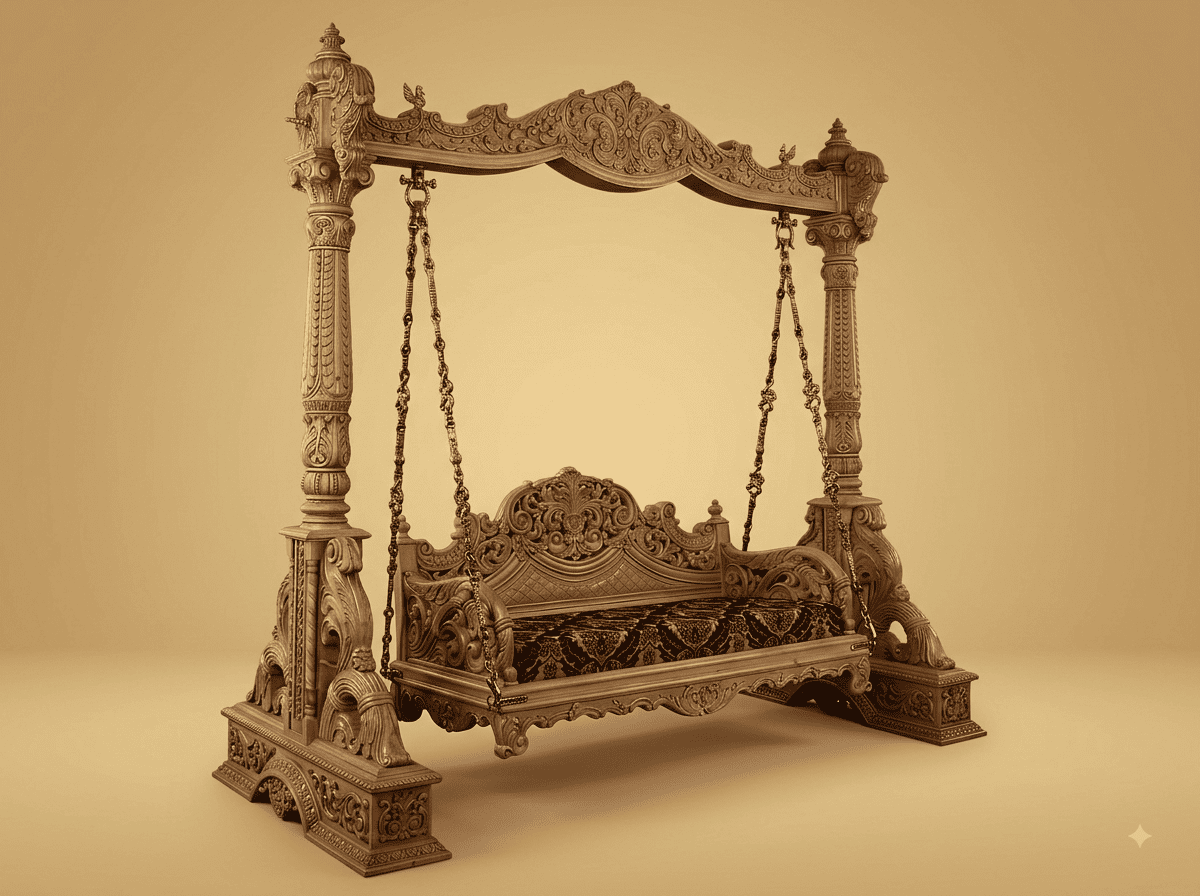
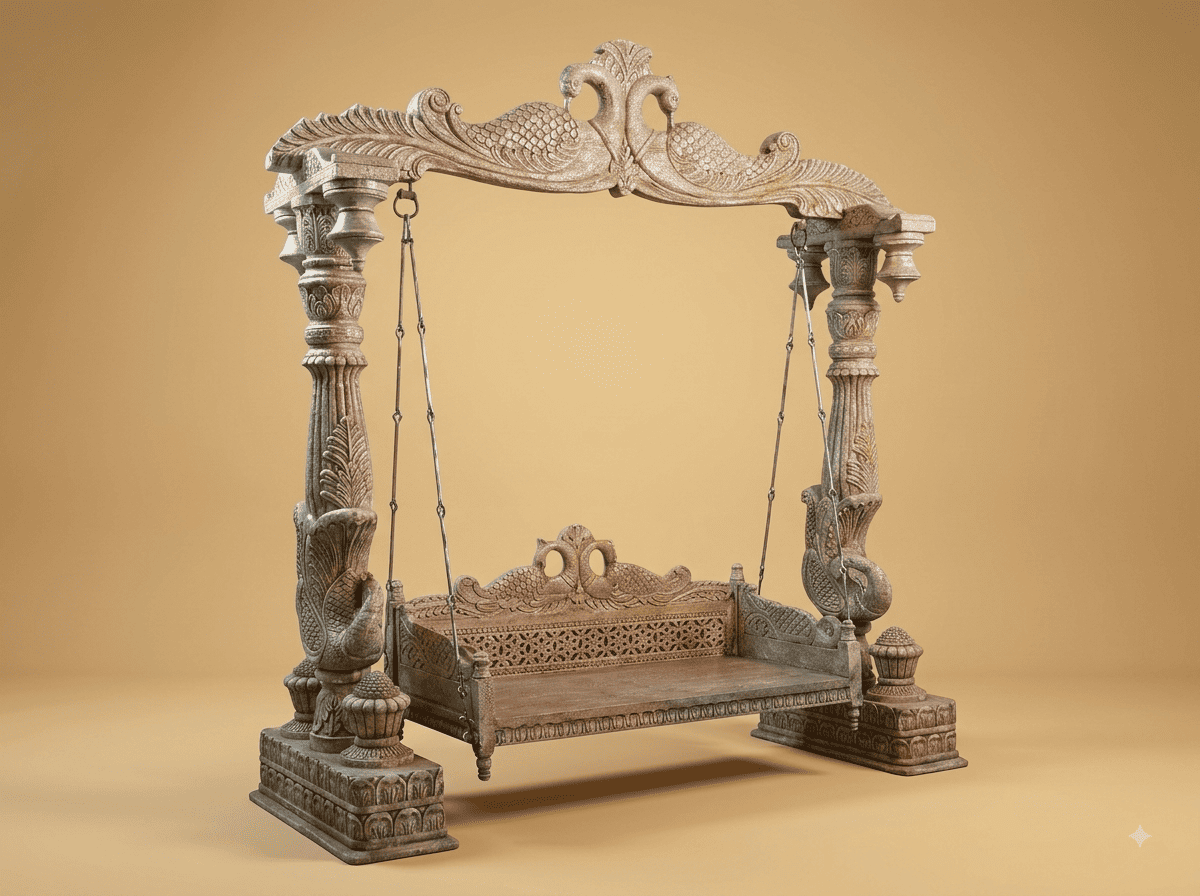
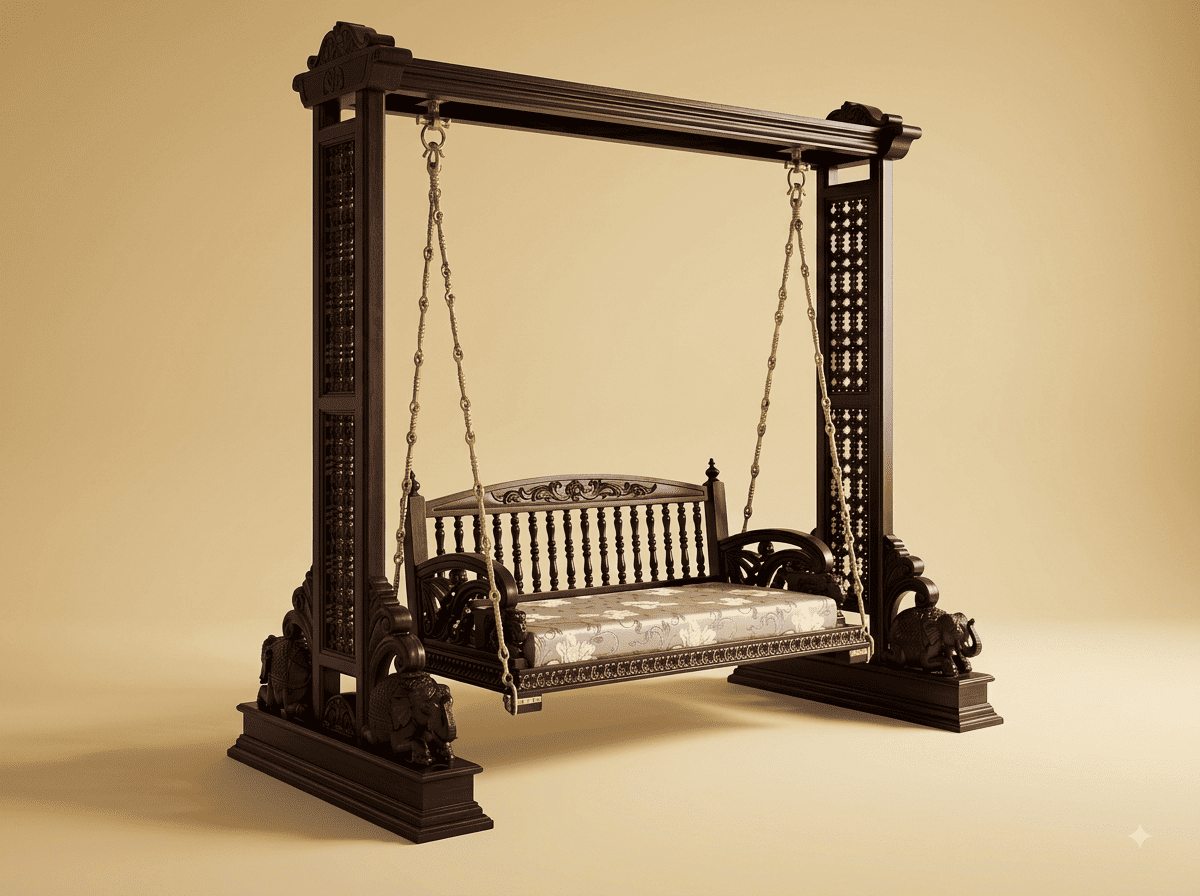
Most jhula stands are two posts and a beam, and they do one job. Building the uprights as full jaali screens gives the piece a second one. Placed across an opening, at the end of a living area or between a sitting space and a passage, the two lattice panels mark a boundary and filter the view the way a jaali screen has always done in Indian architecture, while light and air pass straight through them. You get seating and a room divider in the same object, and neither compromises the other.
Everything else on the piece is drawn to keep it from feeling heavy. The seat back is a run of slender turned spindles rather than a solid or panelled board, so the eye passes through the seat as well as the stand. The arms curve down through open scrolled supports. The chains are brass beads rather than plain links, so they catch light against the dark timber and read as jewellery on the piece. The dark finish ties the whole composition together and makes the lattice read as a fine graphic pattern rather than as bulk. It is carved and finished by hand by master Indian artisans.
 Ask Price On WhatsApp