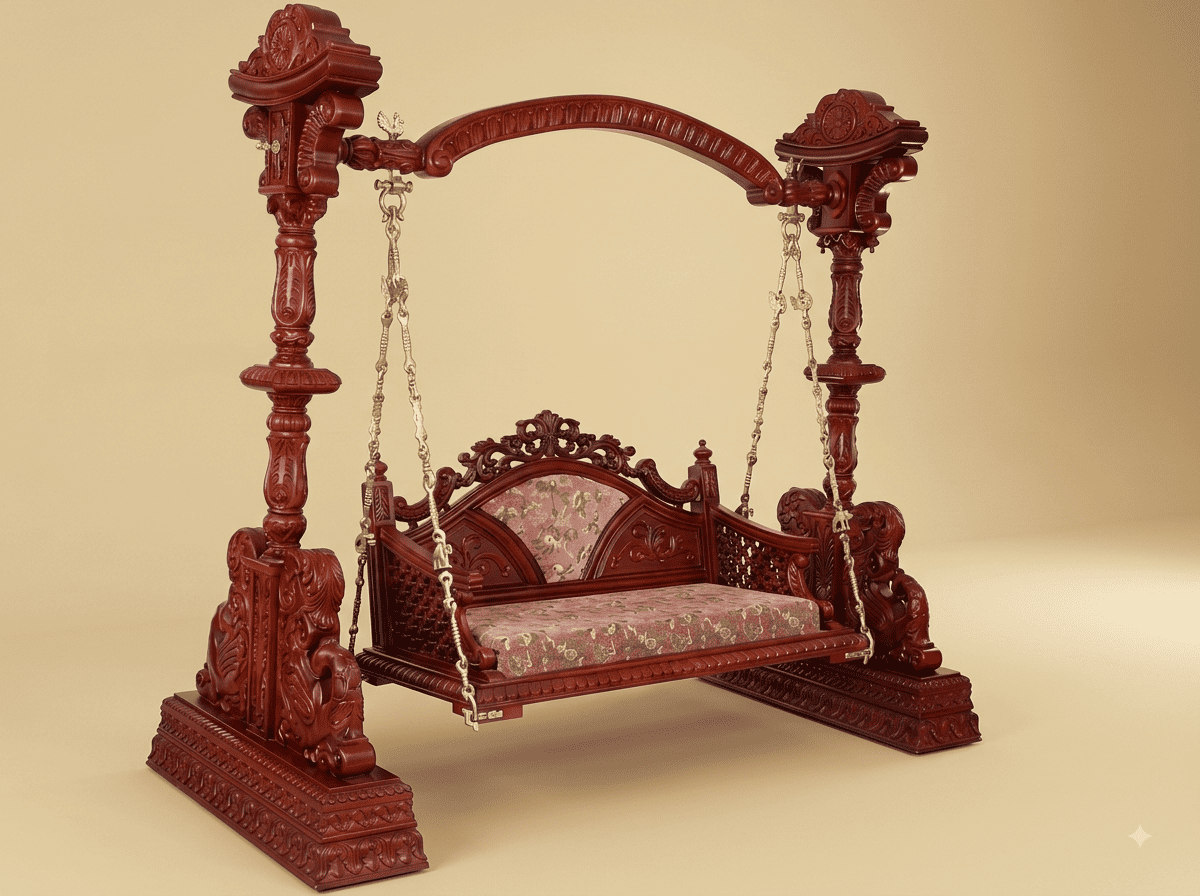
A Valance Instead of a Beam
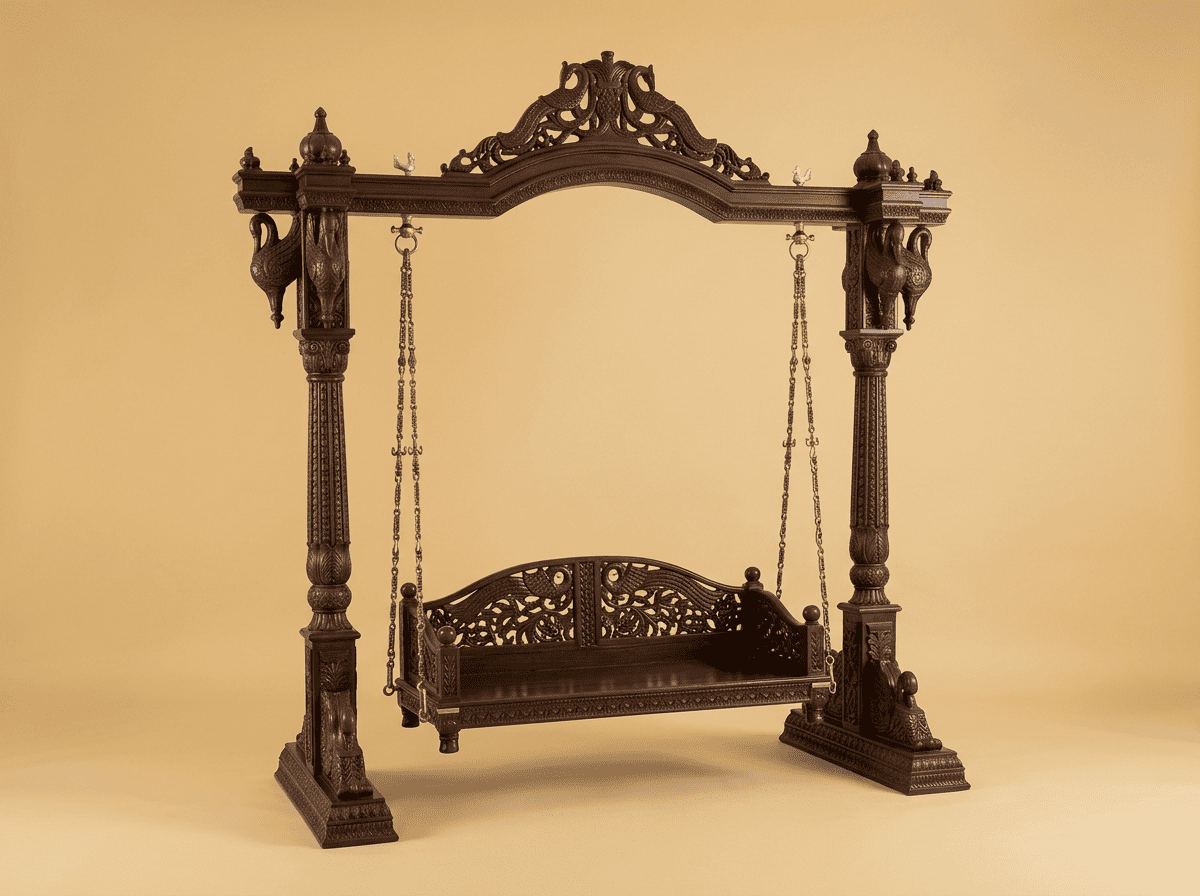
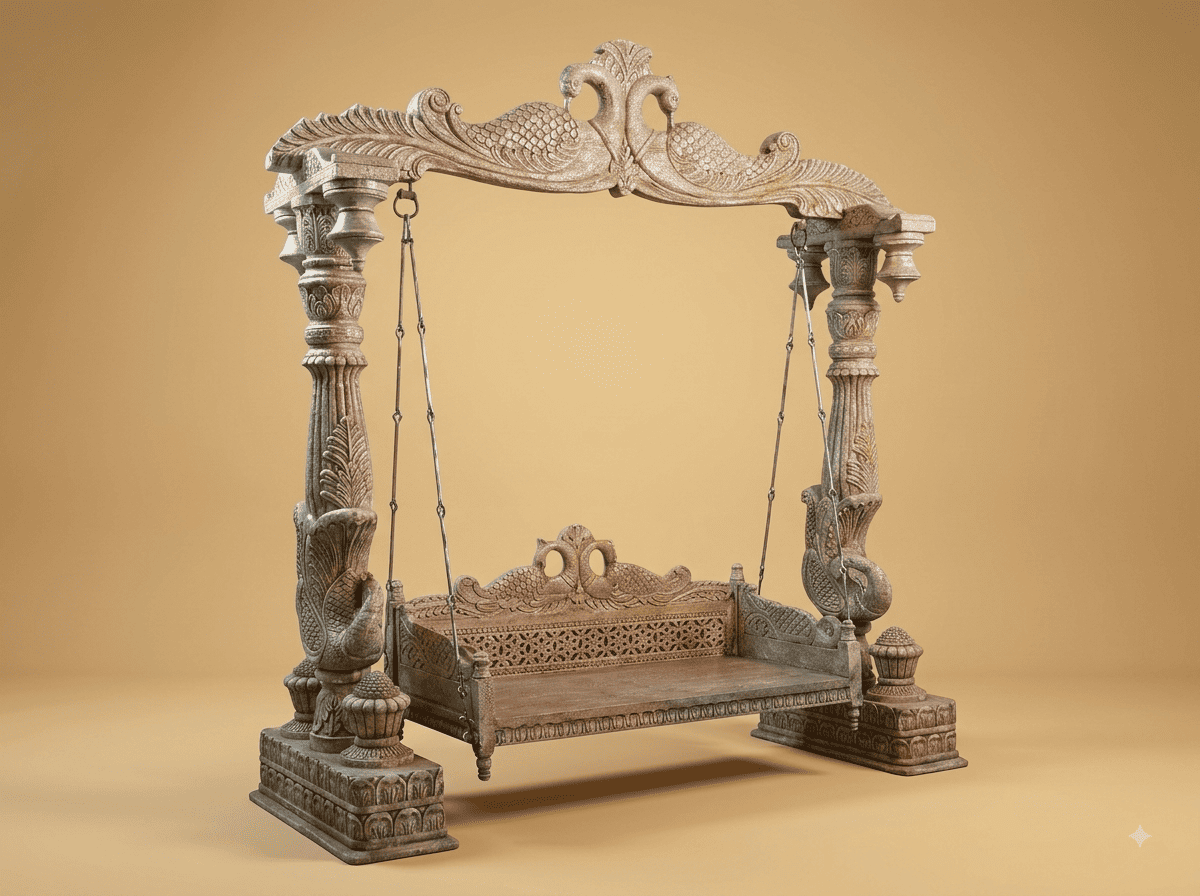
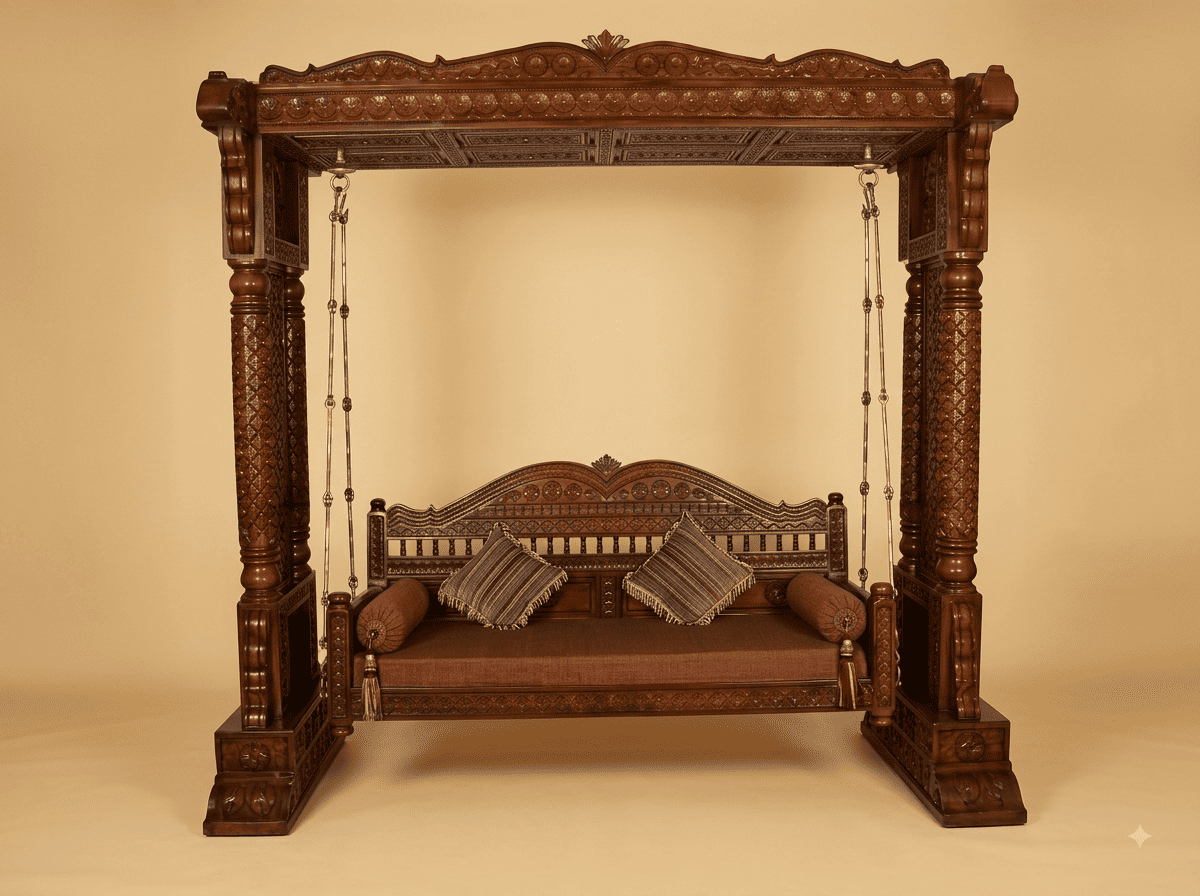
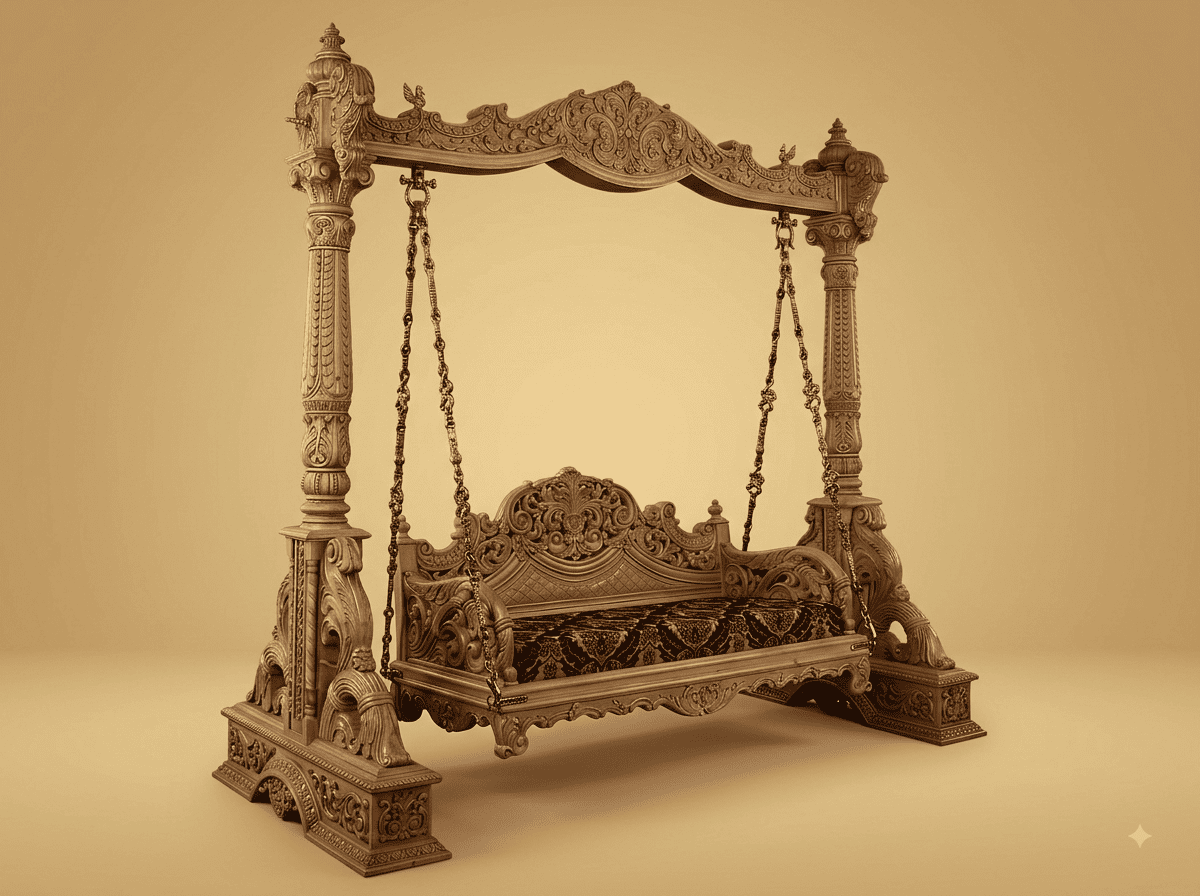
In haveli architecture the space above a doorway or a canopied seat is rarely left as a bare lintel. It is filled with a valance: a carved pelmet with a shaped lower edge, deep enough to read as ornament, that turns an opening into a framed one. This jhula borrows that directly. The top of the frame is a wide carved pelmet with a serpentine lower edge, dipping at the centre and rising towards each column, so the swing hangs within a defined space rather than beneath a plain rail.
The effect is a sense of shelter with nothing solid overhead. You sit under something without sitting under a roof, which keeps the piece light in a room while giving it the enclosure that makes a swing feel restful. The fluted columns carry the same architectural language down to the floor, with carved capitals where they meet the valance and pierced arched aprons at the plinths, so the whole frame reads as a small piece of building rather than as a stand. The seat within it is shaped and carved to match, rising to a pierced medallion at the crest. All of it is carved by hand by master Indian artisans.
 Ask Price On WhatsApp