The Story Behind This TV Unit
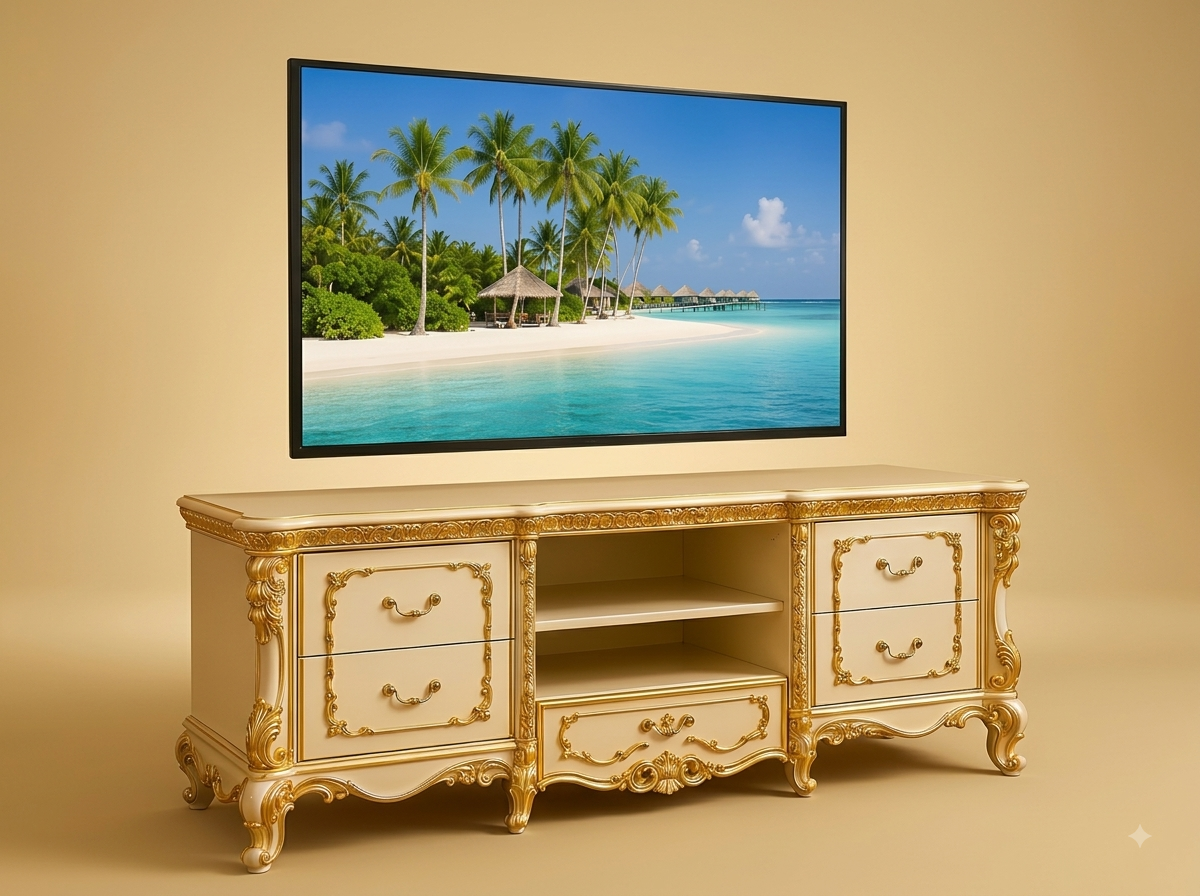
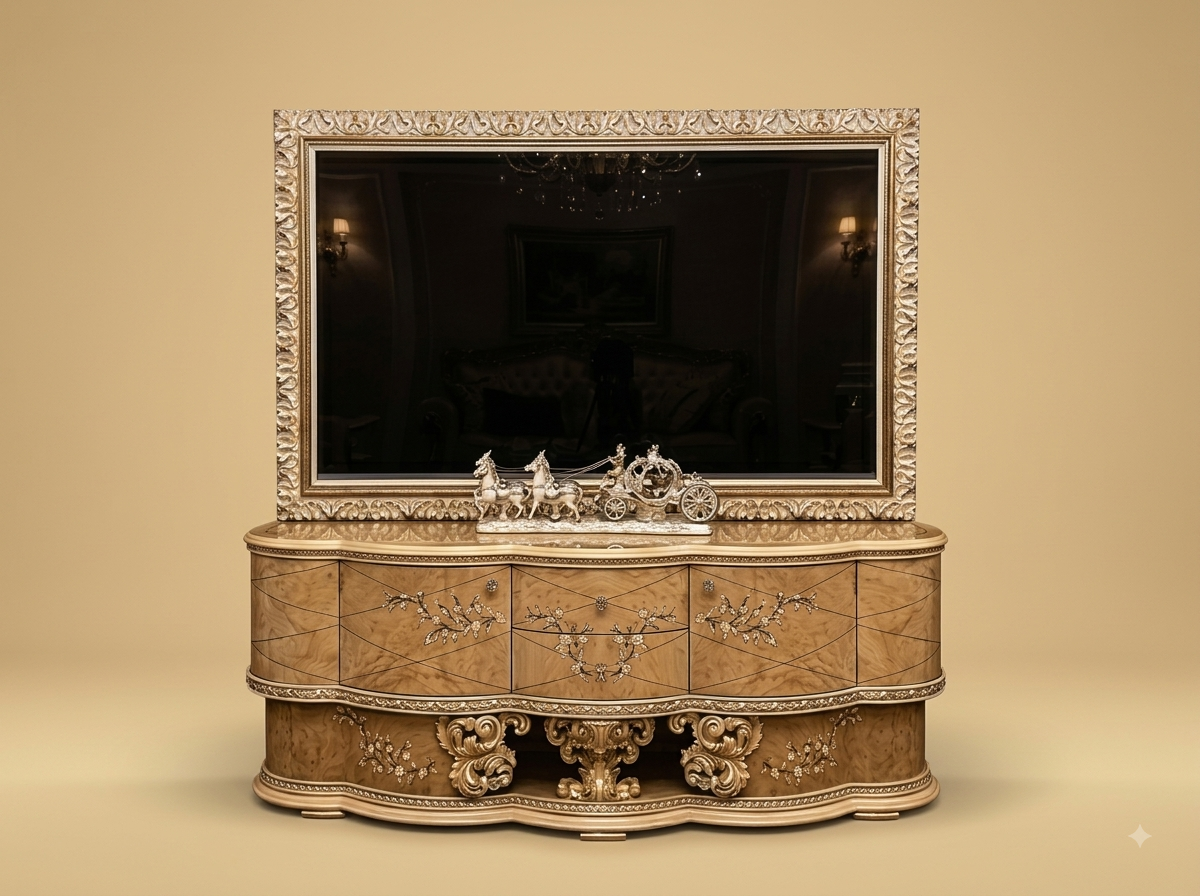
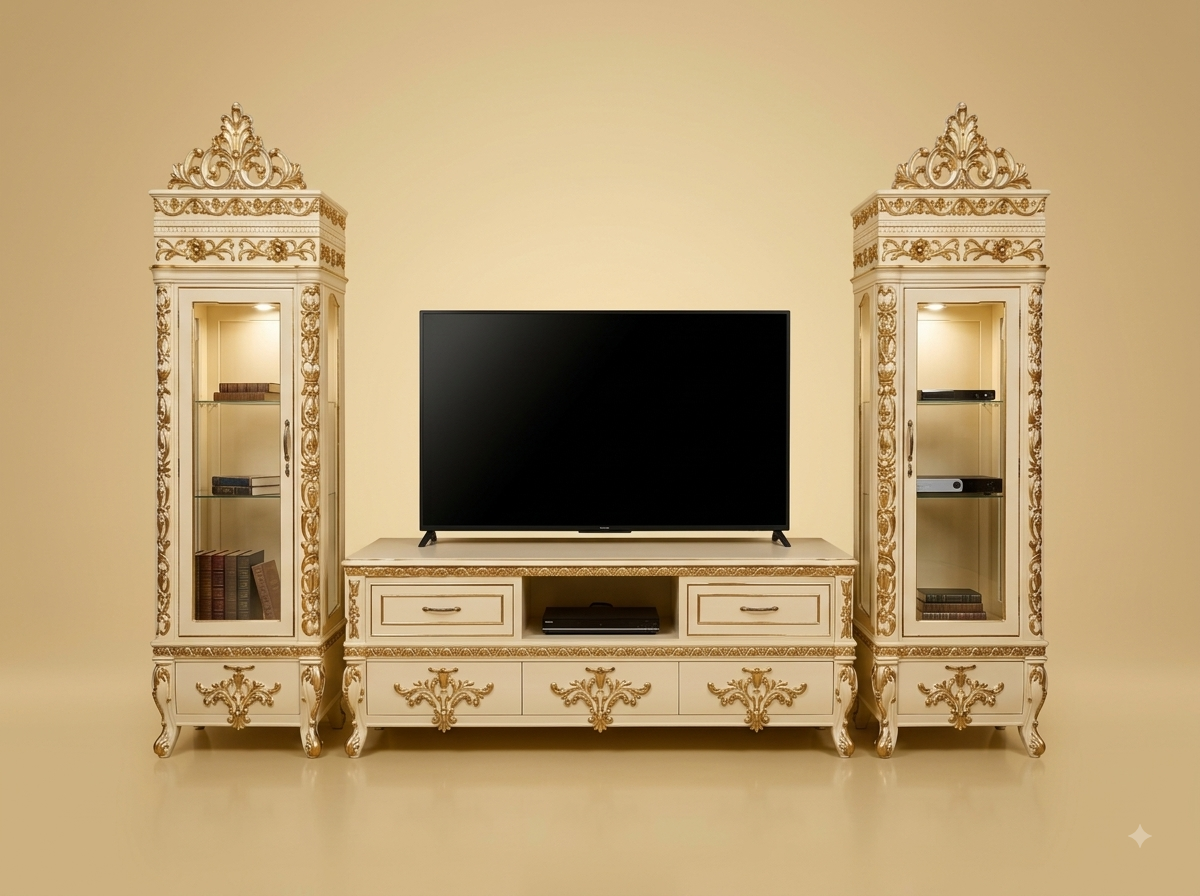
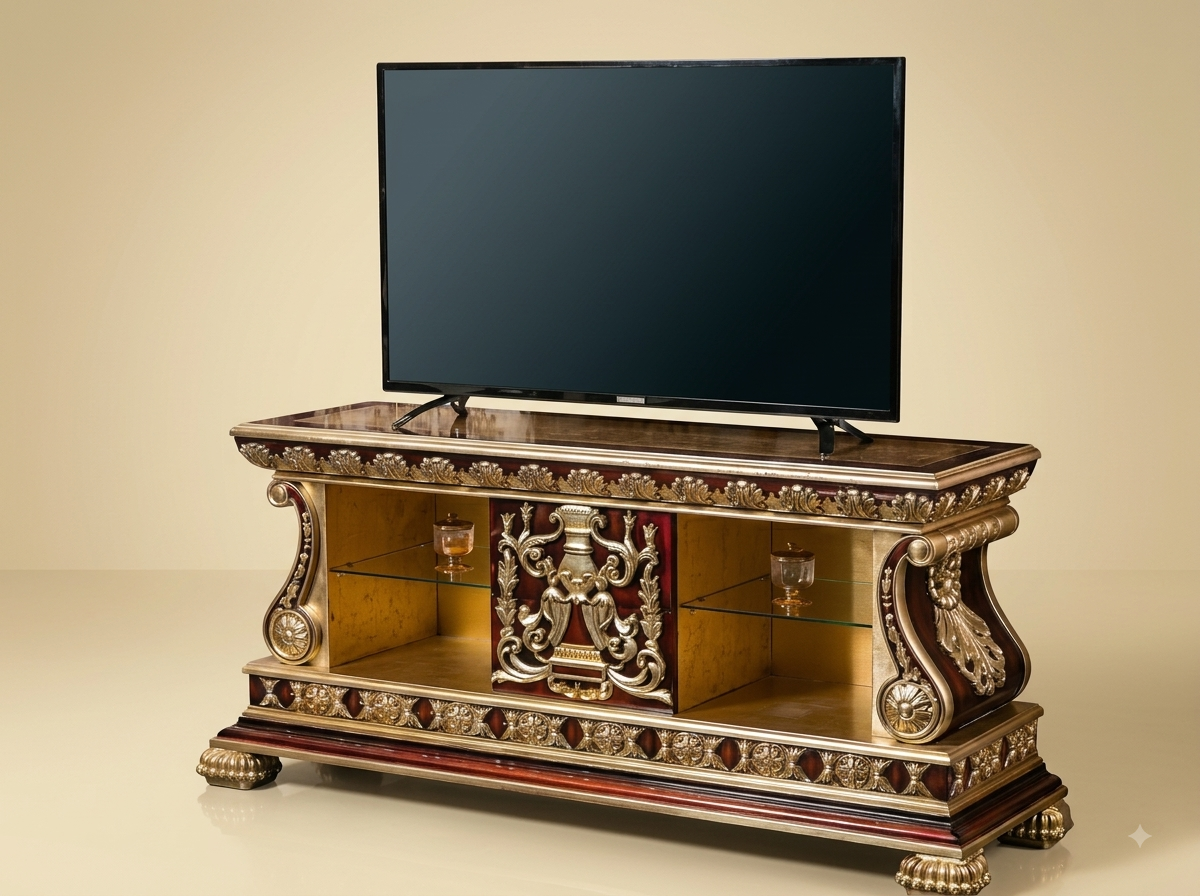
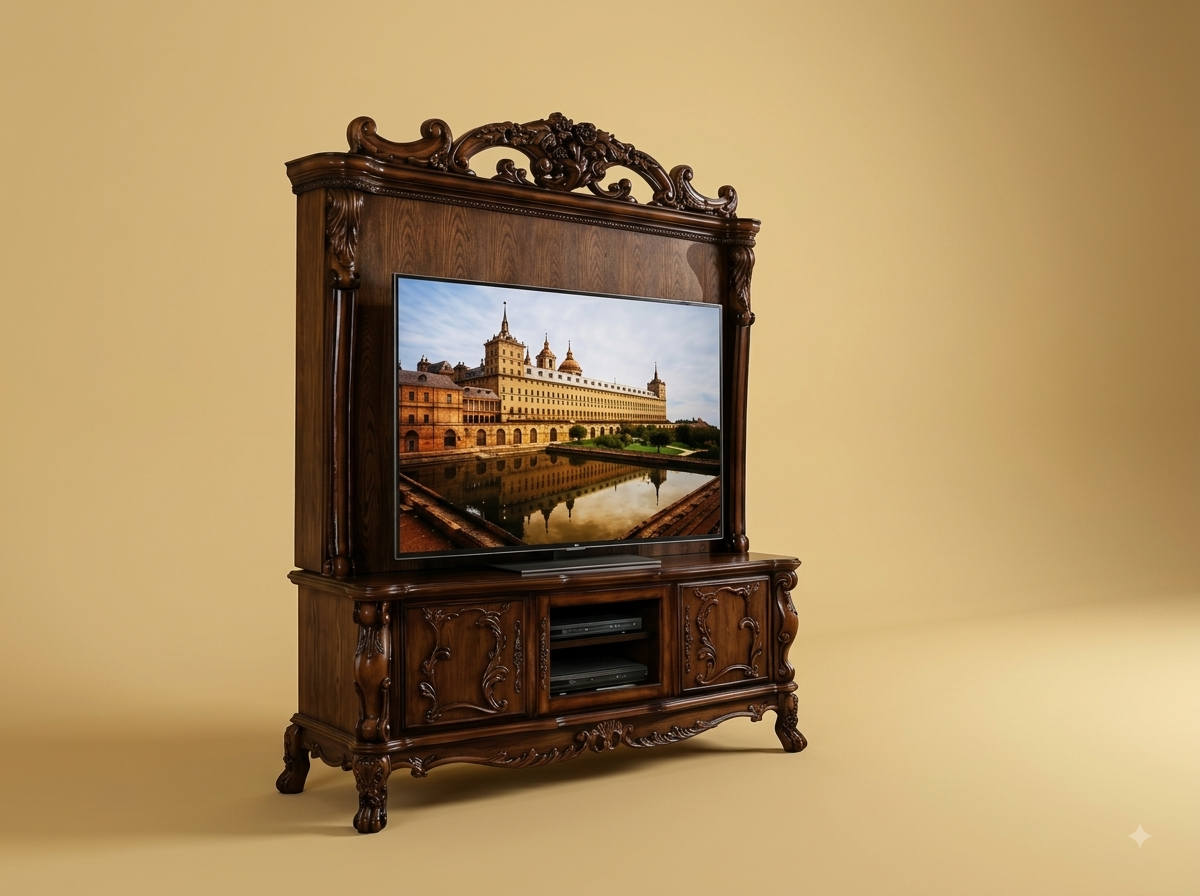
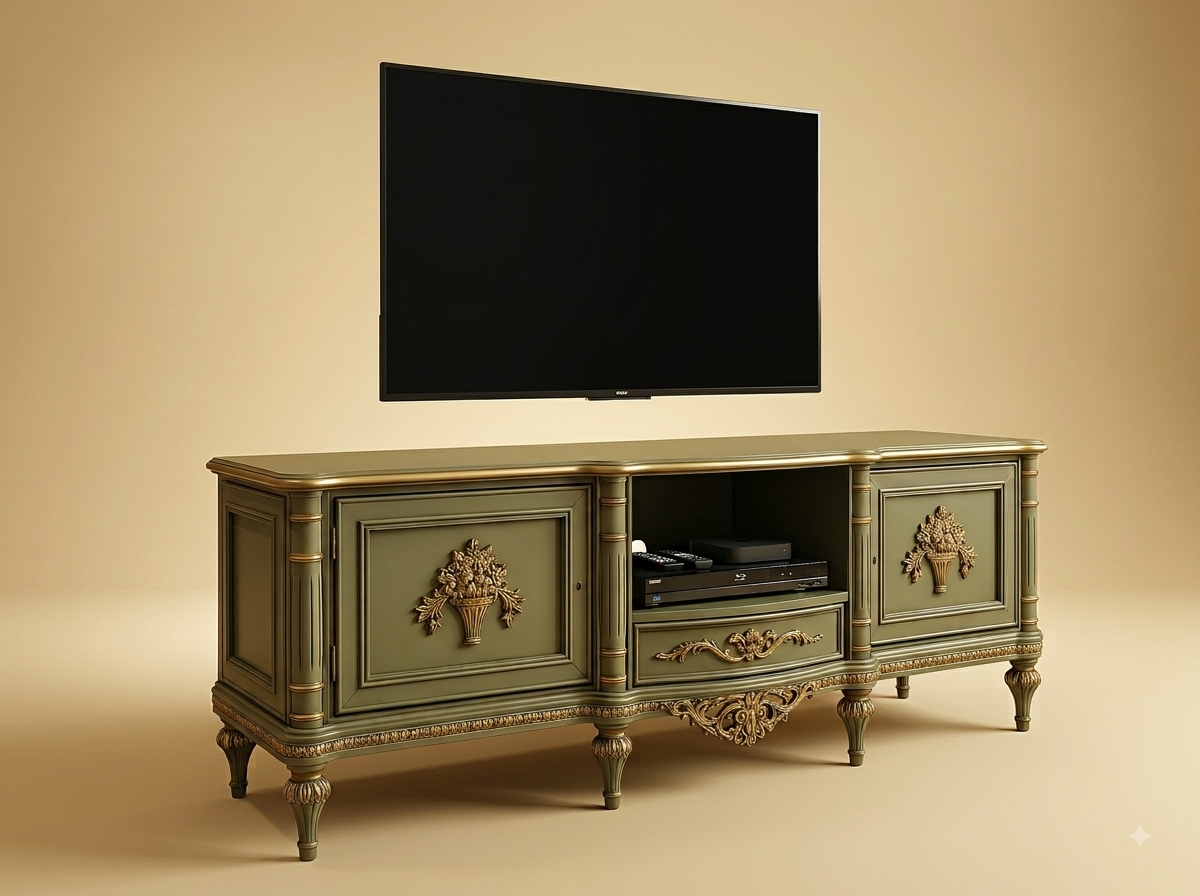
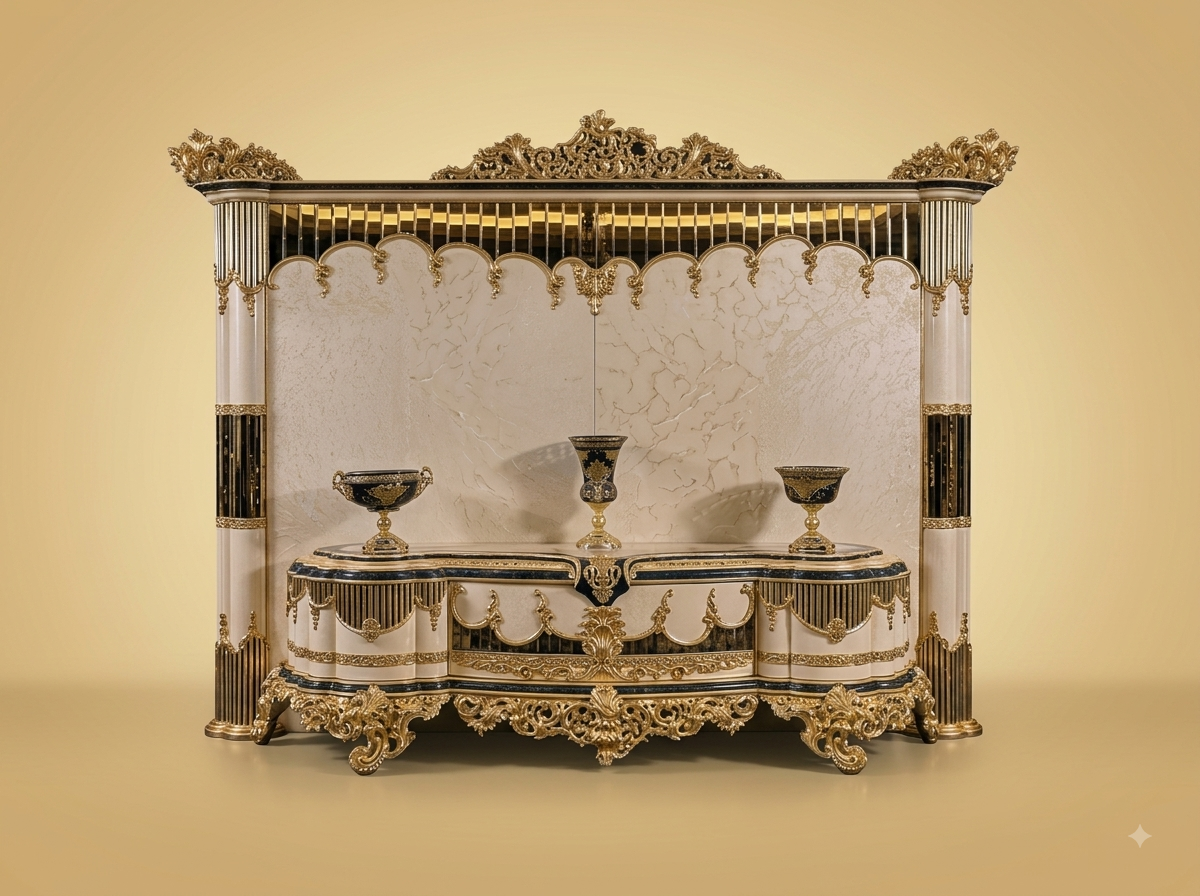
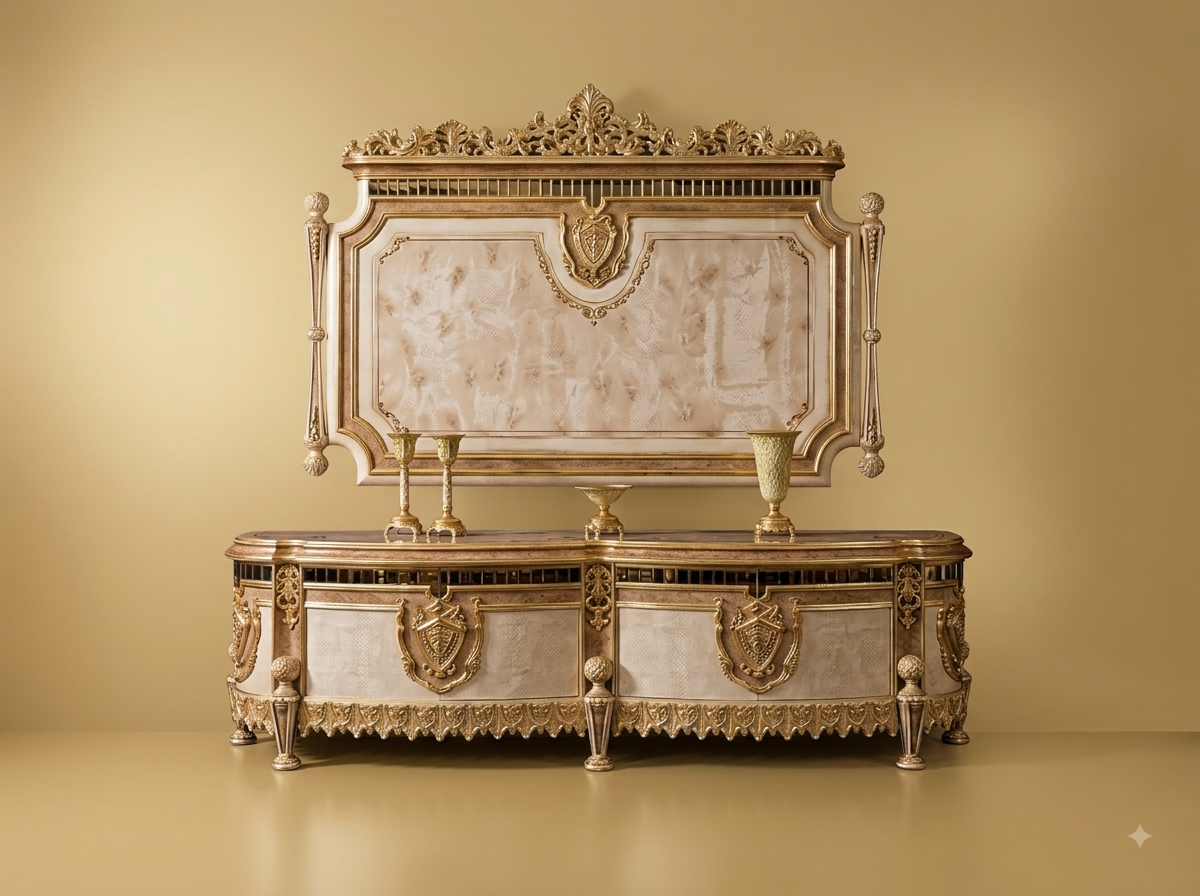
Neoclassical work is judged on symmetry, and symmetry is unforgiving. Every shield cartouche has to sit dead on the centre line of its panel, every swag has to fall identically on both sides, and the lambrequin fringe along the base has to divide evenly across the full length and turn both rounded ends without a stretched or truncated pendant. All of that is arithmetic settled at the setting-out stage, before a chisel touches the timber - and it is recalculated for your exact dimensions rather than scaled from a standard.
The D-shaped console ends are the hard joinery. A curved carcass end has to be built up and shaped rather than simply cut, and the reeded band and lambrequin fringe both have to follow that curve without the repeat breaking where the straight run meets it.
The turned elements - the panel finials, the console legs, the ball capitals - are turned on the lathe and then carved and reeded by hand. Finally the ivory is built up in thin coats and cut back between each, and gold leaf is laid by hand across every carved and moulded element, burnished, then rubbed back at the high points.
 Ask Price On WhatsApp