The Story Behind This Mirror
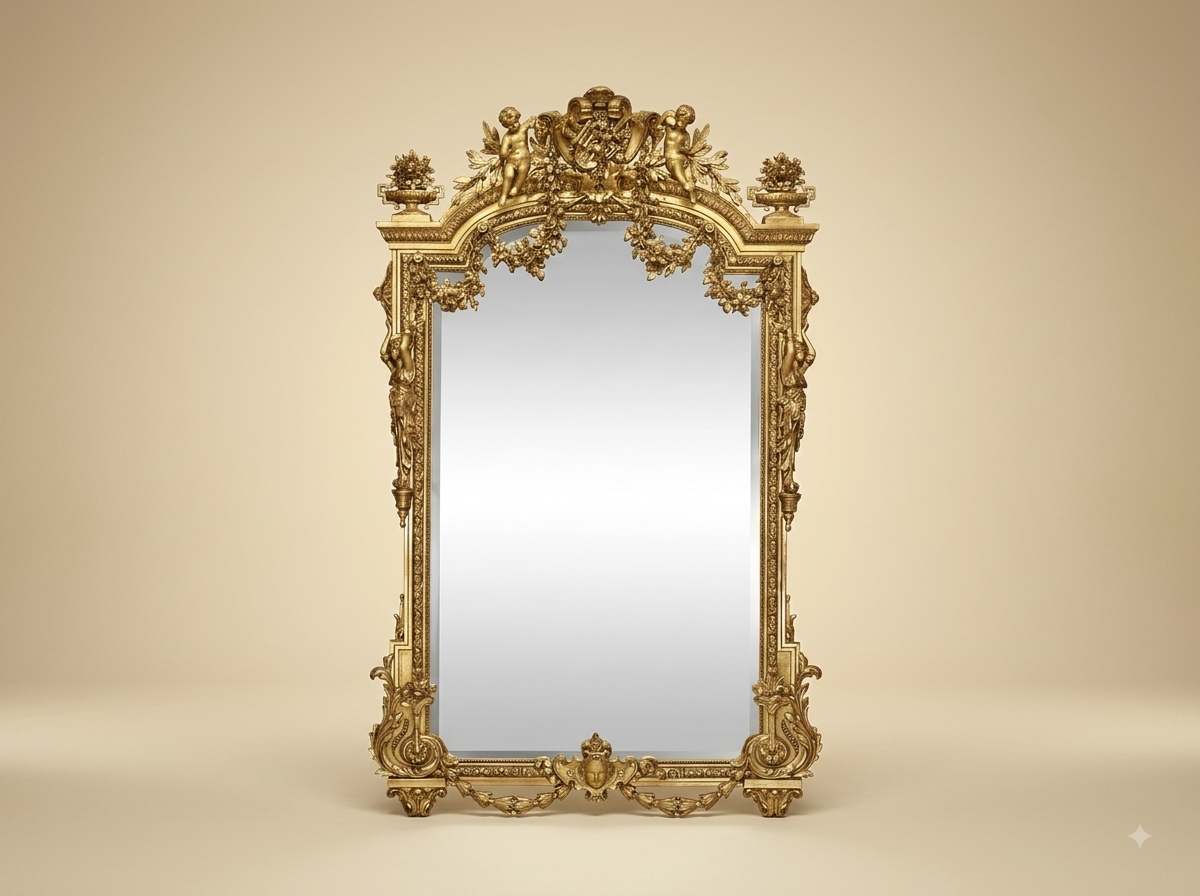
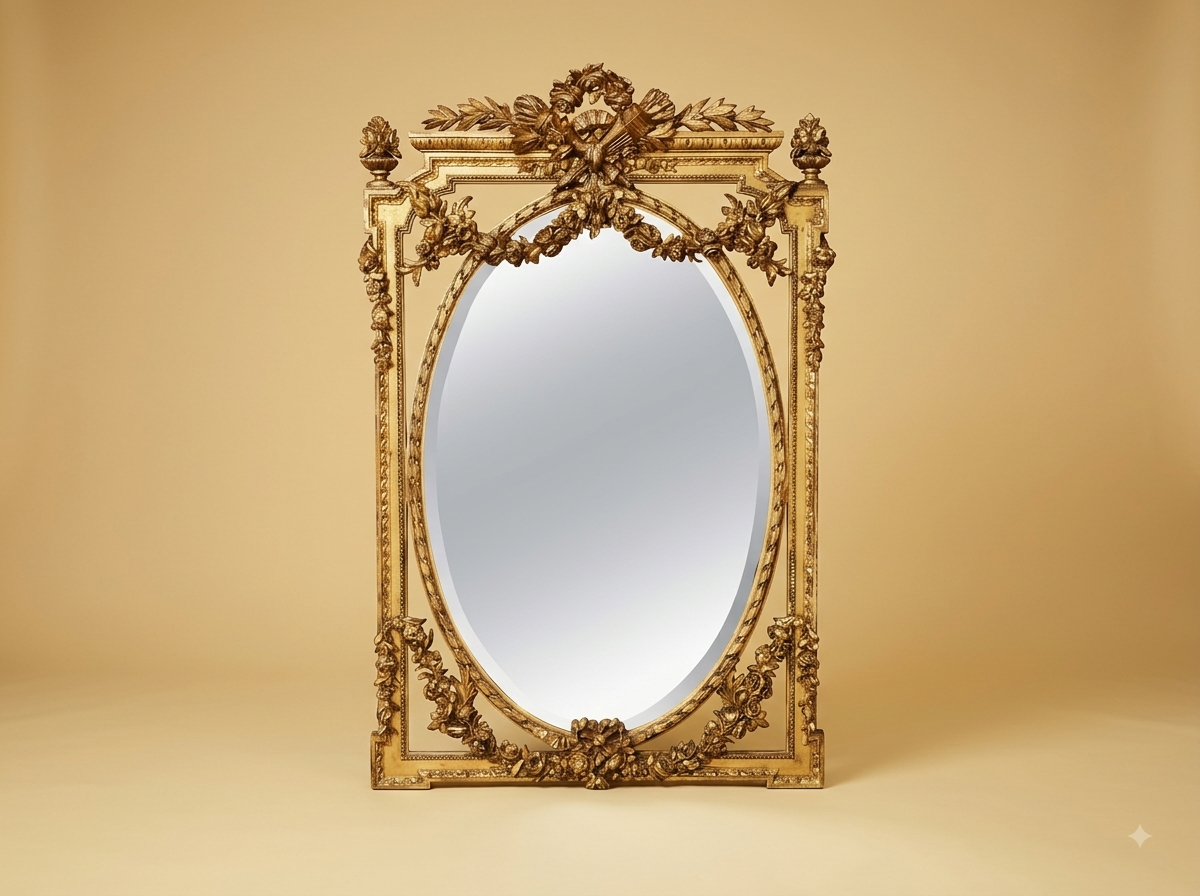
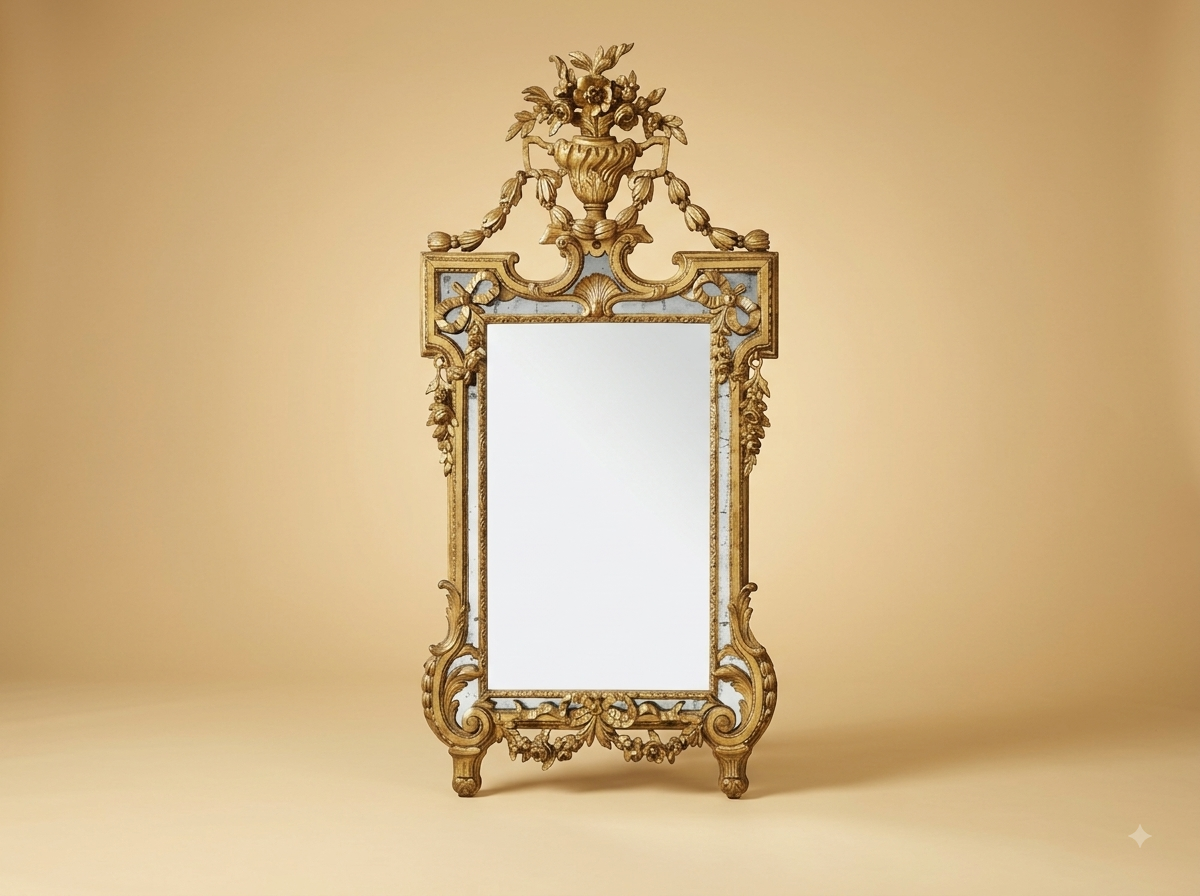
Neoclassical work is judged on discipline, not exuberance. Every husk in a swag has to graduate evenly, every bow has to tie the same way on both sides, and the urn has to sit dead on the centre line - because the whole design is symmetrical, any error is doubled by its own reflection across the axis. So this frame is set out geometrically before carving and checked constantly against the centre.
The urn is turned first and then carved, its body fluted and its lip gadrooned, with the flower spray above shaped bloom by bloom. The swags are cut as continuous runs with each husk slightly smaller than the last so the drape appears to hang under its own weight rather than being drawn on. The ribbon bows are undercut so light passes through the loops.
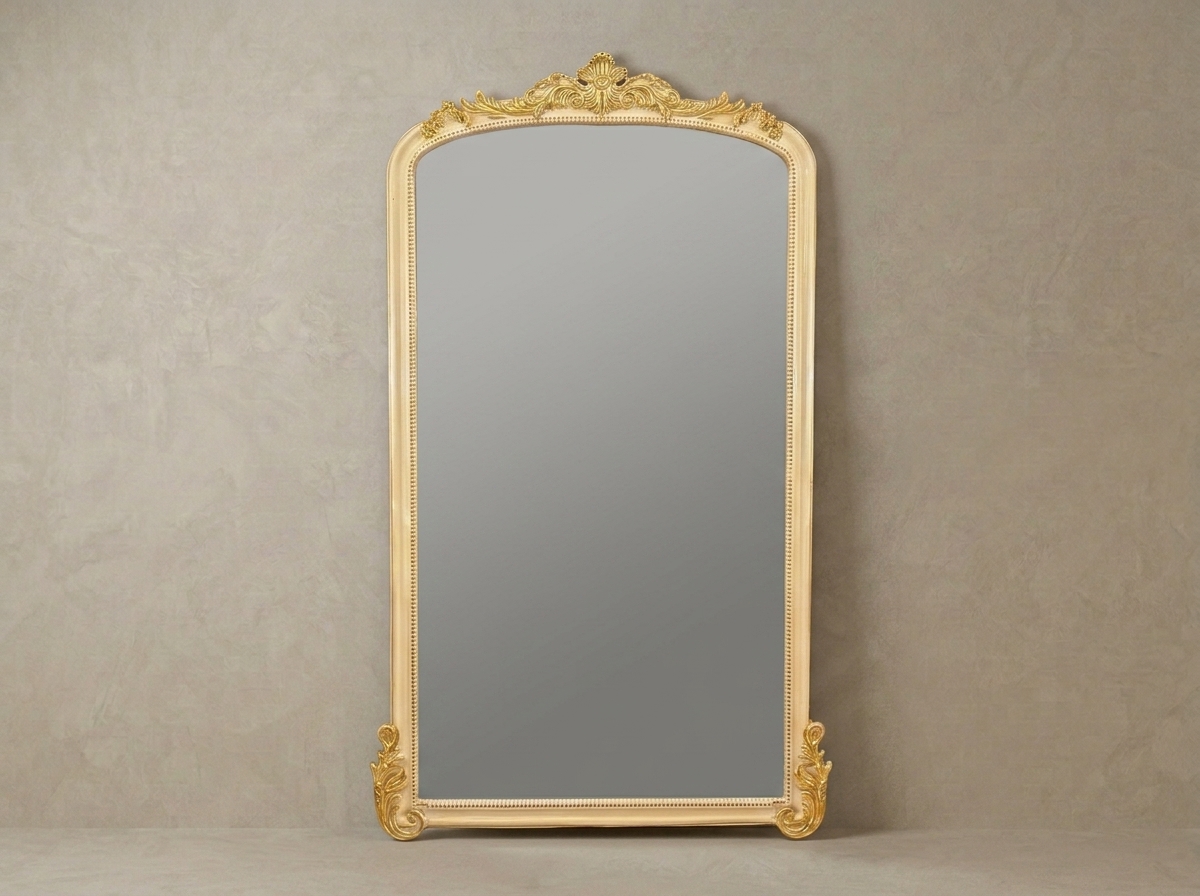
The finishing is what gives the piece its age. The pale ground goes on first and is cut back; the gold is then laid lightly over the raised work only, and rubbed back further than we would on a bright piece, so the ground shows through at the wear points. The marginal panels are glazed before the central plate.
 Ask Price On WhatsApp