The Story Behind This Mirror
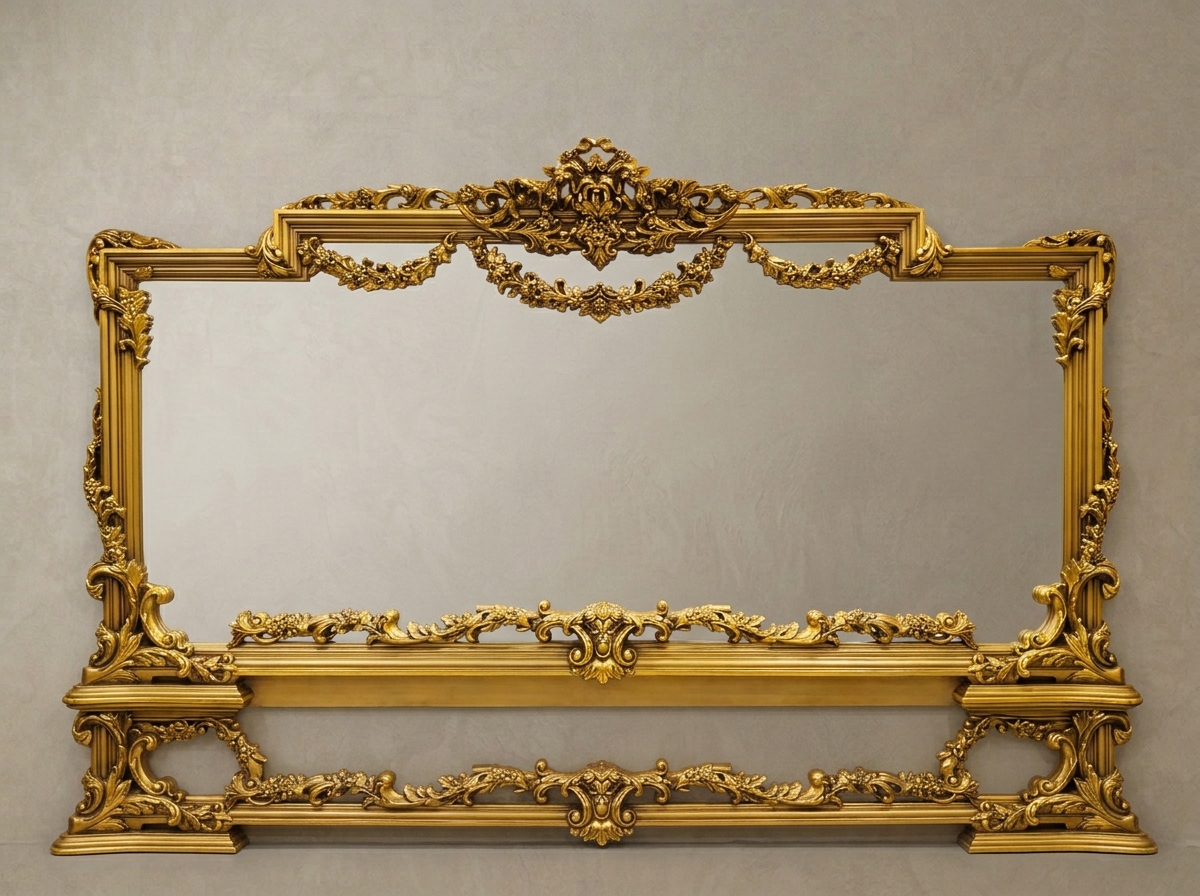
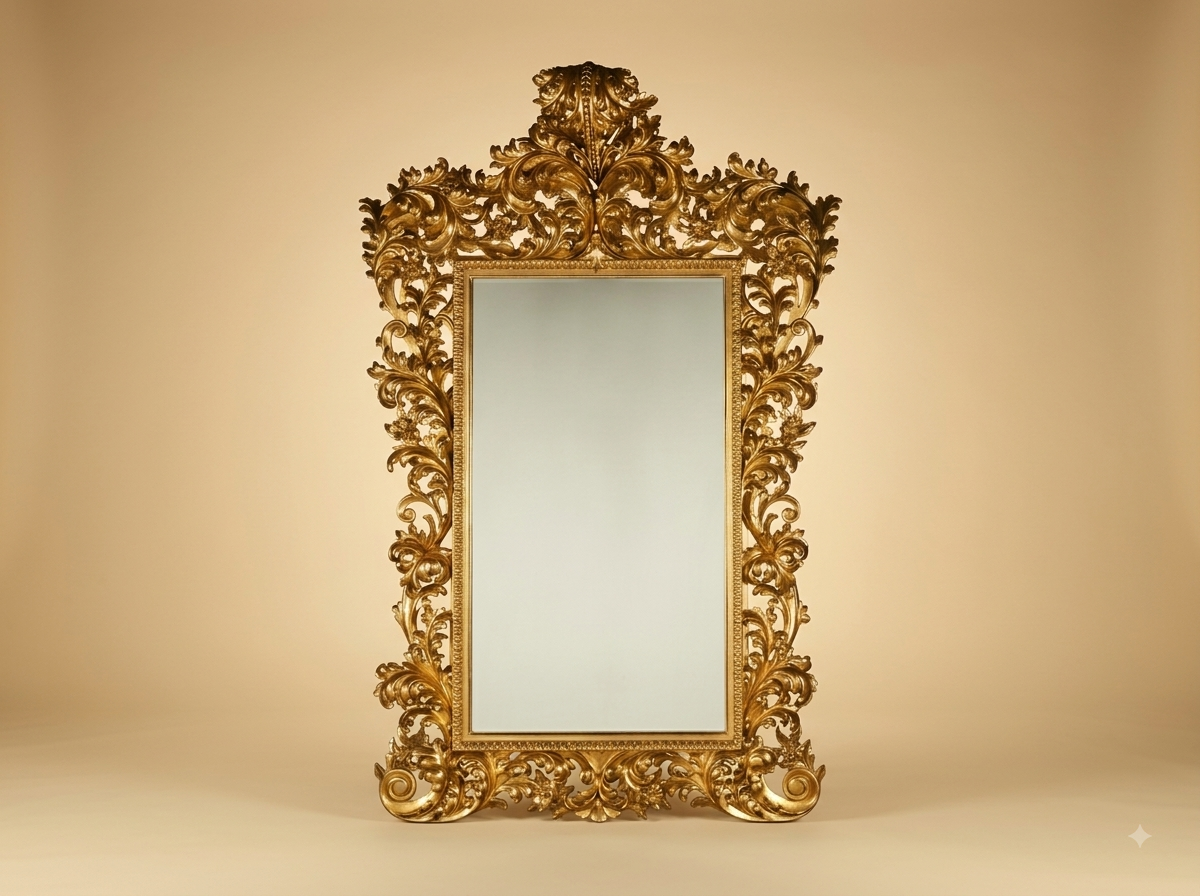
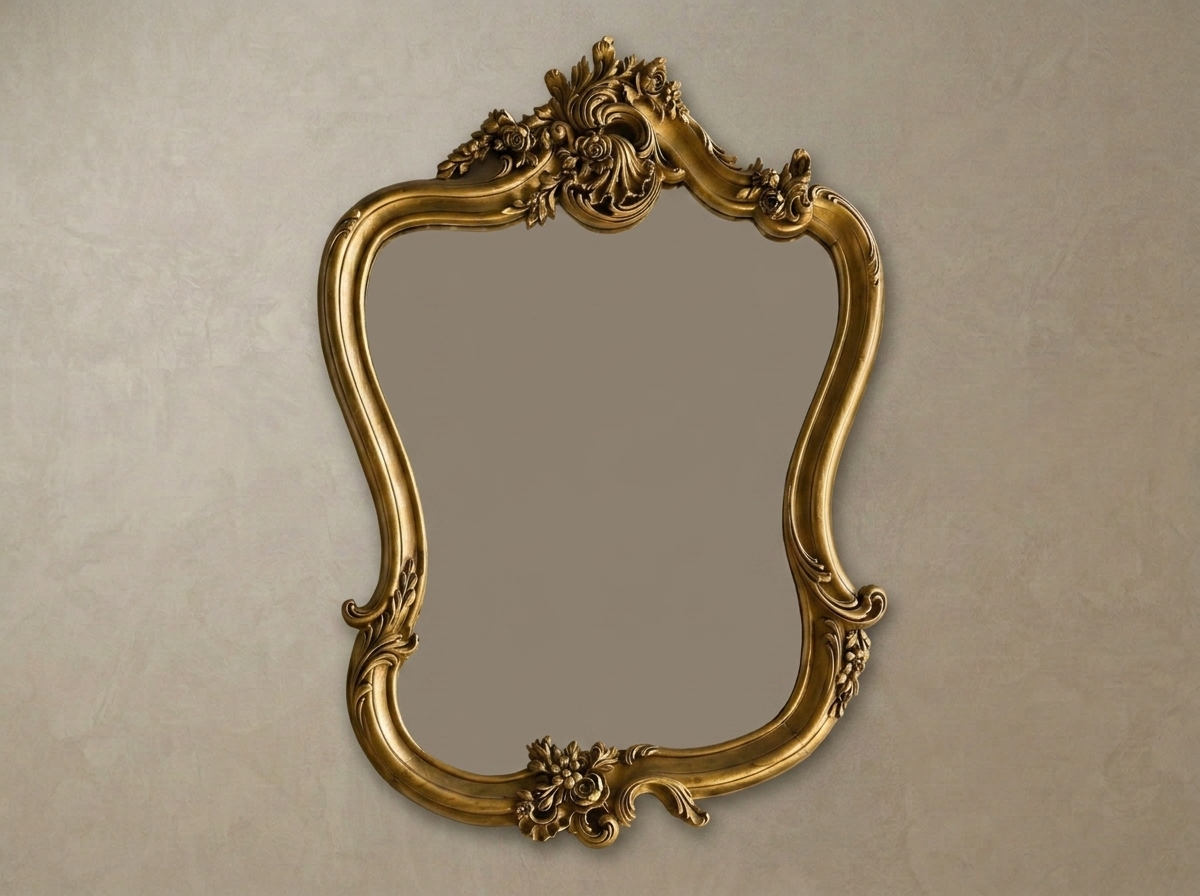
Relief carving into a solid ground is the oldest discipline in the workshop and, in some ways, the least forgiving. In openwork you remove waste and the eye reads the silhouette; in relief the eye reads depth, and depth has to be consistent across a wide border or the frame looks uneven under raking light. The carver therefore works to a fixed ground level across all four rails, checking constantly, because a passage cut a fraction too deep cannot be raised again.
The corner cartouches are set out first, since they carry the most ornament and everything else is composed to balance them. Each is cut individually - the scrolls turning outward, the foliage layered so leaves overlap - and no two corners are identical when examined closely, though they read as a matched set. The centre motifs on each rail are cut next, then the running foliate ground between them.
The beaded mouldings are run last along both edges, and they are the fussiest work on the piece: two continuous bead runs of different scale that both have to keep rhythm around all four corners. Then hand-sanding, gold in coats, and rubbing back at every bead and leaf tip.
 Ask Price On WhatsApp