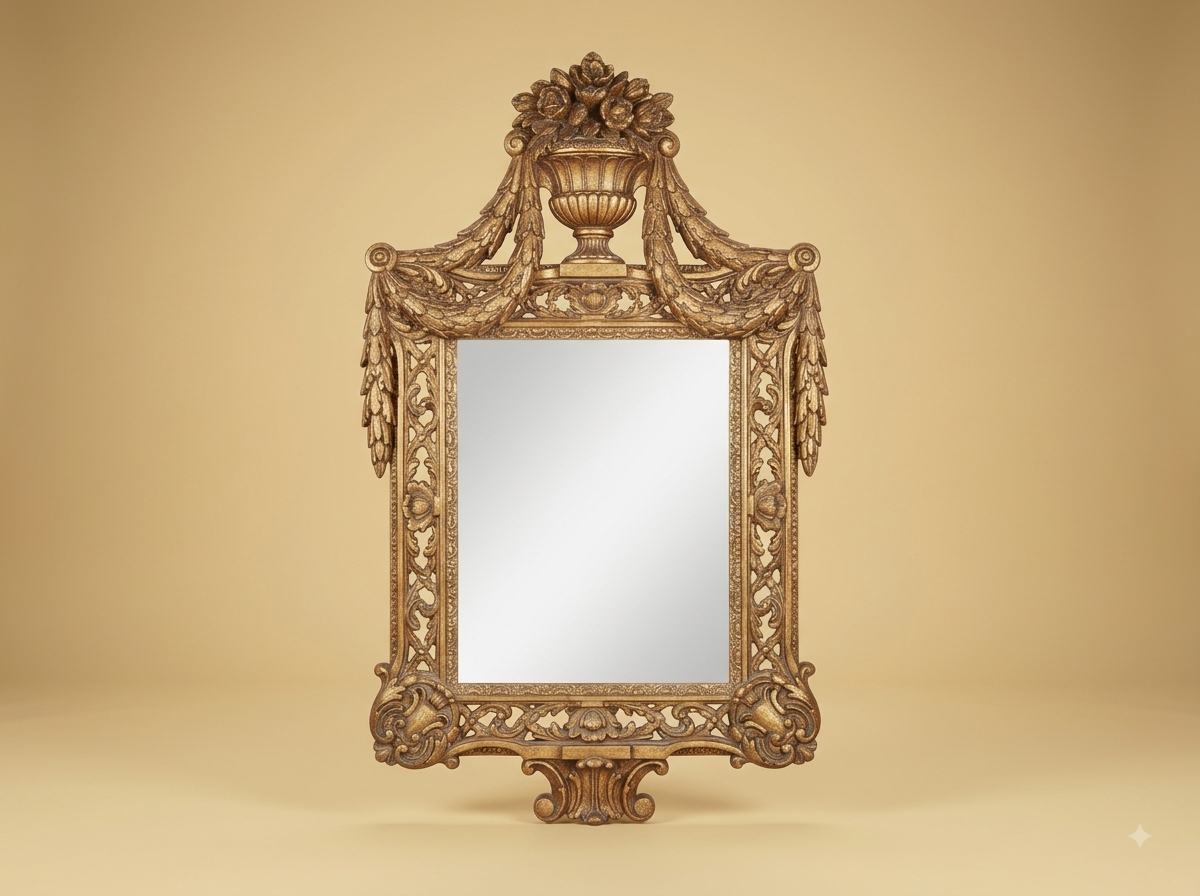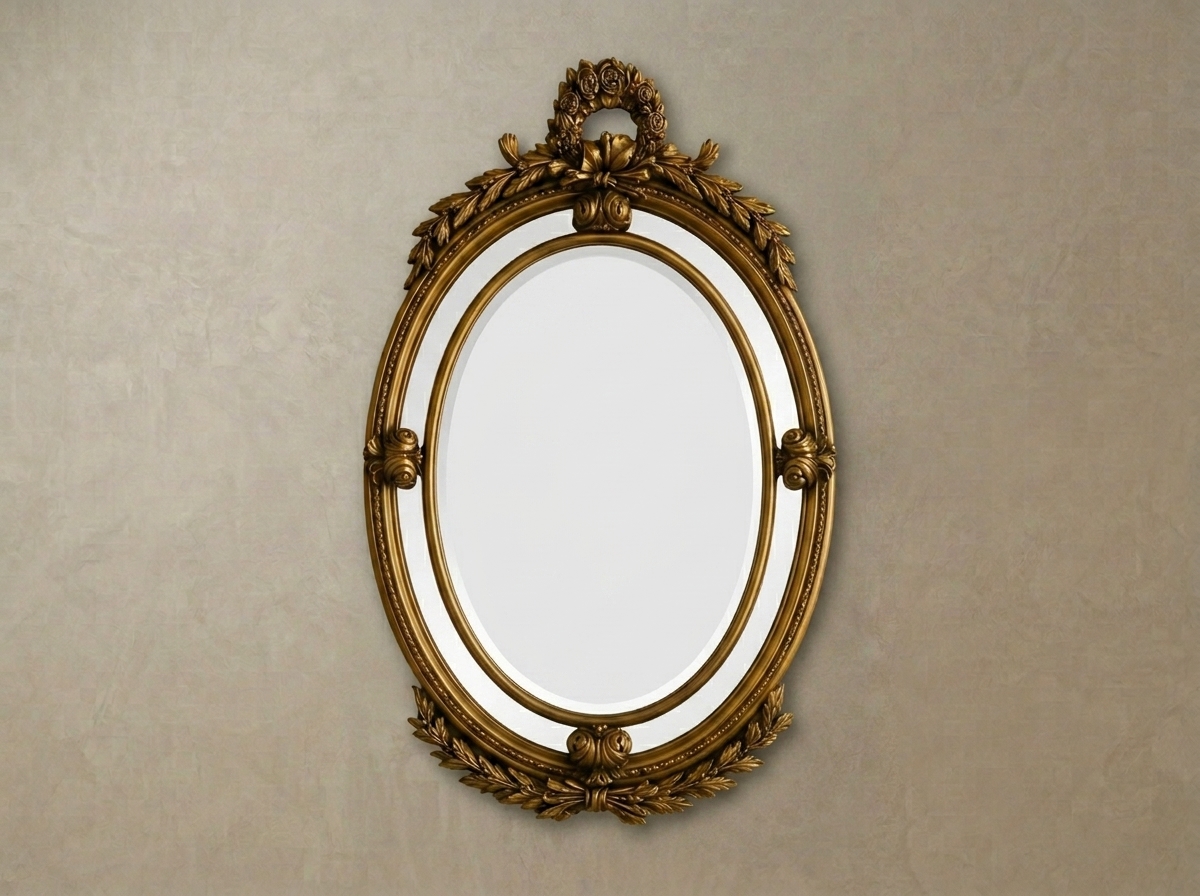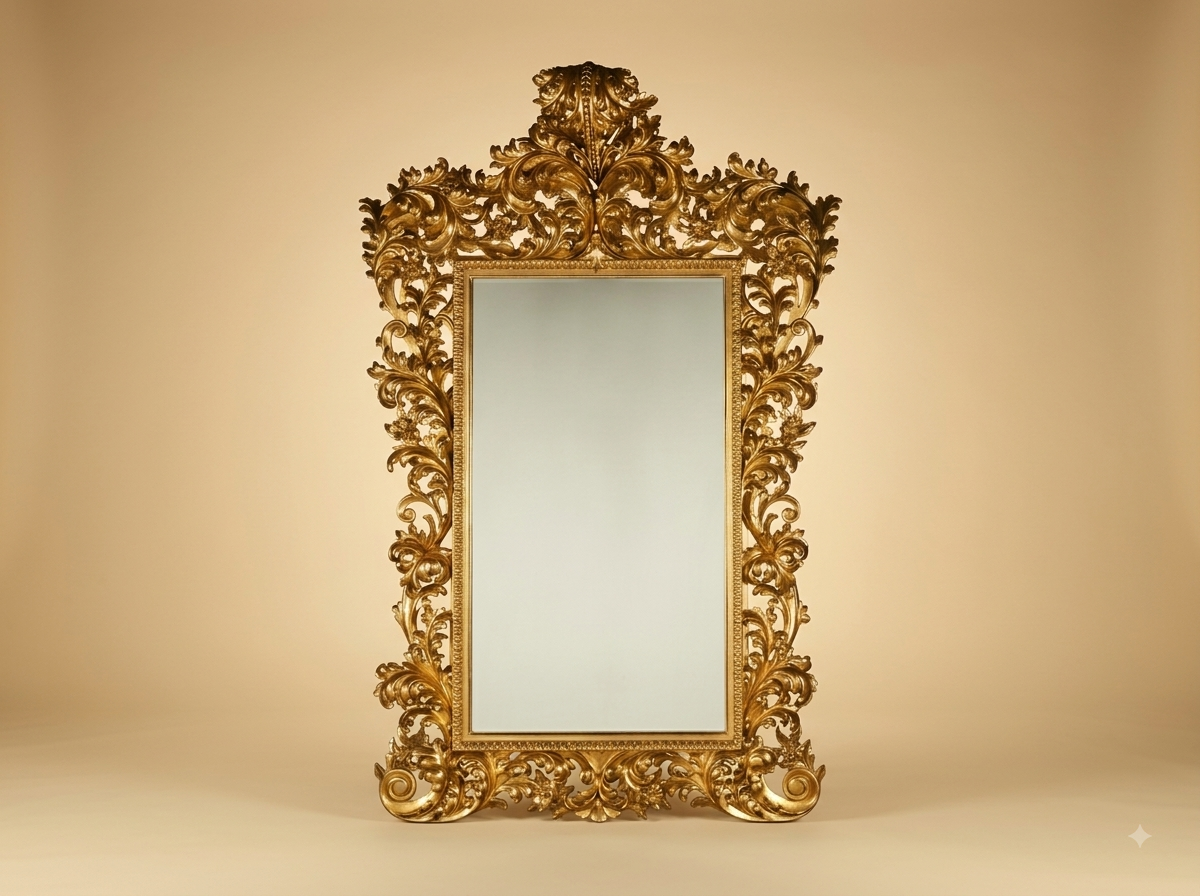
The Story Behind This Mirror
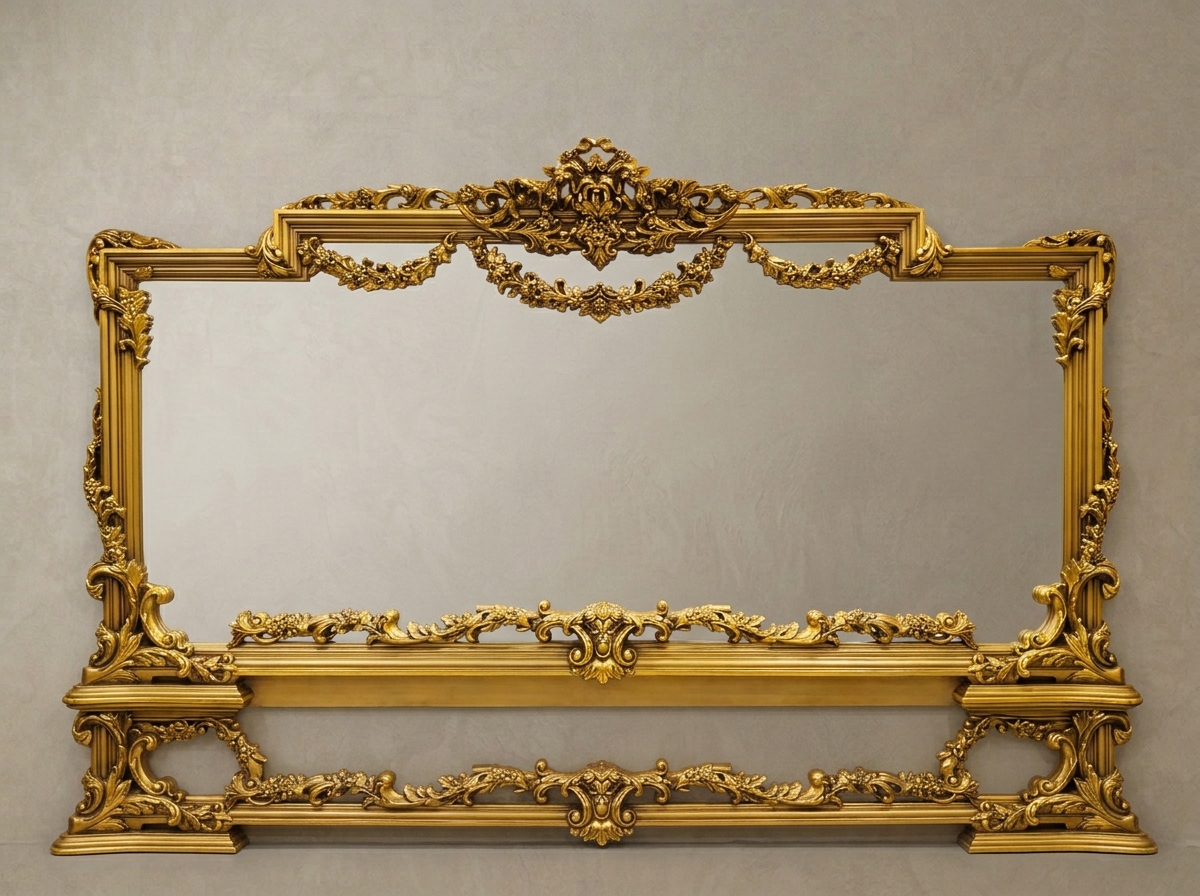
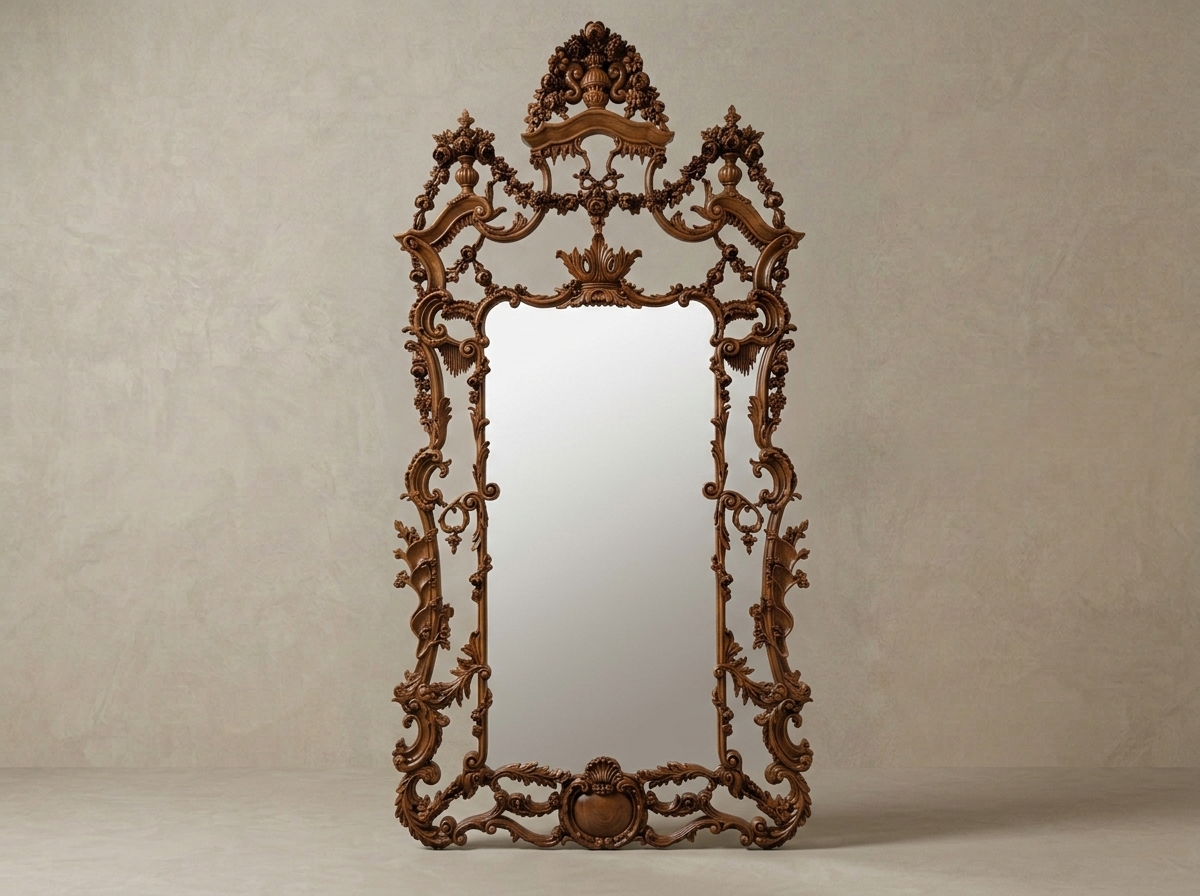
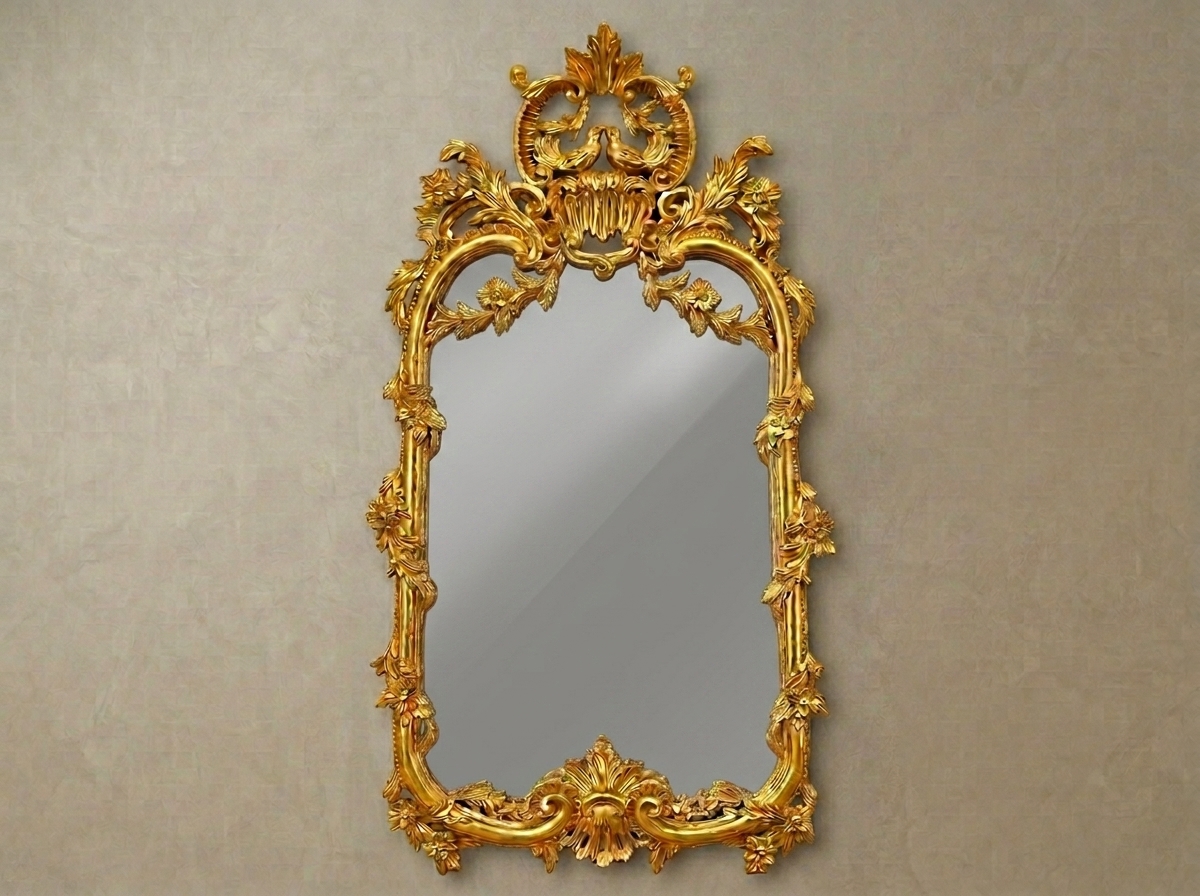
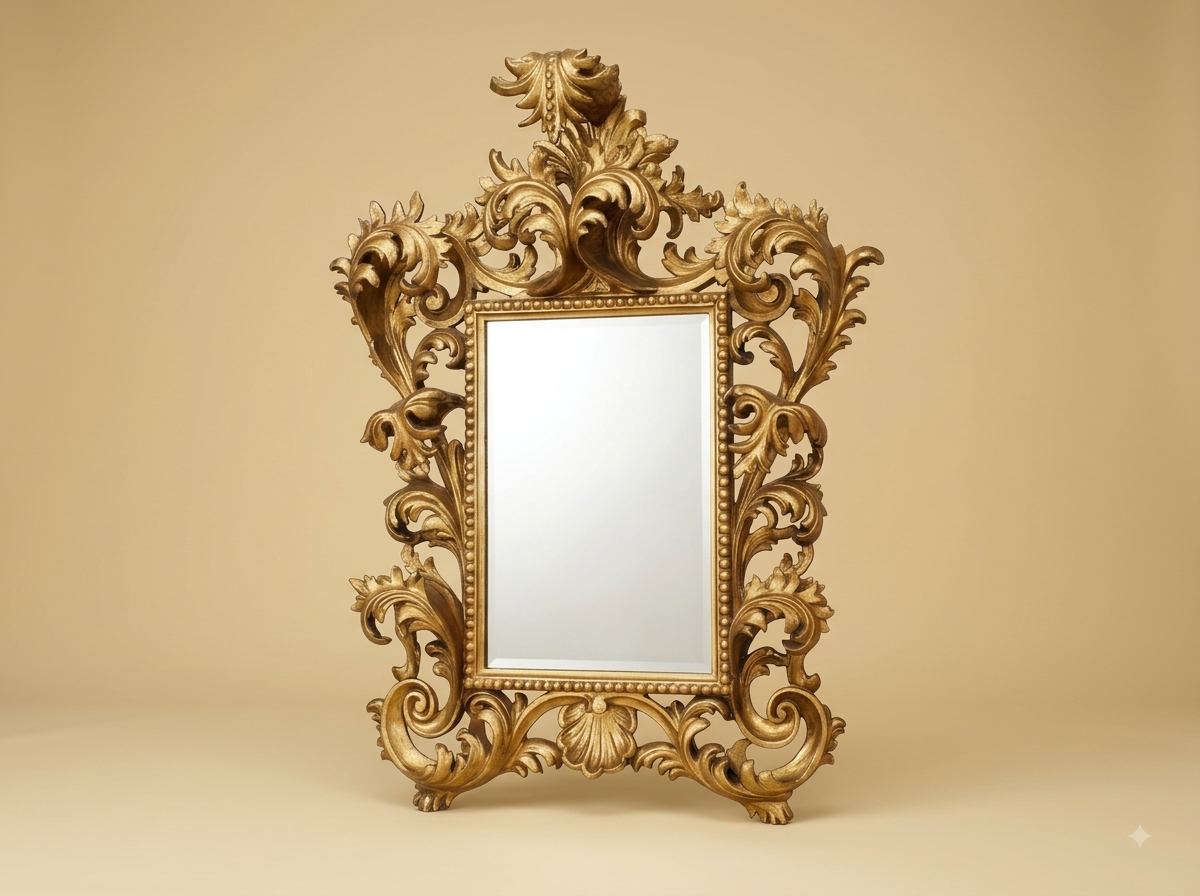
Florentine frames are the honest test of a carver, because there is nowhere to hide. No cherub draws the eye, no cameo distracts from a lazy scroll - if a leaf is flat or a curl is mechanical, you see it immediately. So this frame begins with the best boards in the workshop: straight, tight-grained seasoned teak, chosen for how the grain will run through the deepest cuts.
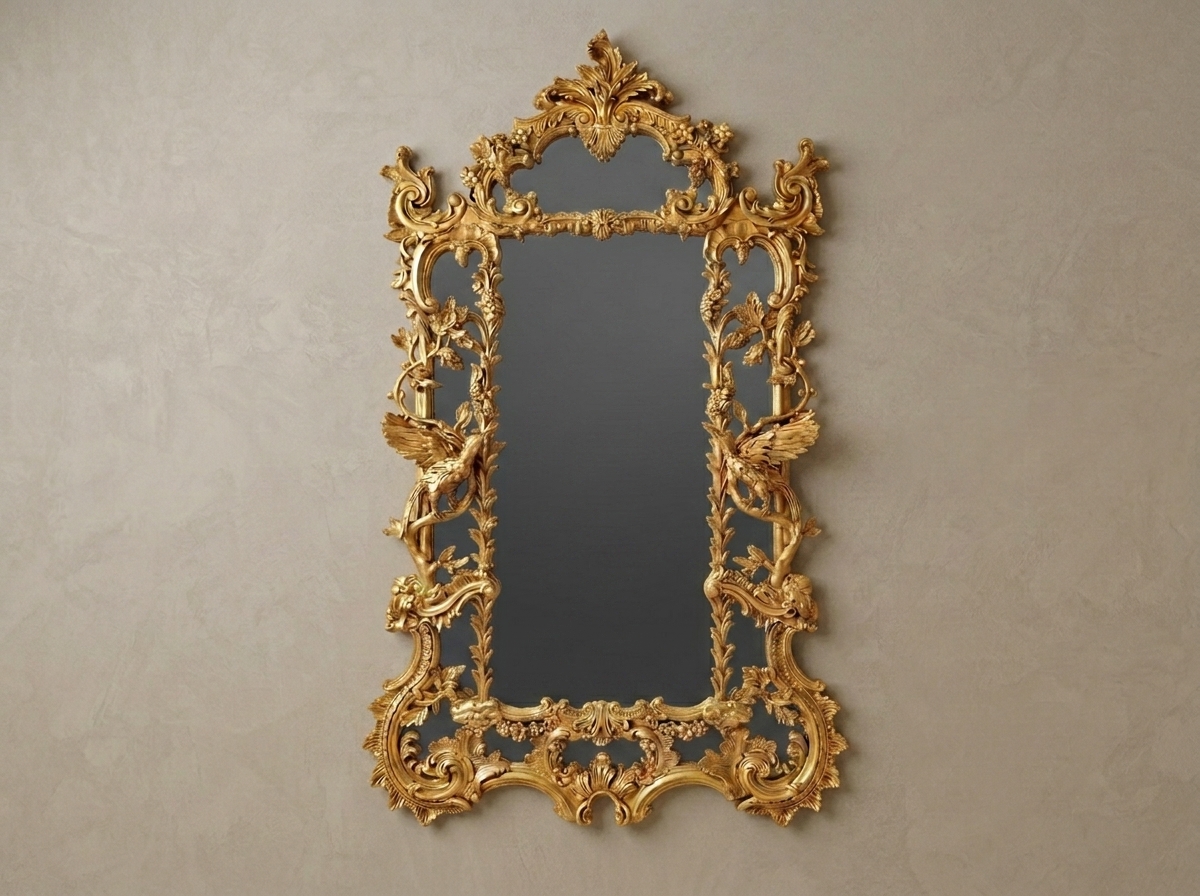
The foliage is worked in layers. The carver establishes the ground first, then lifts one tier of acanthus away from it, then a second, then a third, so the leaves genuinely pass over and behind one another instead of being scratched onto a single plane. Once the layers are set, the waste between them is pierced right through - and that is the point of no return, because the frame is now mostly air and every remaining rib has to be strong enough to carry the glass. The crest shell and plume are cut last so they finish proud of everything below. Then the whole frame is hand-sanded through progressive grits, gold laid in coats, and rubbed back by hand across every raised leaf tip so light breaks unevenly on the surface the way it does on an old gilded frame. The plate is fitted at the end.
 Ask Price On WhatsApp