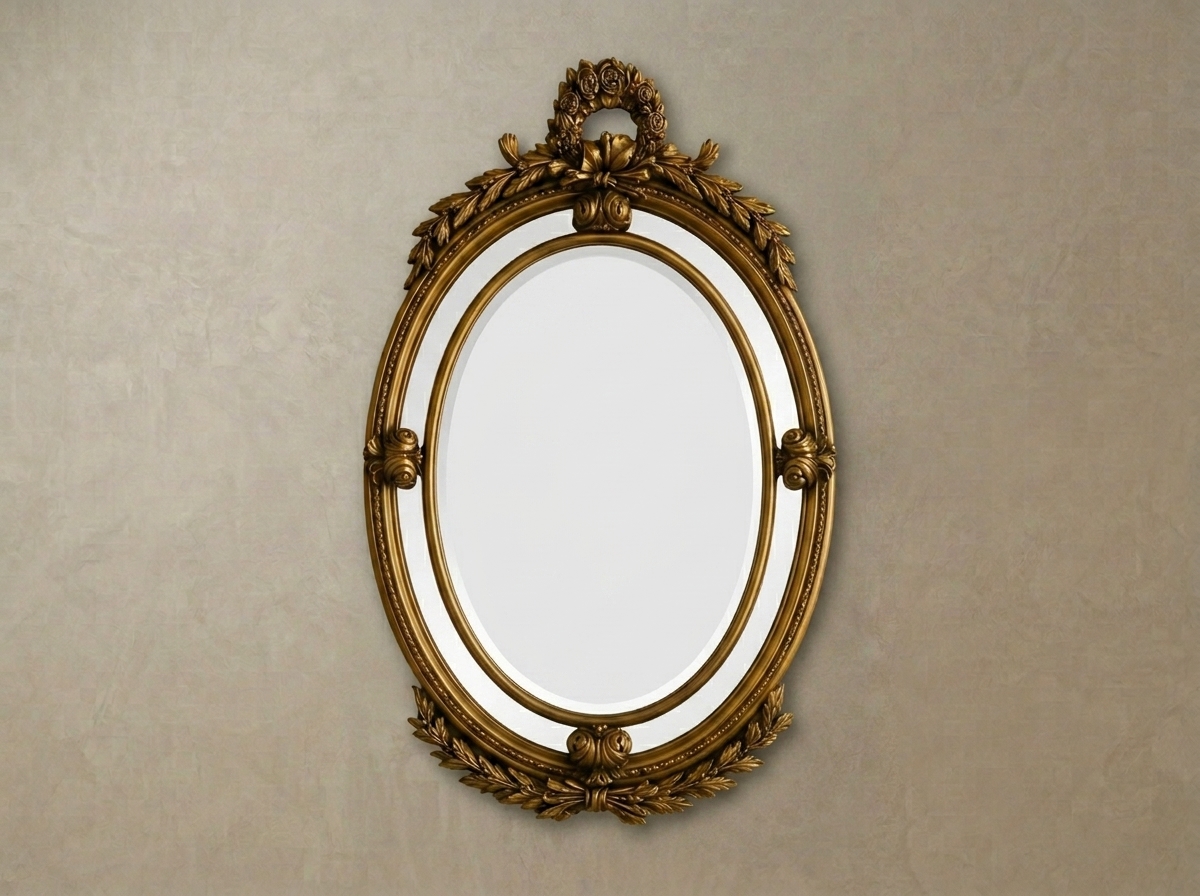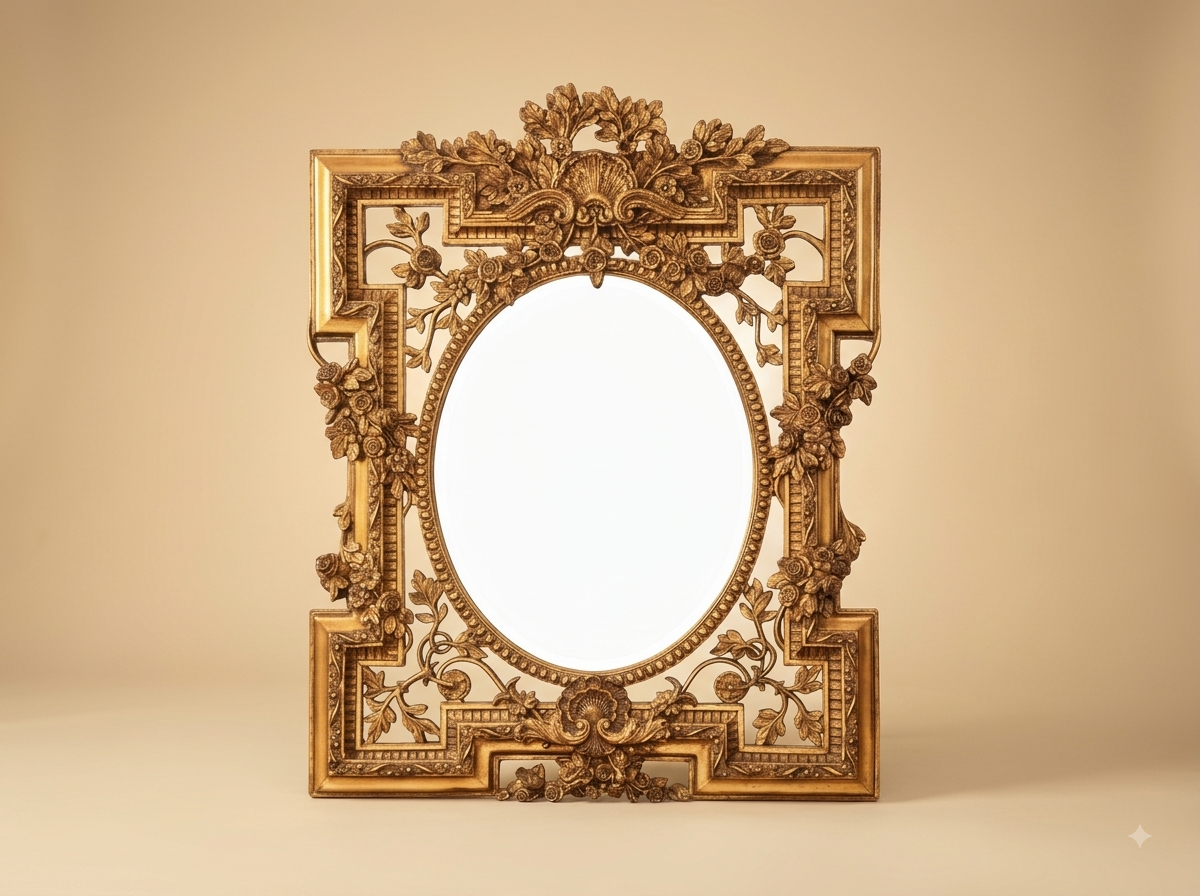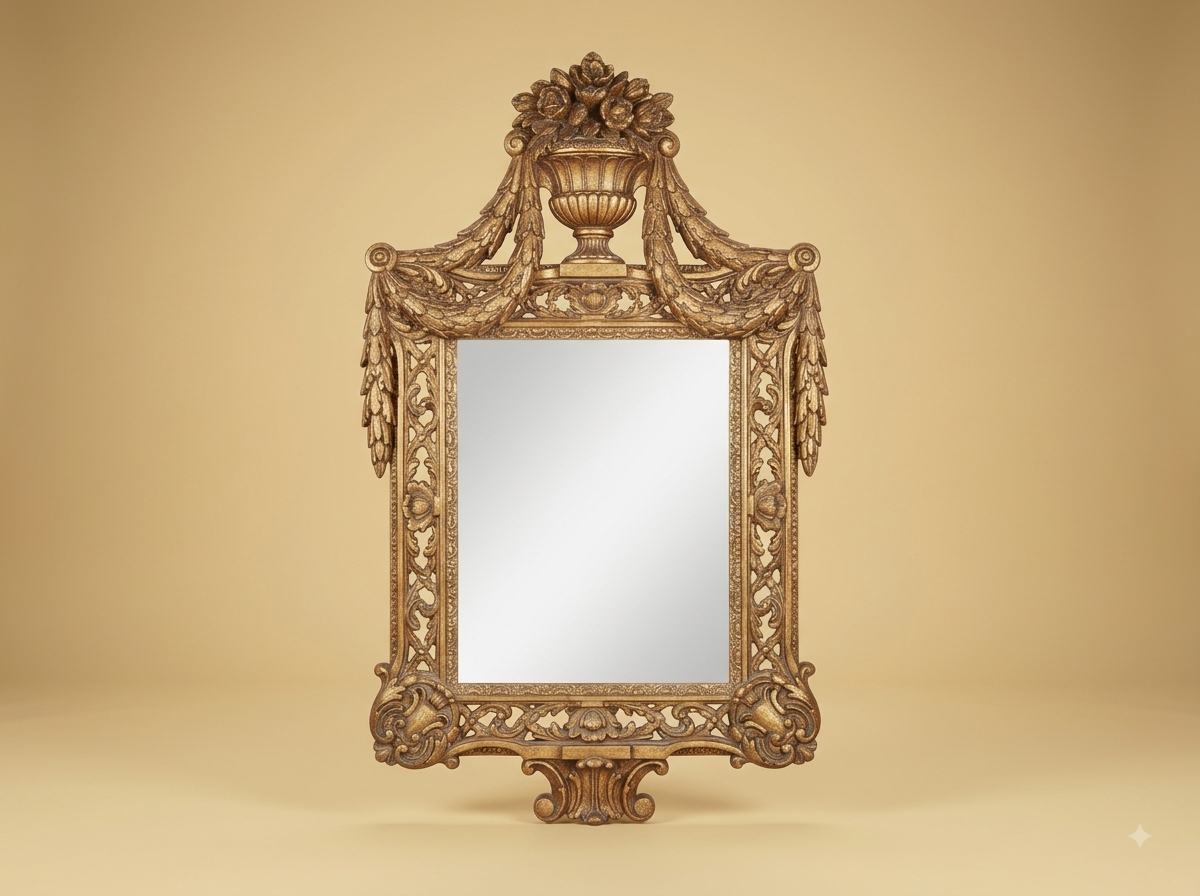
The Story Behind This Mirror
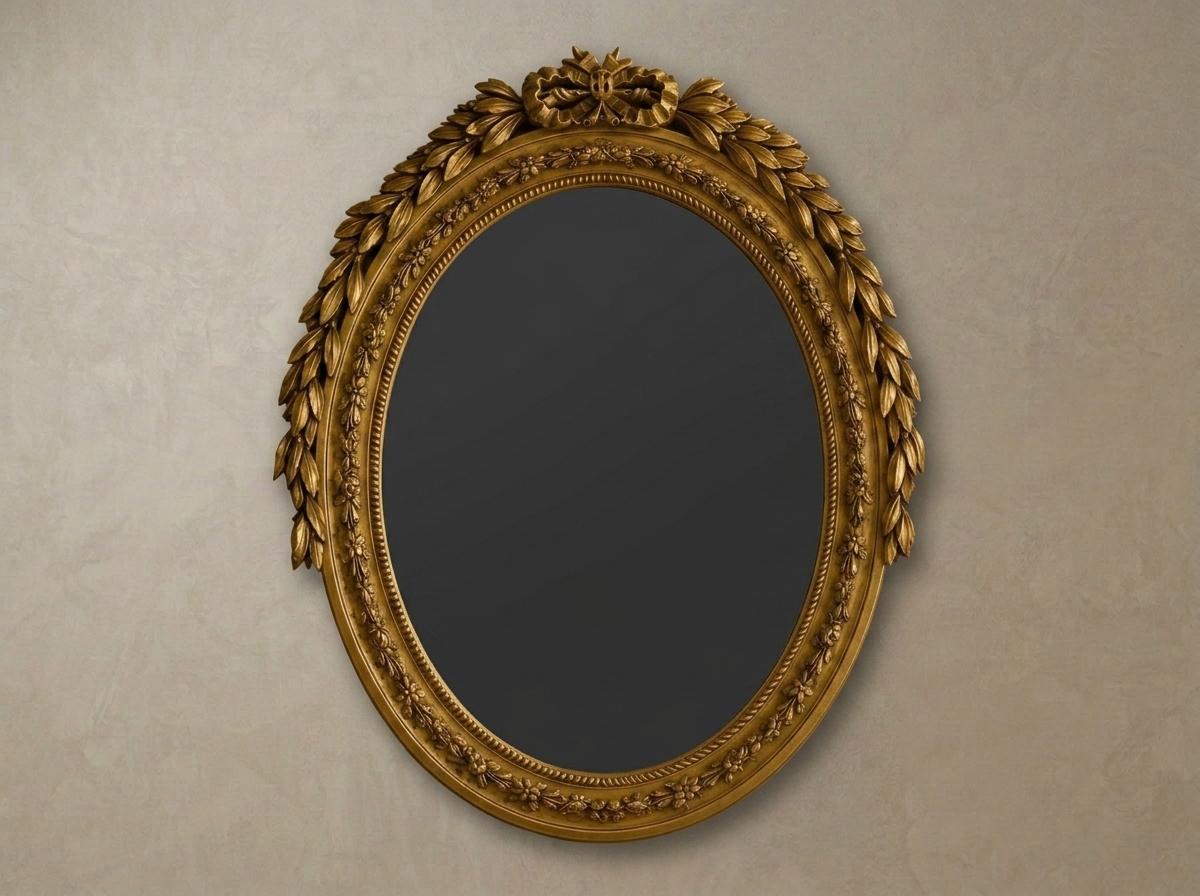
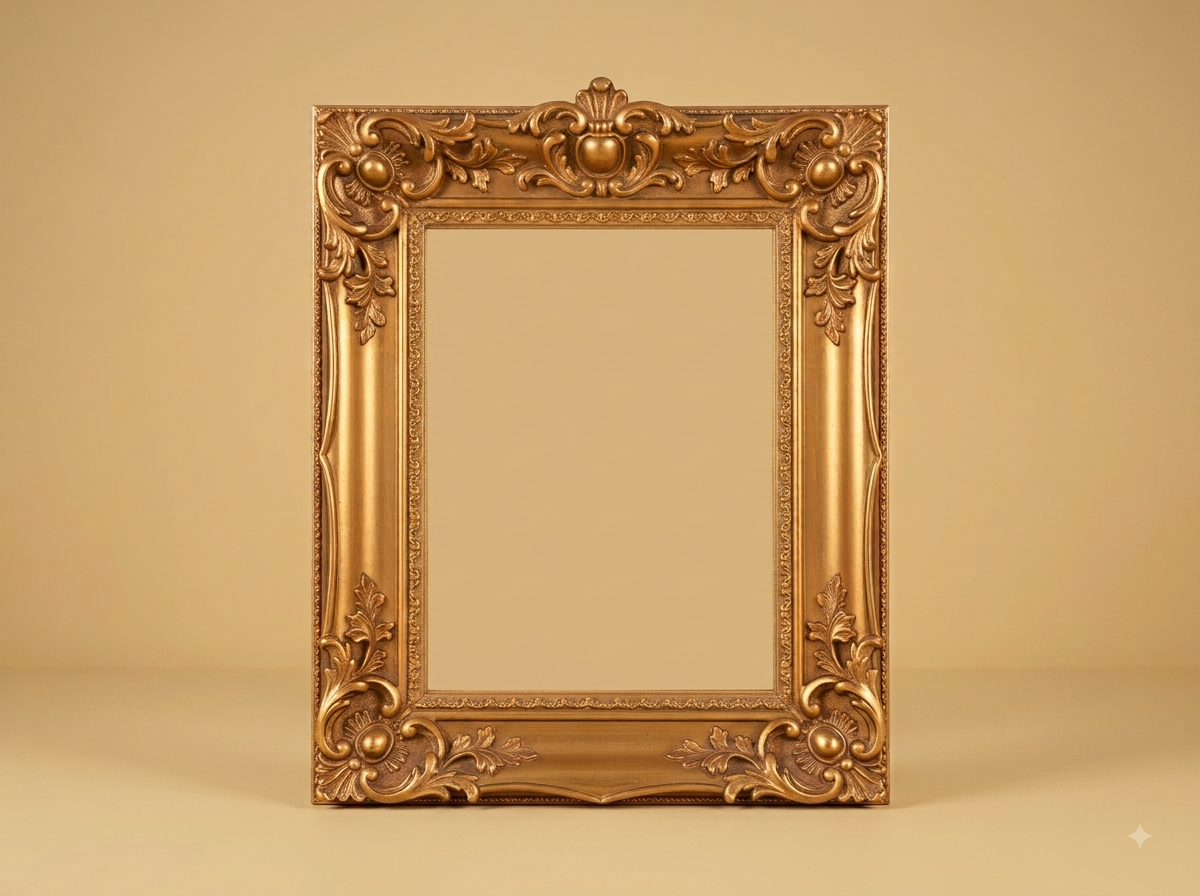
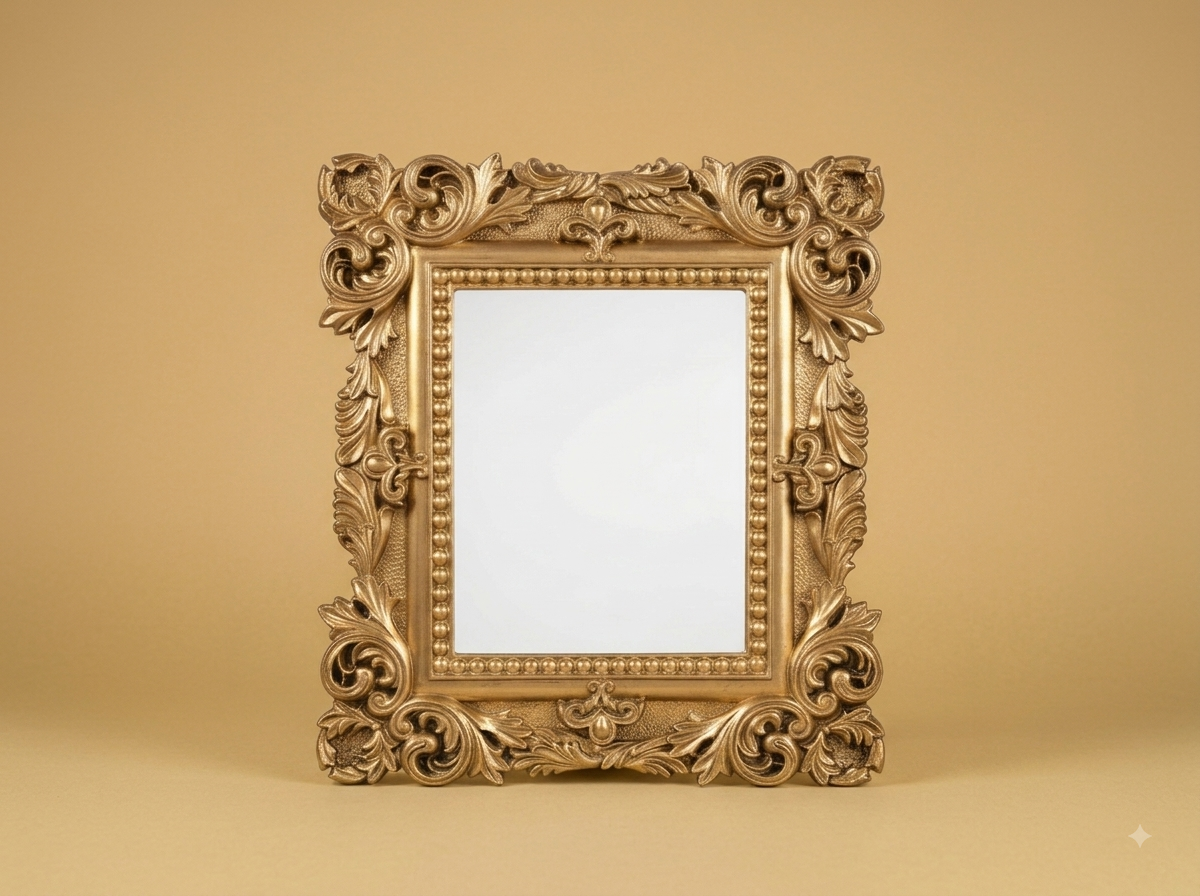
Two-tone finishing is where most workshops give themselves away. It is easy to spray a frame gold; it is difficult to lay a black ground into carved recesses evenly, keep it out of the detail, and then gild only the raised work by hand without the edge between the two going ragged. That is why this piece takes longer to finish than it does to carve.
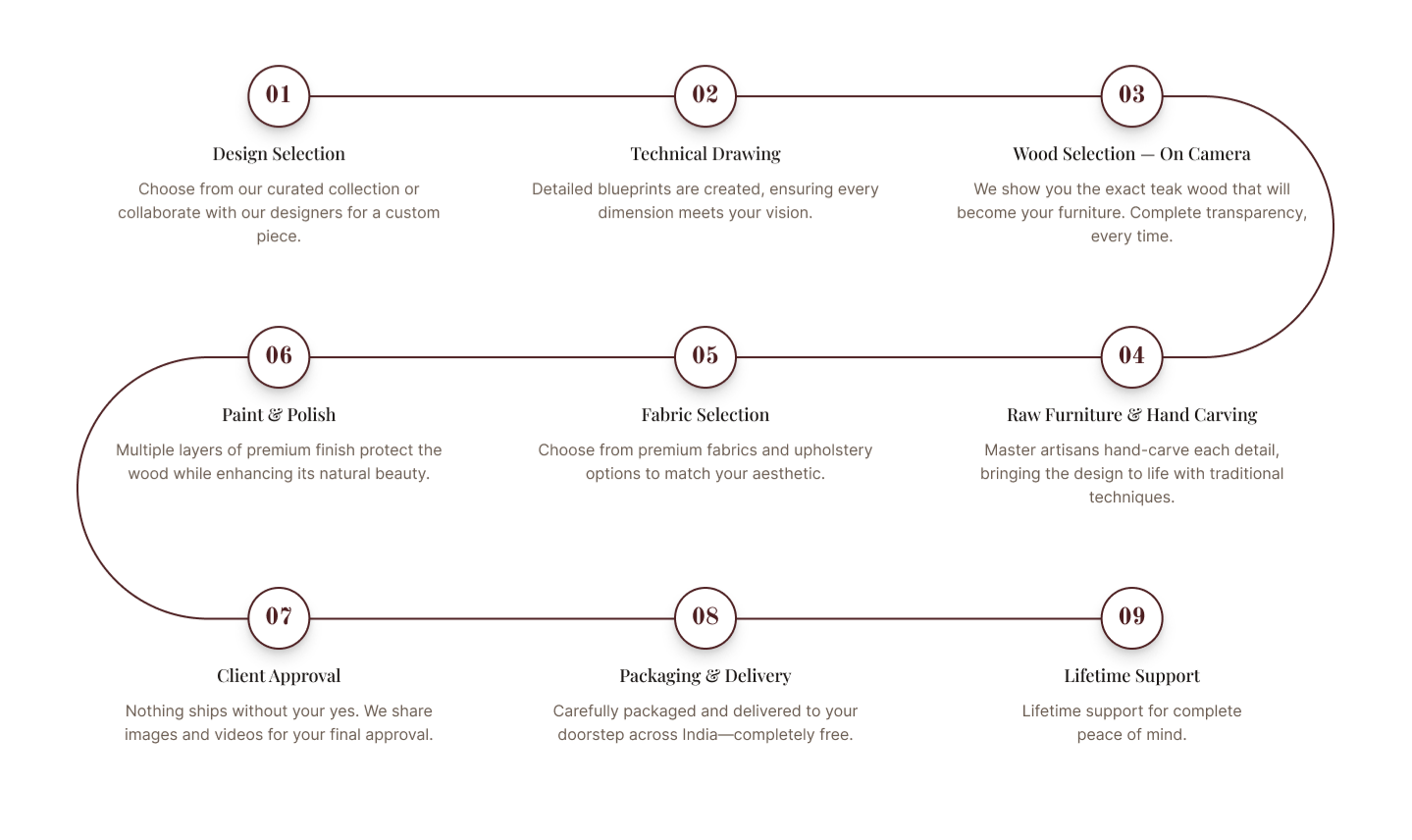
The carving comes first, in seasoned solid teak - the shell at the crest shaped from the solid so its flutes stand proud, the scrolls cut down each shoulder, the feet worked last. The frame is then hand-sanded through progressive grits until every tool mark is gone, because a black finish shows every imperfection that gold would hide. The ebonising is built up in thin coats, cut back between them, until the ground is dense and even. Only then is the gold laid, by hand, along the raised work alone, and rubbed back at the high points so the piece looks aged rather than new. The margin panels and the arched plate are fitted last.
 Ask Price On WhatsApp