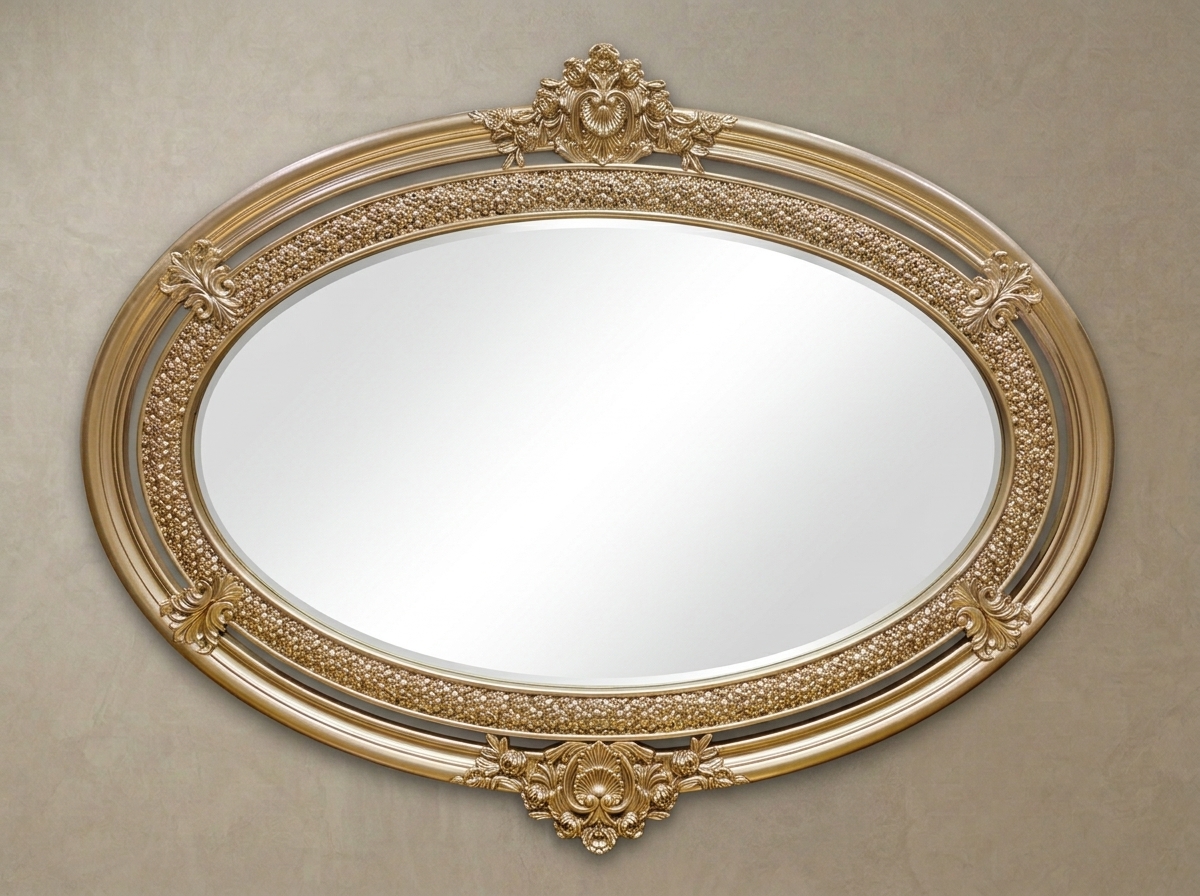
The Story Behind This Mirror
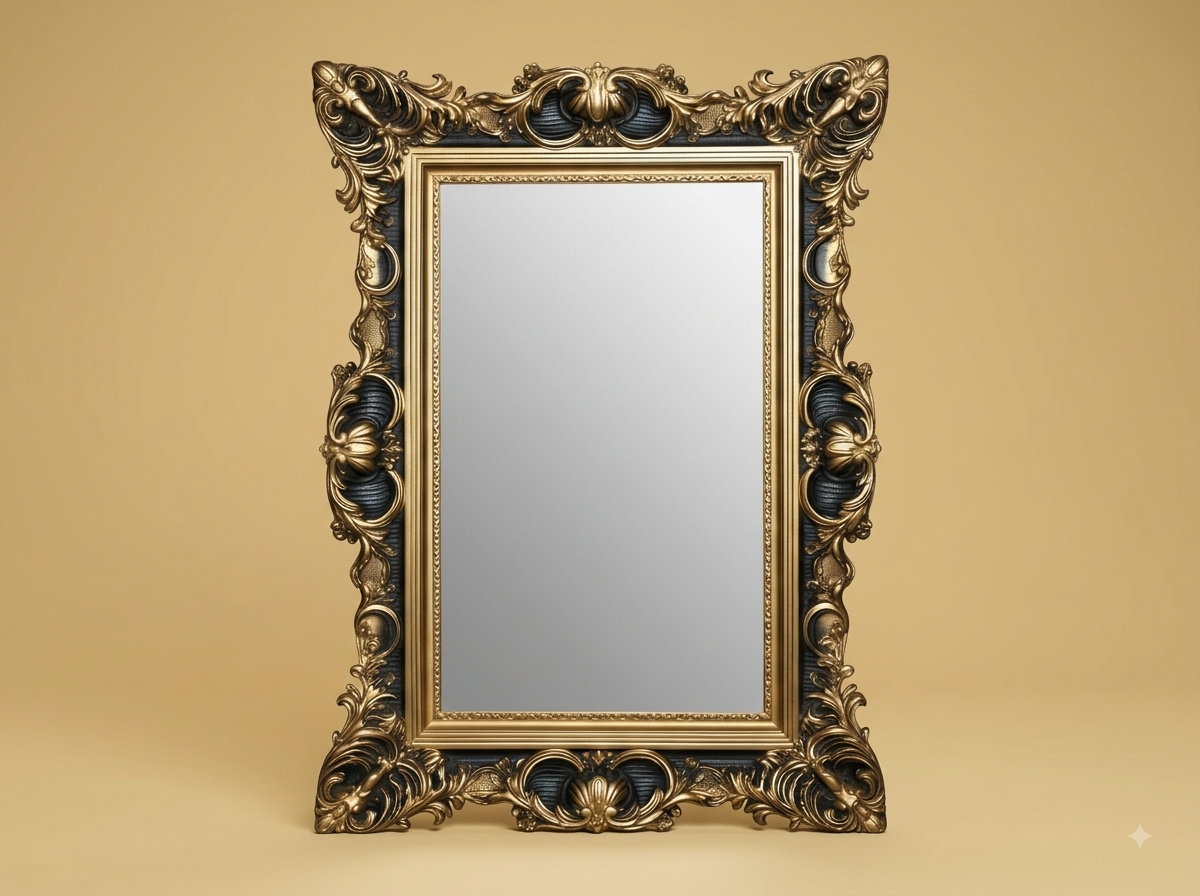
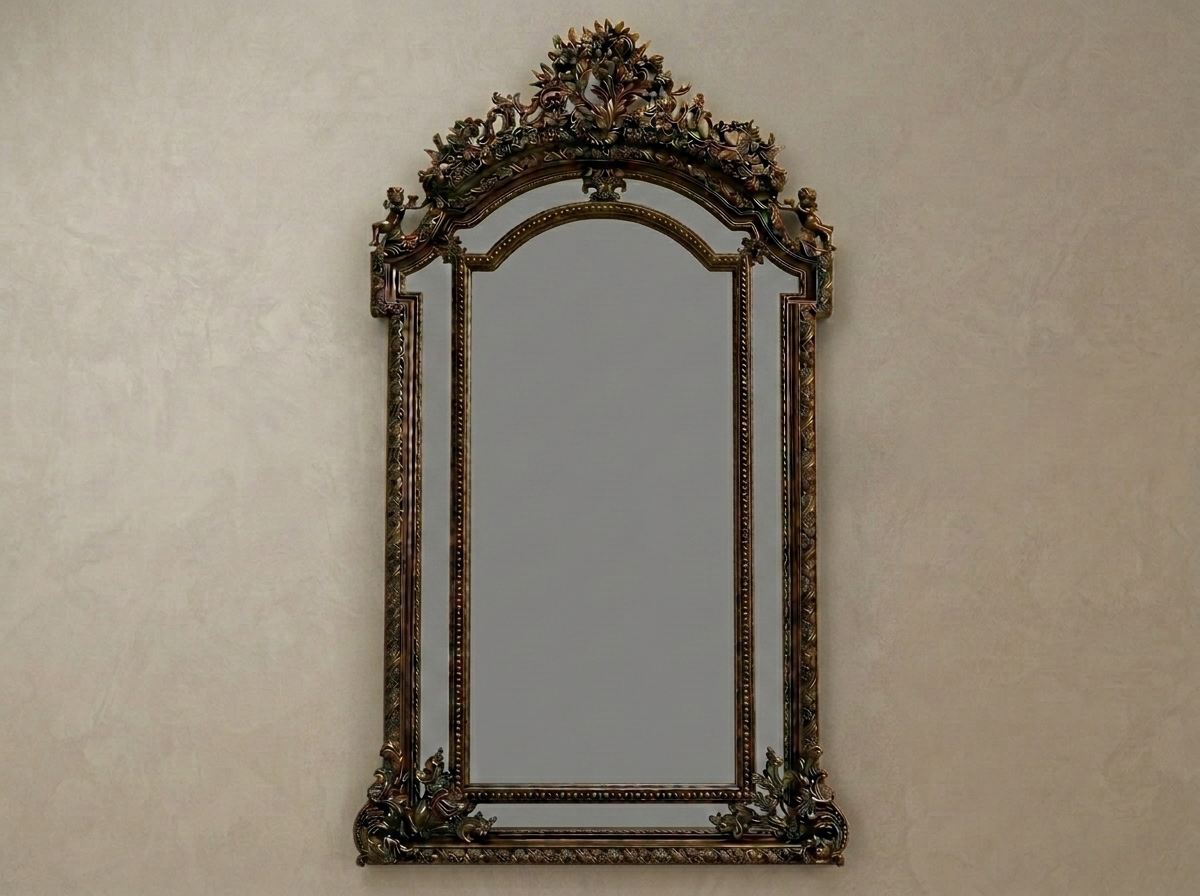
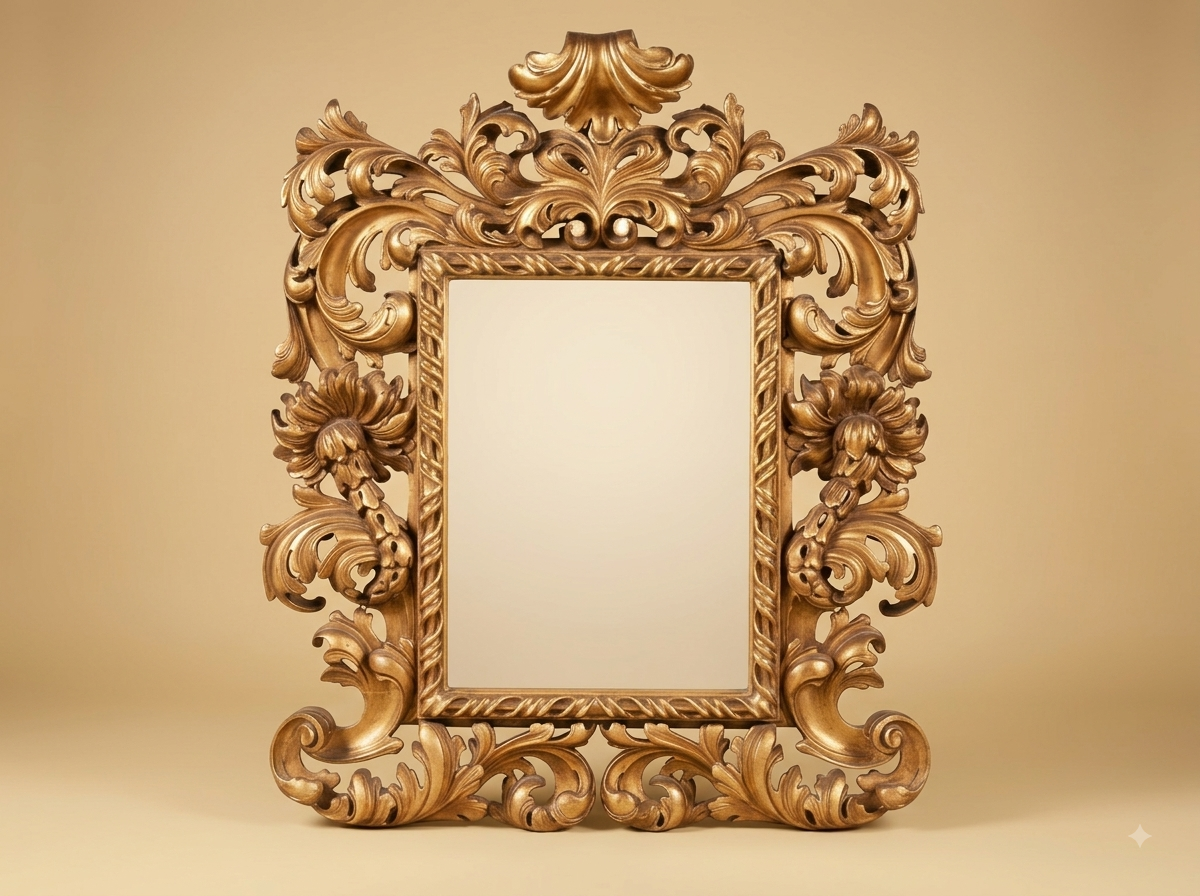
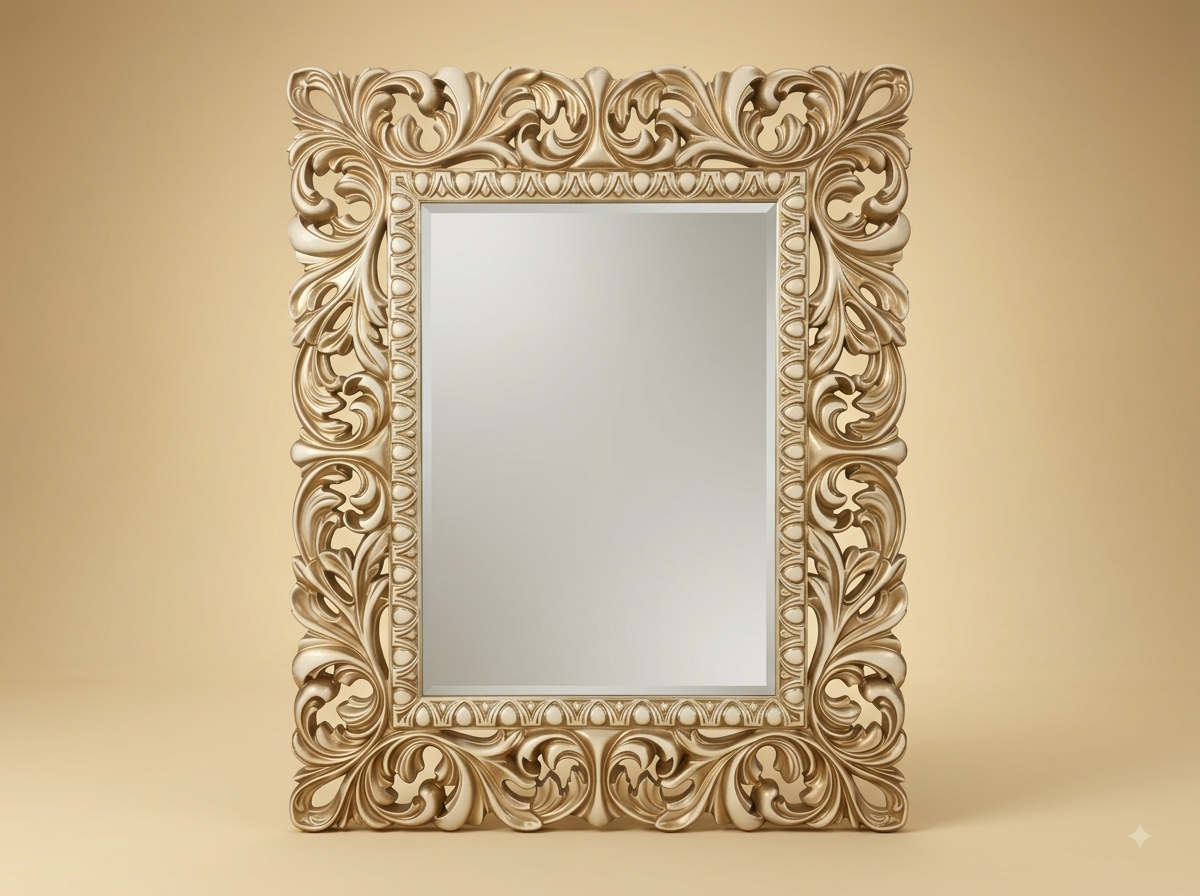
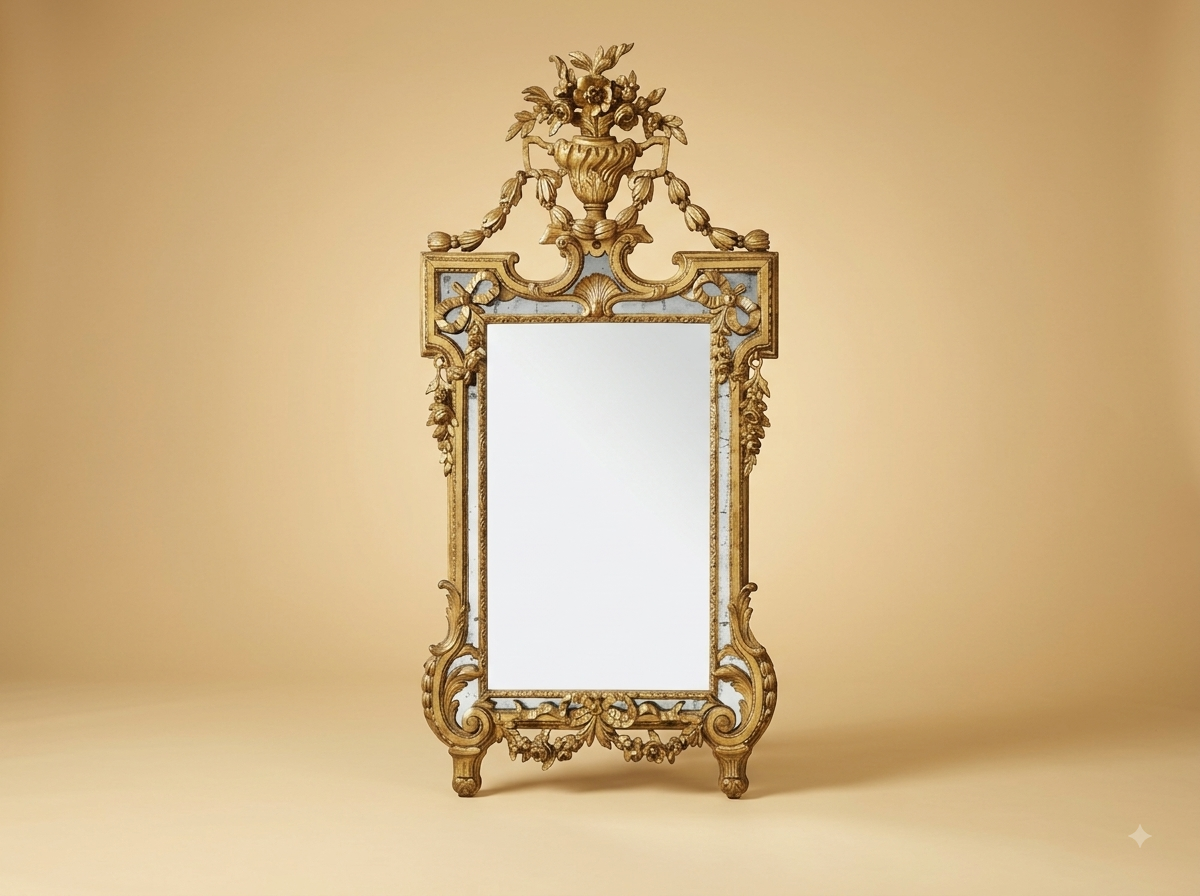
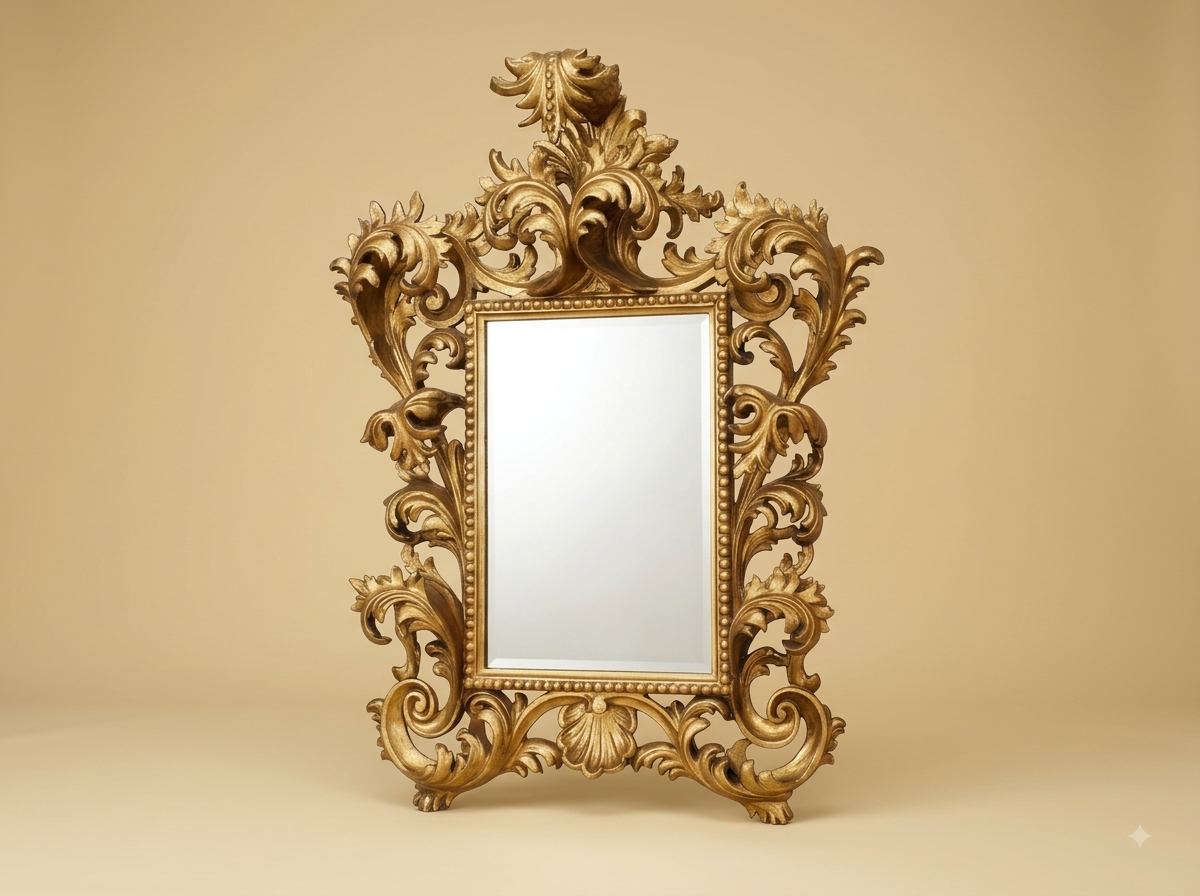
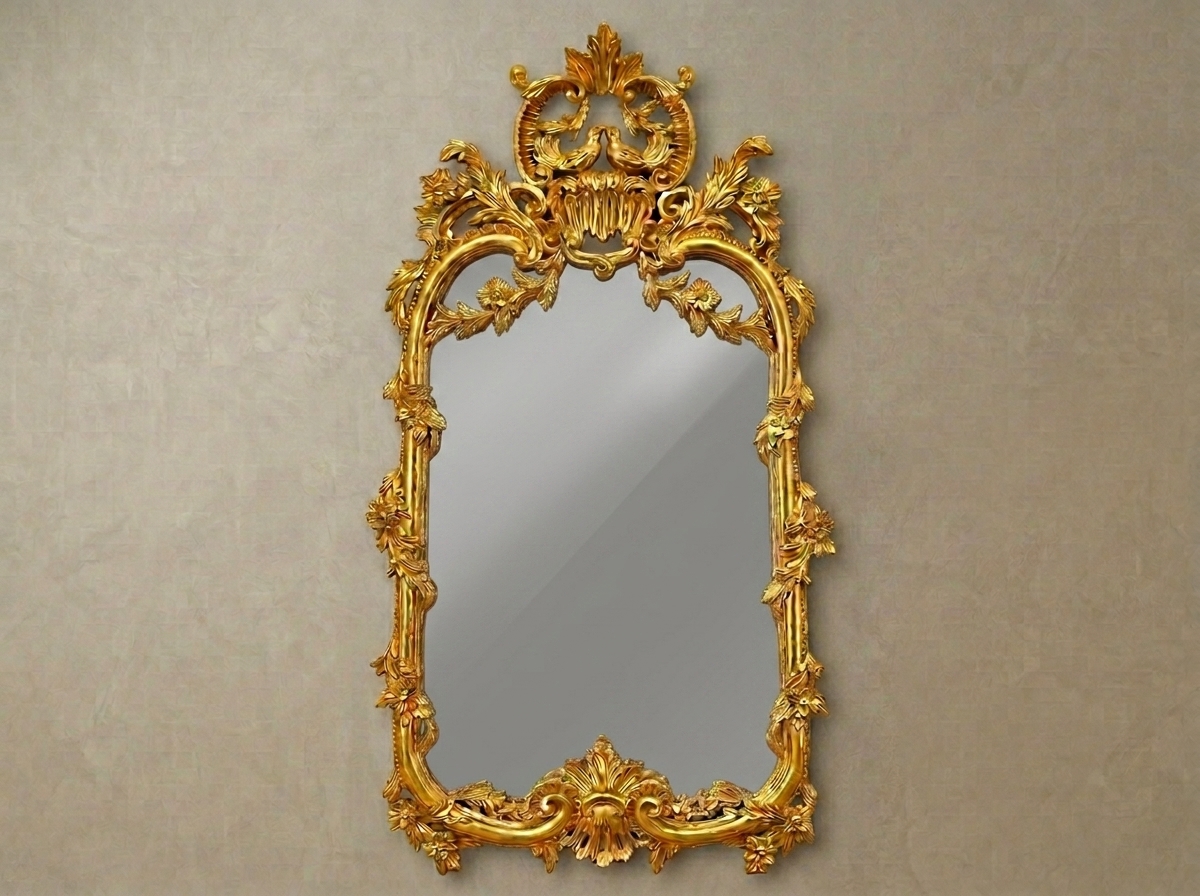
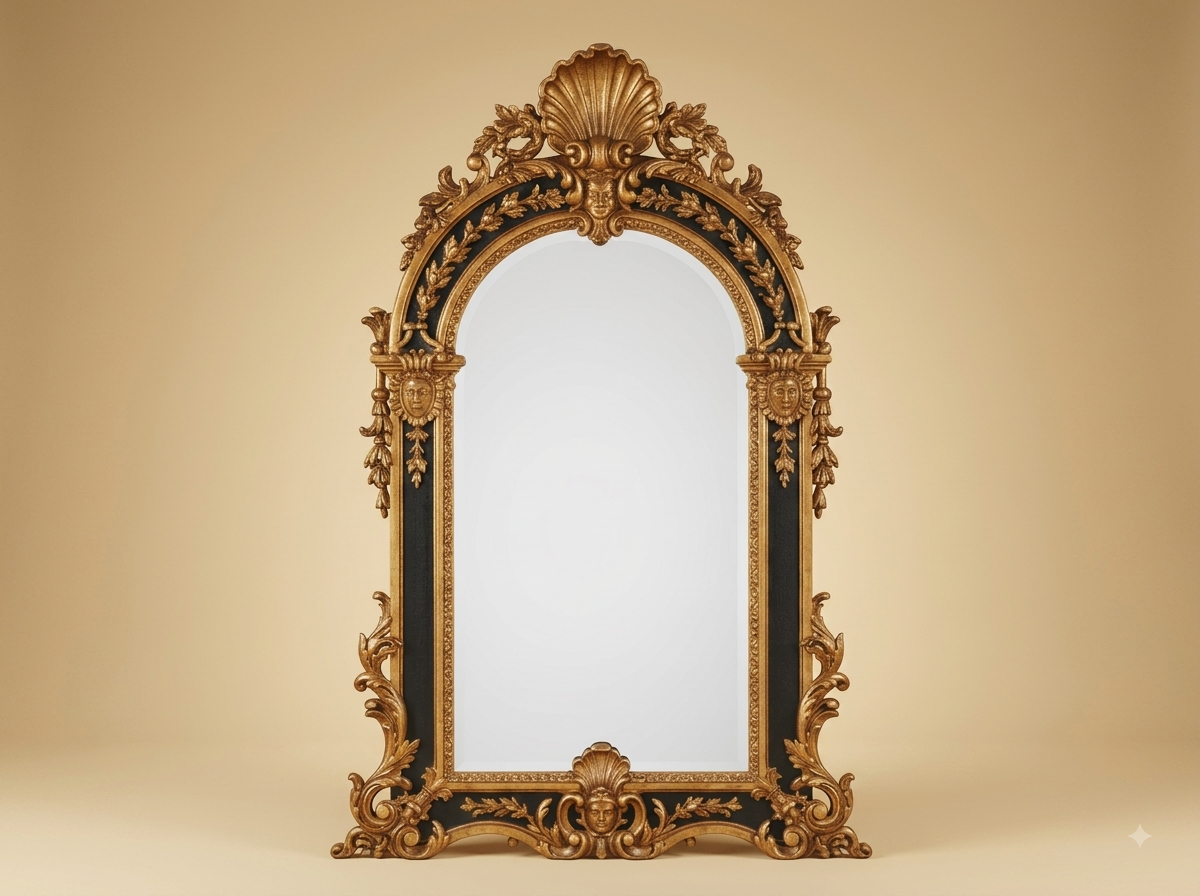
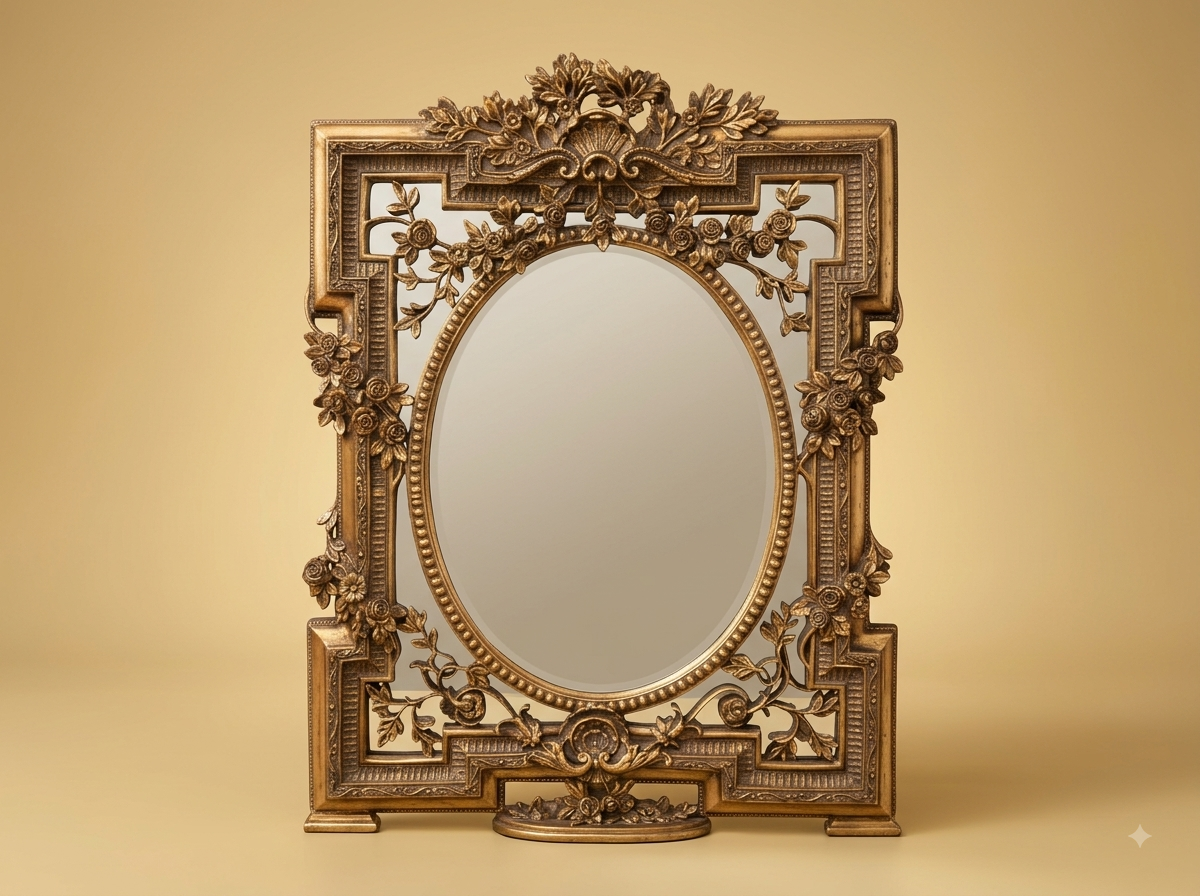
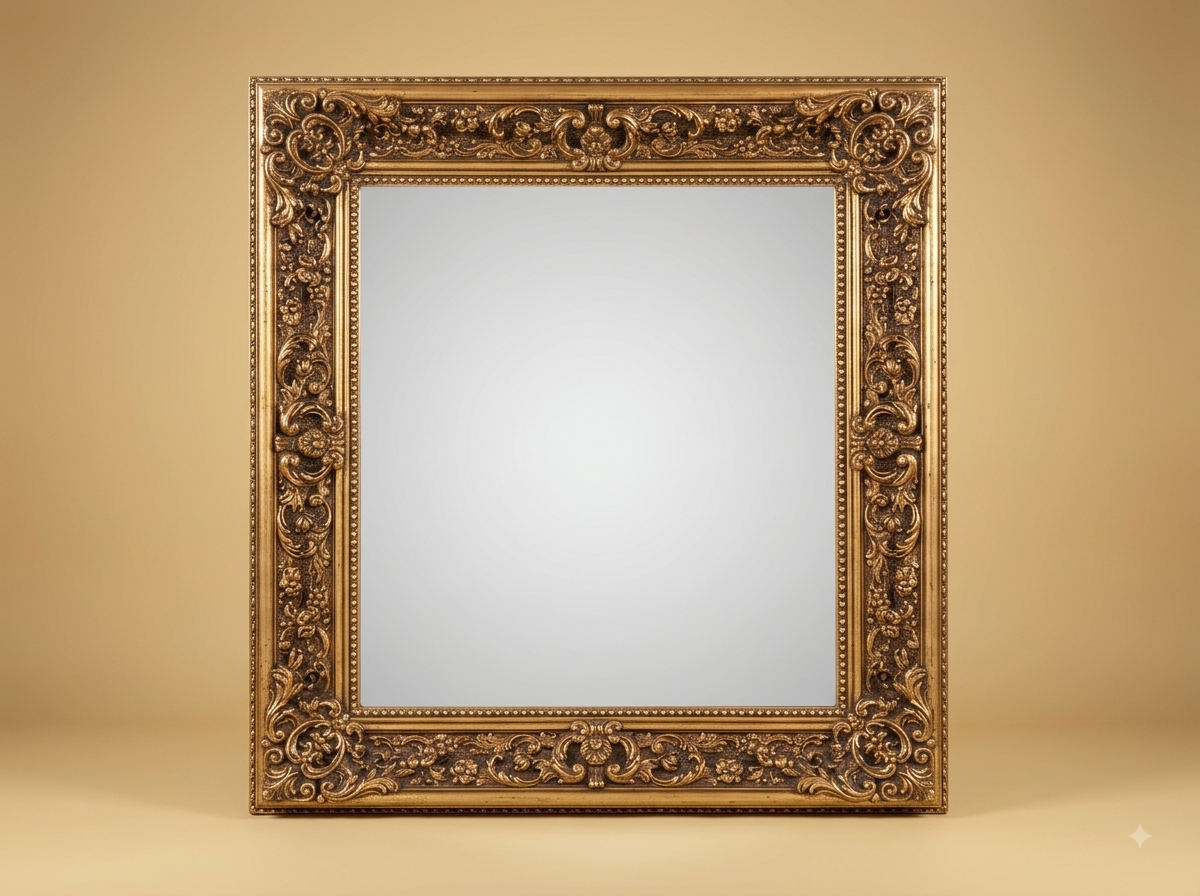
Thin is harder than thick. A wide frame can carry a bad decision - there is enough timber left over to absorb it. A slender pierced frame cannot: every rib is close to its minimum section, so the carver has to read the grain along the whole run before a single cut is made, and leave strength exactly where the glass will hang from.
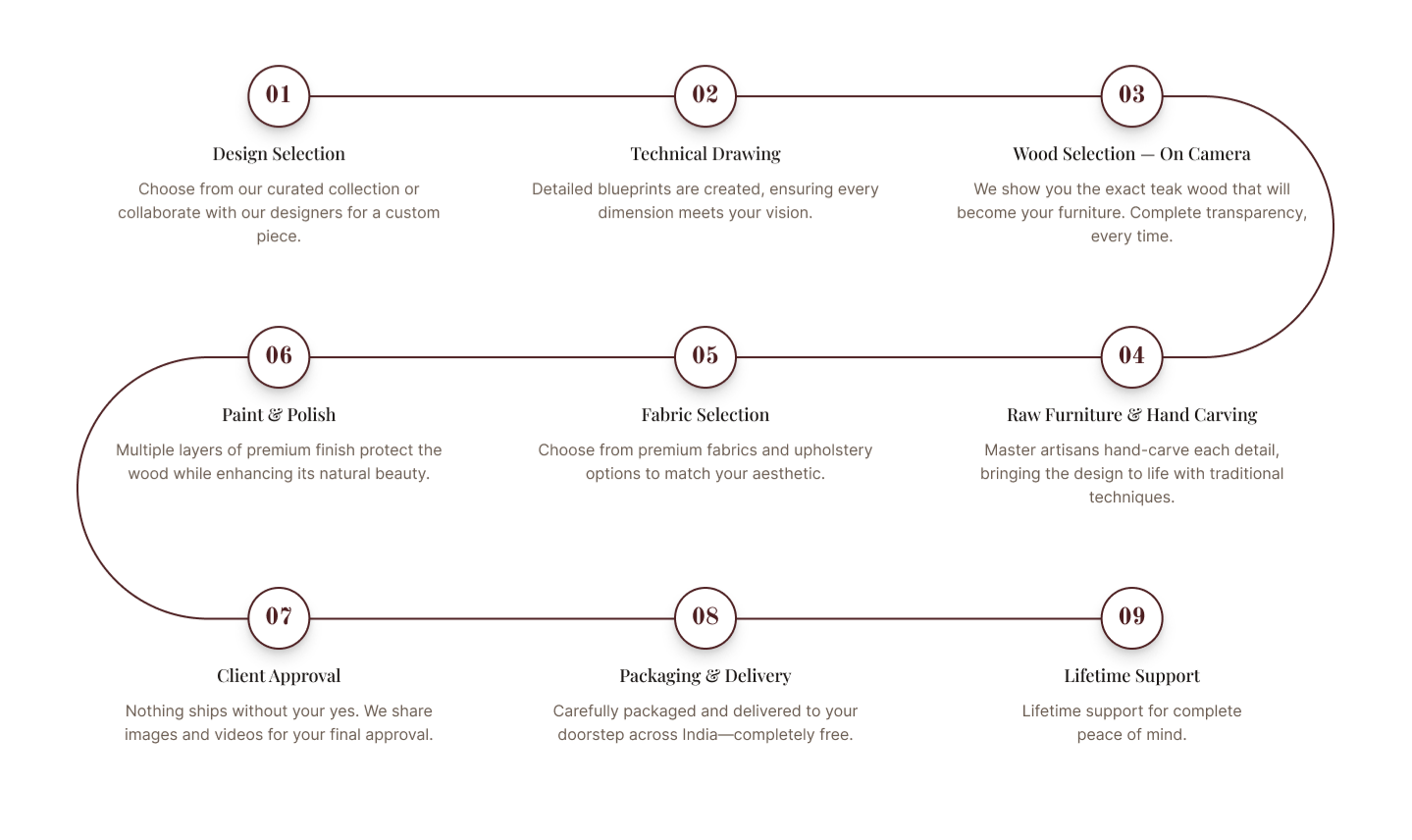
The work starts with board selection - straight, tight-grained seasoned teak, chosen for the direction of the grain along each stile rather than for surface colour. The scroll rhythm is drawn out full-scale so the C-curves flow continuously and do not stutter where the rails meet at the corners. Then the carving: acanthus lifted in layers off the ground, undercut so light passes behind the leaves, and the waste between them pierced right through. The plume crest is cut last and is the tallest, most exposed element on the piece, shaped from the solid so it stands clear of everything below. Hand-sanding through progressive grits follows, then gold laid in coats and rubbed back by hand at every scroll tip, and the plate fitted at the end.
 Ask Price On WhatsApp