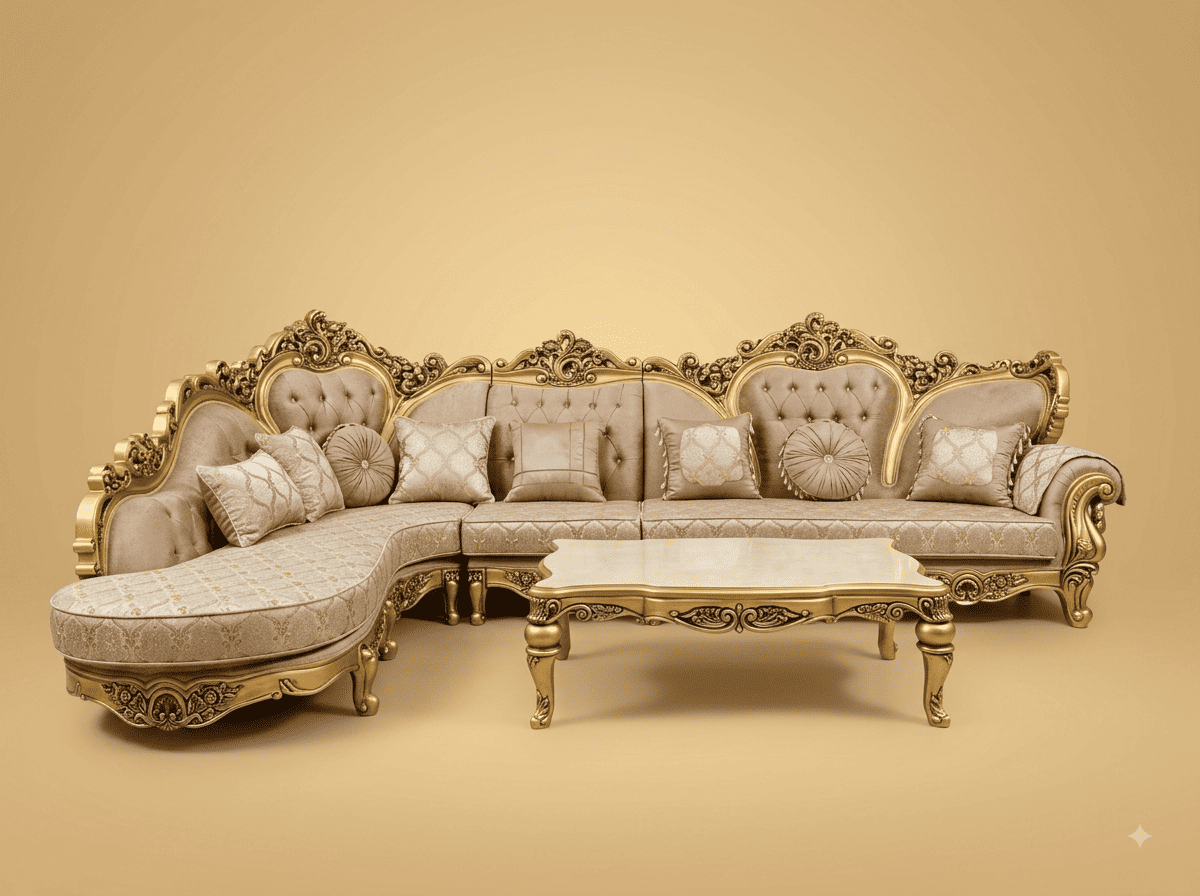
Stone tops and carved wood have been paired in Indian interiors for centuries, and the pairing solves a real problem: wood is beautiful and stone is indifferent to heat, moisture and everything else that lands on a table in a room where tea is served. Putting the two together lets each do what it is good at.
The engineering matters. A stone top is heavy, and it does not flex, so the frame beneath it must be dead flat - any twist and the slab bears on three points instead of four, which is how stone tops crack. The apron and stretchers on this table are there for that reason as much as for decoration; they lock the legs so the frame cannot rack.
Our master Indian artisans set the finished frame on a flat bench and check it before the top ever goes on. It is an unglamorous step that decides whether a stone-topped table survives a house move, and it is the sort of thing that gets skipped when tables are made to a price.
 Ask Price On WhatsApp