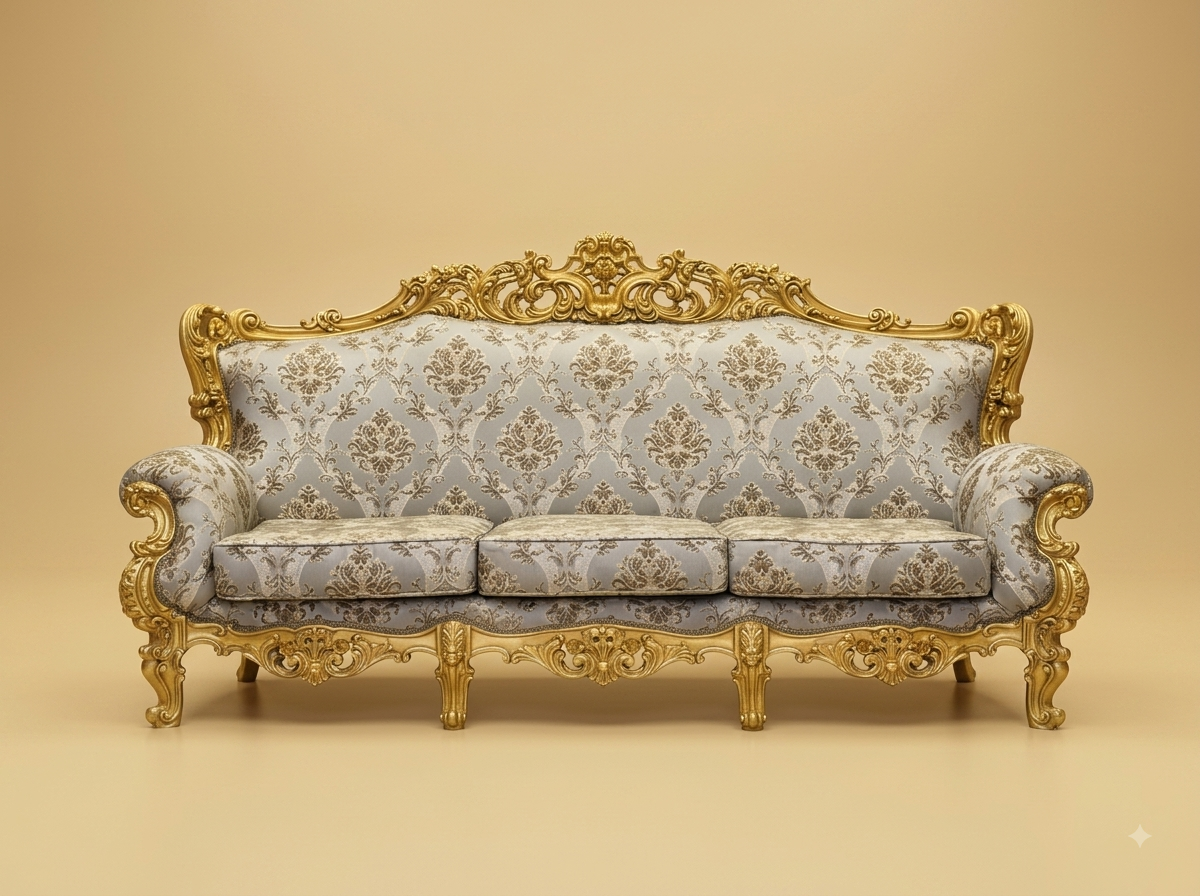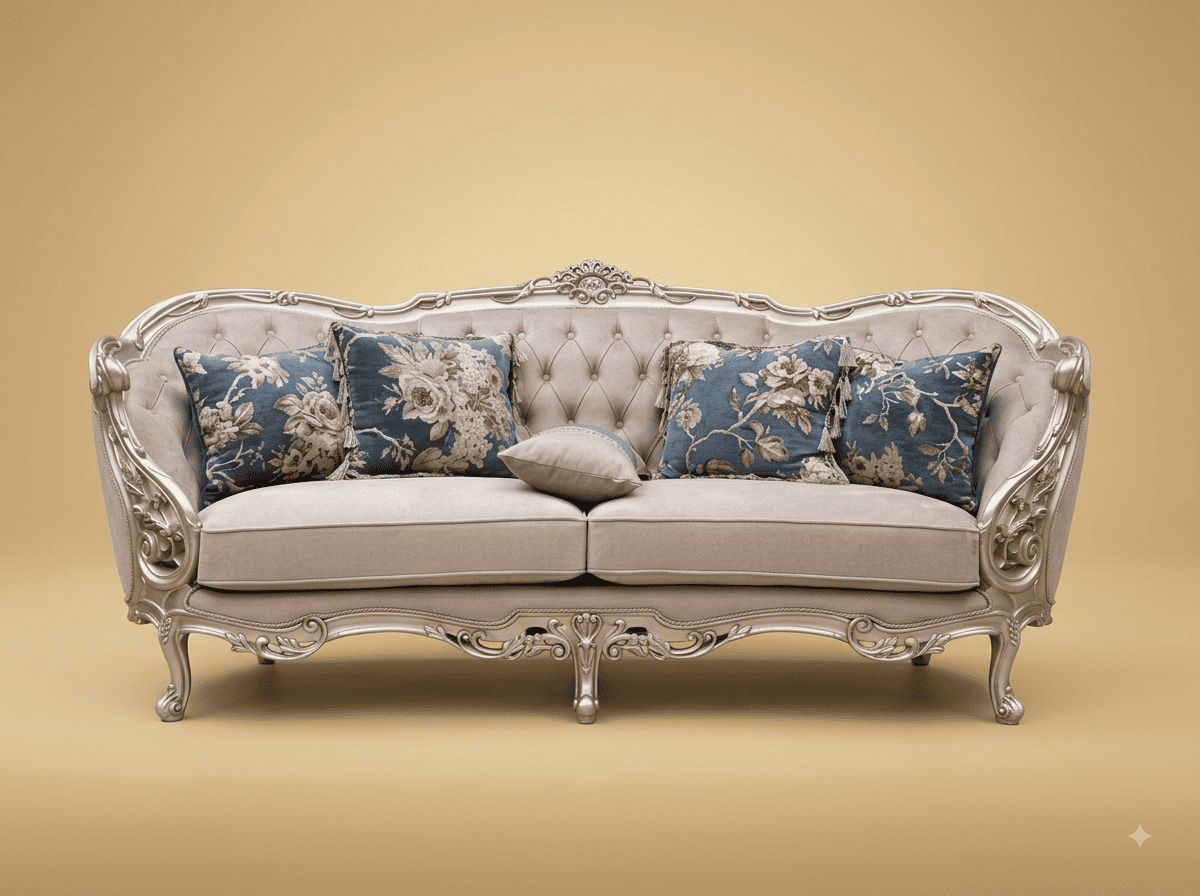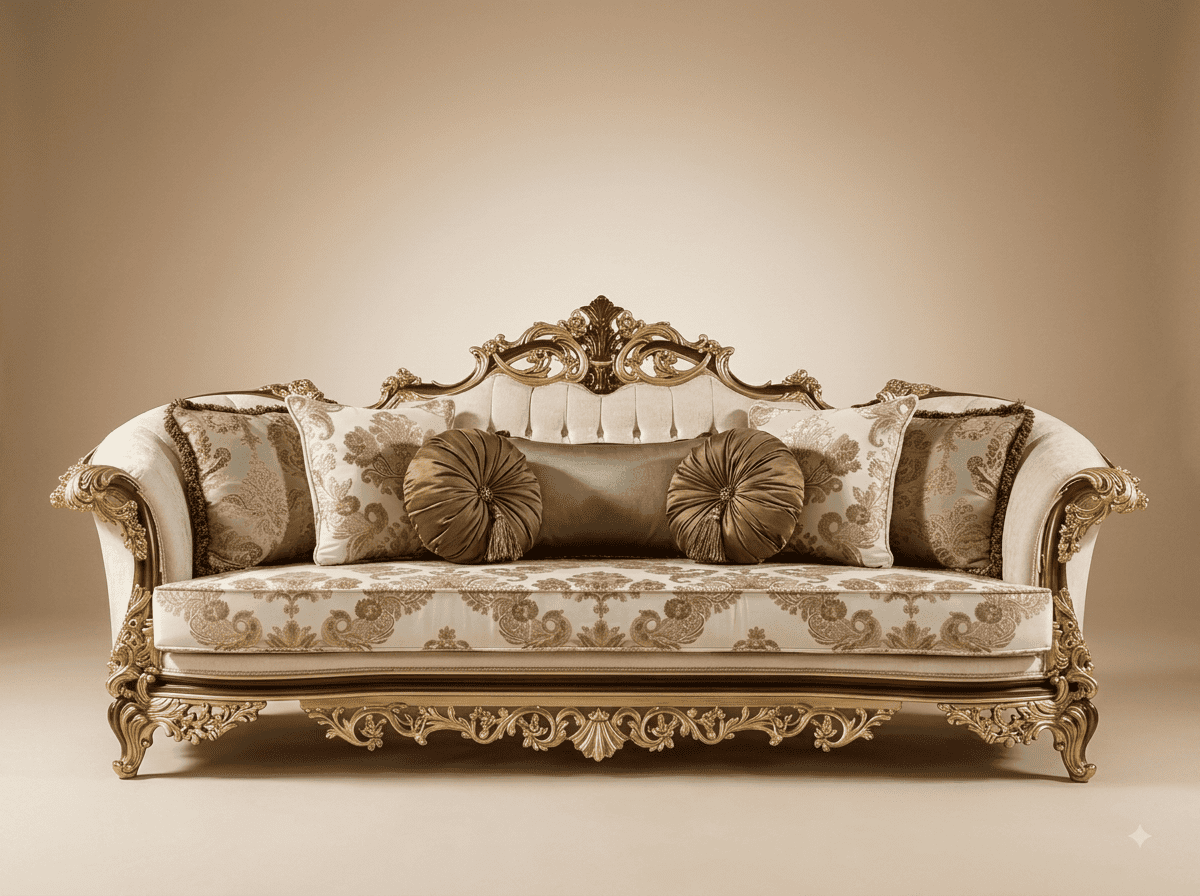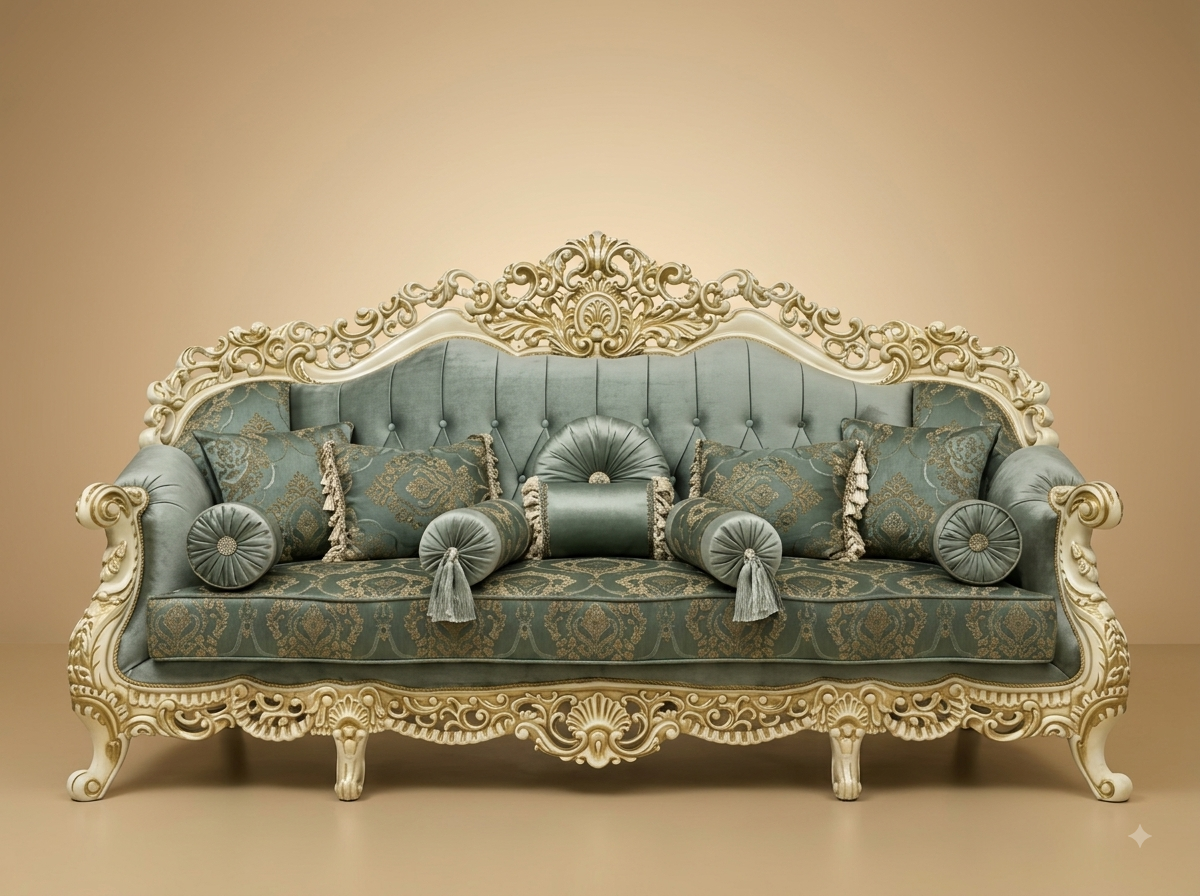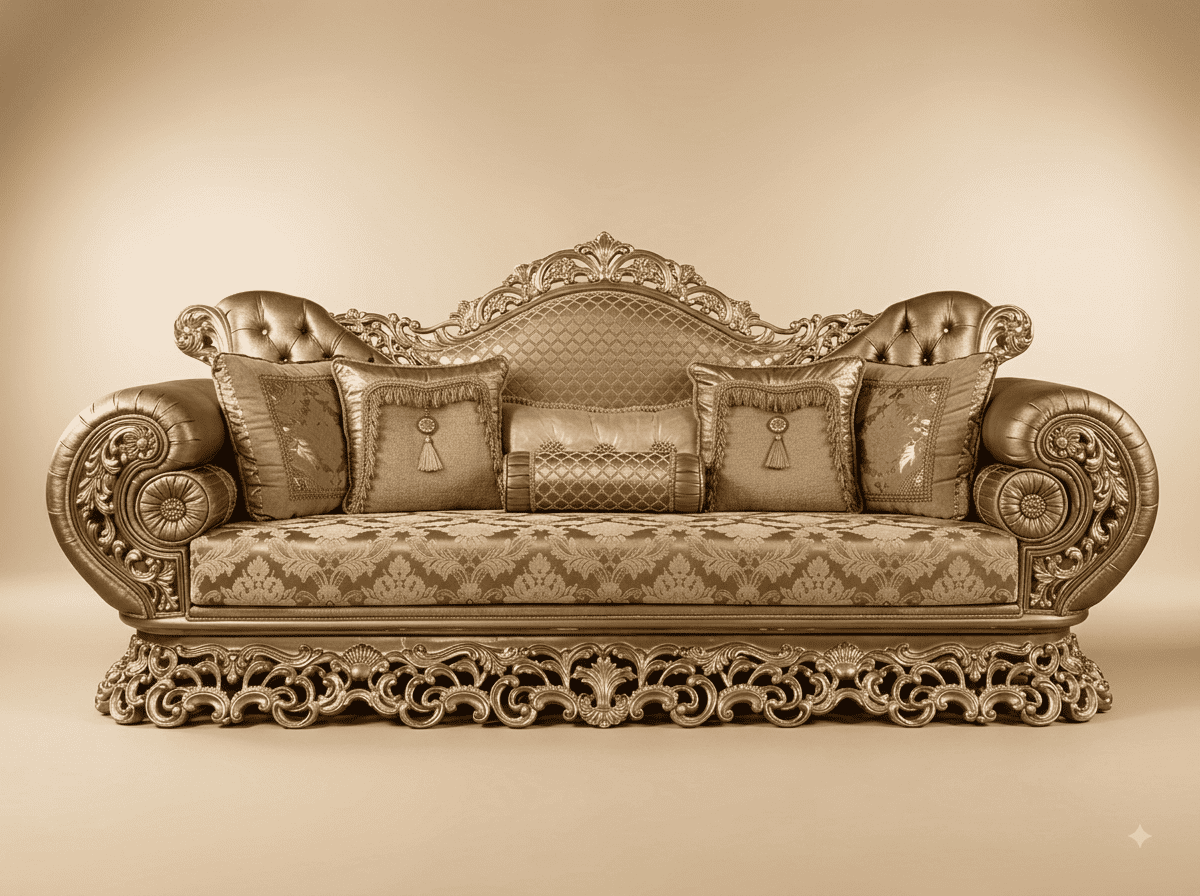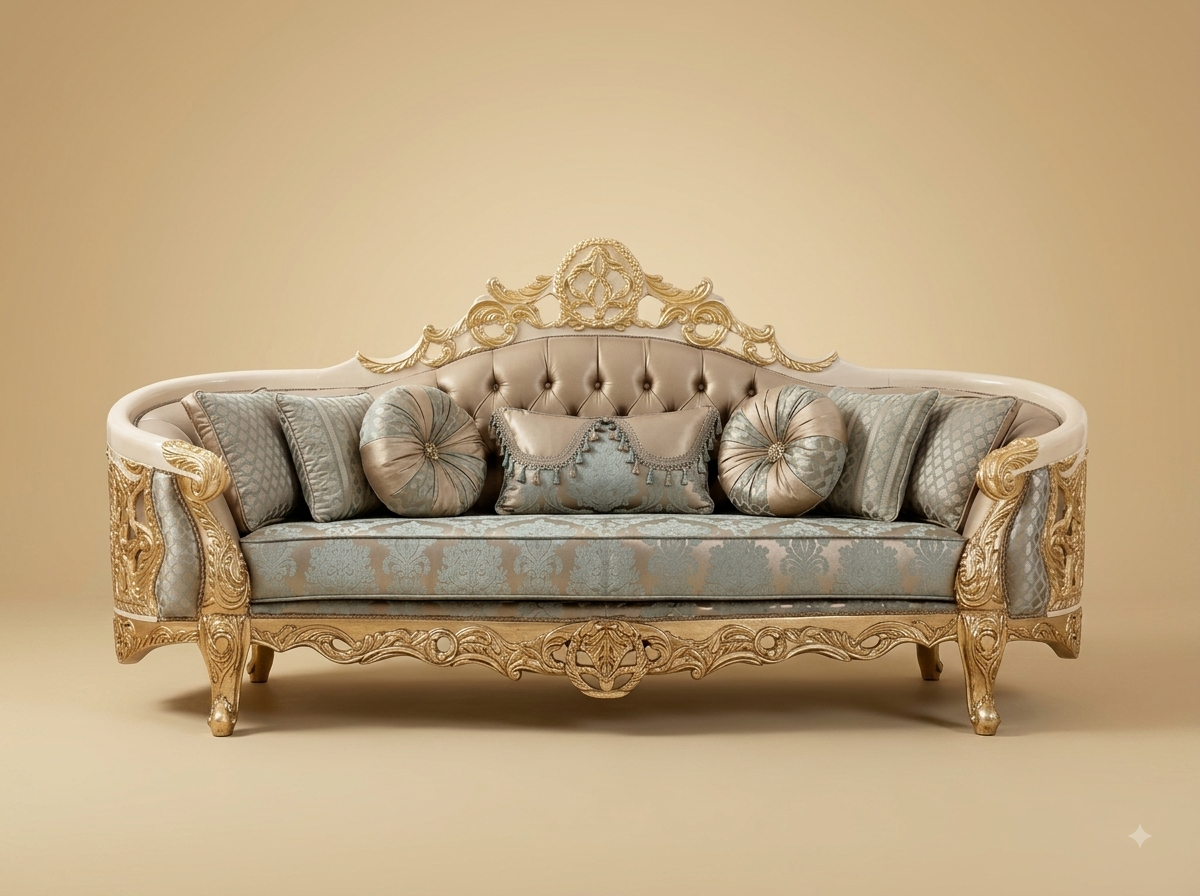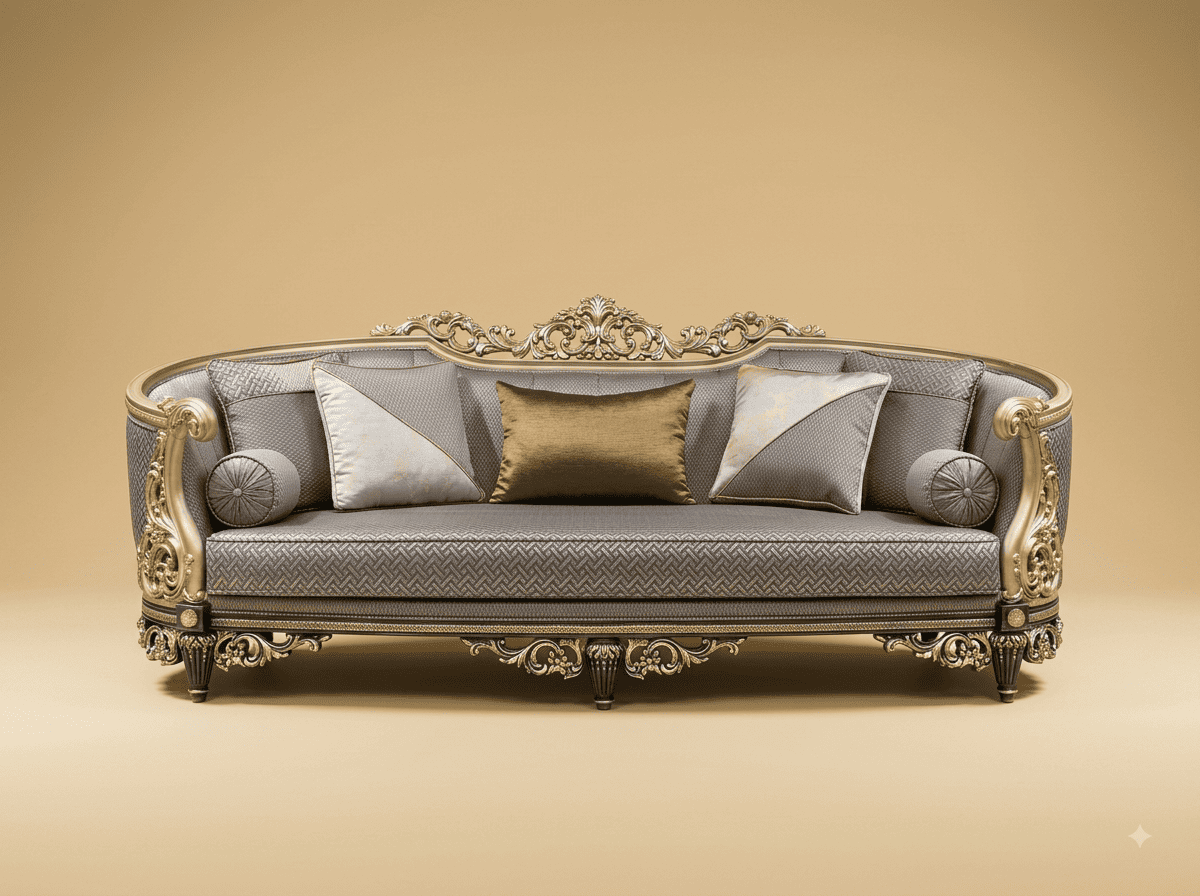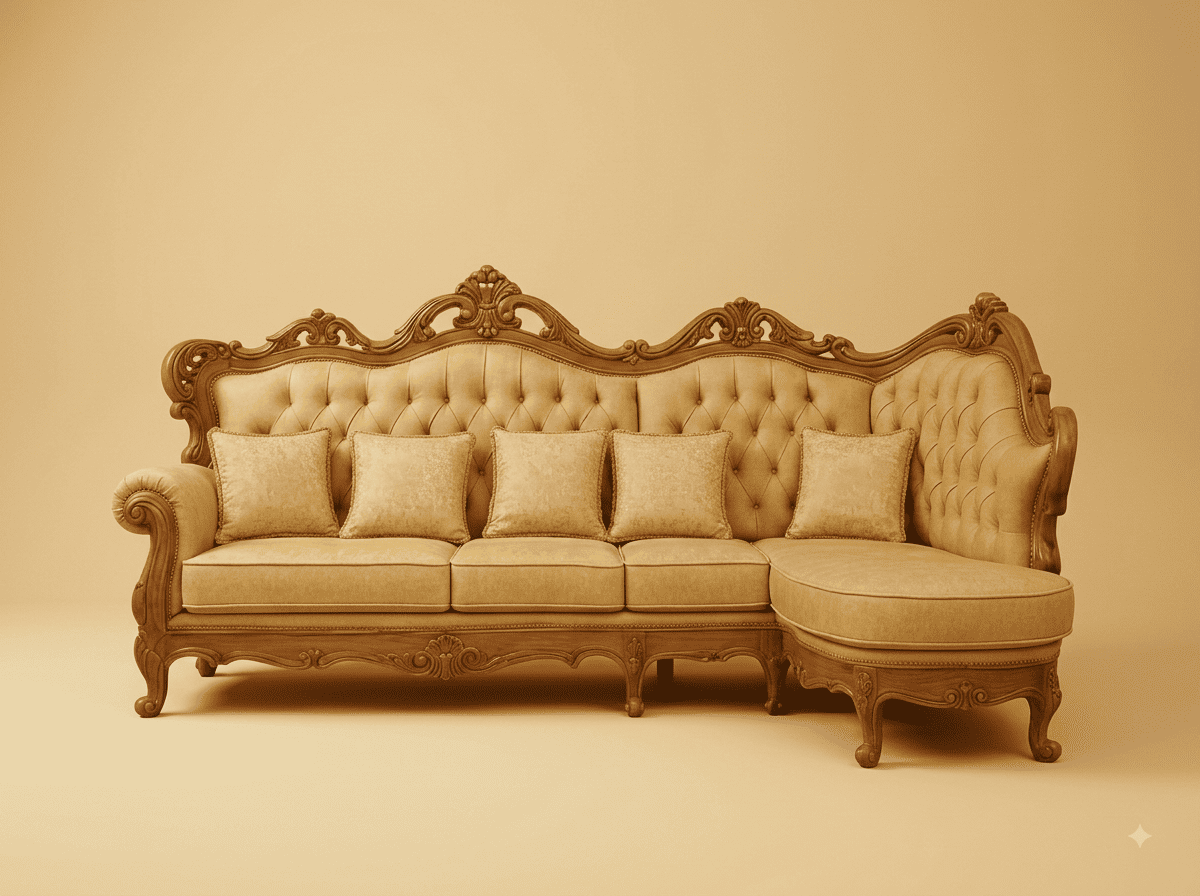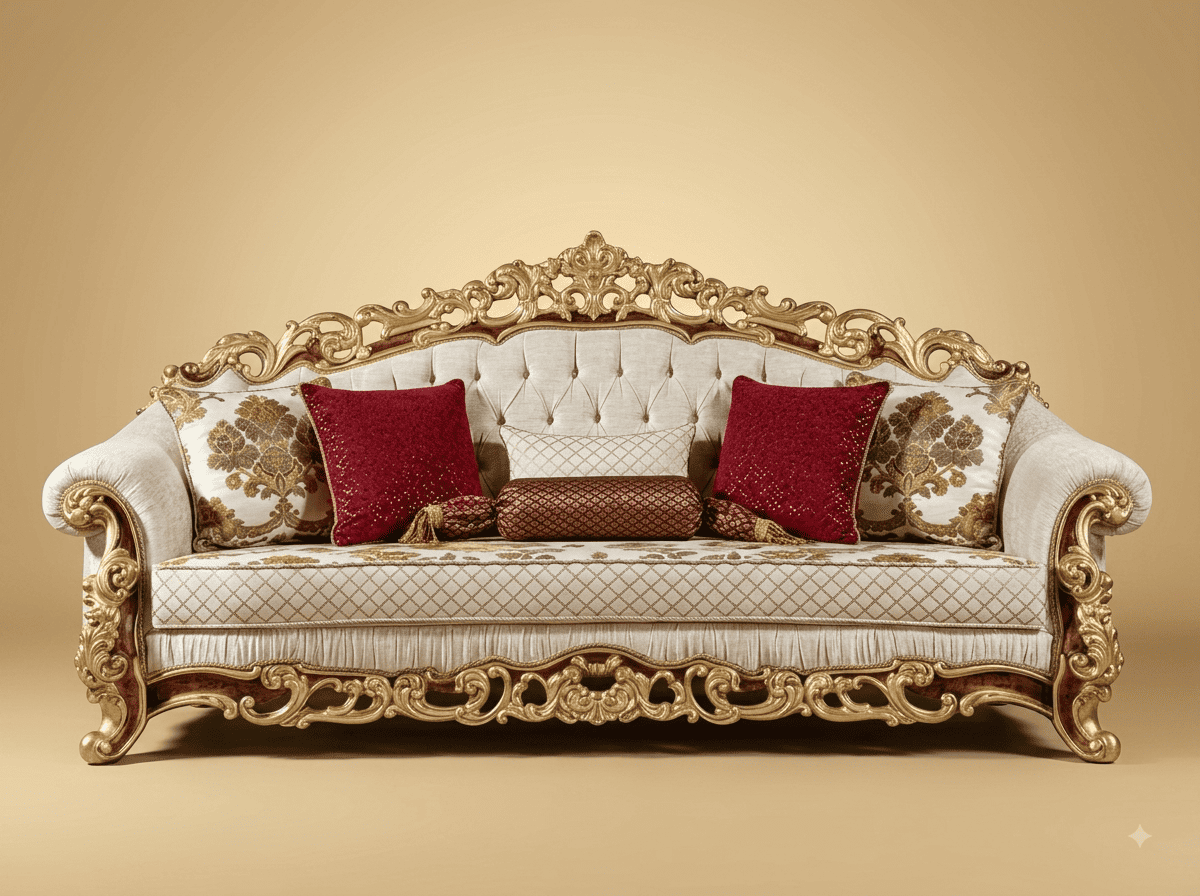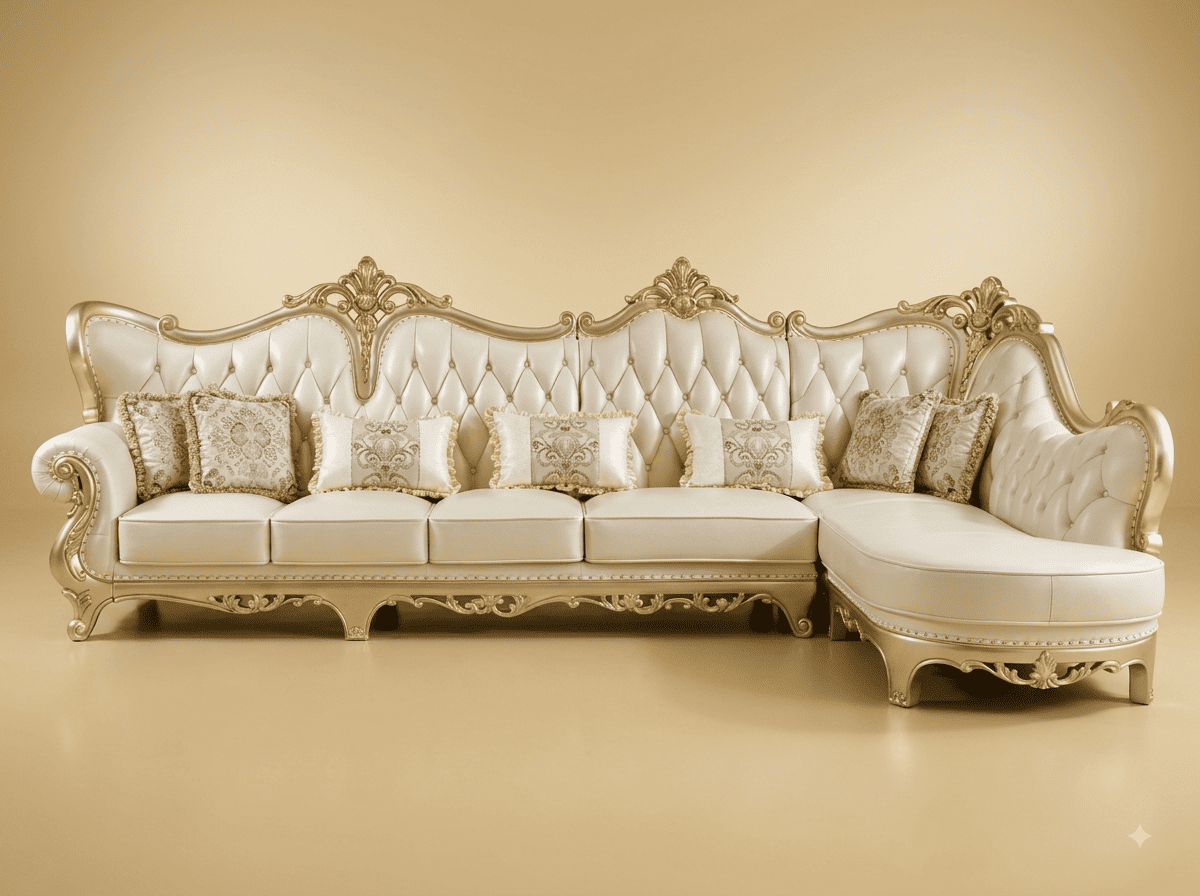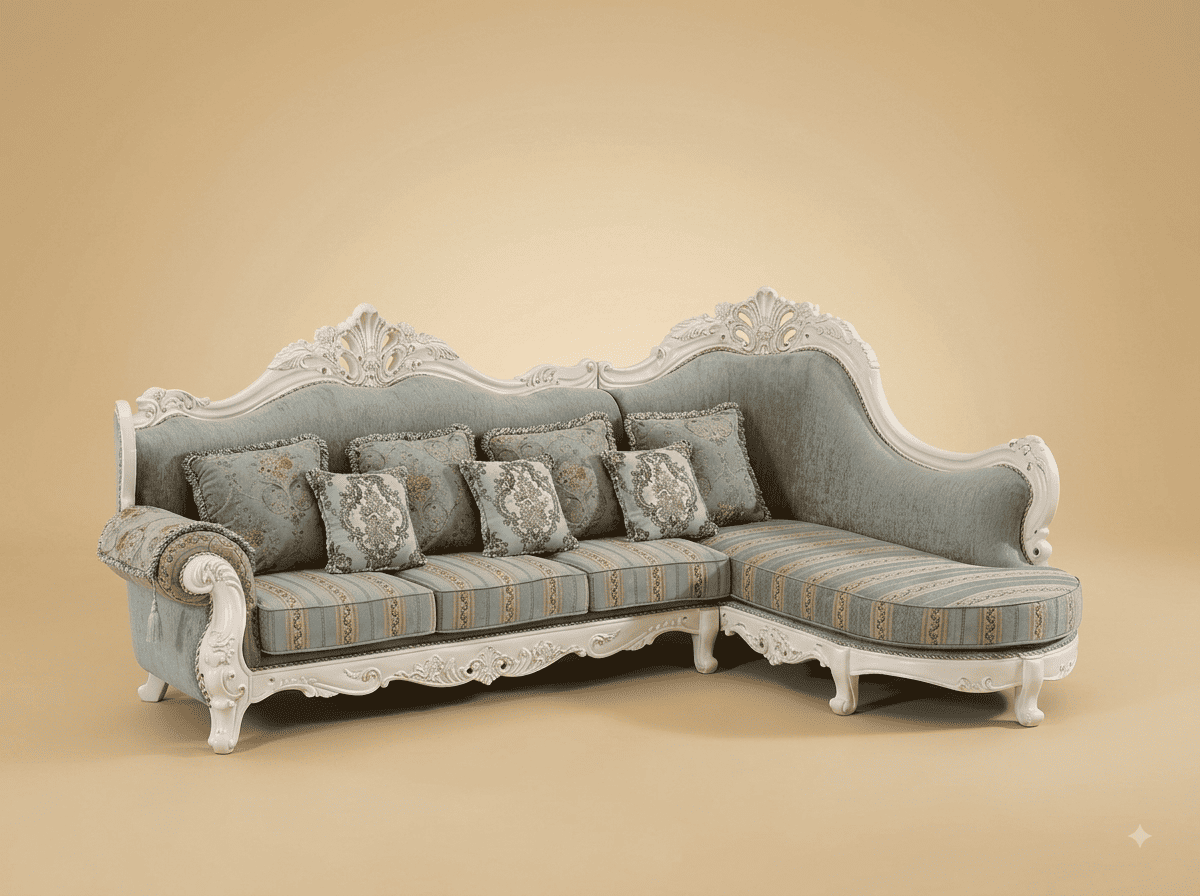
The chaise longue began as a chair that grew - literally, a long chair - and for two centuries it was the only piece of furniture on which it was acceptable to recline in a drawing room. Attaching one to the end of a sofa is a later idea, and a good one: it gives a large seating piece somewhere to end that is more interesting than an arm.
The detail that makes it work is the sweep of the back. It has to fall continuously from full height at the corner to nothing at the open end, and the curve has to be judged by eye rather than drawn with a compass - too fast and it looks broken, too slow and it never resolves. Our master Indian artisans cut that curve full size in a template first and stand it up in the workshop to look at before any timber is committed.
Using two weaves of one colour - stripe on the seats, plain on the backs - is an old upholsterer's device for breaking up a big piece without introducing a second colour. It works because stripes read as horizontal and plain reads as flat, so the eye separates them without noticing why.
 Ask Price On WhatsApp