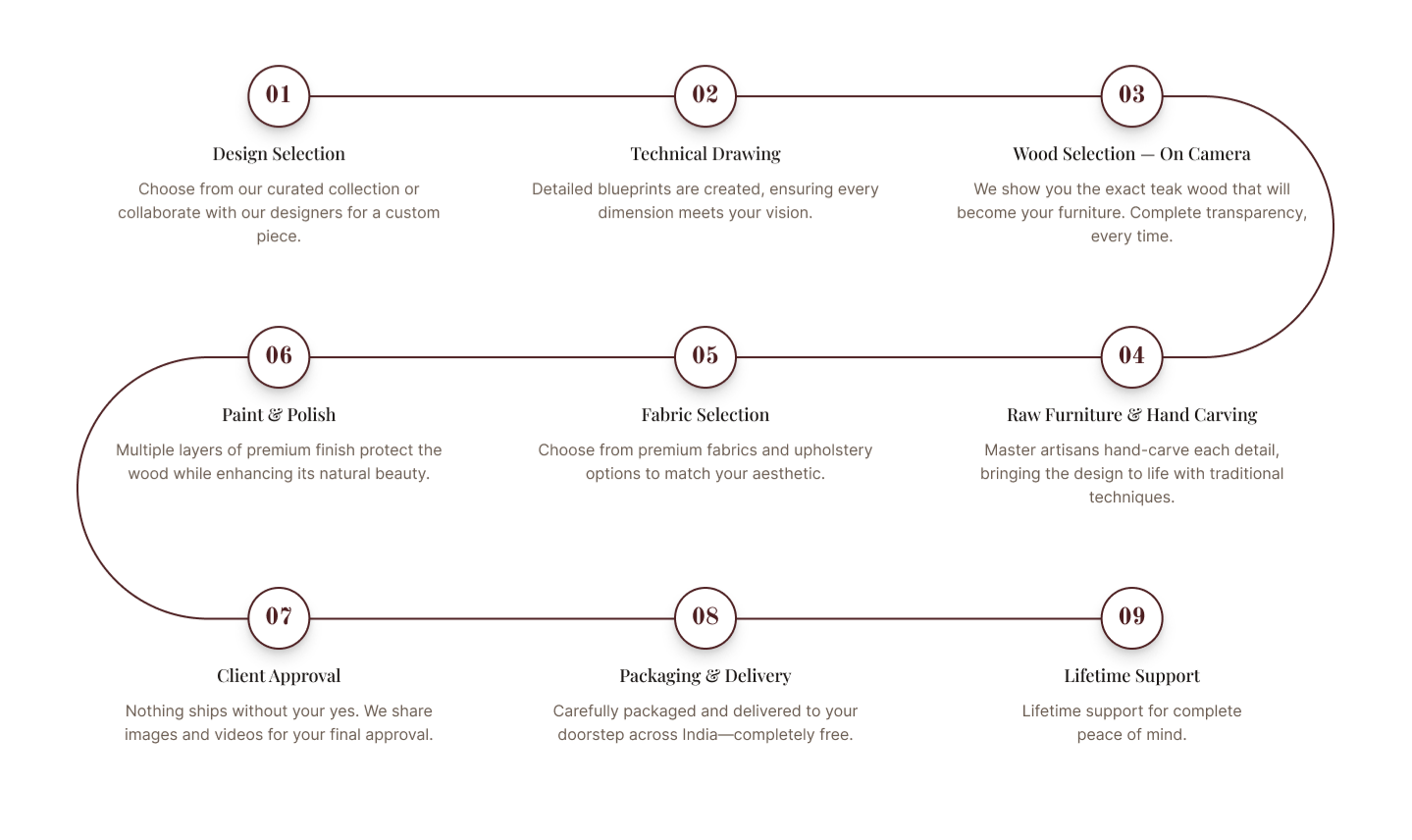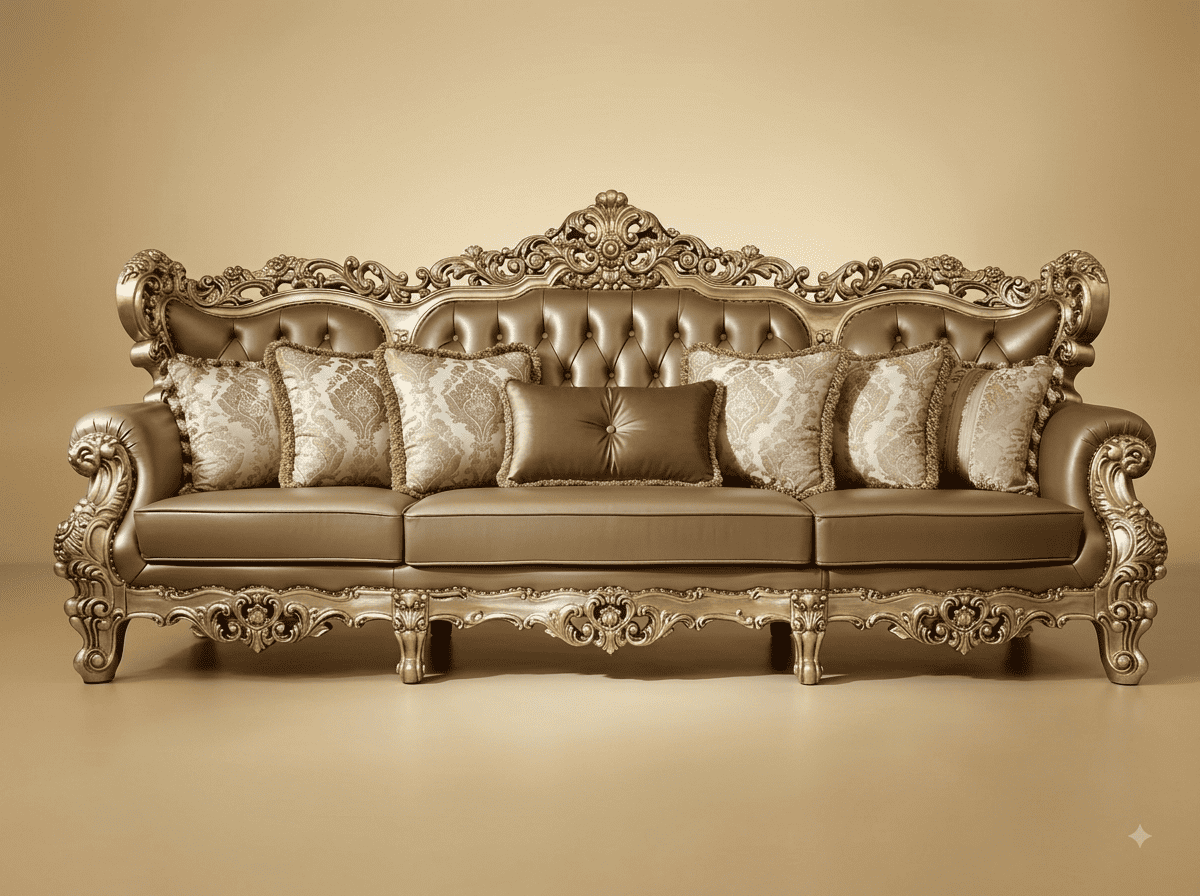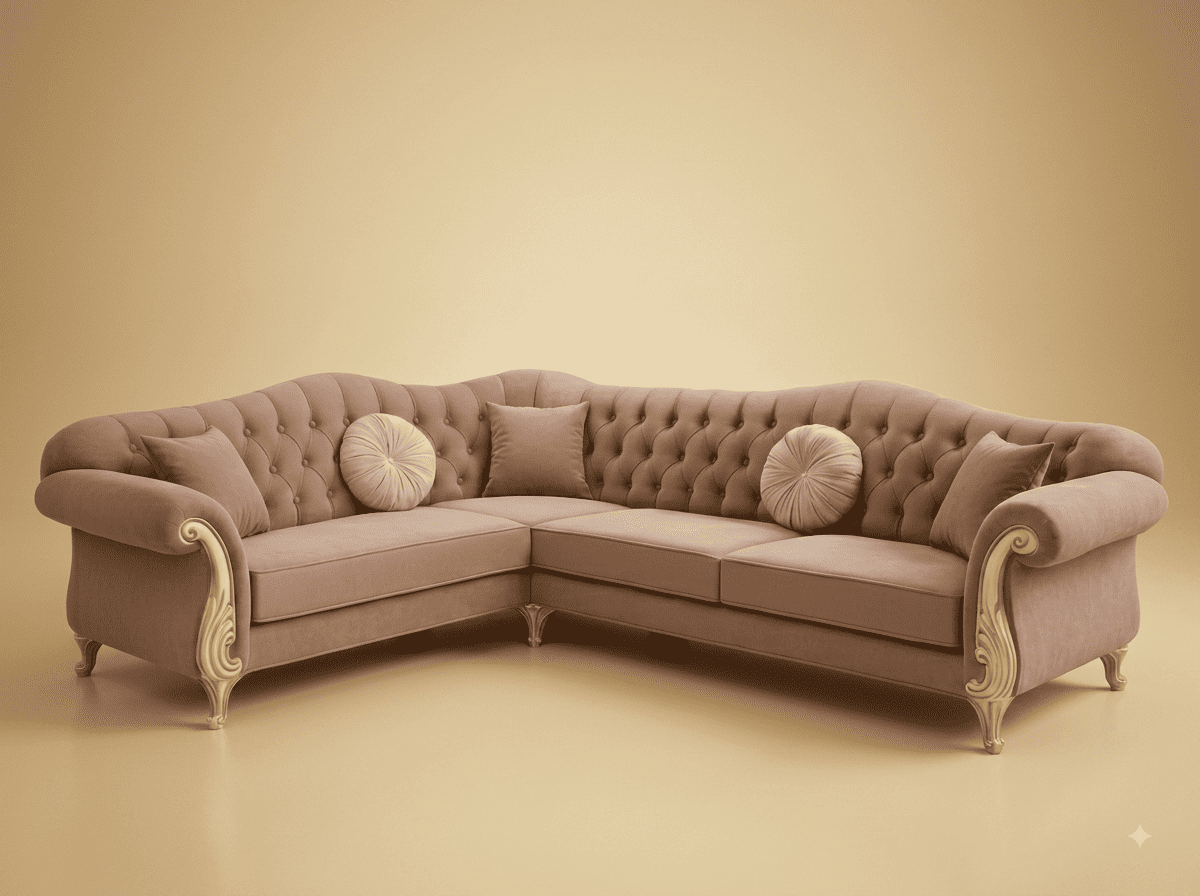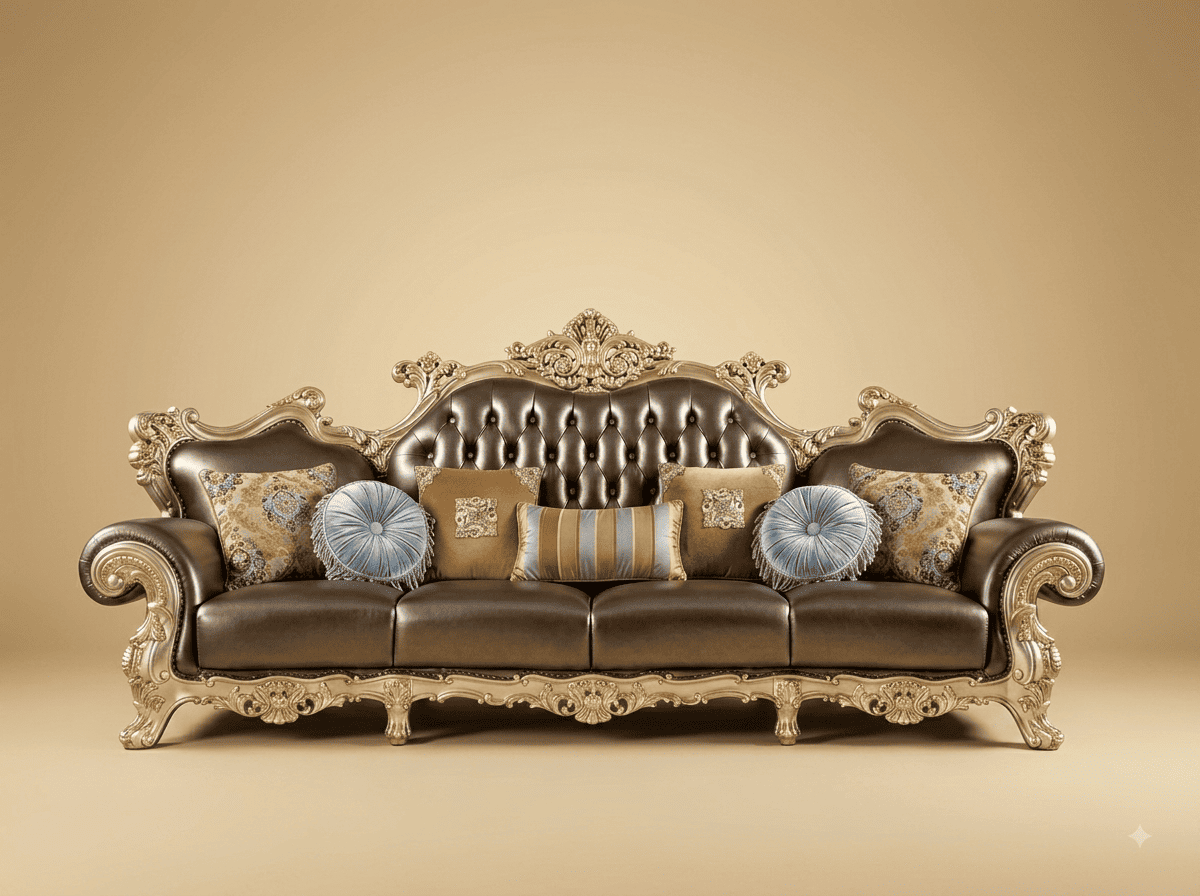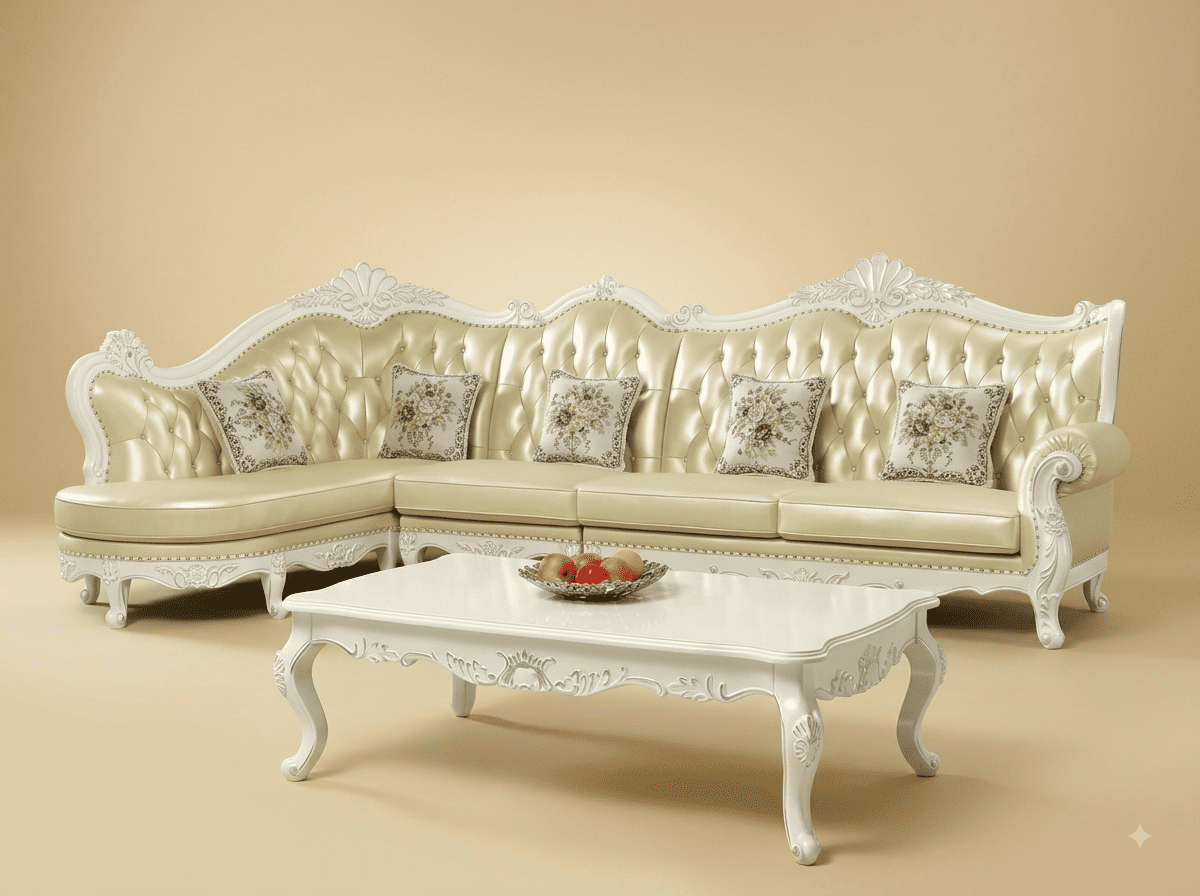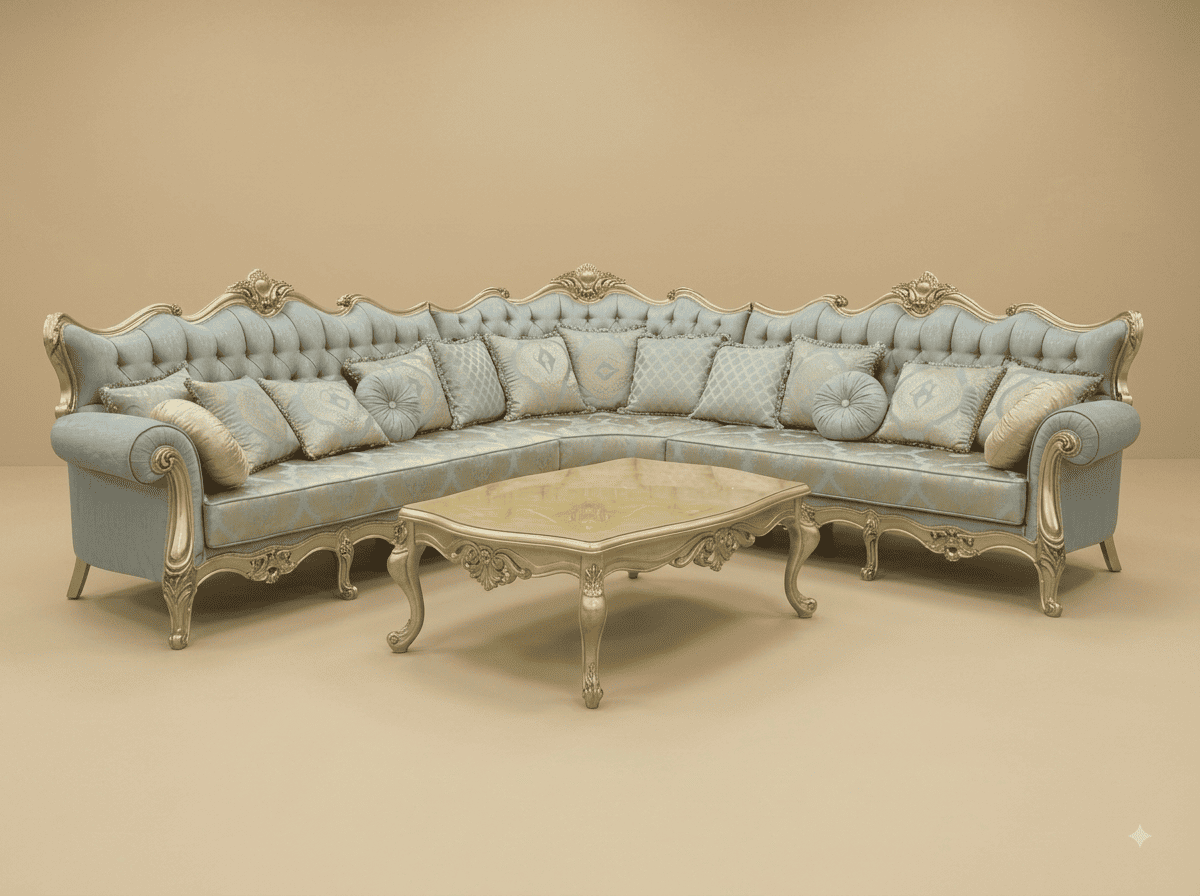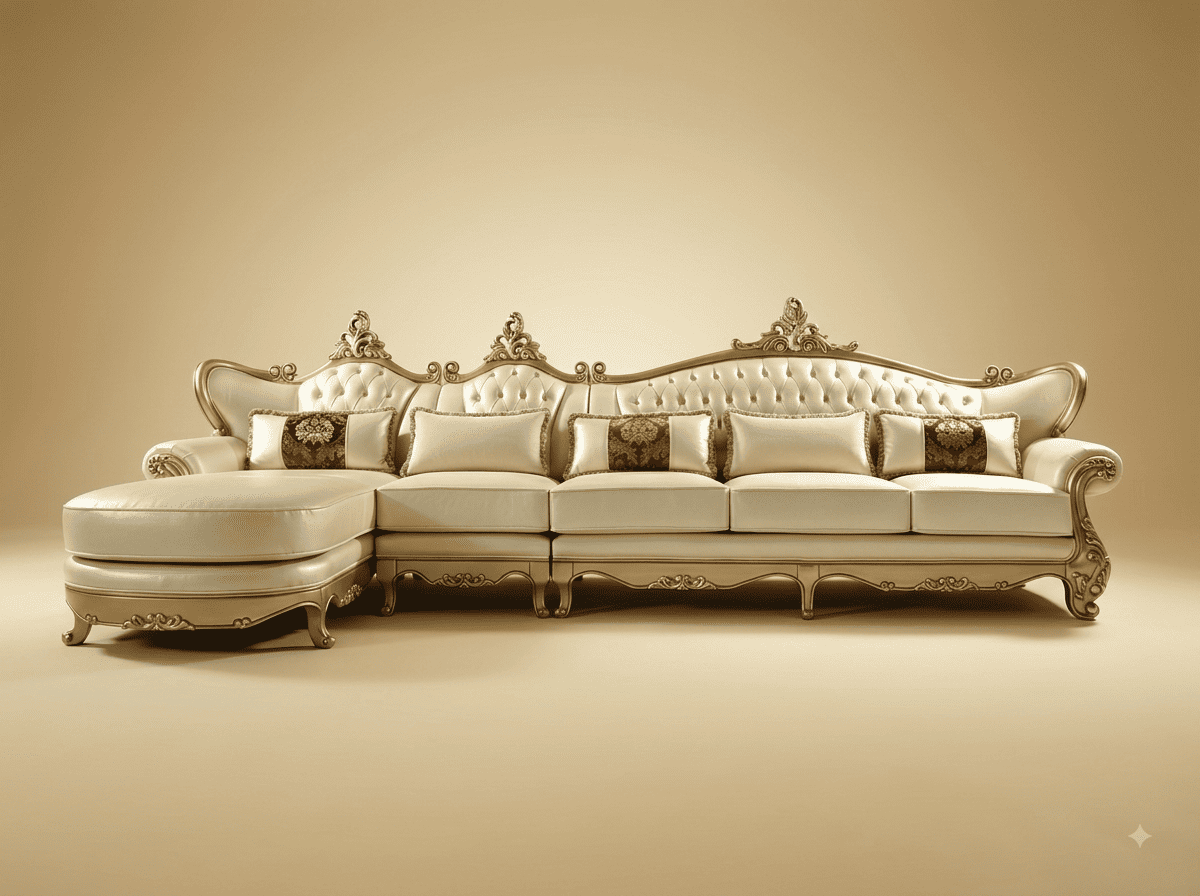
Furniture that does two things is rarer than it should be, because most double-duty designs do neither job properly. The backless chaise is one of the exceptions, and the reason is that lying down and putting your feet up need exactly the same thing: a firm, flat, generous surface at seat height. Add a back and you have committed the piece to one orientation. Leave it off and it serves whoever is using the room that evening.
Getting it right is a matter of the cushion, not the frame. A seat cushion soft enough to sink into is useless as an ottoman - a cup of tea will not stand on it - so the chaise platform is built firmer and flatter than the seats beside it, which is a decision made at the upholstery stage rather than visible in the design.
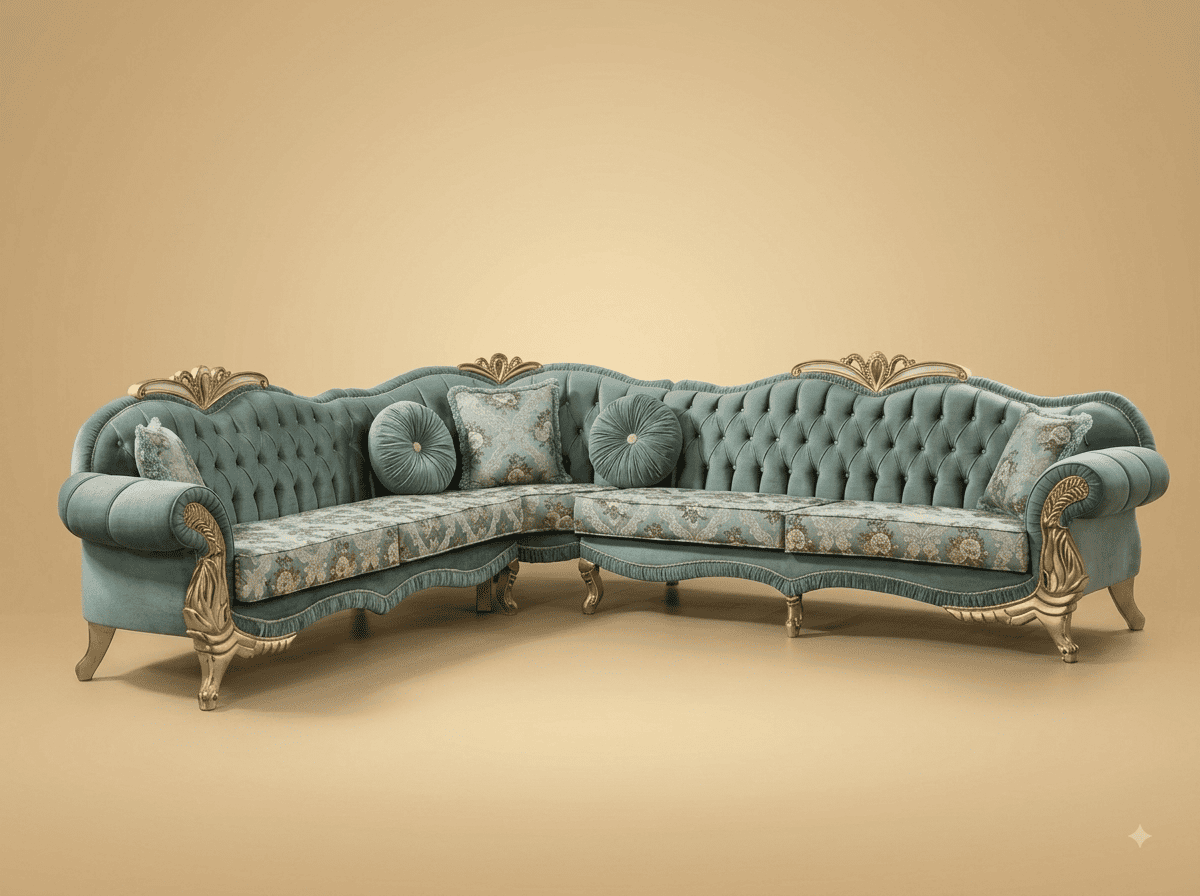
The three crests along the back solve a different problem. A buttoned back this long reads as a single band; lifting it into carved peaks at intervals gives the eye something to travel between, so the length becomes rhythm rather than repetition. Our master Indian artisans space them from the centre outward so the composition stays symmetrical whatever length the sofa ends up being.
 Ask Price On WhatsApp