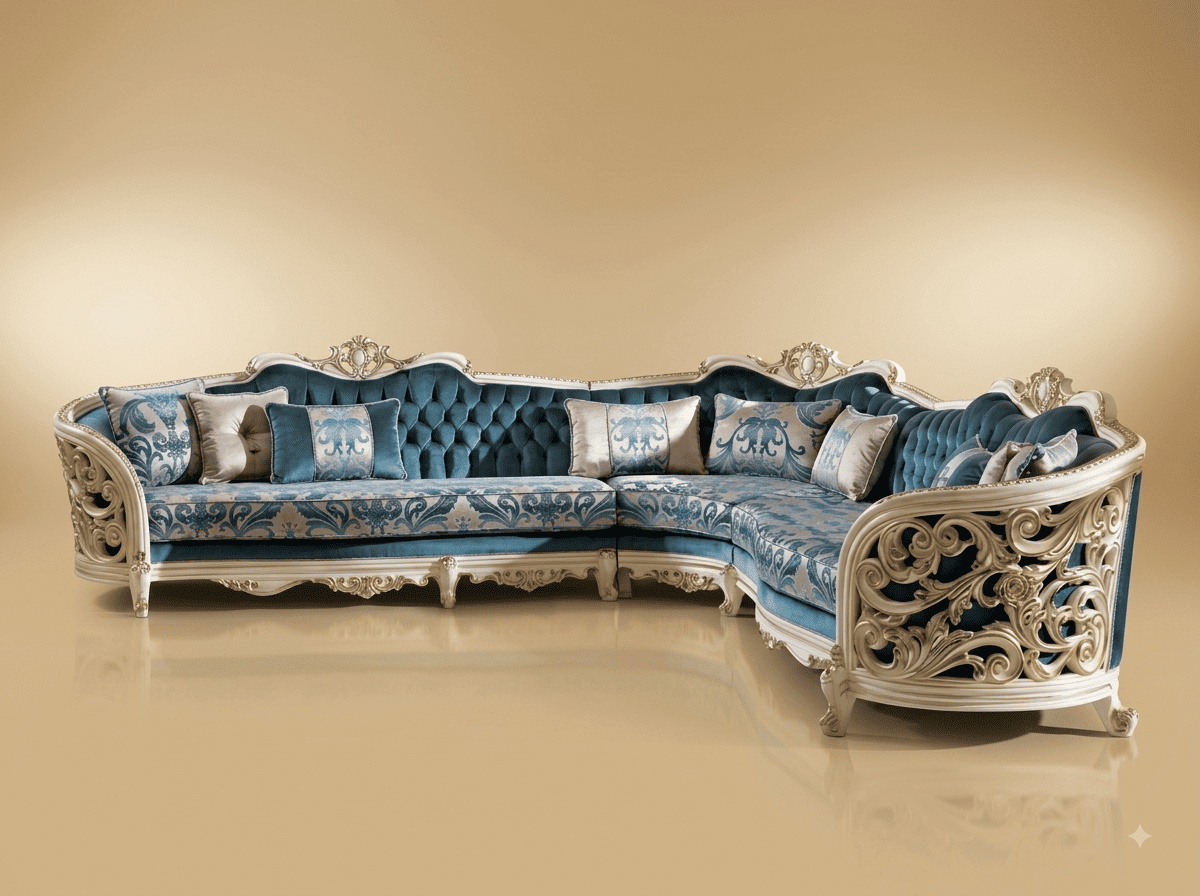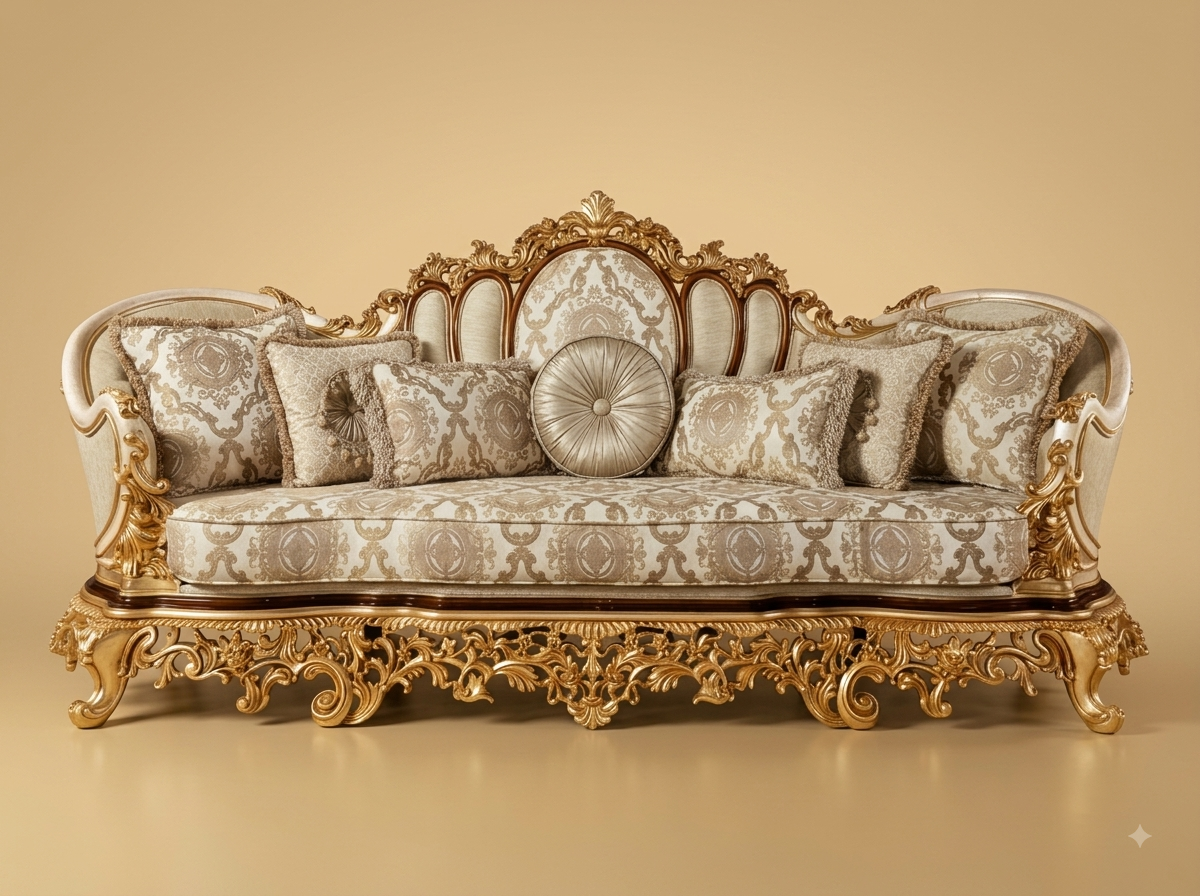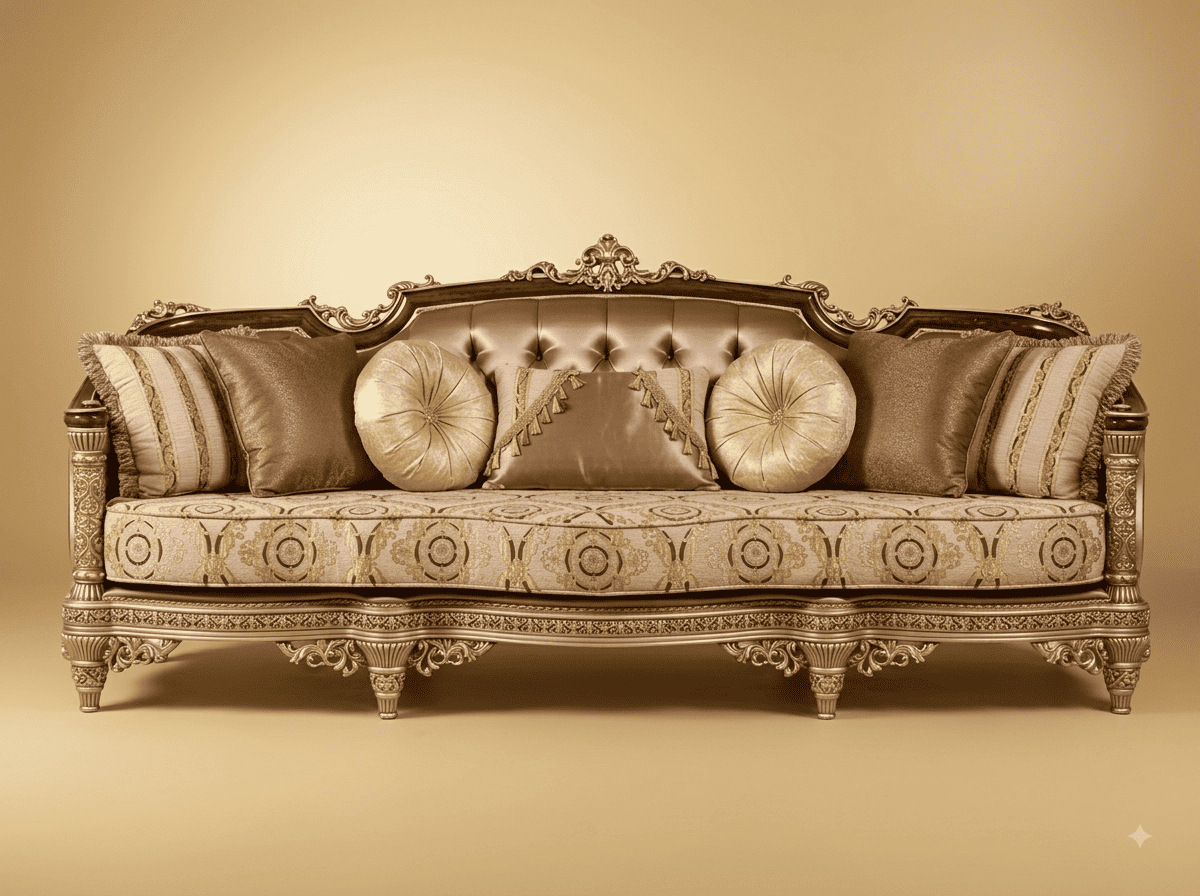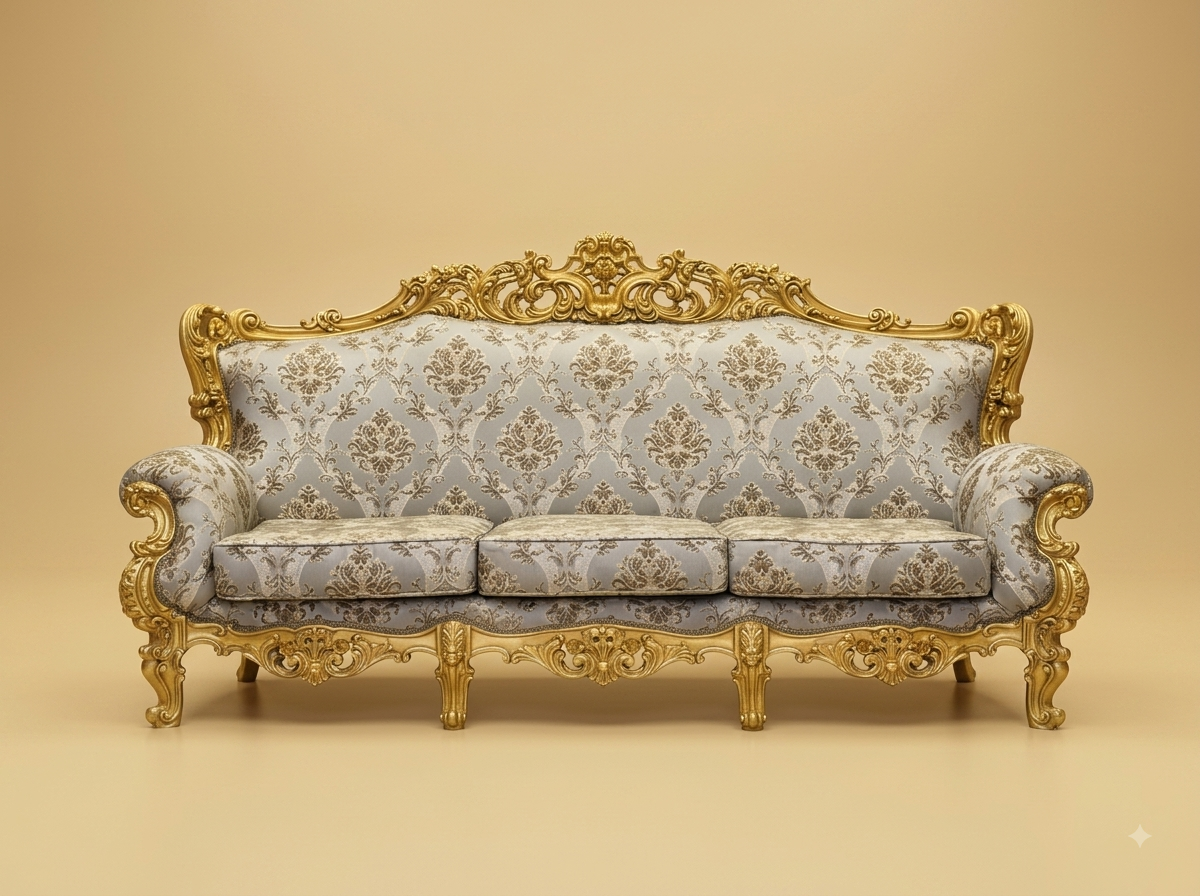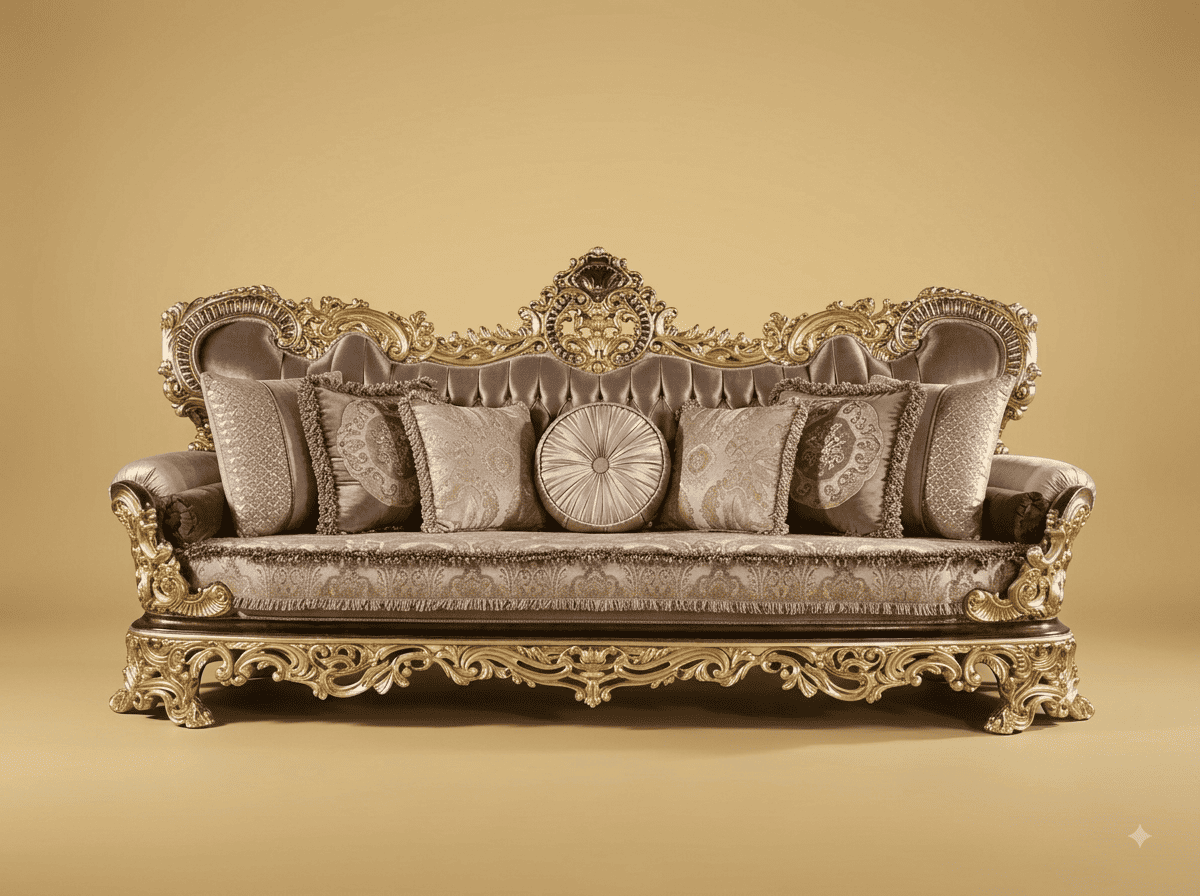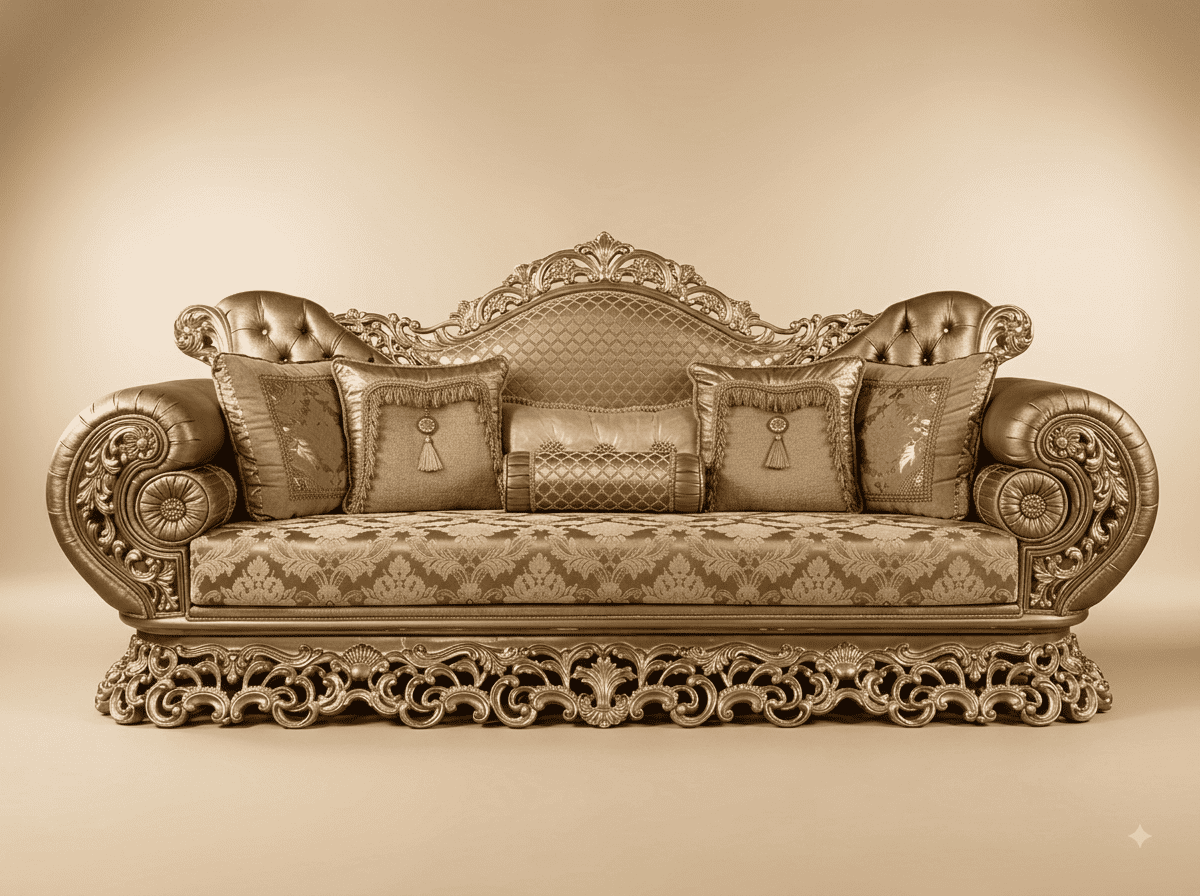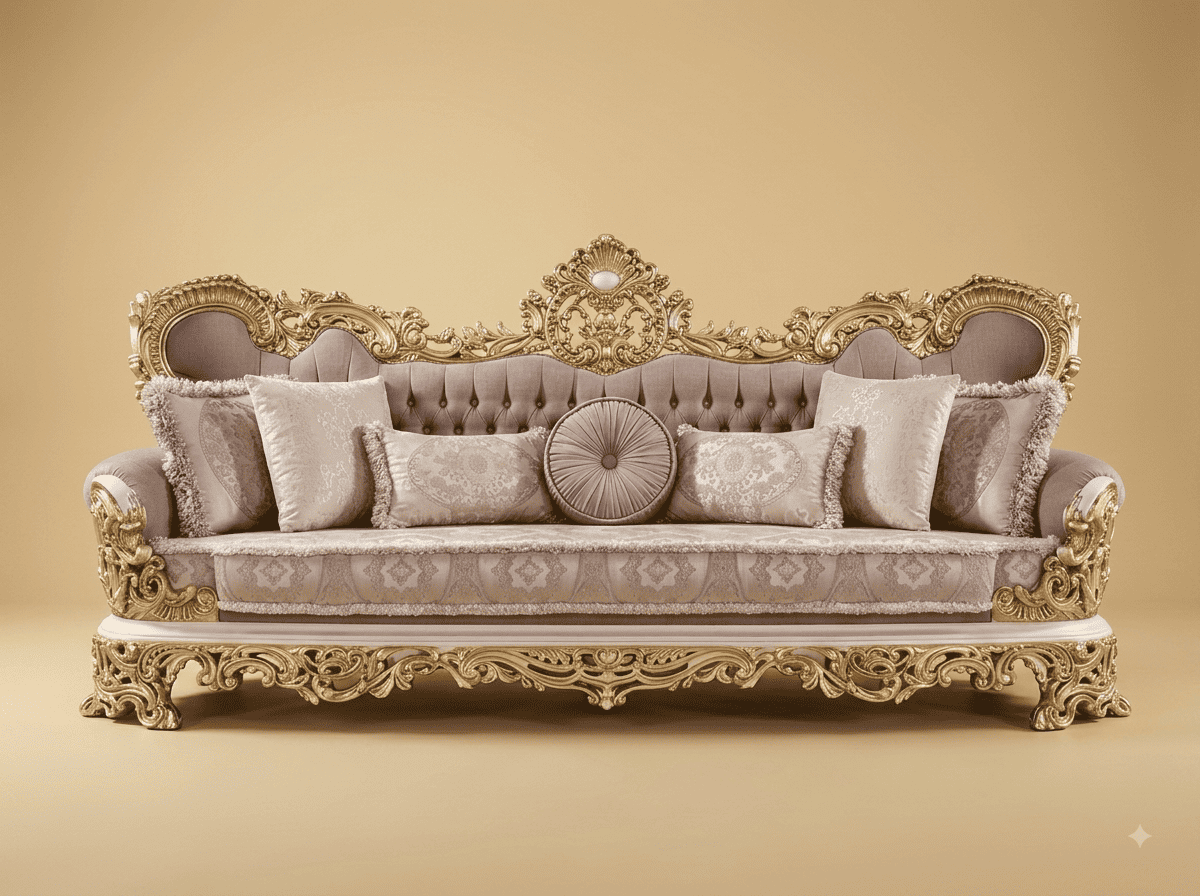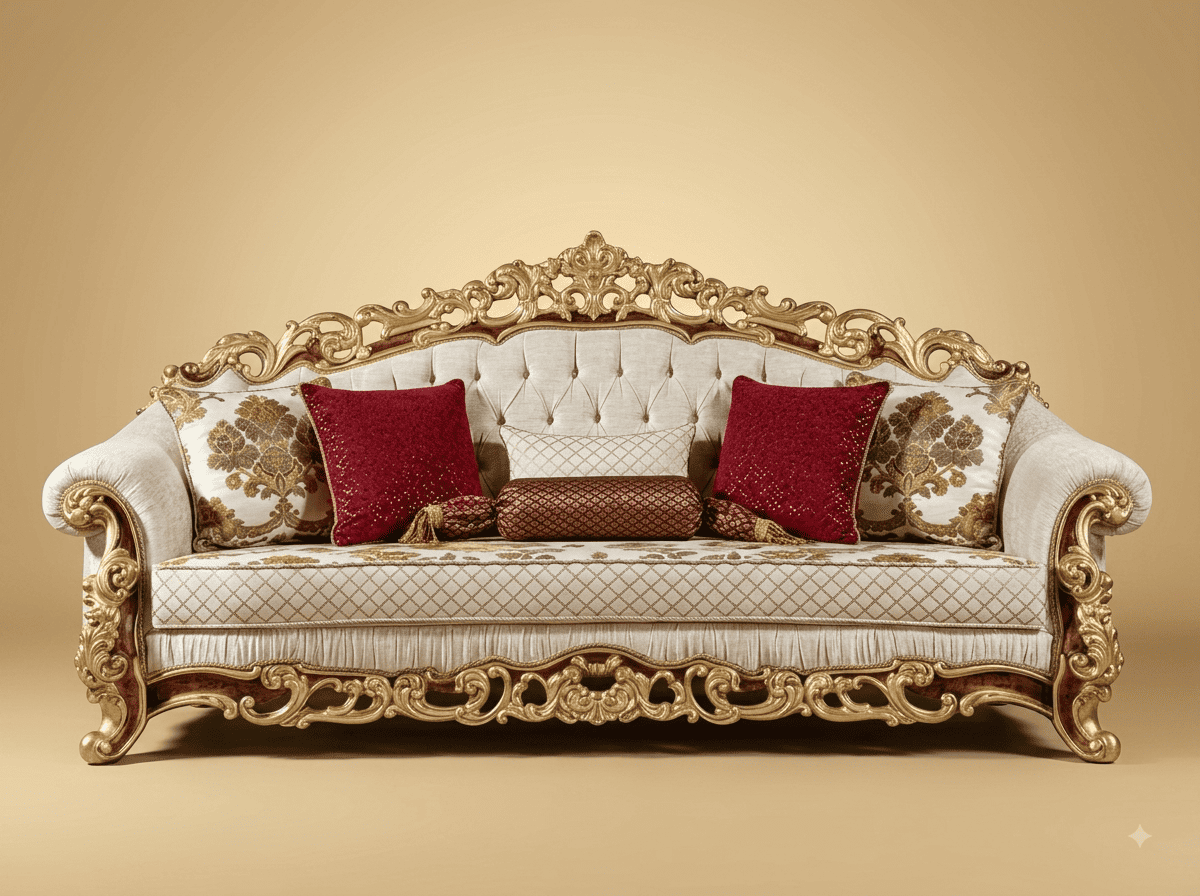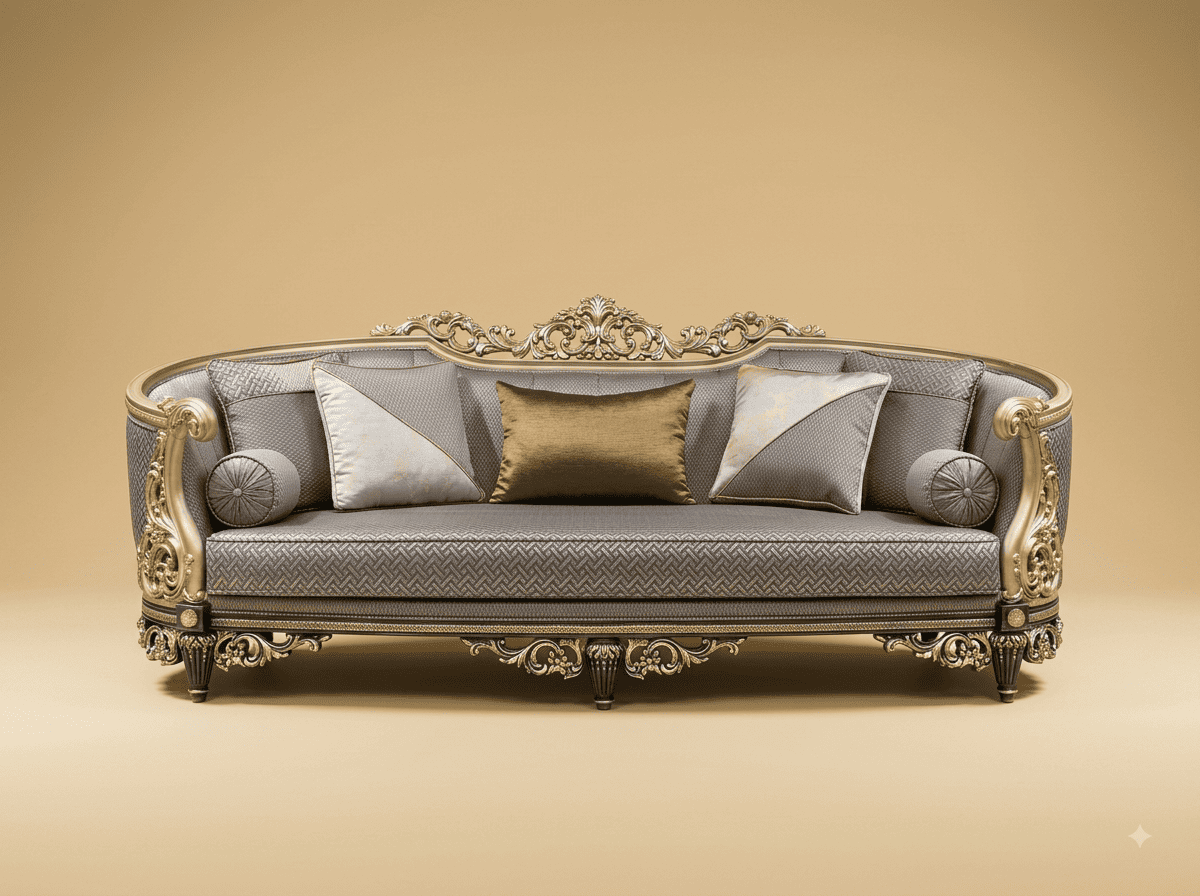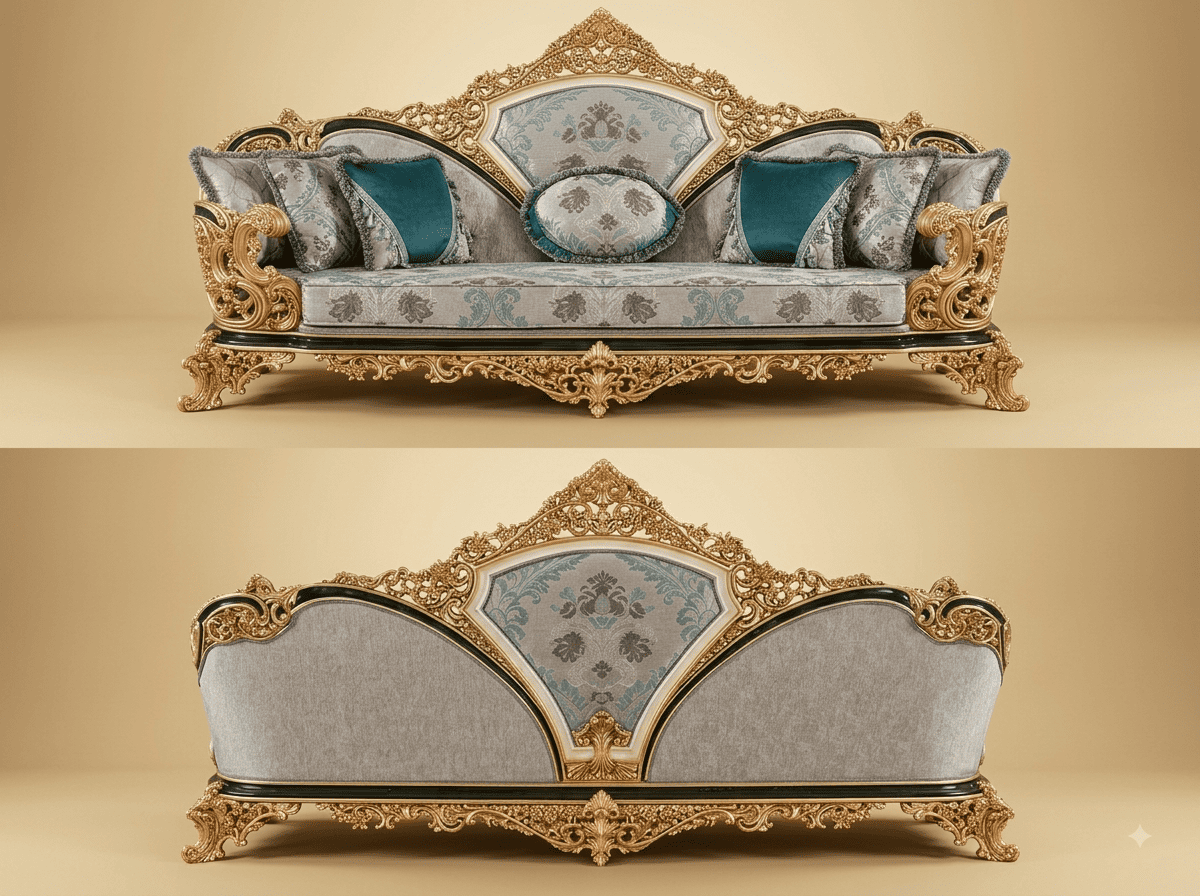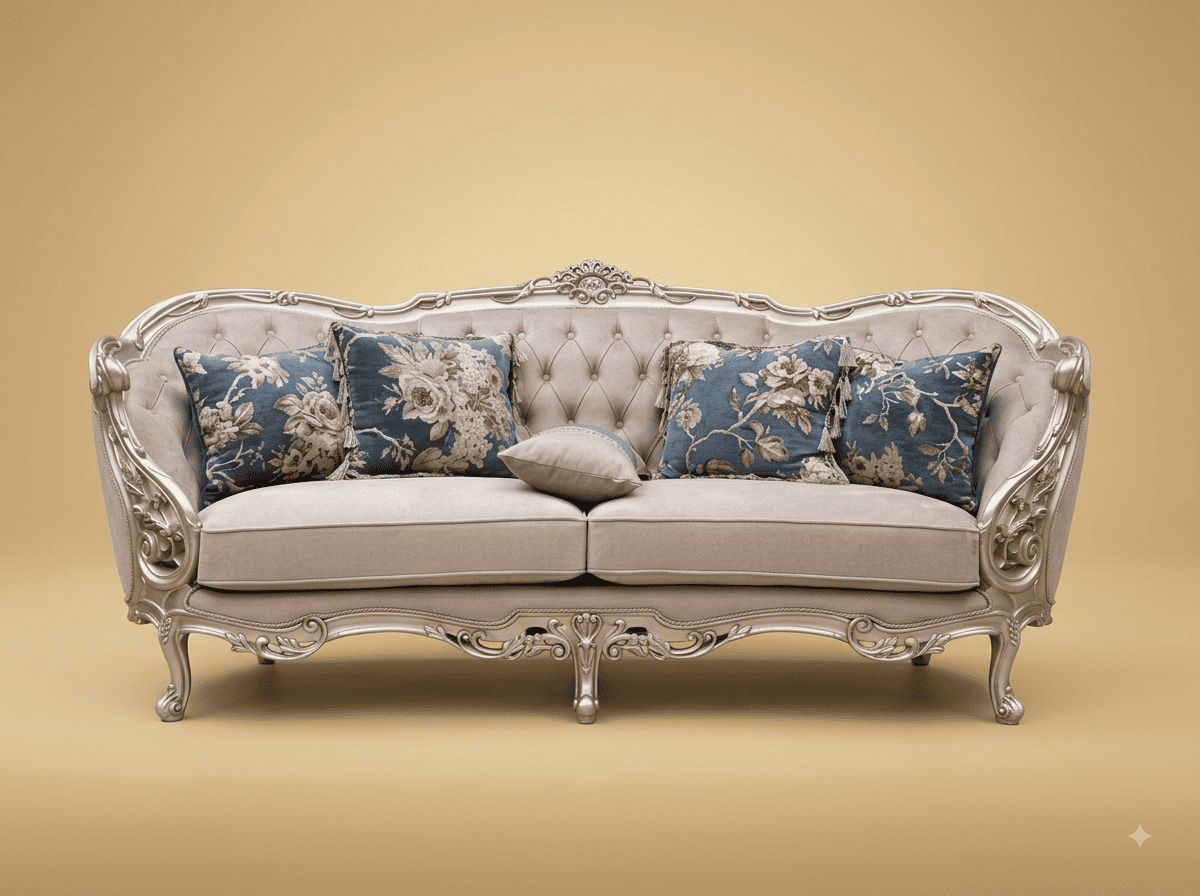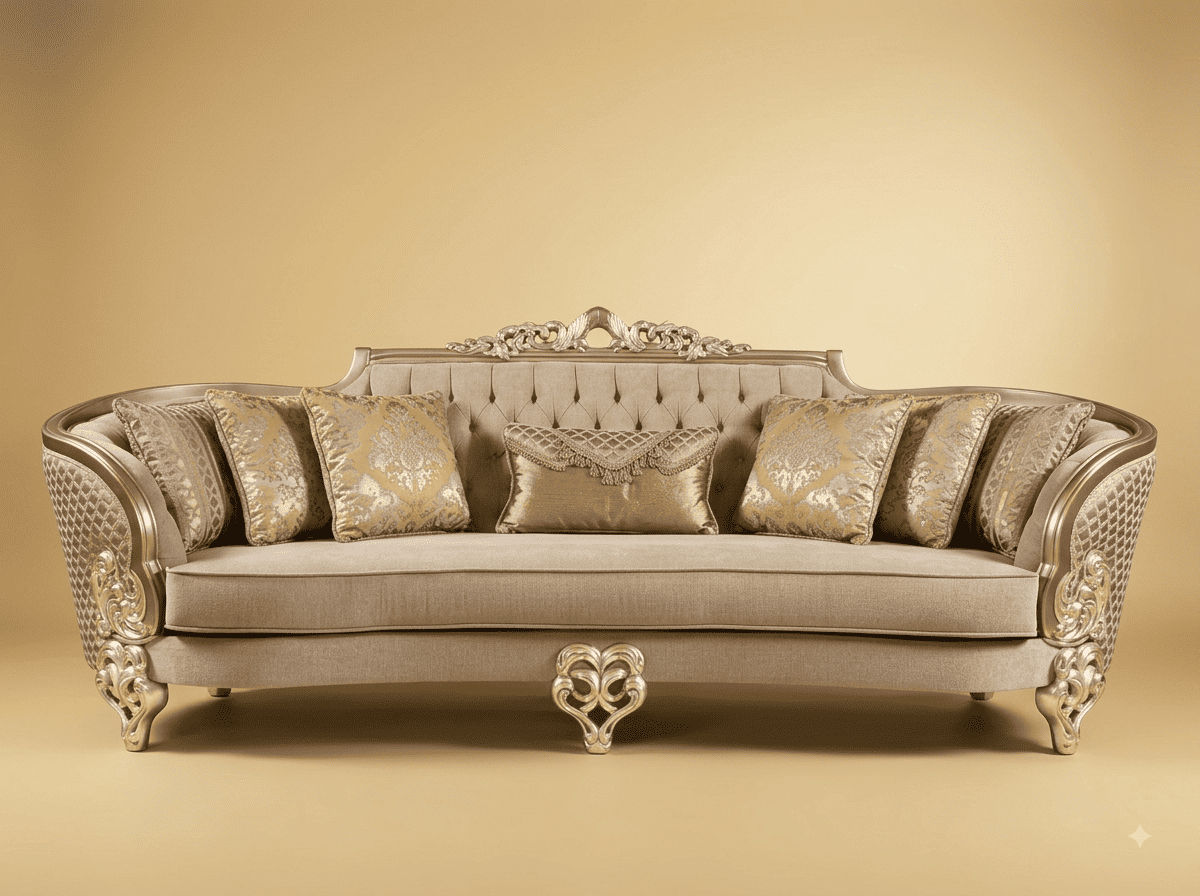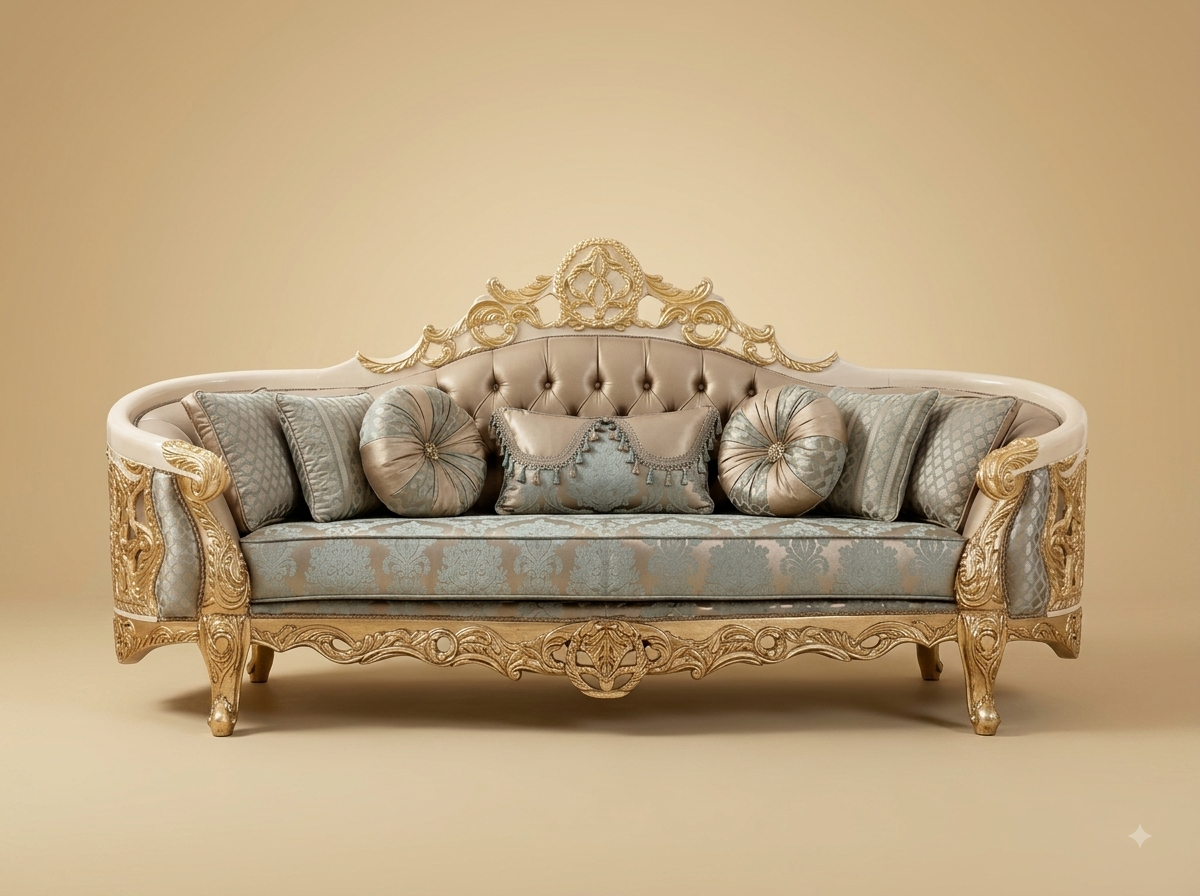
The continuous rail that runs from the front of one arm, round the back, and out to the front of the other is the hardest single component we make for a sofa - and it cannot be one piece of timber.
No board is long enough, and even if one were, the grain would run out across the curve at both ends and the arms would snap. So the rail is built in segments, each cut with its grain following the arc of that section, and jointed to its neighbours on a joint cut at the angle where the two meet.
Where those joints fall is the decision. Put one at the crown of the curve and it is under the greatest bending load; put one at a straight passage and it is doing nothing useful. Our artisans place them at the points where the curvature is changing - the transition between back and arm - because that is where two segments naturally meet at a shallow angle, and a shallow angle means a long joint face with plenty of gluing area.
The carving is then run across the finished rail, which hides the joints entirely and, more importantly, is set out from the crown outward so the pattern is symmetrical about the centre of the sofa rather than about any of its joints.
 Ask Price On WhatsApp