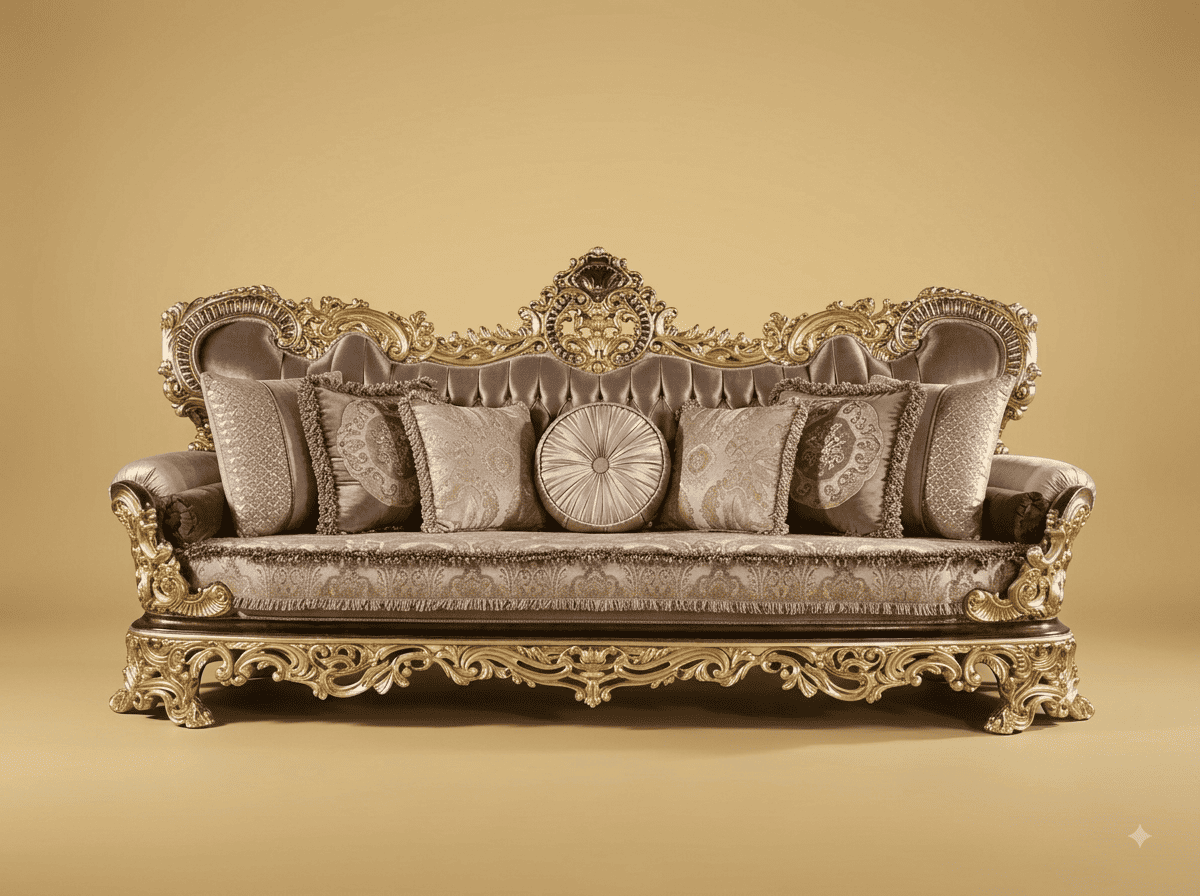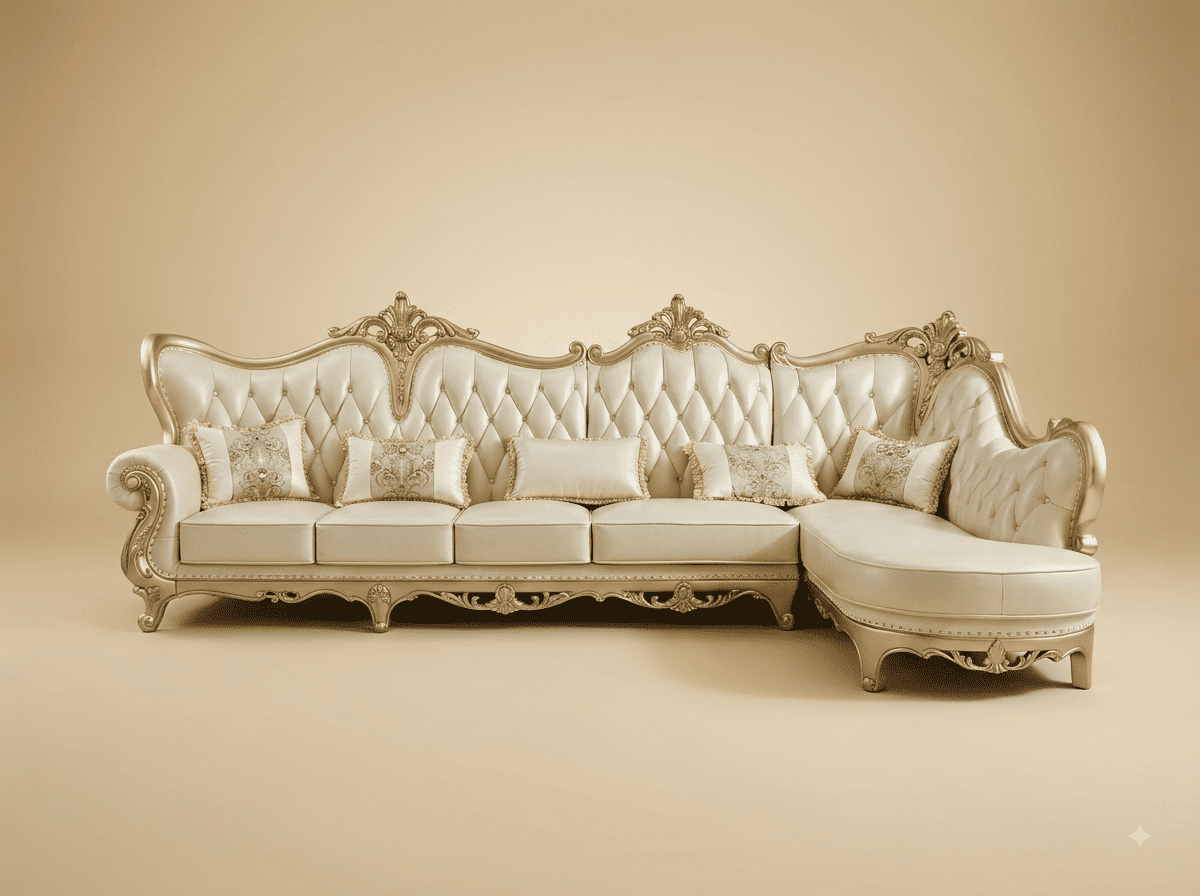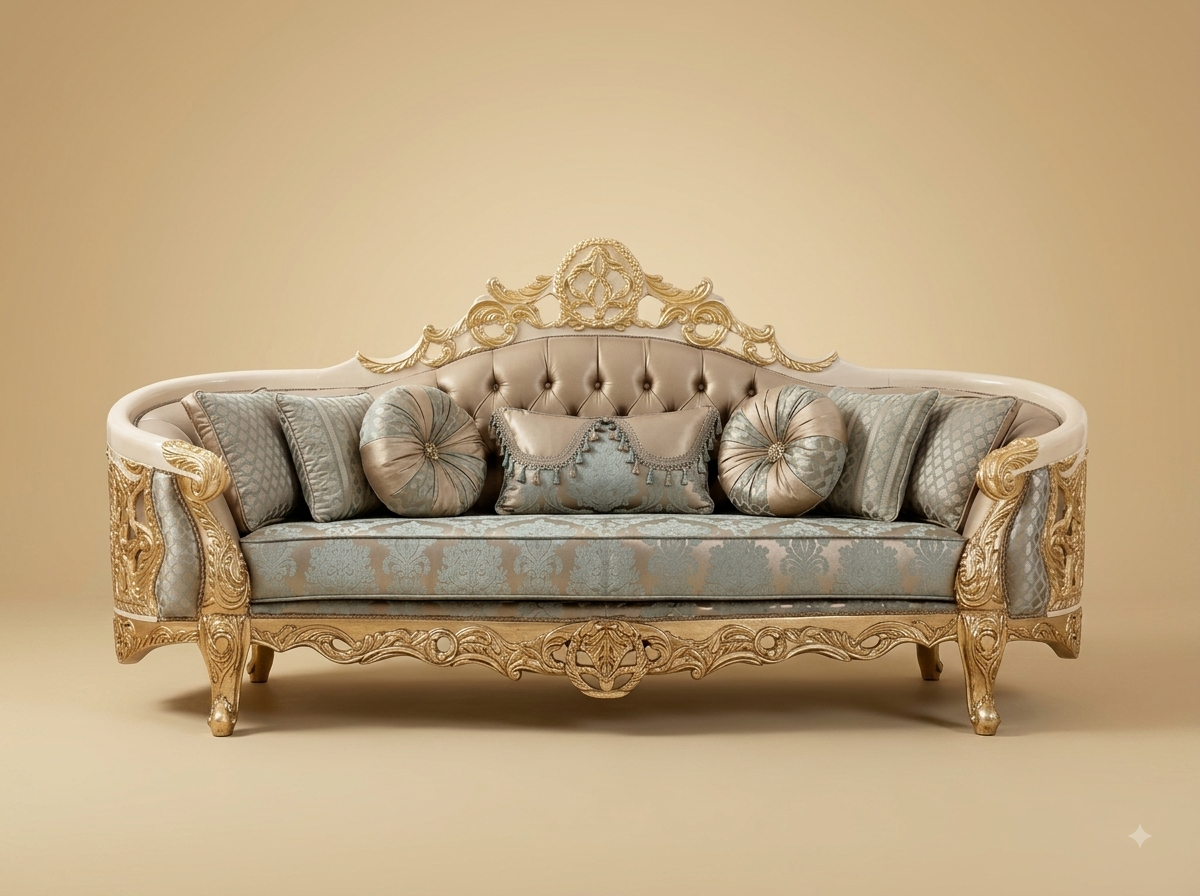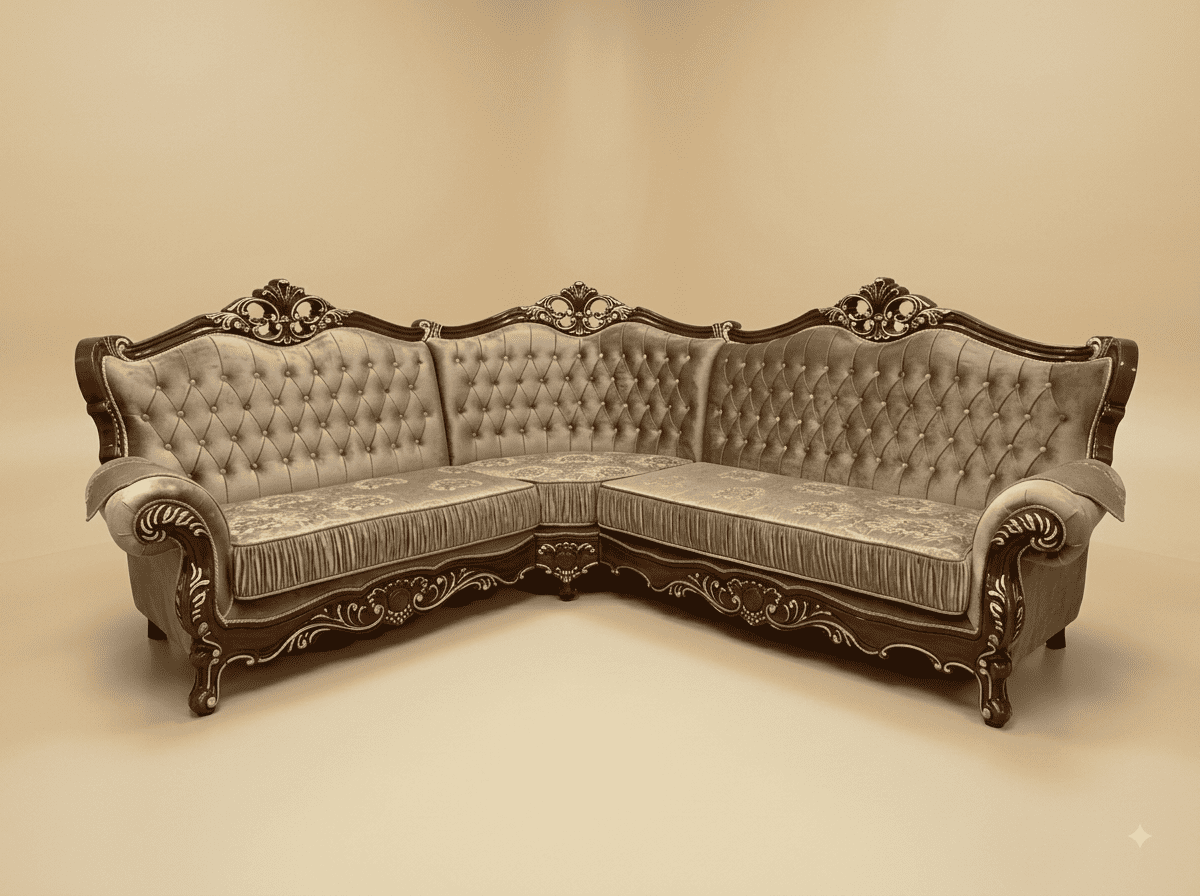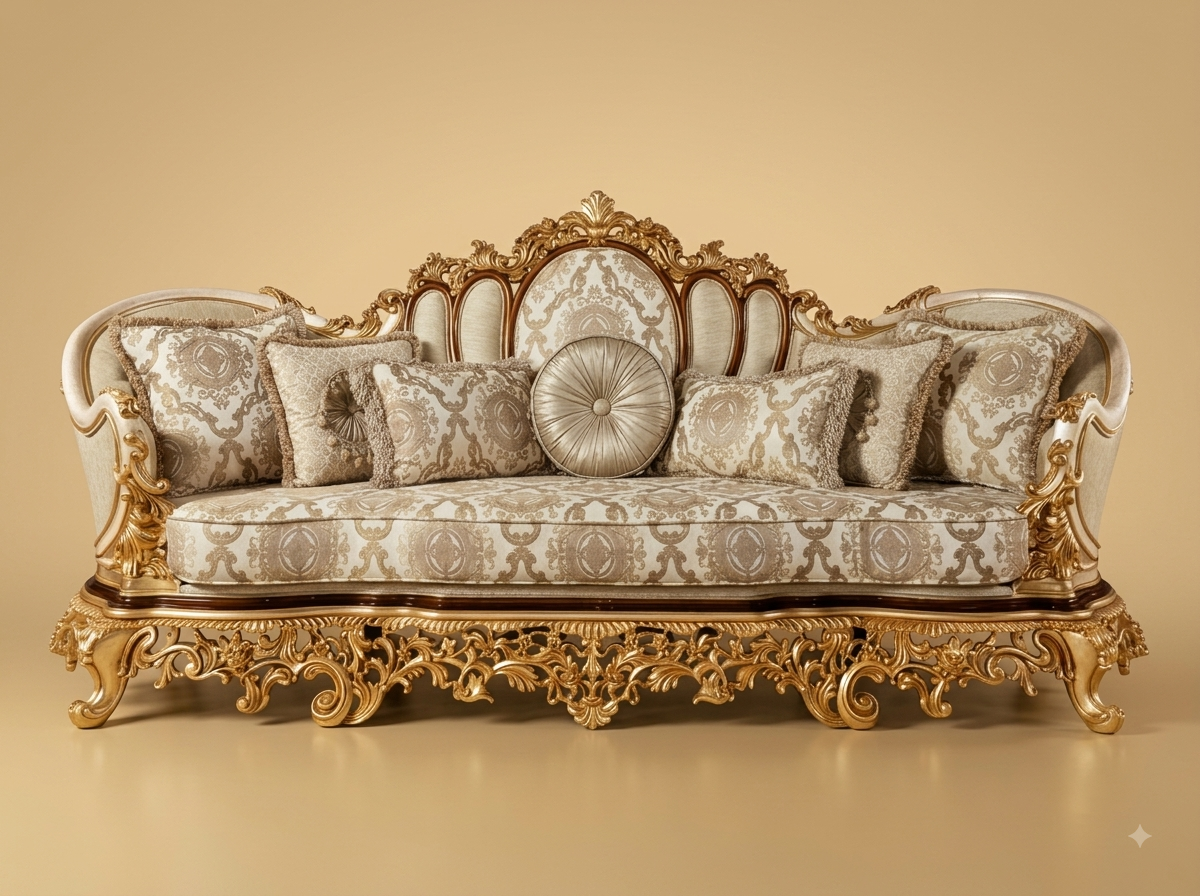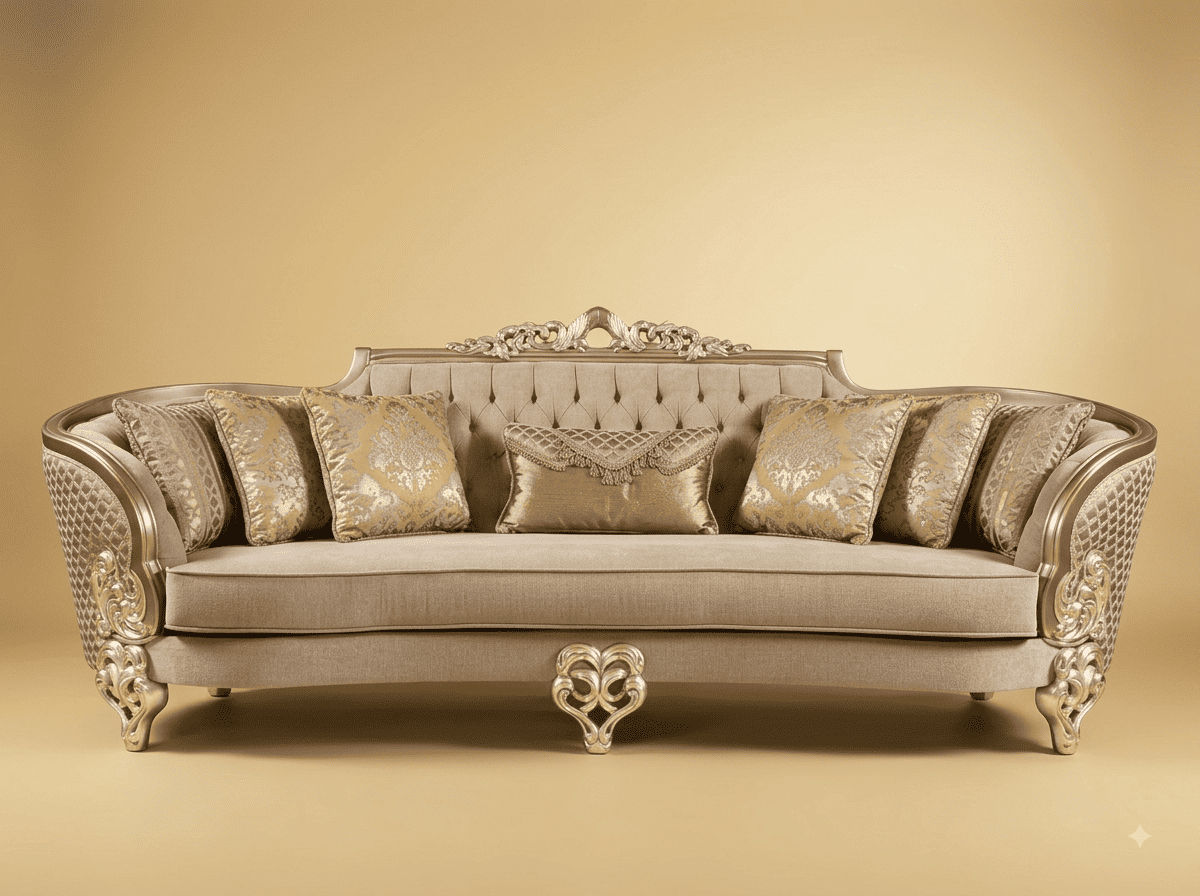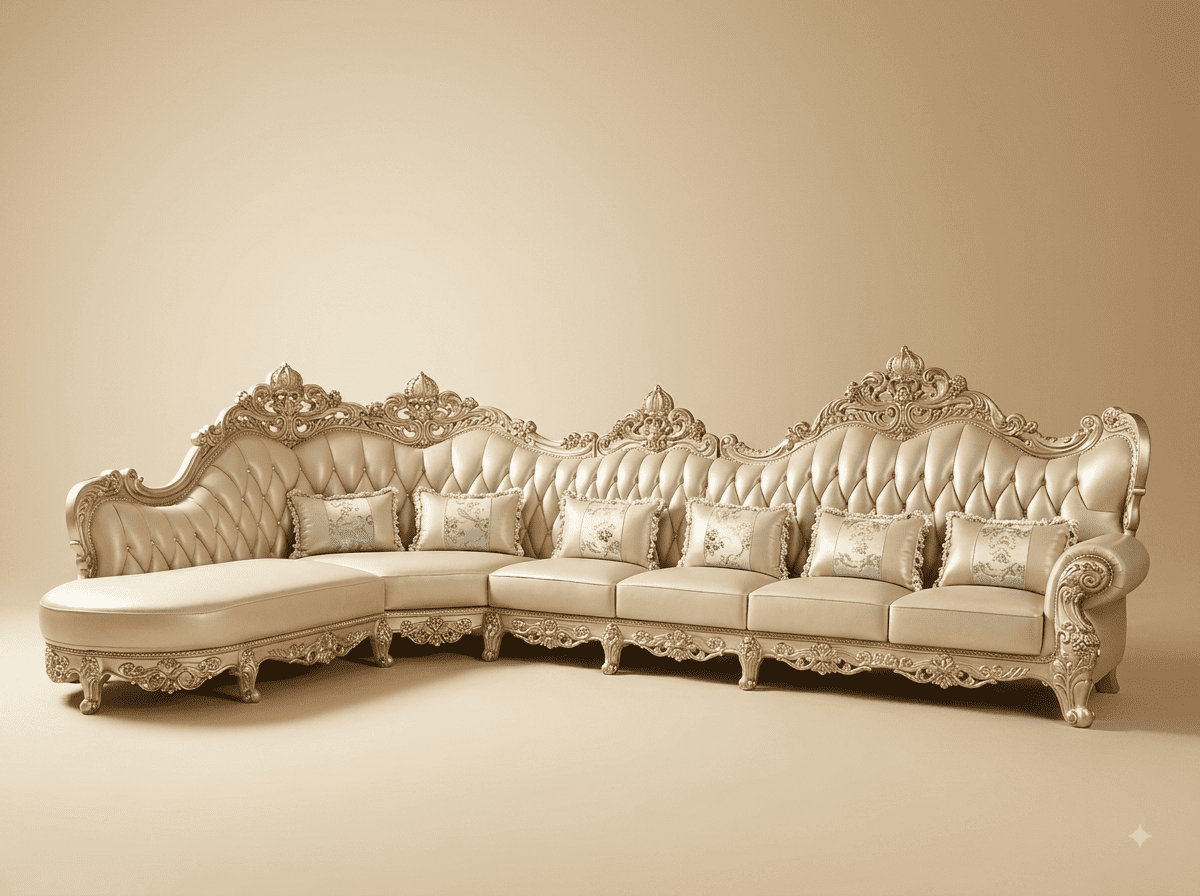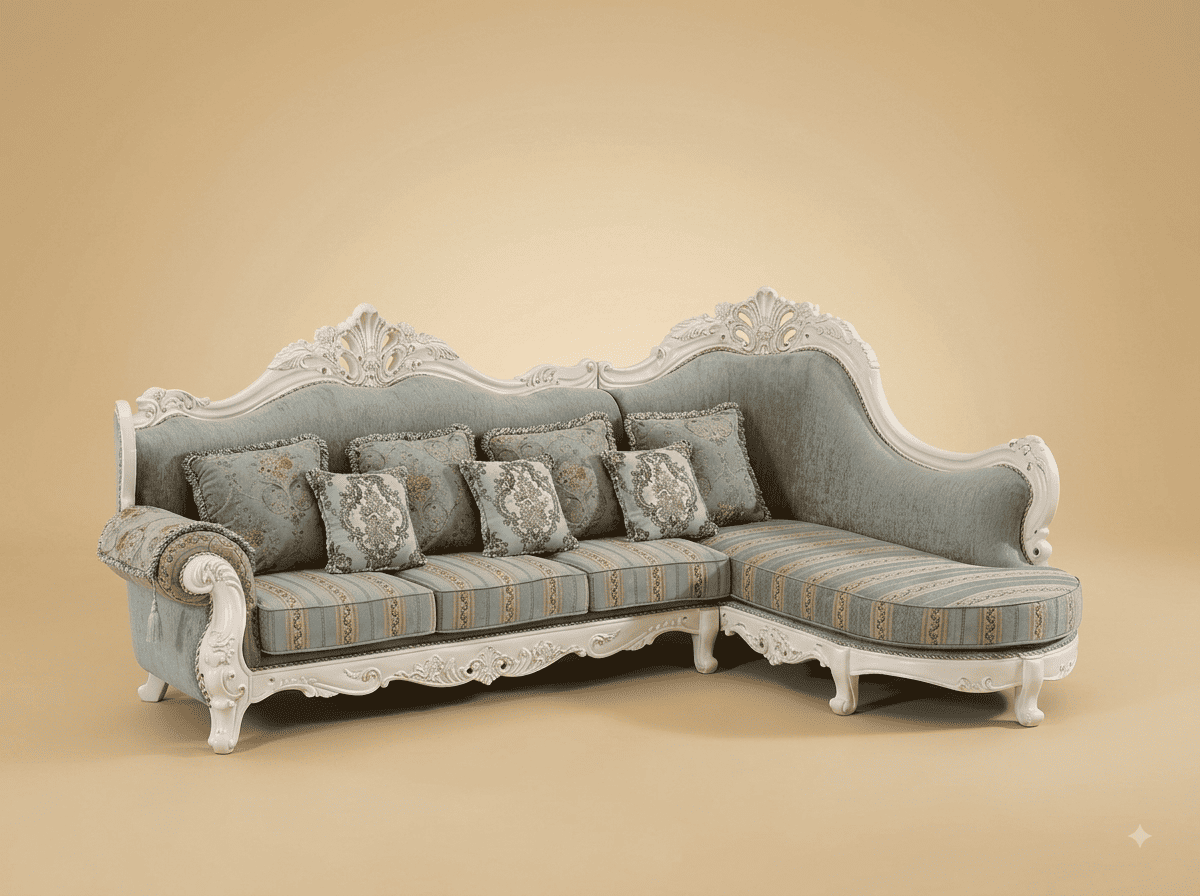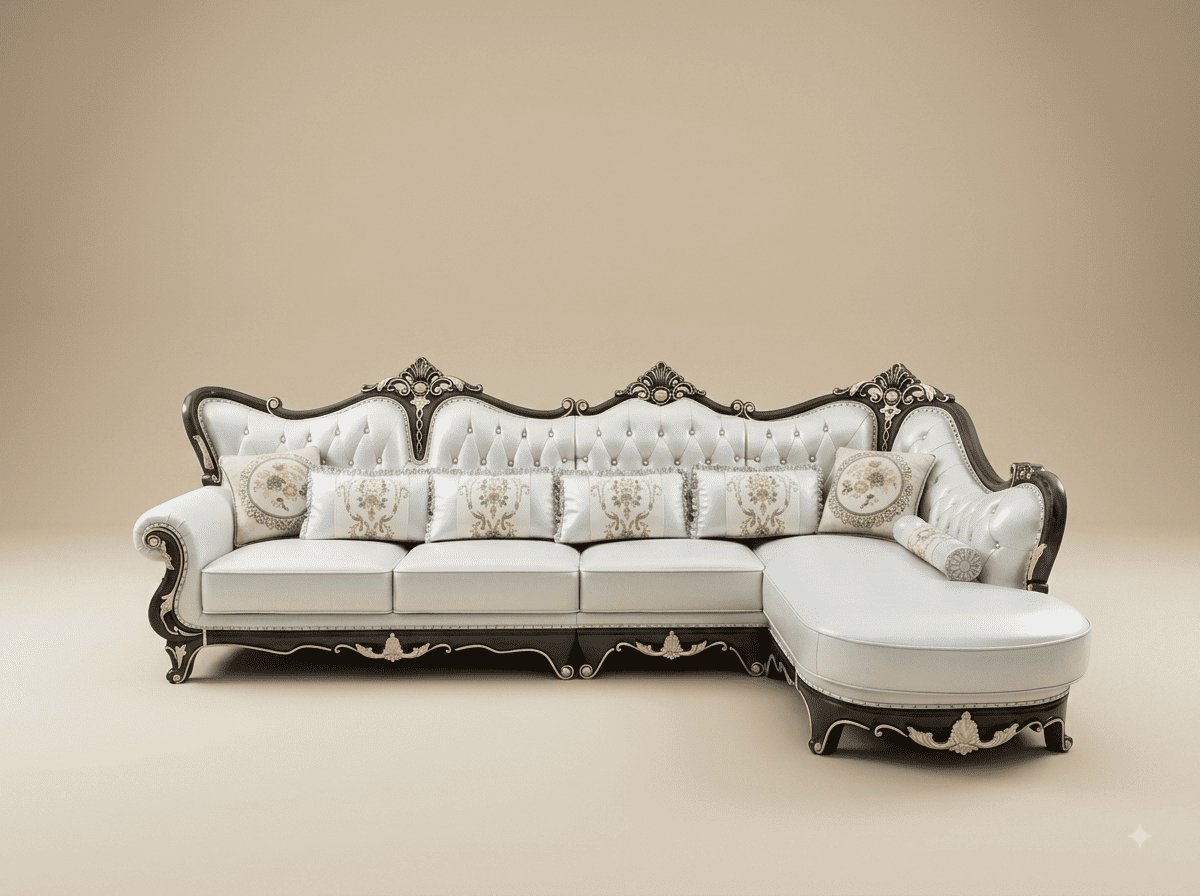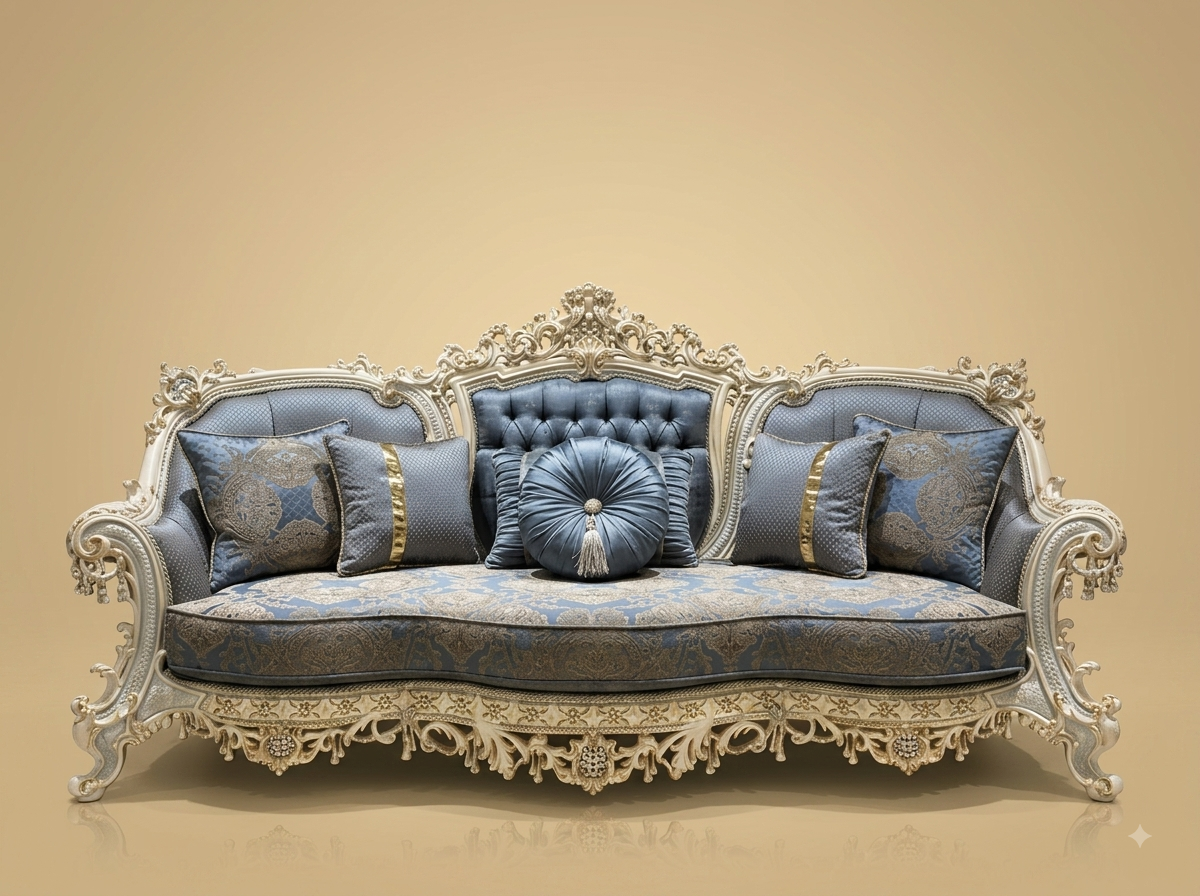
Deep buttoning on a curved back is set out on the frame, not on the fabric - and the grid is not square.
A buttoned panel pulls the covering inward at each button and lets it stand proud between them, which means the fabric travels further than the flat distance from one button to the next. If the buttons are marked out at equal spacings on the finished cover, the pleats between them come out uneven and the diamonds distort.
So our artisans mark the button positions on the timber back frame first, with the spacing calculated to include the extra material each fold will consume - more where the back curves, less where it is flat. The covering is then cut oversized to match, and each button is pulled down to its marked position on the frame.
The pleats that form between them are laid by hand as the work progresses, each one folded downward so that dust settles on the outside of the fold rather than collecting inside it. That single decision is why a well-made buttoned back still looks crisp after years, and it is invisible until you look for it.
 Ask Price On WhatsApp