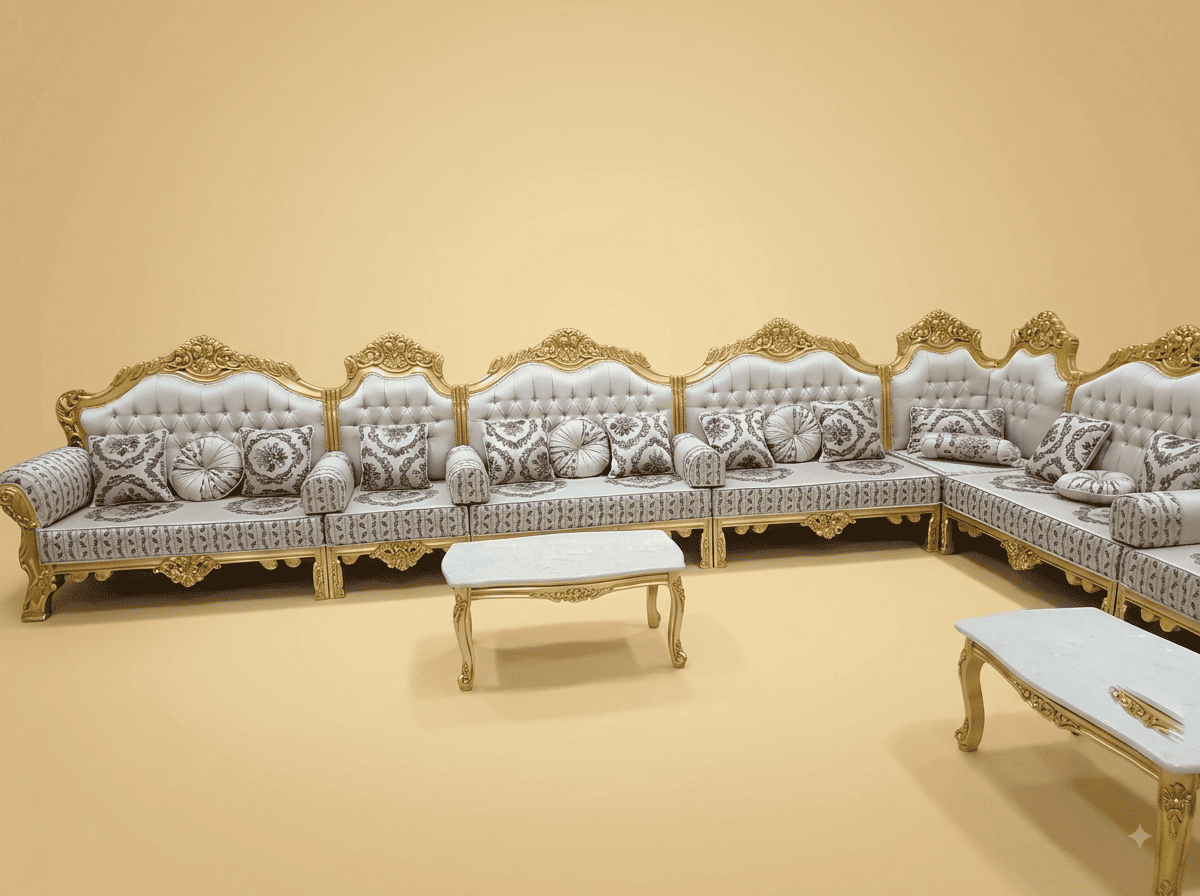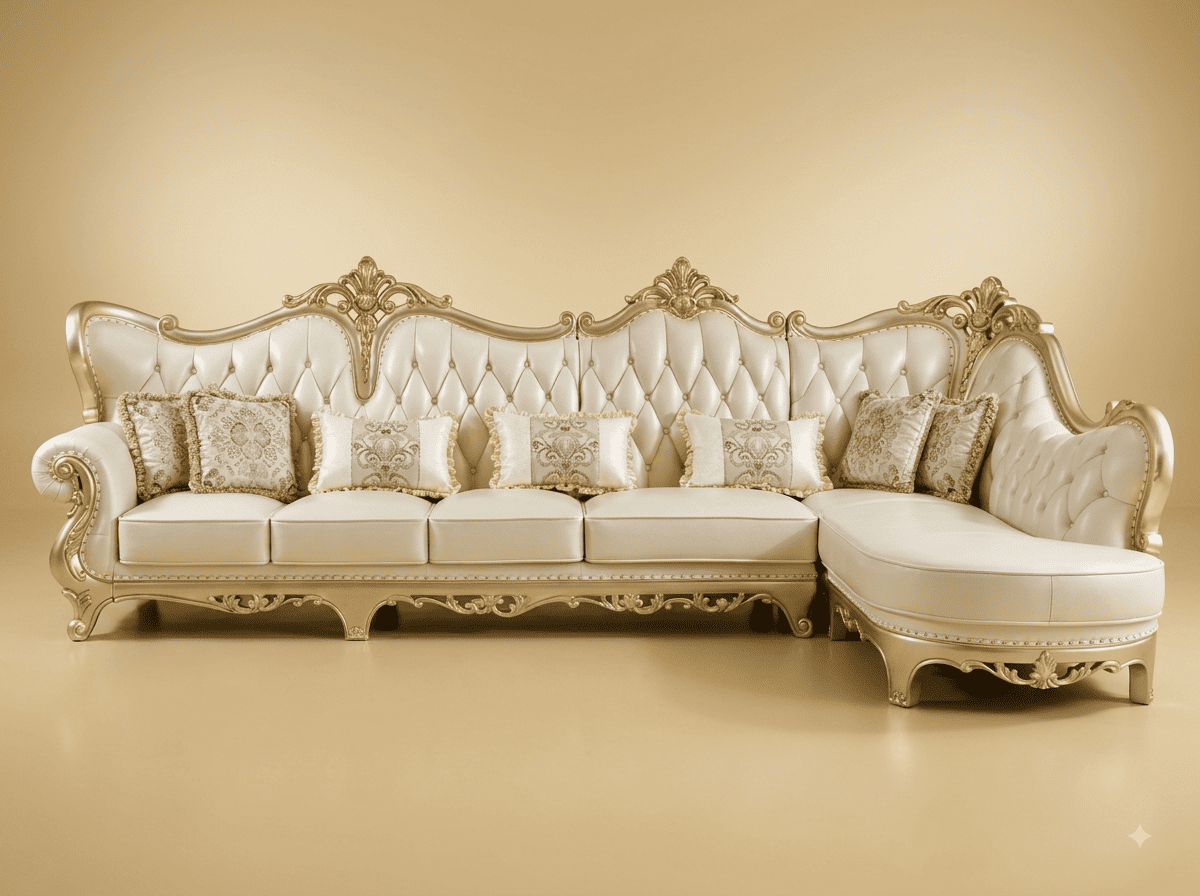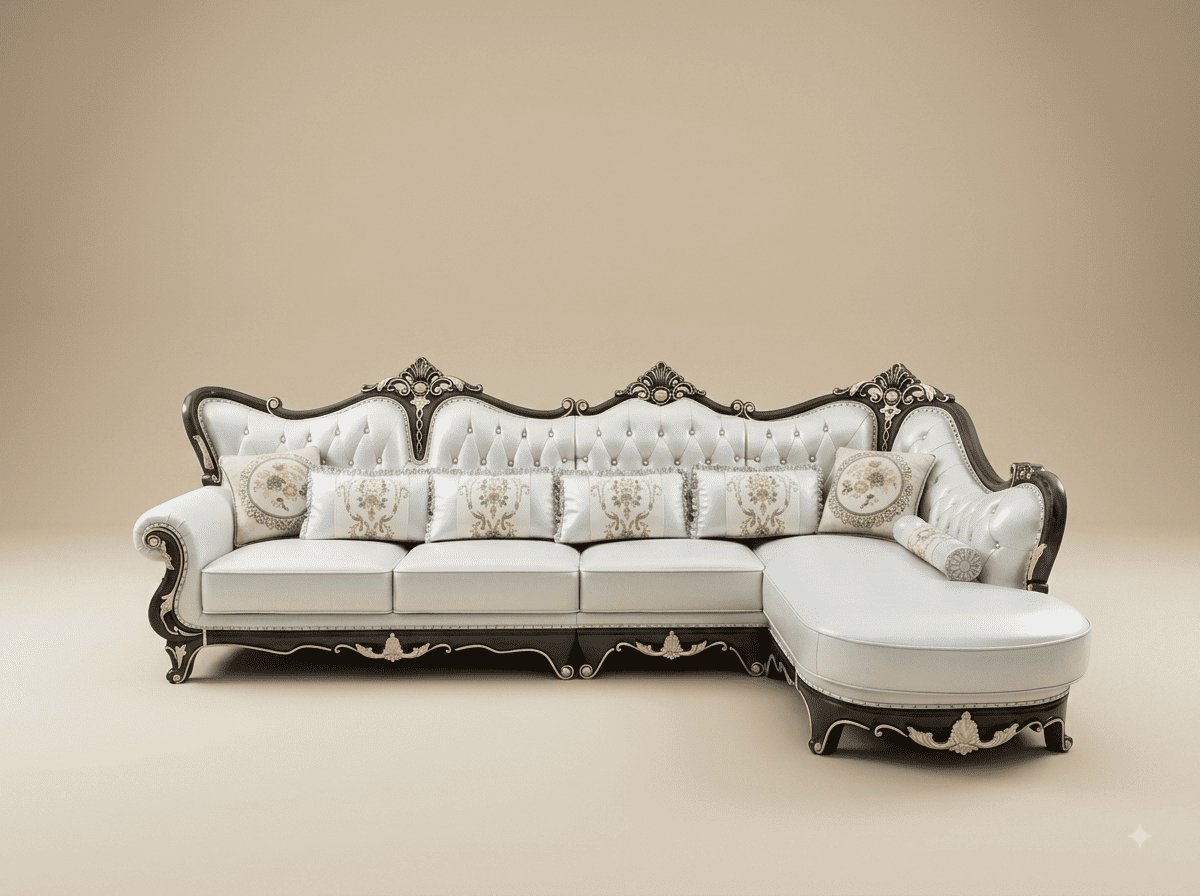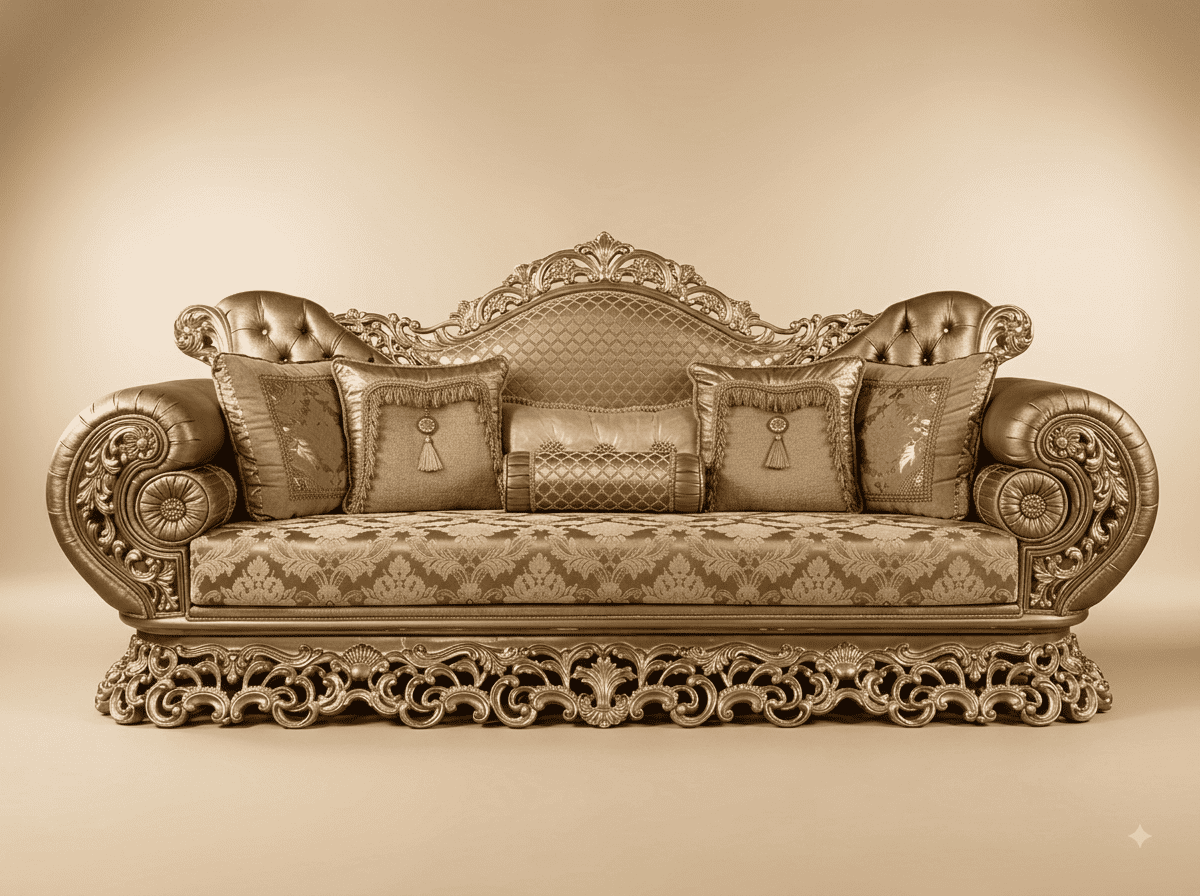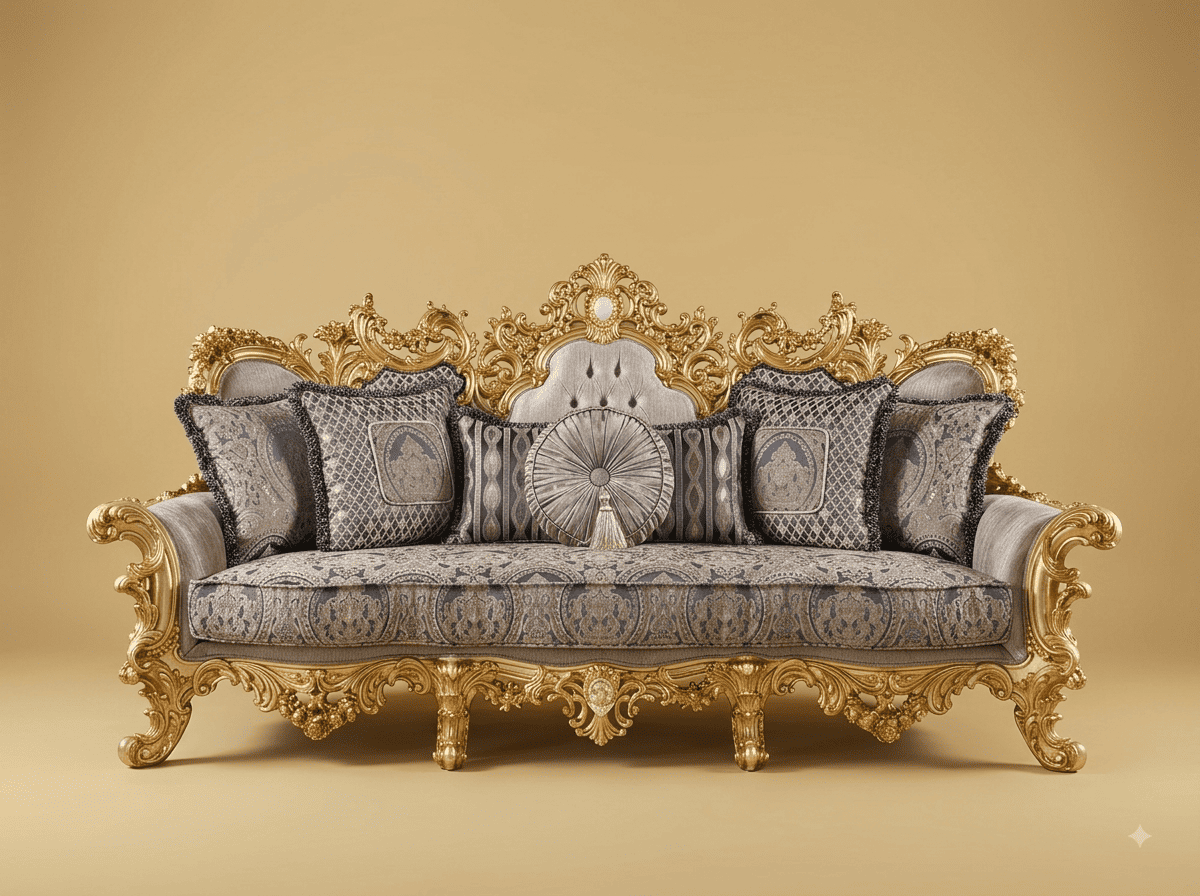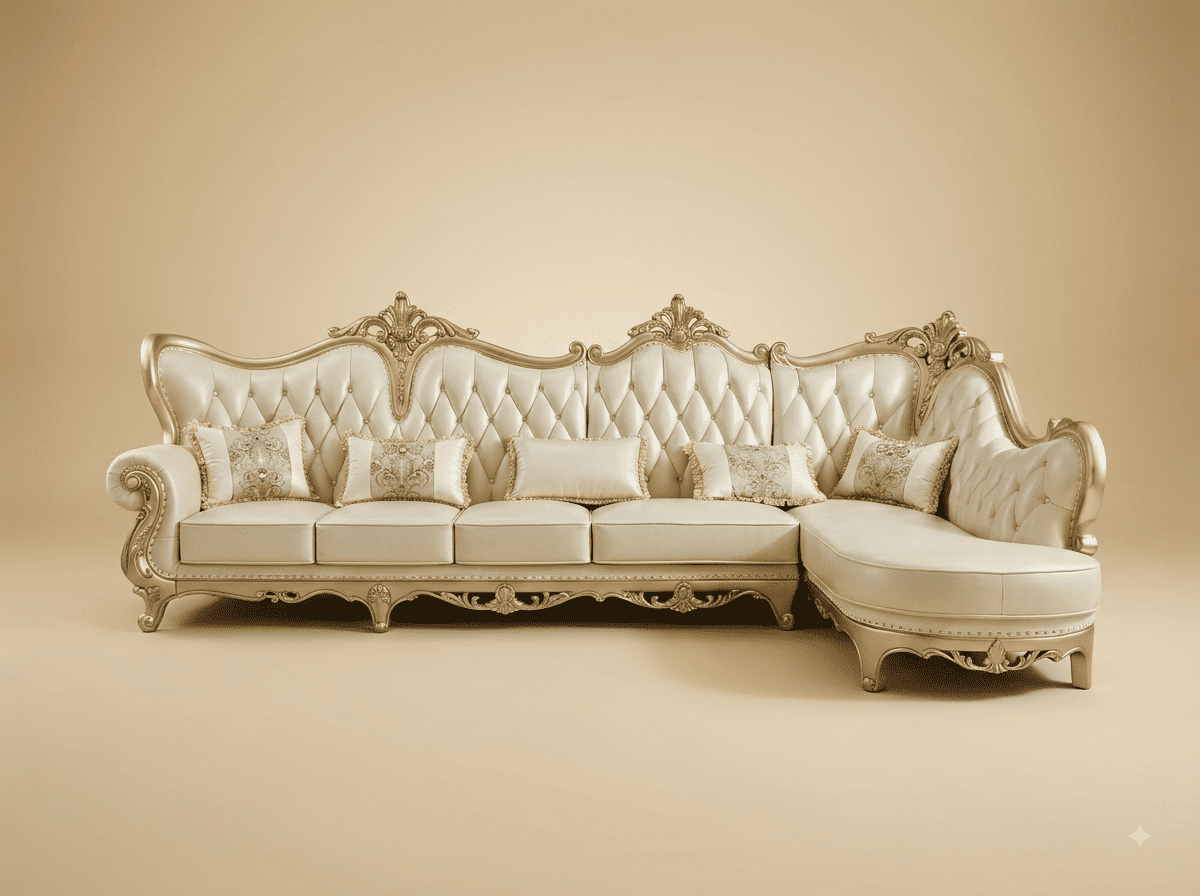
The chaise on the end of a sofa is a nineteenth-century idea that solved a Victorian problem and turned out to solve a modern one. Then, it let someone recline in company without lying on a bed, which was socially impossible. Now it does something simpler: it gives a long sofa a resolution at one end instead of stopping abruptly at an arm.
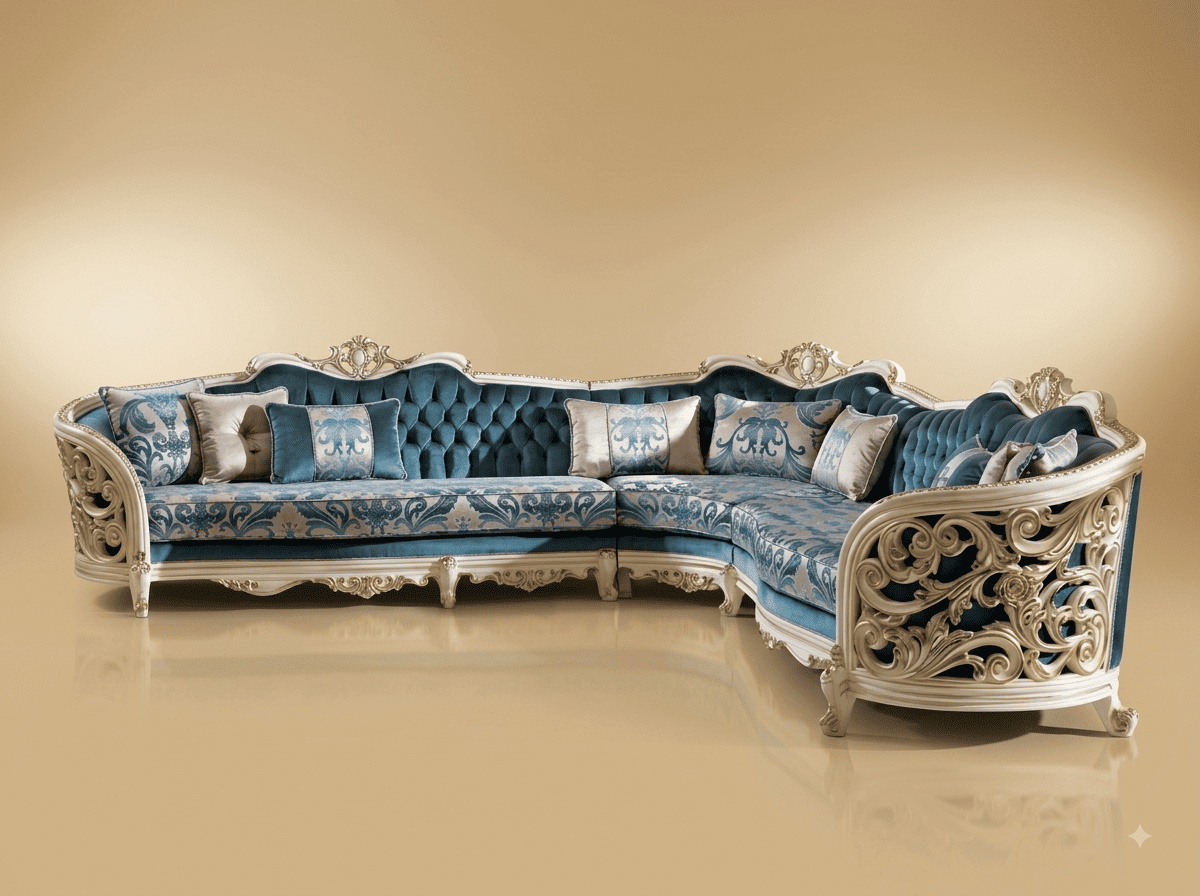
Where it goes matters more than people expect. A chaise on the wrong hand blocks a doorway or turns its back on the television, and unlike a cushion it cannot be moved later - the frame is built that way. It is the single question we ask first on any L shape commission.
Carrying buttoning around the corner is the craft problem. The back changes direction at the return, and a diamond grid that meets that turn carelessly produces a visible seam where the pattern jumps. Our master Indian artisans set the grid out from the corner outward, in both directions at once, so the diamonds meet at the turn rather than colliding there.
 Ask Price On WhatsApp