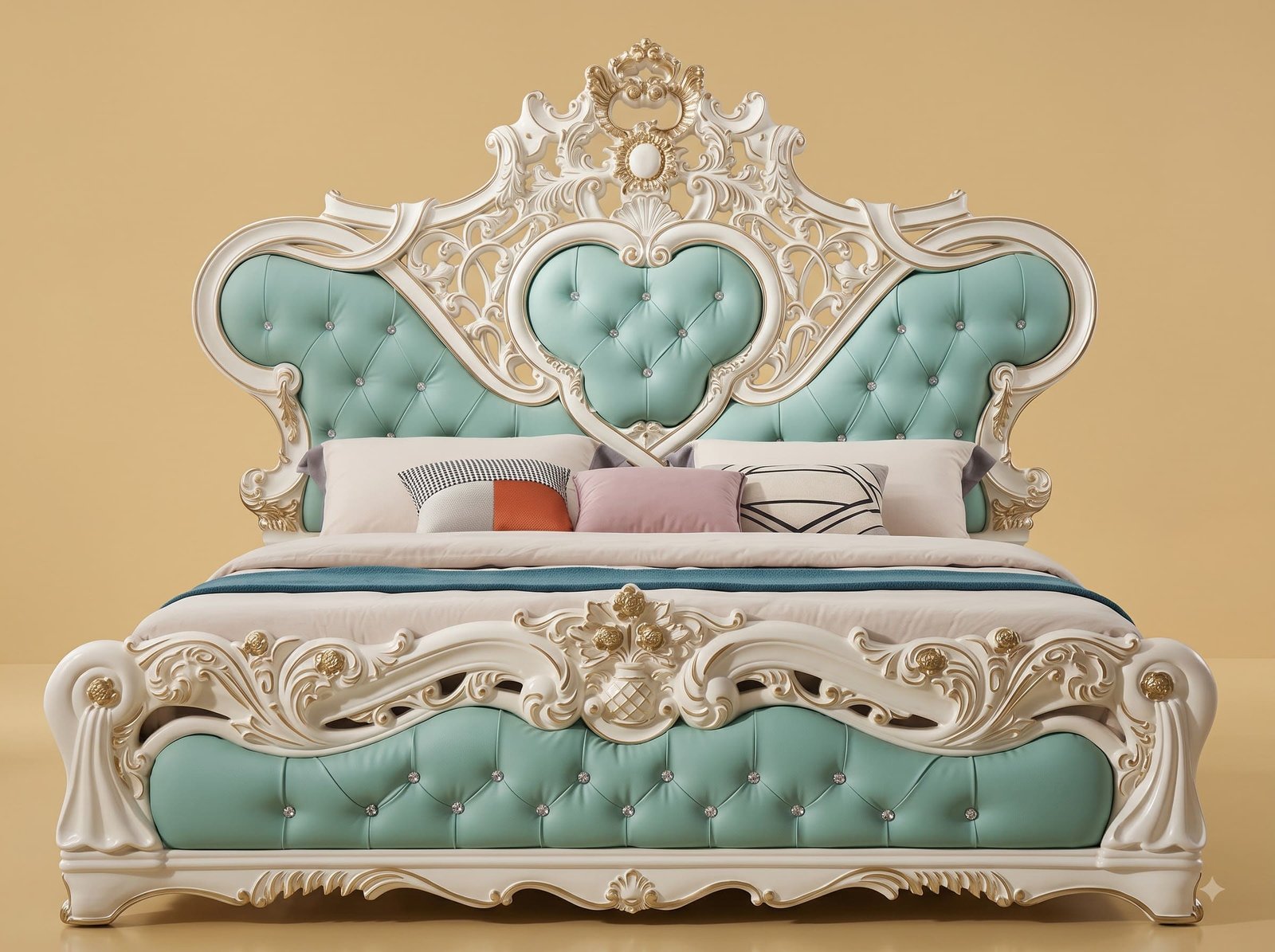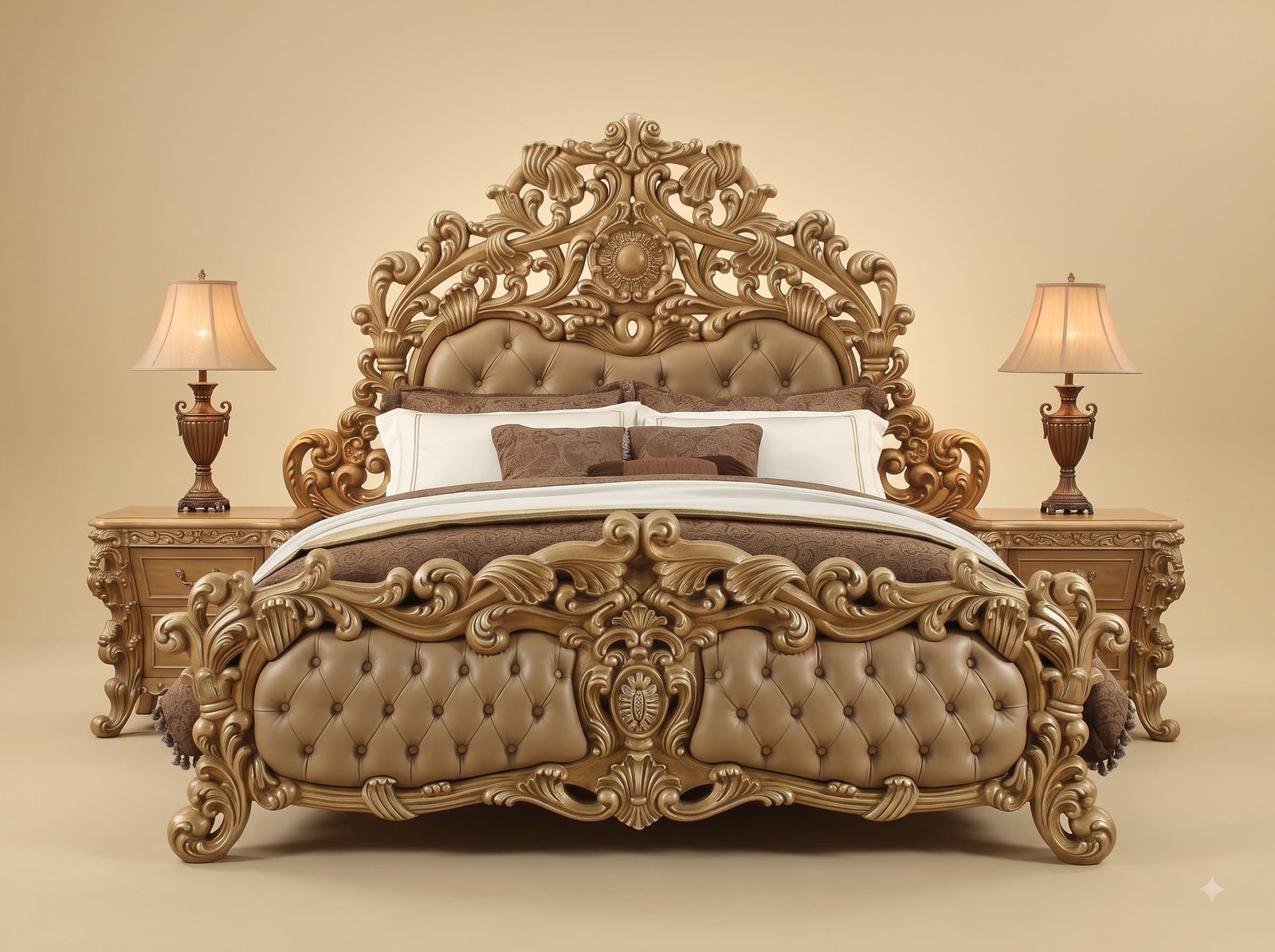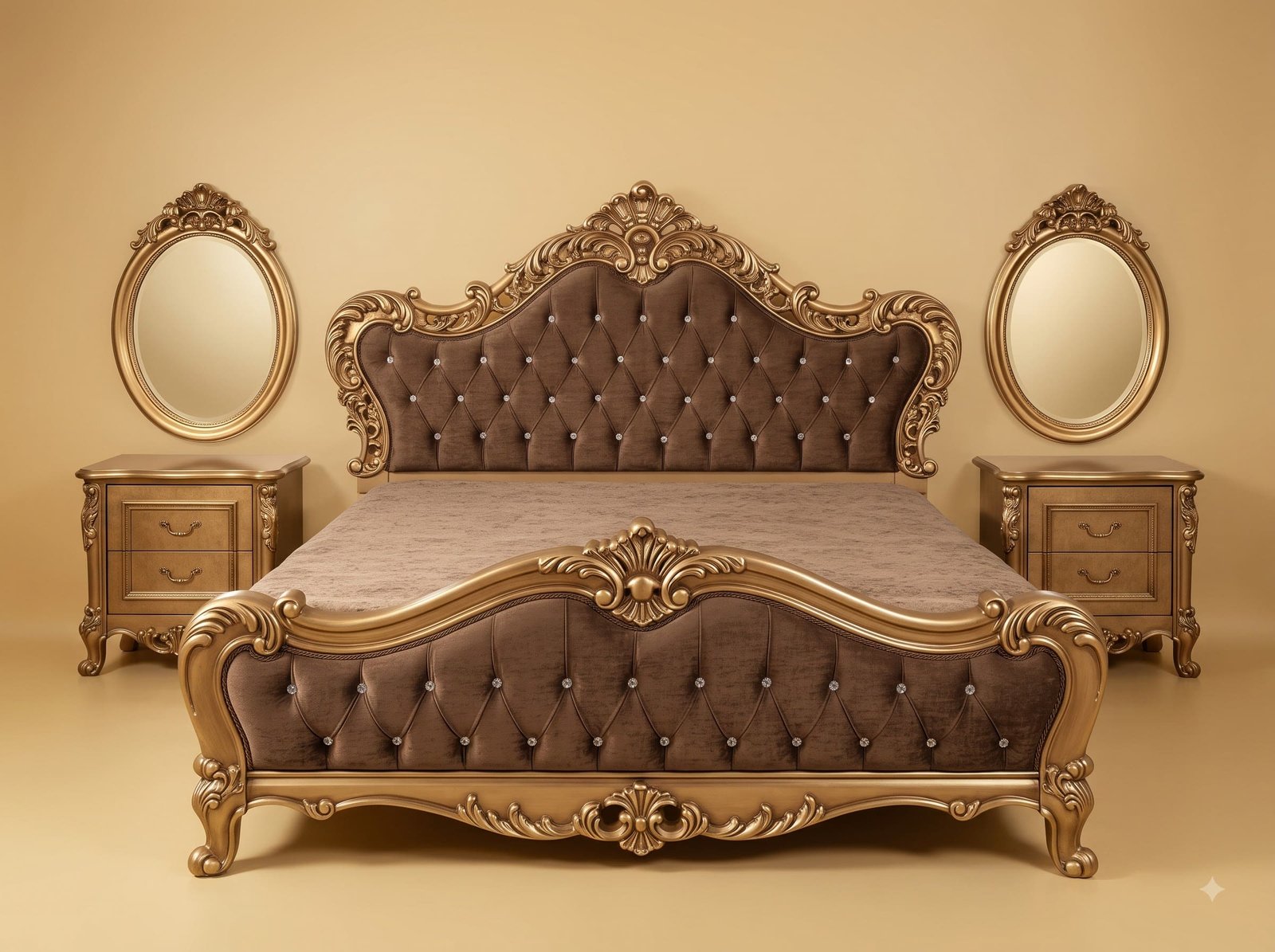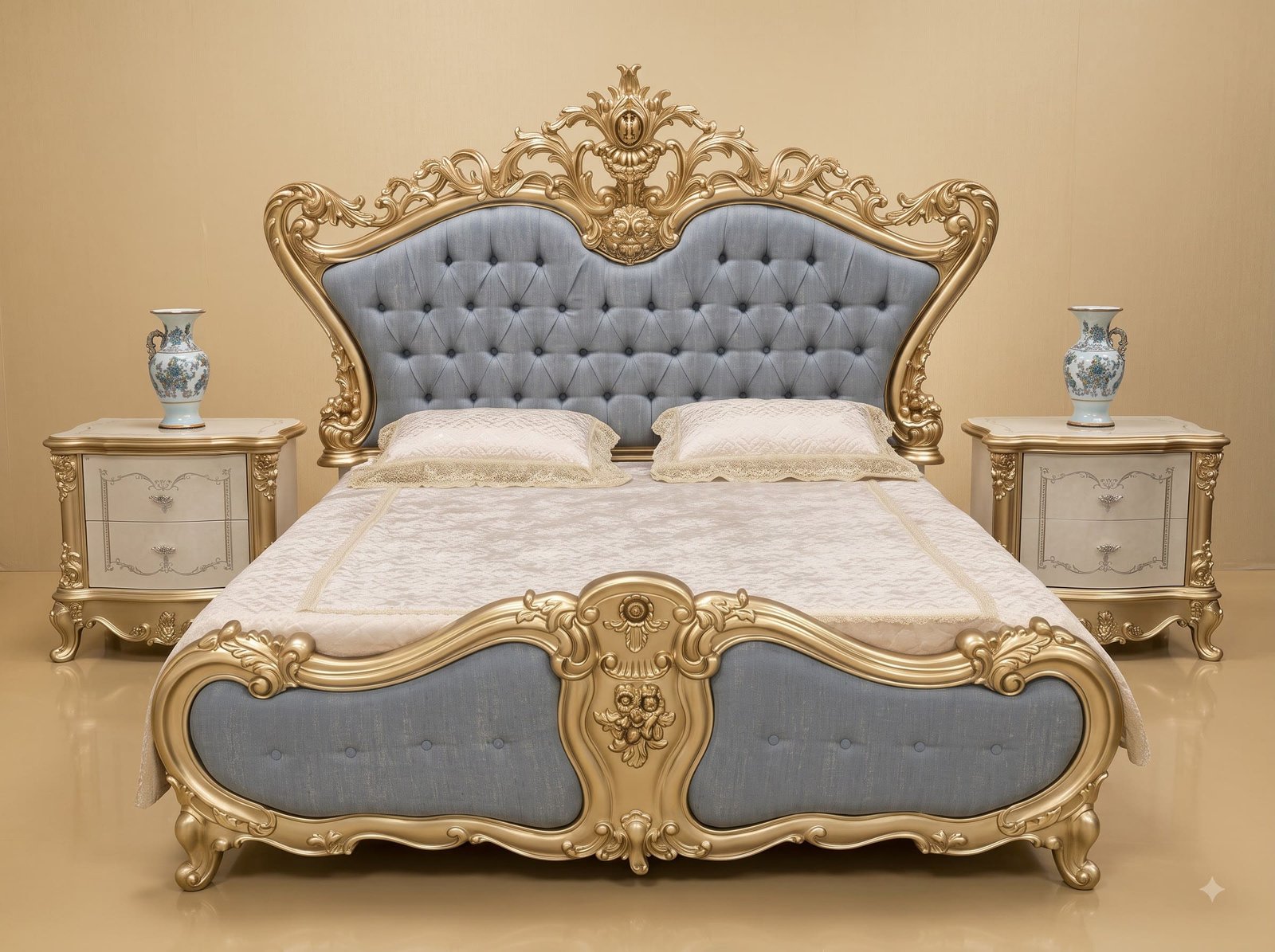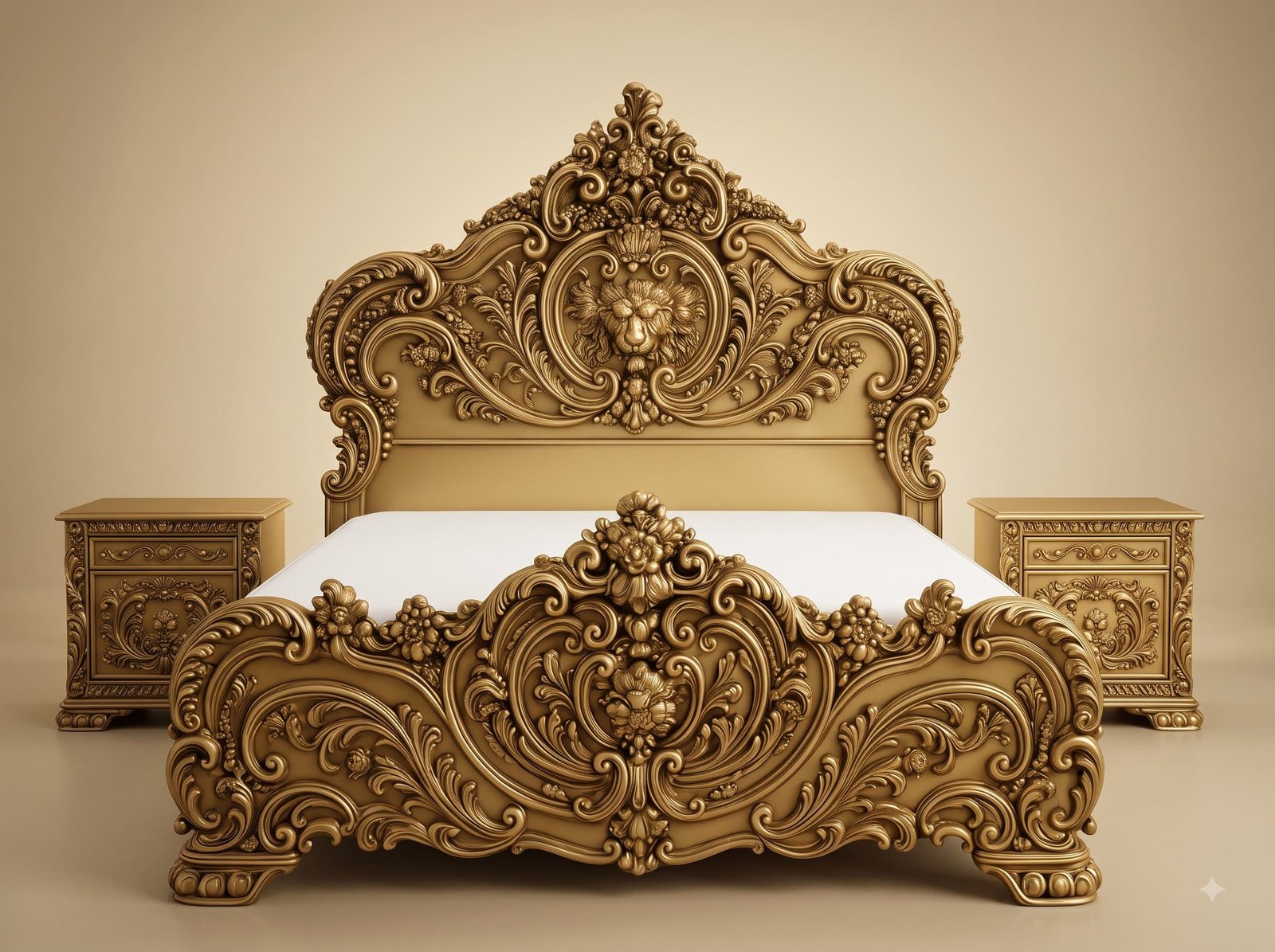
The lion mask is one of the oldest motifs in furniture, and it always sits in the same place: at the centre, facing out. Greek and Roman craftsmen used it on chests and door furniture, European carvers took it up again in the eighteenth century, and Indian workshops have carved it on temple doors and palace beds for just as long. It endures because a face at the centre of a symmetrical design gives the whole composition somewhere to resolve.
Carving one well is a different order of difficulty from carving a leaf. A leaf can be a little off and nobody notices; a face cannot. The eyes have to sit level, the muzzle has to project without undercutting itself into weakness, and the mane has to read as separate locks in low light. It is the piece of work a carver is judged on.
Our master Indian artisans cut this mask from the solid, working down into the same board as the cartouche around it rather than carving it separately and applying it. That is slower and it wastes more wood, and it is why the mask can never lift, crack away or loosen with age.
 Ask Price On WhatsApp