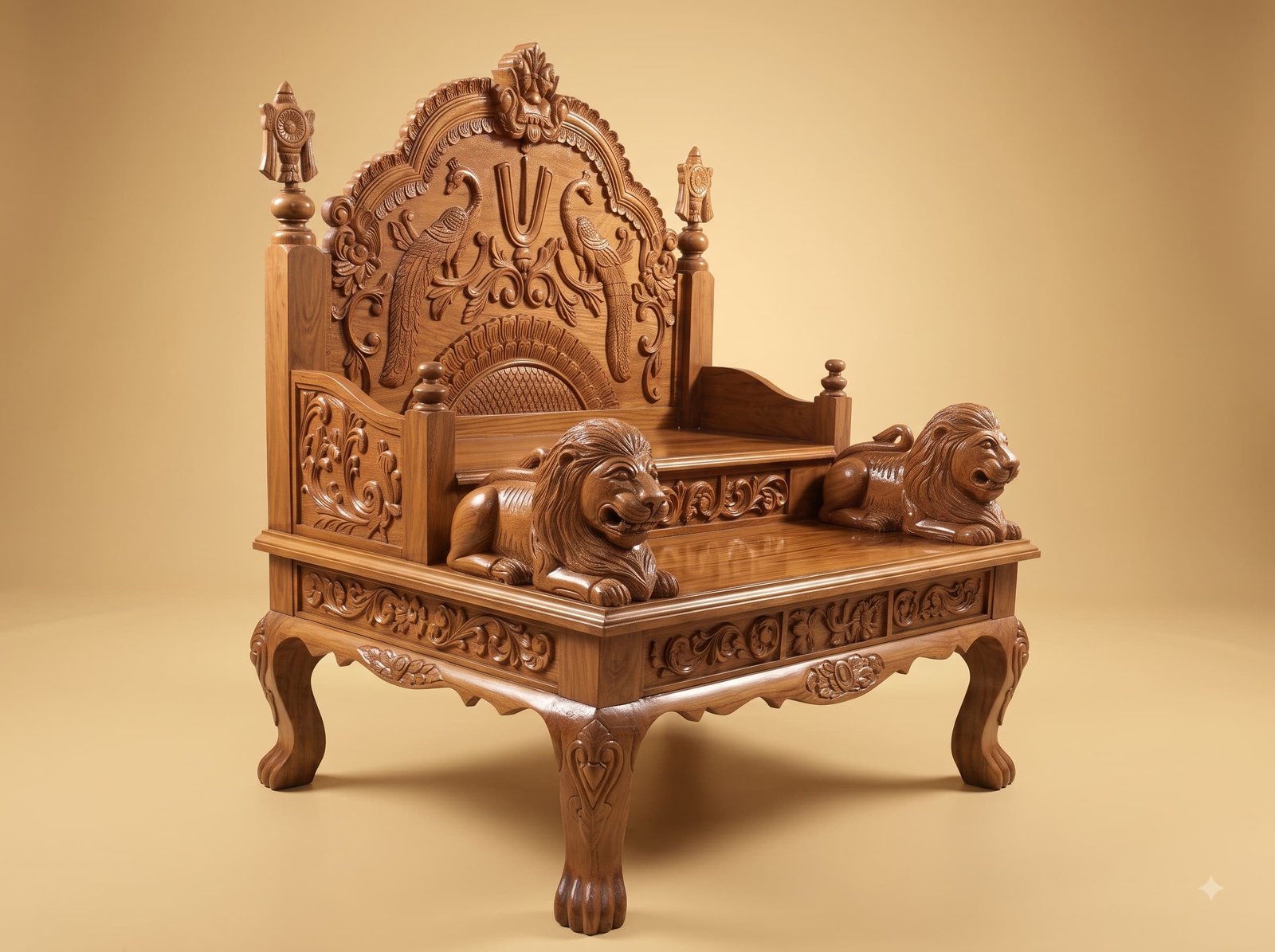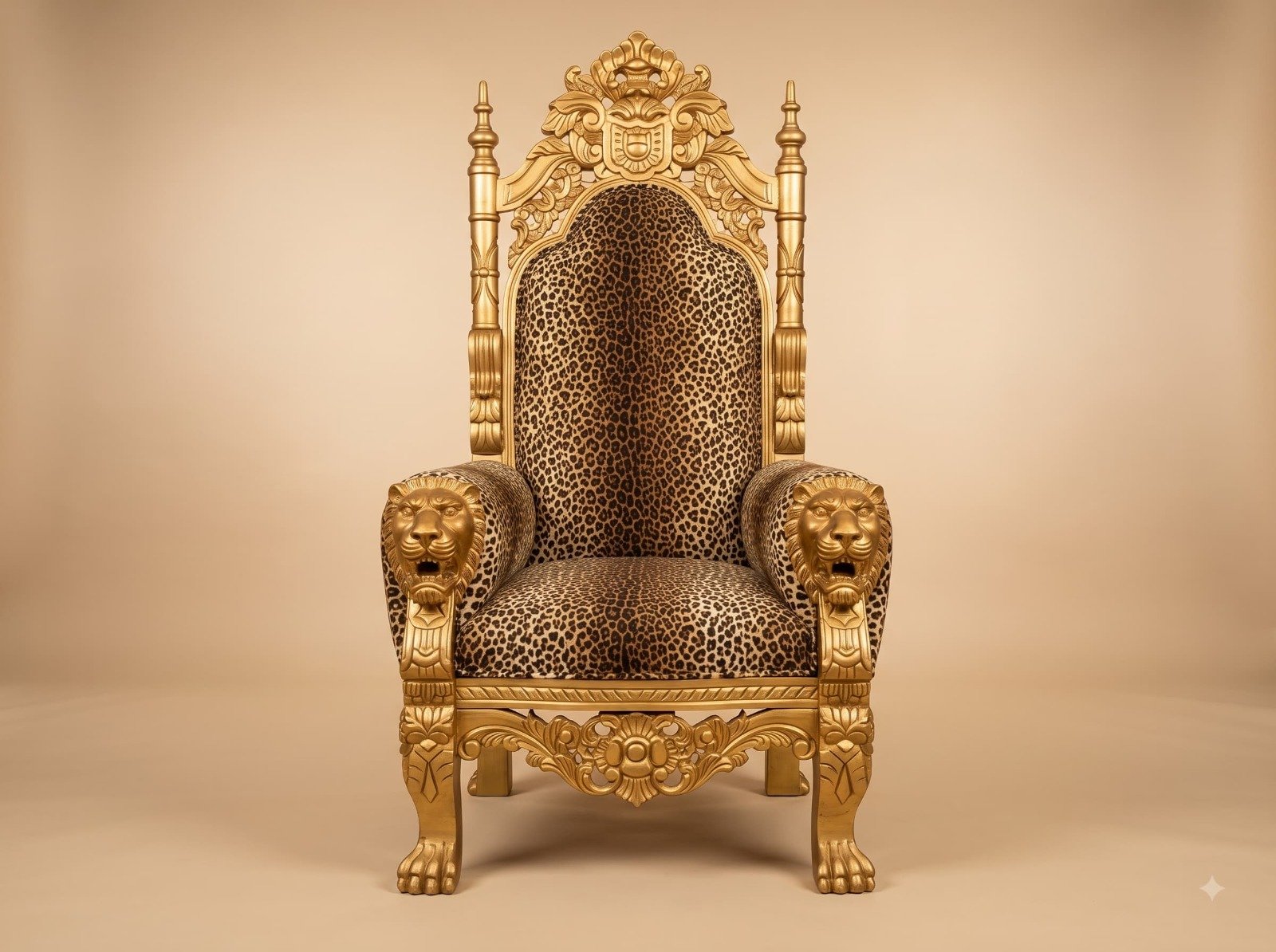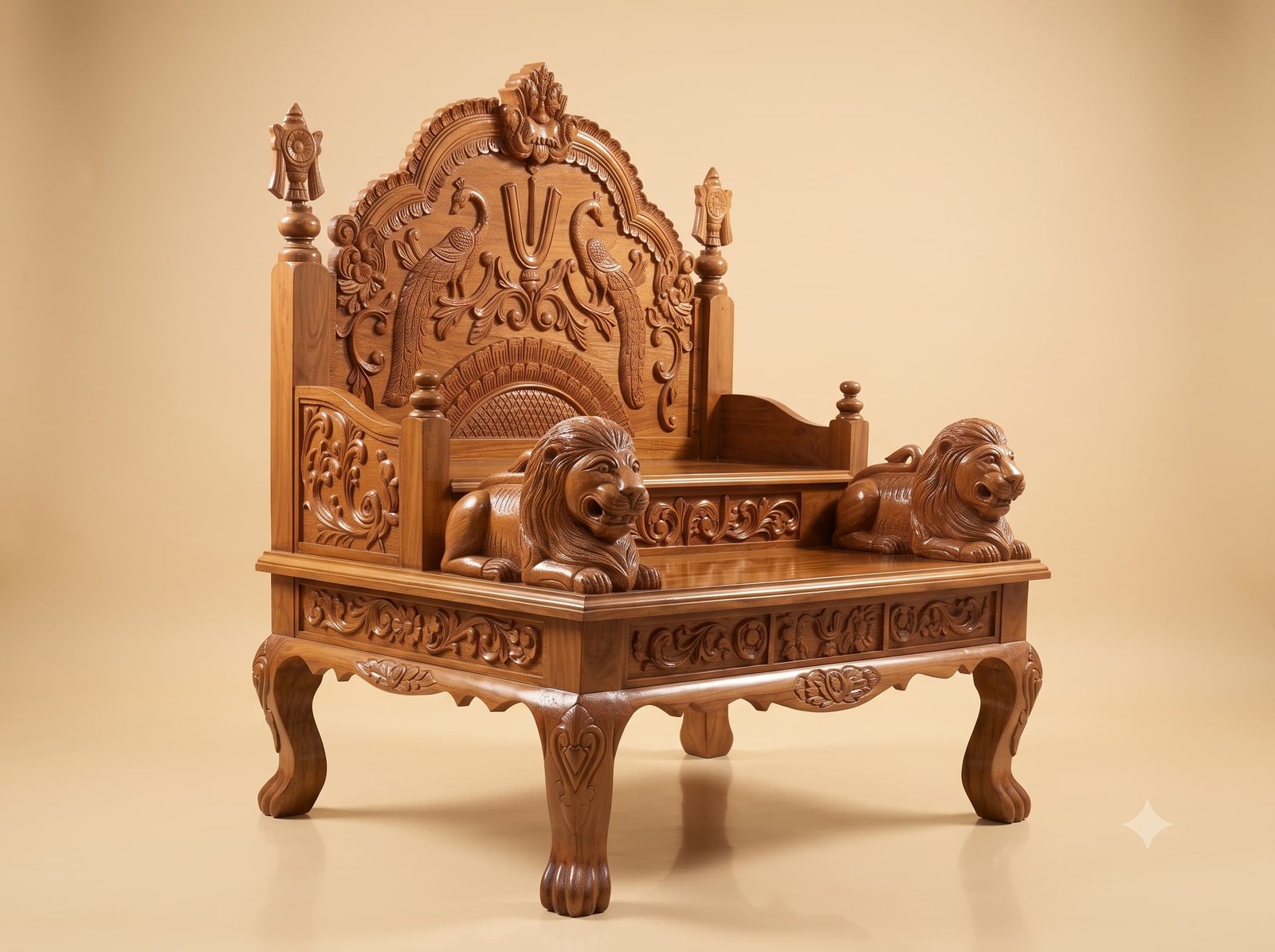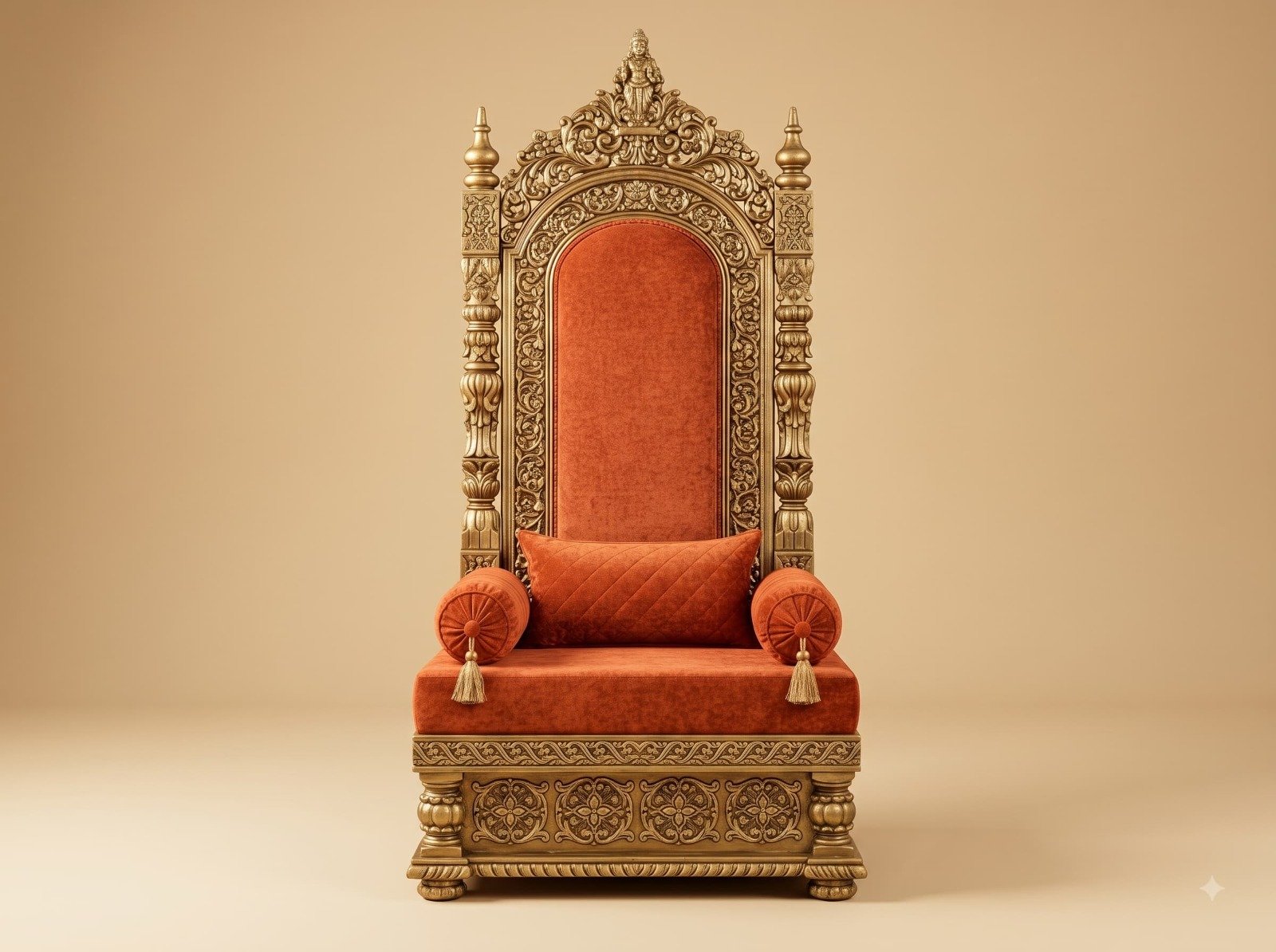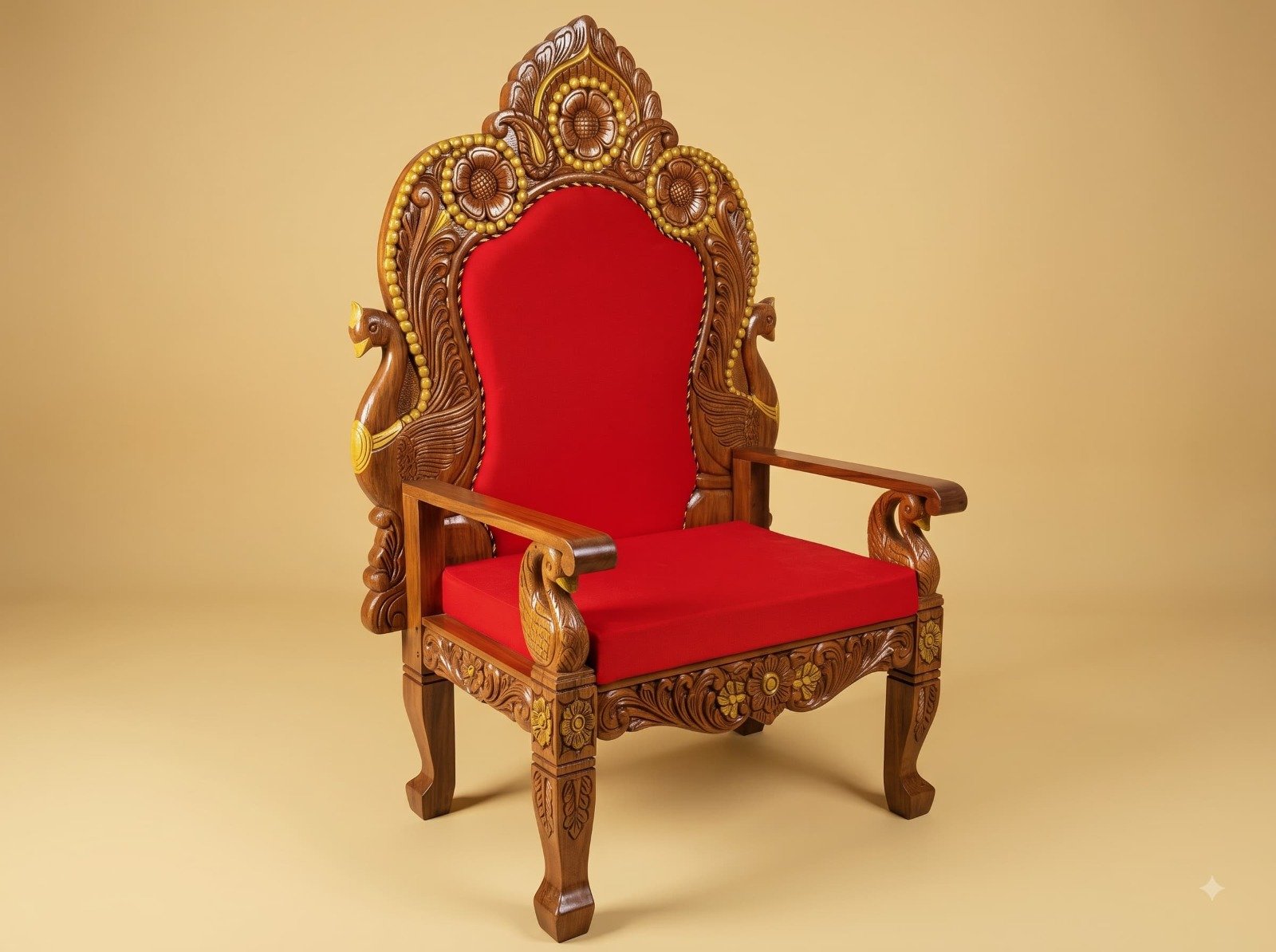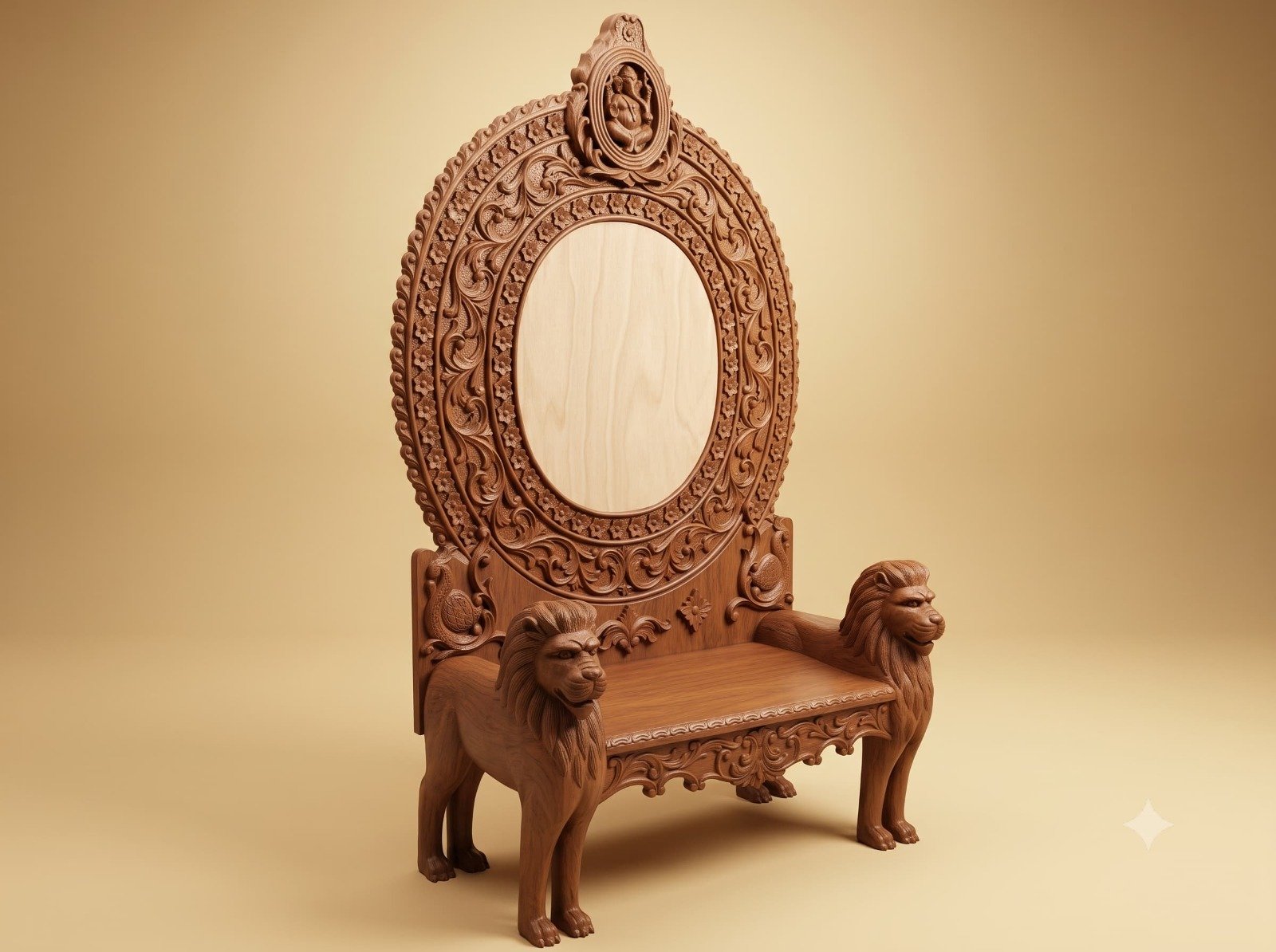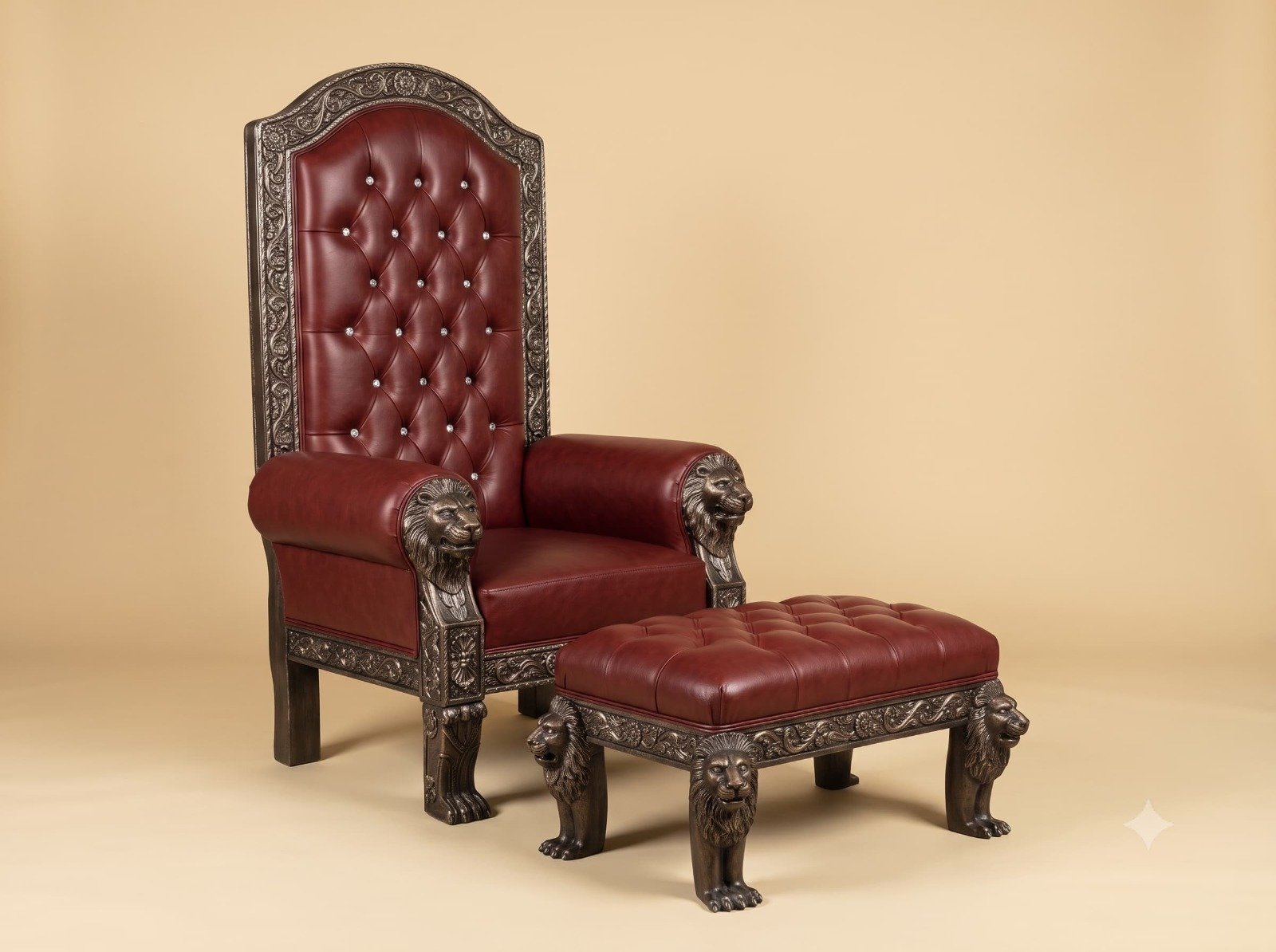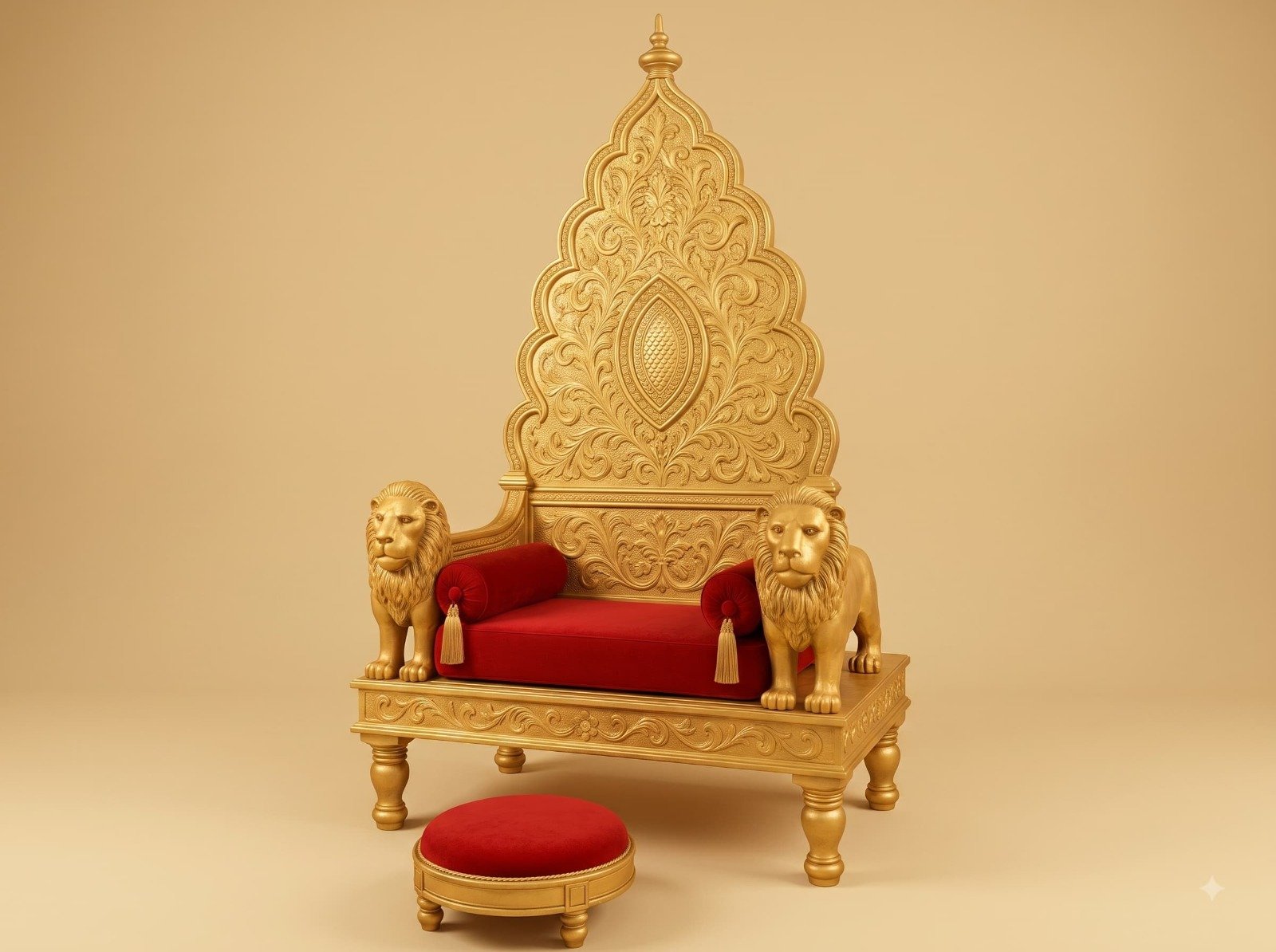
The back of this singhasan is covered in leaves and stems from edge to edge, and the reason you can read every one of them under a gold finish is the background between them - which is not smooth.
Gold reflects. On a flat polished ground it throws light straight back at you as a sheet of brightness, and low relief carved on that ground disappears into the glare. It is the standard difficulty with dense ornament in gold: the more you carve, the flatter it can look.
So the ground between the leaves is punched. After the foliage is cut and before any finish goes on, the carver works over every exposed background area with a small punch, tapping it thousands of times to leave a fine even texture. That texture scatters light instead of reflecting it, so the background reads as a soft shadow while the smooth leaves above it stay bright.
It is the slowest and least interesting part of the whole job - hours of tapping over an area nobody will consciously look at. It is also the only reason the carving above it has any depth at all once the gold is on.
 Ask Price On WhatsApp